
Reviewed · AKIHABARA OTAKU TOURS
[NEW]JPN CULTURE – Buy@Toyosu Market SUSHI Making +TEA +Maid Cafe
You eat Tokyo like a pro. This is a small-group food and culture session built around fresh ingredients: you shop at Toyosu, learn sushi hands-on, then finish with a formal tea ceremony and the sweets you help make. The hook is the access and the pacing—market first, cooking right after, then tea in a quiet, guided setting.
I love the eight-person cap, which keeps things personal and lets your guide slow down when you need help. I also love that you buy the sushi toppings (the neta) in-market and then use them soon after, so the flavors feel properly fresh instead of staged. One possible drawback: it’s a lot packed into one day, so if you want a looser, linger-in-every-aisle Tokyo morning, this schedule can feel fairly full.
In This Review
- Key Points You’ll Care About
- Entering Toyosu’s Food World (Without Just Watching From Afar)
- Sushi-Making That Actually Teaches You How to Rebuild It at Home
- Your Tea Ceremony Lesson: Sweets, Matcha, and the Proper Rhythm
- Why the Market-to-Studio Timing Matters More Than You Think
- Akihabara Maid Café Add-On: Fun If It Fits Your Mood
- How Much Value Is $78.04 Really Buying You?
- Who This Tour Suits Best (And Who Might Want Something Else)
- Final Call: Should You Book This Toyosu Sushi + Tea Experience?
- FAQ
- What is the duration of the tour?
- How many people are in the group?
- Where does the tour start?
- What do I learn and eat during the class?
- Is the maid café included?
- What is the cancellation policy?
Key Points You’ll Care About
![[NEW]JPN CULTURE - Buy@Toyosu Market SUSHI Making +TEA +Maid Cafe - Key Points You’ll Care About](https://8.thetokyotraveller.com/wp-content/uploads/newjpn-culture-buytoyosu-market-sushi-making-tea-maid-cafe-1.jpg)
- Toyosu market shopping you can’t usually do: you join a guide-led ingredient hunt that’s treated as special access.
- Sushi lesson built around real ingredients: you pick neta and then put it to work in the studio.
- You make more than rolls: you’re taught multiple styles, including maki, chirashi, temari, and oshi (plus roll types like thick rolls).
- Tea sweets are part of the class (and the dessert): you shape tea ceremony confections, not just watch.
- Tea master-led ceremony with high-grade matcha: you get the real ritual, using matcha described as suitable for tea masters.
- Optional Akihabara maid café add-on: you can tack it on, or skip it and keep your day light.
Deeper into Electric Town
- Official Street Go-Kart Tour – Akihabara★ 5.0 · 1,578 reviews
- Tokyo: Original Street Kart Experience from Akihabara★ 5.0 · 111 reviews
- Ramen Making from Scratch +Akihabara Tour –Tokyo Cooking Class★ 5.0 · 107 reviews
Entering Toyosu’s Food World (Without Just Watching From Afar)
![[NEW]JPN CULTURE - Buy@Toyosu Market SUSHI Making +TEA +Maid Cafe - Entering Toyosu’s Food World (Without Just Watching From Afar)](https://8.thetokyotraveller.com/wp-content/uploads/newjpn-culture-buytoyosu-market-sushi-making-tea-maid-cafe-2.jpg)
Tokyo’s fish markets have an audience problem. From the outside, it’s mostly people peering through observation windows—interesting, but not interactive. This experience changes the whole vibe because you don’t just look. You go with your guide to find what you’ll actually eat, then you turn those ingredients into a sushi lunch.
You meet at Shijō-mae Station (Toyosu area) and the day is designed to connect two ideas: buying quality ingredients and understanding what they’re for. The guide (including the team led by Max, based on prior guest experiences) helps translate market choices into kitchen decisions. That matters because a lot of sushi class content can feel generic if you’re not starting with the right seafood and the right expectations.
The market portion also has a practical realism. You’re not being asked to memorize sushi terms before you ever touch food. Instead, you learn by shopping, asking questions, and seeing how different ingredients are chosen. If you’re new to sushi, it gives you a clear base. If you’ve had sushi before, it helps you spot what makes it good, beyond the usual “tastes fresh” line.
One more thing: the experience is framed as you not being able to enter with special permission on your own, which is why a guided setup is such a big value here. You’re essentially paying for time with someone who knows where to go, what to look for, and how to turn that market walk into a lesson you’ll remember.
Sushi-Making That Actually Teaches You How to Rebuild It at Home
After the market stop, the day shifts from “shopping” energy to “hands-on” energy. You relocate to a studio and the instruction focuses on building practical skills you can repeat later. You’ll work with a menu designed to help you replicate at home—so the goal isn’t just lunch. It’s getting you to the point where you can host your own sushi party later.
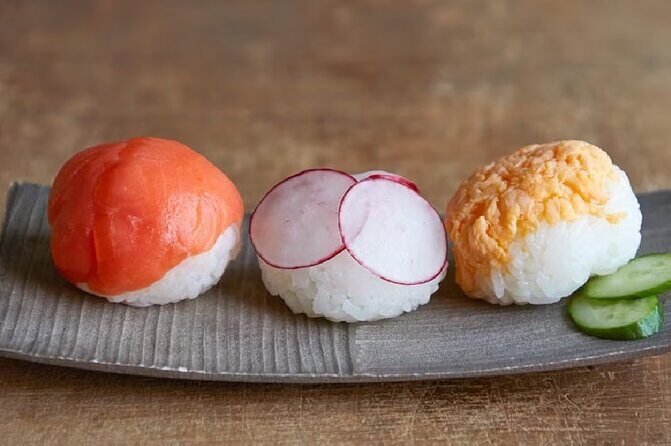
The styles you learn are a major part of why this feels more substantial than a simple demonstration. You’re set up to make multiple kinds, including temari, maki, chirashi, and oshi. Guests also report learning thick roll sushi and chirashi styles, with other variations like tamari referenced in class descriptions. The important takeaway for you isn’t the exact label—it’s that you’ll practice different assembly methods, not just one roll.
Here’s why that’s valuable:
- Maki-style practice teaches control: the rice and filling ratio, the hand motion, and how to keep the roll tidy.
- Chirashi teaches judgment: building a bowl-style plate where balance and arrangement matter.
- Oshi-style practice is different: it’s press-and-structure work rather than the roll wrap. That can be oddly satisfying if you like a more “mechanical” method.
- Temari-style work builds texture awareness: smaller, shaped bites that make you think about grain, seasoning, and bite-size balance.
And then there’s the part you’ll care about most: you eat what you make. You get a sushi lunch built from the ingredients you bought with your guide, so the flavors line up with what you were selecting earlier. It’s the kind of “whole chain” experience that makes the learning stick. You don’t forget what was chosen, because you’re tasting it right after.
Small-group size helps here too. With a cap of eight participants, you’re less likely to feel like you’re watching from a distance while the instructor handles everything for someone else. Instead, you get closer instruction on technique—especially when your hands do something slightly wrong and you need quick correction.
If you’re picky about hygiene and food handling: sushi-making classes can vary. This one’s designed around fresh market ingredients and immediate use, which generally means your experience is more consistent with proper food safety habits and shorter time-from-market-to-kitchen.
Your Tea Ceremony Lesson: Sweets, Matcha, and the Proper Rhythm
Then the day slows down—just a bit—in the best way. You move from sushi work to a tea ceremony experience, including a short break to learn how to make tea ceremony sweets. These confections aren’t treated like an afterthought. You make them and they double as your dessert.
The class includes a real tea ceremony with a qualified tea master, using matcha described as high-grade and worthy of tea ceremony standards. That detail matters because matcha quality changes the whole sensory picture. Cheaper matcha can taste thin or bitter; higher-grade matcha tends to feel more balanced, with a cleaner finish. In a ceremony setting, that balance isn’t optional—it’s the point.
What you’re practicing is not just drinking tea. You’re learning the rhythm of the ritual—how preparation and serving connect to taste. Even if you don’t memorize every step, you’ll come away with a better sense of why the ceremony is treated as a discipline rather than a gimmick.
And you don’t leave hungry. Between the sushi lunch and the tea sweets, you get a full, satisfying food experience that covers both savory and sweet.
Why the Market-to-Studio Timing Matters More Than You Think
![[NEW]JPN CULTURE - Buy@Toyosu Market SUSHI Making +TEA +Maid Cafe - Why the Market-to-Studio Timing Matters More Than You Think](https://8.thetokyotraveller.com/wp-content/uploads/newjpn-culture-buytoyosu-market-sushi-making-tea-maid-cafe-4.jpg)
This tour is built on a chain: Toyosu shopping → sushi class and lunch → tea ceremony sweets and matcha. It might sound like a typical multi-stop “food day” from the outside, but the real value is that the steps are tightly connected.
Many similar experiences have a disconnect—market scenes that feel like sightseeing, then cooking that uses ingredients you never chose. Here, you choose neta with your guide and then you use it soon after. That gives you a clearer understanding of what you bought and why it matters. You taste the difference in context, not in isolation.
It also changes how you interact with the guide. Instead of only being a translator, the guide becomes a mentor—helping you understand what you’re selecting and how it affects results in the kitchen.
In plain terms: you don’t just learn sushi theory. You learn it with the actual food in front of you.
More shopping runs through Tokyo


Akihabara Maid Café Add-On: Fun If It Fits Your Mood
![[NEW]JPN CULTURE - Buy@Toyosu Market SUSHI Making +TEA +Maid Cafe - Akihabara Maid Café Add-On: Fun If It Fits Your Mood](https://8.thetokyotraveller.com/wp-content/uploads/newjpn-culture-buytoyosu-market-sushi-making-tea-maid-cafe-5.jpg)
There’s an optional choice to add an Akihabara maid café experience. If you’ve been curious, this is the easiest way to roll it into a structured day without having to figure out everything yourself.
But it’s also optional for a reason. This tour already runs around 6.5 hours, and the core experience is food + culture. If you’re the kind of person who values quiet, thoughtful moments (like the tea ceremony), you may prefer to skip the maid café and keep the rest of the day calm.
If you do add it, treat it like a theme-park style cultural contrast—something that’s loud, playful, and very “Tokyo” in a specific way—rather than a second cooking lesson. The tour team notes that you can call it a day after the main experience and proceed with your own plans, which is a good option if you’re stretching your energy budget.
How Much Value Is $78.04 Really Buying You?
![[NEW]JPN CULTURE - Buy@Toyosu Market SUSHI Making +TEA +Maid Cafe - How Much Value Is $78.04 Really Buying You?](https://8.thetokyotraveller.com/wp-content/uploads/newjpn-culture-buytoyosu-market-sushi-making-tea-maid-cafe-6.jpg)
At $78.04 per person for about 6 hours 30 minutes, you’re paying for more than a single skill class. The price stacks multiple elements into one ticket:
- Guided access connected to Toyosu market shopping
- A hands-on sushi-making lesson with lunch you eat
- A structured tea ceremony led by a tea master
- Tea sweets that you make and then eat
- The efficiency and guidance of an organized small-group format (max eight participants)
In Tokyo, paying separately for market guidance, a sushi lesson, and a tea ceremony can add up fast. The honest way to think about this price is: you’re buying time with experts and ingredient quality plus the convenience of a complete flow in one session.
Is it cheap? No. But it’s not “just a snack workshop” either. It’s a full food-and-culture block with real instruction, not a quick photo stop.
Who This Tour Suits Best (And Who Might Want Something Else)
![[NEW]JPN CULTURE - Buy@Toyosu Market SUSHI Making +TEA +Maid Cafe - Who This Tour Suits Best (And Who Might Want Something Else)](https://8.thetokyotraveller.com/wp-content/uploads/newjpn-culture-buytoyosu-market-sushi-making-tea-maid-cafe-7.jpg)
This works especially well if:
- you’re visiting Tokyo for the first time and want a day that covers both food craft and cultural ritual
- you like practical learning (hands-on assembly, not just watching)
- you want fresh-market ingredients without needing special knowledge of where and how to shop
- you’re traveling with family or mixed-experience groups, since the small group size supports more individual attention
You might want a different option if:
- you hate time-structured days and prefer slow wandering
- you want more free time at the market for browsing on your own (this is guided and lesson-focused)
- you’re only interested in tea or only interested in sushi, since you’ll get both in one package
Final Call: Should You Book This Toyosu Sushi + Tea Experience?
![[NEW]JPN CULTURE - Buy@Toyosu Market SUSHI Making +TEA +Maid Cafe - Final Call: Should You Book This Toyosu Sushi + Tea Experience?](https://8.thetokyotraveller.com/wp-content/uploads/newjpn-culture-buytoyosu-market-sushi-making-tea-maid-cafe-8.jpg)
If you want a Tokyo day that feels like you’re learning the logic behind the food, I’d book it. The market-to-studio-to-tea setup is the standout reason. You shop for ingredients you’ll use, you make multiple sushi styles, and you end with a real tea ceremony plus sweets you made yourself.
My “yes” comes with one condition: go into it knowing it’s a full schedule. Wear comfortable shoes, bring a small appetite for learning, and treat it like a guided workshop, not a loose market stroll.
If that sounds like your kind of day, this is an easy choice.
FAQ
What is the duration of the tour?
The experience runs for approximately 6 hours 30 minutes.
How many people are in the group?
The tour has a maximum of 8 travelers.
Where does the tour start?
You start at Shijō-mae Sta. 6 Chome-3, Toyosu, Koto City, Tokyo 135-0061, Japan.
What do I learn and eat during the class?
You learn the basics of preparing a Japanese sushi lunch and make multiple types of sushi. You also make tea ceremony sweets and have an actual tea ceremony experience.
Is the maid café included?
A maid café visit is an optional add-on. It can be scheduled if you request it when making your reservation.
What is the cancellation policy?
You can cancel for a full refund up to 24 hours before the experience starts. If you cancel less than 24 hours before the start time, the amount paid is not refunded.
Bring an Empty Suitcase
More Tour Reviews in Tokyo






Further into Akihabara




Fresh reviews from around Tokyo






Akihabara Otaku Tours, compared.
 ★ 5.0Official Street Go-Kart Tour – AkihabaraFrom $611,578 reviews
 ★ 5.0Original Street Kart Experience from AkihabaraFrom $51111 reviews
 ★ 5.0Ramen Making from Scratch +Akihabara Tour –Tokyo Cooking ClassFrom $123107 reviews
 ★ 5.0Tokyo’s Must-Sees: 5-hour Tsukiji, Akihabara & Asakusa TourFrom $10188 reviews
 ★ 4.8Tokyo Akihabara, Anime, Manga, Video Games & Maid Cafe TourFrom $3881 reviews
 ★ 4.6Akihabara: Anime & Gaming Adventure Tour (Group or Private)From $8880 reviews
 ★ 4.5Akihabara: Go-Kart Experience with Local Guide in TokyoFrom $7257 reviews
Real Anime Culture Tour in Shibuya: Food, Shopping & Game FunFrom $7548 reviews
★ 4.5Akihabara: Go-Kart Experience with Local Guide in TokyoFrom $7257 reviews
Real Anime Culture Tour in Shibuya: Food, Shopping & Game FunFrom $7548 reviews
Browse the lists this tour appears in