
Reviewed · MT FUJI DAY TRIPS
Mount Fuji 1-Day Trip: the Hottest Photography Tour
Mount Fuji in one long photo day. This 10-hour guided trip strings together several famous spots around Fujiyoshida and Lake Kawaguchi, so you can focus on photo angles instead of transit headaches. I like that it includes round-trip transfers from Tokyo and a live English/Japanese guide, which helps a lot when you don’t want to puzzle out bus lines.
The shot opportunities feel nonstop. I also like the mix of dramatic and calm stops, from climbing up for the Chureito Pagoda view via 397 steps to the quiet eight-spring ponds at Oshino Hakkai for more reflective shots. One possible drawback: it’s a full day, and you’ll want to plan for weather changes since food, drinks, and attraction admissions aren’t included.
In This Review
- Key highlights that make this trip a strong photo choice
- Tokyo to Mount Fuji, without turning your day into logistics
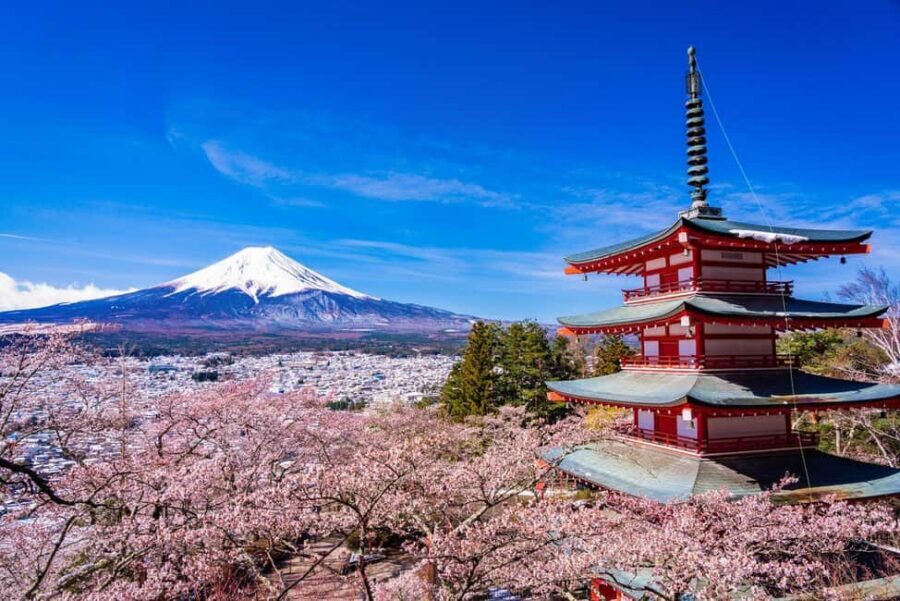
- Arakurayama Sengen Park and the Chureito Pagoda shot (the one people travel for)
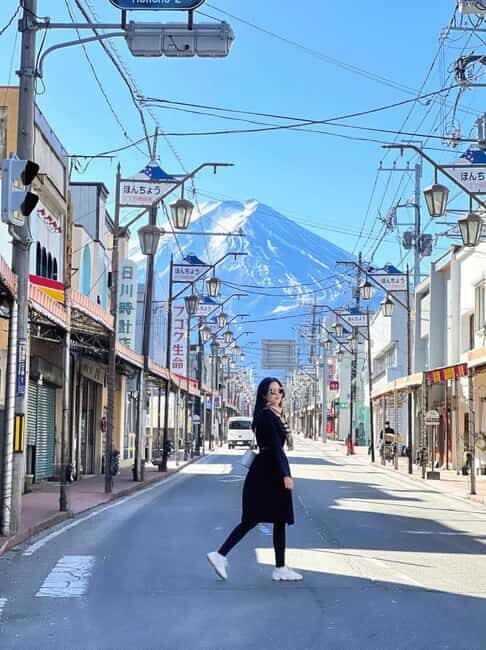
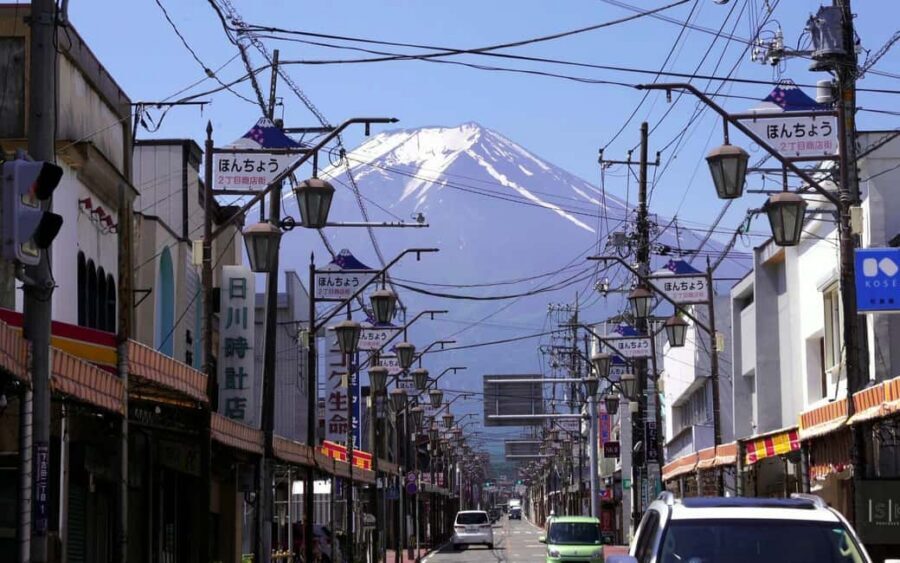
- Hikawa Clock Shop: a quick stop that can turn into your best variety
- Oshino Hakkai’s eight springs: where Fuji reflections get calmer
- Lawson Kawaguchiko Station: the practical photo break with a tasty perk
- Oishi Park and the flower calendar around Lake Kawaguchi
- Getting the best shots: what to wear and how to think about timing
- Price and value: does $83 make sense for a photo-heavy day?
- Who should book this tour, and who should skip it
- Should you book this Mount Fuji 1-day photo tour?
- FAQ
- How long is the Mount Fuji 1-day photo tour?
- How much does the tour cost?
- Where do I meet the guide in Tokyo?
- What’s included in the price?
- Are meals and drinks included?
- Are attraction admissions included?
- What languages is the live guide available in?
- What should I bring, and is there a luggage limit?
Key highlights that make this trip a strong photo choice
- Iconic Chureito Pagoda views from Arakurayama Sengen Park, with a short-but-real climb via 397 steps
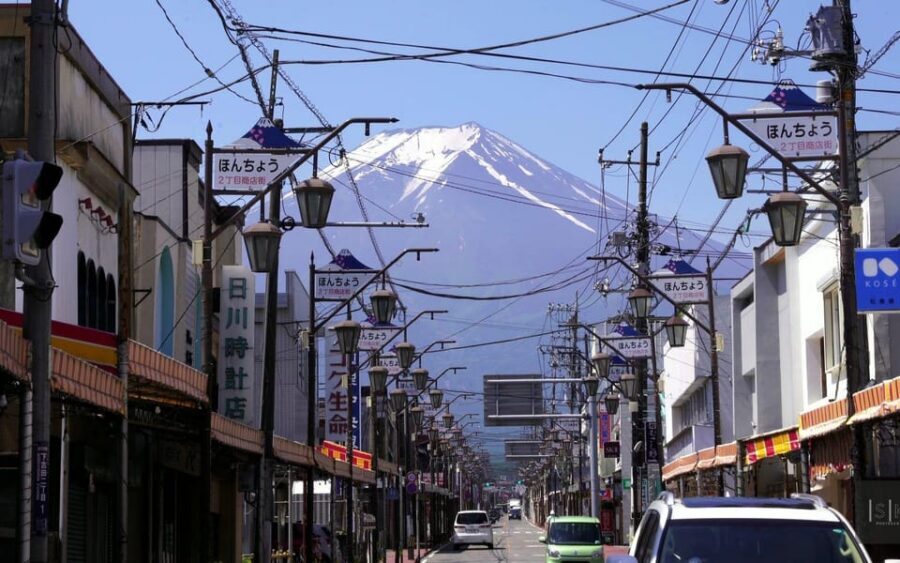
- Multiple Fuji angles in one day, including Hikawa Clock Shop and the Lawson photo stop by Lake Kawaguchi
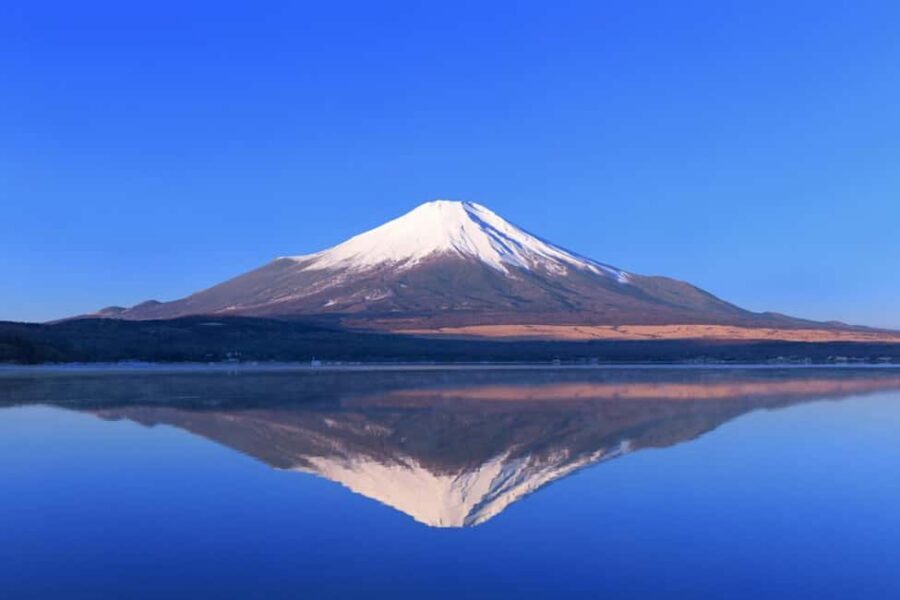
- Oshino Hakkai’s eight springs, a national natural monument setting for calmer, softer compositions
- Seasonal flower plans around Lake Kawaguchi, with different scenery from June through October
- Guide support in English and Japanese, and one guide named Louis is noted for being kind and easy to ask questions
- A practical pacing that balances sightseeing time with breaks for photos and rest
Other routes to the mountain, compared
- Mt Fuji & Hakone Cruise, Drum Show Bullet Train 1 Day from Tokyo★ 4.0 · 7,413 reviews
- Tokyo Mt Fuji 5th St & Hakone Cruise Bus Tour w/Bullet Train★ 4.4 · 5,024 reviews
- From Tokyo: Mount Fuji Full-Day Sightseeing Trip★ 4.5 · 4,970 reviews
Tokyo to Mount Fuji, without turning your day into logistics
Your day starts in Tokyo with two possible meeting points: JR Tokyo Station Marunouchi South Exit or Tokyo Mode Gakuen. You’ll board a bus/coach for about 2.5 hours each way, which matters because Mount Fuji day trips can become a time-sink when you’re figuring out routes on the fly.
A day-before email is part of the deal. It includes your exact pick-up location, the guide’s contact info, and the bus license plate number, which is handy for finding the right vehicle quickly. For a trip where one wrong turn can steal your best light, this kind of pre-clarity is more valuable than it sounds.
I also like how the tour is designed to reduce language friction. You don’t have to negotiate tickets, directions, or stop-by-stop timing; the guide handles the flow. The group still needs to move with the schedule, but you’ll spend your energy looking up at Fuji instead of checking maps every ten minutes.
Arakurayama Sengen Park and the Chureito Pagoda shot (the one people travel for)
Arakurayama Sengen Park is your first major photo stop, and it’s famous for a reason. You get about 1 hour there, which is enough time to climb, frame your shots, and regroup without feeling completely rushed.
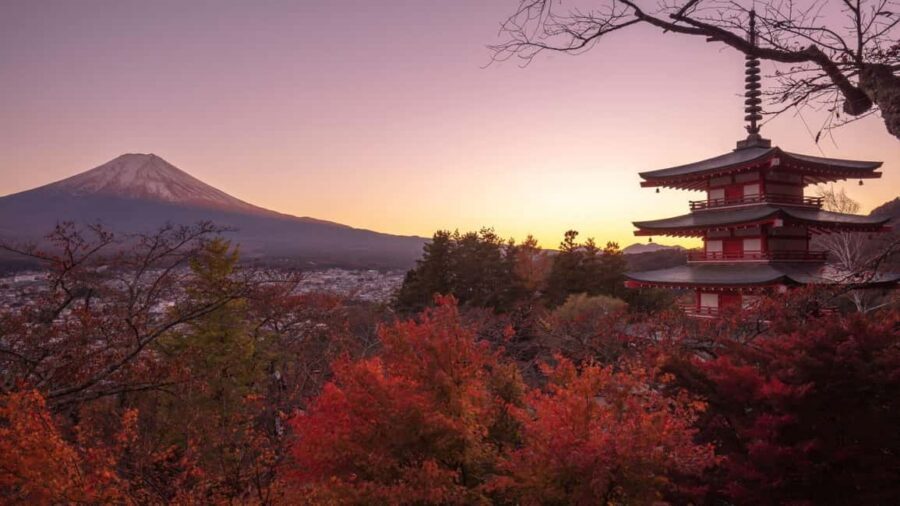
The headline moment is the Chureito Pagoda viewpoint. The approach involves ascending 397 steps, which is short enough to be doable for most people, but it still gets your legs working—especially if you’re arriving after a long coach ride. Once you reach the composition area, you’re looking for the classic scene: pagoda in the foreground with Mount Fuji and surrounding streets creating depth.
Here’s the practical tip: go for at least two different angles. One shows the pagoda centered against Fuji, while another shifts slightly to include more street detail or different framing. If the sky is clear, this is where you’ll often get the clean, postcard-style look. If Fuji is partially obscured, you can still capture mood with the pagoda silhouette and layered town views.
Also, keep your expectations flexible. Mount Fuji photography depends heavily on weather and visibility, and those conditions can change during the day. A guided itinerary can’t control that, but it does make sure you’re positioned at the right places when conditions cooperate.
Hikawa Clock Shop: a quick stop that can turn into your best variety
Next comes a break time and photo stop at Hikawa Clock Shop. This is one of those places that’s visually strong even when you’re not planning for it like a full hiking destination.
The value of a stop like this is variety. After the steps and park viewpoint, the clock-shop area gives you a different visual texture—more human-scale, more “street landmark” energy. It’s also a relief moment: you get a pause to reset, check your photos, and regroup before the bus moves you toward the quieter water scenery.
Because this is a break/photo segment rather than a long visit, you’ll want to treat it like a mini-photo session. Move quickly, decide on one or two frames, then let the rest of your time be a real rest instead of more wandering. If you’re aiming for consistency across your photo set, this stop can help you avoid having every shot look identical.
Oshino Hakkai’s eight springs: where Fuji reflections get calmer
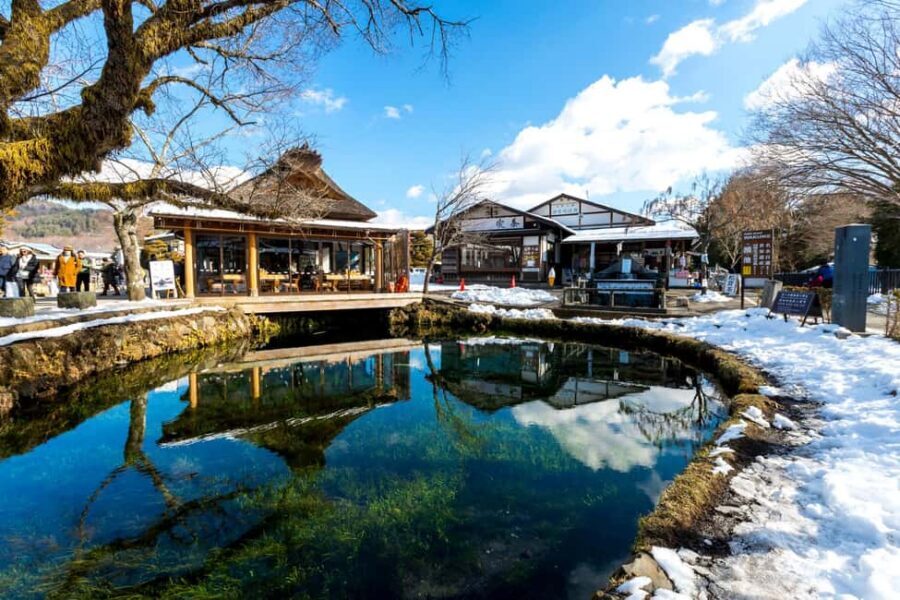
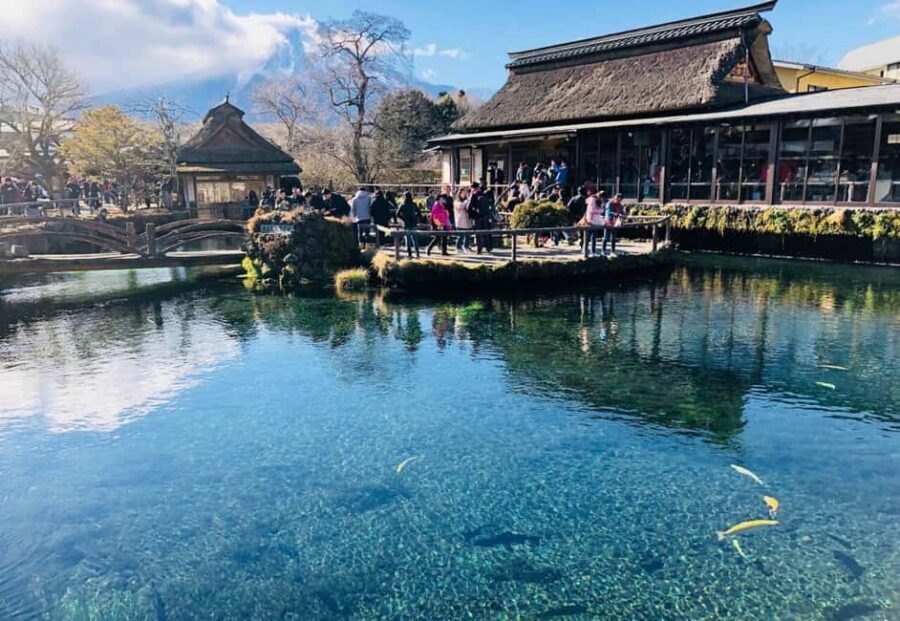
Oshino Hakkai is a major highlight, and you get about 1.5 hours there. This is where the scenery slows down and shifts from “iconic landmark” to “natural setting.” The key feature is the eight pristine springs, all set in harmony with Mount Fuji and recognized as a national natural monument.
This stop is great for photos that feel quieter and more layered. If you can catch good visibility, you’ll have chances for reflections or water-level compositions. Even when Fuji isn’t perfectly crisp, the springs and surrounding pathways can still create strong texture shots—ripples, stone edges, and the contrast between engineered paths and natural water.
The tour also includes scenic views on the way to Oshino Hakkai. That matters because approach roads can give you a first glimpse or partial view that helps you refine your expectations. You may arrive thinking you’ll get one “perfect” photo, but the real payoff is collecting multiple versions of Fuji—some crisp, some softened by haze or cloud.
One consideration: you’ll want comfortable shoes here too. The time is long enough that you’ll be on your feet, moving between viewpoints and paths.
More frames: other photo sessions in Tokyo


Lawson Kawaguchiko Station: the practical photo break with a tasty perk
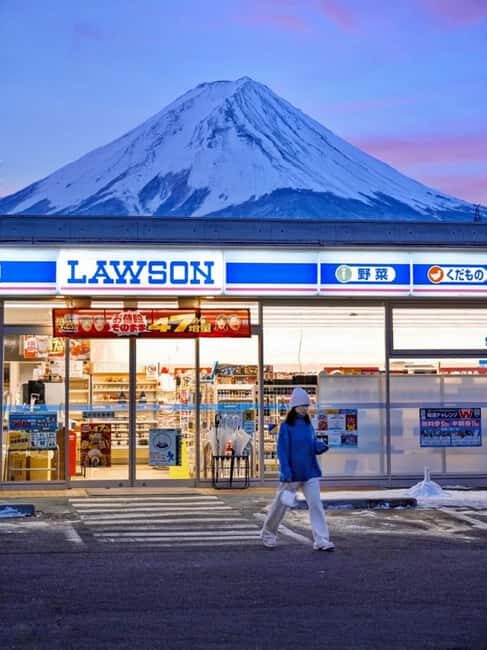
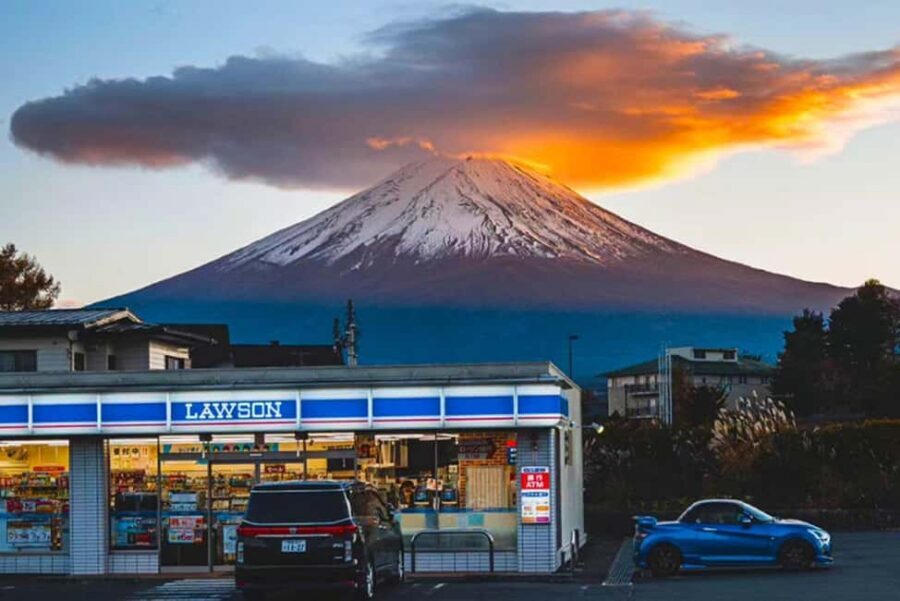
You’ll stop at Lawson at Lake Kawaguchi—yes, that specific convenience store location. It’s scheduled as a break time and photo stop, which is actually a smart way to use your day. Convenience stores in Japan are often visually photogenic, and this is a well-known Fuji-angle location.
The practical part: you get a chance to refuel without needing to hunt for food. The tour also includes a complimentary choice of ice cream, tea, or coffee at that stop. That’s a small add-on, but it can seriously improve your energy level before your final park area.
For photography, this is where you can experiment. The setting near Lake Kawaguchi often gives you a different perspective than the higher viewpoint areas. You’re looking for framing that uses buildings, signage, or nearby edges to create a stronger foreground layer—so your Fuji doesn’t float alone in the frame.
If you’re the type who likes to build a coherent photo set, this stop is helpful. You can switch from “big Fuji spectacle” to “Fuji plus everyday life,” which is usually what makes a photo collection feel more real.
Oishi Park and the flower calendar around Lake Kawaguchi
Oishi Park is your final big nature stop, with about 1 hour on site. This is where you’ll see the “sea of flowers” idea come to life, but the exact scenery depends on the season.
Here’s your flower timing cheat sheet:
- Lavender is available in June and July
- Begonias and cosmos show up July to September
- Kochia can be enjoyed in October
There’s also the Maple Corridor at Lake Kawaguchi, but it’s strictly seasonal. It’s only available from October 20th to November 23rd. Since you’re planning a photography trip, this matters more than many people realize. In Fuji photography, the background flowers often become your strongest color contrast and can rescue your photos if the mountain is hazy.
If you’re traveling during a time when flowers are expected, arrive with a plan. Don’t just shoot the biggest scenic view. Instead, try for three kinds of frames: a wide shot showing Fuji plus flower fields, a mid shot with a strong foreground plant, and a tighter composition where you emphasize color patterns against Fuji.
This is also a good time to slow down. You’re coming out of earlier stops, and the park moment can feel more relaxed. That balance is part of why the itinerary ends here—the visual payoff is strong, and it’s a good place to wrap up your photo session before heading back to Tokyo.
Getting the best shots: what to wear and how to think about timing
This trip is built around walking and photo framing, not just bus rides. Bring comfortable shoes because you’ll climb at Arakurayama Sengen Park and also walk around other stops. Wear comfortable clothes that can handle Japan’s changing conditions, especially if clouds roll in.
Also, pack with “Fuji visibility” in mind. The tour can’t control weather, traffic, or crowds, and schedules can shift. That means you should aim to capture in layers: if Fuji is clear, prioritize the classic compositions first; if visibility is weaker, shift toward water, pagoda shapes, and foreground texture.
One small but important detail: you’ll return to your drop-off point in Tokyo—either JR Tokyo Station Marunouchi South Exit or Tokyo Mode Gakuen, based on where you started. Keeping track of your exact meeting and drop-off option helps you avoid the end-of-day scramble.
Finally, don’t underestimate fatigue. Ten hours is a lot for a photography day. The breaks matter, and you’ll do better if you treat them as breaks instead of more time to rush for “just one more frame.”
Price and value: does $83 make sense for a photo-heavy day?
At $83 per person for about 10 hours, this tour can be excellent value if you’re the kind of traveler who wants planning handled. You’re not just paying for a guide—you’re paying for round-trip transfers from your Tokyo meeting point, plus tolls, parking, and fuel included in the package.
Where it may feel less cost-effective is if you were already planning to DIY the route cheaply and comfortably. But most first-timers underestimate how much time and mental energy it takes to connect multiple Fuji-area viewpoints in one day—especially without local navigation confidence.
Two things are not included: food and drinks, and attraction admissions. That’s normal for many day tours, but it affects your total budget. The Lawson stop helps with one meal-style option via complimentary ice cream, tea, or coffee, yet you’ll still want to budget for additional snacks or meals during free time.
If you do the math, the big value driver is simplicity. You’re buying time and stress reduction: the guide manages the flow, and you get help staying on schedule while you focus on photos.
Who should book this tour, and who should skip it
I think this is a strong fit for three types of travelers.
First, you’re a photographer (or a photo hobbyist) who wants multiple named Fuji photo stops without building an itinerary from scratch. Second, you’re visiting Japan for the first time and don’t want to wrestle with transit, language, and timing. Third, you want a mix of landmark scenes and quieter nature areas—pagoda drama, spring calm, and flower color at Lake Kawaguchi.
It’s less ideal if you want total freedom or if you can’t do a full day of walking. The 397-step climb and general movement between stops will be tough if you’re dealing with mobility limitations. It’s also not a good match if you’re extremely sensitive to weather changes, because Fuji visibility can vary even with perfect planning.
The guide experience matters too. One guide named Louis has been highlighted for being friendly and approachable, which is exactly what you want when you’re trying to nail framing and ask quick questions.
Should you book this Mount Fuji 1-day photo tour?
Book it if your priority is a guided, photo-focused day with multiple Fuji settings and minimal logistical stress. The included transfers and guide help you spend the day where the pictures happen: Arakurayama Sengen Park, Hikawa Clock Shop, Oshino Hakkai, Lake Kawaguchi stops, and Oishi Park’s seasonal flower views.
Skip it if you want to linger longer at fewer places, eat entirely on your own schedule, or you already know how to move around the Fuji area comfortably. Also, if your trip timing is right on the edge of seasonal flower periods, double-check what’s actually available—Maple Corridor only runs from October 20th to November 23rd, and other flowers follow their own windows.
If you want a practical compromise between classic Fuji icons and real nature scenery, this tour is an efficient way to get it.
FAQ
How long is the Mount Fuji 1-day photo tour?
The tour runs for 10 hours total.
How much does the tour cost?
It costs $83 per person.
Where do I meet the guide in Tokyo?
You meet at either JR Tokyo Station Marunouchi South Exit or Tokyo Mode Gakuen, depending on the option booked.
What’s included in the price?
The tour includes a tour guide, round-trip transfers to and from the meeting point, toll fees, parking fees, and fuel fees.
Are meals and drinks included?
No. Food and drinks are not included, though there is a complimentary choice of ice cream, tea, or coffee at the Lawson stop.
Are attraction admissions included?
No. Attraction admissions are not included.
What languages is the live guide available in?
The live tour guide is available in English and Japanese.
What should I bring, and is there a luggage limit?
Bring comfortable shoes and comfortable clothes. Each person can bring one piece of luggage for free, and additional luggage larger than 20 inches will be charged 17 USD.
More Tours in Tokyo




More Tour Reviews in Tokyo




The Fuji Shortlist: Other Days Out to the Mountain

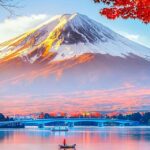
Fresh reviews from around Tokyo






Mt Fuji Day Trips, compared.
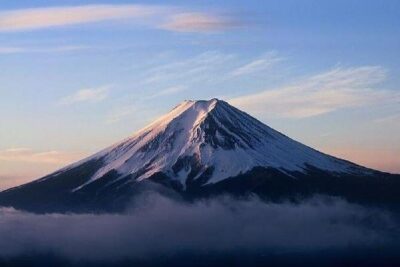 ★ 4.0Mt Fuji & Hakone Cruise, Drum Show Bullet Train 1 Day from TokyoFrom $1497,413 reviews
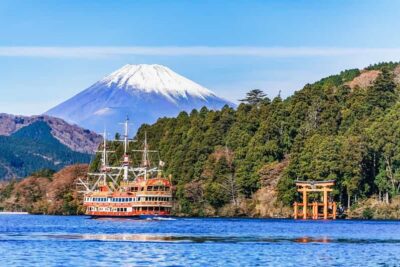 ★ 4.4Tokyo Mt Fuji 5th St & Hakone Cruise Bus Tour w/Bullet TrainFrom $1545,024 reviews
 ★ 4.5From Tokyo: Mount Fuji Full-Day Sightseeing TripFrom $684,970 reviews
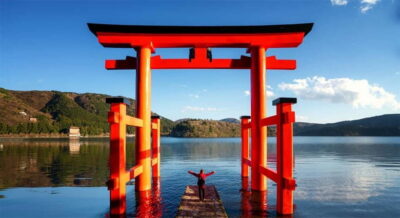 ★ 4.7Mt. Fuji Tour, Hakone Ropeway, Owakudani, Lake AshiFrom $544,002 reviews
 ★ 5.0Private Tour to Mt. Fuji and Hakone (Fully Licenced Operator)From $4971,910 reviews
 ★ 4.9Mount Fuji Full-Day Private Tour from Tokyo (Customizable)From $3931,470 reviews
 ★ 4.0Mt Fuji & Hakone Cruise, Drum Show Bus 1 Day from TokyoFrom $1221,287 reviews
 ★ 4.2From Tokyo: Mt. Fuji & Hakone Tour w/ Return by Bullet TrainFrom $1171,278 reviews
Browse the lists this tour appears in