
Reviewed · TOKYO
Japanese Speaking Experience Meet the locals Friend Cafe Shibuya
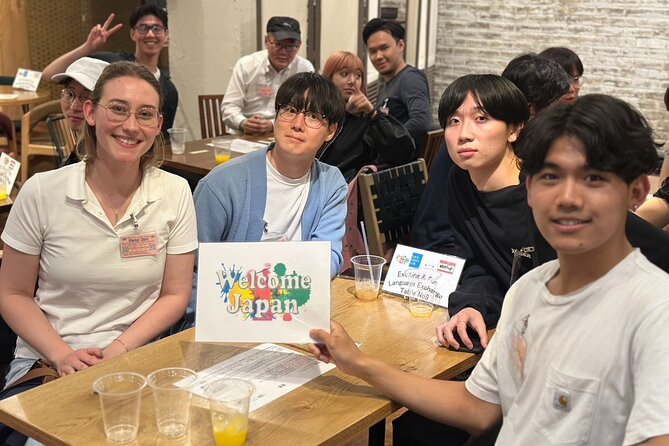
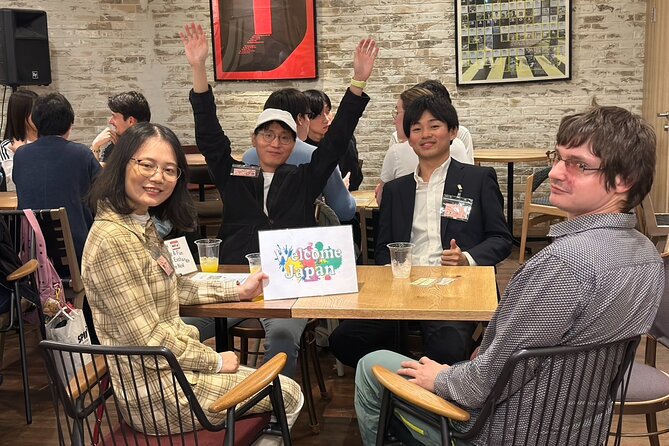
Tokyo chat night, made simple. This Japanese-English language exchange in Shibuya turns awkward language practice into a structured hangout, with topic cards and steady seat changes so you talk to more than the same person all evening. I especially like the beginner-friendly setup and the way the host keeps the pace moving with timed rounds. One thing to consider: it happens in a pub setting (over-18 only), so it’s not a quiet classroom vibe, and the room can be a bit lively.
If you want a low-pressure way to meet people while practicing, this is the kind of event that fits right into a Tokyo night out. You start at the reception, buy your own drink at the bar (at least one), then alternate English and Japanese conversation for about two hours, with short breaks built in. This works best if you enjoy chatting with a mix of locals and international friends rather than doing one long scripted conversation.
In This Review
- Key things I’d plan for before you go
- A Shibuya Japanese speaking experience that doesn’t feel like homework
- Getting started at Shibuya Bowling Cafe (and why timing matters)
- How the evening runs: 15 minutes of English, then Japanese
- Conversation support: topics cards and staff-led group movement
- The pub setting: what it means for your comfort level
- Who this is best for (and who should choose something else)
- Price and value: $29 for a guided language swap
- What to do before you arrive (so you speak more)
- Meeting new people in Tokyo: why seat changes work
- Any drawbacks to plan for
- Should you book this Shibuya language exchange?
- FAQ
- What languages do you practice at the event?
- How long is the experience?
- Where do you meet?
- Is this beginner-friendly?
- What’s included in the price?
- What is the cancellation policy?
Key things I’d plan for before you go
- 15-minute English + 15-minute Japanese rhythm keeps your speaking from stalling
- Topics cards help you get past the I don’t know what to say moment
- Seat changing means you’ll meet more people than a typical meetup
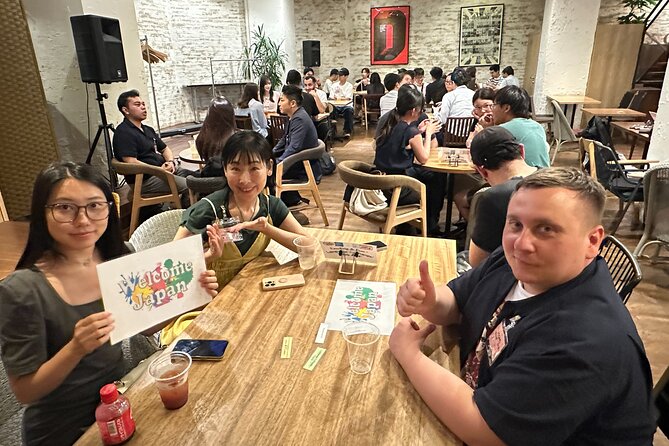
- Small groups (3–4 people) mix Japanese and foreign participants
- Over-18 only keeps the crowd in a pub-friendly mood
Before you commit, see how this one stacks up against a few Tokyo favourites:
- Mt Fuji and Hakone 1-Day Bus Tour Return by Bullet Train★ 5.0 · 26,383 reviews
- 1-Day Tokyo Bus Tour★ 5.0 · 14,250 reviews
- Tokyo: teamLab Planets TOKYO Digital Art Museum Entry Ticket★ 4.6 · 9,779 reviews
A Shibuya Japanese speaking experience that doesn’t feel like homework
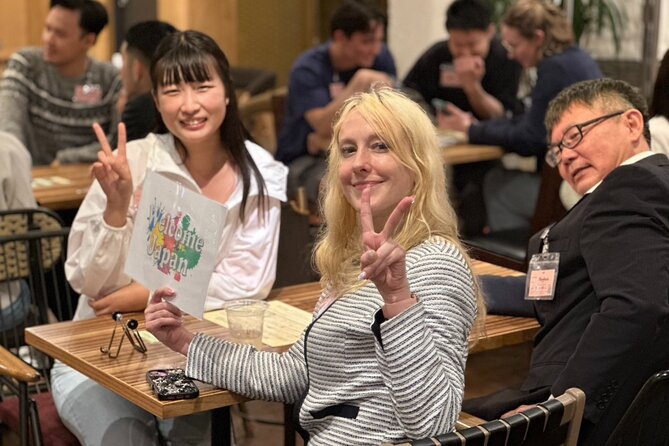
Shibuya is where people come to meet up, and this event uses that energy for language practice without turning it into a big performance. The core idea is simple: you’ll talk in English and Japanese in short, repeatable rounds, so you’re always moving forward instead of waiting for the perfect sentence.
The biggest value for me is the structure. Topic cards + timed conversation + seat switching remove most of the anxiety around language exchange. You don’t have to guess what the conversation partner expects, because the card gives you a starting point, and the host keeps the flow organized.
There’s also a social angle that matters in Tokyo. If you’re staying in Shibuya for a few nights, this is an easy standalone plan, or a solid warm-up if you want to continue exploring afterward. And because it’s a pub-based meetup, the mood is more relaxed than many “study” style events.
Getting started at Shibuya Bowling Cafe (and why timing matters)
You meet at Shibuya Bowling Cafe, Shibuya EST (Shibuya, 1-chōme-14-14). The event takes place on the B1F, so don’t be surprised if you need to head down when you arrive.
Reception starts with a small timing window—arrive about 10 minutes early so you’re ready when the conversation starts. That early check-in matters here because the staff prepares a seat for you and sets up the flow of groups.
This is also where you’ll handle the drink. The ticket covers the event itself, but alcoholic beverages are not included, and the experience asks you to buy at least one drink at the bar when you arrive (you have to be 18+). If you don’t drink alcohol, you might still consider ordering a non-alcoholic option, but the key point is that you should plan to purchase something at the venue.
How the evening runs: 15 minutes of English, then Japanese
The schedule is built around repeated cycles, not one single long chat. The pattern goes like this:
- English conversation for 15 minutes
- Japanese conversation for 15 minutes
- Between rounds, there’s about 5 minutes break time for changing seats
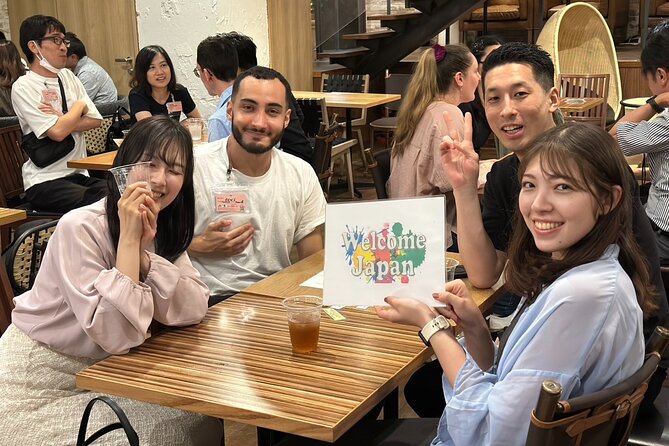
- Then more rounds continue until the close, with a final closing group photo
The rhythm is the secret sauce. If you’ve ever tried to do language exchange in a free-form setting, you know how quickly it can turn into awkward pauses. Here, the timing forces momentum, and the short breaks give you a chance to reset your brain and try again with a fresh partner.
Also, the staff doesn’t just tell everyone to mingle. They split attendees into small groups of 3–4 people, with a mix of Japanese and international participants. Then they adjust seating so you get multiple chances to speak during the night, not just two or three times with the same people.
Conversation support: topics cards and staff-led group movement
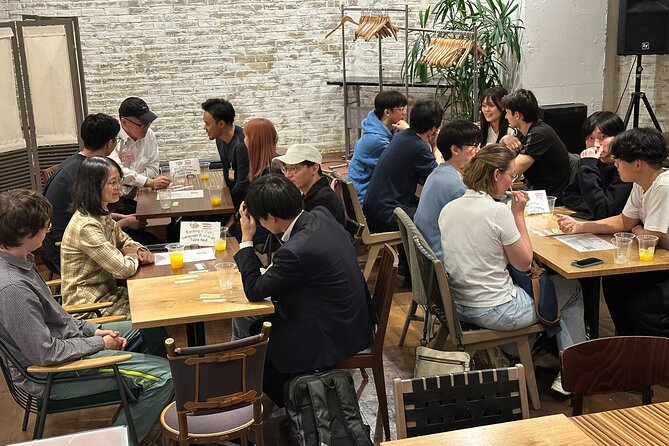
I love anything that helps you start talking without waiting for inspiration. In this event, you get topics cards, which act like conversation rails. Even if your Japanese is basic, the card gives you a prompt, and that means you can focus on forming short sentences instead of panicking about what to say next.
Another helpful detail: the host actively manages who you talk to. Staff change seats so people don’t get stuck talking only with the person closest to them. It’s a small thing, but it’s huge for meeting more of the group, and it makes the event feel fair—everyone gets a turn with different partners.
If you’re trying to improve your Japanese, the seat changes help you practice the same basic skill—listening and responding—over and over, with new faces each time. If you’re helping Japanese learners practice English, the structure still works well because you’re not just guessing where to steer the conversation.





The pub setting: what it means for your comfort level
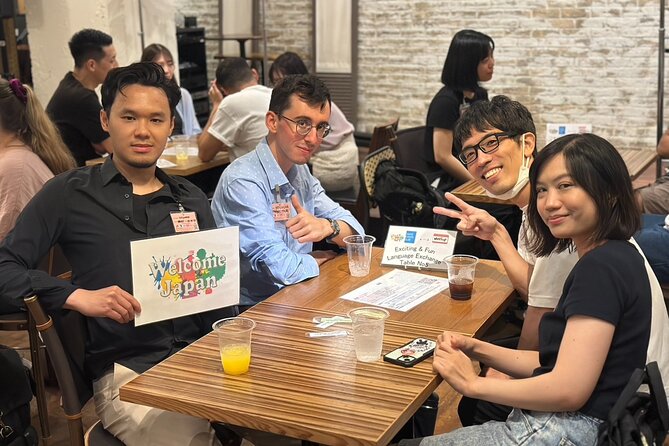
Because this is in a pub, the vibe is social. That’s part of the appeal. You’re not trying to be quiet like you would in a museum or library. People are there to talk, and the setting supports casual conversation.
Still, think of it as a chat evening, not a formal language lesson. You should expect some background buzz, and in one bit of feedback, the bowling area was described as a little loud—so if you’re sensitive to noise, bring the right mindset (and maybe earplugs if that’s your style).
Also remember this is over-18 only. If you’re traveling with friends under 18, this probably won’t fit your group. If you’re 18+, it’s a good way to meet locals in a real-world environment where people naturally spend time.
Who this is best for (and who should choose something else)
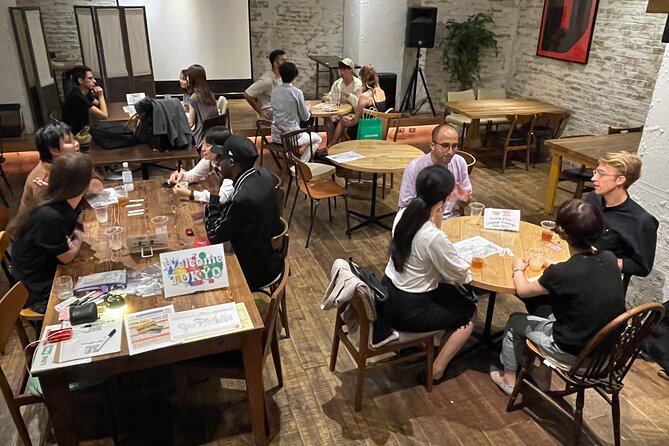
This experience is particularly good for:
- Beginner Japanese learners who want a non-threatening way to speak
- People who want a structured language exchange instead of free-form mingling
- Anyone planning a Shibuya night who wants something social with purpose
- English speakers who enjoy chatting with locals and helping others practice
It may not be ideal if you want a quiet, teacher-led class, because this is interactive and social. It also may not be for you if you dislike buying a drink at the bar; the event expects you to purchase at least one when you arrive.
If you’re the kind of traveler who likes meeting humans more than collecting stamps, you’ll probably enjoy the format. There’s even a sense of friendly hosting in the way people describe the energy and organization.
Price and value: $29 for a guided language swap
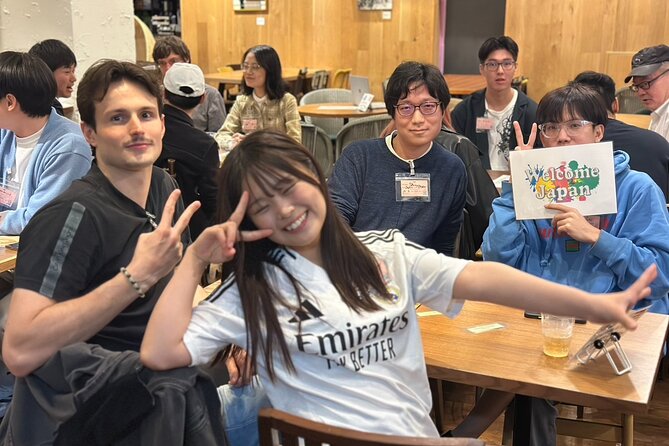
At $29 per person, this isn’t a huge spend for Tokyo, especially for a two-hour evening with structure. Your money goes to the staff-led logistics: group setup, seat planning, topic cards, timed rounds, and the switching flow.
Alcohol isn’t included, so you’ll want to budget for a drink. But even with that in mind, the value comes from how guided the experience is. You’re not paying for a venue and hoping people talk—you’re paying for an event that tells you what happens next and makes sure you meet multiple people.
With a maximum of 20 people, the group stays small enough that you won’t feel lost. That size also supports the seat-changing system, which is where a lot of the “I talked to more than one person” benefit comes from.
What to do before you arrive (so you speak more)
You’ll get more out of the night if you show up with a few ready-to-go phrases. You don’t need fancy grammar. Think practical and short.
Here are a few ways to prepare without studying all day:
- Pick 3 topics you can discuss easily in both languages (food, hobbies, where you’re from, favorite places)
- Prepare a simple opening like Nice to meet you and a short question back
- Decide how you’ll handle mistakes: ask for repetition, slow down, or switch to simpler words
And bring a friendly attitude. The event is designed for mixed skill levels, so being nervous is normal. The format is built to help you keep going anyway.
If you’re worried about being stuck, remember the topics cards are there for a reason. They keep the conversation rolling even when your vocabulary is limited.
Meeting new people in Tokyo: why seat changes work
This event does something smart: it prevents the classic meetup problem where you talk to the same person for an hour and leave feeling like you didn’t really “meet” anyone. Here, the staff changes seats so you can rotate.
That rotation is also a learning tool. You’ll hear the same kinds of questions phrased differently by different people. If you’re practicing Japanese, this gives you repeated exposure to basic patterns, and you can try responding in your own words.
If you’re practicing English, you get the chance to guide without dominating. You can encourage others with simpler corrections or natural follow-ups—again, without turning it into a formal tutoring session.
Any drawbacks to plan for
No event is perfect, so here’s what to keep in mind:
- It’s over-18 only and held in a pub environment
- You need to buy a drink at the bar when you arrive
- The setting can be a bit lively, and background noise may be an issue for some people
- If you expect a silent, classroom-like experience, you might find it more social than you planned
The good news: most of these factors are exactly what makes it work. This is meant to feel like a real evening out, just with language practice built in.
Should you book this Shibuya language exchange?
Book it if you want a structured, beginner-friendly way to practice Japanese and English in Shibuya. It’s also a great fit if you enjoy meeting people and you’d rather do one organized event than hunt for language exchanges on your own.
Skip it if you need a quiet setting, you don’t want to purchase drinks in a pub, or you’re looking for a teacher-led class format. Also, if you’re sensitive to noise, consider that the venue is active and can get loud.
If your goal is to walk away feeling like you actually used your language skills—without having to manage the logistics yourself—this is a strong value for a Tokyo night.
FAQ
What languages do you practice at the event?
You practice English and Japanese through a structured conversation schedule that alternates between the two.
How long is the experience?
The experience runs for about 2 hours.
Where do you meet?
You meet at Shibuya Bowling Cafe, Shibuya EST in Shibuya. The event is on the B1F.
Is this beginner-friendly?
Yes. Beginner Japanese learners are welcome, and the event is designed so you can participate even if you cannot speak Japanese.
What’s included in the price?
The ticket includes all fees and taxes. Alcoholic beverages are not included and you should buy a minimum of one drink at the bar when you arrive.
What is the cancellation policy?
You can cancel for a full refund if you cancel at least 24 hours in advance of the experience start time. If you cancel less than 24 hours before, the amount paid is not refunded.
More Tour Reviews in Tokyo



Fresh reviews from around Tokyo






Tokyo, compared.
 ★ 5.0Mt Fuji and Hakone 1-Day Bus Tour Return by Bullet TrainFrom $16326,383 reviews
 ★ 5.01-Day Tokyo Bus TourFrom $12914,250 reviews
 ★ 4.6teamLab Planets TOKYO Digital Art Museum Entry TicketFrom $259,779 reviews
 ★ 4.0Mt Fuji & Hakone Cruise, Drum Show Bullet Train 1 Day from TokyoFrom $1497,413 reviews
 ★ 5.0Shinjuku Food Tour (13 Dishes at 4 Local Eateries)From $866,603 reviews
 ★ 4.4Tokyo Mt Fuji 5th St & Hakone Cruise Bus Tour w/Bullet TrainFrom $1545,024 reviews
 ★ 5.0Flagship 2-Hours Official Street Go-Kart Tour – Tokyo Bay ShopFrom $644,974 reviews
 ★ 4.5From Tokyo: Mount Fuji Full-Day Sightseeing TripFrom $684,970 reviews