
Reviewed · MT FUJI DAY TRIPS
Sushi Cooking Class at Sushi Factory -KIWAMI- Mt.Fuji
Sushi lessons feel like a game.
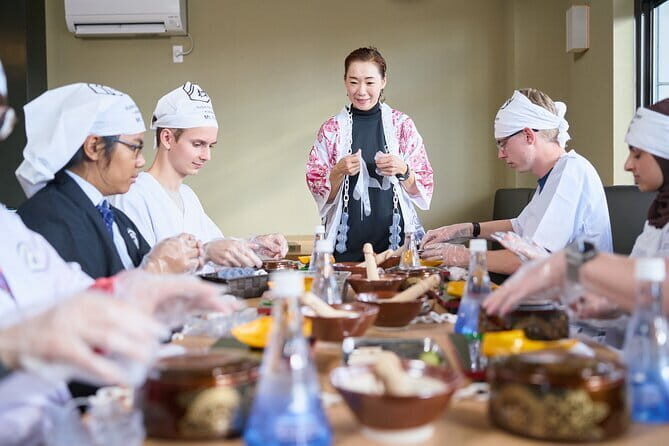
In Fujikawaguchiko, this sushi cooking class turns traditional technique into quick puzzle-style tasks, from shaping sushi to completing fun missions, all with a Mt. Fuji view as your backdrop. It’s the kind of activity where you’re not just watching from the sidelines.
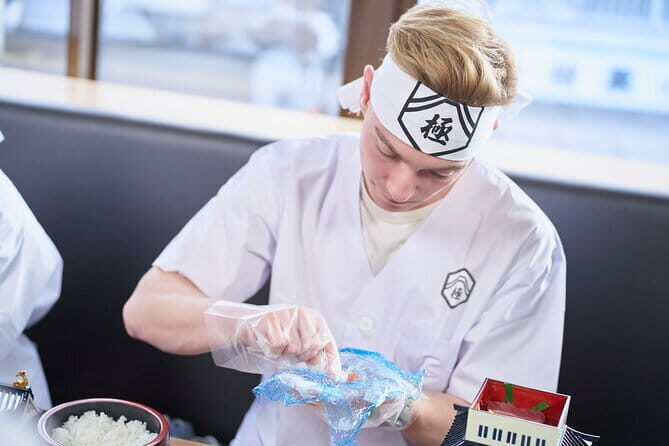
I love the hands-on sushi-making focus. You’ll work on several traditional styles, including Temari, Gunkan maki, Nigiri, and Temaki, plus extra challenges like sushi pearls and decorative sushi boats. Lunch and dinner are included too, so you can treat it like a proper meal day, not just a snack-and-photos stop.
One consideration: it leans more playful than academic. If you’re looking for a deep, lecture-heavy cultural experience, the puzzle elements may feel too gimmicky for your taste, especially in a session that’s about 1 hour 30 minutes.
In This Review
- Key things to know before you go
- Sushi Cooking With Mt. Fuji Views and Puzzle Challenges
- How the 1.5-Hour Class Breaks Down
- Temari, Gunkan Maki, Nigiri, and Temaki: What You Actually Make
- Fresh Wasabi Grating and Other Taste Checks
- Sushi Pearls and Decorative Boat Builds: The Playful Side
- Lunch and Dinner Included: Food Planning Without the Guesswork
- Price and Value: Does $141.84 Feel Fair?
- Where to Meet: Ramen Factory Mt.Fuji in Funatsu
- Who Should Book This (and Who Might Find It Too Gimmicky)
- Booking Decision: Should You Book Sushi Factory -KIWAMI- Mt.Fuji?
- FAQ
- How long is the sushi cooking class?
- Where do I meet for the activity?
- Is lunch and dinner included?
- What sushi types will I learn to make?
- Is transportation included?
- Is there a mobile ticket?
- What’s the group size limit?
- What is the cancellation policy?
- When will I get confirmation after booking?
Key things to know before you go
- Mt. Fuji views during your cooking time
- Multiple sushi styles: Temari, Gunkan maki, Nigiri, Temaki
- Fresh wasabi prep (grate wasabi the real way)
- Mission-style extras like sushi pearls and decorative boats
- Lunch and dinner included, plus all fees and taxes
Sushi Cooking With Mt. Fuji Views and Puzzle Challenges
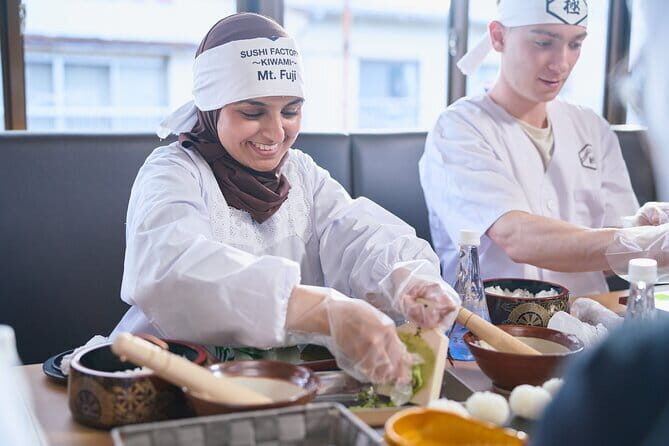
Fujikawaguchiko can be a lot of scenic walks and photo stops. This activity swaps the usual routine for something you can do with your hands. You’re learning classic sushi-making skills, but the pace is structured like a series of small challenges, so you stay engaged instead of getting bored while waiting your turn.
The Mt. Fuji element matters more than you’d think. Even if you’ve seen Fuji from other angles, it changes the feel when you’re cooking in front of it rather than just standing around admiring it. You’ll be busy, but the view is still there, and it turns the class into a memorable experience rather than a one-off food lesson.
Group size is also capped (max 15 travelers). That’s a sweet spot for a cooking class: big enough that it feels lively, small enough that you can actually get help when you need it. If you like activities where the staff can correct you without turning the class into a conveyor belt, this setup should fit.
How the 1.5-Hour Class Breaks Down
The total time is about 1 hour 30 minutes, so you should expect a fast, focused structure. This isn’t a long apprenticeship where you’ll refine one technique for hours. Instead, you’ll cycle through several sushi types and missions in one session.
That timing affects how you should approach the experience. Come in ready to concentrate. If you’re tired from travel or you’re the type who needs long explanations, you might feel rushed. The good part is that the short format keeps energy high, and it’s easier to fit into a day that already has Fuji sightseeing.
The activity also ends back at the meeting point, which is handy for planning. You don’t need to guess where you’ll land afterward or scramble for your next reservation. It’s a simple loop: show up, cook, eat, then go back where you started.
Temari, Gunkan Maki, Nigiri, and Temaki: What You Actually Make
The core skill set is real sushi craft, not just assembling a couple of pieces. You’ll create several traditional styles, including:
- Temari
- Gunkan maki
- Nigiri
- Temaki
Each one teaches a different hand movement and different thinking. Temari sushi tends to focus on shaping and consistency. Gunkan maki pushes you into the roll-and-fill style. Nigiri is all about balance and gentle handling. Temaki is the one that feels most immediate because it’s shaped into a cone you hold as you work.
Then the class adds extra creative tasks layered on top. You’ll tackle sushi pearls and build decorative sushi boats. Those parts are playful on purpose, but they still train control. When rice is sticky and ingredients are delicate, small mistakes happen fast—so doing missions keeps you practicing without turning it into a stressful drill.
If you like learning by doing, this is a strong format. You don’t just hear about sushi; you produce it through multiple variations. By the end, you’ll understand how different sushi forms change the way the rice and toppings behave.
Fresh Wasabi Grating and Other Taste Checks
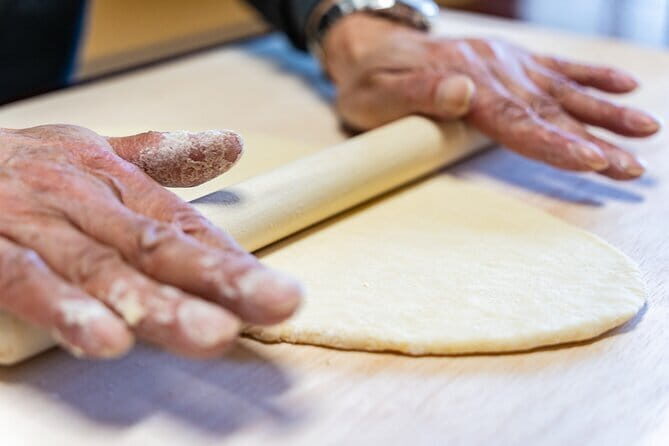
One of the most practical moments is the wasabi prep. You’ll get the chance to grate fresh domestic wasabi, which is a very different experience from the tube you might be used to back home.
Why it matters: fresh wasabi has a sharper aroma and a more nuanced bite. Grating it by hand also slows you down just enough to pay attention. You’re not only learning what to do, you’re learning how flavors shift from step to step. It’s a small detail, but it’s also the kind of thing you can’t fully replicate from memory.
Also, using wasabi in a class teaches better habits. You’ll see how toppings, rice texture, and seasonings interact rather than treating sushi as one flavor “category.” That’s the kind of understanding that helps even after the class, when you’re ordering sushi in Japan and paying attention instead of guessing.
Sushi Pearls and Decorative Boat Builds: The Playful Side
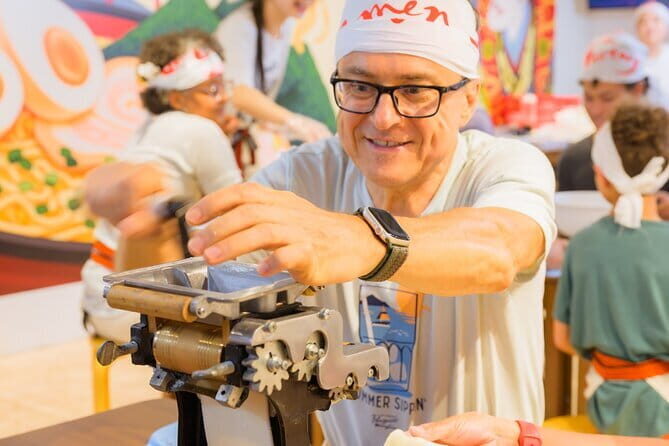
The puzzle and mission approach is where this class may win or miss, depending on your expectations. The experience includes tasks like crafting sushi pearls and building decorative sushi boats, and it’s intentionally multi-sensory—hands, smells, textures, and timing.
Think of it like cooking with “levels.” You get one challenge, you complete it, then you move to the next. That design reduces decision fatigue. Most classes fail when students freeze because they don’t know what comes next. Here, the missions keep you moving.
Now, the possible downside is exactly what it sounds like. If you’re traveling for a quiet, tradition-focused cultural deep-dive, the game-like energy might feel too forced. But if you’re the kind of person who enjoys learning while laughing a bit, these extras make the class feel lighter and more memorable.
Either way, don’t treat the decorative work as just show. Those tasks make you handle rice and ingredients with care, and they encourage you to slow down for precision—even when the timer is moving.
Lunch and Dinner Included: Food Planning Without the Guesswork
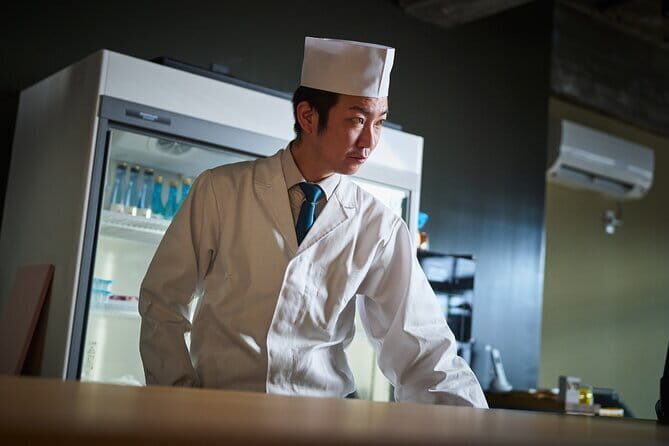
Your ticket includes lunch and dinner, plus all fees and taxes. That’s meaningful value for two reasons.
First, cooking classes can eat up your budget with snacks nearby. Here, you’re already covered for meals tied to the experience, so you don’t have to fit in a restaurant reservation right afterward. Second, having meals included usually signals a more complete setup rather than a quick demo-and-go.
You should still plan like an adult with a schedule. Since the class lasts about 1 hour 30 minutes, check your day flow so you’re not starving for the rest of the afternoon. Bring your appetite. Sushi rice can be filling, and if you’re making multiple styles, you’ll want to taste and enjoy without rushing off to your next stop.
Also, since transportation isn’t included, eating all your meals on the spot can reduce the number of transit transfers you’d otherwise need. That’s a practical win for many days around Lake Kawaguchiko.
Price and Value: Does $141.84 Feel Fair?
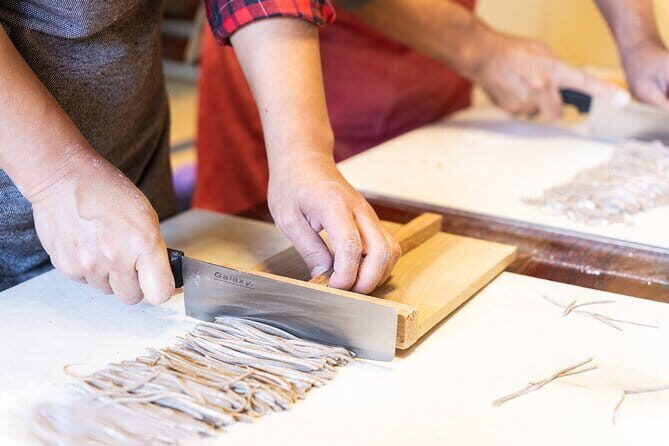
At $141.84 per person, this is not a bargain class. But it’s also not just a hands-on appetizer session. Your price includes lunch, dinner, and all fees and taxes, which is a big part of how you should evaluate value.
Here’s the way I’d sanity-check it: compare what you’d normally pay for a sushi meal plus a paid class format. If you were already planning to eat Japanese food at least twice that day, the inclusion of lunch and dinner reduces the “extra cost” of the experience.
It’s also booked in advance on average (about 25 days). That often means the time slots are limited or popular with couples and families. A popular class tends to be organized well, because people keep signing up when the format works.
Still, if you’re the kind of traveler who expects a long cultural explanation and a slow, museum-style pace, you may feel the price is too high for the length and the playful format. For me, the best value comes when you want active learning and don’t mind that the cooking is paired with missions.
Where to Meet: Ramen Factory Mt.Fuji in Funatsu
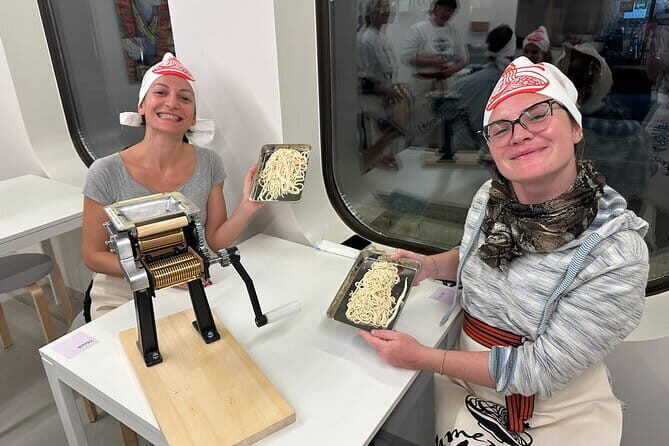
Your start point is Ramen Factory Mt.Fuji, 3487-15 Funatsu, Fujikawaguchiko, Minamitsuru District, Yamanashi 401-0301, Japan. The tour ends back at that same meeting point.
That matters because Funatsu is the heart-area for many Lake Kawaguchiko plans, so it’s usually easier to coordinate this with your sightseeing. Also, the experience is described as near public transportation, which is a real help when you don’t want to rely on taxis all day.
You’ll want to arrive a bit early, not to be safe in a dramatic way, but because cooking classes run smoother when people are settled. Once you’re there, you can focus on the session instead of panicking about where you are.
Transportation service isn’t included, so plan your route to the meeting point. If you already know your day’s transit plan around Lake Kawaguchiko, plug this stop into it early so you’re not scrambling.
Who Should Book This (and Who Might Find It Too Gimmicky)
This class is best for you if you want to do something with your hands, learn real sushi forms, and you like activities that feel structured. The mix of Temari, Gunkan maki, Nigiri, and Temaki gives you variety in one short session, and the wasabi grating adds a hands-on flavor moment.
It’s also a good fit for couples and small groups who like shared experiences. A sushi class creates natural teamwork: you’re shaping, building, and tasting side by side, and the results are tangible.
If your ideal Japan day is quiet, slow, and explanation-heavy, you might find the puzzle missions distracting. One person’s highlight can be another person’s annoyance, especially when the class is designed to keep things game-like.
Finally, keep the time limit in mind. If you’re hoping for a deep technical masterclass, you might feel under-delivered in only 1 hour 30 minutes. If you want a fun, practical introduction that gives you skills you can recognize later in a restaurant, this should land well.
Booking Decision: Should You Book Sushi Factory -KIWAMI- Mt.Fuji?
Book it if you want hands-on sushi with a Mt. Fuji backdrop, and you enjoy learning through short challenges rather than long lectures. The price includes lunch and dinner and all fees and taxes, which improves the value equation if you were going to eat anyway.
Skip it or rethink it if you’re traveling mainly for a serious cultural immersion vibe. This isn’t framed as a quiet shrine of tradition. It’s a cooking class built around puzzles and playful tasks, and that style won’t satisfy every traveler.
If you like doing, tasting, and moving, it’s a strong choice for a day around Lake Kawaguchiko.
FAQ
How long is the sushi cooking class?
The experience runs about 1 hour 30 minutes (approx.).
Where do I meet for the activity?
You meet at Ramen Factory Mt.Fuji, 3487-15 Funatsu, Fujikawaguchiko, Minamitsuru District, Yamanashi 401-0301, Japan. The activity ends back at the meeting point.
Is lunch and dinner included?
Yes. Lunch and dinner are included in the experience.
What sushi types will I learn to make?
You’ll make several traditional sushi types, including Temari, Gunkan maki, Nigiri, and Temaki. You’ll also do challenge items such as sushi pearls and decorative sushi boats.
Is transportation included?
No. Transportation service is not included.
Is there a mobile ticket?
Yes. The experience includes a mobile ticket.
What’s the group size limit?
The tour/activity has a maximum of 15 travelers.
What is the cancellation policy?
Free cancellation is available up to 24 hours in advance for a full refund. If you cancel less than 24 hours before the start time, the amount paid will not be refunded.
When will I get confirmation after booking?
Confirmation will be received at the time of booking.
Learn Another Dish: Fujikawaguchiko machi Cooking Classes
More Tour Reviews in Fujikawaguchiko machi



The Fuji Shortlist: Other Days Out to the Mountain


Mt Fuji Day Trips, compared.
 ★ 4.0Mt Fuji & Hakone Cruise, Drum Show Bullet Train 1 Day from TokyoFrom $1497,413 reviews
 ★ 4.4Tokyo Mt Fuji 5th St & Hakone Cruise Bus Tour w/Bullet TrainFrom $1545,024 reviews
 ★ 4.5From Tokyo: Mount Fuji Full-Day Sightseeing TripFrom $684,970 reviews
 ★ 4.7Mt. Fuji Tour, Hakone Ropeway, Owakudani, Lake AshiFrom $544,002 reviews
 ★ 5.0Private Tour to Mt. Fuji and Hakone (Fully Licenced Operator)From $4971,910 reviews
 ★ 4.9Mount Fuji Full-Day Private Tour from Tokyo (Customizable)From $3931,470 reviews
 ★ 4.0Mt Fuji & Hakone Cruise, Drum Show Bus 1 Day from TokyoFrom $1221,287 reviews
 ★ 4.2From Tokyo: Mt. Fuji & Hakone Tour w/ Return by Bullet TrainFrom $1171,278 reviews
Browse the lists this tour appears in