
Reviewed · WALKING TOURS
Imperial Palace or Edo Castle Time Trip Learning Walking Tour
You can almost see Edo Tokyo from the bridges.
This time-trip style walking tour uses an illustrated Edo map and a licensed English guide to help you picture how the shogun, emperor court, and samurai world fit into the city. You’ll trace part of the old castle line through major gates and water crossings, then connect the dots between today’s Tokyo landmarks and the Edo Castle area that’s now the Imperial Eastern Garden.
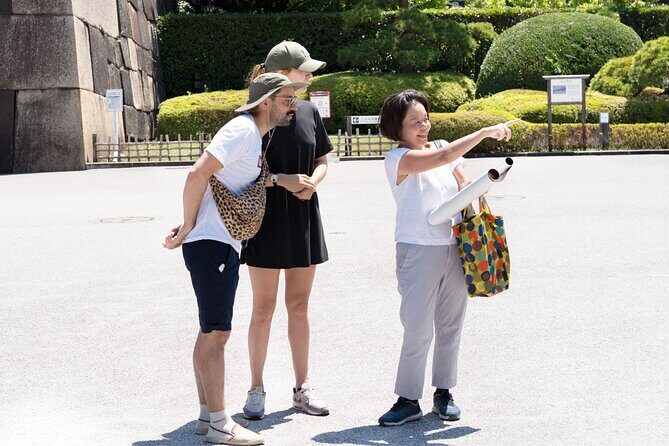
I especially like how the route is explained with clear, period-style storytelling. The guide’s English is a big plus (Blanca comes up as a standout for her knowledge and friendly approach), and you’ll get a small gift that makes the stop-and-learn rhythm feel intentional. I also like that it’s a compact 2.5-hour, small-group walk, so you’re not stuck in a crowd for the whole time.
The main thing to watch is where you start on Google Maps. One guest flagged that the meeting point text can be confusing, and the operator adjusted guidance so you can find the correct exit at Tokyo Station. If you’re arriving early, double-check the exact spot before the tour begins.
In This Review
- Key highlights you’ll feel on this Edo Castle walk
- Why Edo-to-Now Storytelling Works So Well on Foot
- Tokyo Station Start: The One Logistics Detail That Actually Matters
- Stop 1: Mitsubishi Ichigokan Museum Quick Context Stop (5 Minutes)
- Imperial Palace Time: Doubled Bridges and Imperial Eastern Garden (About 2 Hours)
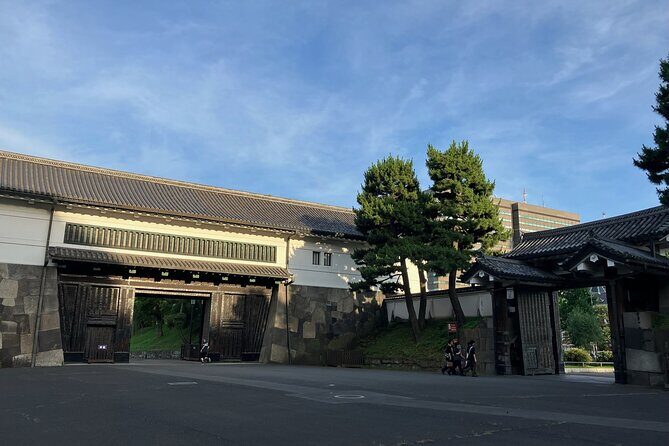
- Hirakawa-mon Gate: Your Edo Exit Point (10 Minutes)
- The 5.4 km Walk: Pace, Comfort, and How to Prepare
- Guide Quality Is the Real Differentiator (And You Can Feel It)
- Value Check: Why This Price Feels Unfair in a Good Way
- Who This Tour Fits Best (And Who Might Prefer Something Else)
- Should You Book This Edo Castle Time Trip Walk?
- FAQ
- How long is the Imperial Palace or Edo Castle Time Trip Learning Walking Tour?
- What distance will we walk?
- Where does the tour start and where does it end?
- Is the tour ticket digital?
- Is the guide available in English?
- Are meals or bottled water included?
- Is admission included for the stops?
- Is the tour dependent on weather?
- How big is the group?
Key highlights you’ll feel on this Edo Castle walk
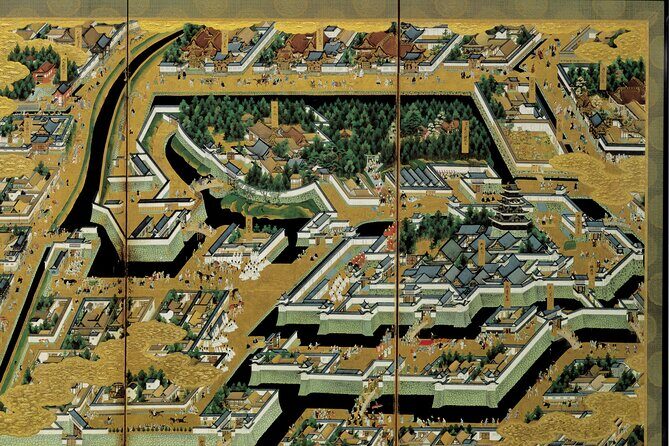
- Illustrated 1650s Edo map that turns modern streets into a period street plan
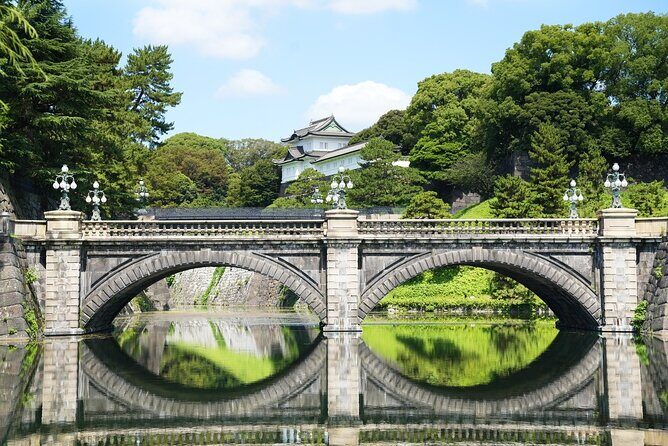
- Imperial Palace views, including the famed doubled-bridge scene that frames the whole story
- Edo Castle ruins in “imagined layers”: gates, moats, bridges, stone walls, and huts
- Sakurada and Hirakawa-mon as easy-to-follow checkpoints for the castle-era route
- Small group size (max 8), so questions don’t get lost
- Great value for a guided 5.4 km walk, with free admission included for key stops
Tokyo at walking pace, a few more ways
- Tokyo Tsukiji Fish Market Food and Culture Walking Tour★ 5.0 · 3,184 reviews
- Tokyo: Shinjuku Local Bar and Izakaya Guided Walking Tour★ 4.9 · 1,794 reviews
- Tokyo: Tsukiji Fish Market Food and Walking tour★ 5.0 · 1,724 reviews
Why Edo-to-Now Storytelling Works So Well on Foot
Tokyo can feel like a lot at once. New towers, bright stations, and neighborhoods that change fast. This tour gives your brain a handle by treating the area around the Imperial Palace as a time machine—without asking you to memorize dates.
The core method is simple: you’ll get an illustrated map of Edo in the 1650s, and your guide will point to how power moved through the city. You’re not just looking at architecture. You’re connecting roles—shogun, emperor, and samurai ruling class—so you understand what these walls and gates were for. That’s the “aha” moment you’re aiming for on this route.
And because it’s a walking tour, the story stays physically anchored. You can look where bridges and gates would have shaped movement. You can stand near a stone wall and let the guide’s prompts pull the imagination into place. It’s not magic; it’s good pacing.
One practical bonus: admissions are free for the listed stops, so you’re not spending your “I planned carefully” energy on tickets at each place. You’ll still do plenty of walking, though, so comfy shoes matter.
Tokyo Station Start: The One Logistics Detail That Actually Matters
Most people try to wing it at Tokyo Station. Don’t. Tokyo Station is huge, and “near” can mean a long walk inside the building.
This tour begins at the Tokyo Station Marunouchi South Gate Dome area, with clear directions to the correct entrance zone (including guidance about using the Marunouchi South exit on the ground floor). Your goal is to arrive a few minutes early and line up with the meeting point before you’re rushed.
What I recommend:
- Save the meeting point in Google Maps before you head out.
- Give yourself a buffer inside Tokyo Station. Escalators and corridors can steal time.
Once you’re set, the day flows. The end point is Hirakawa-mon Gate, which is convenient because it lets you keep walking later or connect to transit without backtracking across the palace area.
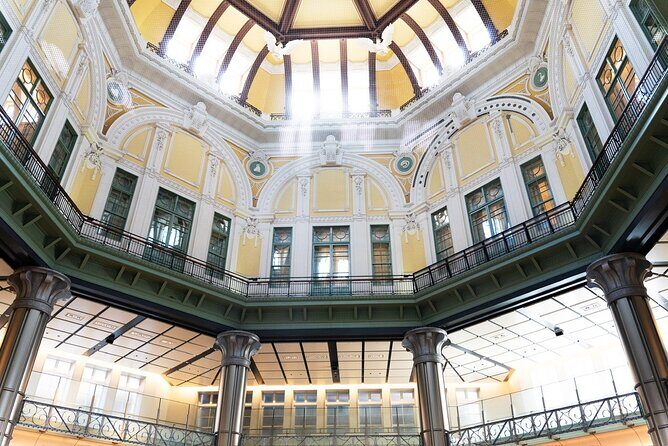
Stop 1: Mitsubishi Ichigokan Museum Quick Context Stop (5 Minutes)
The first stop is at Mitsubishi Ichigokan Museum. It’s a short intro moment, roughly five minutes, with an admission ticket listed as free.
Why this quick stop is useful: it helps you shift from “castle ruin sightseeing” into “how power and industry shaped Japan.” Mitsubishi is mentioned as playing a major role in the Japanese economy, and the guide uses that context to frame how modern Tokyo layers onto older systems of authority and influence.
This is not the kind of stop where you linger for photos. It’s a warm-up. If you like tours where the guide tells you what to notice, this opening works well.
Practical note: since it’s only about five minutes, don’t expect an in-depth museum visit here. Treat it like a briefing.
Imperial Palace Time: Doubled Bridges and Imperial Eastern Garden (About 2 Hours)
This is the heart of the tour. You’ll spend about two hours moving around the Imperial Palace area and then into the Imperial Eastern Garden—the previous Edo castle grounds.
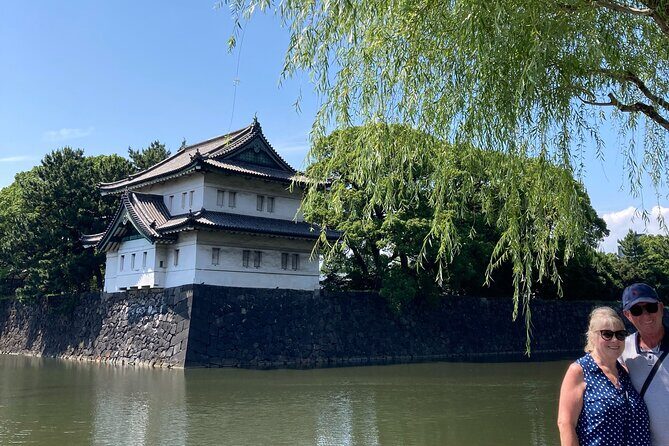
You’ll get an iconic view of the doubled bridges near the Imperial Palace. Even if you don’t know the details yet, that scene is a powerful visual cue. Bridges create a story of control: they direct approach, channel movement, and signal authority. Standing near them makes it easier to understand why gates and water crossings mattered so much in Edo-era planning.
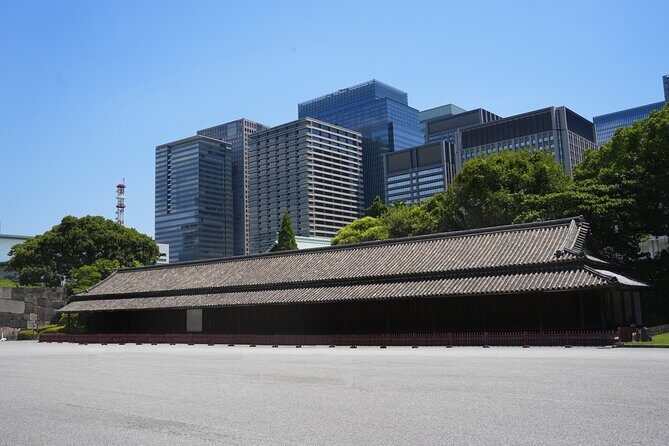
Then the tour shifts from today’s ceremonial landscape to the older castle logic. The guide helps you imagine the Edo Castle setup: gates, huts, stone walls, moats, and bridges. The tour is built around how these elements worked together, not just what they look like now.
Here’s what you’ll take away:
- Movement mattered: people didn’t wander freely; gates and crossings funneled access.
- Social order was physical: different power groups had different roles and visibility.
- Daily life had its own spaces: the guide touches on women of the Edo castle and inhabitants of Edo city, which helps the area feel inhabited rather than only political.
A small drawback for expectations: you might be tempted to think this will feel like walking on intact ruins. It won’t. The value is in the guide’s “put the layers back” approach. If you enjoy guided interpretation, you’ll likely love this part. If you only want untouched remains and archaeology details, you may need to calibrate your expectations toward story-based history.





Hirakawa-mon Gate: Your Edo Exit Point (10 Minutes)
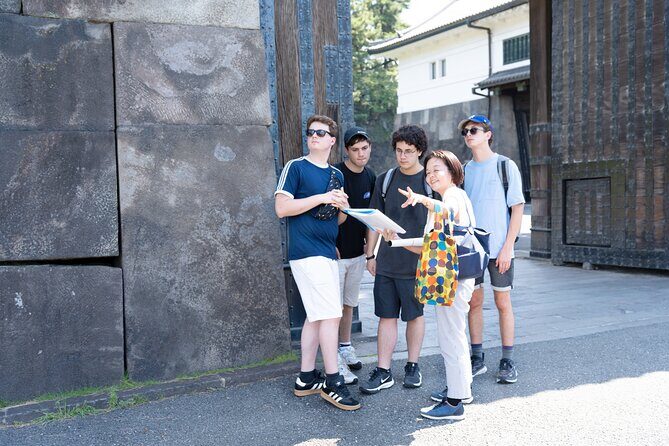
The final scheduled checkpoint is Hirakawa-mon Gate, about ten minutes.
Gates are the perfect place to end a route like this because a gate is both a physical feature and a concept. It marks where access shifts—public to controlled, outside to inside, ordinary street to castle territory. Ending here helps your brain lock in the idea of boundaries and movement.
By this point, you’ve already learned enough about the shogun/emperor framework and samurai ruling class structure to interpret what a gate means in a city plan. You’re not starting from scratch at the end; you’re finishing with context already in your head.
The 5.4 km Walk: Pace, Comfort, and How to Prepare
Over about 2.5 hours, you’ll cover roughly 5.4 km. That’s a solid walk, but it’s not a marathon.
Still, plan for:
- Comfortable walking shoes. You’ll likely spend time stopping, but the route is built around moving.
- Water. Bottled water is not included, so bring your own or be ready to buy it near transit.
- Weather. The tour notes that it requires good weather. If it’s canceled for poor conditions, you’ll be offered another date or a full refund.
Group size is capped at 8, which changes the experience. With fewer people, the guide can react to your questions and keep everyone oriented. It also helps when timing is tight and you need to regroup quickly.
And since the ticket is mobile, you won’t be hunting for paper passes. Just make sure your phone battery is healthy.
Guide Quality Is the Real Differentiator (And You Can Feel It)
A tour like this lives or dies by interpretation. The sites themselves are familiar enough—Tokyo Station, Imperial Palace area, major gates—but the magic is in how the guide makes you see the “then” inside the “now.”
The strongest praise in the available feedback points to guide Blanca specifically: a wealth of knowledge, English that’s very good, and a pleasant manner. That combination matters. You can handle a longer walk when your guide explains clearly and keeps things moving.
The other detail worth noting: the operator responded to a meeting point confusion issue by updating how the meeting point is explained. That tells you they’re paying attention to what guests actually need to find the starting spot.
If you love walking tours where you ask questions and get smart answers, this format fits. If you want pure self-guided sightseeing with zero storytelling, you might find it less satisfying.
Value Check: Why This Price Feels Unfair in a Good Way
At $3.25 per person, the biggest question is: what are you actually buying? Here’s the reality based on what’s included and what the tour covers.
You’re getting:
- An English-speaking guide
- A small gift
- A 2.5-hour guided walking experience over about 5.4 km
- Free admission time for the listed stops (museum intro and the palace/garden segment)
- Mobile ticket convenience
For many Tokyo tours, $3.25 would barely cover a museum ticket or a transportation add-on. Here, the price is built around the guide and the route flow. That’s why it can feel like a bargain—because you’re paying mostly for expertise and organization, not for entrance fees.
The trade-off is that it’s a walking tour with learning beats. You won’t get a long museum session or a sit-down meal. If you want a full “tour + meal + museum hours” day, this won’t be that kind of package. But if you want a focused historical orientation and you’re happy to keep walking, you’re in the right zone.
Who This Tour Fits Best (And Who Might Prefer Something Else)
This tour is a great match if you:
- Want to understand Edo Castle Tokyo without needing a textbook
- Enjoy guided storytelling and map-based context
- Like walking tours that end near major transit points
- Prefer small groups (max 8) for better Q and A
You might want to choose another option if you:
- Only want intact ruins you can touch and photograph (this is more interpretation than archaeological “hands-on remains”)
- Hate walking in variable weather conditions
- Expect meals included (none are provided)
If you’re planning a Tokyo itinerary with the Imperial Palace area as a anchor stop, adding this walk gives you a way to interpret what you see instead of just passing through.
Should You Book This Edo Castle Time Trip Walk?
If you like history that’s explained in plain language—and history that helps you see—I think this is a smart booking.
Book it if you want:
- A structured route from Tokyo Station to Hirakawa-mon Gate
- A guide-led way to connect the shogun/emperor world to the built environment
- A time-efficient, 2.5-hour investment that turns the Imperial Palace area into an Edo-era story
Skip it if you’re allergic to walking, you’re in a rush with no time for stops, or you’re looking for a deep museum program. For a guided “read the city’s layers” experience, though, this one hits the right balance of value, pacing, and interpretation.
FAQ
How long is the Imperial Palace or Edo Castle Time Trip Learning Walking Tour?
It runs about 2 hours 30 minutes (approx.).
What distance will we walk?
You’ll walk about 5.4 km during the tour.
Where does the tour start and where does it end?
It starts at Tokyo Station Marunouchi South Gate Dome and ends at Hirakawa-mon Gate.
Is the tour ticket digital?
Yes, it uses a mobile ticket.
Is the guide available in English?
Yes. The tour includes an English speaking guide.
Are meals or bottled water included?
No. Meals and bottled water are not included.
Is admission included for the stops?
The listed admissions are free for the stops on the tour (including the museum intro and the Imperial Palace area segment).
Is the tour dependent on weather?
Yes. It requires good weather. If canceled due to poor weather, you’ll be offered another date or a full refund.
How big is the group?
The maximum group size is 8 travelers.
Tokyo on Foot: More Walks




More Tours in Tokyo


More Tour Reviews in Tokyo



Fresh reviews from around Tokyo






Walking Tours, compared.
 ★ 5.0Tokyo Tsukiji Fish Market Food and Culture Walking TourFrom $993,184 reviews
 ★ 4.9Shinjuku Local Bar and Izakaya Guided Walking TourFrom $341,794 reviews
 ★ 5.0Tsukiji Fish Market Food and Walking tourFrom $301,724 reviews
 ★ 4.8Asakusa Walking Tour with Sensoji Temple VisitFrom $221,583 reviews
 ★ 4.9Tsukiji Fish Market Guided Walking TourFrom $221,397 reviews
 ★ 4.7Tokyo Castle & Imperial PalaceーShogun Walking TourFrom $231,068 reviews
 ★ 4.9Imperial Palace Japanese History Walking TourFrom $32987 reviews
 ★ 4.7Dark Side of Tokyo Shinjuku Red Light Walking TourFrom $29862 reviews
Browse the lists this tour appears in