
Reviewed · HAKONE DAY TRIPS
Hike Japan Heritage Hakone Hachiri with certified mountain guide
This walk feels like the Old Tokaido. You’re hiking about 8 km along Hakone Hachiri, then using short transfers to keep the day moving like an Edo-era itinerary. I like that Aki (a certified mountain guide with wilderness first aid) ties the history to what you’re stepping on, from checkpoints to old trade routes. One thing to think about first: the route suits moderate fitness, and Mt Fuji views are weather-dependent.
I also like the value rhythm of the day. Most major site admissions are free, and the itinerary is designed so you spend your energy on the walk parts, not the guesswork. Expect a start at Hakone-Yumoto Station around 9:00 am, and an end at Mishima Station, with time for Mishima Taisha and Genbe River before you catch onward trains.
In This Review
- Key highlights worth planning around
- Entering the Edo-era Tokaido: what Hakone Hachiri actually is
- Meet your certified guide Aki and how a small group changes everything
- The 7-hour flow: 8 km of hiking plus bus hops that save your energy
- Stop 1: Hakone Amazake Tea House and the cobbled-craft start
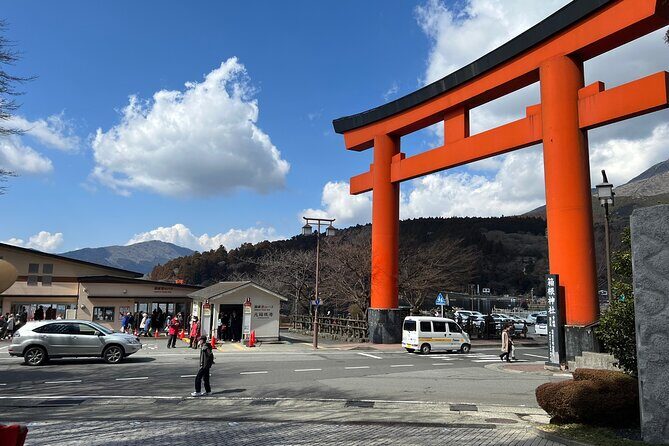
- Stop 2: Lake Ashi by the Motohakone-Ko Pier, Heiwa no Torii, and Mt Fuji odds
- Stop 3: The Cedar Trees of the Hakone Old Road and the checkpoint moment
- Lunch and the bus reposition: keeping the route intact
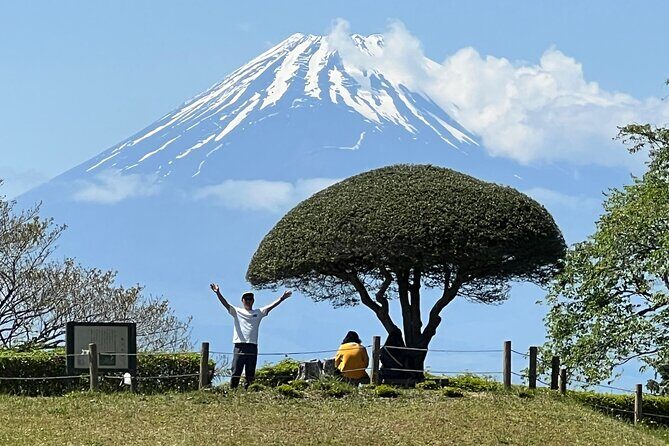
- Stop 4: Yamanaka Castle Ruins and another Mt Fuji check
- Stop 5: Mishima finale—Mishima Taisha, Genba River, and train-ready ending
- What to pack and how to time your day for Mt Fuji (without losing sleep)
- Price and value: where the $158.52 fee makes sense
- Who this tour fits best, and who might prefer another style
- Final call: should you book Hakone Hachiri with a certified mountain guide?
- FAQ
- How long is the Hakone Hachiri hike?
- How much hiking is involved?
- Where does the tour start and end?
- Is lunch included?
- What transportation is used between stops?
- Are site admissions included?
- What if Mt Fuji isn’t visible?
- Is the tour refundable if you cancel?
- What happens if poor weather cancels the tour?
Key highlights worth planning around
- Edo-period Hakone Hachiri along the Old Tokaido Highway route, including steep-slope terrain travelers faced
- Aki’s history + trail skills, with a wilderness first aid background for peace of mind
- Lake Ashi stop with Heiwa no Torii and Mt Fuji framing if the sky cooperates
- Cobblestones, cedar avenues, and a real checkpoint moment where you learn why this place mattered
- A small group (max 6), which keeps the pace human and questions actually get answered
- Hike plus transfers (bus/taxi), so you get variety without turning the day into a punishment hike
Entering the Edo-era Tokaido: what Hakone Hachiri actually is
Hakone Hachiri is the kind of heritage route that makes Japan feel less like a museum and more like a living map. This is a Japan Heritage area tied to the Old Tokaido Highway—the road that connected major cities and shaped travel for centuries. In this specific stretch, you’ll experience what it meant to move through Hakone’s mountain terrain, where slopes were steep and travel wasn’t casual.
A big part of the appeal is how the tour teaches you to look at the trail like an Edo-period traveler. You’re not only passing scenic spots; you’re moving through places that had jobs to do: moving people, channeling traffic around difficult sections, and marking boundaries. If you enjoy history you can feel in your legs, this is the format.
You’ll also get multiple chances at the classic Hakone views. The plan includes Lake Ashi, the cedar-lined old road sections, and viewpoints that may show Mt Fuji depending on cloud cover. Even when Fuji hides, the route still works because the day isn’t only about one photo.
Meet your certified guide Aki and how a small group changes everything
The tour is run by Coconuts Hike Japan, and your guide is a national certified pro with wilderness first aid. That matters on a practical level: you want someone who understands weather, footing, and pacing, especially in mountain terrain where conditions can shift.
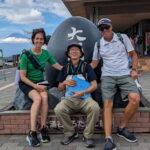
The other reason this guide setup is so effective is personal attention. With a maximum of 6 travelers, the group doesn’t stretch into a line of strangers. You can ask questions, and the guide can adjust pace when someone needs a slower rhythm. The vibe described around Aki is consistently kind and calm, and that matters because it keeps the day from turning stressful.
One detail I really appreciate from the way this tour is run: you’re not just learning where to look—you’re also being helped to capture the moment. Aki is known for taking photos of groups, so you can get real shots without handing your phone to five different people and calling it teamwork.
The 7-hour flow: 8 km of hiking plus bus hops that save your energy
This is listed as about 7 hours total, and the hiking portion is roughly 8 km. That’s a sweet spot: long enough to feel like a hike, but not so long that you’re wrecked by the time you reach the best viewpoints.
The clever part is the pacing. You’ll walk sections, then use local buses (and even a shared taxi early on to reach the trailhead). Later, you’ll use bus travel to skip a temporally closed part and then rejoin the walking route. So you get the sense of following an old route without forcing yourself to fight every modern obstacle.
You start at Hakone-Yumoto Station at 9:00 am and end at Mishima Station. Near public transportation, service animals are allowed, and the tour is aimed at travelers with moderate physical fitness. If you’re the type who enjoys steady walking with short breaks, you’ll probably like this format.
Stop 1: Hakone Amazake Tea House and the cobbled-craft start
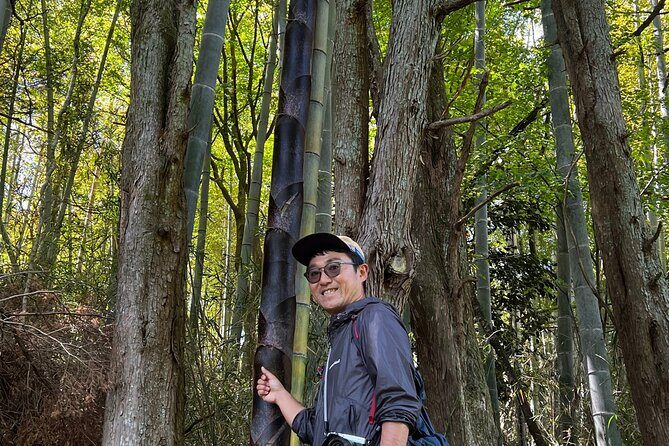
The day begins at Hakone-Yumoto Station. After you meet, you take a shared taxi to reach the trail start area. Once you’re on the trail, you hike about an hour before you reach the wood crafting village area near the Hakone Amazake Tea House.
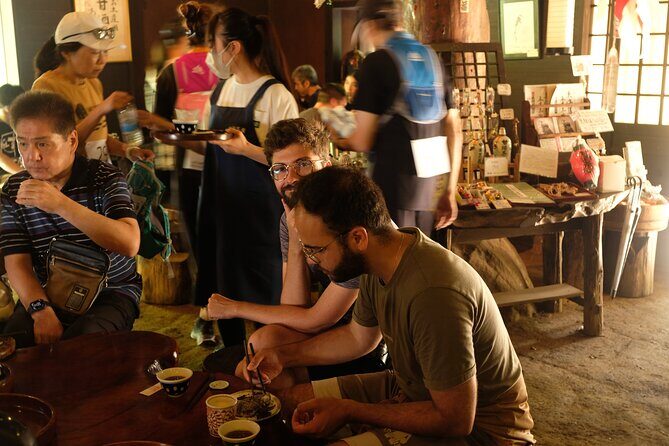
Amasake is a local sweet rice drink. In this tour, the tea house is more than a snack stop—it’s a gentle way to transition into the theme of Edo travel. You’re seeing the kind of local craft-and-food culture that would have supported travelers along older routes. Admission tickets for listed stops are free, so the time here is about the experience, not paying extra for every photo spot.
What to watch for: this first segment sets your energy for the day. If you go out too fast in the morning, you’ll feel it later when the route turns more about sustained walking.
Stop 2: Lake Ashi by the Motohakone-Ko Pier, Heiwa no Torii, and Mt Fuji odds
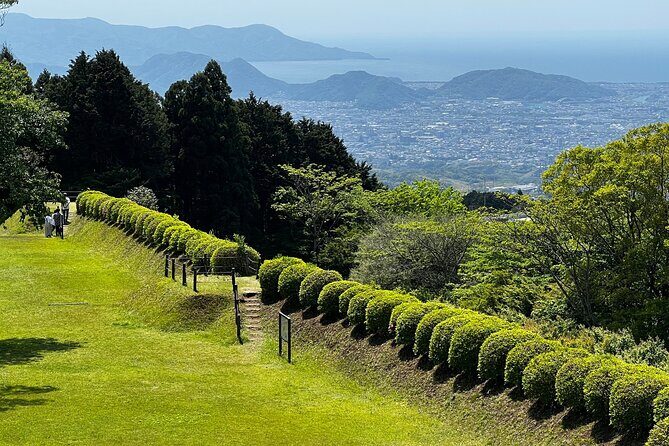
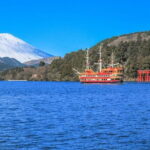
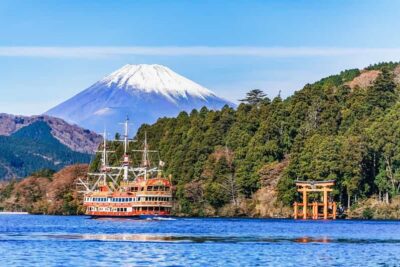
After the early trail portion, you reach Lake Ashi. From the Motohakone-Ko Pier area, you walk along the shoreline. This is where Hakone does its most famous work: you get the view geometry that makes Lake Ashi special.
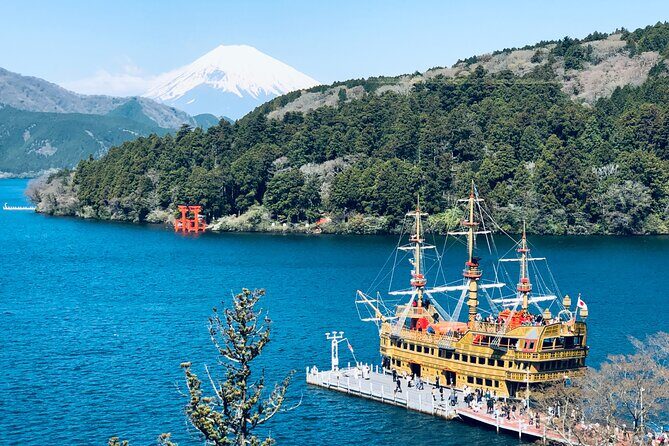
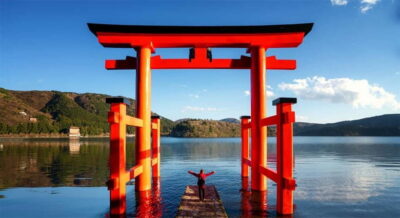
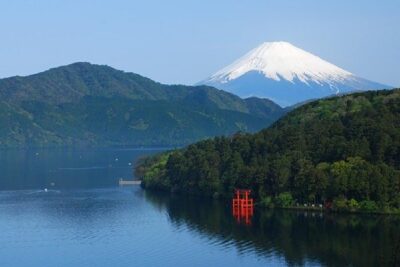
You’ll see the Heiwa no Torii gate, and Mt Fuji may appear in the background if the weather permits. That phrase matters because Hakone is famous for changing conditions. In clear times, Fuji can look close and sharp. In cloud or fog, you may get a softer version—or none at all.
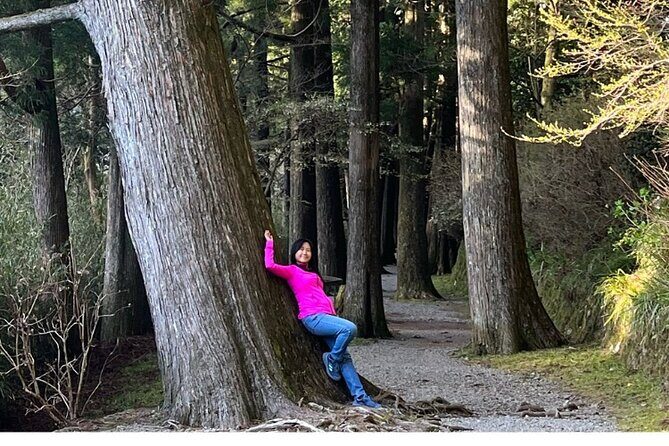
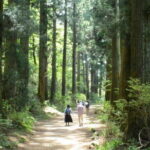
Then comes the cedar avenue section. The idea is simple: Japan loves creating a gradual reveal. The huge cedar trees along the old road corridor make the walk feel sheltered and rhythmic, like you’re moving through a corridor built for travelers—quiet, shaded, and focused.
Practical note: because Fuji depends on conditions, I treat this stop like a viewpoint lottery. You’ll enjoy the scene either way because the gate + lake + cedar combo is visually strong without needing a perfect sky.
Stop 3: The Cedar Trees of the Hakone Old Road and the checkpoint moment
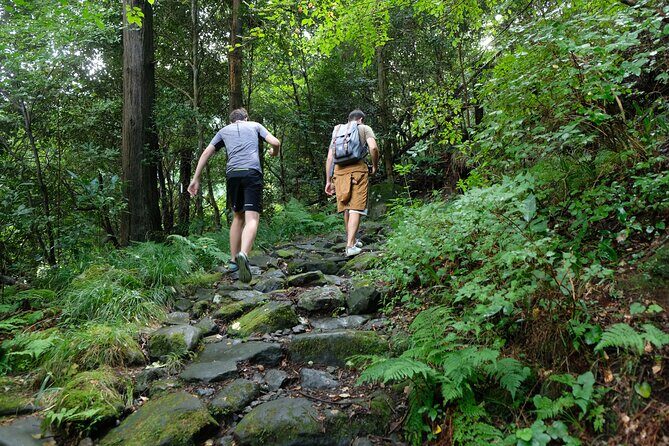
Next, you head toward the Hakone Checkpoint area, a place your guide will explain in plain terms. Think of it as the kind of place that helped control movement along the route. Even if you’re not a history nerd, you’ll likely enjoy this stop because it gives you a reason for what you’re seeing.
This part includes the cedar-lined old road feel, then the checkpoint explanation. The guide’s job here is to connect the dots: what people needed to travel, why checkpoints mattered, and how routes worked in real life—not just as a concept.
Why this stop works: it’s not a passive sightseeing stop. You learn while walking, and the story feels tied to the space instead of floating above it.
Lunch and the bus reposition: keeping the route intact
Midday includes lunch at Hakone-machi at a local Japanese restaurant. Lunch is not included in the tour price, and the budget note is around 2000 yen for your group. That’s normal for this kind of day and also helps keep your meal flexible.
After lunch, you take a bus to reposition toward the Shizuoka-side trailhead for the next walking segment. This is where you can appreciate the “guided logistics” part of the deal. You’re not trying to decode bus routes while hungry and tired. The guide moves the group so you keep the historical flow.
Stop 4: Yamanaka Castle Ruins and another Mt Fuji check
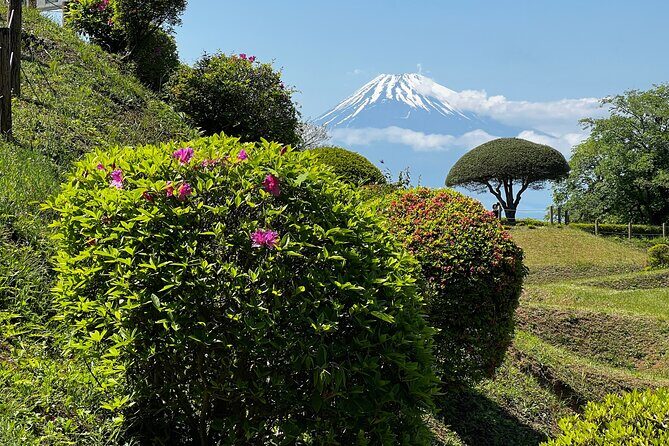
Next up is Yamanaka Castle Ruins, visited along the Hachiri heritage path. The schedule allows about an hour here, and again, Mt Fuji might show up from this area if weather permits.
Castle ruins in Japan often feel like a mix of stone remains and story. Even when the architecture is gone, you can usually read the terrain: why a site was chosen, how it controlled access, and what kind of view it offered. With this tour, you’re not left to interpret everything alone—the guide gives context as you look around.
This stop also helps break up the physical day. After walking and cedar avenues, a ruins area gives you a slightly different pace: less corridor-walking and more standing, looking, and learning.
Stop 5: Mishima finale—Mishima Taisha, Genba River, and train-ready ending
The tour finishes in Mishima. You’ll reach Mishima at the end of the guided day and visit Mishima Taisha—the biggest shrine in Mishima—plus Genbe River.
This is a nice capstone because it shifts from mountain route travel to a town-and-shrine atmosphere. You get one last cultural anchor before heading back into transportation mode.
The ending point is Mishima Station, which is convenient for getting home. From there you can take a Shinkansen to Odawara (about 15 minutes) or to Tokyo (about 45 minutes). A Shinkansen fee from Mishima to Odawara is listed as not included, so plan your budget if you’re continuing the same day.
What to pack and how to time your day for Mt Fuji (without losing sleep)
Because the tour notes that it requires good weather, it’s smart to plan as if conditions can change during the day. Hakone can be rainy or foggy, and even when Mt Fuji doesn’t show, the walk can still feel worthwhile because of the cedar shade, the checkpoint story, and the heritage-route texture.
For gear, stick to basics that work on mountain paths:
- sturdy walking shoes with grip
- layers for changing temperatures
- a small daypack for snacks you buy along the way (snacks and amasake are noted as not included)
Also, budget time for breaks. The day uses a mix of walking and transfers, so you’re not constantly marching. Still, if you’re sensitive to uneven ground, good shoes will make you happier than any miracle gear.
Price and value: where the $158.52 fee makes sense
The price is listed at $158.52 per person, and it’s a small group experience (max 6). That helps explain why this can be good value when you look at what’s included.
Included:
- national certified pro guide with wilderness first aid
- group discounts (not always a fixed amount, but part of the offer)
- mobile ticket
- listed admissions for stops are free
Not included:
- lunch (around 2000 yen for your group)
- transportation fee to the trailhead and between sites (around 2000 yen by shared taxi or buses)
- Shinkansen fee from Mishima to Odawara (around 2500 yen)
- amasake and snacks along the way
So you’re mostly paying for the guide and the structure, not for a long list of paid attractions. In practice, that’s what often makes the difference between a trip you remember and one you just photographed. The guide handles timing, repositioning by bus when parts are closed, and the historical context that makes the route feel coherent.
One more planning angle: it’s booked about 61 days in advance on average. That suggests it’s not a last-minute-only option if your travel dates are fixed.
Who this tour fits best, and who might prefer another style
This hike suits you if you want a guided version of Hakone Hachiri where history is explained in context as you walk. It’s also a good fit if you like mixing outdoors time with structured stops at places like Lake Ashi, checkpoint areas, and shrine ruins.
It may feel less ideal if:
- you prefer fully self-guided hiking with zero transfers
- you have very limited tolerance for walking on mixed terrain
- you want a guaranteed Mt Fuji viewpoint (none is guaranteed here)
If you’re traveling with friends who like learning and moving at a steady pace, the small group helps. If you’re the kind of solo traveler who wants personal space and clear direction, you’ll likely like that too.
Final call: should you book Hakone Hachiri with a certified mountain guide?
I’d book this if you want Hakone to feel like a route people actually used, not just a list of scenic stops. The combination of Aki’s calm, history-led guiding plus the “hike then transfer then hike again” structure makes the day manageable and rewarding. Even when the sky isn’t perfect, cedar avenues, checkpoints, lake viewpoints, and Mishima’s shrine-and-river finish give you enough variety to feel like you got your money’s worth.
Don’t book it if you’re hunting for a guaranteed Fuji postcard. Do book it if you want the journey itself—old stone-paved paths, heritage checkpoints, and the sense that you’re walking along a road that mattered.
FAQ
How long is the Hakone Hachiri hike?
It’s listed as about 7 hours total.
How much hiking is involved?
You’ll hike around 8 km during the trip.
Where does the tour start and end?
It starts at Hakone-Yumoto Station (around 9:00 am) and ends at Mishima Station.
Is lunch included?
No. Lunch at a local Japanese restaurant is not included (budget around 2000 yen).
What transportation is used between stops?
Some segments are on foot, and you’ll also use local bus and a shared taxi for part of the route.
Are site admissions included?
For the listed stops, admission tickets are free.
What if Mt Fuji isn’t visible?
Mt Fuji views are described as weather-dependent, so you should expect that visibility can vary.
Is the tour refundable if you cancel?
This experience is non-refundable and cannot be changed for any reason.
What happens if poor weather cancels the tour?
If it’s canceled due to poor weather, you’ll be offered a different date or a full refund.
Easier with a Guide

More Tour Reviews in Hakone
Hakone, Three More Ways
Hakone Day Trips, compared.
 ★ 4.0Mt Fuji & Hakone Cruise, Drum Show Bullet Train 1 Day from TokyoFrom $1497,413 reviews
 ★ 4.4Tokyo Mt Fuji 5th St & Hakone Cruise Bus Tour w/Bullet TrainFrom $1545,024 reviews
 ★ 4.7Mt. Fuji Tour, Hakone Ropeway, Owakudani, Lake AshiFrom $544,002 reviews
 ★ 5.0Private Tour to Mt. Fuji and Hakone (Fully Licenced Operator)From $4971,910 reviews
 ★ 4.0Mt Fuji & Hakone Cruise, Drum Show Bus 1 Day from TokyoFrom $1221,287 reviews
 ★ 4.2From Tokyo: Mt. Fuji & Hakone Tour w/ Return by Bullet TrainFrom $1171,278 reviews
 ★ 4.5Mt. Fuji & Hakone Private Day Tour with English-Speaking DriverFrom $453824 reviews
 ★ 4.2Hakone Fuji Day Tour w/ Cruise, Cable Car, VolcanoFrom $98724 reviews
Browse the lists this tour appears in