
Reviewed · WALKING TOURS
Gotokuji and Setagaya Walking Tour: Home of the Lucky Cat Statue
Lucky cats, but make it Tokyo suburb. This half-day Gotokuji and Setagaya walking tour focuses on a real neighborhood with shrines, local shopping streets, and the famous cat-statue story that people come to Japan for. You’ll start at Gotokuji Station, walk through Setagaya Ward, and end near Shoin-jinja-mae Station, with a guide who knows how to turn a quick sightseeing loop into a meaningful cultural visit.
I love two things most: the way the guide connects you to the shrine side of the rituals (including purity/prayer basics taught by guides like Yumi), and the sheer visual payoff of seeing numerous lucky cat statues lining up across the temple area. A guide like Mitsuko also keeps the day feeling personal, not rushed, with time for neighborhood context and practical tips.
One possible drawback: the tour includes walking mountain paths, so you’ll want easy, supportive shoes and a moderate fitness level. Also, lunch and transportation aren’t included, so plan to handle food and getting to the meeting point on your own.
In This Review
- Key highlights you’ll actually care about
- Why Gotokuji’s lucky cats feel different in Setagaya
- Meeting at Gotokuji Station and getting oriented fast
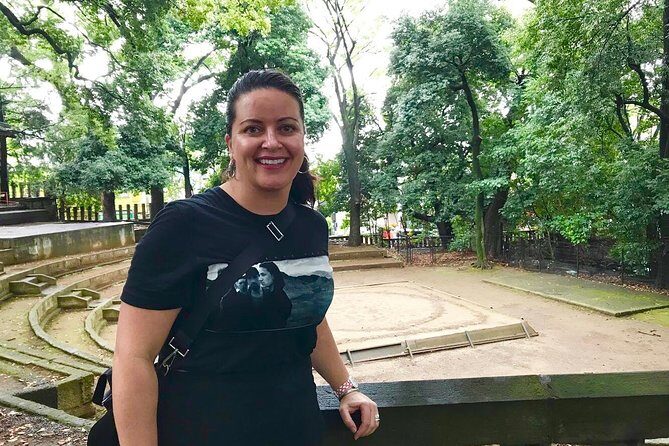
- Stop-by-stop: Setagaya Hachimangu and its sumo ring tradition
- Gotokuji Temple: where the cat legend has roots
- Shoinjinja Shrine: Yoshida Shoin’s influence and the schoolchildren tombs
- The Shoinjinja shopping street stop (and the included drink)
- How Setagaya’s Sengenjacha landmark fits the story
- Ending with the Tokyu Setagaya Line experience
- Price and value: what $84.70 buys you in practice
- What to expect during the walk (and what to pack)
- Who this tour suits best
- Should you book Gotokuji and Setagaya’s lucky cat tour?
- FAQ
- How long is the Gotokuji and Setagaya walking tour?
- Where do I meet the guide, and where does the tour end?
- What’s included in the tour price?
- Are there admission fees at the stops?
- Is lunch included?
- Is transportation from and back to attractions included?
- Do I need to have good walking ability?
- Can I cancel for free?
Key highlights you’ll actually care about
- Lucky cat origins, explained with context: you’ll learn where the cat-legend connects to these temples and shrines
- Shoinjinja shopping-street drink (up to ¥800): a small extra that saves you money and gives you an easy local break
- Shrine details you might miss alone: Setagaya Hachimangu’s sumo ring tradition adds color beyond cat statues
- A real local train ride vibe: the tour includes the Tokyu Setagaya Line area experience after the walking portion
- Guides who help you navigate: names like Emiko and Yoshimi come up for a reason—helpful, friendly, on-the-ground guidance
Tokyo at walking pace, a few more ways
- Tokyo Tsukiji Fish Market Food and Culture Walking Tour★ 5.0 · 3,184 reviews
- Tokyo: Shinjuku Local Bar and Izakaya Guided Walking Tour★ 4.9 · 1,794 reviews
- Tokyo: Tsukiji Fish Market Food and Walking tour★ 5.0 · 1,724 reviews
Why Gotokuji’s lucky cats feel different in Setagaya
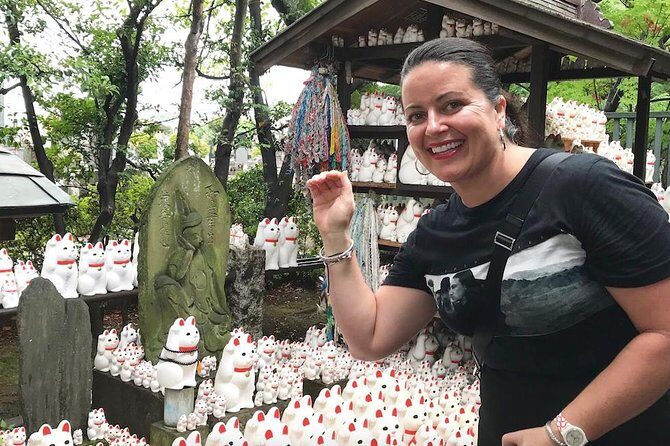
Gotokuji is the kind of place that sounds like a gimmick until you’re standing there. Then it becomes something else: a suburban Tokyo stop where people return again and again, not just to pose for photos, but to participate in a tradition tied to luck and wishes.
This tour matters because it’s not only about the statues. You also get the setting. Setagaya Ward is more lived-in than the central “postcard Tokyo” areas, and that’s exactly the point. You’ll walk through shrine grounds, pass through a local shopping street, and see how everyday neighborhood life sits right next to sacred spaces.
And yes, the lucky cats are the headline. But the value here is the how and the why: you’ll understand how these cat displays grew into something visitors look for, and you’ll connect the imagery to the specific shrines and temple sites you’re visiting.
Meeting at Gotokuji Station and getting oriented fast
Your day starts at Gotokuji Station (the meeting point is listed at 1-chome-43 Gotokuji, Setagaya City). Meeting at a station like this is a big practical win. You can arrive on your own schedule, find your guide, and get moving without a complicated “tour bus” start.
From there, the tour runs about 3 hours 30 minutes (approx.). That’s enough time to feel like you did something substantial, without turning your whole day into logistics.
It’s also a private tour/activity. That doesn’t mean it’s silent or stiff. It usually means you get a smoother experience for your group size, with more attention from the guide and less waiting around.
Stop-by-stop: Setagaya Hachimangu and its sumo ring tradition
The first major stop is Setagaya Hachimangu. Admission is free and your time here is short—about 20 minutes—but it’s packed with a detail that changes how you see the grounds.
What you’re looking for is the shrine’s dohyo (the sumo ring) set up in the shrine grounds, tied to the honosumo (奉納相撲) tradition. Even if you’re not a sumo fan, it’s a fascinating intersection of sport, ritual, and local community. It’s also one of those “only-in-Japan” details that helps you shift out of tourist mode and into cultural mode fast.
A quick note: because this is shrine culture, what you see can depend on timing and seasonal events. Still, the shrine’s connection to matsuri/sumo tradition is the core takeaway, and the guide will help you understand what it means in context.
Gotokuji Temple: where the cat legend has roots
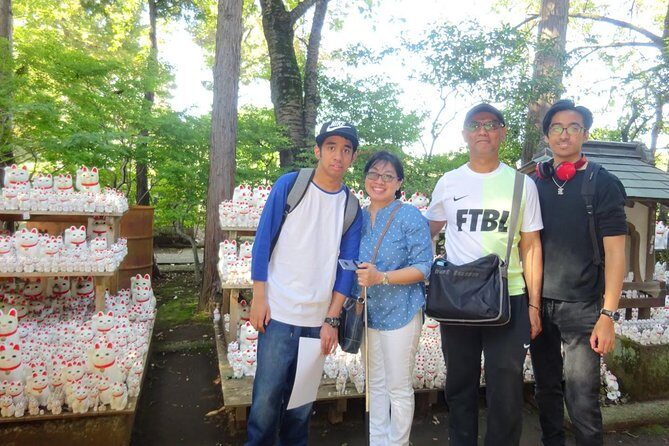
Next up: Gotokuji Temple. Admission is also free, and this is where the lucky cat story becomes physical.
Here’s what makes the site more than a photo stop: Gotokuji connects to a hermitage background tied to historical figures. The temple is described as the beginning of the Kotokuin hermitage, connected to Kira Masatada, who built Setagaya Castle in 1480. It also notes a shift in Buddhist sect affiliation over time—from originally Rinzai to becoming Soto in 1584.
Why does that matter to you? Because it explains why this place has endured as a meaningful religious stop. The lucky cat theme didn’t appear out of thin air. It sits in a long-running tradition of worship, community, and the way Japan preserves stories through places.
On the tour itself, you’ll be shown how to connect what you’re seeing (the cats) with the shrine/temple meaning behind it. That’s the difference between collecting images and understanding what they represent.





Shoinjinja Shrine: Yoshida Shoin’s influence and the schoolchildren tombs
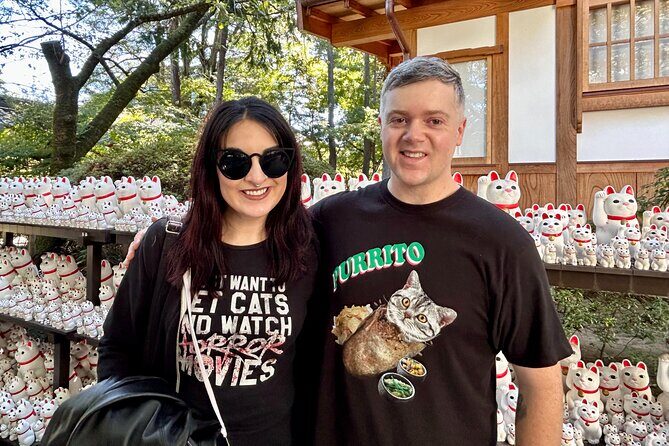
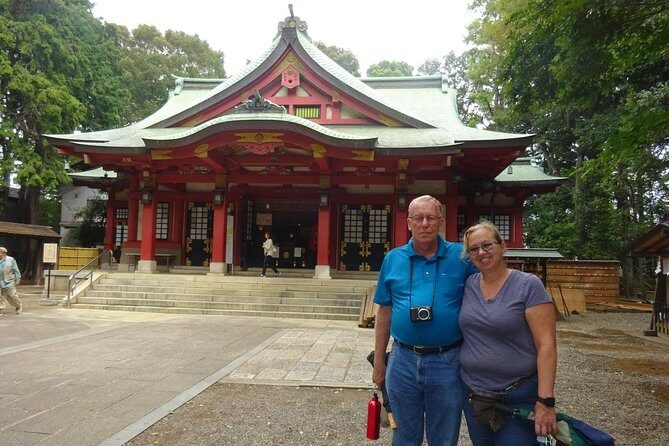
The tour then moves to Shoinjinja Shrine, which is founded in 1882 with master Yoshida Shoin at the center. Plan for about 25 minutes here, admission free.
This stop adds a different flavor to the day. Yes, it’s still tied to the lucky-cat universe, but it’s also about education, memory, and local history connected to Shoin’s legacy.
You’ll also see:
- Tombs of Shoka Village school children, including Yoshida Shoin
- A shrine precinct structure described as a reproduction of a building connected to that story
If you’ve ever wondered why Japanese shrines and temples feel like museums without feeling like museums, this stop explains it. It’s not just art or architecture. It’s people, names, and events made permanent through sacred space.
Guides like Yumi are especially strong at this kind of stop—helping you understand not only what’s there, but how to approach it respectfully and read the precinct as a whole.
The Shoinjinja shopping street stop (and the included drink)
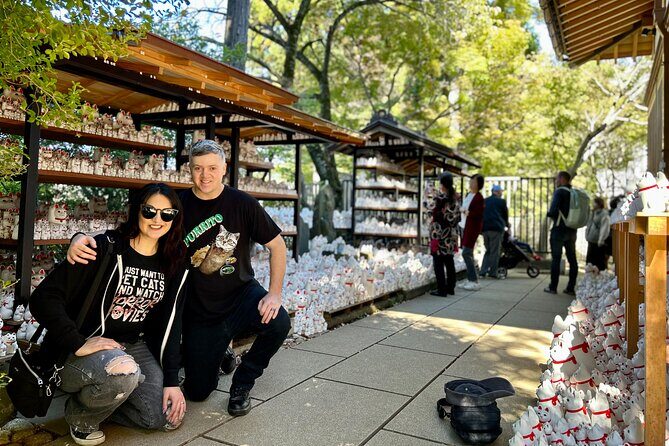
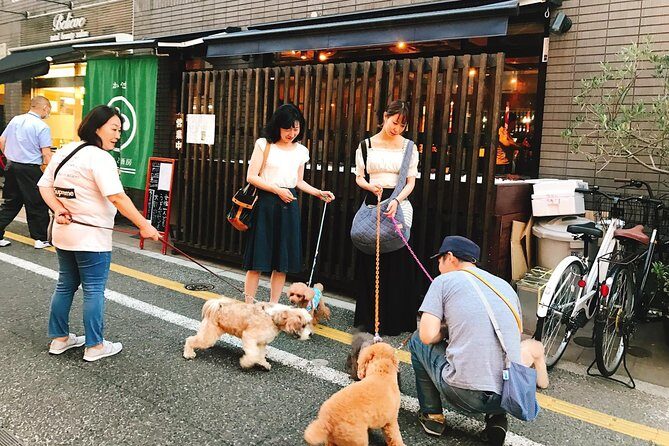
One of the tour’s quiet advantages is the planned time at the Shoin Jinja Shopping Street area. You’ll also get an included drink—coffee and/or tea up to ¥800.
This is small on paper, but it’s big in real life. After temple walking and shrine protocol, a hot drink (or a cool one, depending on season) resets your energy. It also gives you a chance to glance at local shops without the stress of hunting for a café before you’re tired.
Even if you don’t buy anything, you’ll come away with better intuition for the neighborhood. This is the kind of place where locals actually do errands—and that’s the point of taking a tour here instead of another “cat temple” only itinerary.
Also, expect your guide to offer advice on where to eat and what to see after the tour. That’s the easiest way to turn a guided morning into a good rest-of-day plan.
How Setagaya’s Sengenjacha landmark fits the story
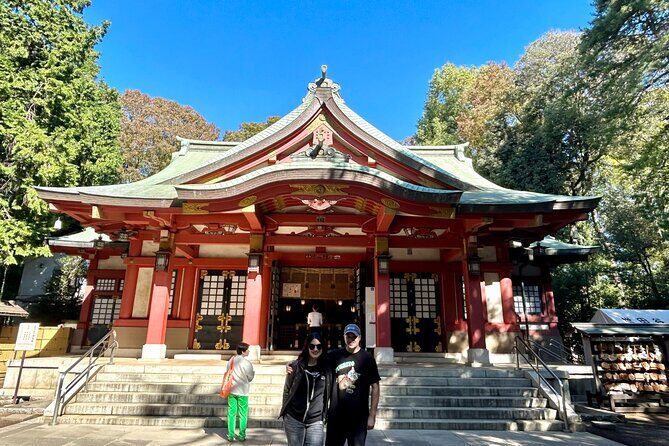
The itinerary includes a stop at the Sengenjacha landmark in Setagaya. The exact details aren’t spelled out here, but the practical value is that you’re getting a more complete “walking through the neighborhood” experience, not just a shrine-to-shrine checklist.
This is also where your guide’s local sense comes through. They can help you connect what you’re seeing to the broader area, and that’s often what makes the tour feel worth the price even if you’ve seen temples before.
Ending with the Tokyu Setagaya Line experience
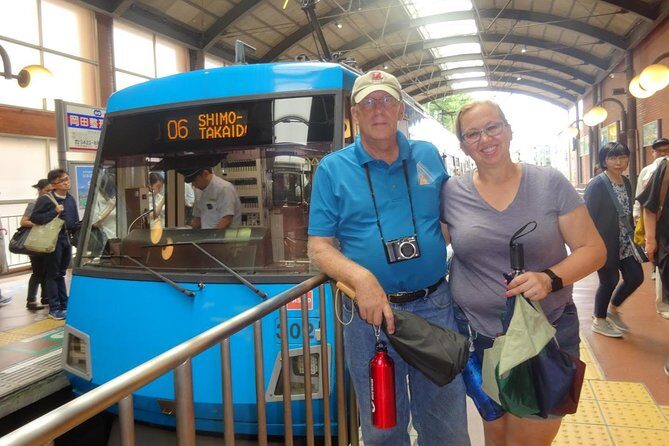
After the main shrine/temple time, the tour includes a Tokyu Setagaya Line moment, with the idea that you’ll see the line with locals after the tour.
Why should you care? Because it’s not just transport—it’s a mini cultural snapshot. You watch how residents move through their day, and then you get to step out near the end station at Shoin-jinja-mae Station.
It also helps you finish with momentum. Instead of standing around wondering how to get back, you’re guided right to the point where local transit becomes your next step.
Price and value: what $84.70 buys you in practice
The tour price is listed at $84.70 per person, and it’s commonly booked about 7 days in advance (on average). At first glance, you might think: “Is that high for a walking tour?”
Here’s the honest value math:
- You get a professional guide for roughly 3.5 hours
- Admissions are free for the listed stops (Setagaya Hachimangu, Gotokuji Temple, Shoinjinja Shrine)
- You get an included coffee/tea up to ¥800
- The tour is private for your group, which usually increases attention per person
If you’re traveling with a group of 2–4, that guide time becomes the main cost, and the included drink is a nice bonus. If you’re traveling alone, you might feel the price more—but you still have the practical advantage of a guided route and local interpretation in a part of Tokyo that isn’t on every first-timer itinerary.
And if you’re the kind of traveler who likes going “just beyond” the well-trodden sites, this price starts to look fair.
What to expect during the walk (and what to pack)
The tour includes mountain paths, and the guidance is very direct: wear shoes that are easy to walk in. That’s not a throwaway line. It matters because shrine-temple grounds and old neighborhood routes often mean uneven steps, slight grades, and paths that aren’t designed for soft sandals.
So bring:
- Comfortable walking shoes with grip
- A light layer (temples and shrines can feel cooler in shade)
- A water plan (water isn’t listed as included)
- A little cash if you want snacks on your own later
Also remember lunch isn’t included. The tour can end with suggestions for where to eat, but you still need to choose and pay for food.
Who this tour suits best
This is a strong choice if you:
- Want more than cat statues and prefer an explanation tied to the actual shrines/temples
- Like suburban Tokyo neighborhoods and don’t need only skyscrapers and crosswalks
- Appreciate a guide who helps with proper shrine visiting basics (purity/prayer guidance came up with Yumi)
- Want practical direction after the tour—where to eat and what to see next
It’s not ideal if you hate walking. It’s also not a good fit if you want a long sit-down meal built into the schedule, since lunch isn’t included and the format is designed for steady walking.
Should you book Gotokuji and Setagaya’s lucky cat tour?
I’d book it if you want a morning or half-day that feels grounded in real neighborhoods, not just sightseeing. The biggest reason is the combination: lucky cat storytelling plus shrine context plus local shopping-street time, all guided.
Book it especially if:
- You’re coming to Tokyo for the first time and want one “off-the-main-grid” day
- You’ve already done the big-ticket districts and want something calmer
- You enjoy details—like the sumo ring at Setagaya Hachimangu—where local culture shows up in unexpected ways
Skip it if:
- Your schedule is tight and you can’t manage a 3.5-hour walk
- You need hotel pickup or pre-planned lunch included (neither is part of the standard package)
If you’re flexible and you like learning as you walk, this tour is an efficient way to get a meaningful Tokyo experience in a place many first-timers overlook.
FAQ
How long is the Gotokuji and Setagaya walking tour?
It runs for about 3 hours 30 minutes.
Where do I meet the guide, and where does the tour end?
You meet at Gotokuji Station (1-chome-43 Gotokuji, Setagaya City) and the tour ends at Shoin-jinja-mae Station (4-chōme-21-16 Wakabayashi, Setagaya City).
What’s included in the tour price?
The tour includes a professional guide plus a coffee and/or tea drink at the Shoinjinja shopping street, up to ¥800.
Are there admission fees at the stops?
The listed stops have free admission: Setagaya Hachimangu, Gotokuji Temple, and Shoinjinja Shrine.
Is lunch included?
No. Lunch is not included.
Is transportation from and back to attractions included?
No. Transportation to and from attractions is not included. The tour does include a Tokyu Setagaya Line stop after the main walking portion.
Do I need to have good walking ability?
You should have a moderate physical fitness level and wear easy walking shoes. The route includes mountain paths.
Can I cancel for free?
Yes. You can cancel up to 24 hours in advance for a full refund.
Tokyo on Foot: More Walks



More Tours in Tokyo


More Tour Reviews in Tokyo



Fresh reviews from around Tokyo






Walking Tours, compared.
 ★ 5.0Tokyo Tsukiji Fish Market Food and Culture Walking TourFrom $993,184 reviews
 ★ 4.9Shinjuku Local Bar and Izakaya Guided Walking TourFrom $341,794 reviews
 ★ 5.0Tsukiji Fish Market Food and Walking tourFrom $301,724 reviews
 ★ 4.8Asakusa Walking Tour with Sensoji Temple VisitFrom $221,583 reviews
 ★ 4.9Tsukiji Fish Market Guided Walking TourFrom $221,397 reviews
 ★ 4.7Tokyo Castle & Imperial PalaceーShogun Walking TourFrom $231,068 reviews
 ★ 4.9Imperial Palace Japanese History Walking TourFrom $32987 reviews
 ★ 4.7Dark Side of Tokyo Shinjuku Red Light Walking TourFrom $29862 reviews
Browse the lists this tour appears in