
Reviewed · TOKYO
Go Karting Tokyo Bay Experience | 9 Top Destinations in 120 Mins
Tokyo at go-kart speed changes everything. In about two hours, you cut through major sights and get real context from your guide, plus 360-degree photos and videos of the ride. You also wear a novelty costume, which turns a normal sightseeing day into something a lot more hands-on.
I love how much you cover in one outing, especially with the small group capped at 10. I also like that the guide keeps the momentum going with stop-by-stop stories tied to what you’re seeing, from Skytree to Akihabara.
One consideration: you must handle the driving-license paperwork correctly, or your tour can be cancelled with no refund. That means bringing your original documents and the right international permit, not just a smartphone screenshot.
In This Review
- Key things to know before you ride
- Why this go-kart route feels like Tokyo by time and space
- Price and what you’re really paying for
- Licensing rules: the one part you cannot wing
- Where the tour starts in Tokyo (and how to plan your timing)
- What happens before you drive (and why it makes a difference)
- Tokyo Skytree and the Ryogoku sumo area: big views, clear context
- Tokyo Sword Museum stop: when gear and symbols meet
- Tokyo Station and Marunouchi: architecture you can feel in motion
- Akihabara: electronics and pop culture with a timeline
- Ueno Park and Asakusa: the city’s older soul
- The Imperial Palace grounds: a calmer ending
- Photo, video, and 360-degree media: what to do with it after
- Weather, timing, and how to avoid stress
- Who this go-kart tour is perfect for (and who should skip it)
- Should you book this Kartzilla Tokyo experience?
- FAQ
- How long is the go-karting experience?
- How much does it cost per person?
- How many people are in a group?
- What’s included in the price?
- What is not included?
- Where does the tour start, and where does it end?
- Do I need an international driving permit?
- Are there special requirements for U.S. Forces in Japan SOFA?
- What happens if the weather is poor?
Key things to know before you ride
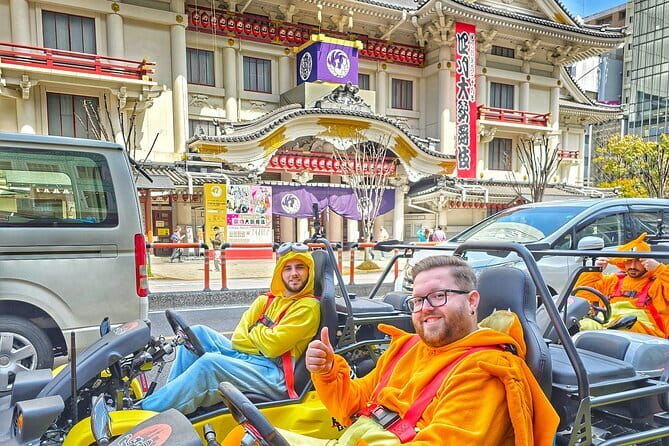
- Two hours, many landmarks: Skytree, Ryogoku, Tokyo Station, Akihabara, Ueno, Asakusa, and the Imperial Palace area are all part of the route.
- Guide-led city stories: You hear about Japanese culture and architecture as you drive, not after you’re done.
- 360-degree photo and video included: You leave with more than a couple of shaky phone pics.
- Costume + safety support: A novelty costume is provided, and the tour includes insurance.
- You need the right driving documents: Bring your local license and the International Driving Permit (1949 Geneva Convention).
- Weather matters: If conditions are poor, the operator offers a different date or a full refund.
Before you commit, see how this one stacks up against a few Tokyo favourites:
- Mt Fuji and Hakone 1-Day Bus Tour Return by Bullet Train★ 5.0 · 26,383 reviews
- 1-Day Tokyo Bus Tour★ 5.0 · 14,250 reviews
- Tokyo: teamLab Planets TOKYO Digital Art Museum Entry Ticket★ 4.6 · 9,779 reviews
Why this go-kart route feels like Tokyo by time and space
Tokyo can be great on foot, but it’s also big and fast-moving. This experience lets you switch from walking pace to kart pace while still hitting famous stops. The result is a sightseeing rhythm that feels more energetic than standard tour days.
The route is built around big-name landmarks plus some culture-heavy stops. You’ll pass Tokyo Skytree, ride through Ryogoku with the sumo connection, and make time for areas like Akihabara, Ueno, and Asakusa. Then you round out with the Imperial Palace area, which gives your day a more reflective tone.
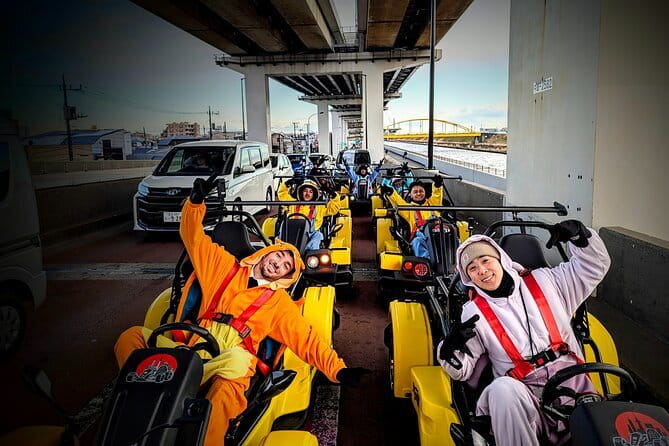
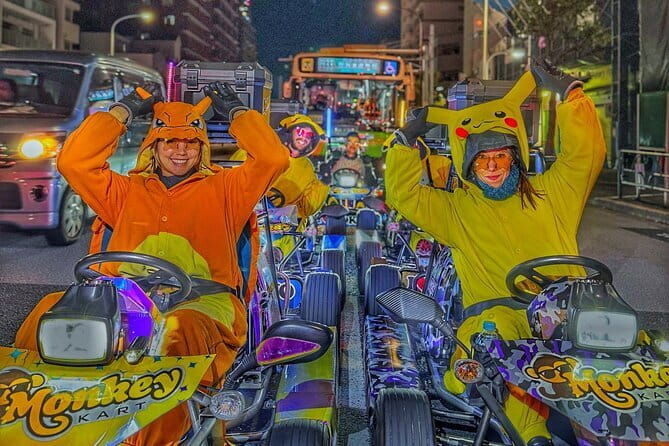
And yes, the novelty costume is real. It’s not a silly add-on that gets in the way. It helps you lean into the experience so you can focus on driving and taking in the city.
Price and what you’re really paying for
At $117.27 per person, this isn’t the cheapest activity in Tokyo. But the value comes from what’s included, not just the kart itself. You get go-kart rental, a tour guide, a costume, fuel, and insurance, plus photo and video coverage.
That bundle matters because it reduces the usual add-on costs. For example, many sightseeing days require separate tickets for transit, separate paid media, or separate insurance coverage. Here, you’re paying for the whole ride experience in one package.
Two other value signals: the schedule is tight (about 1 hour 40 minutes) and the group size is small (max 10). A smaller group usually means fewer waiting gaps and more time actually on the road.
Licensing rules: the one part you cannot wing
This tour requires you to meet driving requirements. You’ll need your local driving license and an International Driving Permit issued under the 1949 Geneva Convention. You also need to bring your passport.
The details matter because the rules are strict. If you don’t show the original documents, the tour can be cancelled and there’s no refund. So check your documents before you go, not at the meeting point.
If you’re in U.S. Forces in Japan SOFA, you need the proper SOFA driving license. And if you’re from certain countries (Switzerland, Germany, France, Belgium, Monaco, and Taiwan), you can drive only if you have Japanese translation of your license available. If you might need help with that translation, plan ahead and contact the operator about a month in advance.
Where the tour starts in Tokyo (and how to plan your timing)
The meeting point is in Katsushika City, Higashiyotsugi: 1-chōme202 小島貸事務所, near public transportation. The good news is that it’s not hidden in the middle of nowhere. The practical news is you still need to arrive on time so you can handle check-in and gear up without rushing.
The tour ends back at the meeting point, and there’s no pickup or dropoff included. So build your day around that. If you’re doing other things in Tokyo the same day, give yourself buffer time to get there and get moving.
Also note the tour uses a mobile ticket. Bring it up on your phone before you arrive.





What happens before you drive (and why it makes a difference)
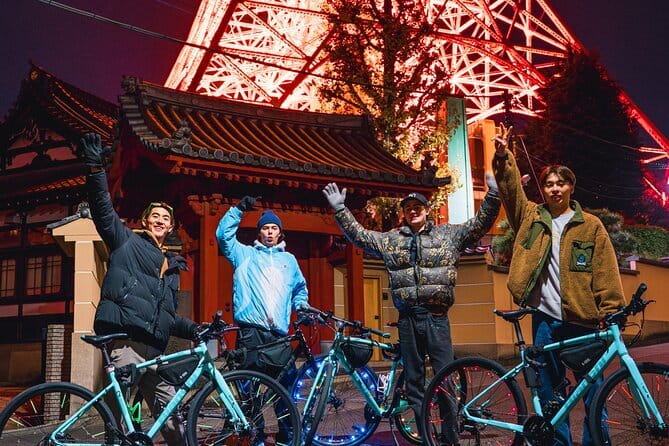
You’re not just handed a kart and sent off. The experience includes an insurance component and is guided, which is a key part of why this style of tour works for first-timers.
Plan for a short setup and briefing period. You’ll be wearing the provided costume, which you can treat as part of your “get ready” stage. If you’re prone to getting hot quickly, dress in breathable layers. You want to stay comfortable because you’ll be active for nearly two hours.
The guide is part safety coach, part interpreter. In one rider account, the guide Travis was praised for keeping everyone feeling safe while explaining what you were seeing along the way. That combination is what turns karting from thrill-only into real Tokyo sightseeing.
Tokyo Skytree and the Ryogoku sumo area: big views, clear context
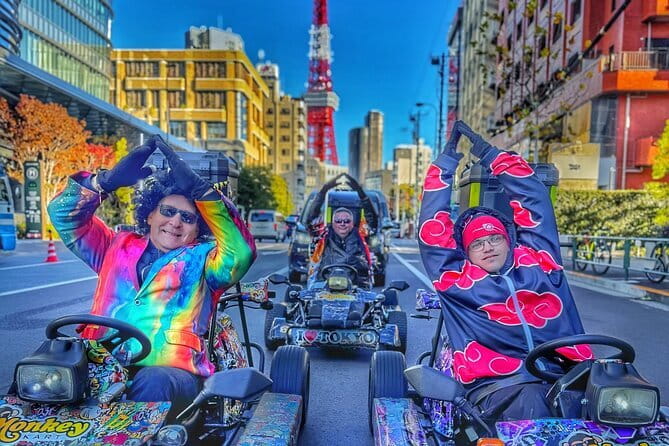
Your route starts with Tokyo Skytree, the world-famous broadcasting and communication tower in Sumida City. Even if you’ve seen it in photos, it lands differently when you’re passing through the surrounding neighborhoods at speed. It gives you an instant visual anchor for the day.
Next comes Ryogoku, where the sumo stadium connection is part of the story. You’re seeing tradition in a modern city framework, and your guide’s job is to connect the dots. That’s one reason this works better than random go-kart time: you understand what you’re looking at.
A practical tip: keep your phone ready, but also look up. The pace is fast enough that the best photos usually come when you already know the landmark direction and don’t stop to re-figure it.
Tokyo Sword Museum stop: when gear and symbols meet
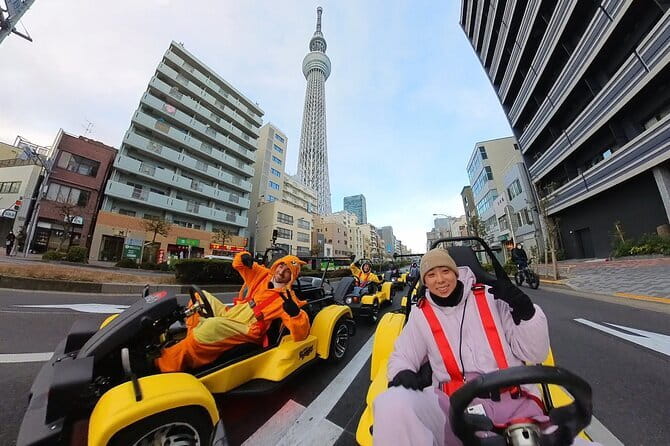
Another stop on the route is the Tokyo Sword Museum. Swords here aren’t presented as movie props. The focus is on swords as symbols of authority, works of art, and objects with cultural meaning.
This stop adds a “Japan beyond neon screens” moment to your day. If you’re used to thinking of Akihabara as your only high-energy stop, the sword museum material gives you a broader picture of how tradition survives in modern Tokyo.
Expect this part to be more story-driven than photo-driven. The best outcome is that you come away understanding why these objects matter.
Tokyo Station and Marunouchi: architecture you can feel in motion
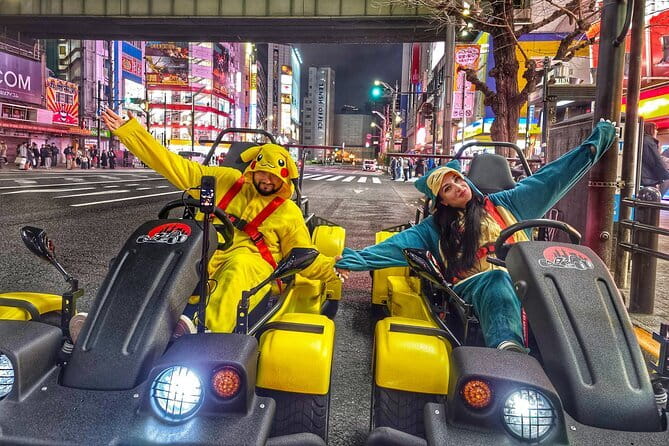
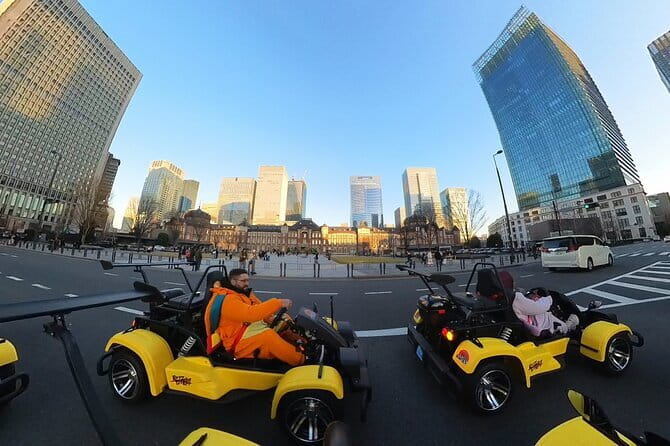
Tokyo Station in Marunouchi is the kind of place where architecture does the talking. The tour route passes through the station area, described as a symbol of architectural brilliance with roots in the early 20th century.
Riding near a landmark like this is a useful contrast. You’ll go from towering skyline views to a more formal, structured urban feel. It’s also a good reminder that Tokyo’s modern identity is built on layers, not just brand-new buildings.
If you like photography, this is where it helps to have your hands ready and your stance stable. At kart speed, stable posture matters more than fancy gear.
Akihabara: electronics and pop culture with a timeline
Akihabara is famous for pop culture and tech. In this experience, it’s framed as an area with historical roots reaching back to the Meiji period. That timeline makes the neighborhood feel more grounded, not just trendy.
Akihabara also connects to why the tour is fun even if you’re not a die-hard anime fan. You’ll see the idea of the “otaku capital” in action, then you’ll understand it as something tied to how Tokyo developed entertainment and electronics over time.
Practical note: if you’re expecting a lot of walking and storefront browsing, keep expectations flexible. This is a drive-and-see experience, so the emphasis is on passing through and learning, not shopping sprees.
Ueno Park and Asakusa: the city’s older soul
Ueno Park is another stop on the route, and the framing is strong. The area rose to prominence after the Tokugawa Shogunate period, and it has roots that stretch from early Edo-era life to modern Japanese art and culture.
Asakusa is where the day feels like it turns toward Tokyo’s “low city” identity. The stop descriptions point to origins going back about 1400 years to the Asuka period. That’s a big statement, and your guide’s role is to make it understandable while you’re driving through.
This is where you can slow your mind even if your kart stays fast. Look at the streetscape and try to imagine how it used to function. A good guide story helps you see old Tokyo without needing a museum ticket for every moment.
The Imperial Palace grounds: a calmer ending
You finish with the Tokyo Imperial Palace area. The palace is the residence of the Emperor and Empress, and the tour context highlights its construction history dating back to 1457, associated with Ota Dokan within the wider Edo Castle grounds.
This part of the route is a nice counterweight to all the earlier motion and pop-culture stops. Even when you’re driving, you can feel the shift from loud commercial energy to a more formal, ceremonial space.
If you’re the type who likes to end tours in a peaceful headspace, this stop timing is a plus. It gives your day a soft landing.
Photo, video, and 360-degree media: what to do with it after
This experience includes photo and video coverage, plus 360-degree photos and videos of your ride. That’s a big deal because it reduces the awkwardness of trying to film while staying focused on traffic and track rules.
When you get your media afterward, treat it like your digital scrapbook of the route. The 360 format is especially useful for seeing what you were passing without needing to pause your own attention during the drive.
One more practical point: the tour notes that a data card for camera is not included (it’s available for purchase). If you plan to bring any camera hardware, double-check what you’ll need ahead of time so you’re not scrambling at the start.
Weather, timing, and how to avoid stress
This tour requires good weather. If it’s cancelled due to poor conditions, you’ll be offered another date or a full refund. That’s not unusual for karting, but it’s important if you booked your trip tightly.
Aim to keep your schedule flexible the day you book, since you’re riding outdoors and timing matters. Also, the activity lasts about 1 hour 40 minutes, so don’t stack it with a very time-sensitive reservation right before or after.
Who this go-kart tour is perfect for (and who should skip it)
I think this tour is a great match if you want a high-energy Tokyo day that still feels cultural. You’ll like it if you enjoy learning while moving, and if you want to cover multiple neighborhoods without bouncing around by transit all afternoon.
It’s also a good pick for people who want to do something fun that isn’t just another walking loop. Karting brings a different type of memory because you feel the streets and the turns.
You might want to reconsider if you’re not able to meet the driving-document requirements. Also, if you need long stops to browse or linger in one area, this route style may feel too fast-paced.
Should you book this Kartzilla Tokyo experience?
If you can meet the driving requirements and you’re okay with a ride-based style of sightseeing, I’d say yes. The best reason to book is the mix of major landmarks plus guide storytelling, packaged with fuel, insurance, costume, and photo/video media.
The decision comes down to two things: your comfort with driving rules paperwork and your willingness to enjoy the day more on-the-road than off. If those fit, you’re likely to end up with a Tokyo memory that feels different from the usual photo checklist.
FAQ
How long is the go-karting experience?
It lasts about 1 hour 40 minutes.
How much does it cost per person?
The price is $117.27 per person.
How many people are in a group?
This tour has a maximum of 10 travelers.
What’s included in the price?
Included items are go-kart rental, tour guide, costume, fuel, insurance, and photo and video.
What is not included?
Not included are pickup and dropoff, a data card for the camera (available for purchase), and food.
Where does the tour start, and where does it end?
It starts at Japan, 124-0014 Tokyo, Katsushika City, Higashiyotsugi, 1-chōme202 小島貸事務所 and ends back at the same meeting point.
Do I need an international driving permit?
Yes. You need a local driving license and an International Driving Permit issued under the 1949 Geneva Convention, plus your passport.
Are there special requirements for U.S. Forces in Japan SOFA?
Yes. For U.S. Forces in Japan SOFA, a SOFA driving license is required.
What happens if the weather is poor?
The tour requires good weather. If it’s cancelled due to poor weather, you’ll be offered a different date or a full refund.
More Tour Reviews in Tokyo



Fresh reviews from around Tokyo






Tokyo, compared.
 ★ 5.0Mt Fuji and Hakone 1-Day Bus Tour Return by Bullet TrainFrom $16326,383 reviews
 ★ 5.01-Day Tokyo Bus TourFrom $12914,250 reviews
 ★ 4.6teamLab Planets TOKYO Digital Art Museum Entry TicketFrom $259,779 reviews
 ★ 4.0Mt Fuji & Hakone Cruise, Drum Show Bullet Train 1 Day from TokyoFrom $1497,413 reviews
 ★ 5.0Shinjuku Food Tour (13 Dishes at 4 Local Eateries)From $866,603 reviews
 ★ 4.4Tokyo Mt Fuji 5th St & Hakone Cruise Bus Tour w/Bullet TrainFrom $1545,024 reviews
 ★ 5.0Flagship 2-Hours Official Street Go-Kart Tour – Tokyo Bay ShopFrom $644,974 reviews
 ★ 4.5From Tokyo: Mount Fuji Full-Day Sightseeing TripFrom $684,970 reviews