
Reviewed · CALLIGRAPHY EXPERIENCES
Calligraphy & print your calligraphy on a T-shirt.
Your handwriting becomes wearable art.
This class turns Japanese calligraphy into something you can actually take home, starting with the story behind Japanese characters and ending with your design pressed onto fabric. I especially like the balance of history + hands-on practice and the moment you choose a placement for your final T-shirt print. One thing to consider: you should wear clothes you don’t mind getting ink on.
The teacher, Mana, keeps it calm and friendly, with clear English guidance that makes shodo feel doable. I also like that you don’t just copy strokes—you learn to make ink and use the proper brush tool called Fude, so the process feels grounded in tradition. A small drawback: the session uses writing tools and inky materials, so if you’re hoping for a totally hands-off, clean souvenir activity, this may not be the right fit.
In This Review
- Key Highlights to Know Before You Go
- Japanese Calligraphy Meets Wearable Art
- Learning the Character Story First, Not Last
- Ink-Making and the Brush Called Fude
- Your First Practice Strokes on Thin Paper
- Choosing Your Design and Deciding Where It Goes
- Green Tea Breaks and a Postcard You’ll Actually Send
- The Materials and Tools You Don’t Need to Buy
- Price and Value: What $48 Buys You
- Getting There Without Stress: Red Brick, 3rd Floor
- Who This T-Shirt Calligraphy Class Fits Best
- Practical Tips to Get Better Fast
- Should You Book This Calligraphy and T-Shirt Printing Class?
- FAQ
- How long is the calligraphy and T-shirt printing class?
- Is the instruction offered in English?
- What’s included besides the T-shirt?
- What do I need to bring, and what should I wear?
- Where do I meet for the class?
- Can I cancel, and is there a pay-later option?
Key Highlights to Know Before You Go
- You get the character background first, so your brush strokes mean something, not just decoration
- You make ink from a Sumi ink stick with water, then learn how it behaves
- You practice on thin paper with expert pointers for control and shape
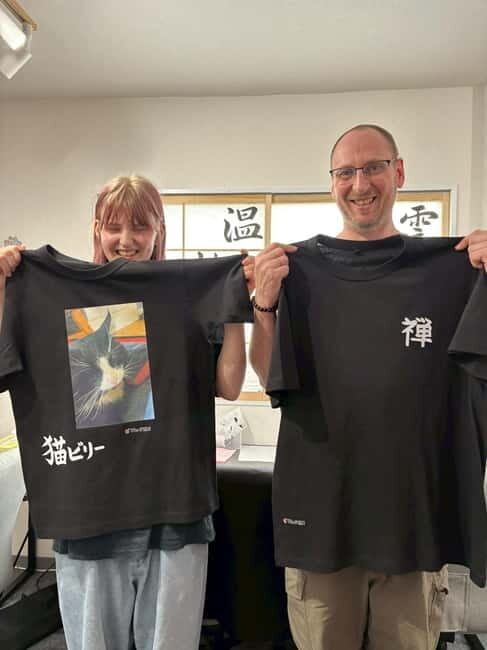
- You pick your design and print placement on a T-shirt (your final product is the point)
- You write a postcard with green tea breaks so you leave with two souvenirs, not one
More ink on paper
- Tokyo: Calligraphy on Kanji Fan & Scroll with Drink★ 5.0 · 210 reviews
- Let’s experience calligraphy in YANAKA, Taito-ku, TOKYO !!★ 5.0 · 127 reviews
- Tokyo: Calligraphy Workshop & Original T-Shirt Creation★ 4.9 · 105 reviews
Japanese Calligraphy Meets Wearable Art
If you’ve ever stared at a bold kanji and thought it looks effortless, this is the class that quietly corrects that myth. Japanese calligraphy is all about pressure, direction, and timing, and the session is built so you understand what you’re making as you make it.
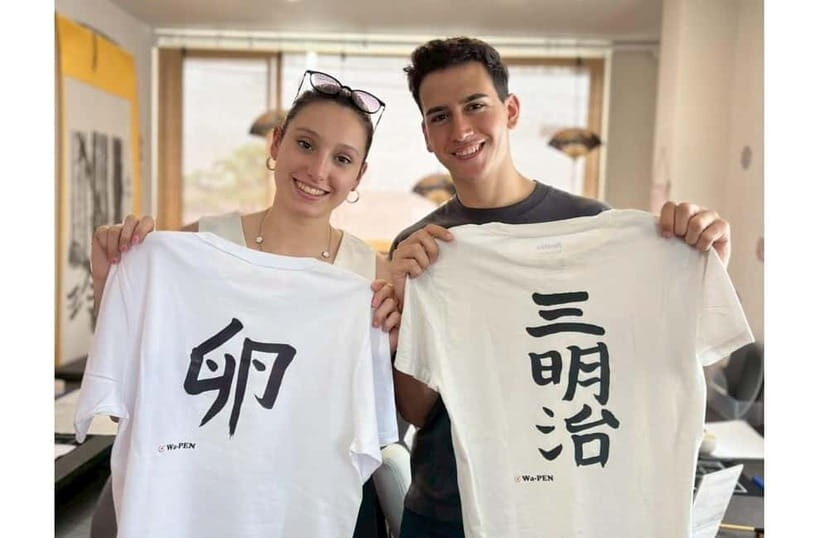
The flow is simple: you start with culture and context, then you handle real tools—brush, ink, paper—and finally you see your work transfer onto clothing. That’s the magic trick here. Most art workshops end at a sheet of paper. This one ends with something you’ll wear.
The class runs about 1 hour to 90 minutes, and it’s taught in English. The exact start times depend on availability, so check the schedule for the option that fits your day.
Learning the Character Story First, Not Last
Before anyone hands you a brush, the session begins with the history of Japanese characters and culture. You learn why characters look the way they do, and that changes how you draw them. Instead of copying shapes with no meaning, you connect the strokes to the broader tradition.
This matters for two reasons.
First, it helps your brain switch from drawing to writing. In shodo, the goal isn’t perfect calligraphy-as-a-copy. It’s expressing the character with correct structure and rhythm.
Second, it makes the final T-shirt feel personal. When you understand what the character system represents, your finished shirt doesn’t feel like a graphic you found. It feels like a small cultural souvenir with an origin story.
Ink-Making and the Brush Called Fude
Then comes the part that feels most real: ink. You make ink with water and a Sumi ink stick. This isn’t just a prop stage. You see how the ink forms and how it affects your strokes.
After that, you learn how to use a Japanese pen called Fude. The “Fude” part is important because calligraphy isn’t drawn with a typical marker feel. It’s brush control: how much ink you pick up, how you hold the brush, and how you commit to each line.
You’re set up with the right materials, including the basics that keep ink from turning into a slippery mess. The class includes items like:
- an inkstone
- a paper-stopper
- an under pad
- pen, paper, ink, and other writing tools you need
You don’t have to be an art person. You just need patience and a willingness to get a little inky. (More on clothes in a bit.)
Your First Practice Strokes on Thin Paper
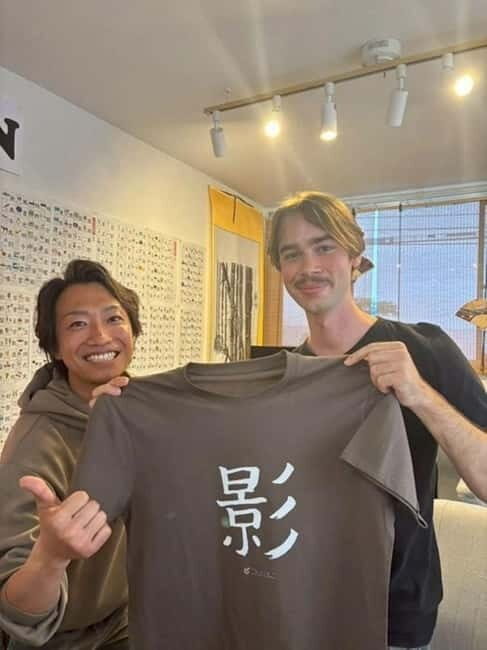
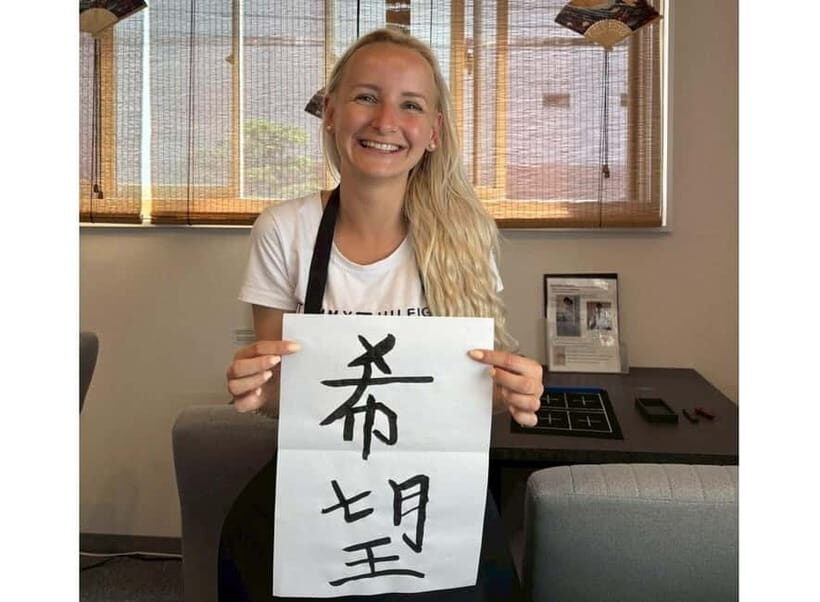
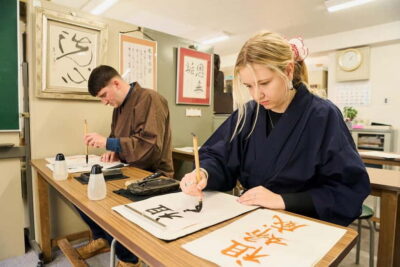
Once you’re set up, you practice writing for about 30 minutes on thin paper with expert teaching. Thin paper is part of what makes brushwork feel responsive. You can feel when you’re too light or too heavy, and you learn quickly how the ink spreads.
If you’re new, your teacher starts you with foundations—how strokes begin, how they finish, and how to keep edges clean. There are also steps that help you avoid common first-timer issues, like pressing too hard or trying to “correct” a stroke mid-motion.
This practice time is where the class earns its value. You’re not rushed toward the final shirt. You get time to adjust your hand and build basic control.





Choosing Your Design and Deciding Where It Goes
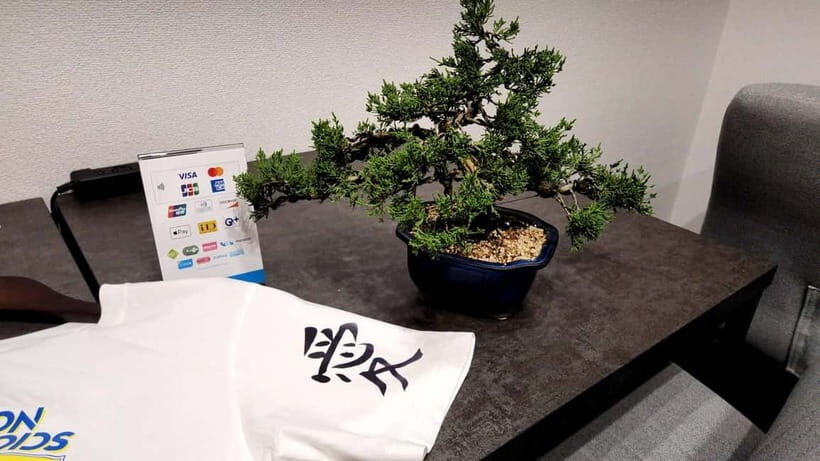
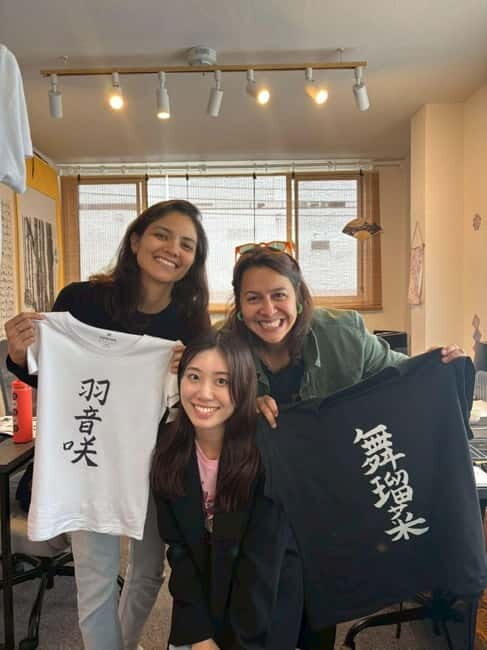
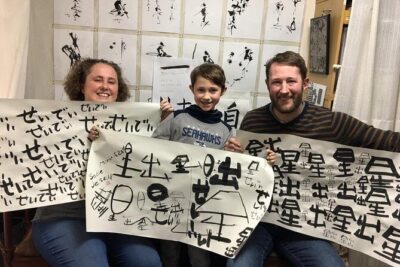
After practice, you choose your favorite design. This is one of the best parts of the experience because it turns calligraphy into a personal choice instead of a one-size-fits-all craft.
Next, you decide where to print it on your clothing. That selection is surprisingly meaningful. Small placement choices change the vibe: centered feels classic, while off-center can feel more modern. You’re getting hands-on design thinking, guided by the instructor.
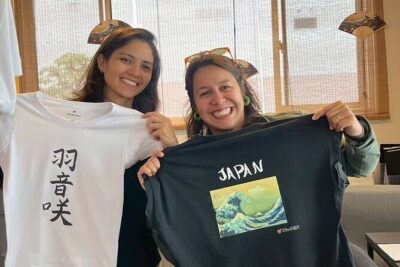
You also learn what will happen when your work moves from paper to fabric. After about 10 minutes, your clothes are printed with your design and ready to take home as a souvenir.
If you already packed a shirt you want to use, you might be able to print onto it as well, but that depends on the instructor’s rules. It’s smart to ask when you arrive.
Green Tea Breaks and a Postcard You’ll Actually Send
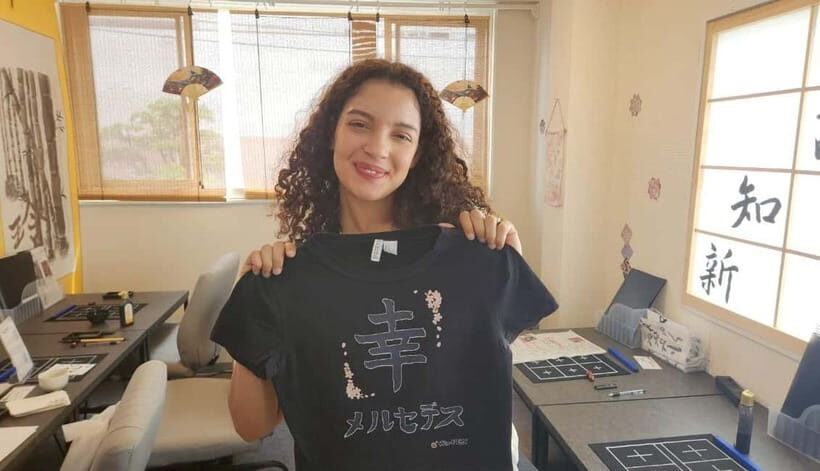
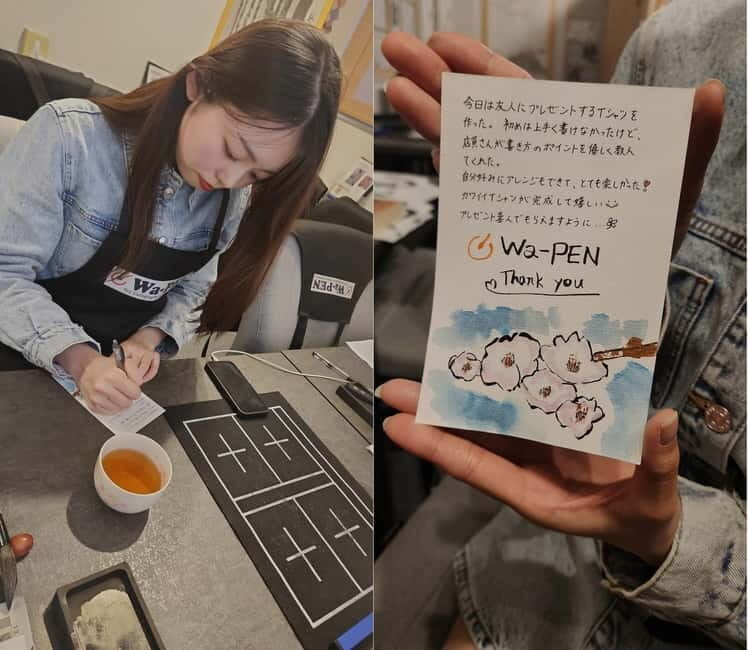
Once your writing is done, you get a cup of green tea while you write a postcard. This isn’t a throwaway moment. It gives you a chance to slow down, think about what you want to say, and turn your artwork into a message you can keep.
You’ll write a postcard to take home as a souvenir. It’s a small detail, but it rounds the experience out. You leave with:
1) a wearable memory (your T-shirt)
2) a written memory (your postcard)
This is also the time when the class feels most relaxing. The early part is about technique. The end part is about turning technique into something that feels like you.
The Materials and Tools You Don’t Need to Buy
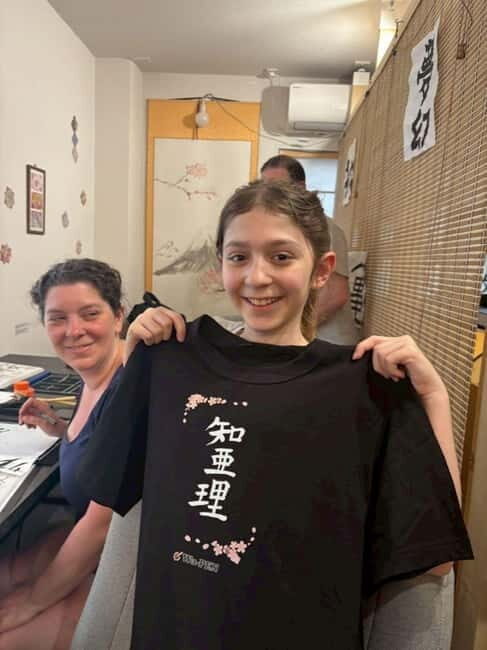
One reason this class is good value at $48 per person is that you aren’t paying for just teaching. You’re also paying for the whole tool setup and final output.
Included materials cover the basics you’d otherwise have to source in Japan:
- pen/brush setup (Fude tool)
- ink, inkstone, and the paper system
- under pad and paper-stopper
- T-shirts for the printing step
- postcard and green tea
The final product is the payoff, too. A lot of workshops stop at paper. Here, your design becomes something you can wear on your next day of exploring.
Price and Value: What $48 Buys You
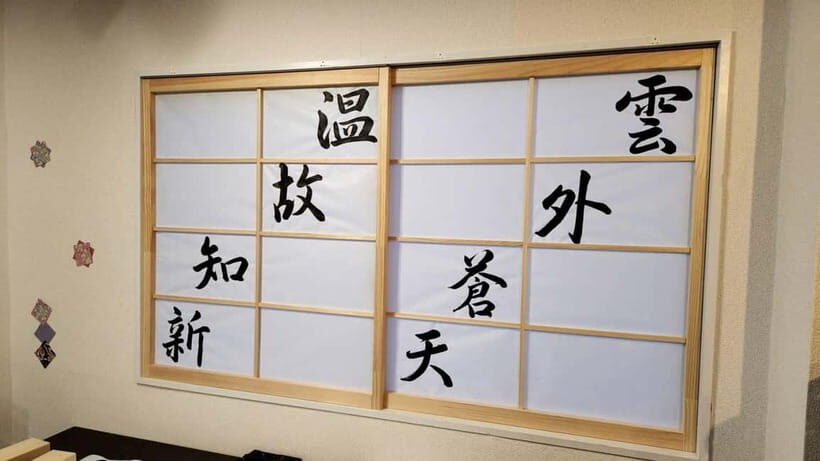
Let’s talk value plainly.
For $48, you’re getting:
- expert instruction in English
- the cultural background on characters
- a full ink-writing practice block (about 30 minutes)
- a printed T-shirt souvenir
- a postcard and green tea
If you compare that to buying calligraphy supplies and trying to learn on your own, the cost becomes easier to justify. The class saves you time, gives you corrections in real-time, and gives you the printing step that beginners usually can’t manage.
Also, the time investment is friendly. Most people can fit 1 to 1.5 hours into a day of sightseeing without losing half a day to logistics.
Getting There Without Stress: Red Brick, 3rd Floor
The meeting point is easy to miss if you don’t look for the right building details.
You’ll find it in a red brick building on the 3rd floor. There’s a sign on the 1st floor, and the restaurant is also on the 1st floor. Go up the stairs to the right of the restaurant.
Two practical tips:
- Arrive about 10 minutes early so you can settle before you start writing
- Wear comfortable clothes you don’t mind getting a bit of ink on
In other words: dress for craft, not for your best outfit.
Who This T-Shirt Calligraphy Class Fits Best
This class works well if you want something more meaningful than a typical souvenir shop purchase.
It’s especially good for:
- beginners who want real instruction, not just a “try this for 10 minutes” experience
- people who like hands-on cultural activities that result in something tangible
- families, including kids (the instruction style can work for younger students too)
If you’re traveling with kids, the pace and patience of the teacher matters. In this class, that teaching style shows up as calm guidance rather than frustration.
It also helps that the session can sometimes feel special when the class is small or quiet, which makes it easier to get feedback.
You can also ask about add-ons if offered. In at least some cases, an option like fan calligraphy may be available for a small extra fee, so it’s worth asking if you want a second craft.
Practical Tips to Get Better Fast
You’ll improve faster if you treat this like a skill practice, not like a test.
A few things that help:
- Follow the teacher’s stroke guidance closely for the first few minutes
- Don’t chase perfection. Aim for a confident stroke
- Expect your clothes to be part of the process, so plan accordingly
- If you want a shirt design that fits your style, spend a few moments deciding placement before printing
And timing helps, too. One smart strategy is to schedule this in the morning. While you’re waiting for your shirt to be ready, you can get a head start on exploring nearby areas.
Should You Book This Calligraphy and T-Shirt Printing Class?
Book it if you want a cultural activity with a real outcome. The class is strong because it connects Japanese characters, practical brush technique, and a wearable souvenir in one smooth arc.
Skip it if you’re very sensitive to ink, you want a clean, minimal-touch experience, or you’d rather spend your time on a longer sightseeing day. Also, if you already have your heart set on learning purely for aesthetic reasons, you might find the hands-on printing step slightly more “craft workshop” than “gallery-style calligraphy.”
Otherwise, this is a well-structured class for short-term travelers: you get tools, instruction, and a finished piece you can wear immediately.
FAQ
How long is the calligraphy and T-shirt printing class?
The class duration is listed as 1 hour to 90 minutes, depending on available starting times.
Is the instruction offered in English?
Yes. The instructor teaches in English.
What’s included besides the T-shirt?
You get expert guidance, all necessary writing materials, green tea, a postcard, and the T-shirt. The class also covers historical content about Japanese characters.
What do I need to bring, and what should I wear?
You should bring comfortable clothes and wear something you don’t mind getting ink on.
Where do I meet for the class?
Meet in a red brick building on the 3rd floor. Look for a sign on the 1st floor (the restaurant is on the 1st floor). Take the stairs to the right of the restaurant.
Can I cancel, and is there a pay-later option?
Yes. You can cancel up to 24 hours in advance for a full refund. You can also reserve now & pay later to keep your plans flexible.
More Tour Reviews in Tokyo



Brush and Ink: More Calligraphy Hours

Fresh reviews from around Tokyo






Calligraphy Experiences, compared.
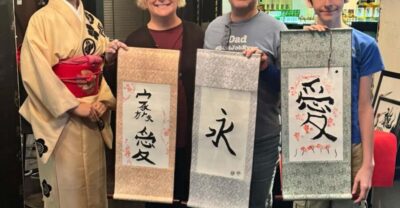 ★ 5.0Calligraphy on Kanji Fan & Scroll with DrinkFrom $53210 reviews
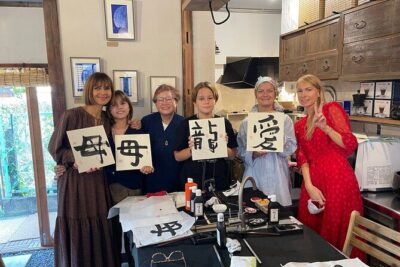 ★ 5.0Let’s experience calligraphy in YANAKA, Taito-ku, TOKYO !!From $75127 reviews
 ★ 4.9Calligraphy Workshop & Original T-Shirt CreationFrom $30105 reviews
★ 5.0Calligraphy Workshop & Original T-Shirt CreationFrom $3380 reviews
★ 4.9Calligraphy Workshop & Original T-Shirt CreationFrom $30105 reviews
★ 5.0Calligraphy Workshop & Original T-Shirt CreationFrom $3380 reviews
 ★ 5.0Calligraphy Culture SHODO Experience in TokyoFrom $3366 reviews
 ★ 5.0Tokyo Asakusa:Calligraphy & Make T-shirt ActivityFrom $5862 reviews
 ★ 5.0Asakusa Calligraphy Workshop Craft Your Own Art in TokyoFrom $4054 reviews
 ★ 5.0Tokyo Japanese Calligraphy Experience with a Master ArtistFrom $9235 reviews
Browse the lists this tour appears in