
Reviewed · WORKSHOPS
Experience Big soba knife Soba Making Class in Tokyo Kappabashi
Sharp knives, calm pace.
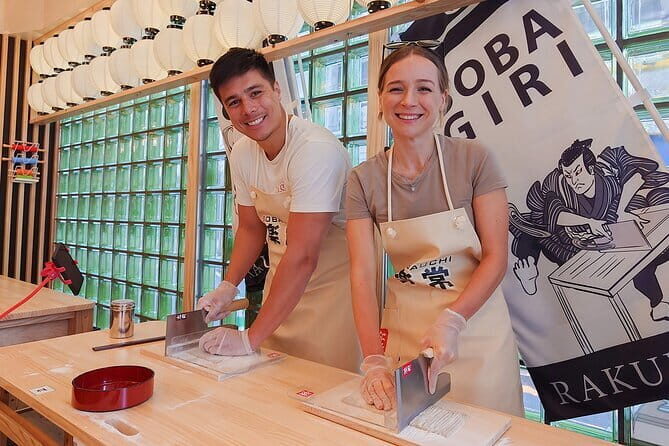
This soba-making class in Kappabashi is interesting because you learn how to make authentic noodles with buckwheat only (no wheat flour), then taste what you cut. I like how the process is taught step-by-step and hands-on, and I love the small-group size capped at 15 people, so you’re not lost in the crowd.
One thing to consider: buckwheat allergies mean you can’t enter the restaurant, and the included food is a snack/tasting rather than a full sit-down meal.
In This Review
- Key highlights to look for
- Kappabashi and Asakusa: the kitchen-town setting that makes soba feel real
- Inside the Open Kitchen Studio class: what you’re learning in 50 minutes
- A quick reality check on language and guidance
- Buckwheat dough to noodle strips: how the class moves step by step
- Your hands do the work, then you eat: tasting, take-home noodles, and optional upgrades
- Flavor options and the vegan/no-pork add-on
- Matcha soba and sake options for extra Tokyo flavor
- Where you meet and how to plan your day around this 50-minute class
- How to pair it with Asakusa sightseeing
- Price and value: what $51.33 buys you in Tokyo
- Who should book Sobagiri Rakujyo and who should skip
- Who should skip
- Should you book this soba class?
- FAQ
- How long is the soba making class?
- What is the price per person?
- Where is the meeting point?
- How many people are in the group?
- Are aprons and gloves provided?
- Is the class made with wheat flour?
- Can I request vegan or no-pork options?
- Can I take the noodles I make home?
- Are buckwheat allergies allowed?
- Can I cancel for a full refund?
Key highlights to look for
- No wheat flour: you’re making soba from buckwheat flour and water only
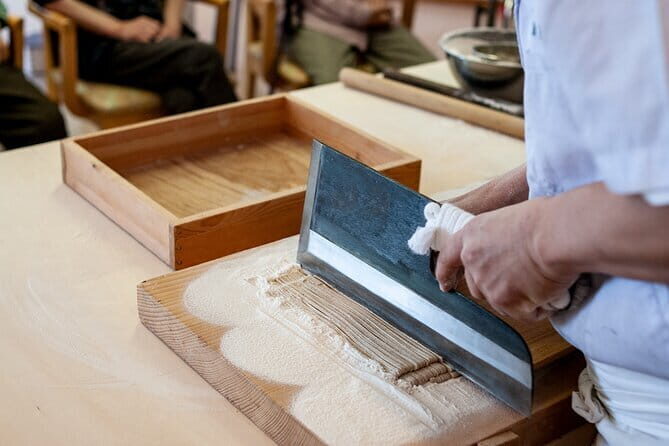
- Four-step workflow: adding water, kneading, stretching, then cutting
- Soba-specific knife practice: you use a large knife designed for the job
- Tasting built in: you’ll eat what you cut at the end
- Tools provided: aprons and gloves are available in different sizes
- Kappabashi kitchen-street stop: time in Tokyo’s cooking equipment neighborhood
More things to make with your own hands
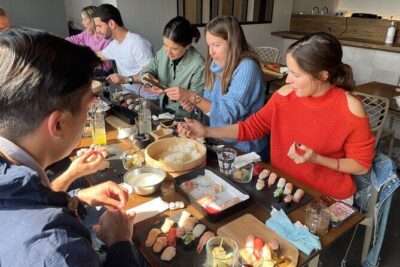
- Sushi Making Tokyo Roll and Authentic Japanese Sushi Class★ 5.0 · 3,971 reviews
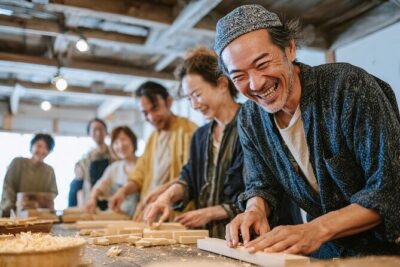
- Tokyo Shinjuku Chopsticks Making Class★ 5.0 · 1,763 reviews
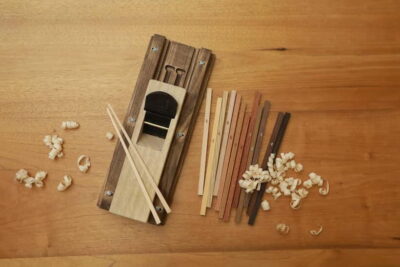
- Chopstick Making Workshop in Ginza★ 4.8 · 1,366 reviews
Kappabashi and Asakusa: the kitchen-town setting that makes soba feel real
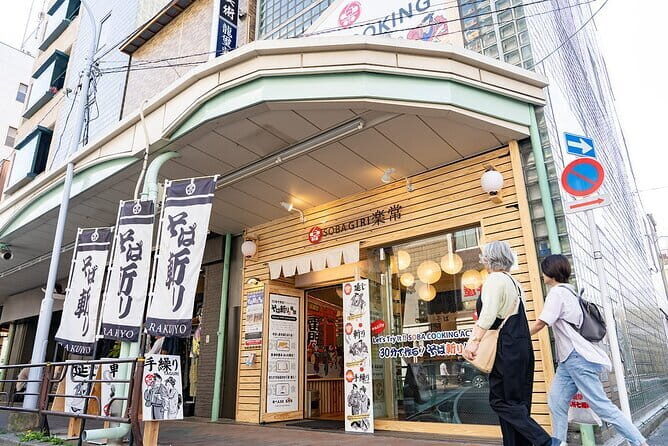
Tokyo has themed streets, then it has places like Kappabashi—where the shopping is practical. This class sets you up to walk around Asakusa and Kappabashi Tool Specialty Store Street (Kappabashi Dogugai), the area known for professional cooking gear. Even if you never buy a thing, it changes your mindset. You start seeing food as tools plus technique, not just recipes.
The schedule loops back through Asakusa, so you get a mini taste of the “workday Japan” vibe where chefs come to source what they need. And since the class is at a studio in the Kappabashi/Asakusa zone (about 25 minutes from Sensoji Temple), you can pair it with a morning or afternoon sightseeing block without burning your whole day.
Inside the Open Kitchen Studio class: what you’re learning in 50 minutes
This experience runs about 50 minutes total, and the heart of it is a hands-on soba session at Open Kitchen Studio. You’ll work with buckwheat flour from Nagano Prefecture, and the focus is the authentic method for making thin noodles using a large soba knife.
Here’s what makes the class feel efficient: they teach the process in four steps that you can actually do, not just watch. The time teaching and practicing is described as about 30 minutes for the main sequence (adding water → kneading → stretching → cutting). That means you’re not standing around for most of the experience while someone else does the work.
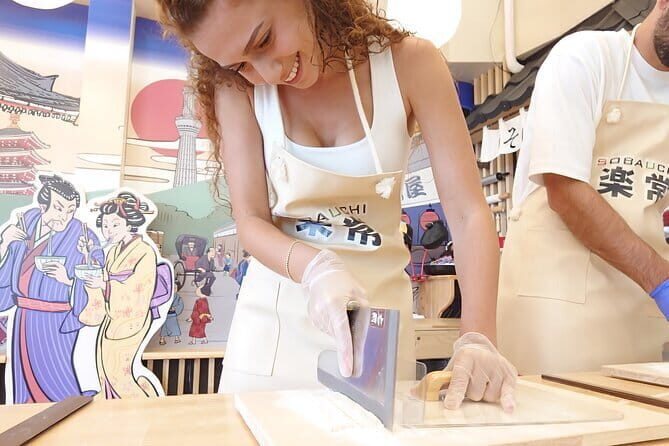
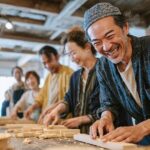
Also, the setup is designed to be easy to join. Aprons and gloves are provided in various sizes, and the class is kept to a maximum of 15 travelers, so you’re more likely to get personal coaching when you’re forming and cutting your noodles.
A quick reality check on language and guidance
You shouldn’t worry too much if your Japanese is basic. The instruction style is built around demonstrations and hands-on corrections. Expect the guide to use a lot of clear technique cues (and a sense of humor), even if English isn’t the main language.
Buckwheat dough to noodle strips: how the class moves step by step
You start from simple ingredients. The class is described as soba making without wheat flour, which matters because buckwheat behaves differently from wheat-based dough. It doesn’t act the same way when you stretch and shape it, so technique is everything.
In plain terms, you’ll practice the core stages:
- Adding water: You’ll work with the right water amount to bring the buckwheat flour together.
- Kneading: You’ll follow the instructor’s timing and pressure cues to develop workable texture.
- Stretching: You’ll form thinner noodle strips, aiming for even width and length before cutting.
- Cutting: You’ll use the soba-designed knife to slice long, thin noodles.
The “smart technology” note is interesting because it’s part of how the studio keeps the workflow smooth for beginners. Translation: you’re not guessing at every stage, and the class is organized so you can focus on doing the physical tasks correctly.
One more practical thing: there’s an emphasis on getting you to the finish line. The reviews and studio notes point to clear, organized teaching and techniques you can repeat later. Even if you never make soba again at home, you’ll leave with a real sense of the steps.





Your hands do the work, then you eat: tasting, take-home noodles, and optional upgrades
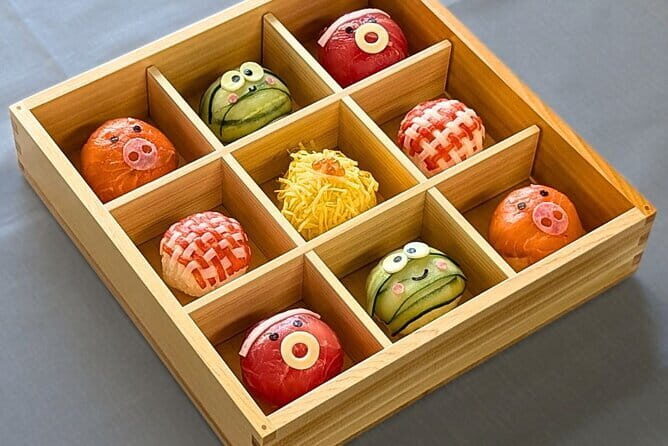
The best part is not only learning—it’s eating. This class includes snacks where you can taste the soba you cut yourself. It’s not framed as a buffet lunch, but it is satisfying in the way a hands-on food activity should be: you make it, then you taste it.
You also have options for how to handle what you create. The class notes that you can take out the noodles you make, which is a big deal if you want a souvenir you can share or save for later.
Flavor options and the vegan/no-pork add-on
Food options are part of the menu structure. There’s an additional charge of 500 yen if you choose a vegan or no-pork flavor option. That’s worth planning for if you’re budgeting a “snack + tasting” activity and want to stay within a set total.
Matcha soba and sake options for extra Tokyo flavor
If you want to go beyond plain soba tasting, there are add-ons:
- Matcha soba: described as mixed into the soba flour, 700 yen
- Sake tasting (three types): the owner compares and selects 1500 yen
These options are useful if you like your food experiences with a little variety. The matcha route gives you a different flavor profile you can recognize quickly. The sake set is for when you want the class to feel more like a guided tasting moment, not just a cooking lesson.
Where you meet and how to plan your day around this 50-minute class
You’ll meet at 111-0036 Tokyo, Taito City, Matsugaya, 3-chōme 112 松が谷センタービル. It ends back at the meeting point, so you’re not left wandering afterward trying to find your way.
The class is also described as being near public transportation, and the experience uses a mobile ticket, which makes entry smoother.
How to pair it with Asakusa sightseeing
Because it’s in the Asakusa/Kappabashi area and the studio is around 25 minutes from Sensoji Temple, I’d treat this as either:
- a midday reset (after you’ve walked enough temples), or
- a near-late afternoon activity when you want food-focused momentum rather than more museum time.
You’ll finish with noodles to taste, so you may not need an immediate full meal right after. But if you’re hungry for a true lunch, plan to eat before or after—this is described as snacks/tasting rather than a full included meal.
Price and value: what $51.33 buys you in Tokyo
At $51.33 per person, this class lands in a mid-range cooking experience price band for Tokyo. The value is mostly in what’s included and what you actually get to do.
Here’s the value math that matters:
- You’re capped at 15 people, so coaching is easier and the pace feels controlled.
- Aprons and gloves are included (and they come in different sizes).
- All fees and taxes are included in the listed price.
- You eat what you make through included soba snacks.
- The experience includes a Kappabashi kitchen-street stop, which adds a foodie context beyond “one room, one class.”
Then there are reasonable optional costs. Vegan/no-pork is 500 yen. If you add matcha soba or sake, expect extra charges. But those are upgrades, not surprises.
The takeaway: if you want a hands-on food skill plus a Tokyo neighborhood experience, the price feels fair. If you only want the cheapest snack possible, you might find better bargains elsewhere.
Who should book Sobagiri Rakujyo and who should skip
This is a strong fit if you:
- enjoy practical cooking lessons and want technique you can understand,
- like small group experiences where the instructor can correct your form,
- are visiting Asakusa/Kappabashi anyway and want your food day to feel anchored in real tools and real steps.
It also seems designed to work well for different group types. The store usage ranking lists strong interest from couples and families with children, and that lines up with the “organized and approachable” vibe described in feedback.
Who should skip
Skip it if:
- you have a buckwheat allergy (the restaurant won’t permit entry),
- you’re not interested in hands-on food work and want mostly just tasting,
- you’re expecting a full included meal rather than snacks/tasting.
Should you book this soba class?
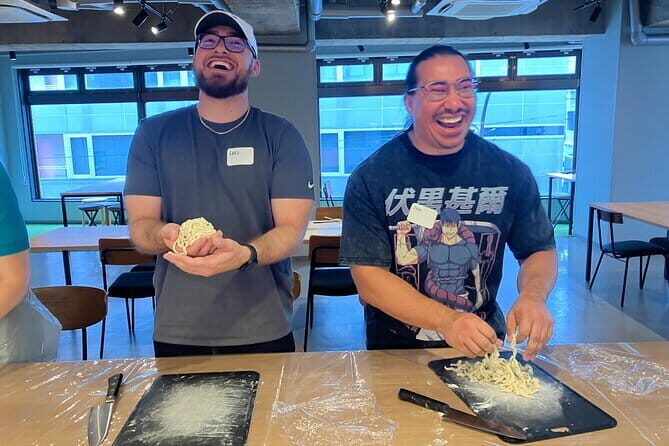
Book it if you want a short, focused food experience that teaches real steps—cutting thin noodles with the right knife—and ends with you eating your own handiwork. The small-group limit and the step-by-step structure are the deciding factors.
Don’t book it if buckwheat isn’t safe for you, or if your priority is a long, sit-down dining experience. This is designed as a lesson first, meal second.
FAQ
How long is the soba making class?
It runs for about 50 minutes (approx.).
What is the price per person?
The price is listed as $51.33 per person.
Where is the meeting point?
The meeting point is at 111-0036 Tokyo, Taito City, Matsugaya, 3-chōme112 松が谷センタービル.
How many people are in the group?
The class has a maximum of 15 travelers.
Are aprons and gloves provided?
Yes. Aprons and gloves are provided in various sizes.
Is the class made with wheat flour?
No. The class describes soba making without wheat flour.
Can I request vegan or no-pork options?
A vegan or no-pork flavor option is available, with an additional fee of 500 yen.
Can I take the noodles I make home?
Yes. You can take out the noodles you made.
Are buckwheat allergies allowed?
No. Those with buckwheat allergies are not permitted to enter the restaurant.
Can I cancel for a full refund?
Yes—free cancellation is offered if you cancel at least 24 hours before the experience starts.
Make Something to Take Home

More Tour Reviews in Tokyo



Fresh reviews from around Tokyo






Workshops, compared.
 ★ 5.0Sushi Making Tokyo Roll and Authentic Japanese Sushi ClassFrom $593,971 reviews
 ★ 5.0Tokyo Shinjuku Chopsticks Making ClassFrom $201,763 reviews
 ★ 4.8Chopstick Making Workshop in GinzaFrom $251,366 reviews
 ★ 5.0Tokyo Sushi Making Class in Tsukiji with Professional ChefFrom $491,177 reviews
 ★ 5.0Ramen & Gyoza Cooking Class in Tokyo with Local Supermarket VisitFrom $122823 reviews
 ★ 5.0Matcha Making Class in Tokyo with Authentic Japanese Sweets SetFrom $21744 reviews
 ★ 5.0Samurai Sword & Archery Class from Samurai DescendantFrom $193603 reviews
 ★ 4.9Tsukiji Fish Market Sushi Making Class with Pro ChefFrom $63506 reviews
Browse the lists this tour appears in