
Reviewed · ASAKUSA TOURS
[electric bicycle tour]: 6-hour travel course by electric bicycle Asakusa, Ueno Park, Edo-Tokyo Museum, and Sky Tree. (There is a support car.)
Six hours can feel like Tokyo speed.
This one-day electric bicycle sightseeing route strings together four big stops—Edo-Tokyo Museum, Ueno Park, Senso-ji in Asakusa, and an optional Tokyo Skytree—using a guided plan in central areas that are easy to reach but not always easy to connect on your own. I like that the ride is structured (museum first, then park, then temples) and the pace is built for travelers who want to see a lot without wrestling with traffic and transfers.
What really stands out is the practical side: you get good bikes, a helpful guide, and a support car that can take over for tired legs or for carrying your luggage. The main drawback to consider is that the time allocation can feel a bit uneven if you’re the type who wants more explanation at every stop, since the guidance may be brief rather than super detailed.
In This Review
- Key Highlights You Should Know
- Why an Electric Bike Day Feels Smarter Than It Looks
- Ryogoku Meeting Point and the Museum Start That Sets the Tone
- Edo-Tokyo Museum: The Best Use of a Guided Window
- Edonoren Lunch in Sumida: Included, Local, and Flexible
- Ueno Park by Electric Bike: Walking the Grounds, Not Fighting Transfers
- Asakusa and Senso-ji: Kaminarimon to the Shrine Streets
- Tokyo Skytree Optional Stop: A Nice Add If You Still Have Energy
- Price and Value: What $283.17 Really Covers
- Logistics That Matter: Rules, Pickup, and What to Bring
- What the Guide Style Means for Your Experience
- Who Should Book This Asakusa–Ueno Electric Bike Day
- Should You Book This Tour?
- FAQ
- How long is the electric bicycle tour?
- What stops are included in the basic plan?
- Is Tokyo Skytree included?
- Is pickup available?
- What languages does the guide support?
- What’s included in the price?
- What isn’t included?
- Are there age and rider height/weight requirements?
- What should I bring?
- What is the cancellation policy?
Key Highlights You Should Know
![[electric bicycle tour]: 6-hour travel course by electric bicycle Asakusa, Ueno Park, Edo-Tokyo Museum, and Sky Tree. (There is a support car.) - Key Highlights You Should Know](https://8.thetokyotraveller.com/wp-content/uploads/electric-bicycle-tour-6-hour-travel-course-by-electric-bicycle-asakusa-ueno-park-edo-tokyo-museum-and-sky-tree-there-is-a-support-car-1.jpg)
- Small group size (max 6) keeps the ride manageable and makes it easier for the guide to adjust pacing.
- Support car + luggage storage helps you avoid arriving drained, and you can offload if you need to.
- Edo-Tokyo Museum is fully guided (2 hours) with a guide who knows Japanese history.
- Lunch in Sumida (Edonoren) is included (1 hour) with several popular local choices like monjayaki and okonomiyaki.
- Ueno Park walk plus temple streets gives you a mix of green space and classic old Tokyo atmosphere.
- Optional Tokyo Skytree stop adds a skyline moment if you have energy left.
More mornings around Senso-ji and the old town
- Tokyo: Japanese Dance Cabaret Theater Asakusa-Kaguwa Ticket★ 4.8 · 2,270 reviews
- Tokyo: Asakusa Walking Tour with Sensoji Temple Visit★ 4.8 · 1,583 reviews
- Tokyo Asakusa Rickshaw Tour★ 5.0 · 1,375 reviews
Why an Electric Bike Day Feels Smarter Than It Looks
![[electric bicycle tour]: 6-hour travel course by electric bicycle Asakusa, Ueno Park, Edo-Tokyo Museum, and Sky Tree. (There is a support car.) - Why an Electric Bike Day Feels Smarter Than It Looks](https://8.thetokyotraveller.com/wp-content/uploads/electric-bicycle-tour-6-hour-travel-course-by-electric-bicycle-asakusa-ueno-park-edo-tokyo-museum-and-sky-tree-there-is-a-support-car-2.jpg)
Tokyo rewards you for planning, but it punishes you for overplanning. This tour uses electric bikes to stitch together sights that would otherwise require multiple rides, long walks, or too many transfers—especially around Asakusa and Ueno where pedestrian traffic can be thick.
You’ll be riding in a small group (up to 6 travelers), which matters. Fewer people means the guide can control stops and regrouping, and you won’t be stuck waiting behind a parade of strangers. It’s also a guided route with a Japanese guide who can respond in Korean, English, Chinese, and Vietnamese, so you’re not stuck guessing what to look for.
One more practical win: there’s a support car. If you get tired, you can have your bicycle and luggage loaded and keep moving through the day without turning the tour into a grind.
Ryogoku Meeting Point and the Museum Start That Sets the Tone
The day begins near Ryogoku Station, with a meeting point at a hotel lobby within Tokyo’s 23 wards if pickup is offered. If not, you’ll meet at the Ryogoku area, and ticket redemption is tied to a nearby Toei Ryogoku Station location. This is the kind of setup that works well because you’re starting from an area that’s not buried under the busiest tourist corners.
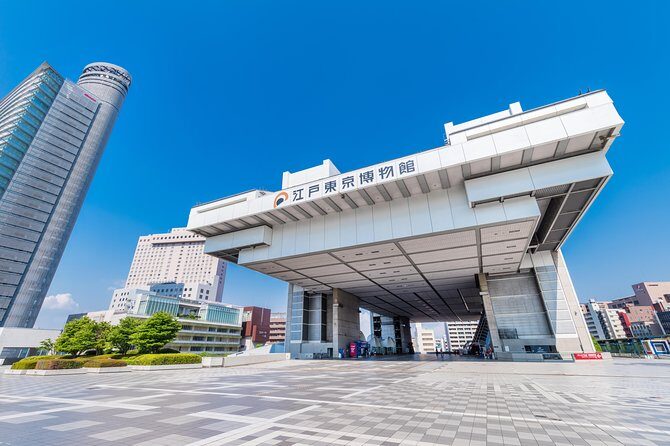
The first major stop is Edo-Tokyo Museum for about 2 hours, and it’s guided. This is a smart opener because it gives you context before you start seeing the more familiar religious and neighborhood scenes later. You’ll walk through exhibits with a guide who clearly knows Japanese history, which helps you connect what you’re looking at to what you’ll see outside the museum.
If you’re hoping for deep, nonstop narration every minute, you may notice the pacing is not always instruction-heavy. Still, the museum portion is one of the best chances to get actual historical framing while the day is young.
Edo-Tokyo Museum: The Best Use of a Guided Window
In a short day, museums can go two ways: either you skim because you’re rushing, or you burn time because you’re lost. Here, the guide-led approach keeps you moving through meaningful sections instead of wandering.
Admission is included, so you don’t have to manage cash, tickets, or ticket lines as part of your schedule. And because this part lasts about two hours, you get enough time to slow down without feeling like you’re trapped in a long indoor session.
This is also where I’d expect the guide to be most helpful, especially if you like “why things changed” storytelling—industrial growth, city layout, and the transformation from older Edo-era patterns into modern Tokyo. The benefit is simple: when you later see temples and streets, you’ll have a mental map that’s more than just photos.
Edonoren Lunch in Sumida: Included, Local, and Flexible
![[electric bicycle tour]: 6-hour travel course by electric bicycle Asakusa, Ueno Park, Edo-Tokyo Museum, and Sky Tree. (There is a support car.) - Edonoren Lunch in Sumida: Included, Local, and Flexible](https://8.thetokyotraveller.com/wp-content/uploads/electric-bicycle-tour-6-hour-travel-course-by-electric-bicycle-asakusa-ueno-park-edo-tokyo-museum-and-sky-tree-there-is-a-support-car-4.jpg)
Lunch is built into the route for about 1 hour at Edonoren in the Sumida area. This is not a throwaway meal stop—it’s scheduled, included, and timed so you can keep momentum after the museum.
You can choose from a menu that includes:
- Monjayaki (pan-fried batter with various ingredients) and okonomiyaki
- Seafood dishes
- Chanko and seasonal dishes
- Sushi
- Tempura
- Fukagawa meshi
- Japanese soba noodles
- Chicken and Gamecock
If you apply in advance, you can make a reservation, which is useful because peak food demand can be real in Tokyo. Even if you don’t reserve, the tour’s set lunch window generally keeps you from drifting into a long wait.
Practical tip: if you’re the type to eat fast and move on, you’ll like the structure. If you like to linger, plan to enjoy the meal but still respect that you’ll have more stops waiting.
More museum hours worth queueing for


Ueno Park by Electric Bike: Walking the Grounds, Not Fighting Transfers
After lunch, you’ll head to Ueno Park by electric bike for about 30 minutes, then walk the park for around 1 hour. This section is one of the nicest “Tokyo contrast” moments: you switch from museum interiors and lunch to open air and famous historical grounds.
The guide covers key spots, including Kaneiji, and gives quick context so you can look at the park’s major landmarks with some meaning instead of just passing by. I like that this is a walk-with-explanation format. You’re not just “seen at Ueno,” you’re oriented.
Also, riding between areas by bike is a time-saver. On your own, you might lose time dealing with route planning and slow foot traffic. Here, the electric assistance smooths the middle segments, so you arrive at the park ready to stroll.
Asakusa and Senso-ji: Kaminarimon to the Shrine Streets
![[electric bicycle tour]: 6-hour travel course by electric bicycle Asakusa, Ueno Park, Edo-Tokyo Museum, and Sky Tree. (There is a support car.) - Asakusa and Senso-ji: Kaminarimon to the Shrine Streets](https://8.thetokyotraveller.com/wp-content/uploads/electric-bicycle-tour-6-hour-travel-course-by-electric-bicycle-asakusa-ueno-park-edo-tokyo-museum-and-sky-tree-there-is-a-support-car-5.jpg)
Next is the move to Asakusa: about 15 minutes by electric bike, then a guided Senso-ji Temple tour lasting roughly 30 minutes to 1 hour. You’ll start around Kaminarimon and tour through the shopping street leading toward the shrine.
This is the part that feels most like classic Tokyo postcards, but the guide makes it less random. Instead of you guessing which side lanes matter or where to look for the “main” views, you get a planned route that funnels you through the core experience.
One note from a reality-check perspective: temple-area shopping streets can be crowded. The tour format keeps you from wandering in circles, and the small group helps you move through thick pedestrian zones without getting separated.
If your goal is photos, this is where you’ll want your camera charged. If your goal is atmosphere, this is where you’ll feel it most—snacks, storefront energy, and that old-meets-new street vibe.
Tokyo Skytree Optional Stop: A Nice Add If You Still Have Energy
The itinerary includes an optional extension to Tokyo Skytree. You’ll bike for about 10 minutes, then you’ll have around 30 minutes at the area (admission ticket is listed as free).
Is it worth it? If you want skyline views or just like checking one major modern landmark, it can be a good capstone after the older-feeling neighborhoods. If you’re already satisfied with the temple and museum mix—or you’re tired from riding—skip it. You still get the core Asakusa and Ueno experience either way.
Because timing can shift depending on season, I’d treat Skytree as a bonus rather than a must. The tour structure makes it feel like an optional reward, not an obligation.
Price and Value: What $283.17 Really Covers
![[electric bicycle tour]: 6-hour travel course by electric bicycle Asakusa, Ueno Park, Edo-Tokyo Museum, and Sky Tree. (There is a support car.) - Price and Value: What $283.17 Really Covers](https://8.thetokyotraveller.com/wp-content/uploads/electric-bicycle-tour-6-hour-travel-course-by-electric-bicycle-asakusa-ueno-park-edo-tokyo-museum-and-sky-tree-there-is-a-support-car-6.jpg)
At $283.17 per person for about 6 to 7 hours, the value comes from the bundle. You’re paying for more than transportation—you’re paying for guidance, time saved through electric biking, and built-in stops that would take planning to connect smoothly.
Included items:
- Use of the bicycle
- Snacks, plus coffee and/or tea
- Bottled water
- Helmet (option)
- WiFi on board
- Luggage storage
- Lunch is included at Edonoren
- Museum and other listed admissions
Not included:
- Personal expenses after you buy souvenirs (you can store souvenirs in the support car)
- Lunch is included, so you don’t need to budget for it
Also, your group size is capped at 6. That’s not nothing in Tokyo, where larger tours can feel slow or chaotic. The tour being booked about 15 days in advance on average suggests it’s a popular way to hit multiple districts efficiently.
If you’re used to paying for guides separately, this price looks more reasonable. If you think of it as an e-bike rental only, it will feel expensive. I’d frame it as a guided sightseeing day with an e-bike shortcut.
Logistics That Matter: Rules, Pickup, and What to Bring
This tour can include hotel pickup (within Tokyo’s 23 wards). That’s a big deal if you don’t want to navigate stations before your first stop.
A few important constraints:
- Tour participants must be at least 11 years old and able to ride bicycles.
- Bicycle users must be 135 cm to 190 cm tall and 100 kg or less.
- It runs daily only if the group meets minimum numbers; if they don’t, they’ll contact you separately.
The meeting area is Ryogoku Station (with redemption at a nearby Toei Ryogoku Station spot). If weather turns bad, you’ll be contacted. Bring your voucher.
What to bring:
- Comfortable clothes and a backpack
- You may want to use the helmet option (it’s provided as an option)
- Overseas travel insurance is recommended, and bicycle insurance is available if you need it
If you’re worried about comfort, think about shoes and clothing first. Electric bikes make distance easier, but you still spend hours standing, walking, and riding.
What the Guide Style Means for Your Experience
Here’s the honest balancing point: the guide is described as helpful and flexible, which is great for a city ride. The bikes are also praised as good quality, which matters because a bad bike turns a fun day into a tedious day fast.
The tradeoff is information density. Some feedback points to not much info, so the tour might feel more like practical navigation and highlights than a deep lecture at each stop. If you love history, you may wish you had more explanation during the park and temple walking segments.
So I’d match expectations to your style:
- If you want structure, quick context, and smooth logistics: this works.
- If you want constant detailed storytelling: you might feel a little short.
Who Should Book This Asakusa–Ueno Electric Bike Day
This tour fits best if you:
- Want to see Asakusa, Ueno Park, and Edo-Tokyo Museum in one day without complicated transfers
- Like guided highlights rather than hours of solo wandering
- Can comfortably ride an e-bike for the day’s segments (with the support car option if needed)
- Have kids 11+ who can ride, or you’re traveling as a couple or small group
It may not be the right choice if you:
- Want maximum explanation at every stop
- Prefer to control your own pace completely
- Are unsure you meet the height and weight bike requirements
Should You Book This Tour?
I’d recommend booking if your priority is efficiency with a guided backbone. The combination of Edo-Tokyo Museum + Ueno Park + Senso-ji is strong, and the e-bike setup plus support car means you can enjoy the day instead of fighting fatigue.
I’d think twice if you’re the type who expects a nonstop deep-dive talk through every moment. The tour is still useful and well organized, but the information level may feel lighter than you hope.
If you can handle an active day and want a smooth Tokyo route, this is a solid way to get your bearings fast and hit multiple iconic neighborhoods in one pass.
FAQ
How long is the electric bicycle tour?
The tour runs for about 6 to 7 hours.
What stops are included in the basic plan?
The basic plan includes Edo-Tokyo Museum, Ueno Park, and Senso-ji Temple in Asakusa, plus rides between them.
Is Tokyo Skytree included?
Tokyo Skytree is an optional stop. If you want it, you can add it to the day.
Is pickup available?
Pickup is offered at the hotel lobby within Tokyo’s 23 wards.
What languages does the guide support?
The guide is Japanese, with responses available in Korean, English, Chinese, and Vietnamese.
What’s included in the price?
The price includes use of the bicycle, snacks, coffee/tea, bottled water, luggage storage, WiFi on board, and the included stops’ entries where listed (like Edo-Tokyo Museum). Lunch is also included at Edonoren.
What isn’t included?
Personal expenses like souvenirs are not included (you can store souvenirs in the support car). Other personal spending is also not included.
Are there age and rider height/weight requirements?
Yes. The tour requires participants to be at least 11 years old and able to ride bicycles. Bicycle users must be 135 cm to 190 cm tall and weigh up to 100 kg.
What should I bring?
Bring your voucher, comfortable clothes, and a backpack. The tour also mentions the use of a helmet option.
What is the cancellation policy?
Cancellation is free up to 24 hours before the start time for a full refund. If the minimum number of travelers isn’t met, you’ll be offered another date/experience or a full refund.
More Tours in Tokyo






More Tour Reviews in Tokyo



Around Senso-ji: More Asakusa Picks

Fresh reviews from around Tokyo






Asakusa Tours, compared.
 ★ 4.8Japanese Dance Cabaret Theater Asakusa-Kaguwa TicketFrom $492,270 reviews
 ★ 4.7Meiji Shrine, Asakusa, Skytree Bus Tour and CruiseFrom $1221,986 reviews
 ★ 4.8Asakusa Walking Tour with Sensoji Temple VisitFrom $221,583 reviews
 ★ 5.0Tokyo Asakusa Rickshaw TourFrom $421,375 reviews
 ★ 4.5Tokyo Panoramic 1 Day: Meiji Shrine, Asakusa, Odaiba and SKYTREE®From $851,222 reviews
 ★ 4.8Samurai Ninja Museum Asakusa: Samurai Sword Lesson & TourFrom $63306 reviews
Asakusa Sightseeing Tour by RickshawFrom $35195 reviews
Asakusa Kimono Dressing and Matcha ExperienceFrom $56173 reviews
★ 4.8Samurai Ninja Museum Asakusa: Samurai Sword Lesson & TourFrom $63306 reviews
Asakusa Sightseeing Tour by RickshawFrom $35195 reviews
Asakusa Kimono Dressing and Matcha ExperienceFrom $56173 reviews
Browse the lists this tour appears in