
Reviewed · YOKOHAMA TOURS
【50 mins】 City lights HelicopterTour: Tokyo and Yokohama plan
Night lights look different from above. This private city lights helicopter tour strings together Tokyo and Yokohama after dark, with about 50 minutes of actual flight time to look down on the glow. You depart from Funabashi Heliport and return there, so the whole experience is self-contained.
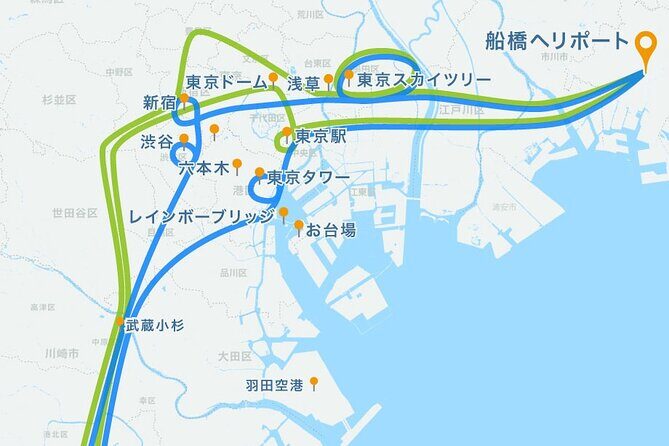
I especially like how the route hits major landmarks you can spot fast: Tokyo Skytree, Rainbow Bridge, Tokyo Tower, Shinjuku, and the Yokohama Harbour area. I also like the small-group feel of a private booking capped at up to 3 people, which keeps things personal without feeling like you’re fighting for window space.
One thing to consider: it’s not a bargain trip. At about $2,002.26 per group (up to three), the value depends on whether you’re traveling with others who can share the cost, and it requires good weather to run.
In This Review
- Quick hits before you fly
- Night Tokyo and Yokohama from above: what you’re really buying
- Funabashi Heliport to return: timing and flow of the day
- Tokyo Skytree and Rainbow Bridge: the fast start that sets the tone
- Tokyo Tower and Shinjuku: where the light density turns into a show
- Yokohama Harbour: the finale that feels different from Tokyo
- The private-group factor: up to 3 people changes the vibe
- Price and value: how to decide if $2,002.26 per group makes sense
- Small rules that can affect who should book
- Practical night-flying tips that help your photos and your comfort
- Should you book? A quick decision guide
- FAQ
- How long is the helicopter flight time?
- Where does the tour depart from?
- How many people are in a booking?
- How much does it cost?
- What are the weight limits?
- Is the tour affected by weather?
- When do I get confirmation after booking?
Quick hits before you fly
- 50 minutes in the air for a real sense of Tokyo and Yokohama at night
- Tokyo-to-Yokohama route over Skytree, Rainbow Bridge, Tokyo Tower, Shinjuku, and the harbor
- Private group up to 3 so your party stays together
- Departing from Funabashi Heliport (near public transportation) to simplify the day
- Safety and experienced piloting are core to the overall experience
- Tight weather dependence means a cancellation or date change is possible
More of the harbour city next door
- Narita Airport: One Way Private Transfer to Tokyo|Yokohama Hotels★ 4.5 · 69 reviews
- Tokyo: Private One-Way Transfers to/from Yokohama Port★ 4.5 · 50 reviews
- Private Car Tour to see Highlights of Kamakura, Enoshima, Yokohama from Tokyo★ 5.0 · 48 reviews
Night Tokyo and Yokohama from above: what you’re really buying
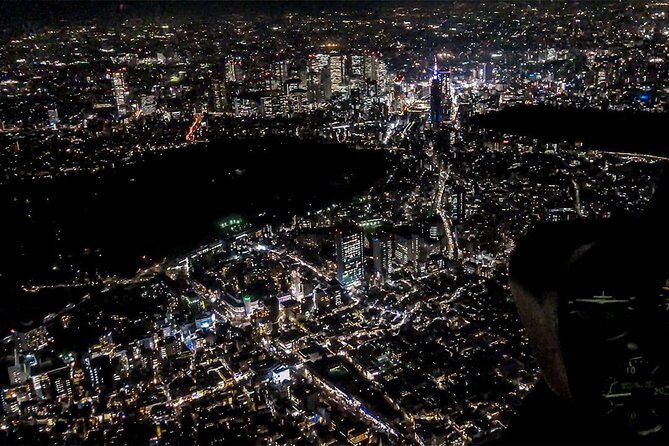
This isn’t a quick flyover where you only catch a couple of famous views. The sweet spot here is the long stretch of night flying—about 50 minutes—so you don’t just glance at the city. You get time to pick out the shapes of landmarks, follow waterways and bridges, and watch districts light up as the route moves along.
You’re also paying for a very specific kind of access: seeing Tokyo and Yokohama as one connected system of lights. From ground level, these places can feel separate. From the air, they read as a single urban nightscape—routes of traffic, dark gaps between neighborhoods, and sudden clusters of bright signage and towers.
Two things stand out strongly in the experience: the sense of safety and the way the views become the main event. One past passenger emphasized that it felt safe and truly memorable, and another pointed out how the skyline can look dramatically different right after sunset—when lights switch on and the city starts to glow in layers.
Funabashi Heliport to return: timing and flow of the day
Even though the flight time is about 1 hour and 30 minutes total, the important part is that roughly 50 minutes is time in the air. That matters because helicopter tours can be short on “time flying.” Here, you’re not spending most of the experience waiting around.
You start and end at Funabashi Heliport, at 1-chōme-44-2-2230 Kanasugi, Funabashi, Chiba 273-0853, Japan. That round-trip setup is practical. You aren’t coordinating with multiple meeting points, and once you’re there, the plan stays simple: you fly the route, then you go back to where you began.
The tour also uses a mobile ticket, which is good if you want a lighter, less paper-heavy day. And it’s listed as near public transportation, which helps if you’d rather not rely entirely on taxis.
One more detail that affects your planning: confirmation comes within 48 hours of booking, depending on availability. So if you’re booking late, don’t assume you’re automatically locked in the moment you pay.
Tokyo Skytree and Rainbow Bridge: the fast start that sets the tone
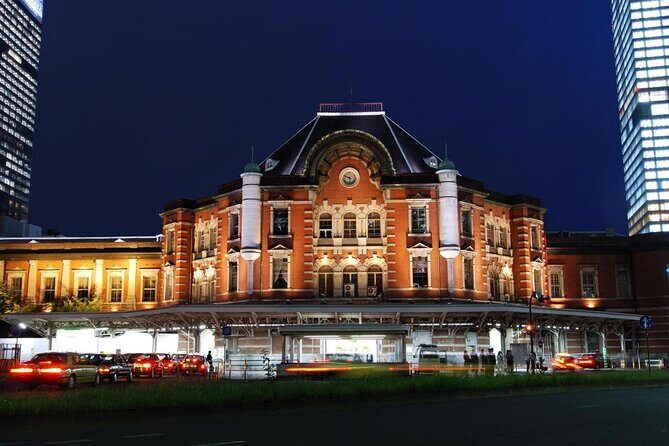
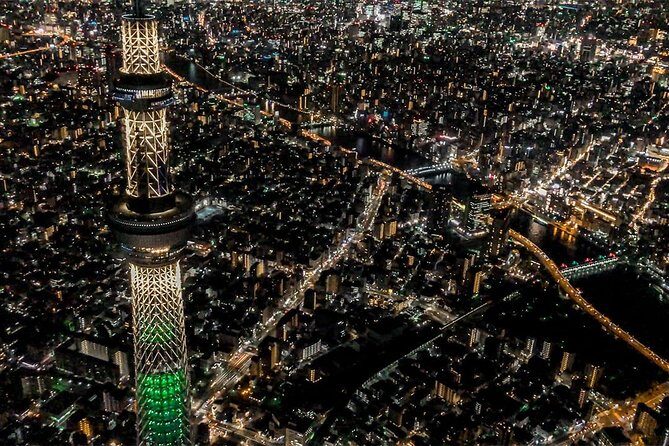
The first part of the route is designed for easy landmark recognition from above. You’ll cruise over Tokyo Skytree, and that’s a smart anchor point at night because it’s tall enough to stand out quickly. From the air, you can get your bearings fast—towers and major structures are legible even after dark.
Then comes Rainbow Bridge. Bridges are where an aerial perspective really shows off. From the ground, bridges can feel like a single line or a photo subject. From above, you can see the waterway context, the shape of the surrounding area, and how the lights wrap around the crossing. It helps the whole experience feel less like a checklist and more like a guided view of how the city connects.
What I like about this segment is that it builds confidence. When the landmarks are clearly readable early, you settle in and stop “waiting for the good part.” You start enjoying the act of watching right away.
Possible drawback: if you’re prone to motion sensitivity, you’ll want to be prepared for a helicopter ride from the start. The data doesn’t include any comfort tips, so I can’t promise how smooth it will feel for you—but the sooner you know you’re comfortable, the more you’ll enjoy the later stretch over denser areas.
Tokyo Tower and Shinjuku: where the light density turns into a show
Next up is Tokyo Tower. This is another “blink-and-you-see-it” landmark, but there’s a catch: at night, it’s not just the tower itself. It’s the way its brightness interacts with nearby buildings and street-level glow. From the air, Tokyo Tower becomes a reference point for the city around it, which makes the surrounding grid feel less random.
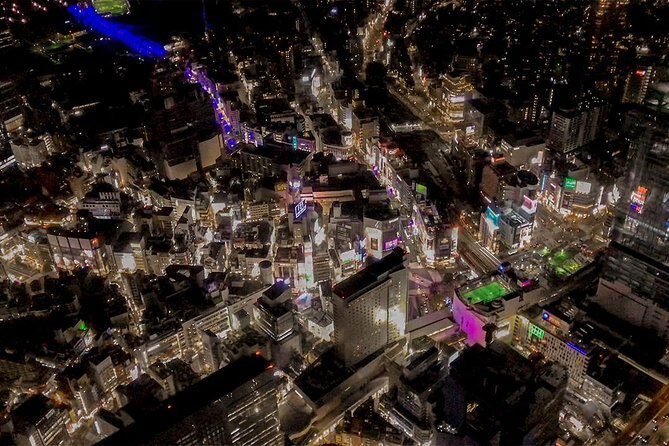
After that, the route moves toward Shinjuku. Shinjuku at night is famous for being bright, and aerial views tend to make that feel even more intense. You can often see how neighborhoods differ from one another: more orderly blocks, clusters of signage, and pockets where the lighting pattern changes. It’s the kind of visual rhythm you can’t really get from a street viewpoint.
If you can choose timing, aim for the option that gets you closer to the transition from sunset into full night. One reviewer specifically recommended the sunset option because the skyline looked beautiful and then the city lit up right after sun had set. That’s exactly the kind of timing boost you want on a night flight: you’re not only seeing darkness—you’re seeing the moment the city turns fully “on.”
Bigger sweeps: other Tokyo city tours
Yokohama Harbour: the finale that feels different from Tokyo
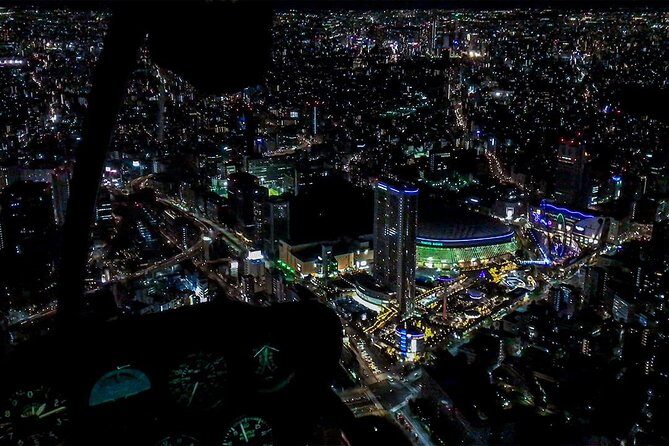
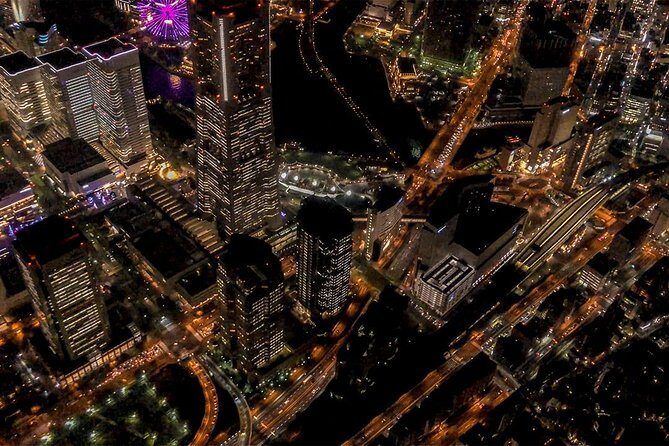
The route finishes with views toward Yokohama Harbour. This is a smart change of pace. Tokyo’s lights can feel tightly packed, while a harbor area often reads with more open space around the glow—water, port structures, and the spread of light patterns.
You get to compare two cities in one session: Tokyo’s vertical landmarks and dense districts, then Yokohama’s waterfront-style visibility. Even if you’re not a harbor person, the aerial angle helps you understand what each area is doing at night—where the lights concentrate, where they scatter, and how the geography shapes the glow.
I like this ending because it gives your eyes a different texture. If you spend the whole flight in one “brightness mode,” your attention can fatigue. A harbor-area finale naturally refreshes what you’re looking at.
The private-group factor: up to 3 people changes the vibe
This is a private tour/activity, and a booking is for up to 3 people. That has real value beyond the marketing word private.
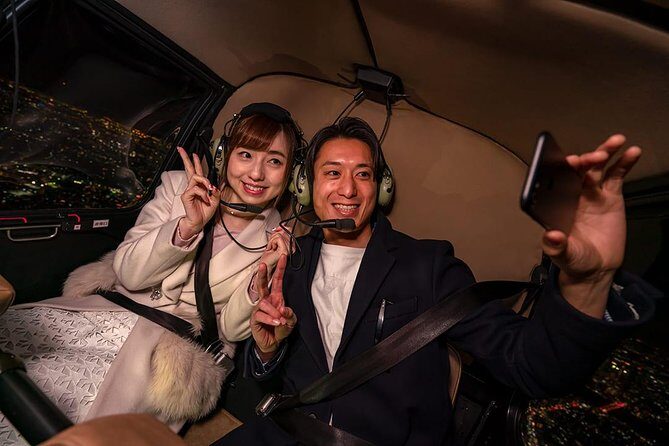
With a small group, your experience tends to feel less like a production line. It’s also easier for your party to plan moments—like taking photos together—without constantly waiting for other passengers to move or adjust.
One of the reviews shared how the flight became part of an emotional surprise. The proposal happened during the experience, and it turned the views into an unforgettable memory. I can’t promise your trip will play out like that, but I can tell you this type of setting is ideal for big moments: it’s dramatic, it’s brief in a good way, and it’s hard to recreate later.
Price and value: how to decide if $2,002.26 per group makes sense
Let’s talk money plainly. The price is $2,002.26 per group (up to 3). That means the math improves a lot if you’re sharing with two other people. If you’re traveling solo or as a couple, it’s still a cool experience—but you’re essentially paying for the cost of a helicopter that can’t scale down just because you’re fewer.
So how should you judge value?
- If your goal is a once-in-a-while night view that’s hard to match, you’re paying for exclusivity and time in the air. 50 minutes is a meaningful chunk for a helicopter tour.
- If you’re the type who likes seeing a route with recognizable stops—Skytree, Rainbow Bridge, Tokyo Tower, Shinjuku, then Yokohama—you’ll likely feel like you’re getting a complete story, not a couple of quick snapshots.
- If you’re budget-driven, this is where you pause. There are cheaper ways to see Tokyo at night. This one costs more because you’re buying access to a vantage point you can’t get from typical viewpoints.
My rule of thumb: if this trip is for a celebration, a bucket-list moment, or a “we want the skyline from the sky” decision, then the price starts to feel normal. If it’s a casual whim, it can feel steep fast.
Small rules that can affect who should book
A few details matter enough to plan ahead.
First, there’s a diving restriction: passengers who have gone diving in the past 24 hours cannot participate. That’s a health/safety rule, so don’t try to work around it.
Second, there are strict weight limits. The data lists:
- a passenger limit of 120kg
- a total flight limit of 220kg
It also mentions “total weight per passenger: 265 lbs.” Because the operator gives metric and also pounds, the safest approach is to treat 120kg per passenger as the firm cap.
Third, this experience requires good weather. If the tour can’t be conducted due to inclement weather, specific aircraft problems, other flight-operation disturbances, or flight cancellation, you’ll receive a full refund or an alternative date. And if the tour can’t be run due to bad weather, it can be canceled even if you’re within a few days—so check forecasts if your dates are tight.
Finally, confirmation is dependent on availability. If you’re traveling during a peak season or on popular dates, build in a buffer.
Practical night-flying tips that help your photos and your comfort
I don’t have details on seat layout or camera mounts, so I won’t invent anything. But you can plan around what the tour is: night views over landmark-heavy routes.
Here are practical, low-risk things to think about:
- Prepare for darkness. Night flying means most of what you’ll photograph is light sources—towers, bridges, signage, and roadway patterns. You’ll get better results by treating it like light-source photography rather than “scenic” daytime shots.
- If you can choose timing, consider the sunset-to-night window. One review called out the sunset option as a highlight because you can see the city’s transition into full lighting.
- Keep the moment bigger than the perfect shot. A lot of the value here is emotional: people use this flight for major surprises, and the aerial views are intense enough that you’ll want to actually watch them, not only shoot.
- Bring ID and keep your mobile ticket handy. The tour is listed with a mobile ticket, so you’ll want your phone ready.
And if you’re sensitive to motion or you’re traveling with anyone who has health concerns, it’s worth asking the operator in advance about any relevant comfort guidance. The provided info focuses on safety restrictions (like recent diving and weight limits), but not on comfort advice.
Should you book? A quick decision guide
Book it if:
- You want a real chunk of night flight time—about 50 minutes—over both Tokyo and Yokohama.
- Your group is up to three people, so you can make the per-group price feel less painful.
- You care about big, recognizable views: Skytree, Rainbow Bridge, Tokyo Tower, Shinjuku, and Yokohama Harbour.
- This is for a special moment. The setting is built for memorable surprises.
Skip or rethink it if:
- Your schedule is tight and weather cancellations would derail your trip planning.
- You’re traveling solo or as a couple and the cost per person doesn’t feel right.
- You (or someone in your party) is above the posted weight limits or has had diving within 24 hours.
If you want a night view that feels like a story—Tokyo turning into Yokohama from the sky—this is exactly the kind of splurge that usually lands as a lifelong memory.
FAQ
How long is the helicopter flight time?
The flight time is 50 minutes, and the total experience lasts about 1 hour 30 minutes.
Where does the tour depart from?
The tour departs from Funabashi Heliport and ends back at the meeting point.
How many people are in a booking?
This is a private experience with a maximum of 3 people per booking.
How much does it cost?
The price is $2,002.26 per group (up to 3 people).
What are the weight limits?
The data lists 220kg total per flight and 120kg per passenger. It also notes 265 lbs as a “total weight per passenger.”
Is the tour affected by weather?
Yes. The experience requires good weather. If it can’t be conducted due to inclement weather or flight cancellations, you’ll receive a full refund or an alternative date.
When do I get confirmation after booking?
You should receive confirmation within 48 hours of booking, subject to availability.
The Whole City in a Day
More Tour Reviews in Tokyo






Next Door in Yokohama

Fresh reviews from around Tokyo






Yokohama Tours, compared.
 ★ 4.9EVO, WRX, Skyline – JDM Night Run to Daikoku Car MeetFrom $125478 reviews
Best Price Daikoku Parking Area JDM Car MeetFrom $76192 reviews
★ 4.9EVO, WRX, Skyline – JDM Night Run to Daikoku Car MeetFrom $125478 reviews
Best Price Daikoku Parking Area JDM Car MeetFrom $76192 reviews
 ★ 4.9Daikoku & Tokyo Private JDM Tour by 700HP R34 GT-RFrom $586101 reviews
 ★ 5.0Tokyo 8hr Private Tour with Licensed Guide from YokohamaFrom $20194 reviews
 ★ 5.0【Tokyo】JDM Daikoku Parking Area & Nissan Facility TourFrom $5587 reviews
 ★ 4.5Narita Airport: One Way Private Transfer to Tokyo|Yokohama HotelsFrom $7769 reviews
 ★ 5.0Shuttle Van Transfer, Yokohama(Port)⇒Tokyo, Narita, Haneda, TDRFrom $12263 reviews
 ★ 5.0R34Skyline Daikoku PA Fast & Furious Private ExperienceFrom $10963 reviews
Browse the lists this tour appears in