
Reviewed · TSUKIJI FISH MARKET TOURS
Tokyo: Tsukiji Fish Market Seafood & Street Eats
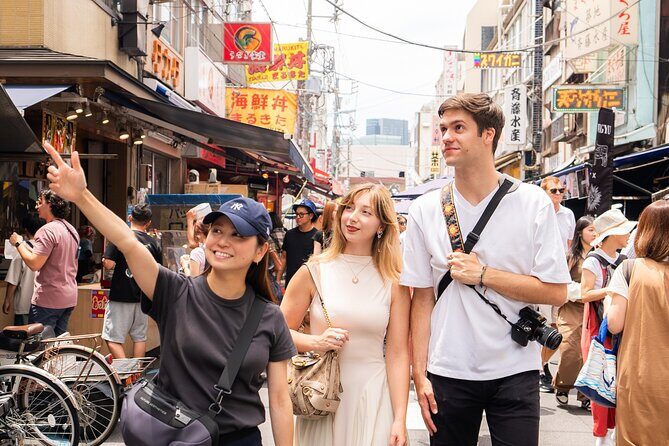
Tsukiji turns breakfast into a mission. This 2.5-hour walking tour threads Tokyo’s seafood culture through Tsukiji Fish Market and Tsukiji Jogai Market, guided in English by a local pro. I like the small-group feel (max 10) because you can actually ask questions instead of shouting over the crowd, and guides like Haru have shown up early and adapted when families needed extra subway-exit help.
My favorite part is the pairing: you start at 築地本願寺 (Tsukiji Hongwanji Temple), then move straight into fish-market reality. Along the way, guides such as Toko are patient with kids, while Ryo keeps things focused for adults who just want great food fast, including help with the best lines to join.
One catch: the tour price covers the guide and market/temple entry, but food and drinks are not included. That means you should plan on extra spending during tastings and meals—and remember you’ll be doing a lot of walking while you’re deciding what to buy.
In This Review
- Key points for planning your Tsukiji morning
- The real value: a guided route through Tsukiji’s best learning-and-eating rhythm
- Tsukiji Hongwanji Temple: a quiet reset before the market intensity
- Tsukiji Fish Market: history plus the best reason to follow a guide
- Tsukiji Jogai Market: your street-food payoff zone
- Guides make or break this kind of tour, and you get strong variety here
- Price and food budgeting: how to get value from a $42 tour
- Timing and logistics: why the morning slot works so well
- What to do when you’re hungry and indecisive
- Weather and comfort: plan for the outdoors
- Should you book this Tsukiji seafood and street eats tour?
- FAQ
- How long is the Tsukiji Fish Market seafood and street eats tour?
- What does the tour cost?
- Is food included in the tour price?
- What’s included besides the guide?
- Are admission tickets included for the markets and temple?
- How many people are in the group?
- Where is the meeting point and where does the tour end?
- What stops are included in the itinerary?
- When will I receive confirmation after booking?
- What if the weather is bad?
- Is free cancellation available?
Key points for planning your Tsukiji morning
- Small group (max 10) means better guidance and more room to ask questions
- English-speaking local guide helps you navigate stalls and order confidently
- Temple + two markets gives you context before you start eating
- Admission includes Tsukiji Jogai Market and Tsukiji Hongwanji Temple
- Food not included so bring cash/card for your own tastings and meals
- Weather matters since the experience requires good conditions
Still hungry? More Tsukiji breakfasts and market walks
- Tokyo Tsukiji Fish Market Food and Culture Walking Tour★ 5.0 · 3,184 reviews
- Tokyo: Tsukiji Fish Market Food and Walking tour★ 5.0 · 1,724 reviews
- Tokyo: Tsukiji Fish Market Guided Walking Tour★ 4.9 · 1,397 reviews
The real value: a guided route through Tsukiji’s best learning-and-eating rhythm
Tsukiji isn’t just a place to eat. It’s a place to understand how seafood is sold, discussed, and celebrated in Japan. This tour works because it uses a morning timeline that fits a busy Tokyo schedule. In about 2 hours 30 minutes, you get three building blocks: a short cultural stop at the temple, then two market zones with different vibes and different kinds of food.
At $42 per person, the price doesn’t try to pretend it’s an all-inclusive feast. Instead, you pay for something practical: a local Japanese English-speaking guide and included admission to the temple and Jogai Market. That means your budget can go where you actually want it—on the seafood you choose to try.
Tsukiji Hongwanji Temple: a quiet reset before the market intensity
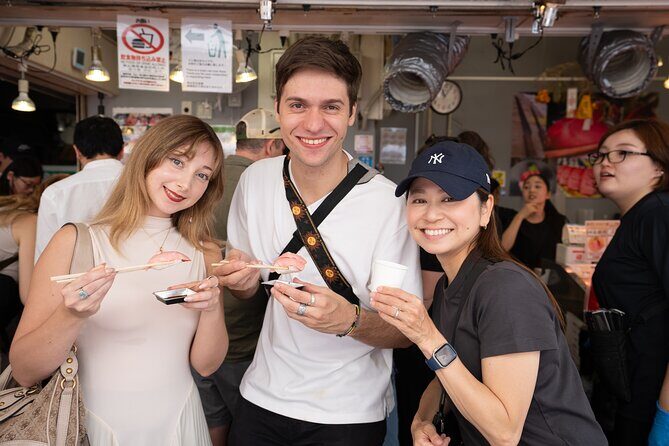
You begin at the 築地本願寺 (Tsukiji Hongwanji Temple). Even if you’re food-only, I think this stop is smart. It gives you a calm, architectural contrast right before the sensory overload of the markets.
What you’re likely to get from the guide here is not a long lesson, but a quick orientation: where you are, how Tsukiji fits into Tokyo, and why markets like this don’t just exist for commerce—they’re part of local daily life and tradition. This is also a good moment to regroup if your group needs a breather before walking deeper into the fish-market area.
Possible drawback: it’s an extra stop before you eat, so if you’re the type who wants food immediately, you’ll want to keep your energy up and be ready to move quickly.
Tsukiji Fish Market: history plus the best reason to follow a guide
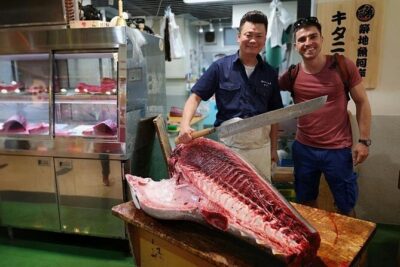
Next comes Tsukiji Fish Market, where your time is about 1 hour 30 minutes. This is the part most people picture: famous tuna auctions and the energy around seafood.
Here’s why the guide matters. Without help, you can wander among stalls and end up with food that’s fine but not ideal—especially when you’re trying to make choices fast. With a guide, you can focus on questions like:
- What should you try first?
- What’s best for your group size and tastes?
- Where do people go for specific styles (like sashimi versus grilled items)?
This is also where the guide’s “queue knowledge” becomes a big deal. Guides such as Haru have been praised for waiting in line for a popular tuna establishment so everyone didn’t waste time. That’s not a small thing in a market setting. Time spent choosing wrong can be more painful than time spent standing in the right line.
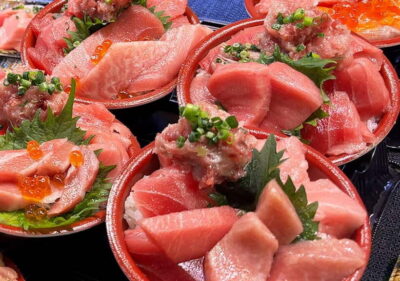
What you’ll experience here: a guided walk through market culture, plus time to sample dishes on your own spending. The tour explicitly notes that food is extra, so you’ll be making purchases during the market stop.
Tsukiji Jogai Market: your street-food payoff zone
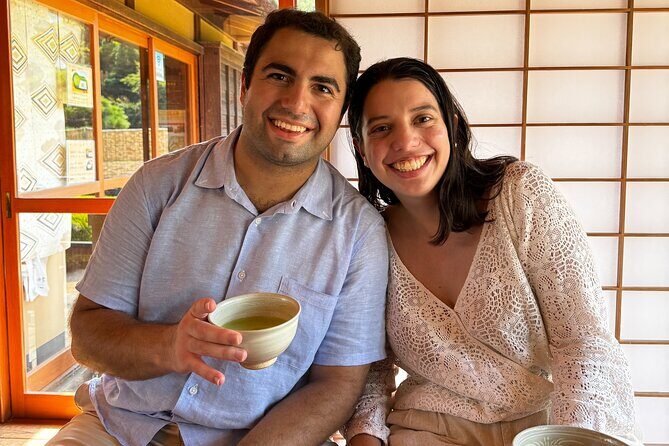
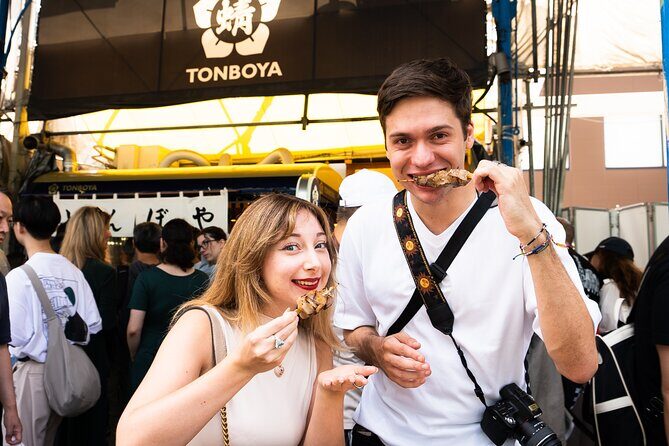
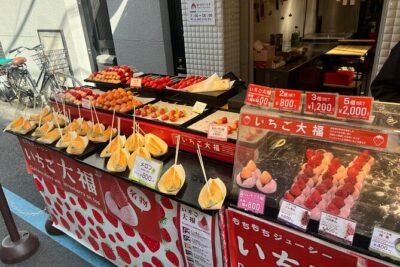
After the Fish Market, you move on to Tsukiji Jogai Market for about 1 hour. This part is all about variety: lots of stalls and shops selling fresh seafood as well as Japanese street food.
This is typically the segment where you can flex your preferences. If your group wants snacks, this is where you shop for smaller bites. If someone wants something more substantial, you’ll often find places in this area that cater to eating on-site.
Also, this stop includes admission, which helps explain why the tour isn’t wildly cheap. You’re paying for entry plus for the guide’s ability to keep your time efficient.
One consideration: because food is on you, you’ll want a simple plan with your group before you arrive. Decide if you’re each grabbing one snack versus sharing a few items. It prevents the classic market problem: everyone buys different things, then no one knows what they spent.
More shopping runs through Tokyo


Guides make or break this kind of tour, and you get strong variety here
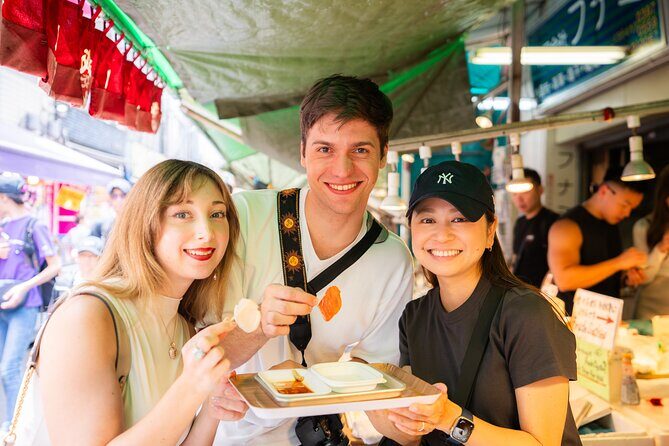
This is one of the best parts of the experience: the guide style matches your group.
- Haru is repeatedly praised for being early, staying flexible when people get lost, and handling lines thoughtfully so you can focus on eating rather than logistics. One standout detail is that he’s helped multigenerational families navigate the maze and still enjoy a top tuna spot.
- Toko is praised for working well with kids—friendly and patient—so families don’t feel like they’re dragging everyone else through the market.
- Ryo is praised for understanding adult priorities. One review described a late-30s/40s food-first mindset where the goal was big flavors, not a field trip. That’s exactly the kind of guidance that makes this tour feel like value.
In plain terms, you’re not just getting someone to walk you down a street. You’re getting someone who can translate market behavior into choices you can actually make in real time.
Price and food budgeting: how to get value from a $42 tour
Let’s talk money clearly. Your $42 per person gets:
- a local Japanese English-speaking guide
- entry/admission to Tsukiji Jogai Market
- entry/admission to Tsukiji Hongwanji Temple
- the time and pacing (about 2 hours 30 minutes total)
- access to the tastings offered during the market stops, but food itself is not included
So the value comes from what you avoid:
- wasted time wandering without a plan
- standing in the wrong line
- ordering confusion when you want something specific
To make this tour feel worth it, I suggest you budget for at least a couple of purchases at Tsukiji. If you go in expecting it to be a free meal, you’ll feel surprised. If you treat it as a guided sampler route, you’ll feel in control.
Practical tip: bring a card and some cash. Markets can be unpredictable, and you want the option to buy quickly when you spot something you like.
Timing and logistics: why the morning slot works so well
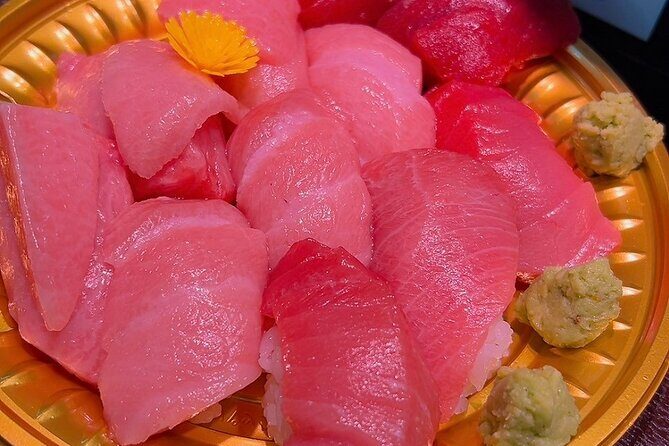
This tour is designed for the morning. That’s not just marketing. Morning is when you can:
- maximize energy before the rest of Tokyo wears you down
- shop before your schedule gets crowded
- fit Tsukiji into a day plan without sacrificing everything else
It also helps you feel the market as a working space rather than a late-day shopping zone. The guide timekeeping matters here, because market stalls don’t wait for your decision.
You also start and finish at the same meeting point: 3-chōme-9-10 Tsukiji, Chuo City, Tokyo 104-0045, Japan. The tour ends back there, which simplifies planning for your next stop.
What to do when you’re hungry and indecisive
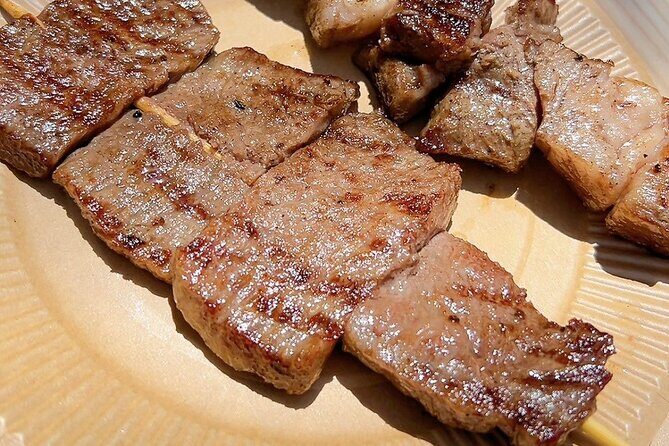
Tsukiji can make you feel like everything is the right choice. A guide helps, but you can help yourself too.
Here are a few approaches that work well:
- Pick a main category first: tuna-style sashimi, grilled fish, or street snacks.
- If your group is mixed (one picky eater, one adventurous), ask the guide for a safe option that still feels special.
- Don’t overbuy early. Eat enough to stay happy, then let Jogai Market finish the meal with variety.
One more practical note: wear shoes you can stand in. Market walking is constant. If you’re thinking about comfort, you’ll enjoy the food more.
Weather and comfort: plan for the outdoors
This experience requires good weather. If conditions are poor, the operator may offer a different date or a full refund. That matters because you’ll be walking around outside for most of the tour.
If you’re visiting during Tokyo’s rainy or hot stretches, pack a small umbrella or light rain layer and keep water in mind. You can’t control the weather, but you can reduce how annoying it feels.
Should you book this Tsukiji seafood and street eats tour?
Book it if:
- you want a guided Tsukiji route that saves time and reduces ordering confusion
- your group likes eating as they go, not sitting through a lecture
- you appreciate a small group where guides like Haru, Toko, and Ryo can tailor their pace and priorities
- you’re okay paying extra for the food you choose
Skip it or swap plans if:
- you want an all-inclusive meal with no extra spending
- you hate lines and prefer to browse slowly on your own
- you’re only interested in one specific type of seafood and don’t want guided decision-making
If you’re doing Tokyo for the first time and want a memorable seafood morning without turning it into a logistics headache, this is a solid choice. You’ll leave with a better sense of how Tsukiji works—and with the kind of food decisions you’d struggle to make on your own.
FAQ
How long is the Tsukiji Fish Market seafood and street eats tour?
It’s approximately 2 hours 30 minutes.
What does the tour cost?
The price is $42.00 per person.
Is food included in the tour price?
No. Foods and drinks are not included, and you purchase what you want at your own expense during the experience.
What’s included besides the guide?
You’ll have a local Japanese English-speaking guide, plus learning about the history and culture of Tsukiji. Entry/admission is included for Tsukiji Jogai Market and Tsukiji Hongwanji Temple.
Are admission tickets included for the markets and temple?
Yes. Entry/Admission for Tsukiji Jogai Market and Tsukiji Hongwanji Temple are included.
How many people are in the group?
The tour has a maximum of 10 travelers.
Where is the meeting point and where does the tour end?
It starts at 3-chōme-9-10 Tsukiji, Chuo City, Tokyo 104-0045, Japan and ends back at the same meeting point.
What stops are included in the itinerary?
You visit Tsukiji Hongwanji Temple, then Tsukiji Fish Market, then Tsukiji Jogai Market.
When will I receive confirmation after booking?
Confirmation will be received at the time of booking.
What if the weather is bad?
The experience requires good weather. If it’s canceled due to poor weather, you’ll be offered a different date or a full refund.
Is free cancellation available?
Yes. You can cancel for free up to 24 hours in advance for a full refund.
Bring an Empty Suitcase
More Tour Reviews in Tokyo






Back to the Market: More Tsukiji Tours

Fresh reviews from around Tokyo






Tsukiji Fish Market Tours, compared.
 ★ 5.0Tokyo Tsukiji Fish Market Food and Culture Walking TourFrom $993,184 reviews
 ★ 5.0Tsukiji Fish Market Food and Walking tourFrom $301,724 reviews
 ★ 4.9Tsukiji Fish Market Guided Walking TourFrom $221,397 reviews
 ★ 5.0Tokyo Sushi Making Class in Tsukiji with Professional ChefFrom $491,177 reviews
 ★ 5.0Tsukiji Fish Market Guided Tour and Sushi Making with Pro ChefFrom $104775 reviews
★ 4.7Tsukiji Fish Market Food and Culture Walking TourFrom $96757 reviews
★ 5.0Tsukiji Fish Market Guided Tour and Sushi Making with Pro ChefFrom $104775 reviews
★ 4.7Tsukiji Fish Market Food and Culture Walking TourFrom $96757 reviews
 ★ 5.0Tsukiji Fish Market: Street Food & Culture Walking TourFrom $33669 reviews
 ★ 5.0Tsukiji Fish Market Small-Group Food Walking TourFrom $87621 reviews
Browse the lists this tour appears in