
Reviewed · TOKYO
tokyo niinja stretch 【ginza】
Your body learns ninjutsu fast.
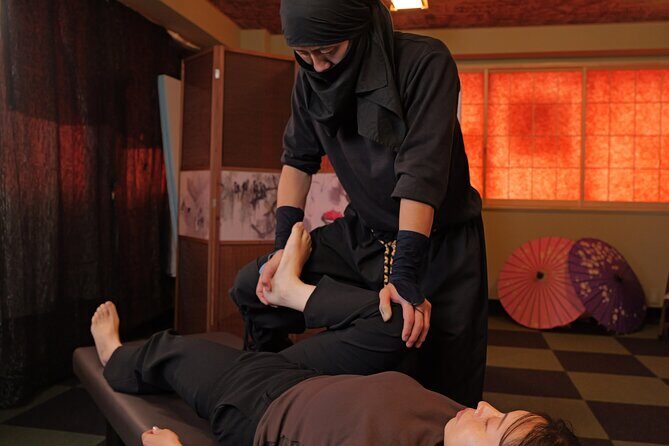
In central Tokyo near Ginza and Tsukiji, you step into a ninja-styled hideout for NINJA STRETCH, a guided 2-on-1 assisted stretch meant to loosen you up in about 15–20 minutes. I love the two-person stretching setup (staff guide you so you can actually move into the positions), and I also love the hands-on fun of real shuriken throwing plus photos with the ninja crew.
The main drawback is the format is short. If you want a long, slow therapy session or a deep hands-on massage, this is more of a focused reset than a full treatment plan. Also, you’ll be placed into stretches that should be controlled and safe, but if you have a serious injury, you should check first.
In This Review
- Key things to know before you go
- Finding the ninja house near Ginza and Tsukiji
- The 2-on-1 ninjutsu stretch: what you’re actually doing
- Ninja photos and real shuriken throwing right after
- How long it takes: 45 minutes on the clock
- Price and value for a $65.32 per-person Tokyo experience
- Who will love this most (and who should think twice)
- My practical game plan: how to get the most from it
- Should you book Ninja Stretch in Ginza?
- FAQ
- Where is the meeting point?
- How long does the experience take?
- What’s included in the price?
- Is the tour private?
- How close is it to train stations?
- What languages are supported?
- Do I need sport clothes?
- Is there mobile ticketing?
- Is shuriken throwing included and free?
- What’s the cancellation window?
Key things to know before you go
- 2 staff per guest for the stretch so it stays guided and quick
- Shuriken throwing and a photo are included after your stretch
- Central location: about a 3-minute walk from Hatchobori or Shintomicho Station
- Language support: English, Japanese, and other support is available
- Private group feel: only your group participates
- About 45 minutes total even though the stretch itself is 15–20 minutes
Before you commit, see how this one stacks up against a few Tokyo favourites:
- Mt Fuji and Hakone 1-Day Bus Tour Return by Bullet Train★ 5.0 · 26,383 reviews
- 1-Day Tokyo Bus Tour★ 5.0 · 14,250 reviews
- Tokyo: teamLab Planets TOKYO Digital Art Museum Entry Ticket★ 4.6 · 9,779 reviews
Finding the ninja house near Ginza and Tsukiji
This is the kind of activity that fits into a real day in Tokyo, not a special all-day production. You meet at a specific spot in Chuo City: 1-chōme 3-15 Shintomi, 京橋プリズムビル (Shintomi area). It’s close to transit, roughly a 3-minute walk from either Hatchobori Station or Shintomicho Station.
When you arrive, you’re not walking into a generic studio. The setting is built to feel like you’re stepping into a ninja space: costumes, guided atmosphere, and details that make the time feel different from a gym or spa. That matters because you’re more likely to relax when the whole room is doing the work with you, not against you.
For timing, I’d treat this like a “reset stop” near your sightseeing. You can do it before a shopping and food stretch around Ginza, or after time near Tsukiji, when your legs and back start feeling the day. The tour ends right back at the meeting point, so you’re not stuck figuring out a new neighborhood afterward.
The 2-on-1 ninjutsu stretch: what you’re actually doing
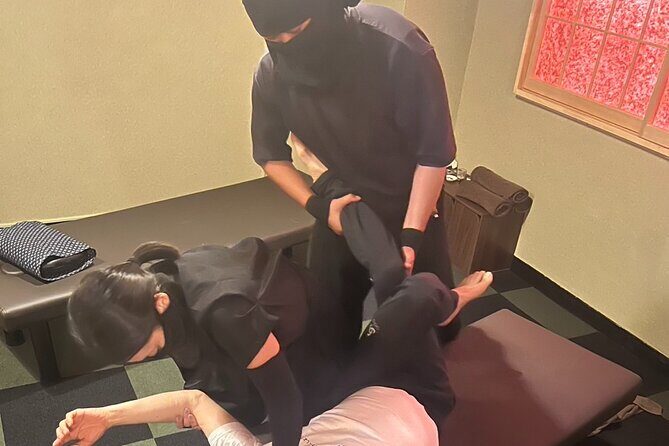
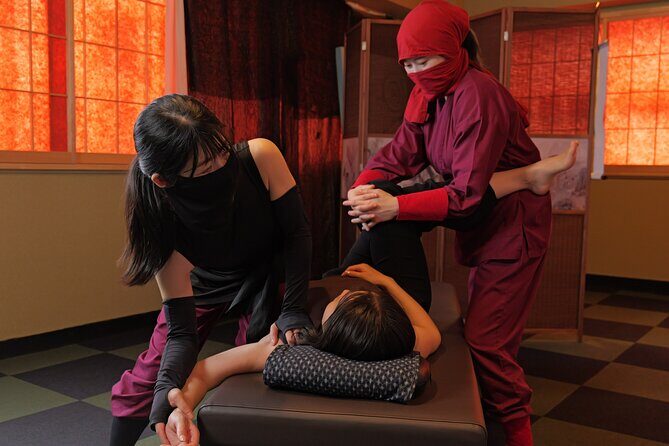
The core experience is the assisted stretch based on traditional ninjutsu ideas—basically, old-school “stay limber” logic brought into a modern wellness session. The big practical twist is the 2-on-1 setup. That means you’re guided by staff, and you’re not trying to self-stretch your way into deep positions.
You’ll typically be working with two staff members as part of the session plan. That’s a big deal for beginners. A lot of stretches fail because you can’t judge the angle, the pressure, or the exact moment to breathe and relax. With hands-on guidance, your body can move in the intended range without you forcing it.
You’re there for about 15–20 minutes of the stretch work, but it feels like more than the stopwatch. People describe a quick increase in range of motion right after the session, including loosening in areas like hips and the back of the body. One of the most useful parts for travelers is that you’re not just stretching in theory. It’s a physical “do it now” experience, so you leave with a clearer sense of what feels tight and what suddenly feels better.
A note on expectations: this isn’t presented as a cure or a medical procedure. It’s body-care and mobility through assisted stretching. If you’re sore, stiff from work, or coming in after a long day of walking, that’s exactly the kind of situation where a short guided session can help you feel lighter and more comfortable.
Also: the session moves fast. Even though it’s short, you still get a full-body focus. Plan to arrive ready to follow instructions and breathe through the stretch. If you rush your body into the first position before you’re settled, it’s harder to get the benefits.
Ninja photos and real shuriken throwing right after
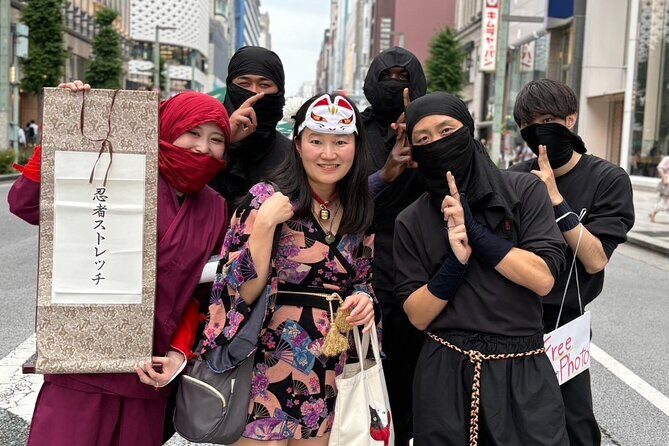
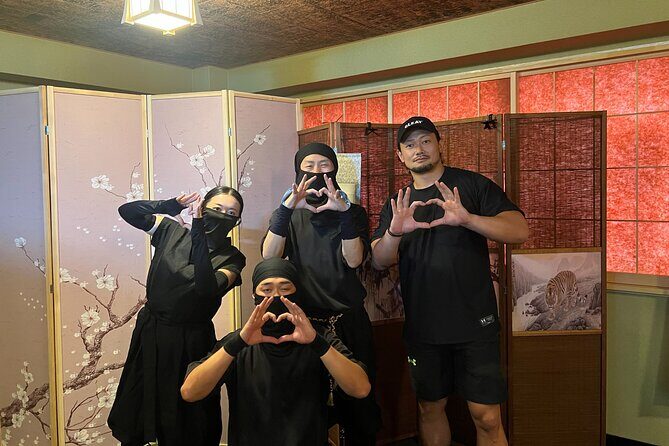
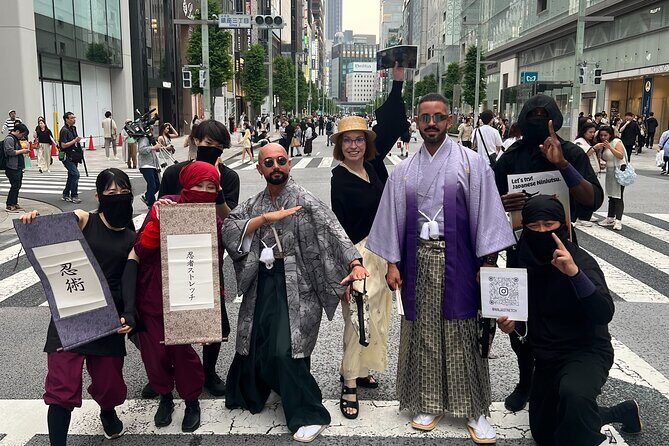
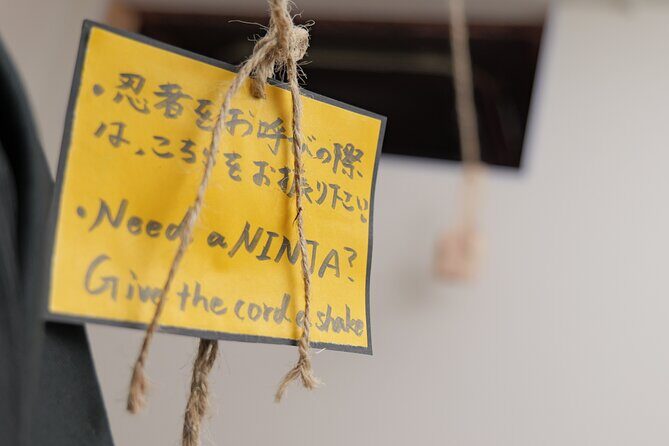
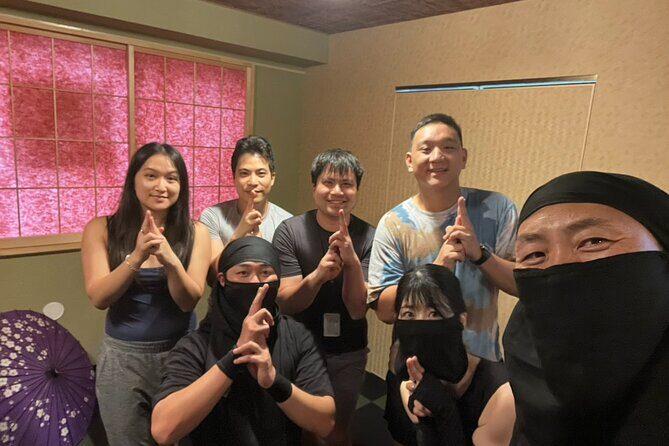
After your stretch, the fun part kicks in. You get a photo with the ninja staff, which is included, and then you try throwing real shuriken (ninja stars). This is one of the best value add-ons because it turns “wellness” into an actual memory you’ll keep.
The shuriken practice is also a good mindset switch. Instead of thinking about your body, you shift attention to aiming and technique—still guided, still part of the show, but more playful. That’s why it works well after a stretch session. Your body gets loosened, then your brain gets to enjoy something active and a little mischievous.
One more detail I want you to know: the ninja theme doesn’t stop at shuriken. People have described mini-lessons and extra ninja-style drills mixed into the experience, like footwork or other skill-style activities (sometimes including things like sword-and-arrow-style tech or blowgun-style experiences, depending on the session). The only guaranteed items listed are the stretch, the photo, and the shuriken throwing, so if you’re hoping for extra activities, go with a flexible mindset: you’ll likely get more than just stretching, but the exact variety can vary.
How long it takes: 45 minutes on the clock
The tour is listed at about 45 minutes, while the stretch itself is about 15–20 minutes. That means you should not schedule this like a long appointment. Instead, see it as a guided block with a clear shape:
- Arrival and setup
- The assisted stretch portion (the real “body care” time)
- Photo time
- Shuriken throwing practice
This timing is ideal when your Tokyo day has momentum. You can do it mid-trip without losing half a day. It’s also good if you’re traveling with a partner or kids who might not want a long wellness session. You’ll likely be done before anyone gets bored, hungry, or cranky.
My practical advice: if you have plans right after, leave a buffer. Not a huge one—just enough that you can walk out, freshen up, and head to your next stop without sprinting. Tokyo can be fast on its own, and you’ll want to enjoy the feeling of being looser, not rush it away.




Price and value for a $65.32 per-person Tokyo experience
At $65.32 per person, Ninja Stretch isn’t the cheapest thing you’ll do in Tokyo. But it’s also not priced like a standard massage spa appointment. You’re paying for several things working together:
- Staff-led assisted stretching with a 2-on-1 approach
- Central-location access near Ginza and Tsukiji
- Included entertainment elements: ninja photos and shuriken throwing
- Private tour format (your group only)
In real terms, this price makes sense if you want a guided experience with coaching, not a DIY self-stretch. It also makes sense if you care about the memory factor. A lot of “wellness” activities turn into forgettable photos of you standing next to a sign. Here, you get an actual staged moment with ninja staff and a hands-on activity that’s hard to replicate on your own.
If you’re value-hunting, the best way to decide is to ask yourself this: do you want a quick mobility reset and a fun cultural memory in one package? If yes, this is strong value. If you want only physical therapy-style treatment, you might feel it’s short for the price.
Who will love this most (and who should think twice)
This experience is a great fit for people who are stiff from real life. That includes office workers, travelers who have walked themselves sore, and couples or families who want something different than temples and shopping malls.
It’s also especially good for people who love hands-on cultural themes. Ninja culture is easy to enjoy as a visual concept, but here it’s connected to a physical practice—so you’re not just collecting trivia. You’re doing something with your body while you’re surrounded by the ninja atmosphere.
Where you should think twice:
- If you have a serious injury or medical limitation, a quick assisted stretch might not be the right move without checking first. The good news is that the experience says most travelers can participate, but it still involves physical positions.
- If you want an in-depth martial arts lesson or a long training session, this is more “stretch and play” than “combat class.”
- If you’re expecting a full spa day, the short format might feel too focused.
My practical game plan: how to get the most from it
If you book, here’s how to make the session feel easy and rewarding:
- Wear comfortable clothes that let you move. Sport clothes aren’t listed as required or included, but comfort matters.
- Go in with a calm attitude. These stretches work better when you breathe, listen, and don’t try to force range at the start.
- Treat the shuriken part like a mini game, not a performance. You’re there to learn the motion and have fun.
- Take the photo seriously. The ninja setup is part of the value, and you’ll probably want proof you actually did something this unusual in Tokyo.
One more tip: since the session is short, timing your day matters. If you’re about to do heavy walking afterward, the stretch can help you enjoy the rest of your route more comfortably. If you’re about to sit in trains for a while, it can also help you feel less stiff after.
Should you book Ninja Stretch in Ginza?
Book it if you want a short, guided mobility reset with real Tokyo-style fun attached. The location is convenient, the session is guided with a 2-on-1 approach, and the included photo and shuriken throwing give you something more memorable than another quick attraction.
Skip it if you only want traditional sightseeing or you’re looking for long-form physical therapy. This is best as a focused break in your day, not a replacement for medical care.
Overall, I think it’s a smart choice for first-timers to ninja culture and for anyone carrying stiffness into their Tokyo trip. You’ll leave feeling looser, with a story that’s easy to tell later.
FAQ
Where is the meeting point?
The meeting point is in Chuo City, Shintomi: 1-chōme3-15 京橋プリズムビル, Tokyo 104-0041. The experience ends back at the same meeting point.
How long does the experience take?
It runs for about 45 minutes total, with the ninja stretch portion lasting around 15–20 minutes.
What’s included in the price?
Included are the 15–20 minute Ninja Stretch (with 2 staff per guest), a photo with ninja staff, and the shuriken throwing experience. English-speaking support is included.
Is the tour private?
Yes. It’s listed as a private tour/activity, so only your group participates.
How close is it to train stations?
It’s about a 3-minute walk from either Hatchobori Station or Shintomicho Station.
What languages are supported?
English and Japanese are supported, and Chinese and French support is also listed as available.
Do I need sport clothes?
Sport clothes are not included. Wear something comfortable for stretching.
Is there mobile ticketing?
Yes. The tour includes a mobile ticket.
Is shuriken throwing included and free?
Yes. Shuriken throwing is included as part of the experience, and the info says it’s included for free.
What’s the cancellation window?
Free cancellation is available up to 24 hours in advance for a full refund. Changes within 24 hours aren’t accepted.
More Tour Reviews in Tokyo



Fresh reviews from around Tokyo






Tokyo, compared.
 ★ 5.0Mt Fuji and Hakone 1-Day Bus Tour Return by Bullet TrainFrom $16326,383 reviews
 ★ 5.01-Day Tokyo Bus TourFrom $12914,250 reviews
 ★ 4.6teamLab Planets TOKYO Digital Art Museum Entry TicketFrom $259,779 reviews
 ★ 4.0Mt Fuji & Hakone Cruise, Drum Show Bullet Train 1 Day from TokyoFrom $1497,413 reviews
 ★ 5.0Shinjuku Food Tour (13 Dishes at 4 Local Eateries)From $866,603 reviews
 ★ 4.4Tokyo Mt Fuji 5th St & Hakone Cruise Bus Tour w/Bullet TrainFrom $1545,024 reviews
 ★ 5.0Flagship 2-Hours Official Street Go-Kart Tour – Tokyo Bay ShopFrom $644,974 reviews
 ★ 4.5From Tokyo: Mount Fuji Full-Day Sightseeing TripFrom $684,970 reviews