
Reviewed · TOKYO
Tokyo’s Authentic and Finest Taiko Drumming Experience
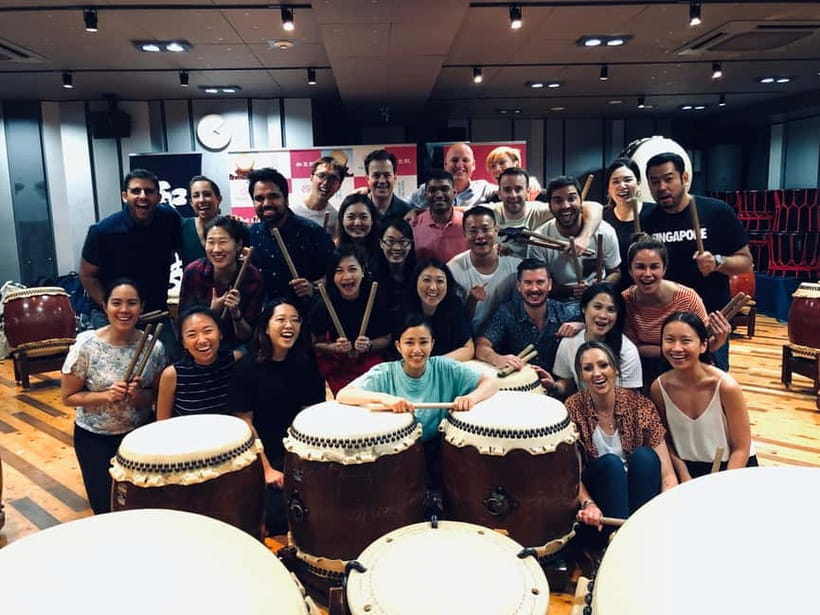
This taiko class turns culture into sweat. In a 90-minute session with Eva Kestner, you learn by doing, not watching. I especially love how quickly the rhythm training clicks, and I love that you leave with a personalized video of your playing.
You should know it’s physical. Your arms can get sore, and a couple of reviewers mentioned the room runs warm, so plan on bringing more water than you think you’ll need.
Good news: you don’t need any prior experience. The workshop is taught in English and Japanese, and it’s built for beginners who still want the real feel of taiko as performance.
In This Review
- Key things that make this workshop worth your time
- A studio session with Eva Kestner, not a tourist demo
- Why taiko feels like a workout (and why that’s part of the point)
- The lesson flow: foundation training, rhythm drills, then a piece
- 1) Foundation training
- 2) Rhythm training
- 3) Learning a traditional and contemporary piece
- Traditional meets contemporary: what you’ll play by the end
- The instructor’s demonstration and the mini history lesson
- Your take-home personalized video: how to actually use it
- Price and value: is $120 fair for 90 minutes?
- Comfort tips you’ll wish you used
- Who should book this taiko workshop (and who should reconsider)
- Should you book Eva Kestner’s Taiko Workshop?
- FAQ
- How long is the taiko drumming workshop?
- Do I need prior experience to join?
- What language is the workshop taught in?
- Are the drums and drum sticks provided?
- Will I learn both traditional and contemporary taiko?
- Do I get anything to take home after the class?
- Where does the workshop take place?
Key things that make this workshop worth your time
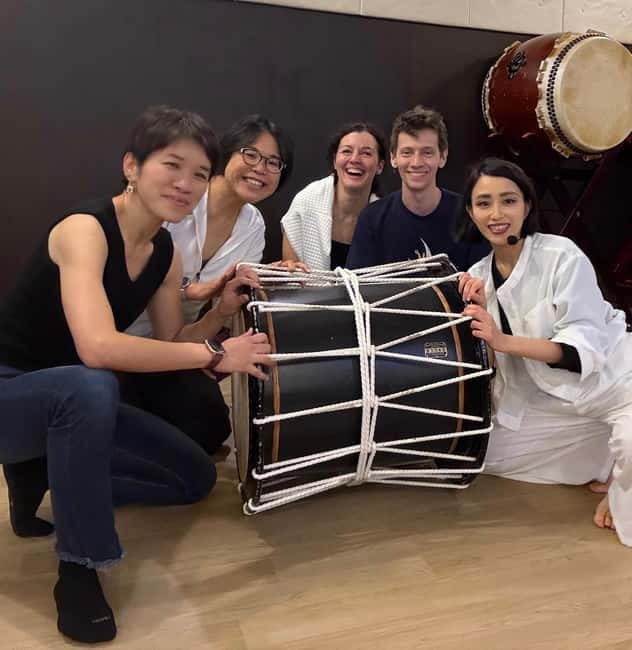
- Eva Kestner’s credentials: Cornell’s first taiko music director, Tokyo University of the Arts New Artists Competition excellency award, and published original music.
- Foundation + rhythm, not random drumming: you start with technique and build into patterns you can actually control.
- You play both traditional and contemporary material: the class moves from basics into a real musical piece.
- Performance-style teamwork: you may end up playing in a pair part with beats and poses.
- Personalized video follow-up: you get a video of you playing, which makes practice after Tokyo way easier.
Before you commit, see how this one stacks up against a few Tokyo favourites:
- Mt Fuji and Hakone 1-Day Bus Tour Return by Bullet Train★ 5.0 · 26,383 reviews
- 1-Day Tokyo Bus Tour★ 5.0 · 14,250 reviews
- Tokyo: teamLab Planets TOKYO Digital Art Museum Entry Ticket★ 4.6 · 9,779 reviews
A studio session with Eva Kestner, not a tourist demo
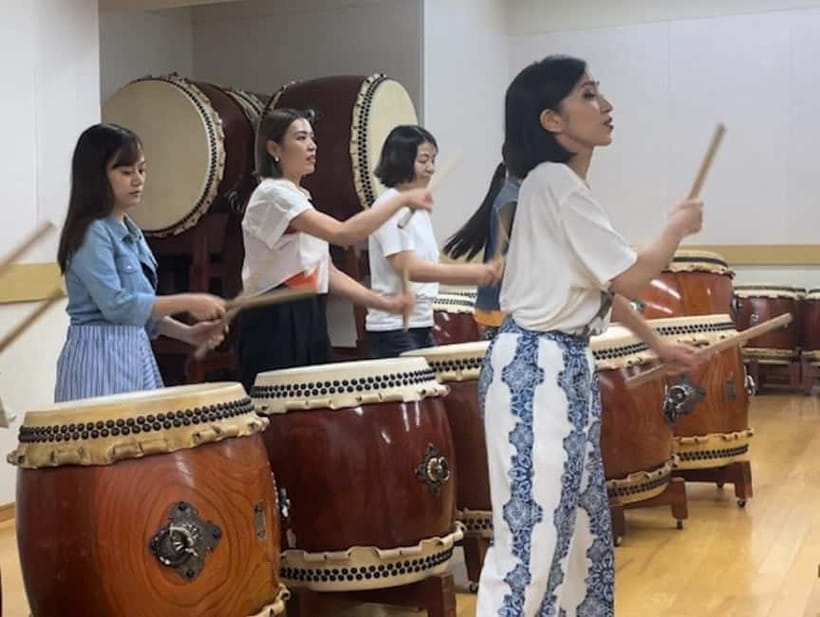
This is a hands-on taiko workshop in Honshu, focused on central Tokyo. You’ll meet your instructor, Eva, and spend the next 90 minutes learning how taiko works from the inside.
What matters here is who’s teaching. Eva isn’t just a performer; she’s a professional teacher with deep ties to taiko. She was the founder and first musical director of Cornell University’s taiko drumming group. She also received an excellency award from the Tokyo University of the Arts New Artists Competition, and her original music is published by Harper Collins and Cambridge International Curriculum. That background shows up in the structure of the lesson: you’re not handed sticks and told to hit hard.
In terms of language, the class is offered in English and Japanese, so you’re not stuck guessing while you learn technique. And if you’re with a group, there’s a private group option. For larger groups (over 20 people), the setup shifts to a studio about 20 minutes away from Shibuya by train, and you coordinate directly to make it work.
If you care about authenticity and real instruction, this is the kind of class that feels like a proper lesson. It’s not pretending taiko is only a spectacle. It’s treating it like an instrument you can learn.
Why taiko feels like a workout (and why that’s part of the point)
Taiko has a reputation for power, but power needs control. That’s why the workshop doesn’t start with the biggest moments. It starts with how to hold the sticks, how to stand, and how to translate rhythm into body movement.
Even in a beginner session, you’ll be moving constantly. Multiple participants mentioned sore arms after class, and one person specifically noted you should be ready to sweat. Another comment said you get through lots of rhythms quickly, so there’s little time to drift or lose your focus.
So here’s the practical takeaway: if you’re the type of traveler who only wants light strolling and photo stops, this may feel like too much. But if you’re okay with activity—like a cardio class, except with drums—this is a great fit. The energy in the room matches the music. And you’ll understand why taiko is so tied to Japanese performance culture: it’s a whole-body art.
Also, don’t underestimate the learning curve of timing. Hitting a drum isn’t the hard part. Timing is. You’ll feel that as the session builds: the rhythms get layered, and your instructor guides you so you can keep up without getting lost.
The lesson flow: foundation training, rhythm drills, then a piece
The workshop is designed around a clear progression, and that progression is what makes it beginner-friendly without feeling dumbed down.
1) Foundation training
You’ll start with basic technique. You learn how to handle the drumsticks and how to approach playing so your sound stays consistent. This part matters because taiko isn’t just about noise; it’s about tone and rhythm control. If your grip and posture are off, everything else becomes harder.





2) Rhythm training
After you’ve got the basics, you move into rhythm exercises. This is where the session gets fun fast. Participants talked about learning different beat patterns and how to keep them straight, even when the tempo or feel changes.
You may also work with parts that include different beats from different positions, including paired sections. One review highlighted paired performance with different beats and poses for each person, which means you’re not only learning a single line. You’re learning coordination.
3) Learning a traditional and contemporary piece
Then you get into the main work: you learn a traditional taiko piece and also a contemporary piece. In one example, the traditional material was traced to a composition from the island of Miyake. Another review mentioned learning a regional piece originally associated with islands near Tokyo.
Important detail: the instructor leads you through it step by step. Several reviewers said the later part can be challenging, but it’s doable because Eva keeps bringing you along rather than dumping you into a complicated pattern and hoping you figure it out.
Traditional meets contemporary: what you’ll play by the end
By the time you reach the piece work, the class stops feeling like drills and starts feeling like music.
You’re learning a traditional composition, and you’re also learning something that reflects modern taiko approaches. The specific pieces can vary by session, but the structure stays the same: you learn enough to play the piece with confidence rather than just copying isolated hits.
Several participants noted a key moment where the session feels closer to a real taiko performance. One review described completing performances and said one of them was the start of a traditional taiko performance. Another mentioned learning a historical, regional piece using two different types of drums, which suggests the class may mix drum setups or parts depending on how the workshop is organized that day.
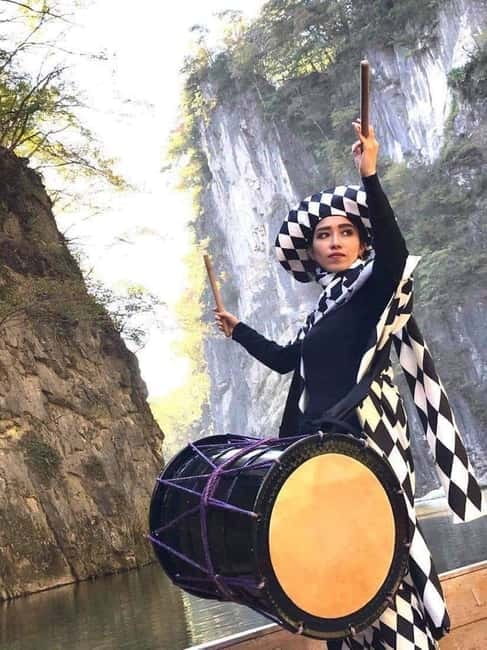
There’s also a performance element beyond solo playing. You may end up playing in a pair, taking turns and hitting different rhythmic roles, with body positions integrated into the performance. That’s one of the reasons taiko feels different from other percussion: it’s choreography plus timing.
What I like about this format is that it respects your time. In 90 minutes, you don’t just learn a rhythm and leave. You learn enough to experience how taiko becomes performance.
The instructor’s demonstration and the mini history lesson
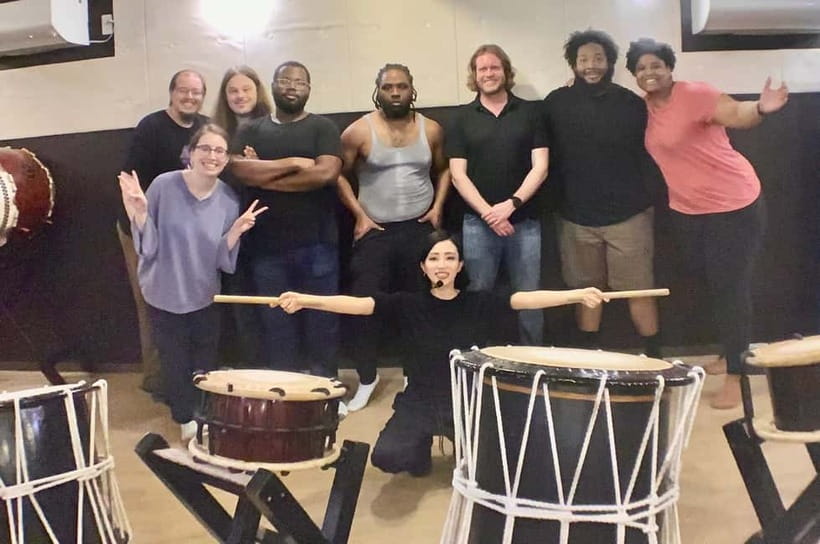
After the workshop practice, you get a demonstration performance by Eva. This isn’t a random curtain call. The idea is to connect what you just worked on to how taiko sounds and feels when it’s performed as a full piece.
You also receive a brief explanation of the history of taiko drumming and its role in Japanese culture. Reviews specifically praised how clearly Eva explains things and how the class stays organized and structured. So even if you’re new, you’ll have some context for what you’re doing.
Here’s how to get more value out of this part: listen for what Eva connects to technique. If she’s saying rhythm matters because of how the piece is meant to land, that’s not trivia. That’s coaching. You can use that understanding immediately when you practice your take-home video.
Your take-home personalized video: how to actually use it
One of the best parts of this workshop is the recording. You receive a personalized video of you playing the taiko drums, and participants mentioned receiving a private YouTube link for practice.
That might sound like a nice souvenir, but it’s more useful than you’d think. When you’re learning fast, your brain fills in gaps. The recording helps you verify what you did—especially on timing and stick technique.
If you want to practice after Tokyo, here’s what to do:
- Watch the video once just to see the full flow.
- Watch again and compare your stick timing to the rhythm you were aiming for.
- Pick one part that felt hardest and focus only on that section.
The recording is also a morale boost. Several reviews said they could practice form using the video, and that they were inspired after finishing the session. Having proof of your progress makes it easier to keep going instead of letting the whole thing fade into memory.
Price and value: is $120 fair for 90 minutes?
$120 per person is not a cheap activity. But for what’s included, it can feel like fair value if you’re the kind of traveler who likes skill-based experiences.
Here’s what’s baked into the price:
- A full 90-minute workshop (not a short try-it session)
- Foundation training and rhythm training
- Learning a traditional piece and a contemporary piece
- A demonstration performance by Eva
- A brief history explanation
- Taiko drums and sticks provided
- A personalized take-home video
If you’re paying for a random class where you hit a drum for ten minutes and call it done, $120 would be hard to justify. But this session is built around progression: you start with technique, then move into rhythm, then work toward playing an actual piece.
Also, you’re not just paying for the drumming. You’re paying for instruction from someone who’s trained and recognized in serious taiko circles. That matters, because good teaching prevents you from developing sloppy habits—especially for rhythm.
My take: if you want more than photos and noise, and you want to leave with a skill you can replay later, this workshop looks like a strong use of your time.
Comfort tips you’ll wish you used
Wear comfortable clothes. You’ll be doing repeated movement and stick work, and at least one reviewer said the room got warm. Bring a water bottle, and don’t treat it like a “nice to have.” Taiko can be tiring even when you think you’re physically fine.
If you run cold easily, you might think you can dress lightly. If you run hot, dress for sweat. One reviewer suggested wearing shorts, so plan around the reality that the session is active.
Also, go into it with the right mindset: this is not a sit-down museum experience. It’s a focused workout where you learn timing and body control. If you’re okay with that, you’ll probably have one of the most satisfying cultural activities in Tokyo.
Who should book this taiko workshop (and who should reconsider)
This workshop is a great fit if you:
- Want hands-on cultural learning instead of passive sightseeing
- Enjoy music that involves your body, not just your ears
- Like classes with structure: technique, rhythms, then a piece
- Want a take-home recording you can practice with
It’s also a good choice for families and groups who want a shared activity. Reviews mentioned doing it with family and highlighted the interactive nature of the lesson.
You might reconsider if you:
- Want something low-energy
- Have limited arm or shoulder capacity, because you may feel sore after
- Get frustrated when you have to learn timing quickly
One more note: since meeting point can vary depending on the booking option, confirm the exact instructions for where you’re going. If you’re going as a large group, expect the studio to be about 20 minutes away from Shibuya by train.
Should you book Eva Kestner’s Taiko Workshop?
Book it if you want a genuine taiko class with a real professional teacher, a lesson that builds step by step, and a take-home video you can use to practice. The $120 price makes more sense when you see how much is included: technique, rhythms, pieces, a demo, and recording, all in 90 minutes.
Skip it (or plan carefully) if you’re not into physical activity. This isn’t a gentle “try a drum for fun” moment. It’s a real workout with real coordination work.
If you’re in central Tokyo and you want one memorable, skill-based cultural experience, this workshop is an easy yes.
FAQ
How long is the taiko drumming workshop?
The workshop lasts 90 minutes.
Do I need prior experience to join?
No prior experience with taiko drumming is required.
What language is the workshop taught in?
The instruction is available in English and Japanese.
Are the drums and drum sticks provided?
Yes. Taiko drums and taiko drum sticks are provided.
Will I learn both traditional and contemporary taiko?
Yes. The workshop includes learning a traditional and a contemporary taiko drumming piece.
Do I get anything to take home after the class?
Yes. You receive a personalized video of you playing the taiko drums.
Where does the workshop take place?
It’s held in a studio. For larger groups, the studio is about 20 minutes away from Shibuya by train, and the meeting point may vary depending on the option booked.
More Tour Reviews in Tokyo



Fresh reviews from around Tokyo






Tokyo, compared.
 ★ 5.0Mt Fuji and Hakone 1-Day Bus Tour Return by Bullet TrainFrom $16326,383 reviews
 ★ 5.01-Day Tokyo Bus TourFrom $12914,250 reviews
 ★ 4.6teamLab Planets TOKYO Digital Art Museum Entry TicketFrom $259,779 reviews
 ★ 4.0Mt Fuji & Hakone Cruise, Drum Show Bullet Train 1 Day from TokyoFrom $1497,413 reviews
 ★ 5.0Shinjuku Food Tour (13 Dishes at 4 Local Eateries)From $866,603 reviews
 ★ 4.4Tokyo Mt Fuji 5th St & Hakone Cruise Bus Tour w/Bullet TrainFrom $1545,024 reviews
 ★ 5.0Flagship 2-Hours Official Street Go-Kart Tour – Tokyo Bay ShopFrom $644,974 reviews
 ★ 4.5From Tokyo: Mount Fuji Full-Day Sightseeing TripFrom $684,970 reviews