
Reviewed · MT FUJI DAY TRIPS
Tokyo: Mount Fuji Must-see Attractions One Day Sightseeing Tour
Mount Fuji in one day can feel like magic. This tour turns that idea into a plan you can actually follow: you swap Tokyo trains for a comfortable coach, hit the Fuji highlights with a live guide, and still get time at the best photo viewpoints.
I especially like the round-trip transfers from the city—no figuring out routes, no ticket juggling, no “wait, what line is this?” headaches. I also like the itinerary choices: Lake Kawaguchiko, Oishi Park, the Arakura area, and Oshino Hakkai are classic for a reason, and you’re not stuck in just one spot all day.
One thing to consider: Mount Fuji visibility can be unpredictable, and the day can feel very different with low clouds. Even when you cannot see much from far away, the stops still give you culture and scenery, but you should be realistic about photos.
In This Review
- Key things to know before you go
- Why a one-day Mount Fuji trip from Tokyo makes sense
- Price and what it really covers (and what it doesn’t)
- Group size, guides, and the bus vibe
- The 10-hour flow: what the schedule feels like in real life
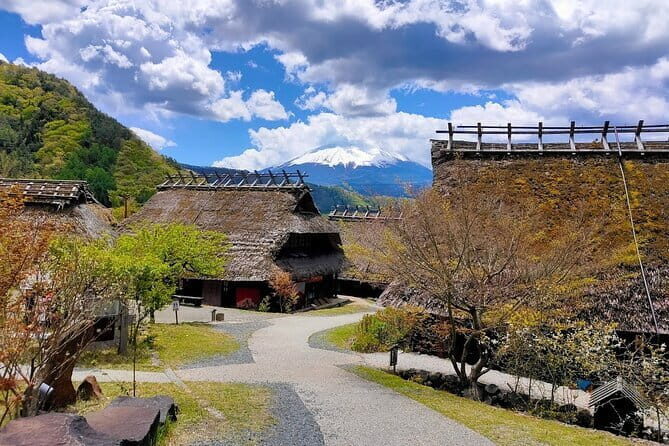
- Saiko Iyashi no Sato Nemba: the traditional village photo stop
- Lake Kawaguchiko: the quick hit that can steal the show
- Oishi Park: seasonal flowers with Fuji in the background
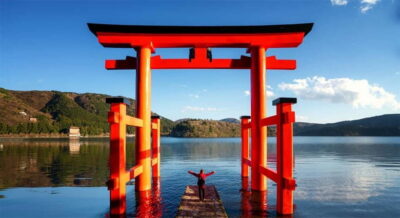
- Kawaguchiko Natural Living Center: that red torii moment
- Arakurayama Sengen Park and the Chureito Pagoda viewpoint
- Arakura Fuji Sengen Shrine: a quick 15-minute spiritual pause
- Oshino Hakkai: spring water and a different kind of Fuji experience
- Weather and the Fuji visibility reality check
- Photo and pacing tips so you don’t feel rushed
- Who this tour fits best (and who might want a different plan)
- Should you book this Mount Fuji one-day tour?
- FAQ
- How long is the Mount Fuji one-day sightseeing tour?
- What is the tour price?
- Does the tour include round-trip transfers from Tokyo?
- What admissions are included?
- Is lunch included?
- Do I need to bring a paper ticket?
- How many stops are included?
- Is the group size limited?
- Can I participate if I’m traveling with a stroller or large luggage?
- Is Mount Fuji visibility guaranteed?
- Is it easy to cancel?
Key things to know before you go
- Round-trip coach transfers mean you spend your energy on Fuji, not transit.
- Live commentary on the way helps the stops make sense, not just look pretty.
- A 10-hour day with multiple quick stops works best if you like moving and photographing.
- Max group size is 45, so it’s not a giant cattle-car.
- Some areas are classic photo targets, including the Arakura Chureito Pagoda viewpoint.
- Oshino Hakkai spring water is free to taste, and it’s a different kind of “wow.”
Other routes to the mountain, compared
- Mt Fuji & Hakone Cruise, Drum Show Bullet Train 1 Day from Tokyo★ 4.0 · 7,413 reviews
- Tokyo Mt Fuji 5th St & Hakone Cruise Bus Tour w/Bullet Train★ 4.4 · 5,024 reviews
- From Tokyo: Mount Fuji Full-Day Sightseeing Trip★ 4.5 · 4,970 reviews
Why a one-day Mount Fuji trip from Tokyo makes sense
If you’ve only got limited time in Tokyo, Mount Fuji can turn into a planning monster. You need the right trains, the right timing, and the right weather window. This day tour removes a lot of that mental workload by putting you on a fixed route with round-trip coach transfers.
You’re also not just “driving by landmarks.” The best parts of the day are the moments when you understand what you’re seeing. Guides on this tour use live commentary to connect places like shrine grounds, lake viewpoints, and traditional villages to the local story of Fuji and the people who live with it.
And yes, you’ll be tempted to stare out the window. That’s normal. Fuji is a long-distance subject. Even when the mountain is partly hidden, the region still has texture: lakeside towns, seasonal flower fields, and that distinct Fuji-zone rhythm.
Price and what it really covers (and what it doesn’t)
The price is $60 per person for an approximately 10-hour outing. For that, you get an air-conditioned vehicle, all fees and taxes, and a guided day that includes paid entry at at least one stop.
What you should plan for:
- Lunch is not included. You’ll want to bring cash or a card plan for food.
- Personal expenses are not included, so keep a little budget for snacks and souvenirs.
- Admission is included or free at several stops, but lunch is still on you.
Is $60 “cheap”? It’s not a bare-bones option. But it’s a good value if you’re comparing it to the cost of managing transport yourself plus the hassle. You’re buying time and stress reduction: the tour handles the route and bundling of multiple Fuji-area sites.
Group size, guides, and the bus vibe
This is capped at 45 travelers, which matters. Smaller groups tend to move more smoothly at stops, and your guide can manage pacing without turning into a factory line.
The guides you may get (based on recent experiences) include people like Kevin, Yulina, Andrew, and Maddy. What stands out from their feedback is not just friendliness, but organization—clear pickup guidance and energetic explanations. One guide-style detail I really appreciate: they don’t just point. They explain what each place is for, and they share travel tips for after the main program.
If you’re the type who likes to ask yourself questions—Why is this shrine here? Why does this viewpoint matter?—a guided day helps a lot.
The 10-hour flow: what the schedule feels like in real life
This day runs across several Fuji-area stops, with short visits at most locations. The total time is long enough to feel like a true excursion, but short enough that you’ll move briskly between photo targets.
Here’s how the day typically breaks down:
- Saiko Iyashi no Sato Nemba: 1 hour
- Lake Kawaguchiko: 20 minutes
- Oishi Park: 25 minutes
- Kawaguchiko Natural Living Center: 10 minutes
- Arakurayama Sengen Park (Chureito Pagoda area): 1 hour
- Arakura Fuji Sengen Shrine: 15 minutes
- Oshino Hakkai: 1 hour
The short visits can be great if you know you want the big sights and good views. If you’re the type who likes to linger for an hour in one place, you may wish for more time at each stop. That’s the trade-off of a one-day “hits all the key locations” plan.
Worth weighing up alongside this Tokyo pick:


Saiko Iyashi no Sato Nemba: the traditional village photo stop
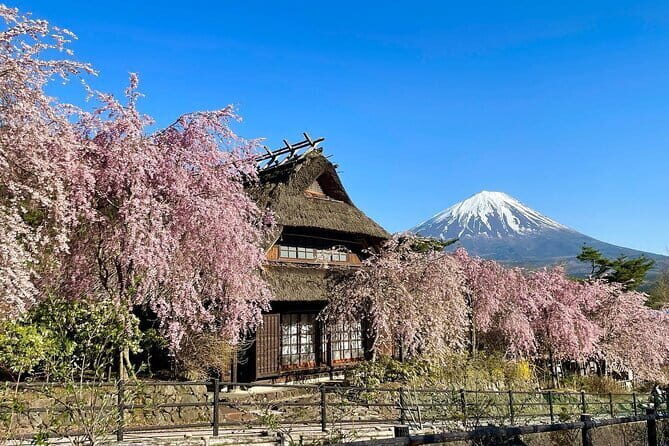
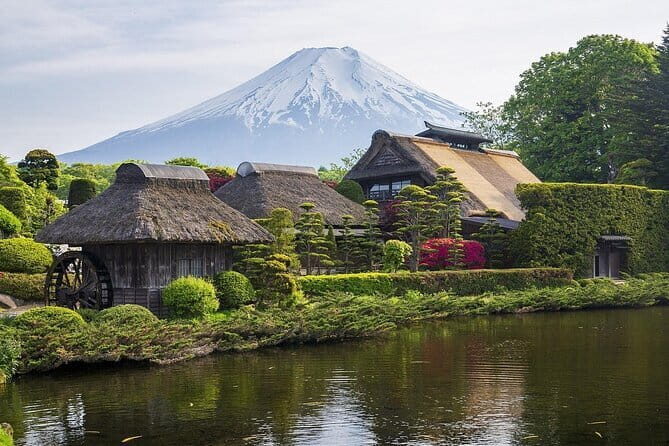
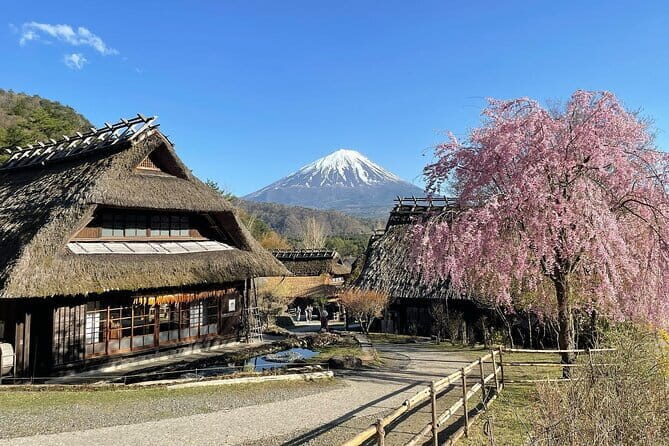
You start at Saiko Iyashi no Sato Nemba, a traditional Japanese village in Fujikawaguchiko Town. It’s known as one of Japan’s most beautiful villages, with Mount Fuji in the background—which is the whole point of this stop.
A detail worth knowing before you get there: the village was destroyed by a landslide during a typhoon in 1966. Seeing that after you hear it from your guide adds weight to what you’re looking at. These aren’t just buildings on a postcard—they’re part of a place that has been reshaped by nature and then rebuilt.
Is it the most “authentic” experience imaginable? It’s traditional-themed, yes. Still, the time slot is one full hour, which is enough to walk at a relaxed pace, read small signs, and grab those classic Fuji-frame photos.
Lake Kawaguchiko: the quick hit that can steal the show
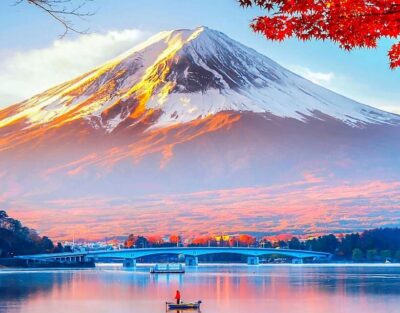
Next is Lake Kawaguchiko. This is one of the most popular Fuji-lake viewpoints, often praised for the way the shoreline creates multiple angles for seeing the mountain.
Your time here is about 20 minutes, so treat it like a landing strip. You’re not meant to do a full lakeside stroll. Instead, focus on:
- picking one viewpoint and photographing from there
- then using the rest of the time to check for a clearer angle if clouds shift
If the weather plays nicely, this is where Fuji can suddenly look crisp. If it doesn’t, the lake is still a pleasant reset—quiet water, clean air, and a real sense that you’ve left Tokyo behind.
Oishi Park: seasonal flowers with Fuji in the background
Oishi Park is famous for seasonal flower displays. Depending on when you go, you might see cherry blossoms, lavender, red leaves, kochia, or even snow and reeds—basically, the scenery can change dramatically across the year.
Your visit is 25 minutes, which is just enough to walk the most photogenic sections and enjoy the seasonal color without feeling rushed to the next stop. If flowers are your thing, this stop can be a highlight, because it gives you something beyond “buildings and views.”
Drawback to keep in mind: if you visit on a day with heavy cloud cover, you may still love the flowers but not get the Fuji pairing you’re hoping for.
Kawaguchiko Natural Living Center: that red torii moment

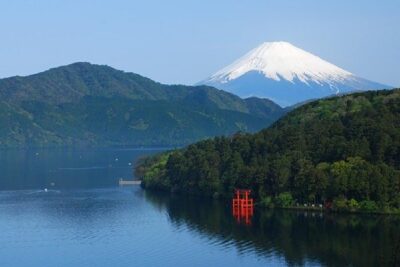
This is a short 10-minute stop at the Kawaguchiko Natural Living Center—but it’s designed for a reason. The big draw is a photo angle where a red torii blends with Mount Fuji.
When you’re dealing with a limited schedule, micro-stops like this can be hit-or-miss. Here it works because the target is clear. You’ll know what you’re waiting for, and you can take photos quickly without overthinking your route.
Bring your patience anyway. If the clouds shift, you might get a better view a few minutes after you arrive. In a fast tour, those small windows matter.
Arakurayama Sengen Park and the Chureito Pagoda viewpoint
If your goal is iconic Fuji photos, this part of the day is the big one. Arakurayama Sengen Park is known for the Chureito Pagoda, a five-storied pagoda that’s become a worldwide photography target.
Your time here is about one hour. That’s the right amount of time to:
- find the best view angle
- move if the crowd is blocking your shot
- take a slow walk for different angles rather than relying on one picture
A useful mindset: this is a photo-first stop. You’ll see lots of other people also doing the same thing. The charm isn’t only the view. It’s the way the pagoda and Fuji line up, turning the mountain into a backdrop instead of the sole subject.
Even if the mountain is partly hidden, the pagoda area still feels like a well-known pilgrimage landscape, and the guide’s context can help you appreciate why people chase this view.
Arakura Fuji Sengen Shrine: a quick 15-minute spiritual pause
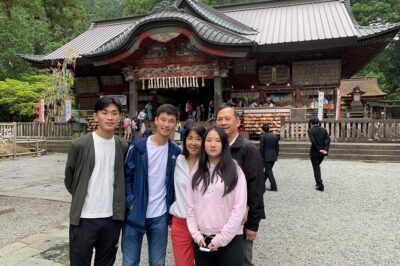
After the photo heavy stop, you’ll head to Arakura Fuji Sengen Shrine for around 15 minutes. This shrine dates back to 705 and has a history of over 1,300 years. It’s a place to pray for well-being and family happiness.
This stop can be surprisingly satisfying because it slows you down. You’re not just snapping photos; you’re stepping into an atmosphere of prayer and tradition. The time is short, though, so it’s not meant for a long exploration.
I’d treat it like a “reset moment.” Walk through the grounds, observe the shrine rhythm, and then get back ready for the final major stop.
Oshino Hakkai: spring water and a different kind of Fuji experience
Your last big destination is Oshino Hakkai, a World Heritage site made of eight clear springs fed by snowmelt from Mount Fuji. It’s also described as one of Japan’s famous water sites, often linked with the idea of purity.
You’ll have about one hour here, which is a great way to end the day because it’s slower and more sensory than the earlier photo-focused spots. And you can taste the spring water for free, which is one of those simple travel moments that sticks with you.
Why it’s valuable: you’re seeing the after-effects of Fuji, not just the mountain itself. The springs are how the mountain’s snow turns into life in the region—very different from lake viewpoints and shrine photography.
If Fuji is hidden by clouds, Oshino Hakkai still feels meaningful. You’re not depending on a single clear-line-of-sight picture.
Weather and the Fuji visibility reality check
Mount Fuji is famous for unpredictability. Even on an overcast day, you can get a scenic trip, but you may not see much of the mountain in the distance. That’s not a “tour failure.” It’s the mountain.
So here’s how you can still make the day work:
- Assume you might get partial visibility, not perfect clarity.
- Focus on composition, not just the mountain outline.
- Enjoy the places even if Fuji is faint, because the tour includes cultural stops and water sights, not only skyline photos.
This approach turns a “maybe we’ll see it” day into a normal good travel day.
Photo and pacing tips so you don’t feel rushed
With multiple stops and short time windows, you’ll enjoy the day more if you do a little prep:
- Save your heaviest camera time for Arakura and the red torii angle at Kawaguchiko.
- At Lake Kawaguchiko and Oishi Park, pick one or two viewpoints and commit.
- Wear layers. Lakeside wind and shrine areas can feel cooler even if Tokyo is warm.
- If you’re traveling with stroller or large luggage, note it when booking so the tour can plan for it.
One more practical note: this tour is built for a coach schedule, so arrive back on time at each stop. In a route like this, missing a small departure can snowball into stress.
Who this tour fits best (and who might want a different plan)
This one-day Fuji trip is a great fit if:
- you want round-trip convenience from Tokyo
- you like guided context at major sights
- you want a “best-of” route without researching trains and transfers
- you’re okay with shorter time windows in exchange for seeing more sites
It may not be ideal if:
- you want long, slow wandering in a single town
- you’re allergic to crowds at famous viewpoints
- you plan to spend the whole day only if Fuji is perfectly visible
The good news: even when visibility is not ideal, the day still has structure—traditional village, lake, seasonal park, shrine, and spring water.
Should you book this Mount Fuji one-day tour?
I’d book it if you want the Fuji highlights with the least stress. The value is strongest when you price in transport and time planning. For $60, you get a full day with air-conditioned coach comfort, included fees/taxes, and multiple Fuji-area experiences that go beyond only staring at the mountain.
Skip the “only if Fuji is crystal clear” mindset. If you can enjoy the region even when the mountain hides behind clouds, you’ll get a rewarding day with memorable scenery and a guide who helps it all click.
If you’re hoping for a deep, slow cultural immersion, you might prefer a longer stay in the Fuji Five Lakes area. But for a first taste from Tokyo, this is a smart, efficient way to see a lot and understand what you’re looking at.
FAQ
How long is the Mount Fuji one-day sightseeing tour?
It runs for about 10 hours.
What is the tour price?
The price is $60.00 per person.
Does the tour include round-trip transfers from Tokyo?
Yes. It includes round-trip coach transfers from the city to the Mount Fuji region.
What admissions are included?
Admission is included for Saiko Iyashi no Sato Nemba. Other stops like Lake Kawaguchiko, Oishi Park, Kawaguchiko Natural Living Center, Arakurayama Sengen Park, Arakura Fuji Sengen Shrine, and Oshino Hakkai are listed as free admission or free to experience as described.
Is lunch included?
No, lunch is not included.
Do I need to bring a paper ticket?
No. You get a mobile ticket.
How many stops are included?
There are 7 stops, including Saiko Iyashi no Sato Nemba, Lake Kawaguchiko, Oishi Park, Kawaguchiko Natural Living Center, Arakurayama Sengen Park, Arakura Fuji Sengen Shrine, and Oshino Hakkai.
Is the group size limited?
Yes. The tour has a maximum of 45 travelers.
Can I participate if I’m traveling with a stroller or large luggage?
You should indicate that when booking, since you may need the tour to plan for it.
Is Mount Fuji visibility guaranteed?
No. Mount Fuji visibility can be unpredictable due to weather and clouds.
Is it easy to cancel?
Free cancellation is available up to 24 hours in advance for a full refund.
More Tours in Tokyo




More Tour Reviews in Tokyo



The Fuji Shortlist: Other Days Out to the Mountain

Fresh reviews from around Tokyo






Mt Fuji Day Trips, compared.
 ★ 4.0Mt Fuji & Hakone Cruise, Drum Show Bullet Train 1 Day from TokyoFrom $1497,413 reviews
 ★ 4.4Tokyo Mt Fuji 5th St & Hakone Cruise Bus Tour w/Bullet TrainFrom $1545,024 reviews
 ★ 4.5From Tokyo: Mount Fuji Full-Day Sightseeing TripFrom $684,970 reviews
 ★ 4.7Mt. Fuji Tour, Hakone Ropeway, Owakudani, Lake AshiFrom $544,002 reviews
 ★ 5.0Private Tour to Mt. Fuji and Hakone (Fully Licenced Operator)From $4971,910 reviews
 ★ 4.9Mount Fuji Full-Day Private Tour from Tokyo (Customizable)From $3931,470 reviews
 ★ 4.0Mt Fuji & Hakone Cruise, Drum Show Bus 1 Day from TokyoFrom $1221,287 reviews
 ★ 4.2From Tokyo: Mt. Fuji & Hakone Tour w/ Return by Bullet TrainFrom $1171,278 reviews
Browse the lists this tour appears in