
Reviewed · IMPERIAL PALACE TOURS
Tokyo: Imperial Palace with Nostalgic Alley Kagurazaka tour
One walk, two eras of Tokyo. You’ll pair Imperial Palace sights with Kagurazaka alley culture, plus a guide who ties what you see to the story of Edo and the Tokugawa Shogunate. I especially like the efficient route from Tokyo Station, and the way the tour adds street-level texture with photo stops and time for a real local snack. The main catch is you don’t enter the inner palace area since it’s not open to the public.
This is the kind of tour that works because it moves with purpose: you’ll see major landmarks, but you’ll also get side streets that most first-timers miss. With a small group (up to 8) and English live guidance, it’s easier to ask questions and get context without feeling rushed. Still, it is a walking tour, so you’ll want comfortable shoes, and it isn’t listed as suitable for pregnant women.
In This Review
- Key Points to Know Before You Go
- Imperial Palace Meets Kagurazaka: The Real Point of This Route
- Meeting at Shin-Marunouchi and Getting Oriented Fast
- Tokyo Station to the Imperial Palace Grounds: A Straight Shot With Story
- Ote-Mon Gate and Ninomaru Garden: Details You’d Otherwise Miss
- Edo Castle Ruins to Nippon Budokan: Seeing Scale and Power
- Lunch-Adjacent Break at Aomi Coffee Kudanshita
- Tokyo Daijingu and Ushigome Gate Remains: A Spiritual Detour With a Theme
- Geisya Komichi Alley, Hyogo Yokocho Alley, and Kagurazaka’s Snack Stops
- The shrine for love and relationships
- The Little-Known Alley Moment: Culture and a Real Snack
- How the 210 Minutes Feel on the Ground
- Value for $51: What You’re Actually Paying For
- What Kind of Traveler Should Book This?
- Should You Book the Tokyo Imperial Palace and Kagurazaka Tour?
- FAQ
- Does the tour include entry to the inner Imperial Palace?
- How long is the Tokyo Imperial Palace with Nostalgic Alley Kagurazaka tour?
- How big is the group?
- Is the guide available in English?
- Where do I meet the group?
- What is the closest Tokyo Station exit?
- What’s included in the price?
- Is the tour suitable for pregnant women?
Key Points to Know Before You Go
- Small group size (up to 8) for a more personal, Q&A-friendly pace
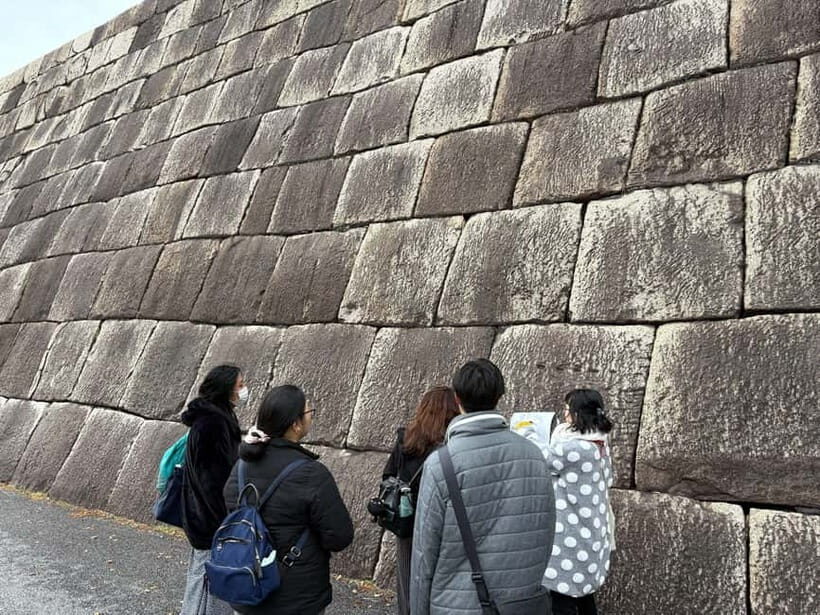
- Imperial Palace area + Edo Castle ruins to understand how power shaped today’s Tokyo
- Kagurazaka backstreets once linked to tea houses and performances by maiko and geisha
- A shrine focused on the god of love for a meaningful detour beyond sightseeing photos
- Snack + coffee or tea included, so you taste the area, not just look at it
Before you commit, see how this one stacks up against a few Tokyo favourites:
- Mt Fuji and Hakone 1-Day Bus Tour Return by Bullet Train★ 5.0 · 26,383 reviews
- 1-Day Tokyo Bus Tour★ 5.0 · 14,250 reviews
- Tokyo: teamLab Planets TOKYO Digital Art Museum Entry Ticket★ 4.6 · 9,779 reviews
Imperial Palace Meets Kagurazaka: The Real Point of This Route
Tokyo can feel like a blur of neighborhoods unless someone gives you a thread to follow. This tour’s thread is simple: you start in the Imperial Palace area (the heart of what used to be Edo Castle’s grounds) and then you follow the walking lines into Kagurazaka, a district with an older, more local rhythm.
I like that the plan doesn’t treat history like a museum worksheet. You’re walking the same kind of space where political power once operated, then you move toward the smaller alleys where daily life still shows through. And because the group is limited to 8, the guide can shape the pace—like giving you extra time at a photo spot if the light is right.
The biggest consideration is transparency about what you won’t do: you don’t visit the inner palace. You will tour the public areas and surrounding features, but if your fantasy is marching inside a palace complex, this isn’t that.
Meeting at Shin-Marunouchi and Getting Oriented Fast
The meeting point is outside the Shin-Marunouchi Building, in front of STAND T (look for the BEAMS sign on the second floor). If you’re using the train, the closest exit is Marunouchi Central Exit from Tokyo Station, and it’s about a 2-minute walk.
Why I think this matters: Tokyo Station is a maze. Getting oriented at the start saves energy later. Instead of spending your best morning hunting for the right building, you’ll meet, listen, and then begin the walk with purpose.
Plan for smart comfort. You’ll be on foot for the full 210 minutes, so wear comfortable shoes and clothes. Smoking, drones, and weapons/sharp objects aren’t allowed, and alcohol and drugs are not part of the experience—so bring a normal sightseeing mindset.
Tokyo Station to the Imperial Palace Grounds: A Straight Shot With Story
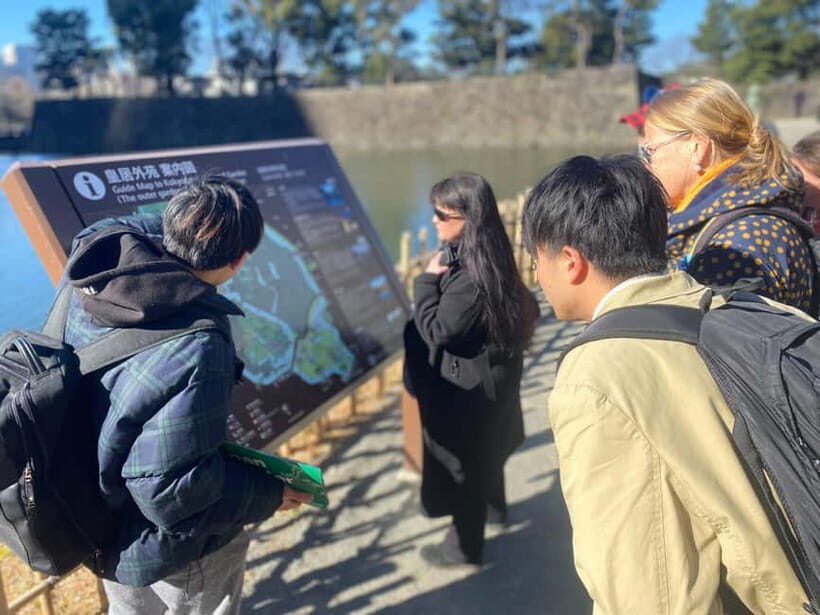
You begin with a photo stop at Tokyo Station, then head into the Imperial Palace area. The guiding starts right away, which is useful because it helps you understand what you’re looking at instead of just collecting angles for Instagram.
At the Imperial Palace itself, the tour gives you about an hour of guided viewing. This is where the history thread becomes concrete: you’ll hear how the Imperial Palace grounds relate to Edo Castle, the political and cultural center during the Tokugawa Shogunate.
Here’s the practical value for you: Tokyo has plenty of “big sights,” but understanding the Edo-to-modern connection makes the whole area feel less random. The castle wall features, garden moments, and the general scale help you picture how much space and authority Edo had.
Ote-Mon Gate and Ninomaru Garden: Details You’d Otherwise Miss
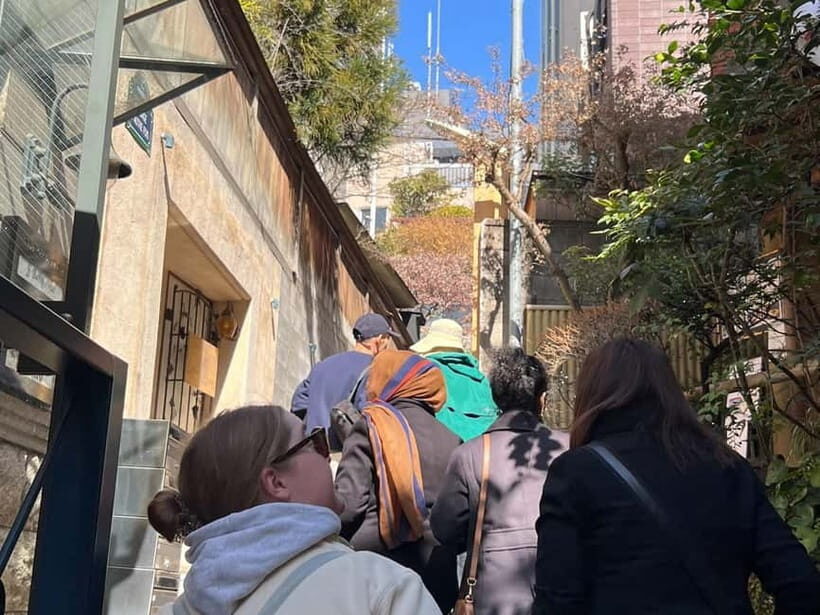
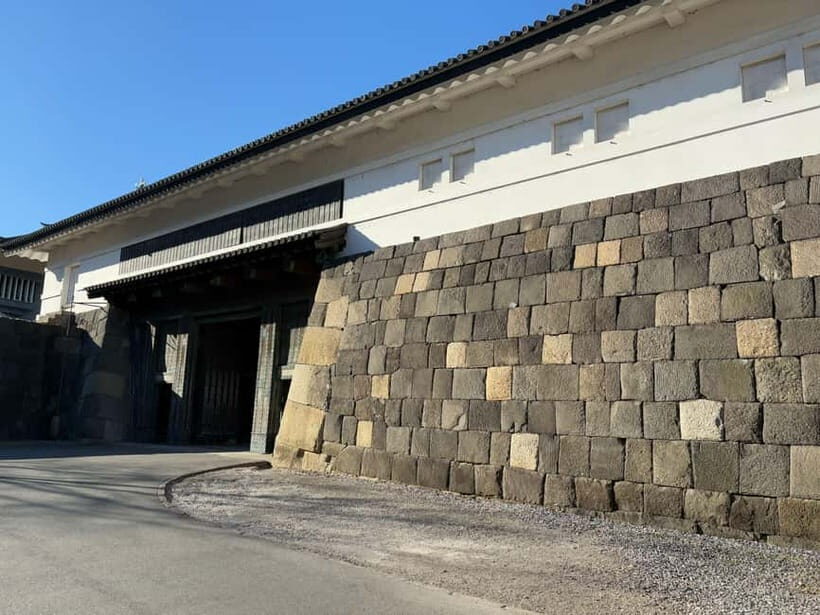
Next comes the Ote-Mon Gate. You get a photo stop plus guidance, so you’ll know what matters visually and what doesn’t. The gate isn’t just a backdrop; it’s part of the defensive and ceremonial layout that helped define how Edo Castle operated.
Then you move to Ninomaru Garden, with another photo stop and guided context. I like gardens on tours when they’re explained properly, because they’re not only pretty—they’re a design language. Even if you’re not a garden expert, you can learn what to look for: pacing, placement, and how nature is used to shape the feeling of a space.
A small note for expectations: this is about seeing and understanding the palace grounds from the outside areas that are available to the public, not touring restricted inner spaces.





Edo Castle Ruins to Nippon Budokan: Seeing Scale and Power
After Ninomaru Garden, the route continues through the Edo Castle Ruins area. You’ll get a photo stop plus guided explanations, with the focus on scale. The tour frames these areas as what’s left of the huge Edo Castle grounds, so you don’t just see remnants—you get a sense of how grand and powerful the former complex once was.
Then you get a short stop at Nippon Budokan (about 5 minutes). It’s a quick photo moment, but it helps you connect history to Tokyo’s modern “stage” culture—Budokan is a familiar name, and you’ll feel how Tokyo layers time on top of time.
This portion is a good example of why the tour length works. You get several landmark beats in one flow, without the typical commute dead time.
Lunch-Adjacent Break at Aomi Coffee Kudanshita

Midway, the tour schedules a break: Aomi Coffee Kudanshita, around 25 minutes. This is where the tour earns its keep for value. The price includes coffee or tea, and you’re not expected to disappear for lunch on your own.
I suggest you use the break for two things: refill water and plan your next walking segment. Bathrooms and snacks are easier when you pause on purpose rather than when you feel rushed.
Also, since this is a guided group, you’ll be less tempted to wander off into a side street just because it looks fun. The schedule matters here. It keeps the history walking from turning into a random neighborhood stroll.
Tokyo Daijingu and Ushigome Gate Remains: A Spiritual Detour With a Theme
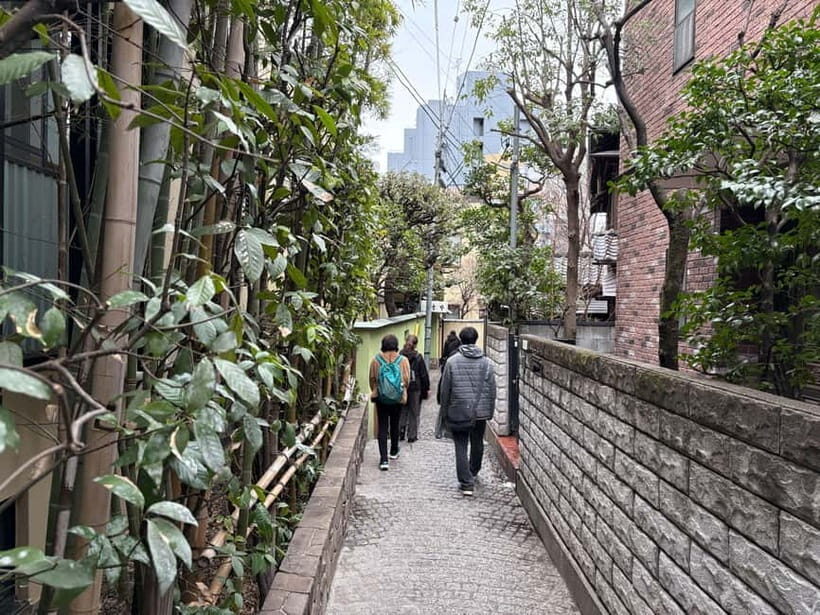
After your break, you visit Tokyo Daijingu for guided time (about 20 minutes). This isn’t presented as a quick checkbox. The guide helps you connect the stop to the broader Tokyo story and gives you context so it feels like more than standing in front of a structure.
Then you see the Remains of Ushigome Gate. Again, it’s guided, and it builds the sense that you’re moving through what was once part of Edo Castle’s larger network.
One thing I like about this design: it adds variety. You’re not only staring at walls and gates. You get both spiritual atmosphere and tangible “what’s left” history, so the tour doesn’t feel repetitive.
Geisya Komichi Alley, Hyogo Yokocho Alley, and Kagurazaka’s Snack Stops
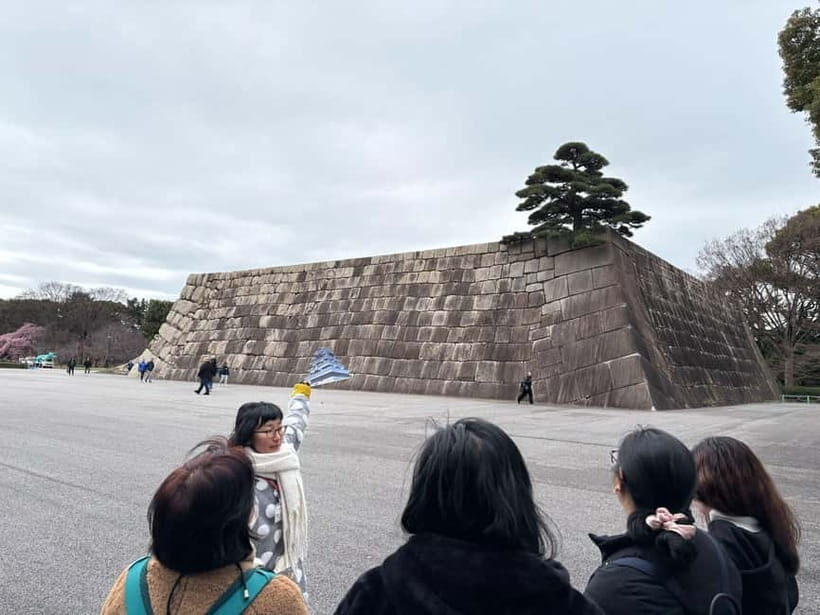
Now we shift gears. This is where the tour stops being only history sightseeing and starts becoming neighborhood Tokyo.
You’ll have photo stops at Geisya Komichi Alley and Hyogo Yokocho Alley. The pace stays walkable, but the mood changes—smaller lanes, more local storefront energy, and that feeling of Tokyo you only get when you’re not standing on a main drag.
The tour then heads toward Kagurazaka to talk about the district’s past. Back around 200 years ago, Kagurazaka was linked to a red light district era, with many tea houses where maiko (and geisha) performed. Today, it’s known for local business shops and traditional-style restaurants, and it still feels more “lived-in” than some of the flashier neighborhoods.
Why this is worth your time: the Imperial Palace part explains how power shaped the city. Kagurazaka shows how people lived, ate, and socialized after that power structure was gone. It’s a shift from top-down history to street-level culture.
The shrine for love and relationships
On the way, the tour includes a unique shrine stop—one that worships the god of love. This is a meaningful break in the middle of the alley wandering. Even if you don’t usually visit shrines, it’s a theme-based stop that fits the idea of relationships and community.
You’ll also hear about local traditions around the area, so the stop feels connected to what you’re walking through rather than like a random detour.
The Little-Known Alley Moment: Culture and a Real Snack
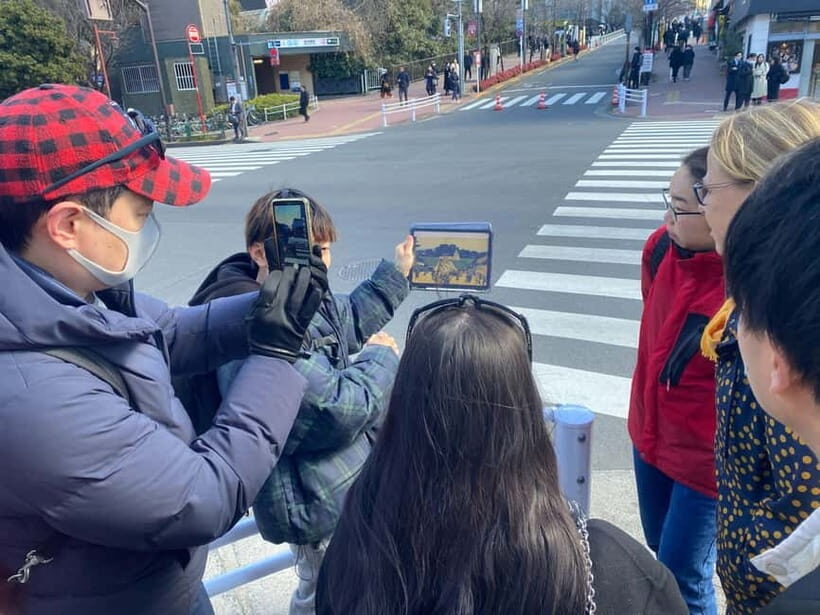
At the end of the walking sequence, you’ll reach a quieter, less touristy alley in Kagurazaka. The tour describes it as an area that most people don’t normally get to see, and the plan includes enjoying the culture and history there—plus a snack.
I like that the tour doesn’t stop at “take a photo and move on.” The snack is included in the price, and you’re not expected to guess where to go. You’ll get to taste something local in a place that feels more like daily life than a theme park.
The snack timing also makes sense. By the time you reach the alley, you’ve already done the major palace landmarks. You’re ready for a break that feels like a payoff.
How the 210 Minutes Feel on the Ground
210 minutes is just over 3 hours. It’s long enough to cover a meaningful chunk of Tokyo’s big historic core and then still reach Kagurazaka’s side lanes. It’s also short enough that you won’t feel like your whole day has vanished into one activity.
Because it’s a small group (limited to 8), you’re unlikely to spend time waiting in long lines. The itinerary is built around photo stops and guided time slices, so you’re always doing something—just not always at the same intensity.
The one pacing drawback: you do need stamina. The tour is walking-heavy, and it’s not ideal for people who can’t do extended walking. If you’re sensitive to heat or you want frequent breaks, consider planning your day around this tour so you’re not exhausted afterward.
Also, tour end time can be delayed about 15 minutes due to traffic conditions or other courses. Build a little buffer if you have the next reservation right after.
Value for $51: What You’re Actually Paying For
At $51 per person for 210 minutes, this tour isn’t trying to be cheap in the “good luck” sense. You’re paying for a guide who connects the sites, plus the practical extras: coffee or tea and a snack.
Here’s what feels like real value:
- You get multiple high-demand stops in one flow, starting near Tokyo Station.
- You learn how Edo Castle’s scale and layout connect to what you see around the Imperial Palace.
- You get into Kagurazaka’s narrower lanes and finish with a snack in a quieter alley.
- You’re in a small group, which makes it easier to ask questions.
If your Tokyo goal is to maximize sights without losing the human details, this price can be a fair deal.
What Kind of Traveler Should Book This?
This tour is a strong match if you:
- Want a guided, English-speaking way to understand the Imperial Palace area beyond basic photos
- Like history that’s tied to real places you can walk through
- Prefer smaller streets and food moments over only major attractions
- Enjoy asking questions and getting answers while you’re moving
It’s less ideal if you:
- Want to enter the inner palace area (it’s not included)
- Can’t do sustained walking
- Are traveling with constraints that make street-level navigation difficult (the tour ends at a different spot than where you start)
And if you’re pregnant, it’s specifically listed as not suitable.
Should You Book the Tokyo Imperial Palace and Kagurazaka Tour?
I’d book it if you want Tokyo that feels more coherent. The Imperial Palace segment gives you context for how Edo—and the Tokugawa world—shaped the city. Then Kagurazaka brings you into a lane-scale Tokyo where history shows up as alley life, traditional shop fronts, shrine energy, and a snack that feels earned.
If you hate walking, or if your idea of a palace day is fully inside access, you’ll likely feel disappointed. But if you want a smart 3-hour plan with an English guide who can handle questions—like the guides named Hiro and Shuntaro did for other guests—this is one of those tours that turns landmarks into meaning.
FAQ
Does the tour include entry to the inner Imperial Palace?
No. The inner palace is not open to the public, so this tour does not include visiting it.
How long is the Tokyo Imperial Palace with Nostalgic Alley Kagurazaka tour?
The duration is listed as 210 minutes.
How big is the group?
The tour is limited to a small group with up to 8 participants.
Is the guide available in English?
Yes, it’s a live tour guide in English.
Where do I meet the group?
Meet outside the Shin-Marunouchi Building in front of STAND T, where you’ll see a BEAMS sign on the second floor.
What is the closest Tokyo Station exit?
Marunouchi Central Exit is the closest, with about a 2-minute walk to the meeting point.
What’s included in the price?
Snack is included, along with coffee or tea during the short break. You also get great photo spots and the local tour guide.
Is the tour suitable for pregnant women?
No. It is not listed as suitable for pregnant women.
More Tours in Tokyo


More Tour Reviews in Tokyo



Fresh reviews from around Tokyo






Imperial Palace Tours, compared.
 ★ 4.9Imperial Palace Japanese History Walking TourFrom $32987 reviews
 ★ 5.0Imperial Palace East Garden and Edo Castle Walking Tour in TokyoFrom $25510 reviews
 ★ 4.8Imperial Palace East Gardens Walking TourFrom $19353 reviews
 ★ 4.5Imperial Palace, Sensō-ji Temple, & Tokyo Tower TourFrom $40339 reviews
 ★ 5.0Tokyo Castle, Imperial Palace, Shogun & Garden Walking TourFrom $31211 reviews
 ★ 4.7Edo Castle & East Garden of the Imperial Palace TourFrom $42112 reviews
 ★ 5.0Tokyo Private Tour! Edo Castle & Imperial Palace East GardensFrom $65105 reviews
 ★ 5.0Imperial Palace, the history of Japan (ENGLISH GUIDE)From $4077 reviews
Browse the lists this tour appears in