
Tokyo slows down here. In just 90 minutes, you get a rare mix of Imperial Palace East Gardens calm and the hard edges of Edo Castle stonework, explained by an English-speaking guide. You’ll move through gates, remnants of old castle walls, and garden paths where the shogunate story quietly connects to modern Japan.
What I really like is the focus. You’re not doing a long marathon across the city, so you can actually stop and look: there’s a photo stop and guided time at the Imperial Palace, then dedicated time in the East Gardens. I also love the reset you get in Ninomaru Garden, with its ponds and seasonal flowers that make the historical setting feel human, not just academic.
One possible drawback: this is mostly an outdoor walking tour with a couple of photo stops, so if you want lots of indoor exhibits or hands-on artifacts, your time may feel a bit light. It’s designed for seeing, noticing, and listening rather than browsing.
In This Review
- Key things that make this tour worth your time
- Entering the Imperial Palace East Gardens without the usual Tokyo rush
- Meeting near Otemon Gate and getting your bearings fast
- Tokyo Imperial Palace photo stop: the quick orientation that matters
- Walking the Edo Castle stone ruins like you’re reading a map
- Ninomaru Garden: where the tour slows down for real
- Sakurada-mon Gate: the photo stop that turns into context
- Timing and pace: why 90 minutes feels like a smart deal
- Who this tour suits best (and who might want something else)
- Should you book this Imperial Palace and Edo Castle historical tour?
- FAQ
- How long is the Tokyo Imperial Palace, Edo Castle and Historical Tour?
- Where is the meeting point for the tour?
- Is the tour offered in English?
- What places are included in the tour?
- Is admission to the East Gardens included?
- Is the tour wheelchair accessible?
- What is the cancellation policy?
Key things that make this tour worth your time
- Stone ruins and castle foundations you can stand over, not just read about
- Ninomaru Garden pauses built into the route, so you don’t rush the scenery
- Sakurada-mon Gate as a clear visual marker for where the story turns
- Clear English guidance noted for being easy to follow, including guides like Tony and Jim
- Admission to the East Gardens included, so you’re not scrambling to buy tickets
More paths into old Tokyo
- Tokyo: Imperial Palace Japanese History Walking Tour★ 4.9 · 987 reviews
- Tokyo: Shinjuku Historical Walking Tour & Secret Backstreets★ 5.0 · 530 reviews
- From Tokyo: Nikko World Heritage Site Private Full-Day Trip★ 4.9 · 243 reviews
Entering the Imperial Palace East Gardens without the usual Tokyo rush
Most of Tokyo can feel fast: trains, signage, crowds, momentum. This tour takes a different rhythm. You’re in a place tied to emperors and shoguns, but the East Gardens don’t feel like a lecture hall. They feel like a pause in the middle of the city.
The route is built around contrasts. You’ll look at stone gates and remnants of former castle walls, then walk into landscaped spaces that reflect the refined taste of the Edo period. That back-and-forth is part of the value. Instead of learning history in one abstract chunk, you experience it as a series of settings: fortification, ceremony, and garden calm.
And yes, the East Gardens are peaceful in a very particular way. You’re not just seeing greenery; you’re seeing a space shaped by power and tradition. The guide’s job is to connect what you’re standing in front of to why it mattered during the Tokugawa shogunate and the shift to imperial rule.
Meeting near Otemon Gate and getting your bearings fast
You meet at a Starbucks Coffee close to the Imperial Palace East Garden. That’s helpful for two reasons. First, it gives you an easy, recognizable reference point in a busy city. Second, it keeps you from spending your tour time figuring out the best entrance.
From there, the tour stays close to the palace grounds rather than scattering across town. You’ll get a logical flow that helps you understand the map as you go. The early photo stop at Tokyo Imperial Palace is short, but it gives you a visual anchor before the deeper walking starts.
If you’re the kind of traveler who likes to know where you’re going before you arrive, this pacing works well. You’ll start with quick orientation, then move into the East Gardens where the walking time is longer. And since the tour is about 90 minutes total, it’s short enough that you can fit it between other palace-area plans.
Tokyo Imperial Palace photo stop: the quick orientation that matters
The first stop is a photo moment and guided time of about 15 minutes at Tokyo Imperial Palace. I like this kind of opening because it reduces the mental load. Before you start looking at ruins and gates, you get a sense of the scale and placement of what you’re about to study.
This is where the guide sets the tone: you’ll hear about the imperial side of the story and how it connects back to the earlier Edo period stronghold. Even if you already know the basic names, hearing how your guide frames the transition from shogunate rule to imperial authority helps the rest of the walk click into place.
Practical tip: bring your camera-ready mindset, but also take a few seconds to look without shooting. The best understanding usually comes from standing still first, then framing photos afterward.
Walking the Edo Castle stone ruins like you’re reading a map
The core of the experience is the connection to Edo Castle’s remains. You’ll walk through historic stone ruins, remnants of defensive structures, and areas tied to the samurai era. This is not just “pretty rocks.” The stones and foundations help you picture how power was built and protected.
One of the big takeaways I’d suggest you look for is how the defensive layout shapes what you can see today. When you stand near castle foundations or old gate sites, you start noticing sight lines—where people would have moved, where walls would have blocked access, and how the design controlled the flow.
That’s also where a strong guide really helps. In feedback, guides such as Jim have been praised for explaining not only what happened, but also why it connects to Japan today. You’ll hear stories about the Tokugawa shogunate and the traditions that still echo in modern Japan, told while you’re physically in the spaces where those decisions were made.
If you like history that feels grounded, this is the segment where you’ll get that. The ruins act like a physical outline of a political system.





Ninomaru Garden: where the tour slows down for real
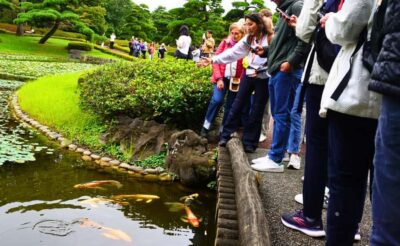
Then comes the most relaxing part: the East Gardens, including Ninomaru Garden. Your guided time here is about 45 minutes, plus photo stops. I like that the pace drops. You can actually walk and look, rather than treating the garden like a quick checkpoint.
Ninomaru Garden is described around seasonal flowers and tranquil ponds. That matters for value because it turns the tour from pure stone-focused sightseeing into a more balanced experience. You’re learning history, but you’re also getting a sensory break: water reflections, greenery, and the gentler geometry of garden design.
Here’s how I’d use this time: don’t rush toward the most photogenic angle. Instead, try to understand the relationship between water, paths, and how the garden is arranged for viewing. When the guide connects the Edo period artistry to what you see, the garden stops being generic landscaping and becomes part of the historical story.
Weather note: this segment will be outdoors. If rain is in the forecast, bring a light layer you can handle and expect the stone ruins to feel a bit different under wet conditions.
Sakurada-mon Gate: the photo stop that turns into context
The tour includes a photo stop and guided time at Sakurada-mon Gate, about 20 minutes. This is one of those stops that works even if you’re not a hardcore architecture person, because gates are easy to understand as symbols. A gate is a boundary. A gate is a decision about who passes and under what rules.
The guide’s explanation here helps you tie the visible features back to the broader timeline: samurai-era defensive thinking, castle-era movement, and the later imperial identity of the palace grounds. Even if you’ve only learned these topics in fragments, this stop gives you a concrete checkpoint to attach them to.
Practical tip: treat this as a short storytelling break. Let the guide point out what to notice, then take your photos after. You’ll capture better images when you know what the gate is actually “doing.”
Timing and pace: why 90 minutes feels like a smart deal
This tour runs about 90 minutes, with the experience described as roughly 1.5 to 2 hours. That range is realistic because outdoor walking often depends on how long you linger at photo stops and how your group moves.
The value is in what’s included. You get a historical walking tour of the Imperial Palace East Gardens, admission to the East Garden, and English-language guidance. At $22 per person for a guided experience that includes entry, it’s not just a sightseeing walk. It’s a structured way to understand a big site without wasting time figuring things out.
You’ll also appreciate the short duration if your Tokyo day is already packed. The palace area can be easy to over-plan because there’s so much to see around it. This tour helps you add depth without stealing half your day.
Group experience note: the tour is designed for wheelchair accessibility, which usually means the route is manageable. You’ll still be walking, but it’s built with practical movement in mind.
Who this tour suits best (and who might want something else)
I think this works especially well for you if:
- you want guided history in a short format
- you like seeing stone and garden features as part of one story
- you appreciate English narration that keeps things clear and easy to follow
It may feel less ideal if you want long, museum-style depth or lots of time to wander freely on your own. This tour is paced to cover key points in a tight window, so there’s less time for solo exploration beyond what the guide builds into the route.
One more detail: the guide experience can matter a lot on history walks. In the feedback, Tony is praised for speaking clearly and loudly for deaf guests, and Bell is noted for being considerate so everyone felt included. That’s a good sign that the guides focus on communication, not just reciting facts.
Should you book this Imperial Palace and Edo Castle historical tour?
If you want a simple, high-value way to understand the Imperial Palace East Gardens as the former heart of Edo Castle, I’d say yes. For around 90 minutes, you get the three ingredients that make this area memorable: stone ruins, meaningful gate stops, and Ninomaru Garden’s calmer side of the story. Add in admission and English guidance, and the $22 price feels fair.
Before you book, decide what you’re chasing. If you want a guided walkthrough that helps you notice the right things quickly, this delivers. If you’re hoping for long independent wandering or indoor exhibits, you might feel slightly constrained.
FAQ
How long is the Tokyo Imperial Palace, Edo Castle and Historical Tour?
It lasts about 90 minutes, described as approximately 1.5 to 2 hours.
Where is the meeting point for the tour?
You meet in front of Starbucks Coffee located very close to the Imperial Palace East Garden (near Otemon Gate). Full meeting details are provided after booking.
Is the tour offered in English?
Yes, the live tour guide speaks English.
What places are included in the tour?
The experience covers Tokyo Imperial Palace, Imperial Palace East Gardens (including Ninomaru Garden), and a photo stop at Sakurada-mon Gate, with Edo Castle stone ruins and historic gates/moats as part of the walk.
Is admission to the East Gardens included?
Yes, admission to the Imperial Palace East Garden is included.
Is the tour wheelchair accessible?
Yes, the tour is wheelchair accessible.
What is the cancellation policy?
You can cancel up to 24 hours in advance for a full refund.
The Old Tokyo, Toured Properly



More Tours in Tokyo


More Tour Reviews in Tokyo



Fresh reviews from around Tokyo






Historical Tours, compared.
 ★ 4.9Imperial Palace Japanese History Walking TourFrom $32987 reviews
 ★ 5.0Shinjuku Historical Walking Tour & Secret BackstreetsFrom $25530 reviews
 ★ 4.9From Tokyo: Nikko World Heritage Site Private Full-Day TripFrom $483243 reviews
 ★ 5.0Yanaka Historical Walking Tour in Tokyo’s Old TownFrom $81182 reviews
 ★ 5.0Kamakura Historical Walking Tour with the Great BuddhaFrom $98129 reviews
From Tokyo: Nikko World Heritage Sight Full Day Private TourFrom $362127 reviews
★ 5.0Kamakura Historical Walking Tour with the Great BuddhaFrom $98129 reviews
From Tokyo: Nikko World Heritage Sight Full Day Private TourFrom $362127 reviews
 ★ 4.8Yanaka District: Historical Walking Tour in Tokyo’s Old TownFrom $79117 reviews
 ★ 4.8Nikko Heritage & Nature Day Trip from TokyoFrom $39194 reviews
Browse the lists this tour appears in