
Reviewed · FULL-DAY
Tokyo full day private tour with Guide
Tokyo can feel like a blur.
This private day plan turns it into a set of sights with built-in pacing, plus door-to-door transfers in a high-comfort vehicle. I like the way the itinerary mixes classic Tokyo (Senso-ji, Meiji Jingu, Imperial Palace area) with modern viewpoints (Skytree, Tokyo Tower) and a seaside reset at Odaiba. I also like the practical extras: complimentary coffee, tea, and bottled water, and flexible customization so you are not forced into a rigid checklist.
The main thing to weigh is that this experience is marketed as guided, but you should still confirm what you’ll get on-site. One past guest described the day as more of a private transfer than a true guide experience, with limited explanations and weaker English than expected. If you care a lot about deep commentary, ask directly how much interpretation your guide provides at each stop.
In This Review
- Key points worth knowing before you go
- Luxury private day: Toyota Vellfire or Crown, picked up at your hotel
- Tsukiji Fish Market with a guided hour: what you can realistically do
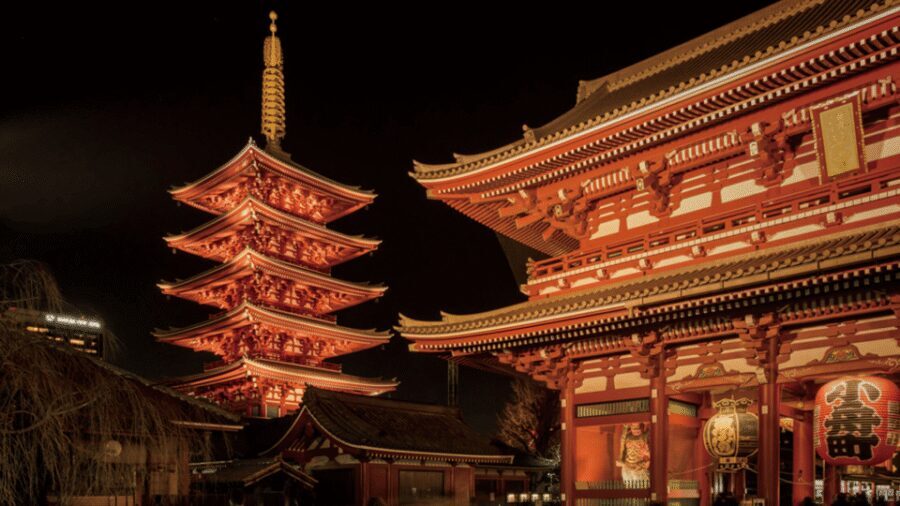
- Senso-ji Temple: long guided first visit, then a return for wandering
- Imperial Palace and the East Gardens: history you can walk through
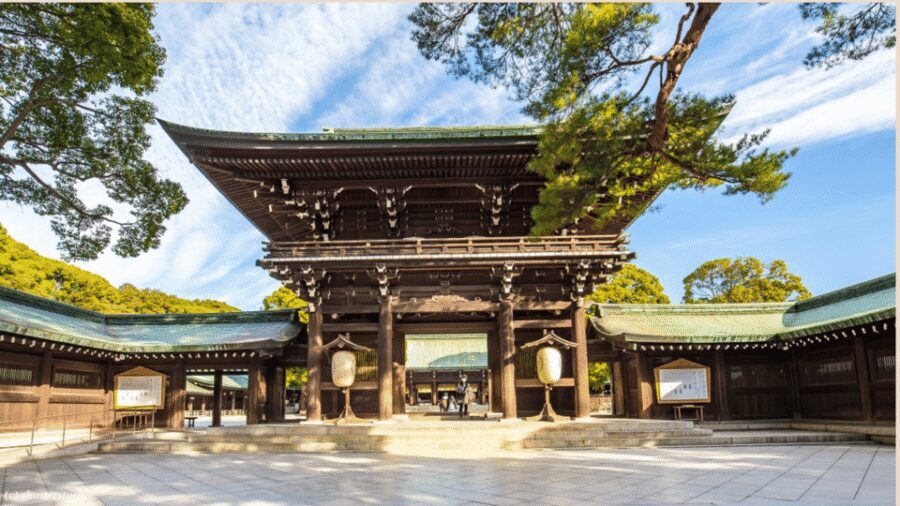
- Meiji Jingu: 70 hectares of forest calm in the middle of the city
- Shibuya Crossing: the guided hour near the screens and scramble energy
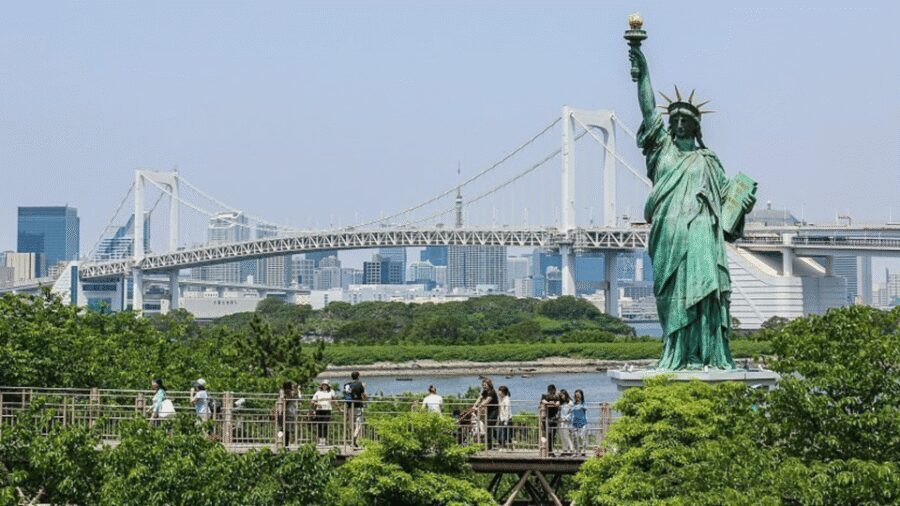
- Odaiba: a seaside reset on an artificial fort-island
- Imperial Palace East Gardens plus the skyline plan: how to manage time
- Price and logistics: is $329 per group up to 2 good value?
- Who should book this private Tokyo highlights day?
- Should you book Luxe Travels’ private Tokyo highlights day?
- FAQ
- How long is the Tokyo full day private tour?
- What is the price?
- Is this a private tour or shared?
- Which places are included in the itinerary?
- Do you get hotel pickup and drop-off?
- Is there a live guide?
- What languages are offered for the tour guide?
- Is the tour wheelchair accessible?
- What type of vehicles are used?
- Is admission to attractions included?
Key points worth knowing before you go
- Door-to-door luxury transfers in Toyota Vellfire or Crown, with Land Cruiser also mentioned
- Guided time at key landmarks like Tsukiji and Senso-ji, plus a guided Shibuya Crossing block
- Two skyline stops in one day: Tokyo Skytree and Tokyo Tower
- Food + culture mix: Tsukiji markets, Senso-ji temple area, Meiji Jingu shrine, Imperial Palace grounds
- Odaiba break by Tokyo Bay, including the historical daiba fort-island story
- Plenty of language options for the guide (English and several others are offered)
More days made easy by a guide
- Tokyo 6hr Private Tour with Government-Licensed Guide★ 5.0 · 3,902 reviews
- Tokyo: Shinjuku Local Bar and Izakaya Guided Walking Tour★ 4.9 · 1,794 reviews
- Tokyo: Private City Highlights Tour with Local Guide★ 4.8 · 1,433 reviews
Luxury private day: Toyota Vellfire or Crown, picked up at your hotel
This is built as a true private outing. You and your group get a dedicated vehicle and an English-speaking chauffeur/guide setup, with hotel pickup and drop-off included. That matters in Tokyo, where timing can get chaotic fast and public transit while dragging a day bag can turn into a full-time job.
The vehicle situation looks like a mix of Toyota Vellfire and Crown (and a Land Cruiser is also mentioned). Either way, the promise is comfort: air-conditioning, highway taxes and fuel included, and the simple fact that you don’t have to figure out transfers between neighborhoods.
The other logistics angle: you’re packing in a lot of stops. The day is listed as about 9 hours (with availability-based start times) and described as approximately 10 hours all in. Translation: expect long transitions and a schedule that’s closer to a fast sightseeing loop than a slow, lingering day. If you’re the type who likes to move at your own pace, use the customization option early—otherwise you can end up feeling like you’re rushing between photo opportunities.
Tsukiji Fish Market with a guided hour: what you can realistically do
Tsukiji is famous for seafood—so it’s helpful that the tour schedules a guided visit there (about one hour). With only that much time, you don’t want your visit to turn into aimless wandering. A guide’s value here is pointing you toward what’s worth seeing and how to read the market vibe: retail and wholesale areas, stalls, and the overall food culture that made Tsukiji Tokyo’s food magnet.
The tour description frames Tsukiji as Japan’s Food Town, with traditional cuisine and the idea that new culinary trends get born here. That’s exactly why the hour is set up the way it is. You get to experience the atmosphere of ingredient shopping and food activity without pretending you can do everything in one visit.
A practical note: Tsukiji experiences can be timing-sensitive. Since your pickup and start time depend on availability, try not to assume you’ll arrive at the most famous hours of the day. Treat this as a guided taste-and-look visit—great for getting oriented and learning how the market works, not great if you’re expecting a full market sampling marathon.
Senso-ji Temple: long guided first visit, then a return for wandering
Senso-ji in Asakusa is one of Tokyo’s biggest “wow” zones, and this tour gives it two time blocks, which is smart. First you get a guided visit of about 105 minutes—long enough for real context, not just a walk-by.
The description highlights the core spiritual and architectural elements: Senso-ji is devoted to the Buddhist goddess of mercy, Kannon, and you’ll see statues of different gods guarding gates, shrines, and hallways. You also get Japanese gardens and traditional marketplaces in the temple area mix. If you’re used to temples as quick photo stops, the guided time helps you understand the structure of what you’re looking at.
Then later, the day schedules a second Senso-ji segment that’s more open: a walk/sightseeing block of about one hour. That second visit is where you catch your own rhythm—lingering on what caught your eye during the guided portion, or checking out the street-market feel in a less structured way.
One caution: two temple blocks can feel repetitive if you’re not temple-minded. But for first-timers, it often works well: the first time gives the meaning; the second time gives the fun.
Imperial Palace and the East Gardens: history you can walk through
Tokyo Imperial Palace area is where Tokyo slows down a notch. The itinerary includes the Imperial Palace visit (about one hour) and then the East Gardens of the Imperial Royal (about one hour later in the day).
The tour description keeps it grounded and factual: from 1868 onward, the Imperial Palace has housed successive emperors, and the complex includes the Emperor’s formal residence and the broader palace grounds. Then it points out that the East Gardens are accessible to the public, located on the eastern portion of the royal grounds.
Why this fits well in a busy day: after markets, shrine crowds, and city streets, you get a calmer “walk space” where the atmosphere is more about ceremony and setting than about rushing for landmarks. You’re not there for rides or shopping. You’re there to see how Japan’s seat of power sits inside a modern metropolis.
A practical tip for making this time worthwhile: go in ready to observe. The gardens and palace grounds reward quiet attention—paths, spacing, views, and the feel of the grounds.
More private options with your own guide



Meiji Jingu: 70 hectares of forest calm in the middle of the city
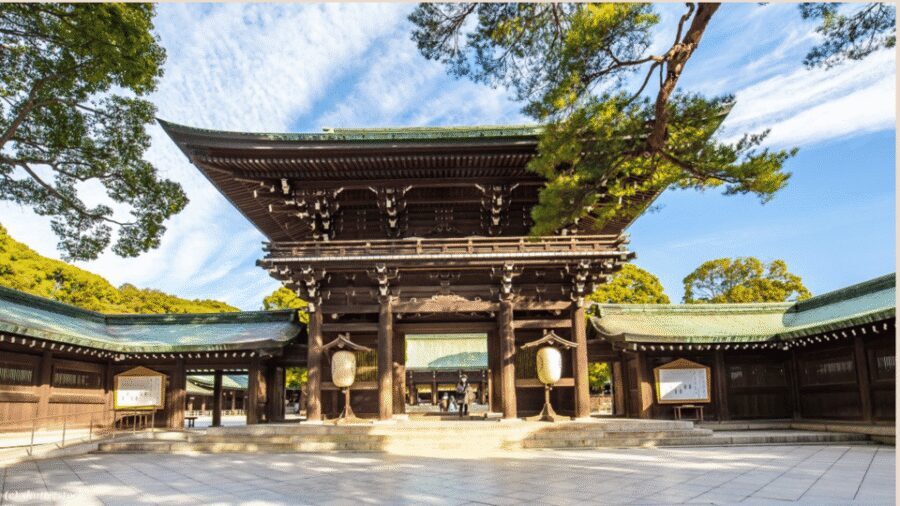
Meiji Jingu is one of the best Tokyo resets, and the day gives it about one hour. The tour description emphasizes a key detail that makes it feel like a different world: Meiji Jingu sits in the center of Tokyo, surrounded by a massive 70-hectare forest.
Founded in 1920 to honor Emperor Meiji and Empress Shoken, it’s a Shinto shrine that channels the modernization-era spirit through a very traditional setting. If your day feels like too much concrete, this stop helps balance it out.
Since you only have an hour, you won’t see everything—but you can still get the big experience: crossing into the shrine grounds and feeling how sound changes once you’re under the trees. Think of it as a breathing break you can actually schedule, not just a hopeful detour.
Shibuya Crossing: the guided hour near the screens and scramble energy
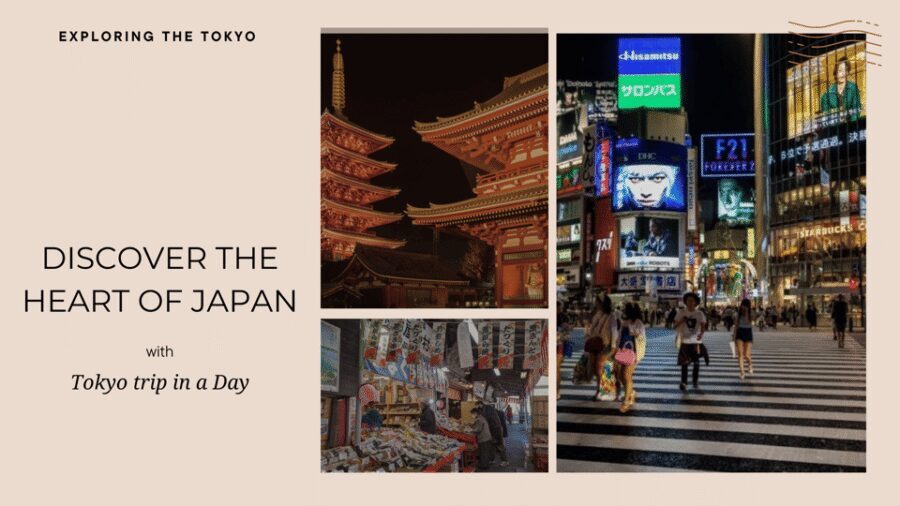
Shibuya Crossing is the postcard version of Tokyo’s movement, but it can also overwhelm you if you show up unprepared. That’s why the itinerary includes about one hour with a guided segment here.
The tour description calls out specific details that make Shibuya Crossing feel like a tech media hub: there are large television screens mounted on buildings facing the intersection, and lights and advertisements keep rolling throughout the day. You also get the classic shuffle in all directions at the scramble junction outside Shibuya Station.
A guide here can help you understand what you’re seeing beyond the spectacle. For example, where to stand to watch the crossing flow, and how to move through the area without fighting crowds in every direction.
This is also a good time to decide what you want from the rest of the day. If your energy is running low, you can lean into viewpoints later with less pressure. If you still have gas, Shibuya is where you’ll feel the city’s momentum again.
Odaiba: a seaside reset on an artificial fort-island
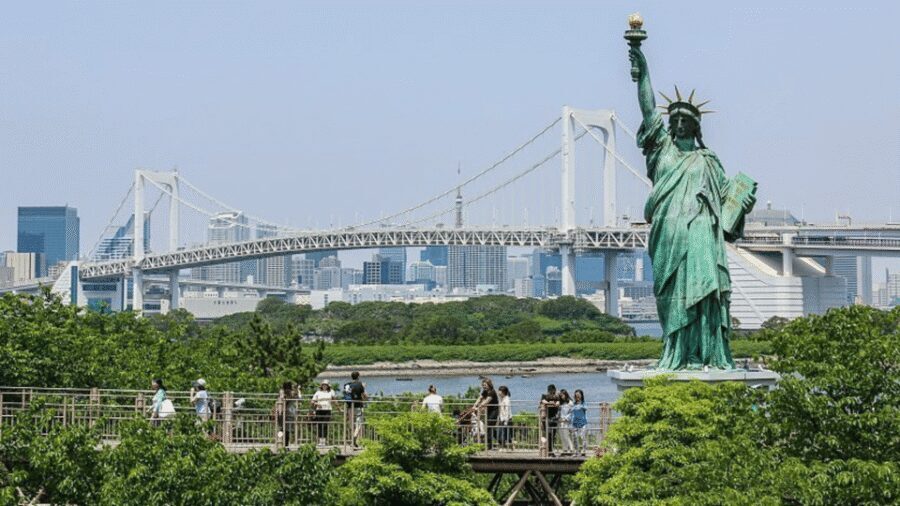
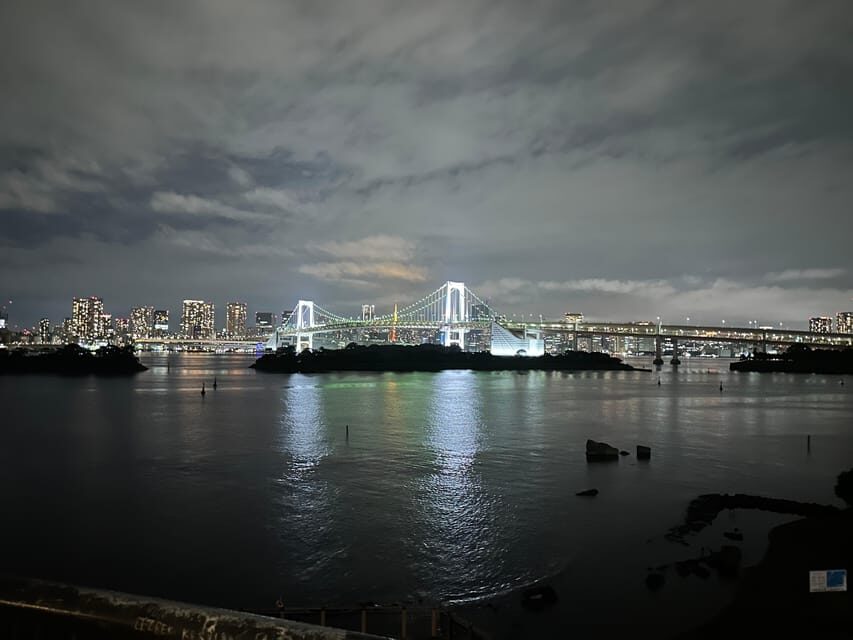
Odaiba is a different flavor of Tokyo: retail and leisure on a man-made island in Tokyo Bay. The tour gives about two hours, which is enough time to walk, snack, and enjoy the water-and-city feel without rushing.
What makes Odaiba interesting in this itinerary is the backstory. The description says daiba literally means fort, and that the islands were built in the late Edo Period (1603–1868) to defend Tokyo from maritime attacks, especially in response to Commodore Perry’s gunboat diplomacy.
That historical note is useful because it helps you understand why the layout feels a certain way. It’s not just a mall strip by the bay. It’s tied to older defense geography—now repurposed for modern leisure.
If you like breaks between high-intensity stops, this is your moment. Use it to cool down, refresh, and reset your legs before you tackle the skyline blocks.
Imperial Palace East Gardens plus the skyline plan: how to manage time
One thing to notice is the overall rhythm: you do Imperial Palace area, then Meiji Jingu, then Shibuya, then Odaiba, then East Gardens again, and finally Skytree and Tokyo Tower in the later portion of the day.
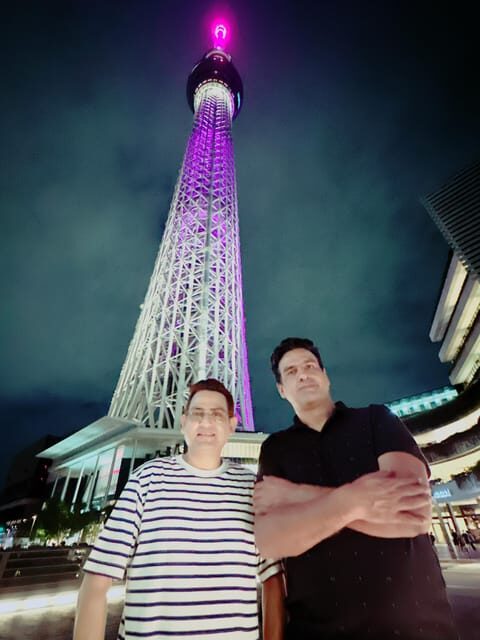
This is a lot of “big names” in one schedule, so you should plan your expectations. The skyline portion needs focus, not multitasking. When you reach Tokyo Skytree, you’ll have about one hour for sightseeing and a walk block.
The tour description gives useful Skytree specifics so you can appreciate what you’re seeing: it opened May 22, 2012, it reaches 634 meters (2,080 feet), and it was the second-tallest building in the world behind Burj Khalifa at that time. It notes two public observation decks—Tembo Deck and Tembo Gallery (also called Galleria)—and describes a curved circular ramp connecting two levels in the gallery. Even if you don’t go into every detail at the deck, having these facts in mind changes how you interpret the visit.
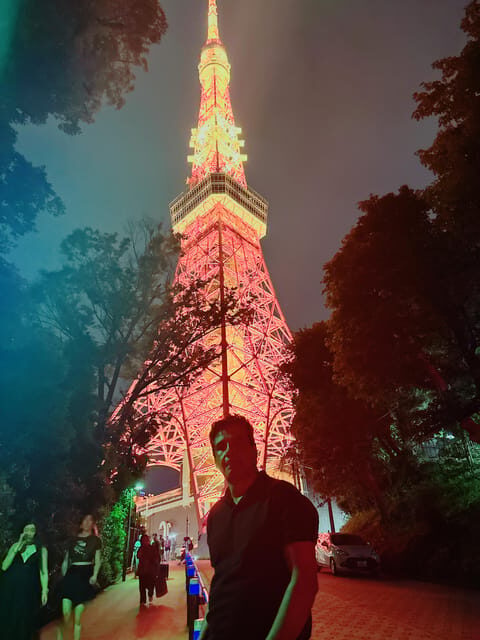
Then you finish with Tokyo Tower for about one hour of sightseeing. Since the provided information doesn’t go deep into Tower specifics, treat it as the classic counterpoint to Skytree: a chance to see another major symbol of Tokyo’s skyline culture and get a second look at the city from a different landmark.
My practical advice: decide early whether you care more about height/engineering (Skytree has the details here) or the iconic silhouette experience (Tokyo Tower time is shorter). With limited time, a clear preference prevents decision fatigue.
Price and logistics: is $329 per group up to 2 good value?
At $329 per group up to 2, what you’re buying is not just admission-like sightseeing. You’re buying a full-day package with hotel pickup and drop-off, private transportation in a luxury Toyota vehicle, highway taxes and fuel, and guided time at multiple major stops. For Tokyo, where moving between far-flung neighborhoods costs time, this can be good value if your goal is efficiency plus comfort.
You’re also getting itinerary customization. That’s a big deal because the itinerary is packed. If you can shift a stop to match your interests—more time near temples, less time on an area you don’t care about—you can turn a busy schedule into a tailored one.
Now the caution. A past guest felt the day was more like a private transfer than a guided tour, and they said the guide’s English wasn’t strong enough and that explanations were missing when questions came up. Another criticism mentioned parking decisions that limited time outside the car. That’s not a reason to avoid everything, but it is a reason to be direct before departure.
Here’s how to protect your money and your expectations:
- Ask what guided time really means at each stop (who joins you on-site and for how long).
- Confirm your language needs clearly in advance.
- If you want history and meaning, say so. Temples and the Imperial Palace area aren’t best enjoyed as quick photo breaks.
Who should book this private Tokyo highlights day?
This tour fits best if you want a structured, high-comfort day and you’re okay with a “see a lot” pace. It’s also a good match if you value the idea of door-to-door transfers, especially if you’re juggling jet lag, heavy bags, or limited stamina.
It also looks like a solid option for people who don’t want to manage transit lines between neighborhoods. Since it’s a private group with wheelchair accessibility listed, it can work for travelers who need easier movement between destinations.
Who should be careful:
- If you want slow travel with lots of free time, this schedule may feel tight.
- If you expect a very talkative, deeply interpretive guide at every stop, you should confirm what you’ll get in advance.
- It’s not suitable for people over 95, based on the tour’s note.
Should you book Luxe Travels’ private Tokyo highlights day?
If your priority is a smooth, private day that covers Tsukiji, Senso-ji, Meiji Jingu, Shibuya, Odaiba, and two skyline landmarks without you planning logistics, this is a strong candidate. The value is tied to comfort, coverage, and guided moments—especially the temple and market blocks.
If you care most about in-depth explanations and fluent guide storytelling, I’d treat this as a “confirm first” booking. Send your questions ahead of time, align on what you want at each stop, and don’t assume every visit will come with the same level of commentary.
Book it when you want convenience plus highlights. Skip it if you want a relaxed, unstructured day where you might fall behind and take your time. This itinerary is designed for the days you want to get things done.
FAQ
How long is the Tokyo full day private tour?
The duration is listed as 9 hours, with starting times depending on availability. The tour description also notes it runs approximately 10 hours in total.
What is the price?
It’s priced at $329 per group up to 2 travelers.
Is this a private tour or shared?
This is a private group experience.
Which places are included in the itinerary?
The included stops are Tsukiji Fish Market, Senso-ji Temple, Tokyo Imperial Palace, Meiji Shrine, Odaiba, Imperial Palace East Gardens, Shibuya Crossing, Tokyo Skytree, and Tokyo Tower.
Do you get hotel pickup and drop-off?
Yes, hotel pickup and drop-off are included.
Is there a live guide?
Yes. A live tour guide is listed, with English and several other language options.
What languages are offered for the tour guide?
The guide is listed in English, Hindi, Japanese, Urdu, Punjabi, Spanish, Vietnamese, and Bengali.
Is the tour wheelchair accessible?
Yes, wheelchair accessibility is listed.
What type of vehicles are used?
Luxury Toyota vehicles are mentioned, including Vellfire and Crown, and Land Cruiser.
Is admission to attractions included?
The inclusions list visits and guided time, but they do not specify whether admission fees are included. You should check directly with the operator for ticket and entry details for Skytree, Tokyo Tower, or other attractions.
Easier with a Guide

More Tours in Tokyo





More Tour Reviews in Tokyo




Fresh reviews from around Tokyo






Full-Day, compared.
 ★ 4.5From Tokyo: Mount Fuji Full-Day Sightseeing TripFrom $684,970 reviews
 ★ 4.9Mount Fuji Full-Day Private Tour from Tokyo (Customizable)From $3931,470 reviews
 ★ 5.0Tokyo Private Full-Day Tour by Car or VanFrom $321684 reviews
 ★ 4.7From Tokyo: Must-Visit Mount Fuji Highlight Full-Day TourFrom $69532 reviews
 ★ 4.5Mt. Fuji, Hakone Full-Day Private Tour with English Driver GuideFrom $495458 reviews
 ★ 4.8From Tokyo: Mount Fuji Full-Day Customizable Private TourFrom $483451 reviews
 ★ 5.0Nikko Full-Day Private Tour with Government-Licensed GuideFrom $155259 reviews
 ★ 4.9From Tokyo: Nikko World Heritage Site Private Full-Day TripFrom $483243 reviews