
Reviewed · MT FUJI DAY TRIPS
From Tokyo: Must-Visit Mount Fuji Highlight Full-Day Tour
Mt. Fuji day trips can be hit-or-miss. This one feels built for both views and control, with two different routes and a guide who helps you hit the best photo angles without turning the day into chaos. I especially like the classic payoff at Arakurayama Sengen Park and the calm water moments around the lakes. One drawback to plan for: it’s still a long day on a coach, and weather can hide the mountain.
What makes it work is the human factor. Guides like Kei and Goldie are repeatedly praised for keeping the group moving on time and staying positive even when conditions change, and the bus ride is comfortable enough that the hours don’t feel endless. You’ll want to bring your own snacks since lunch is not included.
The best part is that you choose your Mt. Fuji mood. Course A leans into postcard photos and waterfalls, while Course B adds spring ponds and lakeside strolling. It’s also stroller-friendly, but it’s not wheelchair-accessible, and the pagoda stop includes steps.
In This Review
- Key points that make this tour worth your time
- Two Routes Around Mt Fuji: Course A Photo Spots vs Course B Lakes and Springs
- Meeting in Tokyo and Getting Comfortable on the Coach
- Arakurayama Sengen Park and Chureito Pagoda: The Step Climb With Big Rewards
- Honcho Street and Fujikawaguchiko: Where the Day Gets Nostalgic Fast
- Lake Kawaguchi, Oishi Park, and Shiraito Waterfall for Classic Fuji Views
- Oshino Hakkai and Lake Yamanaka: The Calmer Water Side of Fuji
- Obuchi Sasaba Tea Fields and Those Small Food Treat Moments
- Timing, Weather, and Why Clear Skies Change Everything
- Price and Value: Why $69 Often Feels Like a Deal
- Who This Tour Fits Best (and Who Should Skip It)
- Should You Book This Mt. Fuji Day Trip?
- FAQ
- How long is the Mount Fuji tour?
- What’s included in the price?
- Are meals included?
- Are there two different routes?
- Is there wheelchair access?
- Is it stroller-friendly?
- Can I cancel for a full refund?
Key points that make this tour worth your time
- Two route styles: classic photo stops vs quieter nature and spring-pond views
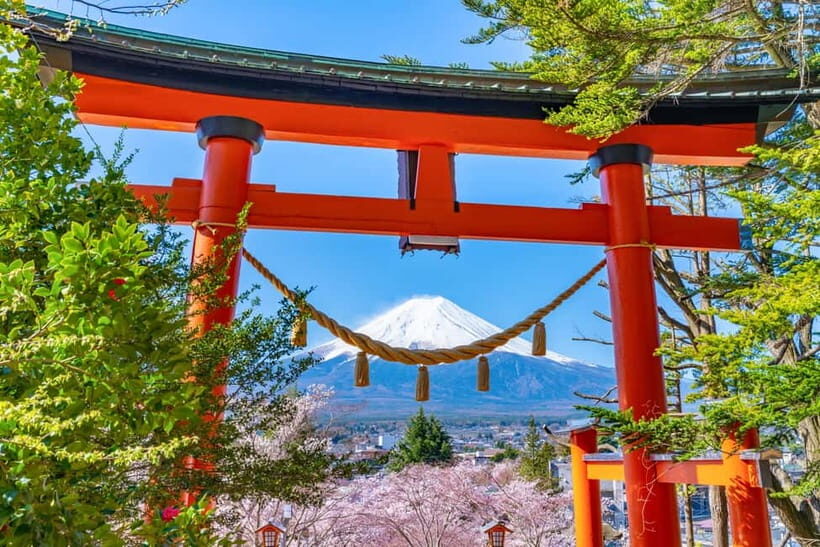
- Chureito Pagoda views from Arakurayama Sengen Park, with an easy-to-moderate step climb
- Lakes for reflections at Lake Kawaguchi and Lake Yamanaka (when skies cooperate)
- Oshino Hakkai spring ponds for a different, more local side of the Fuji area
- Guide-led photo strategy so you’re not just wandering with everyone else
- Comfortable round-trip coach with practical bathroom and snack breaks built in
Other routes to the mountain, compared
- Mt Fuji & Hakone Cruise, Drum Show Bullet Train 1 Day from Tokyo★ 4.0 · 7,413 reviews
- Tokyo Mt Fuji 5th St & Hakone Cruise Bus Tour w/Bullet Train★ 4.4 · 5,024 reviews
- From Tokyo: Mount Fuji Full-Day Sightseeing Trip★ 4.5 · 4,970 reviews
Two Routes Around Mt Fuji: Course A Photo Spots vs Course B Lakes and Springs
This is sold as a “must-visit” full-day trip, but the real value is that you don’t have to do someone else’s exact checklist. You pick between two route variations, and both include the big icons around the Fuji base—just with different pacing and themes.
Course A (Highlight Photo Spots) is the one I’d choose if you want the classic Mt. Fuji look at several famous viewpoints in one day. It strings together Arakurayama Sengen Park and Chureito Pagoda, Shimoyoshida Honcho Street, Lake Kawaguchi with Oishi Park, then Shiraito Waterfall, and finishes with tea fields at Obuchi Sasaba.
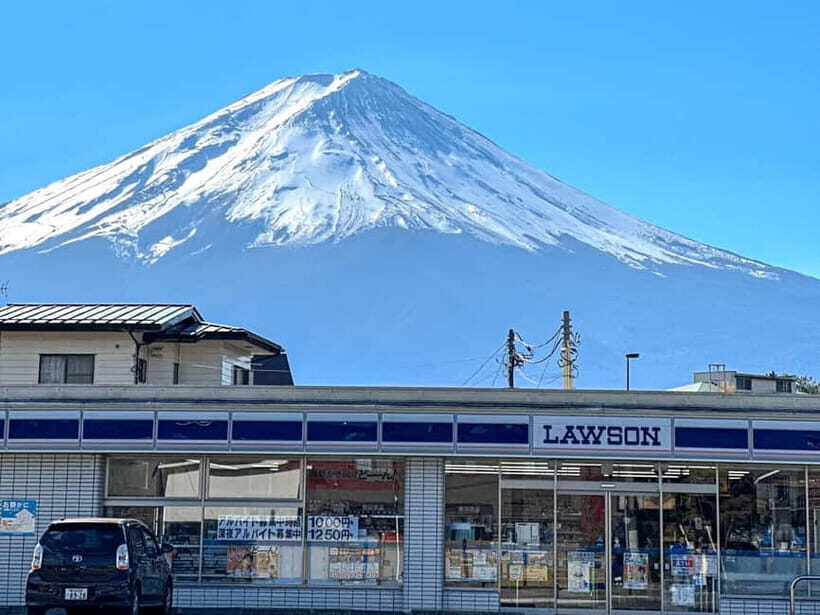
Course B (Signature Scenic Spots) feels calmer and more “region experience.” It starts with a clear first look from the Lawson area in Fujikawaguchiko, keeps you on the same Arakurayama and Honcho Street core, then shifts to culture and water: Mt. Fuji Museum or a nearby matcha café option, Oshino Hakkai spring ponds, and finally Lake Yamanaka with Hirano Beach.
If you’re short on time and want maximum variety of Fuji angles, both routes do the job. If you’re a “photos first” person, Course A tends to satisfy faster. If you care more about local water and walking, Course B usually lands better.
Meeting in Tokyo and Getting Comfortable on the Coach
The tour includes round-trip transport from central Tokyo, and you’ll meet at a starting point that can vary by option. One commonly listed pickup is at Starbucks Coffee by Shinjuku L Tower, near the Tokyo Station Marunouchi north-side exit area. Your exact meeting details depend on what you book.
Expect a long driving day. The early stretch is roughly 2.5 hours by coach before you reach the Fuji area, and then the pace becomes a repeated loop of short stops plus transit time between them. Even so, the coach ride is a key part of the experience because it saves you from renting a car, dealing with parking, or figuring out trains while you chase daylight.
A small but practical tip: several guides seem to coach people where to stand and when to take shots. One review tip I really like is seating on the left side of the bus for better photo positioning along the way. It’s not guaranteed every day, but it’s an easy thing to do.
Arakurayama Sengen Park and Chureito Pagoda: The Step Climb With Big Rewards
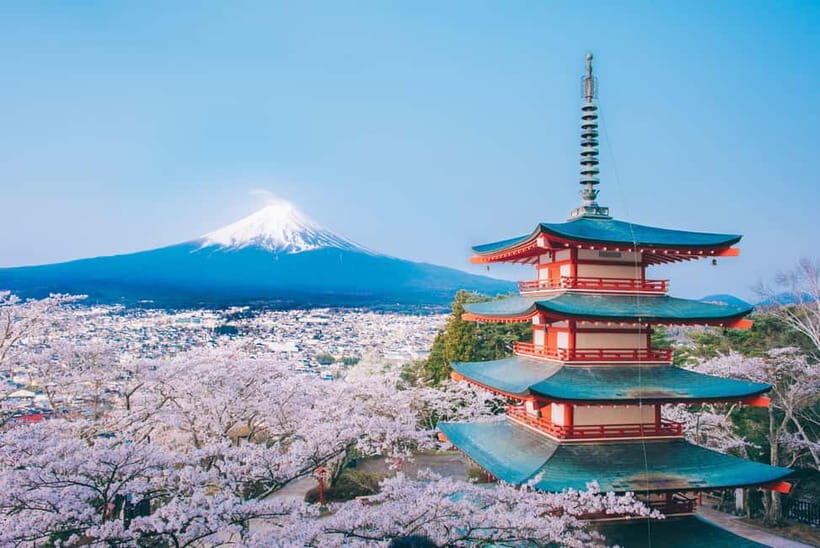
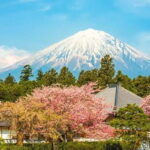
Arakurayama Sengen Park is where the tour earns its reputation. This stop is built around the iconic view of Chureito Pagoda with Mt. Fuji in the background, which is exactly why it shows up on postcards and phone wallpapers.
You’ll get time for photos and strolling. The flow usually includes a stop at the park itself, then walking around the pagoda viewpoint area. A big consideration: the pagoda approach involves stairs, and one shared detail pins it around 400 steps in each direction. It’s described as an easy-to-moderate hike, but it’s real climbing, not a casual flat walk.
If you’re worried about stamina, the good news is that the stop is short enough to manage. The trick is to keep your pace steady, take photos when your timing lines up, and don’t burn energy sprinting. When skies are clear, the payoff is immediate.
Honcho Street and Fujikawaguchiko: Where the Day Gets Nostalgic Fast
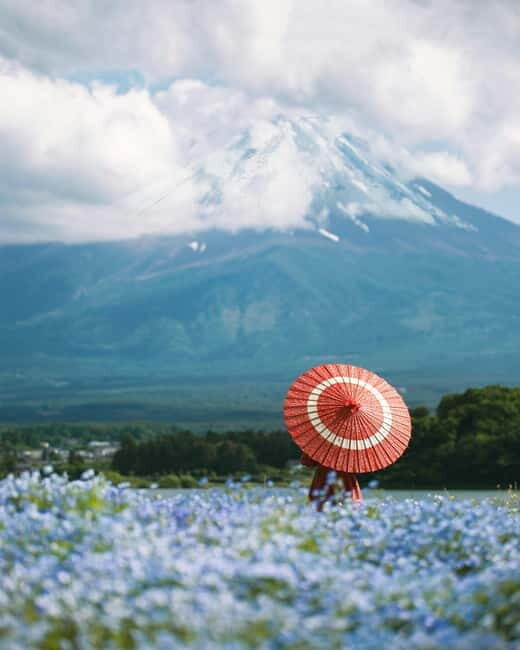
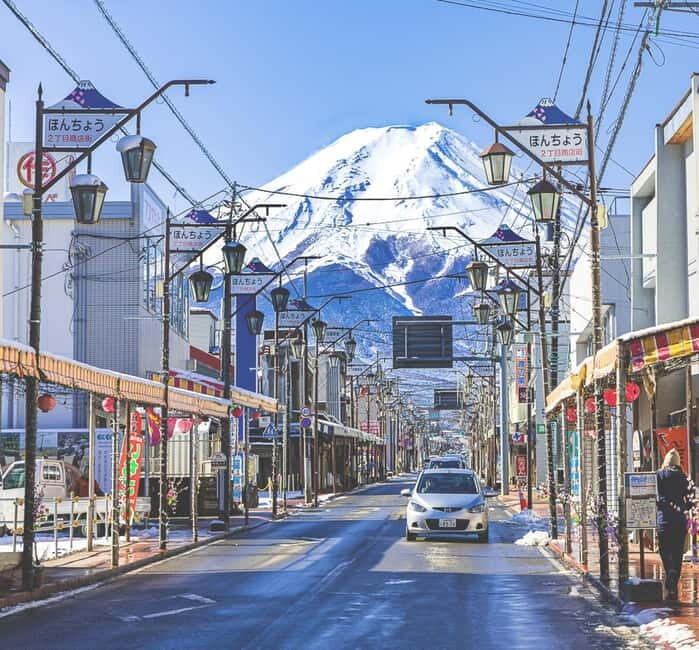
After the pagoda viewpoint, you move into the Fujiyoshida neighborhood feel. Shimoyoshida Honcho Street is where you’ll find a nostalgic shopping street vibe and lots of side angles on Fuji, plus quick photo opportunities without committing to a long hike.
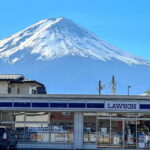
You also get a planned break around the Lawson Fujikawaguchiko area. This is more than a random stop. It’s a buffer for the group—bathroom access, a quick snack reset, and often another chance to spot Fuji before you continue. A recurring detail is that the guide may use weather conditions to decide the best order of viewing. That’s smart. Fuji can go from visible to hidden fast.
This is also where convenience matters. There’s no time for you to wander wildly on your own schedule, so these short breaks are what keep the day from feeling like a race.
Worth weighing up alongside this Tokyo pick:

Lake Kawaguchi, Oishi Park, and Shiraito Waterfall for Classic Fuji Views
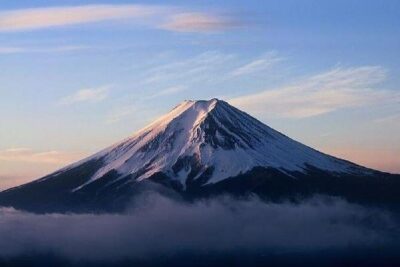
Course A leans heavily into the lakes and waterfall trio, and it makes sense. These stops are designed to show Mt. Fuji in different “modes” throughout the day: mountain silhouette, water reflection, and flowing mist.
At Lake Kawaguchi and Oishi Park, you’re looking for one of the classic Fuji visuals: the mountain framed by lake edges and sometimes mirrored reflections when conditions line up. Oishi Park also adds seasonal color through flowerbed-style scenery, which is exactly the kind of setup that makes photography easier even for beginners—there’s a clear foreground and background relationship.
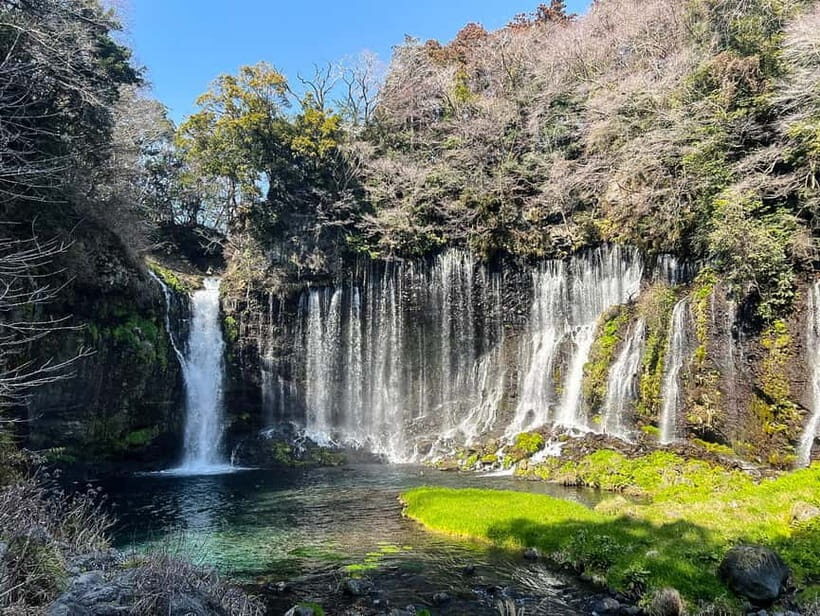
Then comes Shiraito Waterfall, a stop people tend to remember because it changes the mood from mountain-and-lake to sound-and-mist. You’ll have time here for photos and a lunch break, but meals are not included in the tour price. The practical move is to bring snacks or plan to buy something at a stop so you’re not stuck deciding when you’re hungry.
Also, waterfalls and mist mean the ground can feel damp. Comfortable shoes matter more here than at the shopping street stops.
Oshino Hakkai and Lake Yamanaka: The Calmer Water Side of Fuji
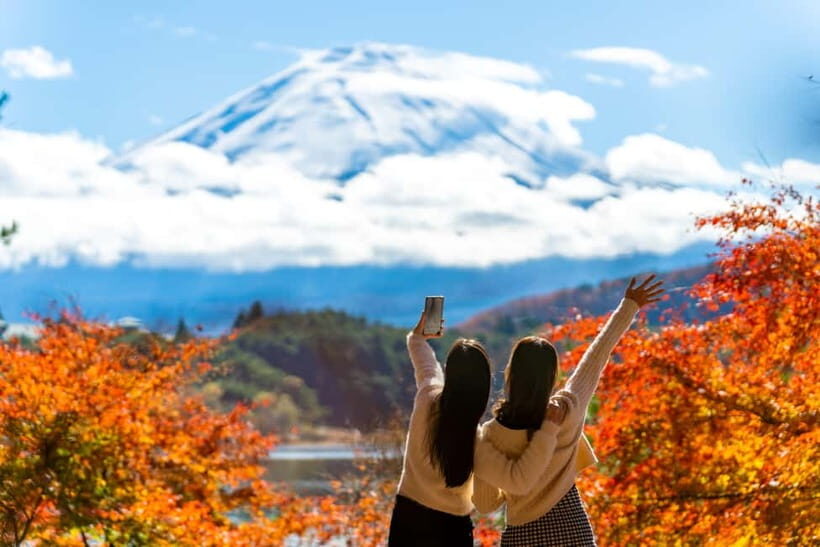
If you choose Course B, you get the Fujian-style village water experience at Oshino Hakkai. This is centered on eight crystal-clear spring ponds, and it’s a nice break from the “big view” competition. Instead of chasing Fuji from one famous angle, you get a more intimate sense of how water shapes this part of Japan.
The vibe here is slower. You’ll have time for photos and a proper wander around the ponds. On many days, even if Fuji is partially hidden, the ponds still deliver. That’s a major reason people like this stop.
Then you finish with Lake Yamanaka and Hirano Beach. This is where you can relax with wide lake views and take in Mt. Fuji from a different angle than Kawaguchi. When the sky cooperates, the mountain reflection look is the goal. When it doesn’t, you still get open-water scenery and the chance to exhale after the earlier stair-and-stops portion of the day.
Obuchi Sasaba Tea Fields and Those Small Food Treat Moments
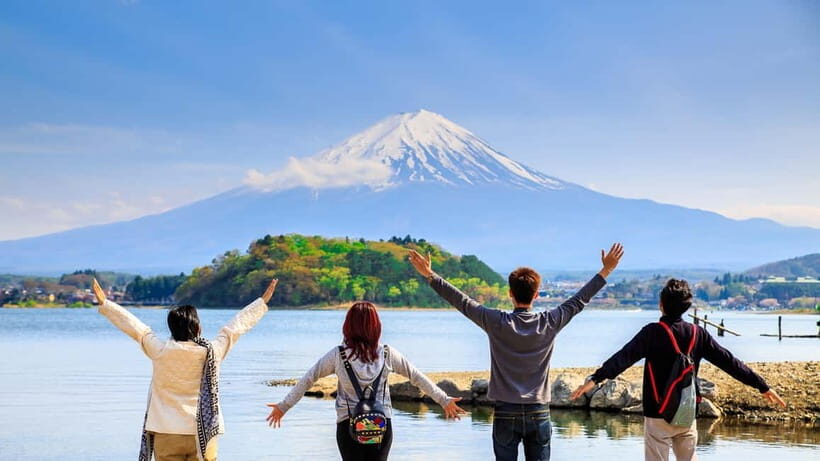
Obuchi Sasaba appears in the Course A sequence, and it’s a smart switch in scenery. Instead of more water views, you head into tea-field territory, where the rolling green slopes put Mt. Fuji in the distance like a final background layer.
It’s also a “pause” stop. You’ll typically get enough time to photograph the plantation views and take a break. Several people mention enjoying sweets here or nearby, including ice-cream-style treats. The line for popular items can be long, but the attitude is basically that it’s worth the wait when you care about the full experience.
Bring patience for food lines. This is Japan, so things tend to be organized, but a famous sweet can still draw a crowd.
Timing, Weather, and Why Clear Skies Change Everything
Here’s the plain truth: the tour can be amazing even on a cloudy day, but your best Mt. Fuji photos depend on weather. Clear skies make everything easier, including the chance to see the mountain from multiple stops.
That said, this tour is set up to handle reality. Guides may adjust timing based on real-time conditions. One described approach is actively reordering or timing where to look first, so you catch Fuji at least once in good visibility and then again during reflections when possible.
When Fuji is hard to spot, you still get a full day of meaningful stops: pagoda views, old streets, waterfalls or ponds, and lakeside walks. I like that this isn’t a single-point “hope and pray” plan.
Also note the operational limit: Japanese law restricts vehicles from running more than 10 hours. That can lead to minor adjustments if the day runs long due to traffic or weather.
Price and Value: Why $69 Often Feels Like a Deal
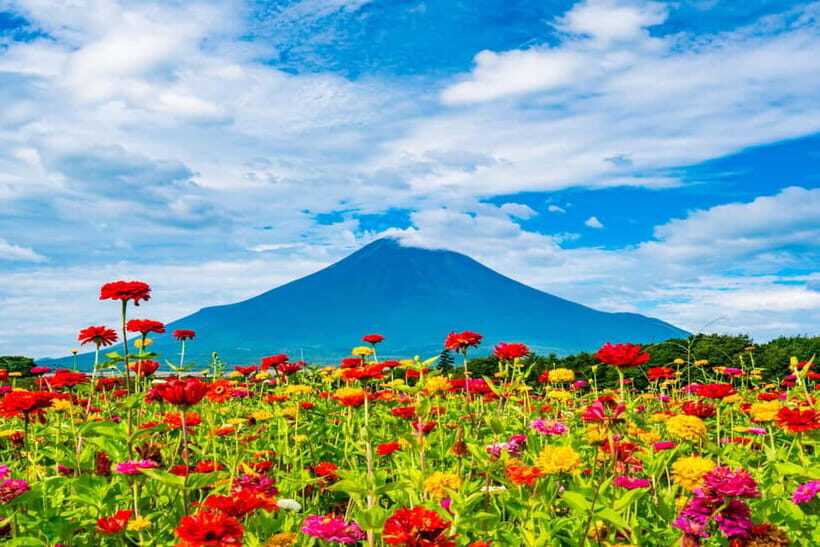
At around $69 per person for a full day, the price makes sense because it bundles three big costs most people underestimate: transportation, guide time, and the added efficiency of pre-planned stops.
You’re not just buying the views. You’re buying the “how” of getting to them from Tokyo without doing your own logistics. A coach with a competent driver plus an English- and Korean-speaking guide (and sometimes Chinese as well) is what turns a potentially stressful day into a manageable one.
You’ll still pay for your own food and snacks. Meals aren’t included, and even though there’s a lunch break window, you should assume you’ll buy something there or snack before you arrive. But because the stops are chosen for convenience, you typically aren’t stranded with no options.
One more value point: the tour runs with group sizes up to about 49 people. It’s big enough to offer variety and comfort, but small enough that a guide can still coordinate photo timing and step-climb pacing.
Who This Tour Fits Best (and Who Should Skip It)
This tour fits best if you want an organized day that hits the Fuji highlights efficiently. It’s a strong option for first-timers who don’t want to rent a car, and for photographers who want structured stops rather than random wandering.
It also works well if you like having your guide explain the why behind what you’re seeing. Several guides are praised for staying upbeat and giving clear direction on where to stand and how to time pictures. People also mention that guides take time to connect with the group, including solo travelers, and help with practical photo moments.
Skip it or rethink if you hate stairs. The pagoda viewpoint includes a step climb, and it’s not wheelchair-accessible. If you can’t do stairs, you’ll likely find the main highlight difficult.
If you travel with a stroller, it’s stroller-friendly, and you just need to inform the operator so they can plan accordingly.
Should You Book This Mt. Fuji Day Trip?
I’d book it if you’re in Tokyo with limited time and you want a guided, no-stress Fuji circuit that still gives you freedom at each stop. The structure is the selling point: two route options, iconic viewpoints, and enough variety that a day of changing weather doesn’t fully wreck your trip.
I’d also book it if you care about photography but don’t want to gamble on timing and transit. The guides’ ability to adjust timing for clearer views, plus the coordination around the pagoda and lakes, is exactly what helps.
Choose Course A for the classic postcard rhythm. Choose Course B if you’d rather slow down with spring ponds and lakeside walking.
FAQ
How long is the Mount Fuji tour?
The tour duration is listed as 11 hours, with the day able to run longer depending on traffic and weather conditions.
What’s included in the price?
The price includes round-trip transportation from central Tokyo and an English- and Korean-speaking guide (the guide is also listed as speaking Chinese as well).
Are meals included?
No. Meals are not included. You should bring snacks or a light lunch since lunch time isn’t included.
Are there two different routes?
Yes. Course A focuses on highlight photo spots, while Course B focuses on signature scenic spots, with differences in what you visit during the day.
Is there wheelchair access?
No. The activity is listed as not wheelchair-accessible.
Is it stroller-friendly?
Yes, it’s stroller-friendly. You should inform the operator if you’ll be bringing a baby stroller.
Can I cancel for a full refund?
Yes. Free cancellation is available up to 24 hours in advance for a full refund.
More Tours in Tokyo




More Tour Reviews in Tokyo




The Fuji Shortlist: Other Days Out to the Mountain
Fresh reviews from around Tokyo






Mt Fuji Day Trips, compared.
 ★ 4.0Mt Fuji & Hakone Cruise, Drum Show Bullet Train 1 Day from TokyoFrom $1497,413 reviews
 ★ 4.4Tokyo Mt Fuji 5th St & Hakone Cruise Bus Tour w/Bullet TrainFrom $1545,024 reviews
 ★ 4.5From Tokyo: Mount Fuji Full-Day Sightseeing TripFrom $684,970 reviews
 ★ 4.7Mt. Fuji Tour, Hakone Ropeway, Owakudani, Lake AshiFrom $544,002 reviews
 ★ 5.0Private Tour to Mt. Fuji and Hakone (Fully Licenced Operator)From $4971,910 reviews
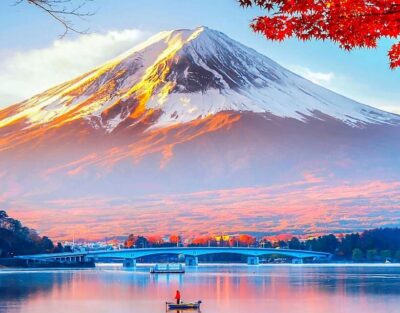 ★ 4.9Mount Fuji Full-Day Private Tour from Tokyo (Customizable)From $3931,470 reviews
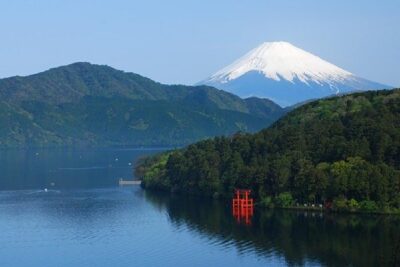 ★ 4.0Mt Fuji & Hakone Cruise, Drum Show Bus 1 Day from TokyoFrom $1221,287 reviews
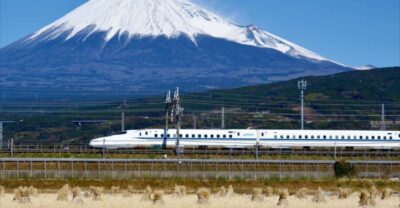 ★ 4.2From Tokyo: Mt. Fuji & Hakone Tour w/ Return by Bullet TrainFrom $1171,278 reviews
Browse the lists this tour appears in