
Reviewed · ASAKUSA TOURS
Tokyo Asakusa: Food Sample Making Workshop
First-time food samples can feel impossible. Then you sit down and build one piece at a time, turning Japanese window-show magic into something you physically made with your own hands. This is a hands-on workshop in Asakusa where the goal is simple: craft a realistic replica and take it home as a souvenir.
I love that you get a clear dish choice right up front—omelette rice, spaghetti, crepe, or jelly parfait—so you’re not guessing what to make. I also like the photo-friendly payoff: if you choose the dining option, you eat a real dish designed to look identical to your sample.
One thing to consider: this isn’t for kids under 5, and if you pick the meal option the session runs closer to 1.5 hours, so plan your time accordingly.
In This Review
- Key things I’d watch for before you book
- Asakusa’s Food Sample Workshop: the playful side of Japanese food culture
- Finding the Food Sample Making Cafe on Asakusa’s main street
- Choose your dish: omelette rice, spaghetti, crepe, or jelly parfait
- The replica-making session: realistic, detailed, and very photo-ready
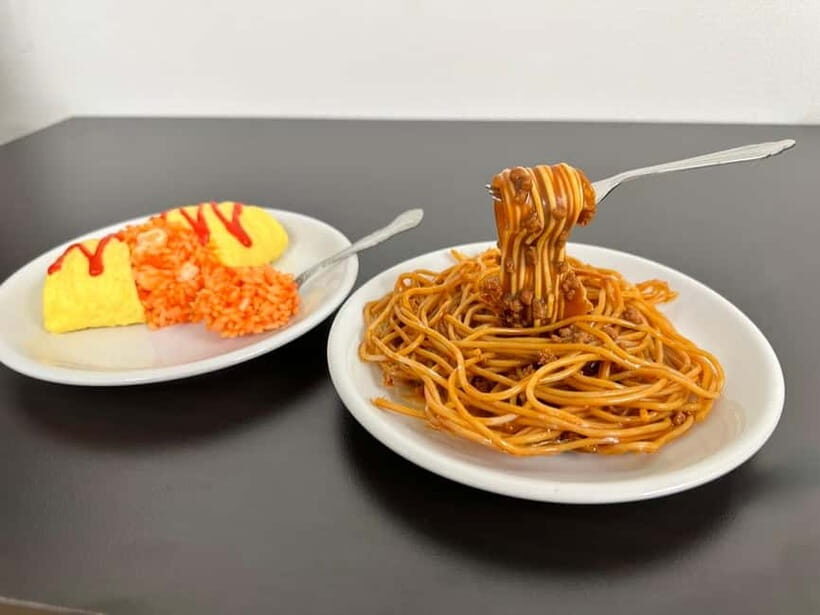
- Omelette rice: ketchup details and a satisfying “finish line”
- Spaghetti with meat sauce: more steps, more noodle drama
- Crepe: shaping layers and keeping the look edible
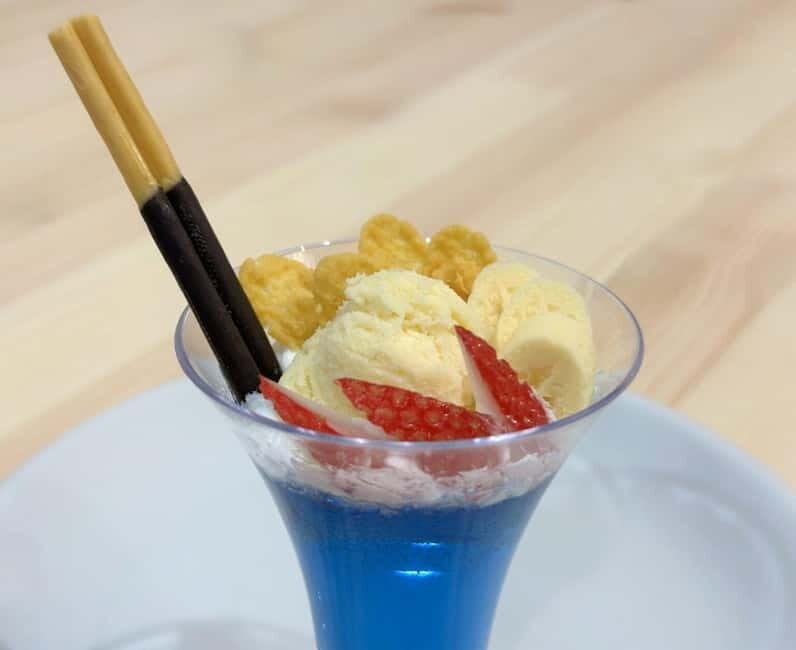
- Jelly parfait: a dessert souvenir that reads well in close-up
- The meal option: taste your creation and compare side-by-side
- Instructor support in English and Japanese: what to expect in practice
- Timing and session length: plan around the 1–1.5 hour window
- Price and value: why $39 feels fair for a hands-on souvenir
- Who this workshop suits best (and who should skip it)
- Should you book the Tokyo Asakusa food sample workshop?
- FAQ
- How long does the Food Sample Making Workshop take?
- What dishes can I make at the workshop?
- Is there an option to eat a meal that matches your food sample?
- Where do I meet for the activity?
- What languages do the instructors speak?
- Is the workshop suitable for young children?
Key things I’d watch for before you book
- Four clear dish options: omelette rice, spaghetti with meat sauce, crepe, or jelly parfait
- You personalize the details: your name in ketchup, noodle poses with chopsticks, or your own shape ideas
- Optional dining match: a real meal that’s meant to look like the exact food sample you create
- Hands-on guidance: staff help you make the replica with instructor support in English and Japanese
- Take-home souvenir: you leave with your finished food sample, ready to display
More mornings around Senso-ji and the old town
- Tokyo: Japanese Dance Cabaret Theater Asakusa-Kaguwa Ticket★ 4.8 · 2,270 reviews
- Tokyo: Asakusa Walking Tour with Sensoji Temple Visit★ 4.8 · 1,583 reviews
- Tokyo Asakusa Rickshaw Tour★ 5.0 · 1,375 reviews
Asakusa’s Food Sample Workshop: the playful side of Japanese food culture
Asakusa is famous for classic Tokyo street energy, and this workshop taps into something you see every day in Japan: shop window displays made from lifelike food replicas. The clever part is that you’re not just learning about them. You’re making one that looks real enough to photograph and, in the meal option, eat.
If you like travel souvenirs that aren’t just a magnet or a postcard, this one has real payoff. You’ll spend your time shaping ketchup swirls, lifting noodle-style portions, and finishing a dish that looks like it belongs behind glass. It’s creative, but it’s also technical in the fun way—accuracy matters because the goal is realism.
This is also one of those experiences where the value comes from the full loop: choose a dish, build a replica, then (if you choose) compare it to the real version. That side-by-side moment is the whole point.
Finding the Food Sample Making Cafe on Asakusa’s main street
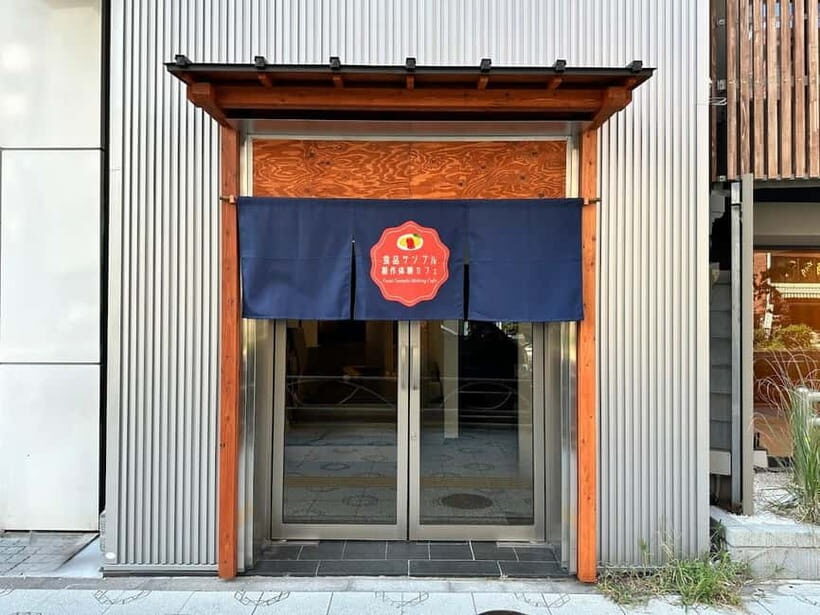
Your meeting point is straightforward. Look for the shop curtain (noren) that reads Food Sample Making Cafe and come inside. The entrance faces the main street, so you shouldn’t need complicated directions.
Practical tip: if you’re pairing this with other Asakusa activities, arrive a few minutes early. Workshops run on a set rhythm, and you’ll want time to choose your dish without feeling rushed.
Also, double-check which option you booked. The meal option changes the total time, so your schedule and nearby plans should match that.
Choose your dish: omelette rice, spaghetti, crepe, or jelly parfait
You start by picking your favorite food sample from four options:
- Omelette rice
- Spaghetti with meat sauce
- Crepe
- Jelly parfait
That choice matters more than it sounds. Each dish demands a different kind of effort and visual thinking. Omelette rice often gives you a chance to focus on filling and finishing touches. Spaghetti tends to involve more steps and handling to get that lifted-noodle look. Desserts like crepe and jelly parfait skew more toward shaping layers and presentation details.
This selection also helps you make the souvenir meaningful. If you’re the kind of traveler who wants a specific flavor memory—comfort food versus sweet treat—your replica becomes a personal mini timeline of what you loved.
The replica-making session: realistic, detailed, and very photo-ready
Once you sit down, the workshop becomes a kind of hands-on craft class, but the theme stays fixed: realism. You’ll build a detailed food replica of your chosen dish using materials provided by the shop and guidance from the staff.
Expect to follow staff instructions in a mix of English and Japanese. Even if English support is limited at moments, the process is still designed to be understandable. The key is that you’re working with clear steps tied to the physical food parts in front of you.
Here’s what personalization can look like, based on the typical creative prompts:
- Add your name in ketchup on the omelette (for omelette rice)
- Use chopsticks to lift noodles in the style of spaghetti presentation
- Create your own original shape or design so your sample feels like it’s yours, not a copy
That last part is bigger than it seems. You’re not just assembling a set. You’re making design decisions within the rules of realism.
Other plates worth crossing Tokyo for

Omelette rice: ketchup details and a satisfying “finish line”
Omelette rice is a great first pick if you want something iconic and visually bold. The omelette presentation usually benefits from sharp finishing touches, especially anything involving ketchup style work.
A practical detail: one version of the experience has the omelette already made, so you may focus on the filling and finishing rather than starting from a completely blank slate. For many people, that’s ideal. You get to spend your energy on what makes the dish look like your version, not just on repetitive base forming.
If you’re traveling with a friend, omelette rice can also be a fun shared comparison. You’ll both make something similar, but the ketchup details and your style choices will push the results in different directions.
Spaghetti with meat sauce: more steps, more noodle drama
Spaghetti tends to be the more involved option. The work isn’t just about shaping a pasta mound. It’s about capturing that specific visual cue: lifted noodles and a natural-looking arrangement.
In other words, you’ll spend more time on positioning. When the workshop leans into “pretend you’re holding it” moments—like lifting spaghetti with chopsticks—that’s where the replica starts looking real in photos.
If you’re the type who enjoys fiddly crafts, spaghetti is rewarding. If you’re short on patience, pick omelette rice or a dessert where the steps may feel a bit simpler.
Either way, staff guidance is there to keep you moving. The goal isn’t perfection in a museum sense. It’s a realistic result you can proudly hold and photograph.
Crepe: shaping layers and keeping the look edible
Crepes are a good choice if you like presentation-heavy crafts. They look simple in photos, but the realism lives in the layers and the way toppings read visually.
For crepe, you’ll be assembling your replica so it looks like the real dessert portion. You’ll also have room to add your own touch so it feels like a souvenir you created, not a kit product.
Jelly parfait: a dessert souvenir that reads well in close-up
Jelly parfait is designed for realism in a different way—through layers, texture cues, and the “depth” of the finished cup. It’s also very camera-friendly because parfait-style desserts photograph well from multiple angles.
If you want something that looks striking up close even without extra props, jelly parfait can be a smart pick. You get a finished item that feels like it belongs on a cafe table.
The meal option: taste your creation and compare side-by-side
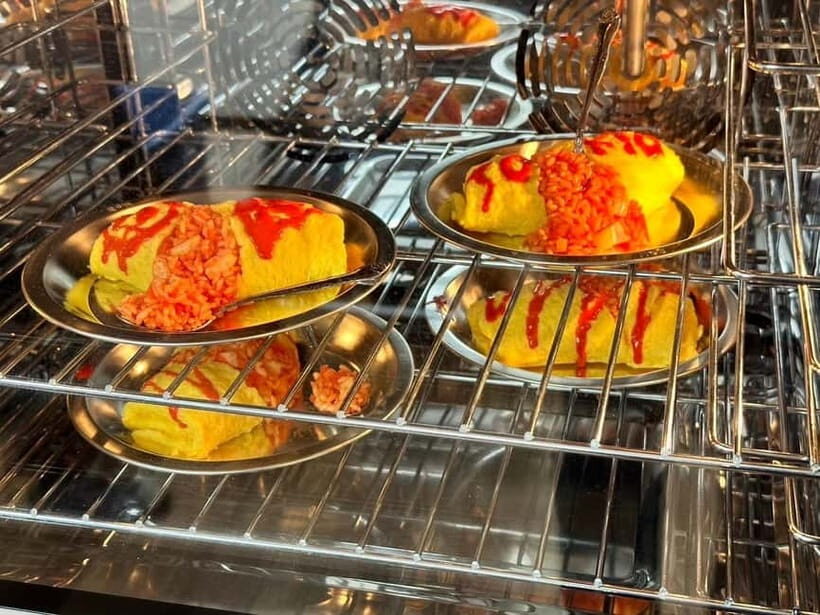
Here’s the part that makes this workshop extra fun: if you select the dining option, you eat a real dish that matches your food sample. That means your real meal is meant to look identical to the replica you just made.
Then the moment happens. You’ll pour ketchup or lift noodles in the same way, and you can do the comparison that the whole experience is built for. Take side-by-side photos. Make a silly little video pretending to eat your own “window food.”
This isn’t just about eating. It’s a reality check for how close the replica is to the real dish. That contrast turns a souvenir into an experience with memory you can feel.
One note for planning: the experience time increases with the meal option. Plan on around 1.5 hours for the full version.
Instructor support in English and Japanese: what to expect in practice
The workshop is guided by staff with English and Japanese instruction. In practice, you might find that some parts rely more on visual explanation than long conversations, especially if you’re in a moment where staff are moving quickly between participants.
That said, the process is designed to be easy to follow. The steps are tied to materials in front of you, and staff guidance keeps you from feeling lost.
If you’re traveling solo, that’s a plus. You can focus on making, ask quick questions when needed, and still end up with something you’re proud to take home.
Timing and session length: plan around the 1–1.5 hour window
Duration depends on whether you choose the meal option:
- Around 1 hour if you’re doing the workshop without dining
- About 1.5 hours if you’re doing the workshop plus the real matched meal
So if you’ve got a tight Asakusa schedule, book the shorter option. If you want the full experience—including the comparison meal—give yourself a bit of breathing room before and after so it doesn’t feel like a race.
Also, the experience includes a crafting portion and, if selected, dining. You’ll want to keep your phone charged for the side-by-side photos.
Price and value: why $39 feels fair for a hands-on souvenir
The price is $39 per person. At first glance, that can sound like you’re paying for a small object. But you’re paying for much more than the final replica.
You get:
- The food sample making experience
- Materials to craft your replica
- Staff guidance
- A real meal that matches your sample if you select the dining option
That’s a lot of included value for something that also gives you a real craft output. You’re not just watching; you’re producing. And with the dining option, you get an eating experience built around the same theme.
If you’re the kind of traveler who likes experiences you can’t recreate at home easily, this is one of those. Most souvenir shops sell you a thing. This workshop gives you a story and a tangible result that looks like your story.
Who this workshop suits best (and who should skip it)
This is a great fit if you:
- Love food-related travel that’s more hands-on than educational
- Want a unique souvenir you’ll actually display
- Enjoy crafts, especially ones where visual realism matters
- Like a structured activity with room for creativity
It may not be ideal if you:
- Have very limited time (because the process plus dining option runs up to about 1.5 hours)
- Are traveling with very young children (it’s not suitable for children under 5)
Should you book the Tokyo Asakusa food sample workshop?
Book it if you want a Tokyo experience that’s playful, visual, and tactile, not just something you observe from the outside. The biggest reason is the full payoff loop: you create a realistic food sample, personalize it, then compare it to the real dish if you choose the meal option.
Skip it only if you’re not into hands-on activities or if you’re trying to cram in too much and can’t spare about an hour (or 1.5 with dining). Otherwise, $39 for a guided craft you take home beats most typical souvenirs in “memory per dollar” by a long shot.
FAQ
How long does the Food Sample Making Workshop take?
The experience is about 1 hour without the meal option. With the meal option, it takes about 1.5 hours.
What dishes can I make at the workshop?
You can choose from omelette rice, spaghetti with meat sauce, crepe, or jelly parfait.
Is there an option to eat a meal that matches your food sample?
Yes. If you select the dining option, you’ll enjoy a real dish that looks identical to the food sample you made.
Where do I meet for the activity?
Go to the shop curtain (noren) that says Food Sample Making Cafe and enter the shop. The entrance faces the main street.
What languages do the instructors speak?
The instructor support is available in English and Japanese.
Is the workshop suitable for young children?
No. It is not suitable for children under 5 years old.
Eat Your Way Round Tokyo
More Tour Reviews in Tokyo





Around Senso-ji: More Asakusa Picks
Fresh reviews from around Tokyo






Asakusa Tours, compared.
 ★ 4.8Japanese Dance Cabaret Theater Asakusa-Kaguwa TicketFrom $492,270 reviews
 ★ 4.7Meiji Shrine, Asakusa, Skytree Bus Tour and CruiseFrom $1221,986 reviews
 ★ 4.8Asakusa Walking Tour with Sensoji Temple VisitFrom $221,583 reviews
 ★ 5.0Tokyo Asakusa Rickshaw TourFrom $421,375 reviews
 ★ 4.5Tokyo Panoramic 1 Day: Meiji Shrine, Asakusa, Odaiba and SKYTREE®From $851,222 reviews
 ★ 4.8Samurai Ninja Museum Asakusa: Samurai Sword Lesson & TourFrom $63306 reviews
Asakusa Sightseeing Tour by RickshawFrom $35195 reviews
Asakusa Kimono Dressing and Matcha ExperienceFrom $56173 reviews
★ 4.8Samurai Ninja Museum Asakusa: Samurai Sword Lesson & TourFrom $63306 reviews
Asakusa Sightseeing Tour by RickshawFrom $35195 reviews
Asakusa Kimono Dressing and Matcha ExperienceFrom $56173 reviews
Browse the lists this tour appears in