
Reviewed · WORKSHOPS
Tokyo: 1.5-Hour Edo Kiriko Glass Cutting Workshop in Sumida
Glass dust, careful hands, and big satisfaction.
This hands-on Edo Kiriko workshop in Sumida is interesting because it turns a famous Tokyo craft into something you can actually feel in your hands. I especially like the way the class starts with practice with tools (so you can get comfortable before you cut), and I also like that you take home your finished piece instead of leaving with photos only.
One consideration: Edo Kiriko takes focus and steady dexterity, and the teaching style is not overly strict. If you want constant step-by-step correction every second, you might wish for a bit more supervision during the cutting stage.
In This Review
- Key things to know before you go
- Edo Kiriko in Sumida: why this craft feels different once you touch it
- The workshop flow: from artisan demo to your own cut design
- 1) Watch the artisans work
- 2) Practice with the tools before cutting
- 3) Pick your own glass piece
- 4) Cut your own pattern (with age-appropriate tasks)
- What you actually create, and what to expect when it’s time to cut
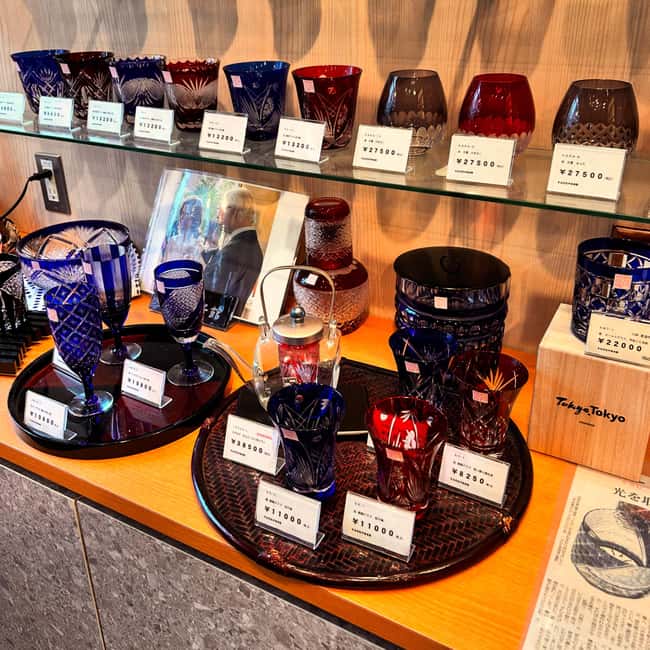
- The on-site shop: what to look for after you make your own glass
- Price and value: is $122 for 90 minutes worth it?
- Who should book this workshop in Tokyo
- Families with older kids
- Adults who want a hands-on souvenir
- People who enjoy small-group instruction
- Logistics that matter: how to plan your time
- The vibe: relaxed learning with real craft pressure
- Should you book the Edo Kiriko workshop in Sumida?
- FAQ
- How long is the Edo Kiriko glass workshop in Sumida?
- How many people are in the group?
- What will I cut: a drinking glass or something else?
- Is there English support during the workshop?
- Can I take photos during the workshop?
- Is cancellation free if my plans change?
Key things to know before you go
- Small group (up to 4 people) means you get more direct attention than big classes.
- Practice first with test glass helps you understand the technique before you commit your real design.
- You choose your own glass daily from a changing selection of one-of-a-kind pieces.
- Adults cut drinking glasses, while younger kids cut lidded containers.
- English support and translation make the craft instructions easier to follow.
- The workshop includes time at the on-site shop, where Edo Kiriko designs and brand collaborations are for sale.
More things to make with your own hands
- Sushi Making Tokyo Roll and Authentic Japanese Sushi Class★ 5.0 · 3,971 reviews
- Tokyo Shinjuku Chopsticks Making Class★ 5.0 · 1,763 reviews
- Chopstick Making Workshop in Ginza★ 4.8 · 1,366 reviews
Edo Kiriko in Sumida: why this craft feels different once you touch it
Edo Kiriko is Tokyo-style cut glass, and it has a look people recognize immediately: sharp-cut facets that catch light and sparkle when the glass moves. But the real magic isn’t just the final shine. It’s the process—how careful you have to be with pressure, angle, and patience.
In this 90-minute workshop, you’re not watching from behind a rope. You’ll step into a working studio environment in Sumida, where craftsmen are actively engraving and cutting. That matters, because it sets the tone: this is a real shop, with real tools, and it feels like craft work rather than a staged demonstration.
I like that the experience respects your learning curve. You start with observation, then get hands-on practice with tools. By the time you cut your own pattern, you understand what you’re trying to do with your hands—not just what the finished product looks like.
The workshop flow: from artisan demo to your own cut design
The day moves in a simple, logical sequence, and it helps you avoid the most common mistake in craft workshops: jumping straight into the hardest step.
1) Watch the artisans work
You’ll begin by observing craftsmen at work in the studio. This isn’t a slow slideshow. You’ll see the craft process in action, including how glass is handled and how the tools are used safely. Even if you’re a total first-timer, this part gives you the right mental picture: the work is precise, but the atmosphere stays relaxed.
2) Practice with the tools before cutting
Next comes a short practice session. You’ll work with tools first so your hands can learn the motion and your eyes can calibrate to the glass. This step is one of the biggest value points of the class, because Edo Kiriko isn’t just about being talented—it’s about doing the same controlled motions repeatedly until you stop fighting the tool.
A big takeaway from the experience is that mistakes aren’t treated like a big deal. The vibe is calm, and you’re given test pieces to get comfortable before committing to your final glass. That’s how you learn without stress.





3) Pick your own glass piece
After practicing, you select your glass from a stock that changes daily. This is more than a random choice. Since each piece is one-of-a-kind, your selection affects the look of what you’ll end up with, and it also adds a sense that you’re making something personal rather than assembling a generic souvenir.
If you’re shopping in the craft world before you take a workshop, this step changes how you think. You can see how the base glass matters, and you understand why makers don’t treat everything as interchangeable.
4) Cut your own pattern (with age-appropriate tasks)
Then comes the main activity: cutting your original design with staff guidance.
Your exact task depends on age:
- Adults and middle school students cut a drinking glass.
- Elementary school children cut a lidded container (with supervision).
This is a smart setup. It matches the physical demands of the craft with the participant’s fine-motor control level, so kids aren’t asked to do the same thing as adults.
Also note the companion rules: adults must accompany children. Companions may observe without cutting, which is helpful if you’re traveling with mixed ages or if one adult wants to watch instead of making.
What you actually create, and what to expect when it’s time to cut
What you take home is a finished Edo Kiriko piece made during the workshop. That “take-home” part is where the value becomes real, because you’re not just paying for instruction. You’re paying for time, tools, guidance, and the raw material that ends up as a usable object or a collectible glass item.
When it’s time to cut, you’ll likely notice two things:
1) Focus and dexterity matter. Even when the mood is relaxed, the task requires concentration.
2) The method benefits from your own experimenting. The class doesn’t feel like it’s micromanaging every movement. You’ll have room to try your own approach, which can be refreshing, especially if you learn by doing and correcting yourself.
Here’s the trade-off. That same freedom means beginners may want a bit more direct supervision during the cutting stage. If you’re the type who feels anxious without step-by-step correction, I’d mentally prepare for a learning curve.
The on-site shop: what to look for after you make your own glass
After the workshop, you’ll have time to browse the Edo Kiriko shop on site. This is where the whole experience starts making emotional sense.
You’ll see colorful Edo Kiriko items with classic motifs, and you may also notice modern collaborations with global brands, including Starbucks. It’s a useful comparison: after you cut a piece yourself, you’ll look at the shop with new eyes. Details that once seemed decorative now feel like evidence of labor and skill.
If you’re shopping for gifts, this shop time is practical too. You can decide whether you love the look enough to buy something additional, or if your workshop piece is the only one you need.
Price and value: is $122 for 90 minutes worth it?
At $122 per person for a 90-minute workshop, this isn’t a low-cost activity. But in this case, I think the price is easier to justify once you understand what’s included.
Your ticket covers:
- A guided workshop in a real studio
- A practice session with tools
- The actual glass-cutting experience (with an age-appropriate item)
- Observation time with artisans working
- English-speaking support
The part that makes the value click is the combination of practice plus take-home. You’re learning a specialized craft in a supervised environment, and you leave with something finished, not just partial progress.
Also, Edo Kiriko pricing often feels high until you go through the process. The craft is demanding—small inaccuracies show up quickly—and that’s exactly what you experience here. I’ve always found that once you understand how careful cutting is, you stop asking why it costs so much.
Who should book this workshop in Tokyo
This workshop is a good fit if you want a tactile, skill-based activity in Tokyo—not just another museum stop.
Families with older kids
The age rules are clear:
- Minimum is 4th grade elementary school with an adult companion.
- Not suitable for children under 9 (which matches the minimum grade level in practice).
If your kids are curious and steady enough for a short craft session, it’s a memorable way to see how Japanese artisans work.
Adults who want a hands-on souvenir
If you like making something rather than collecting mass-produced trinkets, this is a strong choice. You’ll also likely appreciate the learning experience, because it explains the craft through your own trial-and-error.
People who enjoy small-group instruction
With a small group limited to 4 participants, you’re less likely to feel lost. The workshop format supports individual attention, even while the session moves at a steady studio pace.
Logistics that matter: how to plan your time
You’ll need to make your own way to the studio in Sumida, Tokyo, since hotel pickup and drop-off aren’t included. Plan for time to arrive a few minutes early so you don’t feel rushed before the cutting begins.
The workshop itself is about 90 minutes indoors. Photography is allowed in designated areas, so you can capture the studio and your experience without disrupting the process.
Also remember:
- Pets are not allowed.
- No food or drinks are included, so plan around the session if you need a meal before or after.
The vibe: relaxed learning with real craft pressure
This class has a specific mood: relaxed, supportive, and practical. The studio setting is calm, and mistakes don’t seem to turn into embarrassment. You’ll get practice glass first, so the real cutting isn’t your first attempt.
At the same time, Edo Kiriko does demand steady hands. You’re learning a method that rewards focus more than speed. If you go in expecting it to be effortless, you’ll probably feel frustrated. If you go in expecting to concentrate and take your time, you’ll enjoy it.
And that’s where the workshop hits its sweet spot: it teaches craft reality without turning it into a stressful exam.
Should you book the Edo Kiriko workshop in Sumida?
Yes—if you want a hands-on Edo craft experience that ends with a take-home piece and an honest sense of why cut glass costs what it costs.
Book it if:
- You’re traveling with older kids (4th grade and up, with an adult companion).
- You like small-group classes where you can work on your own design.
- You want more than watching—this is a make-it experience.
Consider skipping (or at least tempering expectations) if:
- You need very tight, moment-by-moment guidance. The workshop allows experimentation, and beginners may not get constant correction.
- You’re not interested in precision tasks. Dexterity and focus are part of the deal.
If you’re the kind of traveler who likes crafts where the process matters as much as the result, this is a strong use of your time in Tokyo.
FAQ
How long is the Edo Kiriko glass workshop in Sumida?
The workshop runs for about 90 minutes.
How many people are in the group?
It’s a small group limited to 4 participants.
What will I cut: a drinking glass or something else?
Adults and middle school students cut a drinking glass. Elementary school children cut a lidded container (with supervision).
Is there English support during the workshop?
Yes. The guide and support include English, with Japanese-speaking staff translated for participants.
Can I take photos during the workshop?
Photography is allowed indoors in designated areas.
Is cancellation free if my plans change?
Yes. You can cancel up to 24 hours in advance for a full refund.
Make Something to Take Home




More Tour Reviews in Tokyo



Fresh reviews from around Tokyo






Workshops, compared.
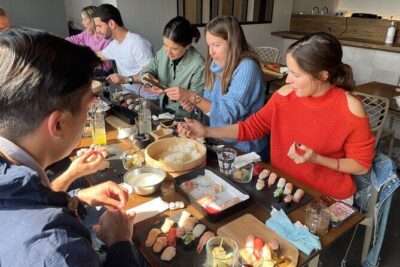 ★ 5.0Sushi Making Tokyo Roll and Authentic Japanese Sushi ClassFrom $593,971 reviews
 ★ 5.0Tokyo Shinjuku Chopsticks Making ClassFrom $201,763 reviews
 ★ 4.8Chopstick Making Workshop in GinzaFrom $251,366 reviews
 ★ 5.0Tokyo Sushi Making Class in Tsukiji with Professional ChefFrom $491,177 reviews
 ★ 5.0Ramen & Gyoza Cooking Class in Tokyo with Local Supermarket VisitFrom $122823 reviews
 ★ 5.0Matcha Making Class in Tokyo with Authentic Japanese Sweets SetFrom $21744 reviews
 ★ 5.0Samurai Sword & Archery Class from Samurai DescendantFrom $193603 reviews
 ★ 4.9Tsukiji Fish Market Sushi Making Class with Pro ChefFrom $63506 reviews
Browse the lists this tour appears in