
Reviewed · VEGAN & VEGETARIAN
Ramen Making from Scratch with Tokyo Mom(Vegan Option Available)
Tokyo’s ramen is made differently.
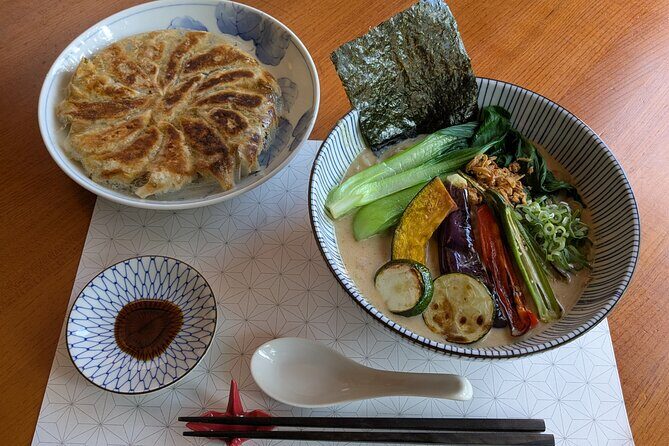
In this Shinjuku cooking class, Aki teaches you to build ramen and gyoza from scratch with real ingredients and no MSG or artificial flavorings. You’ll learn the why behind Japanese umami, not just the steps, in a class that feels more like cooking with a calm, experienced “Tokyo mom” than sitting through a demo.
Two things I really like: you’ll handle the dough and noodles yourself, and Aki’s approach is patient and clear in English, even when you’re learning from zero. The second big plus is the setting—up on the top floor near Shinjuku Gyoen, it’s bright, airy, and easy to relax before you start cooking.
One consideration: it’s hands-on, and ramen-making takes some physical focus (kneading and working with dough), so if you’re traveling with very young kids or you’re hoping for a totally hands-off activity, this may feel more work than you expected.
In This Review
- Key Highlights You’ll Care About
- A Top-Floor Ramen Class Above Shinjuku
- What You’ll Cook: Ramen Noodles, Broth, and Gyoza
- The Flavor System: Japanese Umami Without MSG
- The 2 to 2.5 Hour Flow (And What Happens When)
- Dietary Planning: Vegan Option, But Mention Your Needs Early
- Location and Getting There: 5 Minutes From Shinjuku Gyoenmae
- Small Group Cooking With an English-Speaking Japanese Mom
- Price and Value: Is $120 Worth It?
- What You’ll Actually Take Home (Skills, Not Just Photos)
- Who This Class Fits Best
- Should You Book This Tokyo Mom Ramen Class?
- FAQ
- Where is the meeting point for the class?
- How long does the ramen making class last?
- What dishes will we make during the session?
- Is there a vegan option available?
- Can the host accommodate allergies and other dietary preferences like halal?
- What’s the maximum group size?
- Does the class use MSG or artificial flavorings?
- What’s included in the price?
- Do I receive a recipe to take home?
- Can I cancel for a full refund?
- Is transportation included?
Key Highlights You’ll Care About
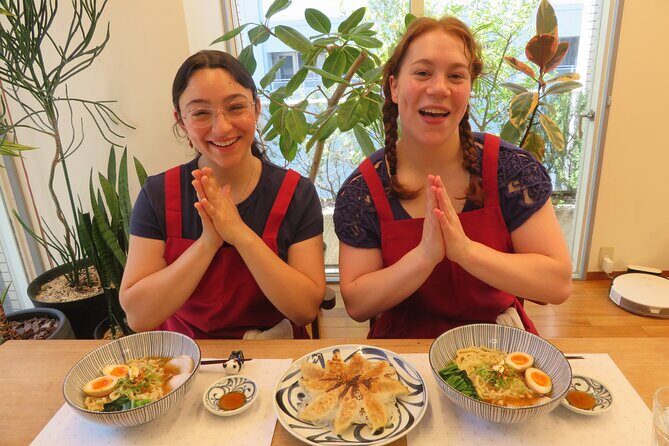
- Handmade noodles and dumplings: you do the work, not just watch it
- No MSG, no artificial flavorings: flavor comes from ingredients like kombu and bonito
- Small class (max 6): you get help while you cook
- English-speaking host: clear guidance throughout the session
- Vegan option available: you can plan ahead based on your diet
Worth weighing up alongside this Tokyo pick:
- Tokyo: Shinjuku Food Tour (13 Dishes at 4 Local Eateries)★ 5.0 · 6,603 reviews
- Tokyo Tsukiji Fish Market Food and Culture Walking Tour★ 5.0 · 3,184 reviews
- Tokyo: Shinjuku Food Tour (15 Dishes and 4 Eateries)★ 4.9 · 2,033 reviews
A Top-Floor Ramen Class Above Shinjuku
If you want Tokyo that’s not just sidewalks and shopping malls, this is a solid pick. The experience takes place in Aki’s kitchen a short walk from Shinjuku Gyoenmae Station, then you go up to a top-floor space that feels open and breezy. You’ll be cooking in a relaxed, spacious room with plenty of natural light, which matters more than it sounds—dough work goes smoother when you’re not squinting in dim corners.
The meeting point is in Shinjuku, and the class ends right back where you started. That round-trip setup is convenient when you’re pairing this with other plans in Shinjuku (or winding down after sightseeing). Also, the tour uses a mobile ticket, which is usually a quick win for sorting your day.
What You’ll Cook: Ramen Noodles, Broth, and Gyoza
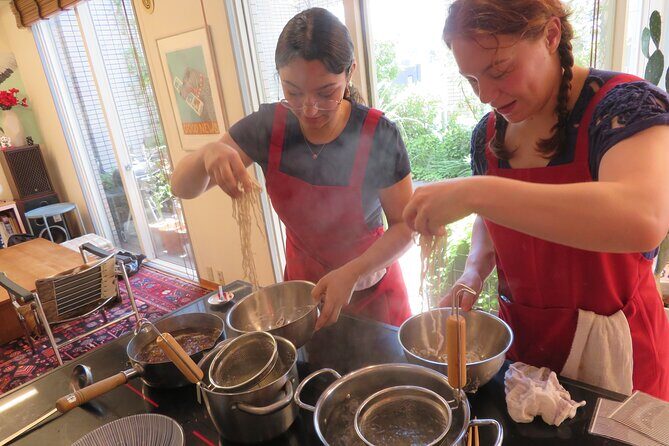
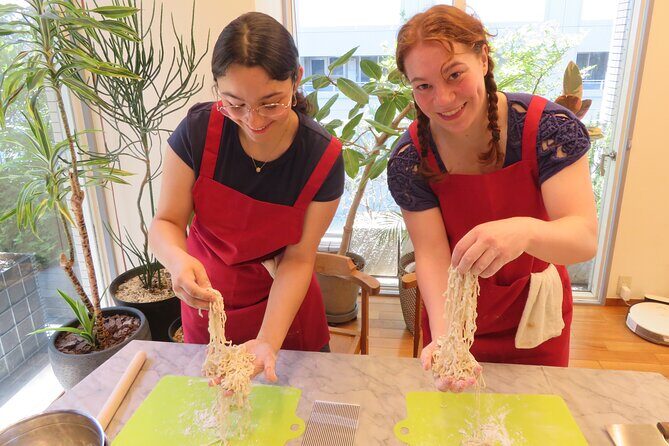
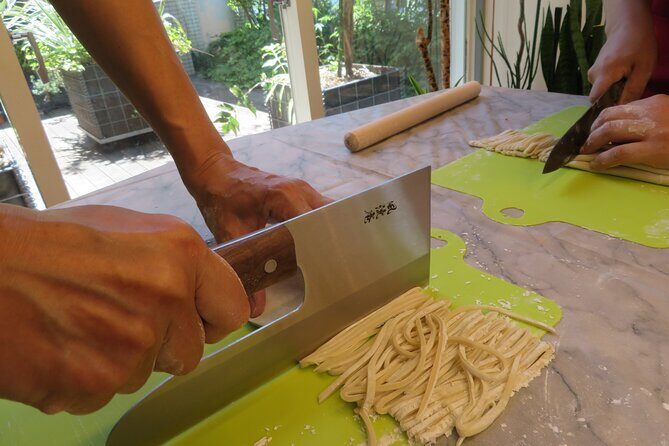
This class is built around three main tasks: make ramen noodles, prepare a broth from natural ingredients, and form gyoza. The ramen part isn’t treated like a single “mix and heat” recipe. You knead the noodles, work the dough, and learn how the texture affects the final bowl.
Then comes the broth. Instead of relying on shortcuts, you build a rich base using Japanese ingredients known for umami. You also learn how to balance flavors so the ramen tastes complete, not just salty or heavy.
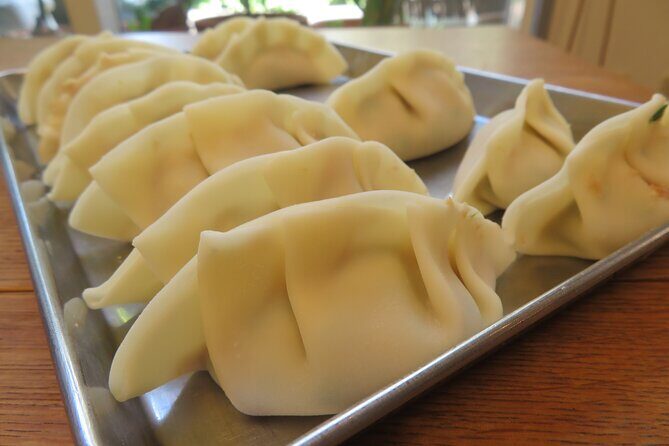
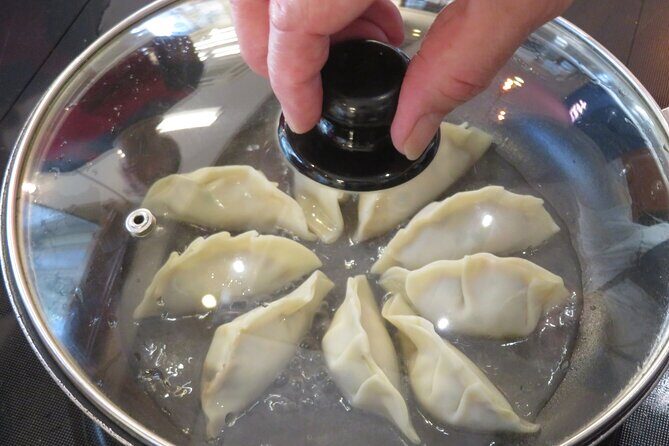
Finally, you make gyoza together. In other cooking classes, gyoza can feel like an afterthought. Here, it gets real attention because you’re creating homemade dumplings as part of the same hands-on session.
If you’re the kind of person who wants to come home with more than a memory—this is one of those classes.
The Flavor System: Japanese Umami Without MSG
A big selling point here is simple: no MSG and no artificial flavorings. That changes how you think about ramen, because you stop depending on a shortcut that makes everything “taste like ramen” fast. Instead, you lean on ingredients that contribute savory depth.
You’ll work with the core umami trio:
- katsuobushi (bonito flakes)
- kombu (kelp)
- shiitake mushrooms
The class specifically calls out using these to build flavor. You’ll also make a broth using chicken and pork for the meat-based version, which is the classic kind of richness many people crave.
And here’s why this matters for you: once you understand how these ingredients behave, you can recreate better ramen at home—especially the taste balance. A bowl you made with artificial flavor can be “good,” but it’s harder to troubleshoot. A bowl you built from natural umami makes it easier to adjust seasoning next time.
The 2 to 2.5 Hour Flow (And What Happens When)
The session runs about 2 hours 30 minutes, which is a good length for a hands-on cooking class. It’s long enough to learn the feel of dough and broth, but not so long that you lose your energy.
Here’s how the pacing typically feels, step by step:
1) Set up and noodle work
You’ll knead ramen dough and get hands-on experience that most ramen shops never show you. The class format makes it realistic to try using simple tools and techniques. You’re not just learning theory—you’re getting a feel for how dough should look and behave as you work it.
2) Broth building
Next you’ll prepare a broth base using natural ingredients. The goal isn’t just to follow instructions; it’s to learn how these ingredients create depth. If you love that “Japanese restaurant umami” sensation, this is where it happens.
3) Gyoza preparation
Then you move into dumpling mode. You’ll craft the gyoza together, turning ingredients into something you can shape into dumplings. This part is often where people realize they’re better at cooking than they thought—because the steps are clear and the kitchen environment is supportive.
4) Taste and learn your results
Once everything is prepared, you get to enjoy the meal you made. This tasting moment is where the class becomes more valuable than a recipe download. You can connect cause and effect: what you kneaded, how the broth tasted, and how the dumplings held up.





Dietary Planning: Vegan Option, But Mention Your Needs Early
If you want vegan ramen and you don’t want to gamble on substitution, plan for this class carefully. The experience says a vegan option is available, and Aki encourages you to mention dietary needs at booking—food allergies, vegan preferences, or halal preferences.
Here’s the honest part: the class also notes that adjustments depend on the ingredient plan, so it may not be possible to accommodate every request. So do this the smart way:
- send your dietary needs during booking
- clearly list allergies (not just preferences)
- don’t assume every diet can be swapped perfectly
In practice, the class is designed to work with different needs. One of the strongest signals you’ll see is that the kitchen aims to accommodate more than one preference in the same session—like pairing a meat-based ramen version with a vegetarian one for the family. That’s a good sign that the host can handle variations, at least when the dietary needs are communicated ahead of time.
Location and Getting There: 5 Minutes From Shinjuku Gyoenmae
You’ll find the venue about a 5-minute walk from Shinjuku Gyoenmae Station. That’s a big practical advantage, because Shinjuku can be chaotic if you’re dragging around luggage or arriving late. A short, predictable walk helps you show up calm and ready to cook.
The class doesn’t include transportation, so you’ll need to get yourself to the address in Shinjuku. The meeting point is:
ブライダルユニゾンユニゾン1-chōme-24-7 Shinjuku, Shinjuku City, Tokyo 160-0022, Japan
Because the experience is only about 2.5 hours, I’d treat the commute like part of your plan. Build in a few extra minutes so you don’t arrive rushing. When you’re working with dough, rushing is not your friend.
Small Group Cooking With an English-Speaking Japanese Mom
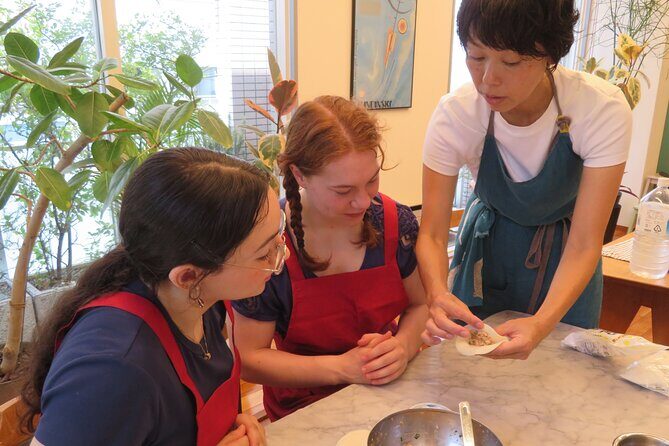
The group size caps at 6 travelers, which is why this feels personal. In a large class, you might wait for help at the exact moment your dough goes wrong. Here, the smaller group supports real back-and-forth—especially when you’re learning knife technique, noodle handling, and the timing of broth steps.
The host is Aki, an English-speaking Japanese mom who guides the class in a warm and relaxed way. You’ll also see support from Kanna mentioned in the experience’s hosted context, and that kind of team setup usually means more attention while you’re cooking.
What I like about this style is the “home-cooking” tone. The class positions Aki as someone who cooks with you and helps you feel comfortable in the kitchen. That’s the difference between a cultural activity that’s technically impressive and one that actually makes you want to repeat it later.
Price and Value: Is $120 Worth It?
At $120 per person, you should ask what you’re getting. Here’s the value case that makes sense on paper and in real life:
- All ingredients for ramen and gyoza are included
- Kitchen tools are provided, plus an apron rental
- You get a digital recipe sheet (PDF)
- The session includes English-speaking guidance throughout
- It’s hands-on in a small group, not a rushed buffet-style activity
When you compare this to the cost of ingredients and the time it takes to learn noodle textures and broth balance on your own, the pricing starts looking more reasonable. The real value is the coaching. You can buy a recipe and still miss the feel of dough or the balance of umami. This class targets those exact gaps.
If you’re also the type who likes making food to share, this is one of the better “learning experiences” you can bring home to your kitchen.
What You’ll Actually Take Home (Skills, Not Just Photos)
The class doesn’t end at tasting. You’re given a PDF recipe sheet, which helps you recreate the dishes later. But the bigger take-home is the method you learn:
- how ramen noodles change with kneading and handling
- how to build a savory broth using umami ingredients
- how to shape and cook dumplings you made yourself
That’s why this feels practical. You’ll have something you can reproduce at home, and it won’t just taste like a memory—it’ll taste like you made it again.
Also, because the ingredients are described as natural and without MSG or artificial flavorings, you can make choices at home that match your preferences. If you’re trying to eat cleaner or reduce processed seasoning, this lesson gives you a flavorful alternative.
Who This Class Fits Best
This works especially well if you:
- want a hands-on Tokyo ramen making class rather than a food tour
- like learning the “why” behind Japanese umami
- want to bring home real skills for cooking
- need a class that’s small enough for individual help
It’s also a great option when the weather isn’t cooperating. Cooking indoors in a calm setting is a nice plan on a rainy day.
If you hate hands-on tasks or you’re looking for a quick snack stop, you might feel the time is too long. This is not a tasting-only experience. You’re making the food.
Should You Book This Tokyo Mom Ramen Class?
Book it if you want a memorable Tokyo meal that comes with a skill set. The no-MSG approach, the focus on katsuobushi/kombu/shiitake umami, and the hands-on noodle and dumpling work are exactly the ingredients of a class that sticks with you.
Skip it if you’re mainly after casual sightseeing, or if you’re hoping for zero-dough, zero-participation. You’ll be working in the kitchen.
And one more practical tip: when you book, be specific about diet needs and allergies. The class says it will do its best, but not everything may be possible. Clear details help the kitchen set you up for success.
FAQ
Where is the meeting point for the class?
The class meets at ブライダルユニゾンユニゾン1-chōme-24-7 Shinjuku, Shinjuku City, Tokyo 160-0022, Japan, and it ends back at the same location.
How long does the ramen making class last?
Plan for about 2 hours 30 minutes (roughly 2–2.5 hours).
What dishes will we make during the session?
You’ll make ramen and gyoza from scratch, including the noodles and broth, plus the homemade dumplings.
Is there a vegan option available?
Yes. Vegan option availability is mentioned, and you should note dietary needs when booking so the host can plan ingredients.
Can the host accommodate allergies and other dietary preferences like halal?
The host asks you to mention food allergies and vegan or halal preferences when booking. The class notes that adjustments may not be possible for every request, so it’s best to communicate early and clearly.
What’s the maximum group size?
The class has a maximum of 6 people.
Does the class use MSG or artificial flavorings?
No. The class specifically says it uses no MSG or artificial flavorings.
What’s included in the price?
Included are all ingredients to make ramen and gyoza, full use of kitchen tools, apron rental, a digital recipe sheet (PDF), and an English-speaking Japanese host.
Do I receive a recipe to take home?
Yes. You’ll get a digital recipe sheet in PDF format.
Can I cancel for a full refund?
Yes. You can cancel up to 24 hours in advance for a full refund.
Is transportation included?
No. Transportation isn’t included, and you’re required to come directly to the venue.
More Good Eating in Tokyo


More Tour Reviews in Tokyo



Fresh reviews from around Tokyo






Vegan & Vegetarian, compared.
 ★ 5.0Vegan Friendly Sushi & Okonomiyaki Shibuya Night Foodie TourFrom $110124 reviews
 ★ 5.0Ramen & Dumpling Cooking in Tokyo with Chef/Vegan possibleFrom $102107 reviews
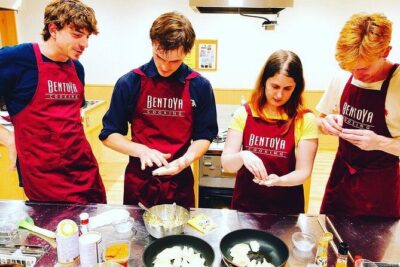 ★ 5.0Vegan/Vegetarian Ramen and Gyoza by Bentoya cookingFrom $7559 reviews
2-Hour Vegan and Vegetarian Ramen Guided Walking TourFrom $9633 reviews
Shibuya Tokyo: Sushi Making Class (Vegan/Vegetarian/Halal)From $5829 reviews
★ 5.0Vegan/Vegetarian Ramen and Gyoza by Bentoya cookingFrom $7559 reviews
2-Hour Vegan and Vegetarian Ramen Guided Walking TourFrom $9633 reviews
Shibuya Tokyo: Sushi Making Class (Vegan/Vegetarian/Halal)From $5829 reviews
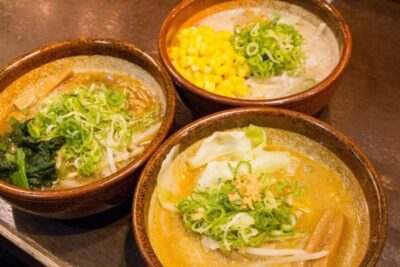 ★ 5.0Tokyo Vegan Food TourFrom $10112 reviews
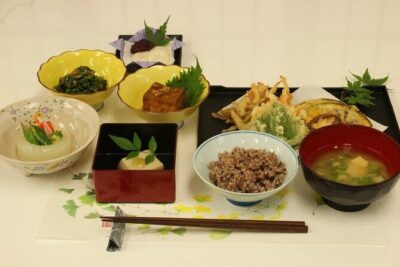 ★ 5.0Zen Buddhist Vegetarian(Shojin Ryori): Cooking ExperienceFrom $1149 reviews
★ 5.0Tokyo Vegan Food TourFrom $998 reviews
★ 5.0Zen Buddhist Vegetarian(Shojin Ryori): Cooking ExperienceFrom $1149 reviews
★ 5.0Tokyo Vegan Food TourFrom $998 reviews
Browse the lists this tour appears in