
Reviewed · MT FUJI DAY TRIPS
Mt. Fuji Highlight Photo Spots One Day Tour from Tokyo
Mt. Fuji in one long photo day.
This tour is built for views you can actually photograph—you’re taken to a string of Fuji spots around the base, timed so you get multiple angles instead of one big “maybe it’ll show up” moment. I like that the plan mixes famous classics with smaller streets and tea-field scenery, so you’re not just chasing one postcard view. One thing to keep in mind: the whole day depends on weather and traffic, and your guide may adjust the route when conditions change.
Two big reasons I’d do this again are the included round-trip transportation (Tokyo navigation and trains are off your plate) and the fact that you’ll get different Fuji looks, from pagoda framing to waterfall mist and tea rows. Also, the guide support can be genuinely helpful—names like Yunan and Ukei (K) show up in the guide experience, and clear communication matters when you’re meeting up and moving as a group. The only real drawback is that meals aren’t included, so you’ll want to plan snacks.
In This Review
- Key Points at a Glance
- Why This Mt. Fuji Tour Feels Efficient (And Not Like a Rush)
- The Starting Pin: Arakurayama Sengen Park and the Chureito Pagoda
- Honcho Street and a Fuji Peek Behind Old-World Wires
- The Fast Postcard Stop: Fujikawaguchiko Town and the Lawson View
- Lake Kawaguchiko: The Water Mirror Moment
- Oishi Park: Flowers in Front of Fuji (And Seasonal Drama)
- Shiraito Waterfall: Thread-Like Mist and a Cooler Break
- Obuchi Sasaba Tea Fields: Fuji Above the Greens
- Transportation and Timing: What Makes the Day Work
- Guide Support Makes a Difference (Especially When Weather Changes)
- What You Should Bring for a Photo-Focused Day
- Who This Tour Is Best For
- Should You Book This Mt. Fuji Photo Spots One Day Tour?
- FAQ
- FAQ
- How long is the Mt. Fuji highlight photo spots tour?
- How much does the tour cost?
- Is transportation included from Tokyo?
- Do I need to pay entrance fees at the stops?
- Are meals included in the tour price?
- What languages do the staff speak?
- Is the tour suitable for everyone physically?
- How many people are on the tour?
- What happens if weather is bad?
Key Points at a Glance
- Multiple Mt. Fuji perspectives in one day, not just one viewpoint
- Guided photo stops designed for snapping stills and quick video clips
- Included round-trip transport so you’re not figuring out trains and transfers
- Free admission for most stops, with Lake Kawaguchiko included
- Small-ish group cap of 60, usually easier for moving together
- Staff support in English, Korean, and Chinese, helpful if you don’t read Japanese
Other routes to the mountain, compared
- Mt Fuji & Hakone Cruise, Drum Show Bullet Train 1 Day from Tokyo★ 4.0 · 7,413 reviews
- Tokyo Mt Fuji 5th St & Hakone Cruise Bus Tour w/Bullet Train★ 4.4 · 5,024 reviews
- From Tokyo: Mount Fuji Full-Day Sightseeing Trip★ 4.5 · 4,970 reviews
Why This Mt. Fuji Tour Feels Efficient (And Not Like a Rush)
A one-day Mt. Fuji trip can go two ways: either you see a lot, or you spend half the day traveling. This itinerary is set up to reduce the second problem. You get picked up and transported for the long stretches, then you’re dropped at specific photo points where the “best angle” is the point—not something you have to hunt down yourself.
The tour also has a good mix of settings. You’ll see Fuji framed by a famous pagoda, mirrored over lake water, and rising above carefully tended tea fields. That variety matters because Fuji photography isn’t only about whether the mountain is visible—it’s about how it appears in relation to foregrounds.
The other practical win: the stops aren’t all huge crowds at one place. You’re moving through several areas, and each one gives you a different kind of scene.
The Starting Pin: Arakurayama Sengen Park and the Chureito Pagoda
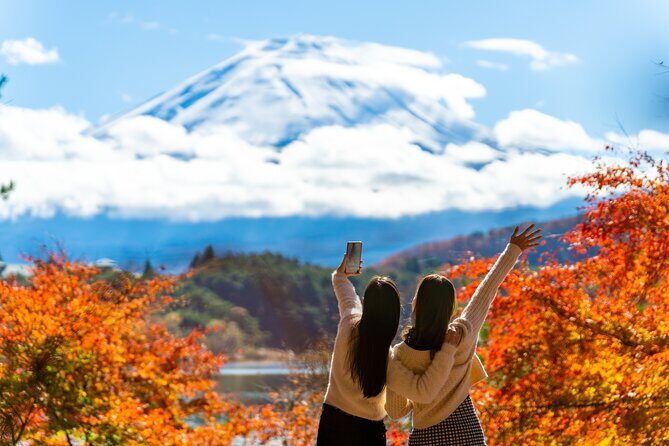
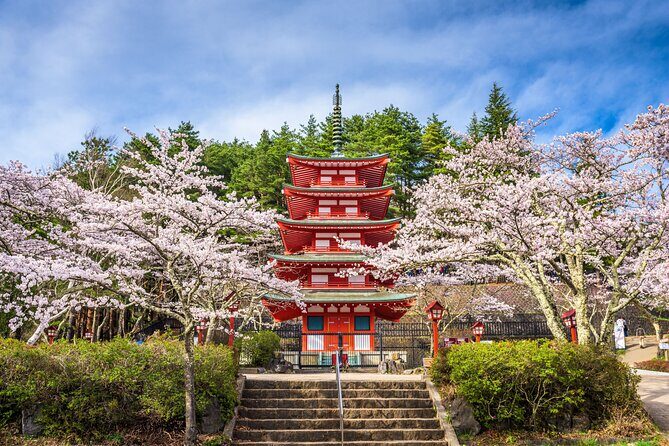
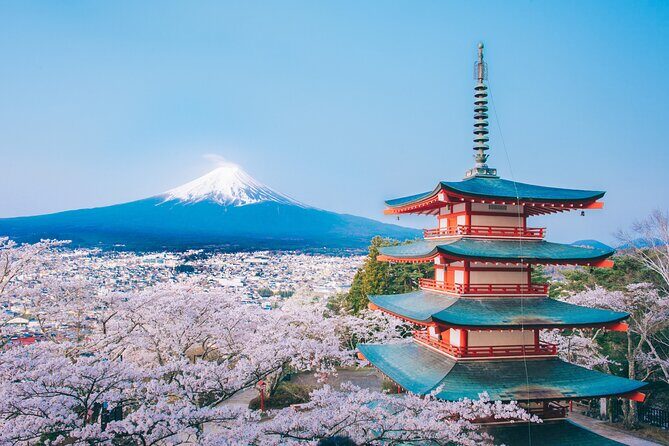
Your first major stop is Arakurayama Sengen Park, the classic spot for the Chureito Pagoda view. This is the mountain with a “frame.” Instead of looking at Fuji from a random street corner, you’re seeing it composed with a pagoda in the foreground—exactly the kind of shot that makes people stop scrolling.
Timing is part of the deal here. You’ll have about 40 minutes on site. That’s enough time to walk to the main viewpoints, get your angles, and then reposition if clouds drift through. It also helps that the park is free to enter, so you can spend your energy on photos rather than fees.
Seasonal light makes this stop even more interesting. During cherry blossom season, the park’s setting can shift dramatically. Even when blossoms aren’t in play, the composition still works because the pagoda gives you that strong foreground anchor.
Honcho Street and a Fuji Peek Behind Old-World Wires
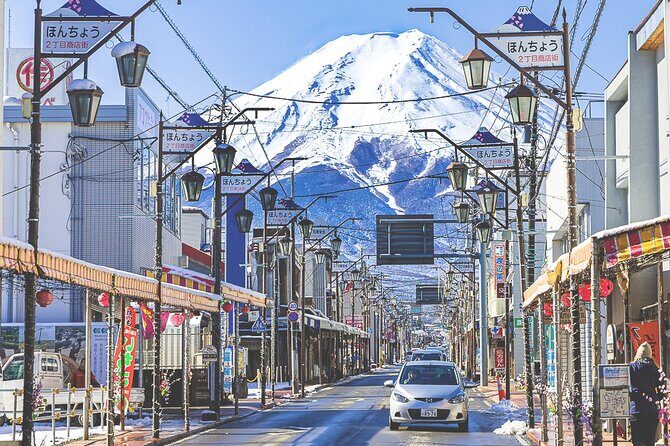
Next up is a walk along the Shimoyoshida area—specifically the Fujiyoshida Shiei Honmachidori Parking Lot stop, paired with time to stroll the Shimoyoshida Honcho Street area. This is the more nostalgic lane portion of the day, where you’ll find charming signage and the everyday overhead lines that make small-town Japan feel real.
You get about 40 minutes here, and the goal is simpler: stroll, look for Fuji framed by local details, and collect a few “I’m here” shots. The payoff is that this isn’t only about the mountain being huge in the background. It’s about making the Fuji view feel connected to daily life.
If you’re the type who loves street-level photos, you’ll appreciate this stop. If you only care about the most iconic Fuji photo, you might wish for more time at the big-name viewpoints—but the tour’s strength is that it balances both.
The Fast Postcard Stop: Fujikawaguchiko Town and the Lawson View
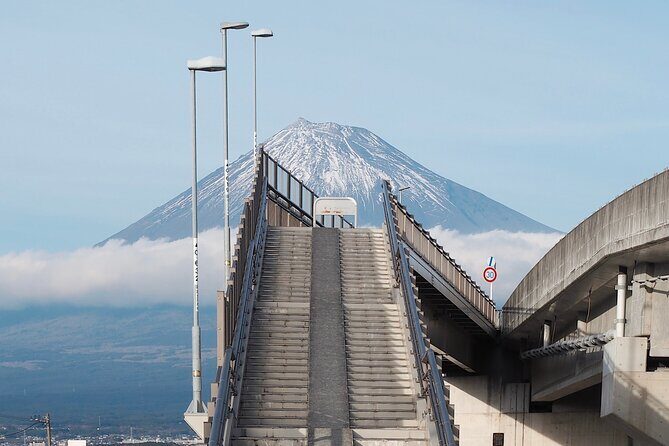
Then you get a quick photo-and-refresh break at the Lawson Fujikawaguchiko Town Hall area, with around 15 minutes. This is a short stop, but it’s a fun one because it gives you a different kind of Fuji composition: the mountain looming behind a convenience-store landmark.
Why does this work? Because it shows Fuji in a modern context. It’s also a practical pause. You can step out, take a few pictures, and grab something small to eat before the day shifts toward lakes and waterfalls.
Quick warning: 15 minutes goes fast, especially if you’re waiting for the best cloud gap. If Fuji is visible when you arrive, don’t delay. Get your shots early, then keep moving.
Worth weighing up alongside this Tokyo pick:


Lake Kawaguchiko: The Water Mirror Moment
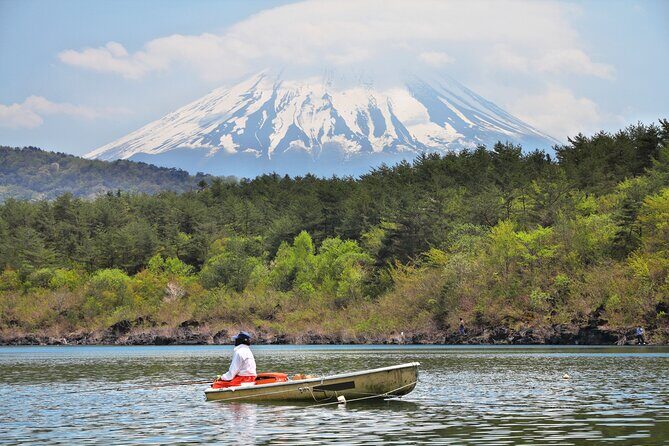
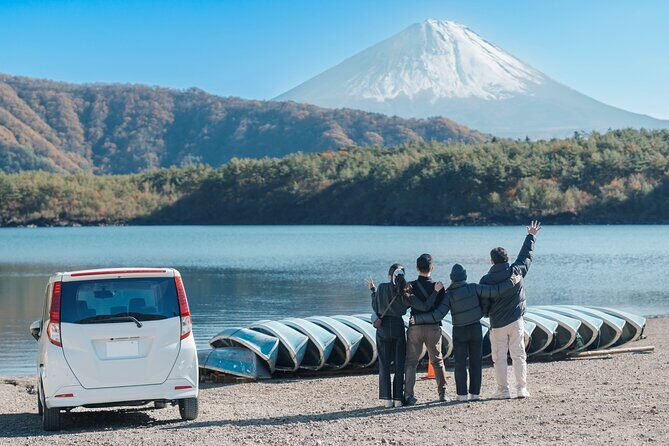
Now you get to the lake. Lake Kawaguchiko is part of the Fuji Five Lakes area, and the reason people keep coming is simple: on clear days, the reflections can be stunning. You’ll spend about 20 minutes here, with admission included.
This stop is the “slow down and look” part of the tour. Even if you take photos constantly, you’ll want a few minutes just to watch how the light moves across the water and how Fuji’s outline sharpens or softens.
A note on expectations: lake views depend heavily on weather. If the sky is hazy or overcast, you may get less reflection and more of a partial outline. Still, the mountain tends to look impressive even without perfect mirror conditions, and the viewpoint is built for sightseeing and photography.
If you like being near water, this is where your day starts feeling like a true escape from Tokyo.
Oishi Park: Flowers in Front of Fuji (And Seasonal Drama)
From the lake you head to Oishi Park, another key photography stop with about 20 minutes. This is where seasonal flowers can turn your Fuji photos from “nice” into “how did they get that shot.”
The park is known for dramatic floral displays—especially lavender fields in summer. That means you’re not just photographing the mountain. You’re photographing color and texture in the foreground with Fuji as the backdrop.
Even if the flowers aren’t in their peak season on your date, you still get the core benefit: clear park viewpoints over the lake with the mountain in the composition. It’s a stop you can enjoy even if you’re not a flower-photography person, because the scenery does most of the work.
Shiraito Waterfall: Thread-Like Mist and a Cooler Break
Then you’ll visit Shiraito Waterfall, one of Japan’s well-known falls, with about 50 minutes on site. The name comes from its appearance—water falling in fine, thread-like streams from a curved basalt cliff.
This is a good shift in pace. After lakes and parks, you get movement and sound. Also, waterfall areas can feel cooler, which helps on a long day out of Tokyo.
Practical tip: bring a lens cloth or plan for damp air if you’re shooting close. If it’s windy, your tripod or phone grip can get annoying fast, so keep it light and focus on stable hand-held shots if needed.
If Fuji is partly hidden by clouds, this stop still delivers. It’s not only “Fuji-dependent photography.” You’ll have scenery that works even when the mountain is less cooperative.
Obuchi Sasaba Tea Fields: Fuji Above the Greens
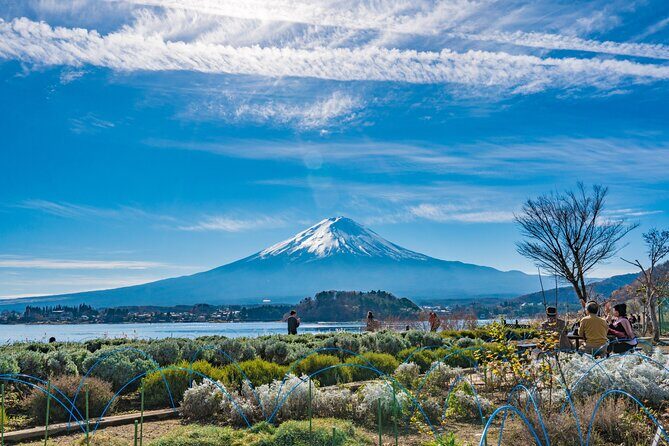
Finally, the tour reaches Obuchi Sasaba, a tranquil tea plantation viewpoint with about 40 minutes. This one is famous for a layered postcard view: rows of tea bushes in the foreground with Fuji rising in the distance.
This stop is especially satisfying because it gives you depth. Instead of a single flat horizon, you’re photographing texture and repetition. The view is calm, and it’s a nice contrast to the busier iconic spots earlier in the day.
It’s also a good “last set of photos” location. By the time you’re here, you’ve already captured the big Fuji hits. Now you’re collecting a different style—one that feels more serene and less touristy, even though it’s popular.
Transportation and Timing: What Makes the Day Work
This tour runs about 10 to 11 hours, and it includes round-trip transportation from Tokyo. That’s a big part of the value. You don’t have to figure out train connections, luggage space, or which station is closest to each viewpoint.
There are also real-world rules behind the scenes. In Japan, vehicles can’t operate for more than 10 hours, so the guide may adjust the itinerary based on traffic and conditions. That matters because the day is subject to weather too—and you’ll see language in the tour details that it’s weather-dependent.
Practically, it means you should be flexible. If you’re chasing one specific photo, you’ll need a Plan B. The good news is that the itinerary is designed to give you multiple attempts and angles, so one cloudy hour doesn’t ruin the whole day.
Group size is capped at 60, which is large enough to be organized but small enough that you’re not swallowed by a sea of people everywhere.
Guide Support Makes a Difference (Especially When Weather Changes)
A major theme in the guide experience is organization and hands-on help. Guides like Yunan and Ukei (K) stand out in how they support meeting points, movement, and helping people take pictures. One practical detail that really matters on a long day: guides may share the meeting spot using WhatsApp the night before, so having access to wifi on your phone can save you stress.
You don’t need to speak Japanese to enjoy this tour. The staff includes English, Korean, and Chinese speaking support, and that reduces the “blank stare” moments when you need directions or clarification.
The best part is that guides don’t just drop you at each spot. They help you make sense of the schedule so you can spend time photographing instead of wandering.
What You Should Bring for a Photo-Focused Day
Because meals are not included, I’d pack small snacks and water. The tour specifically recommends bringing a light lunch or snacks because lunch time isn’t built in. This is one of those details that can make or break your mood after hours on the road.
Also think about the weather swings. Even if the forecast looks good, Fuji days can change fast. Bring a light layer you can peel on and off, and plan for mist at the waterfall stop.
For photography, you’ll want:
- your phone or camera fully charged
- a way to store lots of images (space matters)
- lens cloth or a small wipe for damp conditions near the falls
Who This Tour Is Best For
This one-day Mt. Fuji tour is a strong match if you:
- want multiple viewpoints around the base in one shot
- don’t want to deal with Tokyo train logistics
- like photo variety: pagoda, lake reflections, tea fields, waterfall texture
- value organized timing more than wandering freely
It’s also a good option if you’re traveling with mixed photo skill levels. The stops are straightforward, and the scenery does the heavy lifting.
If you’re the kind of traveler who wants long stays at one location, you might feel the stops are timed tightly. But that’s the trade-off for seeing more than one Fuji “moment.”
Should You Book This Mt. Fuji Photo Spots One Day Tour?
If your main goal is a high-output Fuji day with less transportation hassle, I think it’s worth booking. The combination of included transport, guided photo stops, and a route that doesn’t rely on only one view makes it a smart buy for limited time in Tokyo.
I’d hesitate only if you’re extremely weather-dependent in your expectations and you hate “schedule adjustments.” Since the day is weather- and traffic-sensitive, you’ll want to treat it as a photography chance rather than a guarantee of the perfect clear-mountain shot.
FAQ
FAQ
How long is the Mt. Fuji highlight photo spots tour?
It runs about 10 to 11 hours.
How much does the tour cost?
The price listed is $78.82 per person.
Is transportation included from Tokyo?
Yes. Round-trip transportation is included.
Do I need to pay entrance fees at the stops?
Most stops list admission as free. Lake Kawaguchiko has admission included, while meals are not included.
Are meals included in the tour price?
No. Meals are not included, and it’s recommended to bring snacks or a light lunch.
What languages do the staff speak?
Staff are English, Korean, and Chinese speaking.
Is the tour suitable for everyone physically?
The tour advises a moderate physical fitness level. Some walking is involved at the photo spots.
How many people are on the tour?
The tour has a maximum of 60 travelers.
What happens if weather is bad?
The experience requires good weather. If it’s canceled due to poor weather, you’ll be offered a different date or a full refund.
More Tours in Tokyo




More Tour Reviews in Tokyo



The Fuji Shortlist: Other Days Out to the Mountain

Fresh reviews from around Tokyo






Mt Fuji Day Trips, compared.
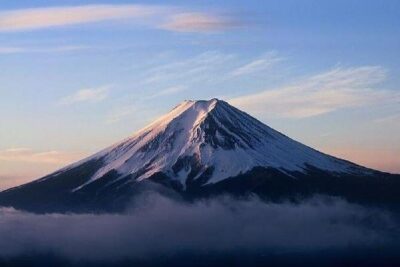 ★ 4.0Mt Fuji & Hakone Cruise, Drum Show Bullet Train 1 Day from TokyoFrom $1497,413 reviews
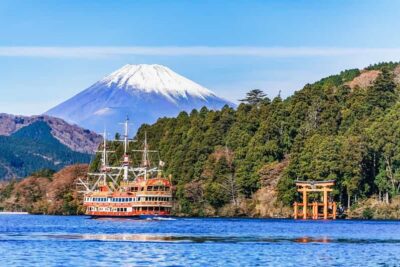 ★ 4.4Tokyo Mt Fuji 5th St & Hakone Cruise Bus Tour w/Bullet TrainFrom $1545,024 reviews
 ★ 4.5From Tokyo: Mount Fuji Full-Day Sightseeing TripFrom $684,970 reviews
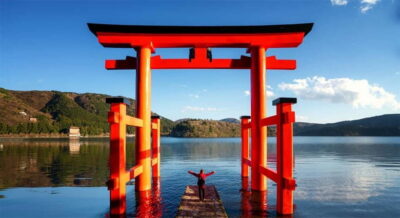 ★ 4.7Mt. Fuji Tour, Hakone Ropeway, Owakudani, Lake AshiFrom $544,002 reviews
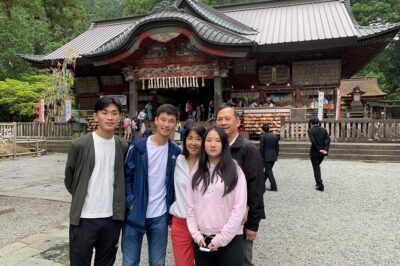 ★ 5.0Private Tour to Mt. Fuji and Hakone (Fully Licenced Operator)From $4971,910 reviews
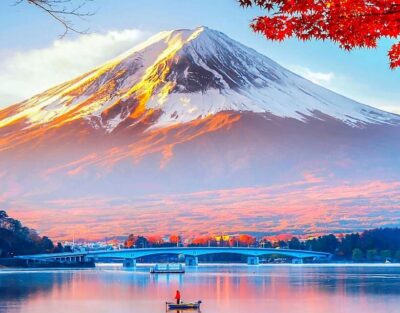 ★ 4.9Mount Fuji Full-Day Private Tour from Tokyo (Customizable)From $3931,470 reviews
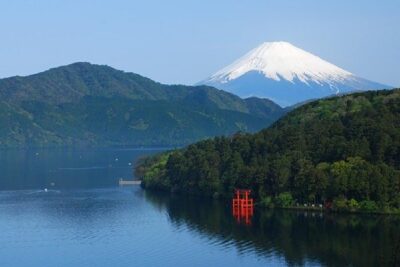 ★ 4.0Mt Fuji & Hakone Cruise, Drum Show Bus 1 Day from TokyoFrom $1221,287 reviews
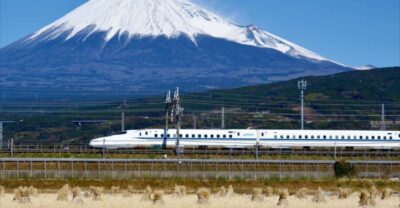 ★ 4.2From Tokyo: Mt. Fuji & Hakone Tour w/ Return by Bullet TrainFrom $1171,278 reviews
Browse the lists this tour appears in