
Reviewed · WORKSHOPS
Mini Origami Lamp and Mizuhiki knot Belt Workshop in Ueno
Folding paper in Ueno feels like therapy. In 2.5 hours, you make two traditional Japanese crafts: a bellows-style mini origami lamp and a mizuhiki knot belt ornament. It is tactile, calm, and surprisingly satisfying when your lamp finally glows.
I love the private instruction, with time to ask questions and get help as you fold and glue. I also love that the session includes a proper tea break with Japanese paper tea and sweets, not just a quick snack on the side.
One consideration: this is detailed handwork, so it is not suitable for young children. Also, the workshop has a cat, so if you have allergies, you will want to let them know ahead of time.
In This Review
- Key highlights you will actually care about
- Ueno Workshop Basics: where you meet and how the timing feels
- Making the Mini Origami Lamp: bellows folding, glue work, and warm light
- Mizuhiki Knot Belt Ornament: paper cord, twisting, and gift meaning
- Getting guidance in a private class with Kaho Shinoda
- The tea break: Japanese paper tea and sweets you do not skip
- Price and value: what $107.50 buys you in real terms
- Small details that can affect your day
- Who this workshop is perfect for
- Should you book this mini origami lamp and mizuhiki workshop?
- FAQ
- How long is the workshop?
- Is this a private class?
- What souvenirs do I make and take home?
- Are materials included?
- What is mizuhiki?
- What food and drinks are included?
- Is it suitable for children?
- Does the workshop have a cat?
Key highlights you will actually care about
- Private class: Only your group participates, so you get real attention while you work.
- Two crafts in one: A mini origami lampshade plus a mizuhiki knot for a belt ornament.
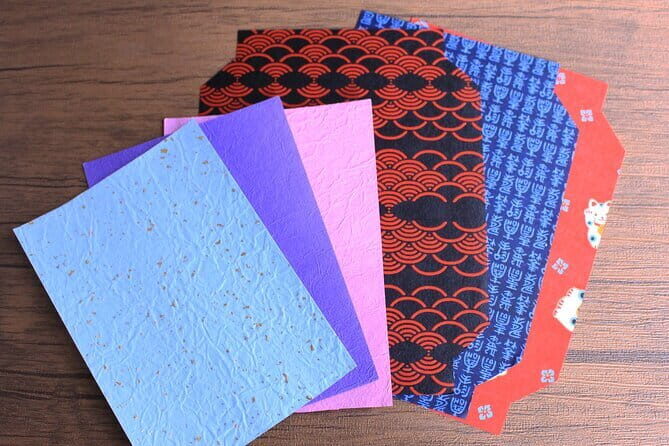
- Washi paper focus: You learn the basics of washi and craft with materials prepared for you.
- Japanese paper tea: You get tea plus sweets, including Japanese paper tea they highlight as special.
- Meaningful knots: Mizuhiki knots connect to gift-giving, since each knot can carry meaning.
- Ueno convenience: The meeting point is in Ueno and near public transportation.
More things to make with your own hands
- Sushi Making Tokyo Roll and Authentic Japanese Sushi Class★ 5.0 · 3,971 reviews
- Tokyo Shinjuku Chopsticks Making Class★ 5.0 · 1,763 reviews
- Chopstick Making Workshop in Ginza★ 4.8 · 1,366 reviews
Ueno Workshop Basics: where you meet and how the timing feels
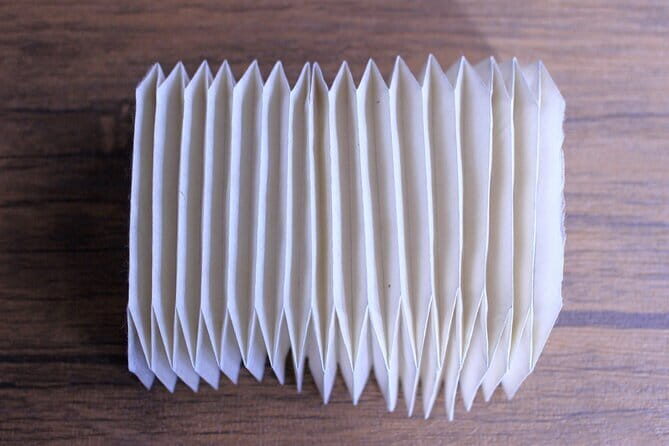
This workshop happens in the Ueno/Taito area, and it runs about 2 hours 30 minutes. You will start and end at the same place, so you can plan a low-stress Tokyo afternoon without bouncing between neighborhoods.
Your meeting point is 和紙ラボTOKYOJapan, 110-0016 Tokyo, Taito City, Taitō, 3-chōme302 市川ビル 1F. It is close to public transportation, which matters in Tokyo. You do not want a craft class where you are rushing through train transfers while your brain is still in commute mode.
It is also a private activity, so you are not squeezed into a crowded classroom setup. That matters for paper crafts, where tiny steps and clean folds are the whole point.
One more detail that helps your expectations: the session includes a small guide document to introduce the basics of washi paper before you start folding. Even if you are a beginner, that primer gives you context so you understand what you are doing instead of just following steps blindly.
Making the Mini Origami Lamp: bellows folding, glue work, and warm light
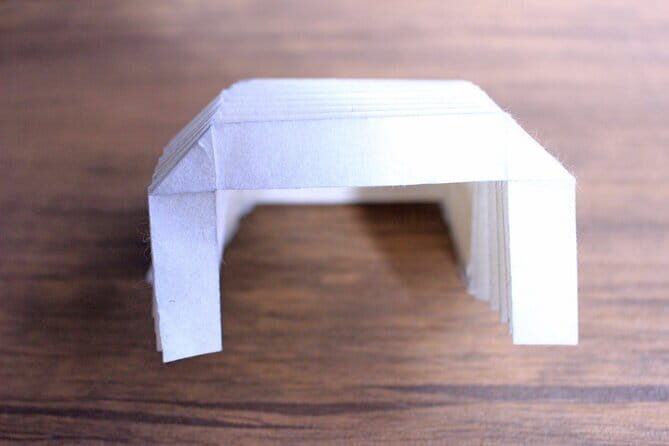
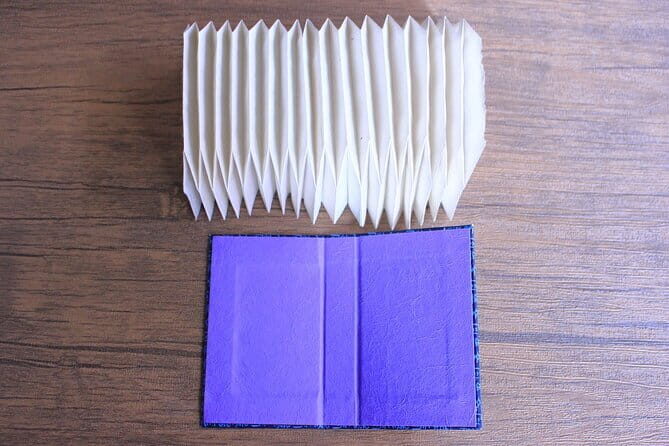
The star project is a mini origami lampshade built from handmade washi paper. The core idea is the bellows shape. You fold multiple sheets and assemble them so the paper expands and contracts in that accordion-like way.
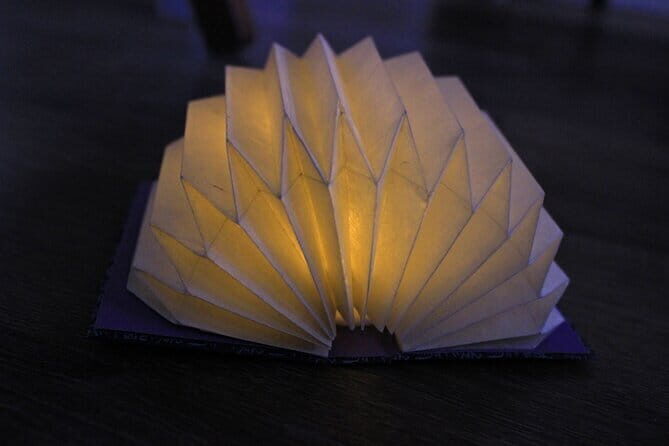
Then comes the fun part: they guide you on inserting a small lamp inside the bellows-like paper structure. When it is lit, the lamp gives off a gentle, warm glow rather than harsh light. The shape also has a satisfying design payoff: when you close the bellows, the finished form looks like a closed book.
That closed-book detail is not just decoration. It makes the lamp easy to store and easy to carry home in a way that feels intentional, not fragile-for-the-sake-of-it. Washi is also described as light and durable, which helps explain why this craft has stayed popular for both art pieces and interior decor.
What you are learning here is less about copying a pretty picture and more about control:
- how to fold accurately enough for the bellows to “work”
- how to glue so the structure holds without turning lumpy
- how to assemble so the lamp sits correctly inside
You end with your own one-of-a-kind lamp. That is a big part of the value: you are not just watching someone else do the craft. You leave with a usable object you can display.
Mizuhiki Knot Belt Ornament: paper cord, twisting, and gift meaning
Alongside the lamp, you craft a mizuhiki knot belt ornament. Mizuhiki is traditional paper cord. It uses a core of twisted washi paper, wrapped with nylon or film, which gives it the decorative strength you need for knotting.
You are not just learning to tie a knot for the sake of tying. The session covers the idea that each knot can have meaning, which makes mizuhiki practical for gifts. Even if you only use this ornament as a personal keepsake, understanding the meaning behind it changes how you see the craft.
The workshop frames this as a decorative skill: mizuhiki knots are often used in Japanese gift-giving contexts, so learning them feels like you are picking up a cultural “language,” not only a craft technique.
And because it is a belt ornament, it is a specific, charming outcome. You are making something that can attach to something you own, unlike crafts that are stuck on a shelf forever.
If you want a hands-on activity where you can feel your skill improve in real time, mizuhiki is a great match. Knots have a “this is right or wrong” feel, so you know when you are getting it. When it turns out cleanly, you tend to feel proud fast.
Getting guidance in a private class with Kaho Shinoda
The workshop is run by 和紙ラボTOKYO, with guidance from Kaho Shinoda. In past sessions, the instruction style is described as patient and clear, and that is exactly what you want for paper crafts.
Why private instruction matters: with origami lamps and mizuhiki knots, one small mistake can ripple into the final shape. In a group class, you might lose time trying to fix it while others move on. In a private format, you can slow down where needed and ask direct questions.
You also get help during the glue and assembly steps. Those steps tend to be where beginners get stressed. Here, you are given clear instructions and can confirm you are on track instead of guessing.
It is also worth noting that the workshop is positioned as more than a “do the craft, leave.” They explain background: what washi is, how the lamp design works, and why mizuhiki knots are meaningful. That context is what keeps the experience from feeling like a generic souvenir factory.
One practical expectation setting: this is not framed as a quick casual craft. It is detailed work. If you like crafts, you will probably find it relaxing. If you are the type who hates precision tasks, you might want to pick a simpler paper craft instead.





The tea break: Japanese paper tea and sweets you do not skip
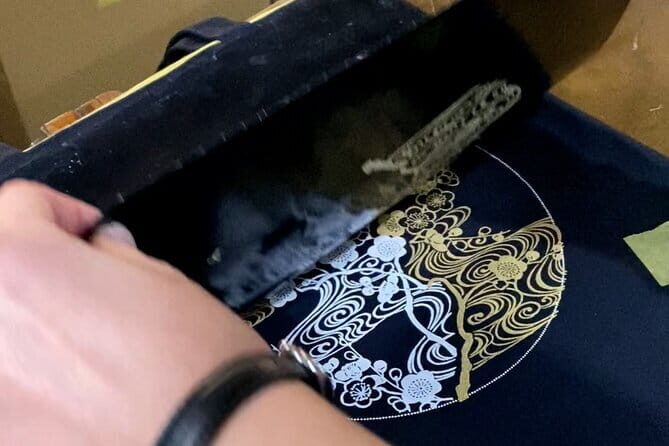
After you finish, you get Japanese sweets and tea, and they also include something they specifically highlight: Japanese paper tea that is not offered elsewhere. That detail alone makes the food portion feel like part of the craft theme, not an afterthought.
They also describe the tea as connected to Japanese paper culture. Even if you are new to washi-related experiences, this snack pairing helps you close the loop. You make something from paper, then you taste something tied to the concept.
In reviews, people mention that the paper tea and snacks are delicious. In a workshop like this, that matters because it turns the end of the session into a proper decompression moment. You are done with fine motor work, and now you can sit, taste, and admire what you built.
If you are the kind of traveler who thinks food experiences should have meaning, this tea break is a real plus.
Price and value: what $107.50 buys you in real terms

The price is $107.50 per person, and the session runs about 2 hours 30 minutes. On paper, that can look high compared with “cheap craft” activities. Here is the honest value math:
You are getting:
- a private class format
- materials to make both crafts (the origami lamp and mizuhiki knot belt ornament)
- instruction and help through steps that require precision
- a full tea-and-sweets break, including Japanese paper tea
- take-home items you can display and use as souvenirs
Paper crafts are usually priced around the labor and the materials. This one also adds the private attention and the included drink/food portion, which pushes value up.
You are also paying for a specific craft outcome. A mini lamp that looks like a closed book and glows warm light is a standout souvenir. A mizuhiki ornament with knot meaning gives you a second culturally grounded craft piece instead of one generic decoration.
If you want two quality handmade items and a calm, guided afternoon in Ueno, this price starts to make more sense. If you are only interested in a small craft you can buy for less, you might feel it is too pricey.
Small details that can affect your day
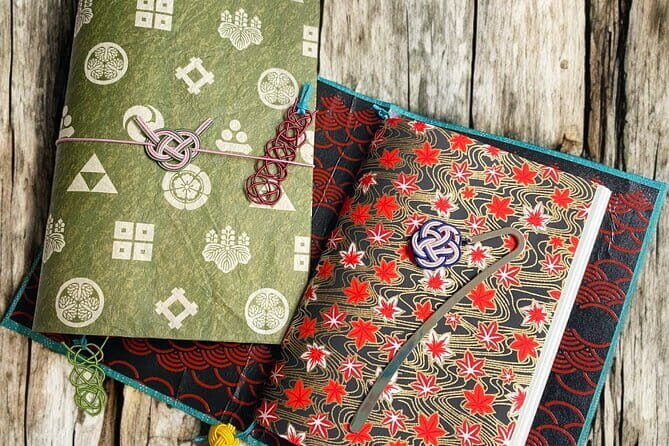
This workshop is described as requiring detailed skills, so it is not suitable for young children. If you are traveling with kids, consider whether they can handle careful folding, glue work, and small knot steps without frustration.
There is also a cat in the workshop. If you have allergies, you should tell them in advance so you can plan accordingly. The cat appears as part of the atmosphere, not as something hidden or random.
Finally, the experience requires good weather. If it is canceled due to poor weather, you are offered a different date or a full refund. That is not the norm for indoor craft classes, so it is smart to treat it like a condition that could affect your schedule in Tokyo.
Who this workshop is perfect for
This is ideal if you:
- love crafts and want something you can bring home that is actually handmade
- want a quieter, hands-on experience in the Ueno area instead of only sightseeing
- like cultural explanations, not just step-by-step folding
- enjoy gift-making ideas (mizuhiki knot meanings connect directly to that)
It may not be ideal if you:
- want something suited to young children
- dislike precision work or glue/assembly steps
- are looking for a purely visual tour with zero hands-on time
Should you book this mini origami lamp and mizuhiki workshop?
I think you should book it if you want a high-satisfaction souvenir day. The combination of a warm-glowing origami lamp and a meaningful mizuhiki knot belt ornament makes this feel like two crafts, not one.
It is also a strong choice if you value calm, focused time in Tokyo. The private format and the structured craft steps make the experience feel controlled, even if paper crafts are new to you.
Before you book, check two things: you are comfortable with detailed work, and you do not have a cat allergy issue. If those boxes are checked, this is the kind of workshop that leaves you with something you will actually keep and use, not just carry in a bag.
FAQ
How long is the workshop?
It runs for about 2 hours 30 minutes.
Is this a private class?
Yes. It is private, and only your group participates.
What souvenirs do I make and take home?
You create a mini origami lamp and a mizuhiki knot belt ornament, and you take both home.
Are materials included?
Yes. Materials for making the lampshade and the mizuhiki knot belt ornament are included.
What is mizuhiki?
Mizuhiki is traditional paper cord made from twisted washi paper wrapped by nylon or film. The knots can have meanings, which makes them useful for gifts.
What food and drinks are included?
You get Japanese sweets and tea, including Japanese paper tea.
Is it suitable for children?
It is not suitable for young children due to the detailed work required.
Does the workshop have a cat?
Yes, there is a cat. If you have any allergies, you should inform the workshop ahead of time.
Make Something to Take Home




More Tour Reviews in Tokyo



Fresh reviews from around Tokyo






Workshops, compared.
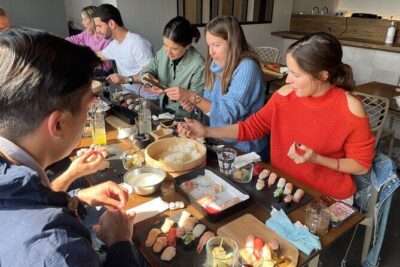 ★ 5.0Sushi Making Tokyo Roll and Authentic Japanese Sushi ClassFrom $593,971 reviews
 ★ 5.0Tokyo Shinjuku Chopsticks Making ClassFrom $201,763 reviews
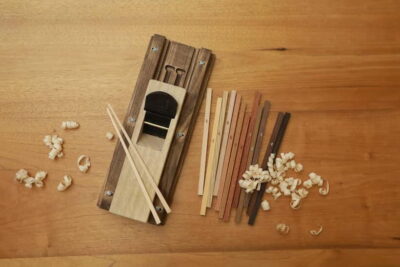 ★ 4.8Chopstick Making Workshop in GinzaFrom $251,366 reviews
 ★ 5.0Tokyo Sushi Making Class in Tsukiji with Professional ChefFrom $491,177 reviews
 ★ 5.0Ramen & Gyoza Cooking Class in Tokyo with Local Supermarket VisitFrom $122823 reviews
 ★ 5.0Matcha Making Class in Tokyo with Authentic Japanese Sweets SetFrom $21744 reviews
 ★ 5.0Samurai Sword & Archery Class from Samurai DescendantFrom $193603 reviews
 ★ 4.9Tsukiji Fish Market Sushi Making Class with Pro ChefFrom $63506 reviews
Browse the lists this tour appears in