
Reviewed · WORKSHOPS
Mini Origami Lamp and Mizuhiki knot Belt Workshop in Ueno
Paper crafts can feel relaxing fast, and this Ueno workshop is built for that. You’ll learn two classic Japanese techniques in one sitting: how to fold and assemble a washi paper origami lamp that glows with gentle warmth, and how to tie a mizuhiki knot ornament designed for a belt. I especially like that the instructor walks you through the handwork step-by-step, and that the lamp you make looks like a closed book when it’s shut. One consideration: the skills require careful folding and gluing, so it’s not a good fit for kids under 10.
If you want a souvenir that’s not mass-produced, this hits the mark. You’ll also get time with washi basics and a simple guide document, which makes the final piece feel personal instead of like you just followed steps. And yes, you also get a snack-and-tea finish: Japanese sweets and Japanese paper tea made with washi.
In This Review
- Key points worth your attention
- Where Ueno Craft Time Feels Personal
- What You’ll Make: Lamp First, Then a Mizuhiki Belt Ornament
- Step One: Was hi Paper Basics and Your Handy Guide Document
- Folding the Origami Lamp Like a Bellows, Then Closing It Like a Book
- Mizuhiki Knots: Tying the Cord and Learning Why Each Knot Matters
- The End-of-Class Break: Japanese Paper Tea and Sweets
- Price and Time: Is $106 for 150 Minutes Good Value?
- Instructor Support and the Pace You’ll Feel
- Not for Very Young Kids: The Fine-Motor Reality
- Who Should Book This Ueno Workshop
- Should You Book It?
- FAQ
- How long is the workshop in Ueno?
- How much does it cost?
- What will I make during the class?
- What is mizuhiki?
- Is the class in English?
- What’s included in the price?
- Are there age limits?
- Is it a private group?
- Can I cancel or change my plans?
- What’s the best reason to attend if I’m buying souvenirs anyway?
Key points worth your attention
- Two crafts, one 150-minute session: lamp + mizuhiki knot ornament
- A lamp that shuts like a closed book and opens to glow softly
- Knot meanings for gifting so your ornament has a reason, not just decoration
- Washi paper guide material to help you understand what you’re doing
- Japanese paper tea and sweets served at the end
- Private group instruction in English and Japanese for a smoother pace
More things to make with your own hands
- Sushi Making Tokyo Roll and Authentic Japanese Sushi Class★ 5.0 · 3,971 reviews
- Tokyo Shinjuku Chopsticks Making Class★ 5.0 · 1,763 reviews
- Chopstick Making Workshop in Ginza★ 4.8 · 1,366 reviews
Where Ueno Craft Time Feels Personal
This workshop takes place in Ueno, and it feels like the kind of class you’d book when you want hands-on Tokyo time, not another checklist of sights. The vibe is calm and focused. You’re not just watching a demo. You’re working through materials, folds, and assembly while the instructor keeps things clear in both Japanese and English.
What makes it especially appealing is that it’s designed around making objects that you can actually use and keep. A paper lamp is practical in the sense that it changes mood in your space. A mizuhiki knot ornament is small, easy to display, and meaningful when you think about how the knots are used for gifts in Japan.
The workshop is also private group, which typically means less waiting and fewer awkward “am I doing it right” moments. If you’ve ever struggled in group classes where everyone gets rushed, you’ll probably appreciate the slower, more guided flow. And the experience runs 150 minutes, so you have time to do it properly without feeling trapped for half a day.
What You’ll Make: Lamp First, Then a Mizuhiki Belt Ornament
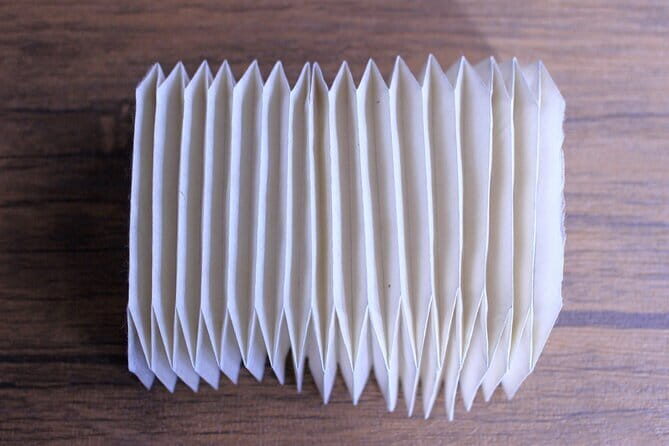
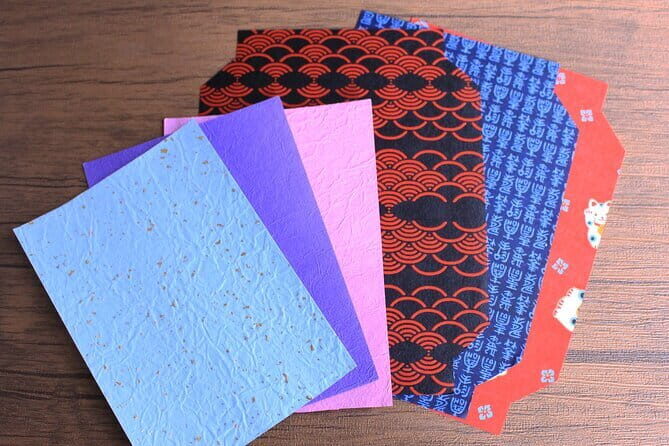
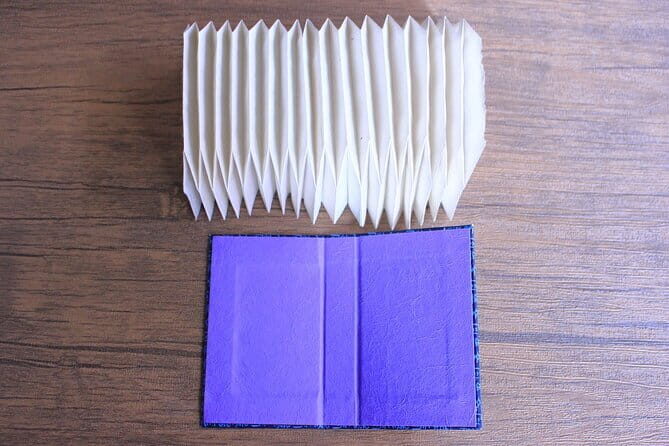
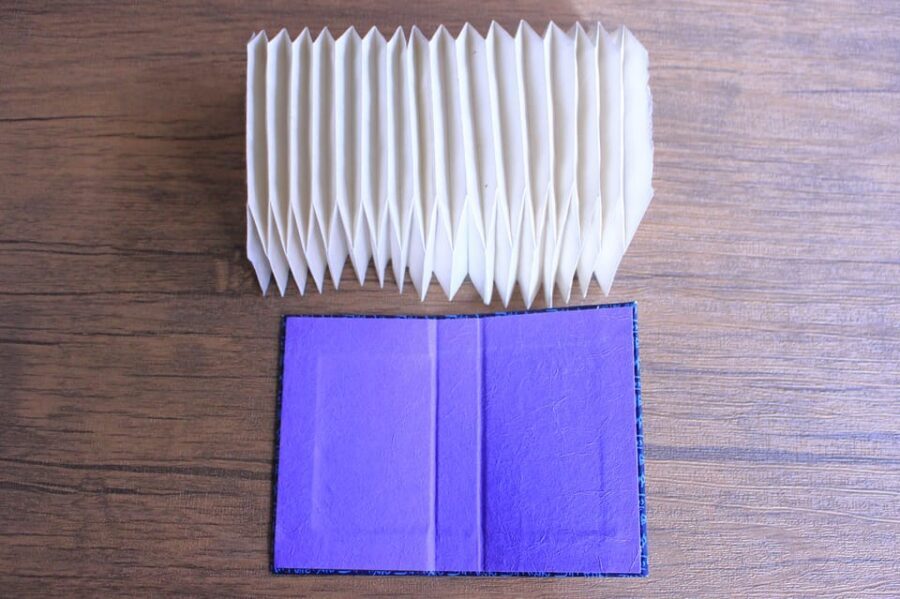
You end up with two take-home items, and that’s a big part of the value. First you’ll make the origami lamp. The method is a bellows-style structure made from several sheets of handmade washi paper. You fold and glue the pieces in a way that creates an accordion-like shape.
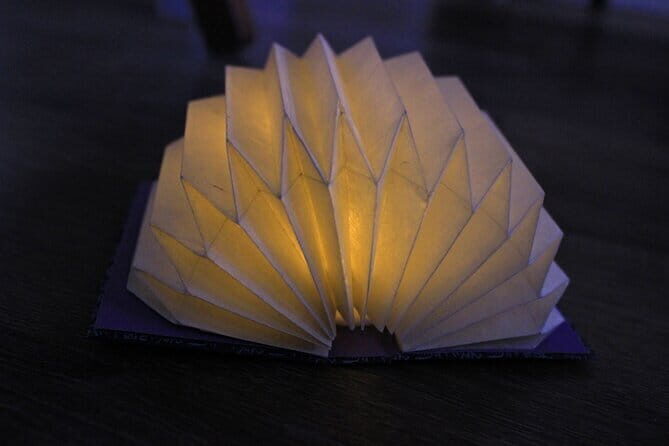
Then you insert a small lamp inside the folded bellows structure. When it’s lit, the paper diffuses the light into something gentle and warm. When you close it, the form looks like a closed book, which is a fun detail because it makes storage and display easier than a typical open-lamp craft.
Second, you’ll create a mizuhiki knot ornament using paper cord. Mizuhiki is traditionally a decorative cord made with a core of twisted washi paper, then wrapped with nylon or film. You’ll tie a knot and make it work as an ornament for a belt. The idea is that you’re learning craft technique plus cultural meaning, not just copying a shape.
Step One: Was hi Paper Basics and Your Handy Guide Document
Before you start folding anything delicate, you get a quick washi paper basics introduction. The workshop includes a guide document that covers the essentials, so you’re not relying only on memory while your hands are busy.
Why this matters: washi is light and durable, and those traits affect how the craft behaves. If you press too hard, thin areas can crease in a way that’s hard to fix. If you treat it too gently, glue placement can be messy. Learning the basics first helps you avoid the two common problems in paper crafts: overworking the sheet and under-assembling the structure.
The guide is also useful if you want to recreate similar folds later. Even if you don’t redo the whole project, you’ll understand what aspects of the folding structure create stability and what steps control the final shape.
You’ll use all materials provided for both the origami lamp and the mizuhiki knot ornament. That takes away the guesswork of finding the right paper type, cords, and adhesives on your own.
Folding the Origami Lamp Like a Bellows, Then Closing It Like a Book
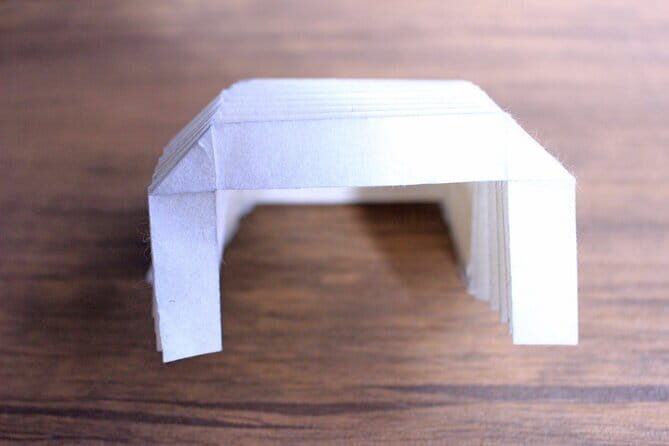
This is the main creative arc of the workshop. You start by folding and gluing sheets of handmade washi paper into a bellows-like structure. Think of it as building a soft, paper accordion frame.
As you work, the instructor helps you with the folding sequence and the glue steps. In practice, this is where the class earns its calm reputation. When the materials are all set out and the workflow is guided, you spend less time panicking and more time enjoying the rhythm of careful paper work.
Once the bellows structure is ready, you insert the small lamp inside. This step changes the whole craft from flat paper to functional decor. When the light turns on, you can see how the washi diffuses it. It’s not a harsh bulb look. It’s more like warm, softened glow.
The closing detail is worth paying attention to: when you close the bellows shape, the lamp’s silhouette looks like a closed book. That makes it feel more like a designed object than a school craft. It also helps with travel and storage after the class, since it’s compact when not lit.





Mizuhiki Knots: Tying the Cord and Learning Why Each Knot Matters
After the lamp structure work, you switch to mizuhiki. This is where the craft connects to Japanese gift culture in a clear way.
You’ll learn about mizuhiki knot meanings and their uses. Different knots carry different intentions in Japan, so the same decorative cord can signal something specific. That’s why these knots are often used in gift wrapping and gifting traditions: the ornament isn’t just pretty; it can communicate.
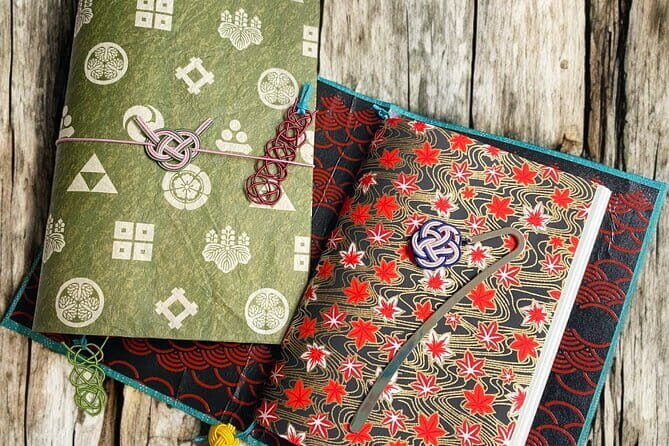
The cord is special because it’s not just paper string. Mizuhiki is made with a twisted washi-paper core, then wrapped with nylon or film. That affects the way it feels in your hands and how the knot holds shape. When you tie it, you’ll notice how it grips and stays tidy when you form the loops and turns.
You’re making an ornament designed for a belt, so the finished knot is something you can actually attach or display easily. It’s a small, portable piece of Japanese craft that doesn’t need a glass case or special handling.
The End-of-Class Break: Japanese Paper Tea and Sweets
Around the end of the workshop, you get Japanese sweets and Japanese paper tea made from washi. This part isn’t just a snack. It’s another way the day ties together the theme of washi beyond craft.
The tea is served with the feeling that it’s part of the experience, not an afterthought. Since the paper tea isn’t something you’ll typically find in everyday tourist snack stops, it adds a small cultural signature to the workshop. It also gives you a chance to slow down after fine-motor work and let your new creations settle.
If you like experiences where craft and food match the same theme, you’ll probably enjoy this ending a lot. It gives the whole class a complete arc: learn, make, then taste something that fits.
Price and Time: Is $106 for 150 Minutes Good Value?
At $106 per person for 150 minutes, you’re paying for more than a craft kit. You’re paying for materials, guided instruction, and the fact that you’re making two items—one of them a light-up paper structure.
Here’s how I’d think about the value:
- You get guided assembly for the lamp structure, not just a single step. That time and support matter with paper crafts.
- You also get mizuhiki knot instruction plus knot-meaning context, which turns it from a craft to a cultural skill.
- You take home two finished pieces, not just one small ornament.
- You also receive Japanese sweets and Japanese paper tea, which makes the session feel complete.
Also keep in mind that it’s a private group, so you’re not sharing instructor attention with a large crowd. That often means better pacing, and fewer mistakes that you’d otherwise have to fix on your own.
If you’re the type who likes souvenirs you can feel proud of—something you’d actually display—this price feels more fair. If you mainly want a quick photo stop, you might find it too hands-on for your taste.
Instructor Support and the Pace You’ll Feel
The instructor communicates in Japanese and English, which makes a big difference in craft classes. You can follow both the practical steps and the why behind the process without relying on guesswork.
From the way the class is set up, it sounds like materials are prepared ahead of time and the instructor shows how to fold, glue, and fix together the lamp properly. That matters because the lamp build depends on accuracy in multiple small steps. A tiny misfold early can affect later structure.
There’s also a nice human touch to the experience. The class includes a mascot cat presence, and that adds a little levity during the concentrated work. You’ll likely find that helpful if you’re traveling with a bit of craft curiosity but want the vibe to stay friendly, not stiff.
Private group format also suggests you won’t be forced into a rushed “next step now” rhythm. That’s important for paper crafting where drying time and careful alignment affect results.
Not for Very Young Kids: The Fine-Motor Reality
This workshop isn’t suitable for children under 10. The reason is straightforward: the crafts require detailed skills, especially for the lamp assembly with folding and gluing.
If you’re traveling with kids, consider it a “grown-up craft day.” For families who want something more age-flexible, there’s a different washi-focused option in Ueno mentioned for families, but this specific lamp-and-knot session is clearly aimed at people who can handle careful paper work.
For adults and older kids, the skill level feels approachable if you take your time. The instructor support helps, and you get the guide document to keep you oriented.
Who Should Book This Ueno Workshop
This is a strong fit if you:
- Want a hands-on craft with a take-home object that looks intentional
- Like washi paper culture beyond the usual buying souvenirs
- Enjoy making gifts with meaning, not just decoration
- Prefer a private or quieter class format with clear instruction
You might choose something else if:
- You dislike glue, careful folding, or close work with paper
- You only want a short, low-effort activity
- You’re traveling with younger kids who won’t manage the fine-motor steps
If you’re in Ueno anyway, this workshop is a great way to balance the area’s culture with something you create yourself.
Should You Book It?
Yes, if you want a meaningful souvenir and a calm, guided afternoon. The biggest reasons to book are simple: you make a light-up origami lamp and a mizuhiki knot ornament, and you learn the knot meanings that give it gifting context. The included washi paper basics guide and the instructor’s Japanese/English support help you avoid the most frustrating part of crafts: getting stuck without help.
I’d especially recommend it when you want to slow down in Tokyo and do something tactile. It’s not just a craft workshop. It’s a way to understand washi paper as a living material, then carry that understanding home in the form of something you can actually use and display.
If you’re comfortable with careful hands-on work and you’re open to learning cultural meanings along with the technique, this one is a smart choice.
FAQ
How long is the workshop in Ueno?
The workshop lasts 150 minutes.
How much does it cost?
The price is $106 per person.
What will I make during the class?
You’ll make a traditional Japanese origami lamp using washi paper, and you’ll also create a mizuhiki knot ornament for a belt.
What is mizuhiki?
Mizuhiki is a traditional Japanese paper cord made with a twisted washi paper core, wrapped with nylon or film, used for decorative knot ornaments.
Is the class in English?
Yes. The instructor teaches in Japanese and English.
What’s included in the price?
Japanese sweets and Japanese paper tea are included, along with a guide document on washi paper basics and all materials to create the origami lamp and mizuhiki knot ornament.
Are there age limits?
Yes. The workshop is not suitable for children under 10.
Is it a private group?
Yes, it is a private group experience.
Can I cancel or change my plans?
Free cancellation is available up to 24 hours in advance for a full refund. You can also reserve now and pay later.
What’s the best reason to attend if I’m buying souvenirs anyway?
You’re taking home handcrafted items plus a washi-and-knot skill you learn in the session, not just a store-bought decoration.
Make Something to Take Home




More Tour Reviews in Tokyo



Fresh reviews from around Tokyo






Workshops, compared.
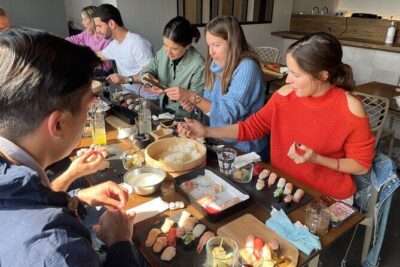 ★ 5.0Sushi Making Tokyo Roll and Authentic Japanese Sushi ClassFrom $593,971 reviews
 ★ 5.0Tokyo Shinjuku Chopsticks Making ClassFrom $201,763 reviews
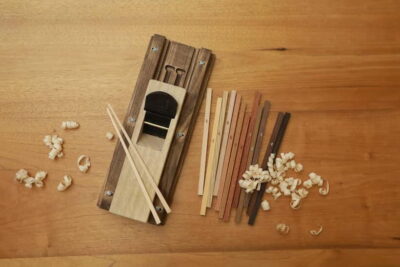 ★ 4.8Chopstick Making Workshop in GinzaFrom $251,366 reviews
 ★ 5.0Tokyo Sushi Making Class in Tsukiji with Professional ChefFrom $491,177 reviews
 ★ 5.0Ramen & Gyoza Cooking Class in Tokyo with Local Supermarket VisitFrom $122823 reviews
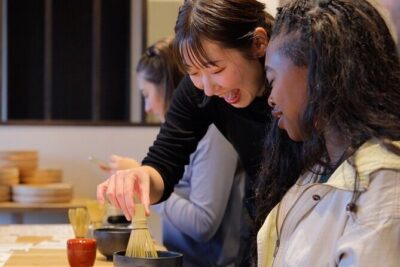 ★ 5.0Matcha Making Class in Tokyo with Authentic Japanese Sweets SetFrom $21744 reviews
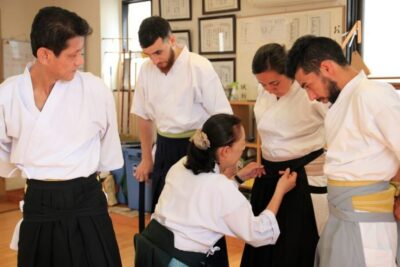 ★ 5.0Samurai Sword & Archery Class from Samurai DescendantFrom $193603 reviews
 ★ 4.9Tsukiji Fish Market Sushi Making Class with Pro ChefFrom $63506 reviews
Browse the lists this tour appears in