
Reviewed · KAMAKURA DAY TRIPS
Kamakura One Day Hike Tour with Government-Licensed Guide
Samurai steps start in Kamakura. This Daibutsu Trail day hike links famous temples in about 6 km of walking, with government-licensed interpretation that helps you understand what you’re seeing instead of just ticking boxes.
I love the way this tour stays flexible. You can tailor your plan around your interests and pick the sites that matter to you, typically choosing 3–4 stops. I also like the guidance style—guides in this program, including Shinji Komiyama (mentioned in past tours), tend to check in before you start and adjust the day around what you want to learn and photograph.
The main drawback is time. It’s a ~6-hour walking day, and Kamakura is about an hour from Tokyo—so if you rush in and out, you’ll feel it. Give yourself enough time to enjoy the temples and the trail.
In This Review
- Key highlights you’ll feel right away
- Getting To Kamakura: One Hour From Tokyo, But Plan for a Real Day
- What You’re Really Buying: A Government-Licensed Guide + Real Context
- Meeting Up and Moving Around: Pickup Offered, Then You Walk
- The Daibutsu Trail: 6 km of Temple-to-Temple Motion
- Tsurugaoka Hachimangu Shrine: Start With Samurai Roots
- Kotoku-in Great Buddha: The Photo You’ll Understand
- Hasedera Temple: Mercy, Kannon, and a Tall Wooden Presence
- Hokoku-ji Bamboo Grove: A Quick Walk Through Texture
- Kamakura Hiking Trails: The Midday “Connective Tissue”
- Zen Temple Power Moves You Can Build Around
- Engaku-ji (円覚寺)
- Kencho-ji (建長寺)
- The “branch temple” feeling: Jomyo-ji, Zuisen-ji, Jufukuji, and more
- Zeniarai Benten and Meigetsuin: Tiny Detours With Personality
- Zeniarai Benten Shrine
- Meigetsuin (Hydrangea Temple)
- Nichiren-Sect Stops: Ankokuronji and the “Other Side” of Buddhism
- Eishoji: A Nunnery in the Heart of Old Kamakura
- Enoshima Island: Sea Air and a Possible Mt. Fuji View
- Price and Value: Why This Costs $153.50 and When It’s Worth It
- Who This Tour Fits Best (and Who Might Feel Tight)
- Should You Book This Kamakura One-Day Hike Tour?
- FAQ
- FAQ
- How long is the Kamakura one-day hike tour?
- Is pickup included?
- What does the tour include?
- Are entrance fees included?
- Can I customize the itinerary?
- Is there free cancellation?
Key highlights you’ll feel right away
- Government-licensed English guide: You get cultural and historical context from someone certified by the Japanese government.
- Custom itinerary (usually 3–4 sites): Choose your must-sees, then connect them through the hike.
- Daibutsu Trail is the spine of the day: A 6 km route between the Great Buddha area and Jochi-ji.
- Bonus stops that cost less: Tsurugaoka Hachimangu and Zeniarai Benten are listed as free admissions.
- Enoshima is a smart add-on: A short ride west of Kamakura for coastal views and a change of pace.
Getting To Kamakura: One Hour From Tokyo, But Plan for a Real Day
Kamakura is close to Tokyo—about an hour away—so it’s tempting to treat it like a quick side trip. Don’t. This is the kind of place where your day can quietly expand once you start moving temple to temple.
A practical approach: plan the day so you’re not thinking about trains every 20 minutes. The tour runs about 6 hours, and it’s a walking tour, not a bus loop. If you’re traveling from Tokyo, I’d aim to start early enough that you still have energy at the end of the hike.
What You’re Really Buying: A Government-Licensed Guide + Real Context
This tour isn’t just walking routes with a GPS. The big value is the guide’s national government-licensed interpreter training—certification requires solid knowledge of Japanese culture and history. That matters because Kamakura’s temples aren’t only pretty buildings. They’re political history, religious practice, and family legacies layered into stone and wood.
I like that the day is built to be personalized. You can share what you want to experience and when you want to start, and then select must-see spots from a list to create your itinerary. So instead of “see everything,” you can target what fits your curiosity—samurai stories, Zen atmosphere, bamboo, hydrangeas, coastal scenery, or a mix.
Meeting Up and Moving Around: Pickup Offered, Then You Walk
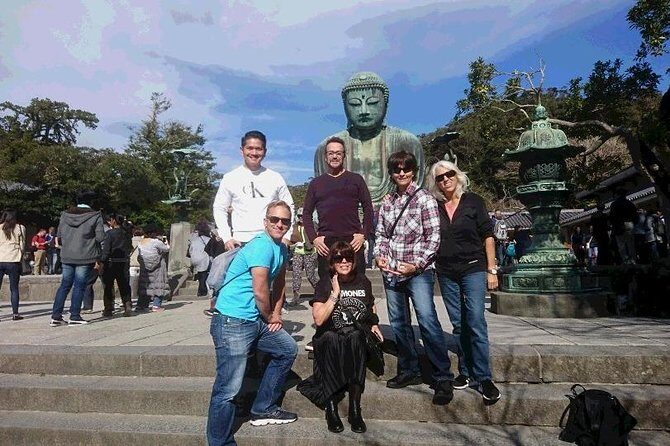
You’ll meet your guide at your hotel or at the closest station (the tour notes pickup is offered). After that, it functions like a walk-led day: you’ll meet on foot within a designated area of Kamakura/Yokohama.
Two practical notes:
- Because it’s walking-first, wear shoes you’d trust on uneven paths.
- The tour is described as private, so it’s only your group—that usually makes pacing and photo stops easier.
The Daibutsu Trail: 6 km of Temple-to-Temple Motion
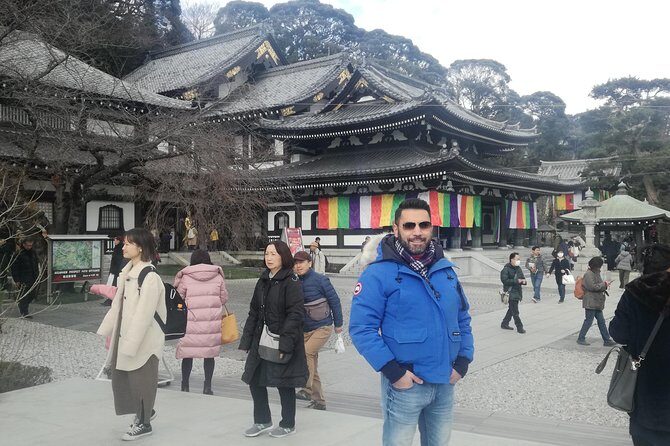
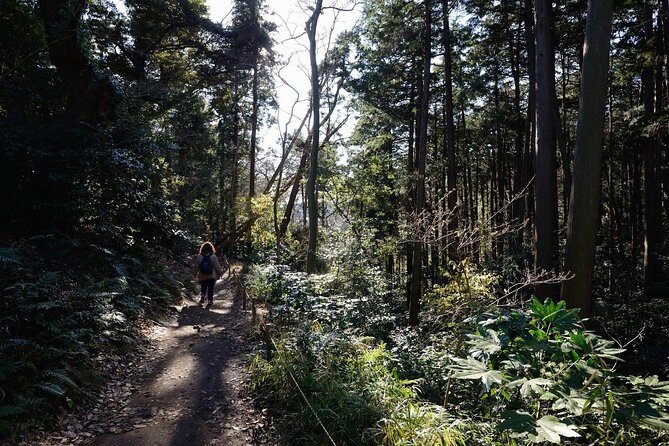
At the center of the day is the Daibutsu hiking trail, about 3.7 miles (6 km). It runs between the Great Buddha area in the south and Jochi-ji Zen temple toward the north. That “south to north” direction is useful because it creates a natural rhythm: you’re not just hopping between destinations—you’re walking through the hills that connect them.
Why I think this trail format works for most people:
- You get a sense of Kamakura’s geography—ocean to the south, wooded hills around the rest.
- The temples feel connected, not isolated stops.
- The hike stretches your day in the best way. It turns sightseeing into a slow, lived-in route.
One reality check: if rain hit the area recently, trails can get slippery. A guide response in past tours noted that a rainy prior day made the trail slick, but they were able to walk without trouble. Your takeaway: bring grippy footwear and move with normal caution.
Tsurugaoka Hachimangu Shrine: Start With Samurai Roots
Your first stop is Tsurugaoka Hachimangu Shrine, dedicated to Hachiman, the patron god of the Minamoto family and samurai culture. It’s a strong opening because it frames Kamakura’s identity early: this wasn’t just a scenic hillside town; it was a power center.
It’s also efficient for a day-hike plan. The listed visit time is about 30 minutes, and admission is free. That means you can spend more of your energy on the hike and on paid temple areas later.
Kotoku-in Great Buddha: The Photo You’ll Understand
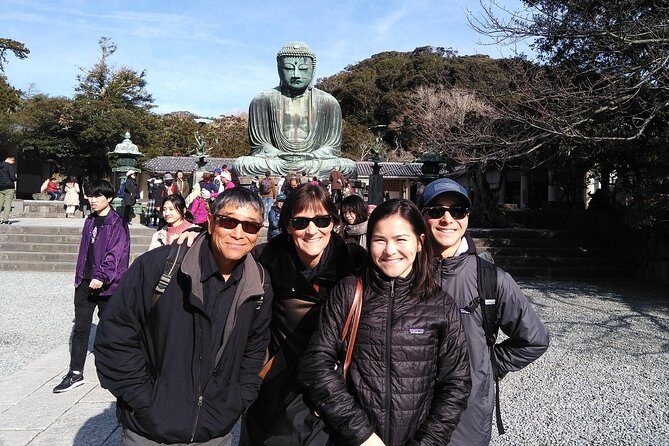
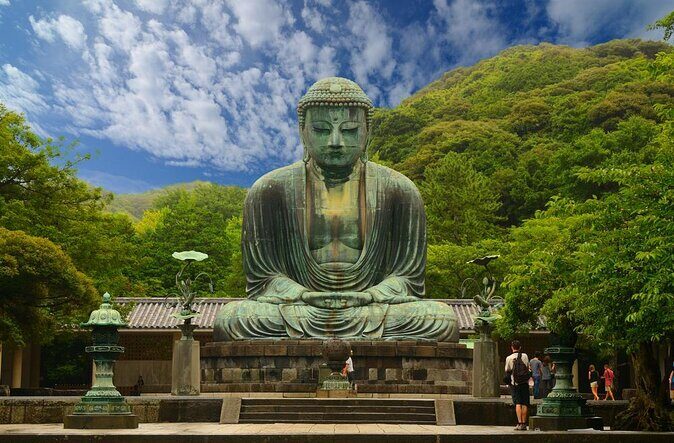
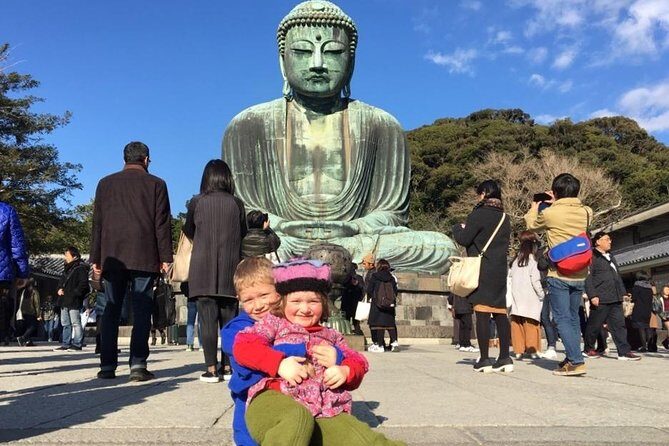
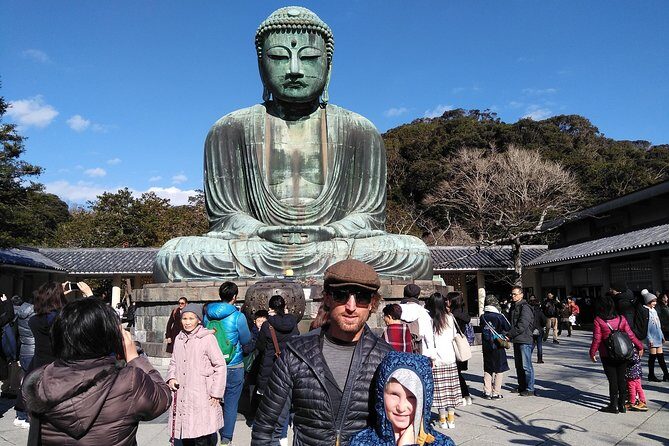
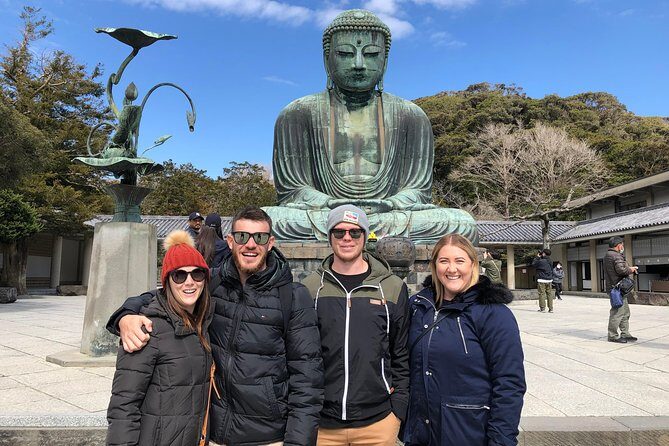
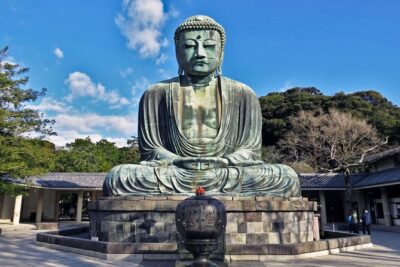
Next comes Kotoku-in Temple and the Great Buddha of Kamakura (Daibutsu). The statue is a bronze Amida Buddha, about 11.4 meters tall, located on Kotoku-in’s grounds.
Even if you’ve seen Buddha statues before, Kamakura’s Great Buddha hits differently because it’s tied to the coastal hillside setting and the temple complex around it. The tour lists this stop at about 5 minutes. That short time is actually helpful for timing—don’t use the Great Buddha as a time sink. Instead, enjoy the initial wow, take photos, and then keep moving.
Admission isn’t included for this stop, so budget a little extra if you want to go inside areas where tickets apply.
Hasedera Temple: Mercy, Kannon, and a Tall Wooden Presence
Hasedera (長谷寺) is known for its famed eleven-headed statue of Kannon, the goddess of mercy. The guide’s explanation can matter here because the scale and religious symbolism aren’t always obvious at a glance.
This stop is brief in the schedule (about 5 minutes), but it’s famous for a reason: you’ll be seeing one of Japan’s large wooden sculptural traditions. Admission isn’t included, so treat this as a “pay once, savor it” kind of stop.
Hokoku-ji Bamboo Grove: A Quick Walk Through Texture
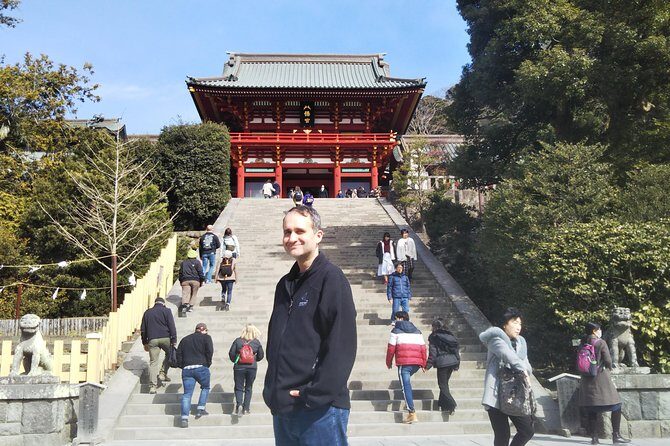
Hokoku-ji Temple is best known for the bamboo grove behind the main hall—listed as over 2000 bamboo stalks. If you want one stop that feels like a mood shift, this is it.
The visit time is about 30 minutes, and admission isn’t included. That longer time compared to some other stops is a hint: this isn’t just a look-and-go photo spot. Let yourself slow down through the narrow pathways and the dim green rhythm of bamboo.
Kamakura Hiking Trails: The Midday “Connective Tissue”
Between the big landmarks, you’ll spend time on Kamakura hiking trails—listed at about 1 hour with free admission. This segment is part of what makes the tour more than a temple checklist.
I like these trail portions because they teach your eyes to read the town: where hills pinch in, where paths open toward temples, and how the sites relate to each other in real distance. If you only do “station-to-temple” sightseeing, you miss that.
Zen Temple Power Moves You Can Build Around
After the Daibutsu core, you’ll choose from a list of Zen temples. Many stops are short (often 5 minutes) because the key goal is to give you a variety of atmospheres without turning the day into an all-day crawl.
Here’s what each temple brings, and where you might spend more or less time depending on your mood.
Engaku-ji (円覚寺)
Engaku-ji is one of Kamakura’s leading Zen temples and listed as the number two of the five great Zen temples. It’s described as important in Eastern Japan and founded in 1282 by regent Hojo Tokimune.
Time is about 30 minutes. Admission isn’t included. If you want one Zen stop where you can actually sit with the place and let the details land, this one is a good bet.
Kencho-ji (建長寺)
Kencho-ji is number one of Kamakura’s five great Zen temples and is noted as the oldest Zen temple in Kamakura, founded in 1253 during the Kencho Era era by Hojo Tokiyori.
This stop is shorter in the schedule (about 5 minutes). If you want quick comparisons between the “great five,” this is useful. If you care a lot about Zen temple design, you may want to ask your guide to explain what to look for so a short visit still feels meaningful.
The “branch temple” feeling: Jomyo-ji, Zuisen-ji, Jufukuji, and more
The tour also lists several branch temples in the mix, including:
- Jomyo-ji (浄妙寺), founded by the Ashikaga family (listed as number five among the great five).
- Zuisen-ji (瑞泉寺), described as sitting in a narrow valley surrounded by wooded hills.
- Jufukuji Temple (寿福寺), number three among the five great Zen temples, tied to Minamoto Yoritomo’s wife Ma.
- Jochiji (浄智寺), number four among the five great Zen temples.
- Tokeiji (東慶寺), a small Engakuji branch temple.
- Zuisen-ji, again, stands out for setting and privacy based on the description.
- Kencho-ji school branch noted for Jufukuji.
Most of these are short stops (often 5 minutes) and admission isn’t included. The value here is variety: you see how Zen spread through different lineages and locations, and you notice differences in mood—valley calm versus hillside presence.
Zeniarai Benten and Meigetsuin: Tiny Detours With Personality
Two stops add playful energy to a temple-heavy day.
Zeniarai Benten Shrine
At Zeniarai Benten Shrine, the idea is “coin washing.” The name means exactly that, and the tradition says money washed in the spring will bring luck (the description notes a promise of doubling, as the shrine’s belief goes).
Time is about 30 minutes, and admission is free. This is one of those moments where you get local custom, not just architecture.
Meigetsuin (Hydrangea Temple)
Meigetsuin is also called Hydrangea Temple because hydrangeas bloom abundantly on the grounds (timing will depend on the season). It’s a Rinzai Zen sect temple founded in 1160.
The tour schedule lists about 5 minutes, and admission isn’t included. If you’re visiting in bloom season, this can be a highlight; if not, the guide’s interpretation can still help you understand why people come here.
Nichiren-Sect Stops: Ankokuronji and the “Other Side” of Buddhism
If your interests stretch beyond Zen, you may also include:
- Ankokuronji (安国論寺), a Nichiren sect temple along the southeast hills, connected to Nichiren’s presence around 1253.
- Myohonji (妙本寺), another Nichiren sect temple on the southeast hills, founded around 1260 by Hiki Yoshimoto.
These are usually short on the schedule (often 5 minutes), and admission isn’t included. For me, these stops add balance: Kamakura isn’t only Zen. It’s a religious map with multiple schools.
Eishoji: A Nunnery in the Heart of Old Kamakura
Eishoji (英勝寺) is noted as the only surviving nunnery in Kamakura, near Tsurugaoka Hachimangu. It’s described as founded in the early Edo period, linked to a woman connected to the Tokugawa family, and known for an endearing nickname in its description.
It’s listed at about 10 minutes with admission not included. This is one of those places where a short visit can be surprisingly memorable because it adds a human story to the stone.
Enoshima Island: Sea Air and a Possible Mt. Fuji View
The optional coastal turn is Enoshima Island, connected to the mainland by a bridge and reached by a short train ride west of Kamakura. The island is touristy in the best way—shrines plus viewpoints—and the tour lists about 5 minutes for the stop.
Admission is listed as free. If the weather cooperates, you might catch a view of Mt. Fuji from Enoshima. A prior guide response mentioned being able to see Mt. Fuji from Enoshima when skies were clear, especially during a photo-focused request. You still shouldn’t count on it, but on a bright day it’s a nice bonus.
Price and Value: Why This Costs $153.50 and When It’s Worth It
At $153.50 per person, this tour isn’t a bargain-bin deal. The value comes from a mix of things:
- A government-licensed guide means you’re paying for interpretation, not just someone walking beside you.
- Customization lets you spend your time on what you actually care about, instead of being forced into a fixed route.
- The day combines walking trails plus multiple temple areas, which is harder to coordinate well on your own if you want context at each stop.
If you’re a solo walker who only wants photos and doesn’t care about explanations, you can probably do Kamakura independently. But if you want the names, the connections, and the meaning behind the shrines and Zen halls, paying for a guide can feel like the smartest use of your time.
Also, you may see some free sites in the mix (Tsurugaoka Hachimangu and Zeniarai Benten), which helps offset the paid ones.
Who This Tour Fits Best (and Who Might Feel Tight)
This works especially well if you:
- Want a guided temple-and-trail day rather than a bus tour.
- Like history but also want it tied to what you see in front of you.
- Prefer choosing your own must-see stops from a menu.
You might feel it’s less ideal if you:
- Are only in the area for a super short window.
- Don’t enjoy walking and want lots of long breaks.
- Want a fully “ride-based” sightseeing plan.
Should You Book This Kamakura One-Day Hike Tour?
Book it if you want a guided Kamakura day that pairs the Daibutsu Trail with temple stops you choose based on your interests. The price makes sense when you care about interpretation and you want your day to feel connected instead of scattered.
Skip or reconsider if your schedule is too tight. The tour is about 6 hours of walking, and Kamakura itself deserves more than a rushed half-day. If you can give it a calm start and an unhurried finish, you’ll get a lot more out of each stop—Great Buddha photos, bamboo pathways, Zen temple comparisons, and a possible sea-view payoff at Enoshima.
FAQ
FAQ
How long is the Kamakura one-day hike tour?
The tour runs about 6 hours.
Is pickup included?
Pickup is offered, and you’ll meet your guide at your hotel or the closest station. The tour is described as a walking tour.
What does the tour include?
It includes a licensed local English-speaking guide and a customizable walking tour of your choice of 3–4 sites. It also includes meeting up with your guide within a designated area of Kamakura/Yokohama. You’ll need transportation, entrance fees (unless listed as free), lunch, and personal expenses on your own.
Are entrance fees included?
Entrance fees are not included overall, though some specific stops are listed as having free admission (for example, Tsurugaoka Hachimangu and Zeniarai Benten). Other temple admissions are listed as not included.
Can I customize the itinerary?
Yes. You can personalize the tour by selecting must-see spots from a provided list, and you can also request your preferred start time and interests.
Is there free cancellation?
Yes. You can cancel up to 24 hours in advance for a full refund.
More Tour Reviews in Yokohama






Next Door in Yokohama
More Days by the Great Buddha
Kamakura Day Trips, compared.
 ★ 4.5Kamakura & Enoshima Day Trip including Temple TicketsFrom $581,375 reviews
 ★ 4.5From Tokyo: Kamakura & Enoshima 1-Day Bus TourFrom $66189 reviews
 ★ 5.0Kamakura Historical Walking Tour with the Great BuddhaFrom $98129 reviews
Kamakura Private Tour: Temples, Nature, and the Great BuddhaFrom $98121 reviews
Kamakura Walking Tour – The City of ShogunFrom $35100 reviews
★ 5.0Kamakura Historical Walking Tour with the Great BuddhaFrom $98129 reviews
Kamakura Private Tour: Temples, Nature, and the Great BuddhaFrom $98121 reviews
Kamakura Walking Tour – The City of ShogunFrom $35100 reviews
 ★ 5.0Kamakura 8 hr Private Walking Tour with Licensed Guide from TokyoFrom $20180 reviews
 ★ 4.1Kamakura & Enoshima Day Tour with Pickup & Train RideFrom $1361 reviews
 ★ 4.8Kamakura: Private Guided Walking Tour with Local GuideFrom $10660 reviews
Browse the lists this tour appears in