
Reviewed · TOKYO
Kimono Art Workshop in Tokyo
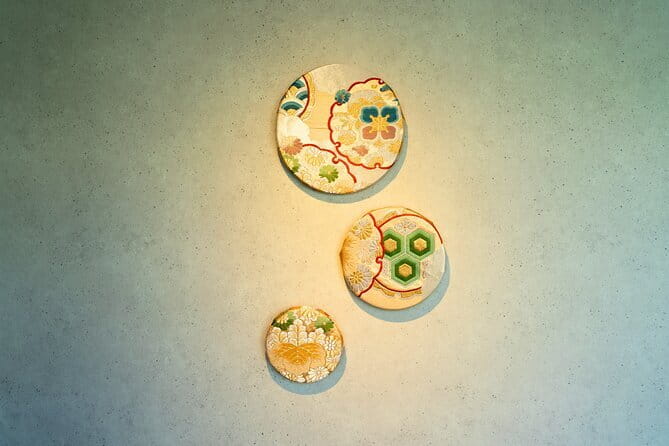
This workshop turns fabric into wall art. You’ll learn kimono culture from instructor Yuki (and Kasumi), then repurpose vintage textiles into a custom art panel. I like the mix of facts and doing, and I also love the sustainability angle—your design comes from fabrics with a past. The only real catch is logistics: there’s no hotel pickup, so you need to get yourself to the meeting point.
The pace is about 1 hour 30 minutes, and the class is built so beginners can keep up. You pick from kimono-pattern options tied to regions like Okinawa, Amami, Kanazawa, and Kyoto, then use simple techniques to finish something you’ll actually want to hang at home.
If you want to slow down for a calm, creative break in Tokyo, this fits. It’s also a small-group format (max 6), and you’ll leave with a take-home keepsake made from real vintage kimono fabric.
In This Review
- Key things to know before you go
- Kimono art in Tokyo: what you make and why it feels meaningful
- The fabric menu: Bingata, Oshima Tsumugi, Kaga Yuzen, and Kyo Yuzen
- Meeting in Hatchobori: simple logistics, real-world access
- Your instructor team and how the class actually flows
- The lecture: learning what’s behind the patterns (without turning it into a school day)
- Hands-on crafting: turning vintage textile into your own kimono art panel
- The value equation: is $58.79 worth it?
- How to plan your day around 1 hour 30 minutes
- Take-home souvenir tips: what to do with your panel in real life
- Who should book this kimono art workshop in Tokyo
- Should you book? My honest take
- FAQ
- How long is the kimono art workshop?
- Where is the meeting point?
- What’s included in the price?
- Is hotel pickup and drop-off included?
- Is there a limit on group size?
- Can beginners participate?
- Are service animals allowed?
- Do I get a mobile ticket?
- What is the cancellation policy?
Key things to know before you go
- Small group attention: maximum of 6 people, with clear step-by-step help
- Eco-friendly by design: you repurpose authentic vintage kimono textiles
- Real regional kimono styles: Bingata, Oshima Tsumugi, Kaga Yuzen, and Kyo Yuzen
- Take-home panel: you make a finished art piece, not just a craft sample
- No hotel pickup: you meet at Hatchobori and head back there afterward
Before you commit, see how this one stacks up against a few Tokyo favourites:
- Mt Fuji and Hakone 1-Day Bus Tour Return by Bullet Train★ 5.0 · 26,383 reviews
- 1-Day Tokyo Bus Tour★ 5.0 · 14,250 reviews
- Tokyo: teamLab Planets TOKYO Digital Art Museum Entry Ticket★ 4.6 · 9,779 reviews
Kimono art in Tokyo: what you make and why it feels meaningful
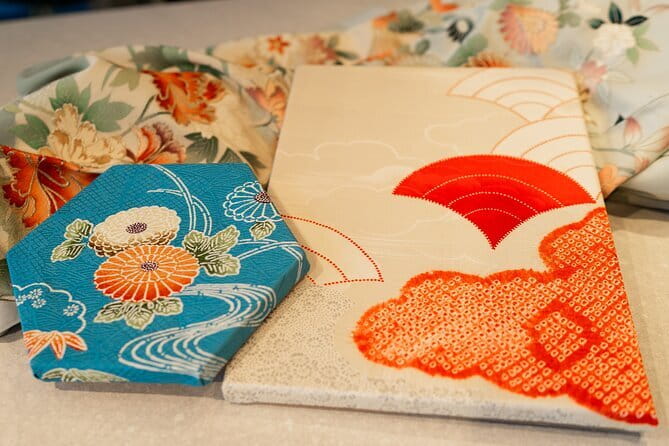
A kimono art workshop sounds like a souvenir factory until you realize what this one is doing. Instead of buying a mass-made trinket, you create a panel using repurposed vintage kimono fabrics. That changes the whole feeling. The cloth already has patterns, texture, and craft history—your job is to choose it thoughtfully and transform it into your own design.
The finished piece is meant to be practical, too. People talk about using it as wall decor or as a gift, which makes sense once you see the result: it’s colorful, designed, and more personal than a generic keychain. You’re not just collecting an image of Japan. You’re making something that looks like Japan in cloth form.
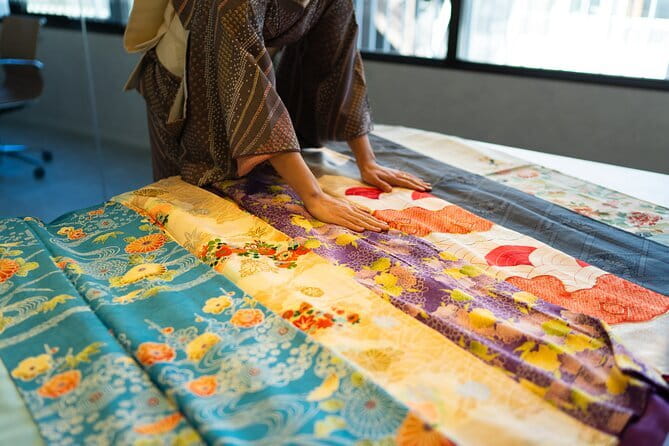
This is also a good fit if you like structure. The workshop includes instruction by a kimono expert and all necessary materials. That means you’re not hunting for tools or trying to figure out techniques from scratch while jet-lagged. The class is built so you can focus on your choices and let the guidance do the heavy lifting.
The fabric menu: Bingata, Oshima Tsumugi, Kaga Yuzen, and Kyo Yuzen
One of the most interesting parts is the selection. You don’t just pick any decorative cloth. You choose from a set of vintage kimono patterns tied to specific regions of Japan. The options listed include:
- Bingata from Okinawa
- Oshima Tsumugi from Amami
- Kaga Yuzen from Kanazawa
- Kyo Yuzen from Kyoto
Here’s why that matters for you. Regional kimono styles aren’t random decoration. They often reflect local materials, dyes, and design traditions. Even if you don’t go deep into textile science, you’ll start noticing how the style “signals” a place.
And because this workshop is about making an art panel, your fabric choice becomes a creative decision with cultural weight. The instructor’s talk helps you see pattern meanings and regional differences, so your final panel feels intentional rather than accidental. It also makes your souvenir more interesting when you explain it later, because you can connect your panel to a specific region and style.
Meeting in Hatchobori: simple logistics, real-world access
You’ll meet at Hatchobori (Hatchōbori Third3-chōme-14-4, Chuo City, Tokyo). The activity ends back at the meeting point, so plan your day around that fixed location. The big practical note is that there’s no hotel pickup and drop-off.
Good news: it’s listed as near public transportation. That matters in Tokyo because your time is valuable. If you keep your plan simple—get yourself to Hatchobori, do the workshop, then continue with your day elsewhere—you’ll avoid the stress of juggling transfers right before or after class.
Also, the workshop uses a mobile ticket. So once you book, have your phone ready with the ticket info. Confirmation happens at booking time, which helps you feel secure about the reservation.
Your instructor team and how the class actually flows
The workshop is guided by a kimono expert. In the reviews, Yuki gets called out again and again for being friendly, helpful, and able to teach in English. Another instructor, Kasumi, is mentioned as part of the supportive team.
You can expect a clear rhythm:
1) A welcome and intro to kimono culture and patterns
2) A lecture on the meaning and regional differences in kimono styles
3) Choosing your fabric and pattern
4) Hands-on work to repurpose the vintage textile into a panel
5) Final touches and taking your finished keepsake home
The hands-on part is what makes this worth your time. Several people mention the process felt intuitive, and that the instructions were clear. That usually means you won’t be stuck staring at your workspace wondering what to do next.
There’s also a comfort factor you might not think about. One review specifically notes comfortable seating. In a workshop that involves careful making, that’s the kind of detail that quietly improves the whole experience.





The lecture: learning what’s behind the patterns (without turning it into a school day)
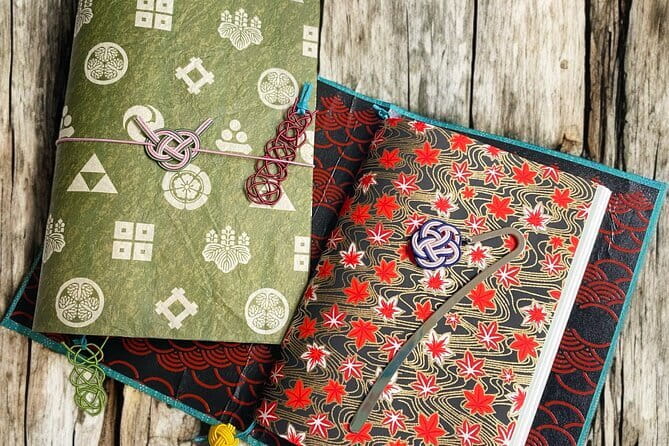
This isn’t a lecture-only experience. It’s a teaching moment that supports your crafting.
You’ll learn about the cultural significance of kimono and how styles differ by region. That’s important because kimono can look “beautiful” to the eye while still being confusing in context. The workshop helps you connect the design to place, and place to meaning.
From the descriptions, you’ll also hear about signature patterns and variations across Japan. In other words, the talk isn’t just general. It supports the fabric choices you’ll make. If you choose something inspired by Kyoto’s style, you’ll understand why that style shows up the way it does. If you choose Okinawa’s Bingata-inspired fabrics, you’ll get context on why that design language is distinct.
That kind of explanation makes your final art panel feel like a story. You’re not only selecting color and pattern. You’re selecting a slice of regional identity.
Hands-on crafting: turning vintage textile into your own kimono art panel
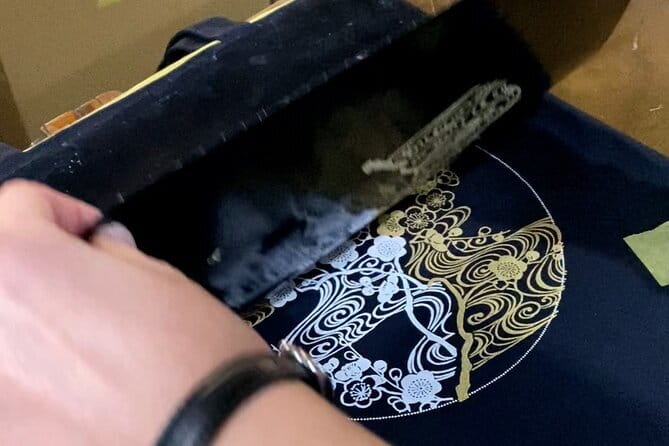
This is where the workshop earns its keep. You select your favorite fabric and pattern from the available vintage options, then your instructor guides you through repurposing them into a kimono art panel.
A few practical things to expect in this kind of workshop (based on what’s described):
- You’ll be working with materials already prepared for the process, since all materials necessary are included.
- The techniques are designed to be beginner-friendly, using simple steps rather than advanced textile engineering.
- You’ll focus on layout, fabric selection, and finishing your panel in a way that looks cohesive as an art piece.
The big theme across the experience is sustainable repurposing. You’re working with textiles that are no longer serving their original purpose, which turns the workshop into more than a craft lesson. It becomes a lesson in respectful reuse.
That’s also why it feels like a true keepsake. In a way, the panel holds two memories at once: the Japan you experienced in the studio, and the textile’s earlier life before it became art.
The value equation: is $58.79 worth it?
At $58.79 per person, this isn’t a budget workshop, but it also isn’t priced like a luxury tour. What you’re paying for is a full, guided experience with a specialist.
Here’s the value breakdown in plain terms:
- You get instruction from a kimono expert
- You get all materials needed to create your panel
- You get a take-home art piece designed to be displayed or gifted
For many people, the most compelling value isn’t just the art. It’s the combination of culture plus making. A ticket price is one thing. But when you leave with something you made yourself—and it’s tied to real regional kimono styles—you’re getting more than a souvenir-shaped object.
The small group size (max 6) also matters. When it’s not crowded, you’re more likely to get the help you need during the hands-on steps. That’s part of why people describe the experience as relaxing rather than rushed.
How to plan your day around 1 hour 30 minutes
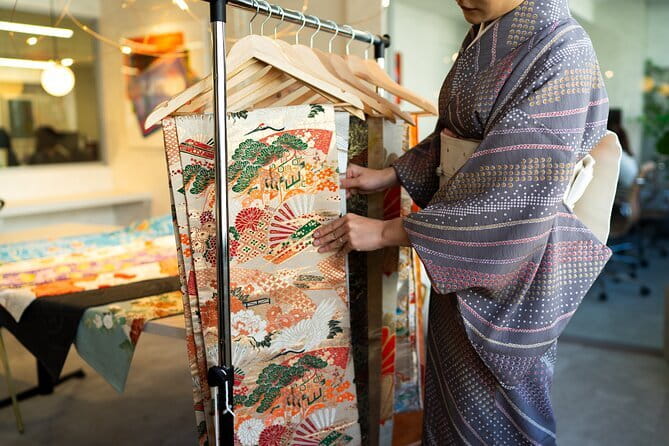
The duration is about 1 hour 30 minutes, which is a sweet spot. It’s long enough to learn and make something, but short enough that you can still do other Tokyo plans afterward.
Because there’s no pickup, plan for travel time to Hatchobori. Keep the workshop as a main event rather than a “between trains” stop. If you’re trying to cram this right after a long museum day, you might feel rushed walking in. The class seems designed to work best when you’re not sprinting.
If you’re building a Tokyo day, consider pairing the workshop with nearby sightseeing and eating afterward. Hatchobori is a convenient base for moving around the city, and your workshop ends back where it starts.
Take-home souvenir tips: what to do with your panel in real life
You’ll leave with your finished kimono art panel, and you’ll probably want to protect it on the way home. Since the workshop gives you materials and finishes the panel as an art piece, you’ll want to treat it like a fragile souvenir.
A smart approach is to plan your return route so you’re not changing trains five times with a large flat item. Keep it in your bag or carry it carefully, and avoid crushing it under heavy items.
Also, think about gift potential. Reviews specifically mention the panel as a nice decoration for a wall or a thoughtful present for family or friends. If you’re the type who likes giving something personal rather than generic, this is one of the more meaningful options.
Who should book this kimono art workshop in Tokyo
Book it if you:
- Want a cultural activity that also produces a real object you’ll keep
- Like hands-on crafts and don’t want a passive experience
- Enjoy eco-friendly ideas, especially repurposing existing textiles
- Want to learn about kimono styles by region, not just general facts
You might skip it if you’re looking to experience wearing a full kimono outfit for photos. This workshop is about creating a textile art panel, and that’s the focus. If your dream is dressing up, you’ll want a different kind of activity.
Should you book? My honest take
If your trip has a spot for something calm, creative, and thoughtfully taught, I’d book this. The biggest strengths are practical: you get expert instruction, you make a panel with real cultural context, and you repurpose vintage kimono fabric instead of buying a disposable souvenir.
The main consideration is simple logistics: no hotel pickup. If you’re comfortable navigating to Hatchobori and keeping the day flexible around the 1 hour 30 minutes time window, you’ll have a good experience.
If you want a Japan memory that looks like Japan when you bring it home, this workshop delivers.
FAQ
How long is the kimono art workshop?
It lasts about 1 hour 30 minutes.
Where is the meeting point?
The workshop meets at Hatchōbori Third3-chōme-14-4, Chuo City, Tokyo 104-0032, Japan.
What’s included in the price?
The price includes the workshop participation fee, instruction by a kimono expert, and all materials necessary to create your art panel.
Is hotel pickup and drop-off included?
No. Hotel pickup and drop-off are not included.
Is there a limit on group size?
Yes. The workshop has a maximum of 6 travelers.
Can beginners participate?
Most travelers can participate, and the workshop includes guidance from a professional kimono expert, which makes it suitable for beginners.
Are service animals allowed?
Yes, service animals are allowed.
Do I get a mobile ticket?
Yes. The workshop provides a mobile ticket.
What is the cancellation policy?
You can cancel for free up to 24 hours in advance for a full refund. If you cancel less than 24 hours before the start time, you won’t be refunded.
More Tour Reviews in Tokyo



Fresh reviews from around Tokyo






Tokyo, compared.
 ★ 5.0Mt Fuji and Hakone 1-Day Bus Tour Return by Bullet TrainFrom $16326,383 reviews
 ★ 5.01-Day Tokyo Bus TourFrom $12914,250 reviews
 ★ 4.6teamLab Planets TOKYO Digital Art Museum Entry TicketFrom $259,779 reviews
 ★ 4.0Mt Fuji & Hakone Cruise, Drum Show Bullet Train 1 Day from TokyoFrom $1497,413 reviews
 ★ 5.0Shinjuku Food Tour (13 Dishes at 4 Local Eateries)From $866,603 reviews
 ★ 4.4Tokyo Mt Fuji 5th St & Hakone Cruise Bus Tour w/Bullet TrainFrom $1545,024 reviews
 ★ 5.0Flagship 2-Hours Official Street Go-Kart Tour – Tokyo Bay ShopFrom $644,974 reviews
 ★ 4.5From Tokyo: Mount Fuji Full-Day Sightseeing TripFrom $684,970 reviews