
Reviewed · TOKYO
Japan’s Best Mount Fuji Tour
Mount Fuji can hide, but the plan doesn’t. I love how this day strings together panoramic viewpoint stops and the Healing Village at Saiko for a real change of scenery. You’ll also get culture talk from a guide who’s known for clear, polite English, including one named Sam. The main drawback to plan around is visibility and crowds, since Fuji can be totally invisible and the pagoda viewpoint can get busy.
You start and finish in Shinjuku, and the schedule is built for a long, satisfying day rather than a quick photo sprint. The group size is limited per booking (up to 8 people), which usually makes it easier to find each other at stops. Still, it’s a join-in format, so you might share the day with others from different bookings.
For $77, you’re paying for more than views: transport, tolls/parking, and key entrance fees are included. Lunch isn’t included, and you’ll need cash for several places, so bring a little “Japan cash buffer.”
In This Review
- Key things I’d pay attention to
- Shinjuku Meeting Point: Getting to Kogakuin University on Time
- The 7 to 8 Hour Schedule: How the Timing Really Works
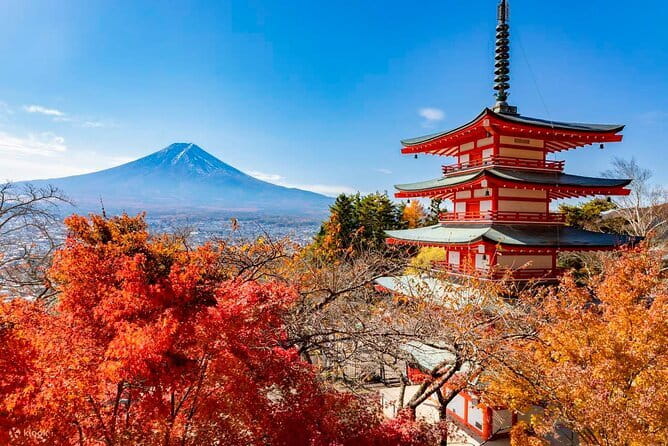
- Arakurayama Sengen Park: The Pagoda View and Mt. Fuji’s Mood
- Fujiyoshida Honcho Street: Where Lunch Takes a Real 90 Minutes
- The Mount Fuji Stop: Why This Short Pause Can Matter
- Oishi Park (April to June): Lake Kawaguchi Views When the Timing Hits
- Saiko Iyashi no Sato Nenba (Healing Village): The Calm Part of the Day
- Guide and Group Size: Why English Clarity Helps at Every Stop
- Practical Tips: Cash, Shoes, and Bus Rules That Can Catch You
- Price and Value for $77 from Tokyo
- Should You Book This Mount Fuji Day Tour?
- FAQ
- Where does the tour start?
- What time does the tour depart?
- How long is the tour?
- Is lunch included?
- Are entrance fees included?
- Is Oishi Park part of every departure?
- Do I need cash?
- How many people are in the group?
- Is hotel pickup or drop-off included?
- Are there rules about food on the bus?
- Should You Book This Mount Fuji Day Tour?
Key things I’d pay attention to
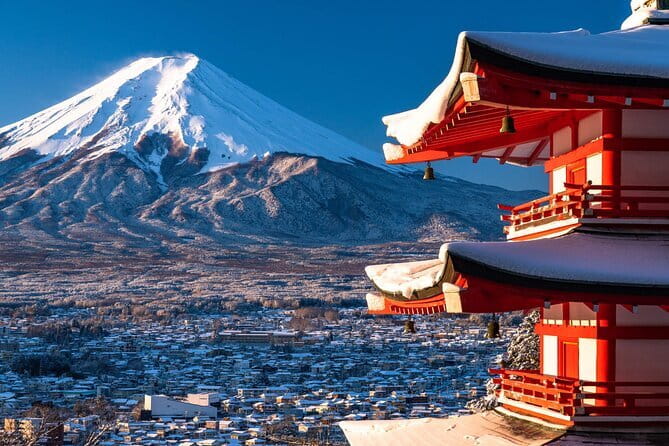
- Arakurayama Sengen Park views with a good shot at the pagoda area (weather and crowds decide)
- Fujiyoshida Honcho Street time for wandering and a proper lunch pace
- Saiko Iyashi no Sato Nenba (Healing Village) as the calm, nostalgic counterweight
- Oishi Park is seasonal (an added stop for April to June departures)
- Small-group feel, join-in reality so meeting point accuracy matters
- Bus rules and cash needs that affect how smooth your day feels
Before you commit, see how this one stacks up against a few Tokyo favourites:
- Mt Fuji and Hakone 1-Day Bus Tour Return by Bullet Train★ 5.0 · 26,383 reviews
- 1-Day Tokyo Bus Tour★ 5.0 · 14,250 reviews
- Tokyo: teamLab Planets TOKYO Digital Art Museum Entry Ticket★ 4.6 · 9,779 reviews
Shinjuku Meeting Point: Getting to Kogakuin University on Time
Your day starts at Kogakuin University Shinjuku Campus (West Exit, Central West Exit underground). The directions are very specific: from the West Exit, head toward the Chuo-dori Underpass and the Tokyo Metropolitan Government Building, then continue on foot outside for about 1–2 minutes.
This is exactly the kind of meeting point that can trip people up if you arrive late or walk up from the wrong side of the street. The tour asks you to be there 10 minutes early, and the departure is on time. If you want a stress-free start, treat this like a train connection: show up early, get your bearings, and be ready.
A small detail that helps: you’ll see Keio Plaza Hotel across the street. That landmark makes it much easier to confirm you’re in the right place before you spot the group.
The 7 to 8 Hour Schedule: How the Timing Really Works
The tour runs about 7–8 hours. You meet at 08:20, and the departure is 8:30 am. The return arrival at Shinjuku Station is scheduled for around 6:00 pm, with the tour ending back near the meeting point.
What matters most is how the stop times are balanced:
- Some stops are short viewpoint breaks.
- Others give you real time to wander.
- One stop is a “healing village” style stroll that slows everything down.
Also, the schedule can change due to traffic and road conditions. Some stops might be shortened or canceled if congestion is heavy, and there’s a note that bus driver working-hours rules (in effect from April 1) can affect what’s possible on crowded days. That’s not unusual in Japan—just plan to stay flexible and accept that the day is partly weather-and-road dependent.
Arakurayama Sengen Park: The Pagoda View and Mt. Fuji’s Mood
Arakurayama Sengen Park is the first real scenic target after Shinjuku. You’ll be picked up from the campus area around 8:30 am, then you’ll spend about 1 hour at the park.
This stop is all about the big panoramic outlook over the city, with Mount Fuji as the star if visibility cooperates. In other words, this is your first chance to catch Fuji early in the day when skies often have a better shot at clearing.
The park also connects with the famous pagoda viewpoint area people often travel for. If it’s crowded (and it can be), it can be harder to see every angle. The trick here is simple: take your photos early, then slow down and enjoy the view from different spots rather than fixating on one “perfect” line.
If Fuji is hidden, don’t treat this as a failure. You’re still getting the overlook and city geometry that make the area worth the trip.
Fujiyoshida Honcho Street: Where Lunch Takes a Real 90 Minutes
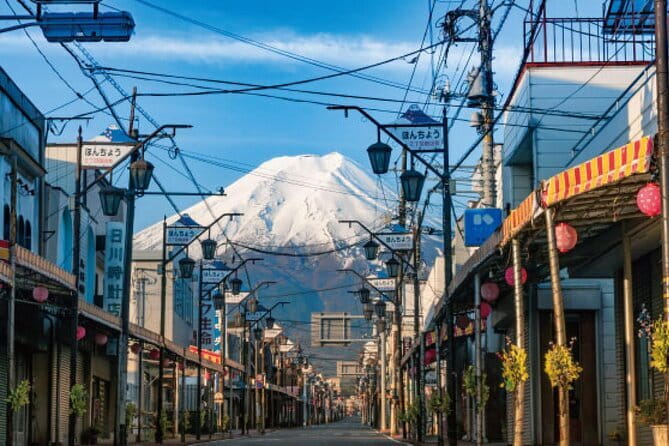
After the mountain-area viewpoints, you move to Fujiyoshida, with time on Honcho Street. You get about 90 minutes for lunch and strolling.
This is a great section of the day because it shifts from lookout mode to street life. You’ll have time to wander at a comfortable pace, browse, and pick a lunch option without the usual “rush to the next stop” pressure.
Two practical notes:
- Meals aren’t included, so you’ll be paying your own lunch costs.
- If you’re sensitive to timing, note that the rest of the day is built around these blocks, so don’t disappear into the shops so long that you miss the return call.
If you’re the type who likes to snack while walking, keep in mind there are bus rules later: on the bus, eating and drinking (including snacks) and loud talking are prohibited.





The Mount Fuji Stop: Why This Short Pause Can Matter
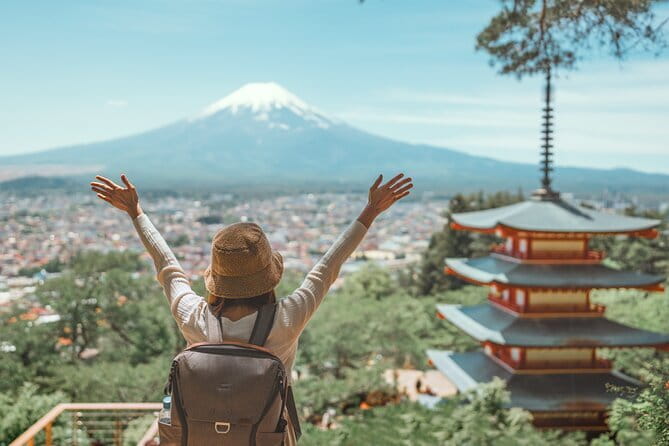
The itinerary includes a Mount Fuji stop (about 30 minutes) with admission listed as free. It’s shorter than the park and the village, so you should treat it as a “watch and adjust” moment.
This is where you’ll feel the reality of a Mount Fuji day: visibility can change fast. When you get a break in the clouds, 30 minutes is enough to make your best photos and enjoy the atmosphere without turning it into an all-day wait.
If Fuji is still hidden, you haven’t wasted the day—you’ve shifted your focus to the seasonal charm of the area and the overall day’s design. The important thing is to keep your energy steady: take the weather as it comes and stay ready to grab the moment if it appears.
Oishi Park (April to June): Lake Kawaguchi Views When the Timing Hits
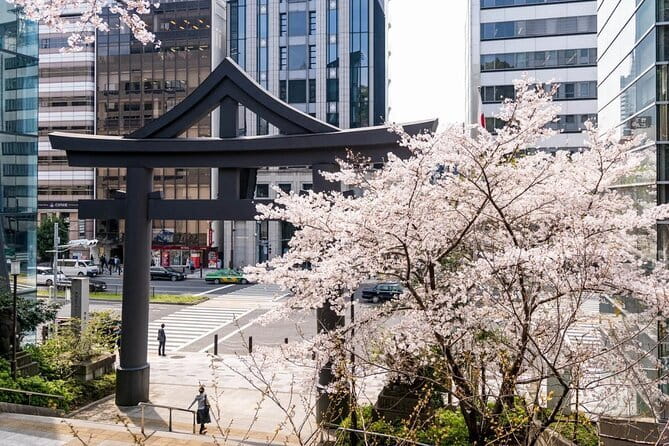
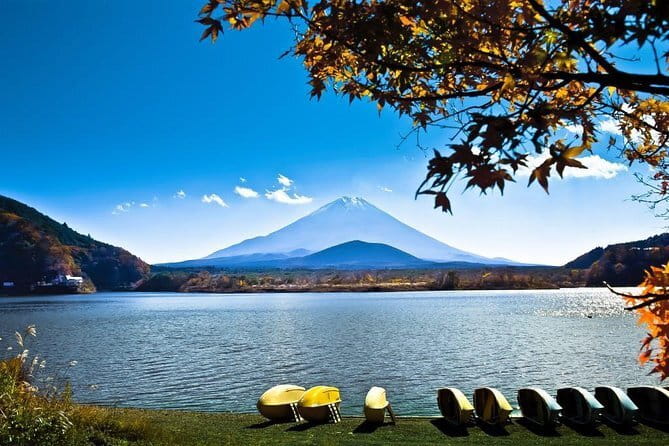
Oishi Park is a stopover that’s listed as available only for departures from April to June. When it’s included, you’ll get about 1 hour, and it’s positioned as a viewpoint by Lake Kawaguchi, overlooking the lake with Mount Fuji and seasonal flowers.
This stop is essentially a bonus “big view” layer. If you’re traveling in that April-to-June window, it can be the prettiest kind of add-on: lake reflections, seasonal bloom timing (when it’s there), and an alternate angle on Fuji rather than the same viewpoint style over and over.
If you’re traveling outside April to June, don’t expect it to appear. The tour’s structure is designed around what’s likely to be possible in-season, not a guarantee of every scenic angle every day.
Saiko Iyashi no Sato Nenba (Healing Village): The Calm Part of the Day
After the viewpoint stops, you’ll visit Saiko Iyashi no Sato Nenba, the Healing Village, for about 1 hour. This is where the tone changes.
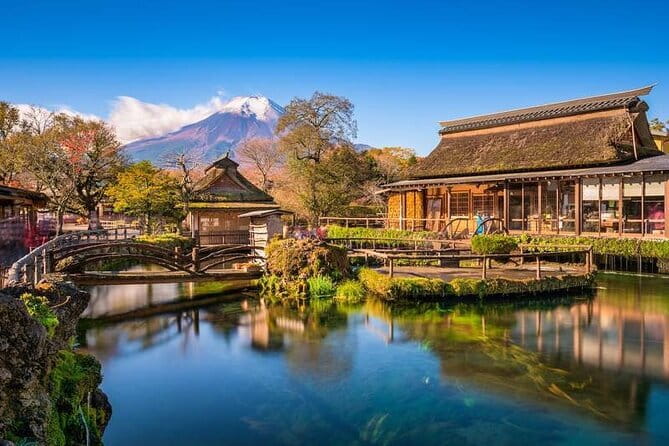
Instead of looking outward, you look inward at nostalgic, old-style Japan scenery. It’s the kind of stop that works even when Fuji is partially hidden, because the village experience doesn’t rely only on a single distant mountain silhouette.
An entrance fee is included for this stop, so it feels “paid for” in the best way: you’re not standing in line thinking about whether the ticket is worth it. You can simply walk, take your time, and enjoy the atmosphere at a slower pace.
This is also a good place to regroup if your legs are tired. There’s mention of some walking/hiking across the day and a moderate physical fitness level is suggested, so the village stop is a nice pacing reset.
Guide and Group Size: Why English Clarity Helps at Every Stop
This tour is capped at a maximum of 8 people per individual booking, and it’s join-in. That matters because you’ll likely have other groups in the same bus, but your booking has a small cap, which helps with moving as a unit at stops.
The guide experience is one of the big strengths. A guide named Sam is specifically associated with in-depth knowledge of Japanese culture and very clear English conversation. That kind of guiding makes the day easier because you’re not only getting where to go—you’re also getting context for what you’re seeing and why it’s placed there.
Another practical win: the guide is known for being polite and helpful, including coordinating around the departure point. In a day where timing matters, that kind of calm leadership reduces the chance of you feeling lost.
Still, there’s one thing you control that affects how smooth the tour feels: show up on time at the right meeting spot, and follow the group movement instructions. A day like this only works if everyone is lined up when the bus leaves.
Practical Tips: Cash, Shoes, and Bus Rules That Can Catch You
Mount Fuji-area sightseeing can be surprisingly cash-heavy. The tour notes that many spots around Mount Fuji only accept cash, so you’ll want enough yen ready. This matters most for snacks, small shopping, and any paid items that aren’t explicitly covered.
Wear comfortable walking shoes. Even though this is not a rugged trek day, the park areas and viewpoints involve walking and some uneven ground, and you don’t want uncomfortable shoes turning a scenic day into a foot-pain day.
On the bus, there are specific rules: eating and drinking (including snacks) and loud talking are prohibited. If you’re used to grabbing a snack mid-ride, plan to wait until your scheduled lunch or walking time.
Finally, accept that the day can shift. The itinerary says stop durations can shrink due to traffic, and the order and car numbers might change. If you’re the type who panics when plans change, bring a little patience. This is Japan, and road rules plus congestion can reshape the timeline.
Price and Value for $77 from Tokyo
At $77 per person, you’re paying for a full day trip from Tokyo with a bundle of “hard costs” handled for you: transportation, parking fees, toll fees, and consumption tax, plus entrance fee coverage for key sights like Arakurayama Sengen Park and Saiko Iyashi no Sato Nenba.
What’s not included is the obvious part: meals (including lunch) and personal expenses.
So how do you decide if it’s good value? I think it’s strong if:
- you want an efficient day that hits multiple distinct experiences (viewpoint parks, street time, a nostalgic village)
- you’d rather pay for organized transport than figure out connections and transfers on your own
- you’re okay with Mount Fuji visibility being weather-dependent
Where it may feel less “value” is if your priority is only one thing—like getting a guaranteed, unobstructed Fuji view. This tour can’t promise that. What it can do is maximize your chances by hitting several scenic points and keeping the day structured.
Should You Book This Mount Fuji Day Tour?
Book it if you want a smooth, single-day Mount Fuji outing built around variety: viewpoints, Fujiyoshida street time, and the more peaceful Healing Village. The small-group cap per booking and the guide-style focus on culture explanations (including Sam) are practical reasons this tends to land well.
Skip it (or at least adjust expectations) if you need Fuji photos above all else. Visibility can be poor, crowds can interfere with the pagoda viewpoint, and timing can shift with congestion. Also, because the tour is non-refundable and can’t be changed, make sure your travel dates are firm before you lock it in.
If you do book, your best move is simple: arrive early at Kogakuin University, bring enough yen, wear good shoes, and treat the day like a flexible scenic loop rather than a single guaranteed mountain moment. That mindset turns an uncertain Fuji day into a solid Japan memory.
FAQ
Where does the tour start?
It starts at Kogakuin University Shinjuku Campus, 1-chōme-24-2 Nishishinjuku, Shinjuku City, Tokyo.
What time does the tour depart?
The meeting time is 08:20, and the tour departure is at 8:30 am.
How long is the tour?
It runs about 7 to 8 hours.
Is lunch included?
No. Lunch is not included, and you’ll have about 90 minutes in Fujiyoshida for lunch.
Are entrance fees included?
Yes for select stops. Arakurayama Sengen Park includes admission, and Saiko Iyashi no Sato Nenba includes the entrance fee. Oishi Park is also listed as included when it is part of the departure.
Is Oishi Park part of every departure?
No. Oishi Park is a stopover only for departures from April to June.
Do I need cash?
Yes. Many spots around Mount Fuji only accept cash, so you should carry enough yen.
How many people are in the group?
The tour is capped at a maximum of 8 travelers per individual booking, but it’s a join-in tour, so there may be other guests from other bookings.
Is hotel pickup or drop-off included?
No. The tour includes transportation from the meeting point, but hotel pickup and drop-off are not included.
Are there rules about food on the bus?
Yes. Eating and drinking, including snacks, and loud talking are prohibited on the bus.
Should You Book This Mount Fuji Day Tour?
If you want a structured day that mixes big views with a slower, nostalgic village stop, this is a good fit. If your travel style is all about one guaranteed photo angle of Mount Fuji, you’ll be happier tempering expectations, bringing yen for cash-only stops, and trusting the itinerary to give you multiple chances rather than one outcome.
More Tour Reviews in Tokyo



Fresh reviews from around Tokyo






Tokyo, compared.
 ★ 5.0Mt Fuji and Hakone 1-Day Bus Tour Return by Bullet TrainFrom $16326,383 reviews
 ★ 5.01-Day Tokyo Bus TourFrom $12914,250 reviews
 ★ 4.6teamLab Planets TOKYO Digital Art Museum Entry TicketFrom $259,779 reviews
 ★ 4.0Mt Fuji & Hakone Cruise, Drum Show Bullet Train 1 Day from TokyoFrom $1497,413 reviews
 ★ 5.0Shinjuku Food Tour (13 Dishes at 4 Local Eateries)From $866,603 reviews
 ★ 4.4Tokyo Mt Fuji 5th St & Hakone Cruise Bus Tour w/Bullet TrainFrom $1545,024 reviews
 ★ 5.0Flagship 2-Hours Official Street Go-Kart Tour – Tokyo Bay ShopFrom $644,974 reviews
 ★ 4.5From Tokyo: Mount Fuji Full-Day Sightseeing TripFrom $684,970 reviews