
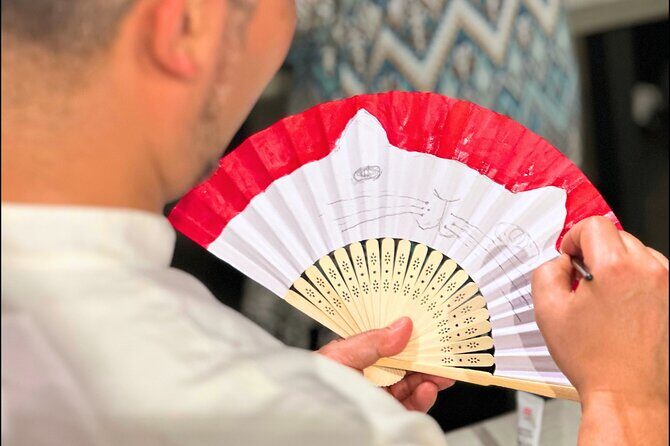
Reviewed · WORKSHOPS
Japanese Fan Painting Workshop ~ in a Tokyo Flower Shop
A fan workshop is a quiet kind of fun. This one takes you away from Tokyo street noise and into a flower-filled shop where you paint a Japanese fan you can actually use. I also like that you’re not just making art in the dark. You get real context on how fans shaped Japanese daily life and culture, plus guidance that keeps beginners from feeling lost.
What’s even better is the atmosphere and the teaching. The setting is tranquil and photo-friendly, and the instructor (Ruby and the team) is the patient type. One possible drawback: if you’ve done a lot of painting already, the pace may feel a little light for the time, since the workshop is only about two hours.
You’ll start by picking your fan shape, size, and colors, then paint it your way. Traditional motifs like cherry blossoms and koi show up as options, but you can also go freestyle—and end with a finished souvenir that doubles as a handy cooling tool when it’s warm.
In This Review
- Key Things I’d Book This For
- Entering The Flower Shop: The Moment It Switches Gears
- Picking Your Fan Canvas: Choosing Shape, Size, and Color
- What You Learn About Fan Painting in Japanese Culture
- The Real Workshop Flow: From First Stroke to Finished Fan
- Step one: get set up and start designing
- Step two: learn techniques that match fan surfaces
- Step three: painting with support, not correction
- Step four: finish up and take photos
- Traditional Motifs vs. Your Own Design: How to Decide
- Small Group Energy: Getting Help Without Being Overwhelmed
- Materials Included: Less Shopping, More Creating
- Price and Value: Is $60 Worth It?
- Where It Fits in Your Tokyo Plan
- Who Should Book This Fan Painting Workshop?
- Should You Book This Fan Painting Workshop?
- FAQ
- What is the price of the Japanese Fan Painting Workshop?
- How long does the workshop take?
- Do I get a mobile ticket?
- How many people are in the group?
- Where does the workshop meet?
- What kind of materials are provided?
- Are service animals allowed?
- Is there free cancellation?
Key Things I’d Book This For
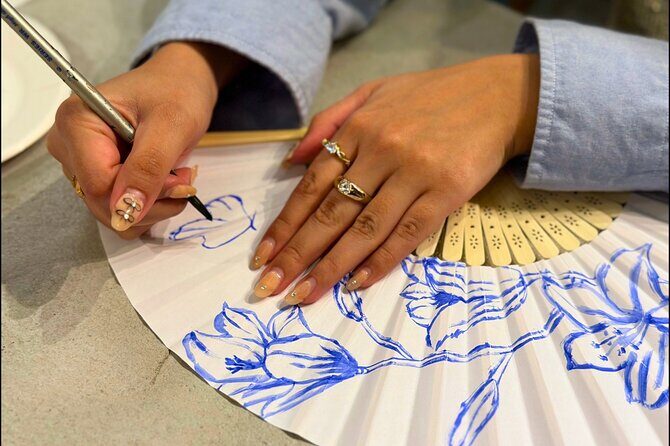
- A calm flower-shop setting that makes the workshop feel like a breather from the city
- Guidance that works for beginners, including help for tricky paint-on-fan surfaces
- Choose-your-own fan canvas (shapes, sizes, and colors) before you even touch the brush
- Traditional motifs plus creative freedom, from cherry blossoms to koi fish and scenic scenes
- Small group vibe, with a maximum of 20 people so you can get attention when needed
More things to make with your own hands
- Sushi Making Tokyo Roll and Authentic Japanese Sushi Class★ 5.0 · 3,971 reviews
- Tokyo Shinjuku Chopsticks Making Class★ 5.0 · 1,763 reviews
- Chopstick Making Workshop in Ginza★ 4.8 · 1,366 reviews
Entering The Flower Shop: The Moment It Switches Gears
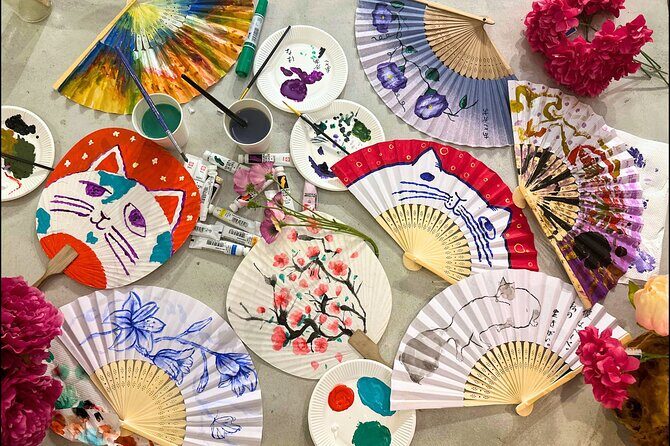
The experience starts at Park House Chiyoda Kojimachi in Kōjimachi. When you arrive, you’re brought into a gorgeous, flower-filled space. This matters more than it sounds. Tokyo can be fast. This workshop flips that switch and gives you a slower rhythm right away—sit, look around, choose your tools, and actually focus.
The shop environment also makes the whole thing feel less like a rushed tour activity. Instead of darting from landmark to landmark, you’re settling in. That’s one of the best parts of fan painting here: it’s a creative activity with a calm setting built in.
You’ll be welcomed, then you’ll choose your fan. Each participant selects from a variety of fan shapes, sizes, and colors. Even before painting begins, that choice creates “ownership.” You’re not copying a sample. You’re building a piece that starts with your preferences.
Picking Your Fan Canvas: Choosing Shape, Size, and Color
This workshop treats the fan as both a canvas and a practical object. That means your design choices aren’t just aesthetic. The fan’s shape and size influence how lines, patterns, and details will look once it’s folded and opened.
So when you pick, don’t rush. Think about what you want your motif to do:
- Do you want a centered subject that looks good when the fan opens?
- Do you want a pattern that flows across the surface?
- Do you prefer bold color blocks or more delicate details?
Because the fans vary, the instruction can fit different starting points. That’s especially helpful if you’re a beginner or if you’ve never painted on anything irregular before.
What You Learn About Fan Painting in Japanese Culture

Before the paint fully takes over, you’ll learn about the history and significance of fan painting in Japanese culture. It’s not just a quick lecture. The idea is to connect what you’re doing to why fans matter.
You’ll also explore traditional motifs you can use, including:
- Cherry blossoms
- Koi fish
- Scenic scenes (painted as visual backgrounds)
This cultural context is useful in two ways. First, it helps you choose a motif with confidence instead of guessing what will look “right.” Second, it makes the finished fan feel more meaningful than a random souvenir. You’re creating something tied to a real art tradition, even if you’re putting your own spin on it.
And if you’d rather create your own design, that’s supported too. The workshop gives you the historical backdrop, then leaves room for your imagination.
The Real Workshop Flow: From First Stroke to Finished Fan
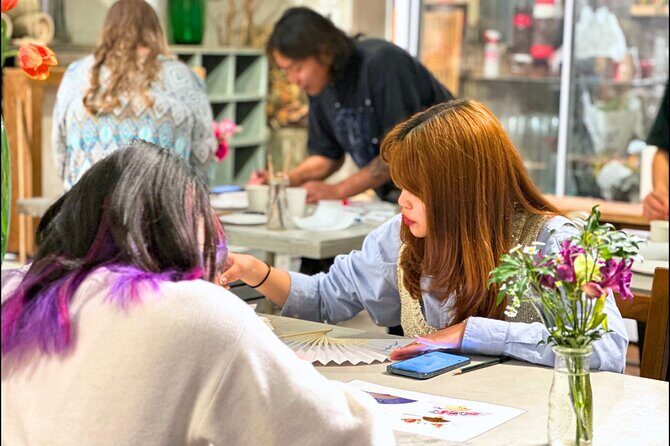
The class runs about 2 hours and stays focused on making one solid piece. Here’s what that typically feels like in practice.





Step one: get set up and start designing
Once you’ve chosen your fan, you settle into painting mode. You’ll have access to the materials you need, including paints and brushes. That’s a big value point, since you’re not shopping for supplies in Tokyo first.
Step two: learn techniques that match fan surfaces
A major help here is how the instruction adapts to the fact that a fan surface isn’t flat like paper. One useful tip I’m glad you’ll have in your pocket is advice for painting on an irregular surface using acrylic and water-based paints. If you’ve ever tried to paint on something curved, you already know the problem: edges behave differently than the middle. The guidance helps you avoid frustration.
Step three: painting with support, not correction
You’re guided through techniques and encouraged to keep going. The goal isn’t to make you create a perfect replica. It’s to help you make something that looks good and feels like yours.
Step four: finish up and take photos
At the end, there’s time to enjoy what you made. One person mentioned taking photos at the end, and honestly, it’s smart to do that while details are fresh and you’re still in “maker mode.” Your fan is your souvenir, but it’s also an art project. Treat it like both.
Traditional Motifs vs. Your Own Design: How to Decide
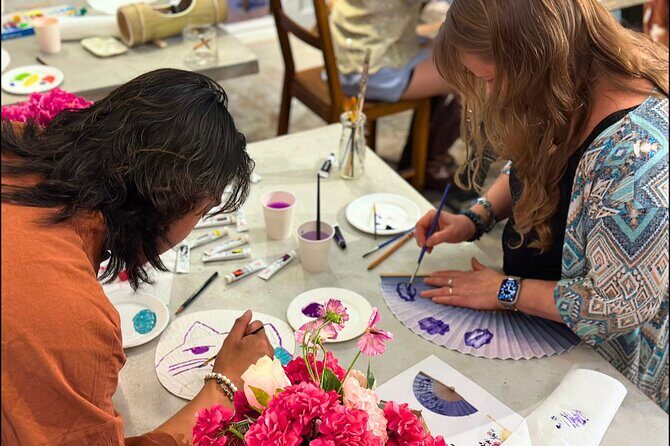
One of my favorite parts of this kind of workshop is that it gives you options without forcing you into a single style.
If you want traditional, cherry blossoms and koi fish are great picks because they’re iconic and readable. You don’t need to paint every tiny detail to make the theme clear.
If you want your own design, you still benefit from the instruction. Techniques like brush control, paint consistency, and placement across an uneven surface translate across subjects. So even freestyle art can look intentional when the guidance is about method, not just theme.
A simple way to choose:
- Pick the motif that matches the story you want your fan to tell.
- Use the techniques you learn to make it sit well on the surface you picked.
Small Group Energy: Getting Help Without Being Overwhelmed
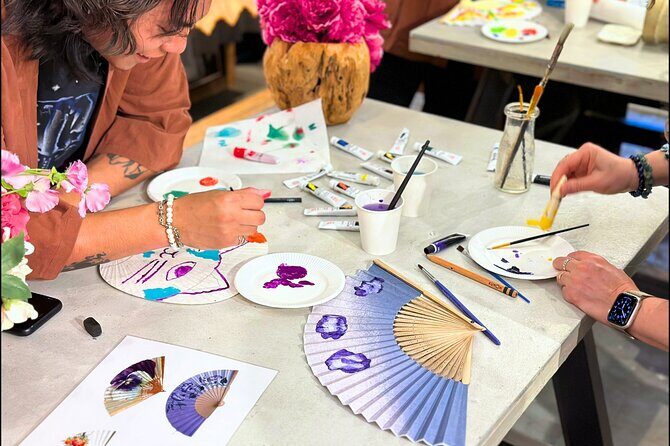
This activity caps at 20 people, and that changes the whole experience. In a class that small, you’re not stuck waiting for an instructor to notice you. You can ask questions as you go, and you can get reassurance if you’re nervous about your first attempt.
That matters most for beginners. One of the strongest signals from the experience is that people who are new to art still get patience and kindness from Ruby and the team. That doesn’t just make the workshop nicer. It improves your results, because beginners learn faster when they feel safe to try.
Materials Included: Less Shopping, More Creating
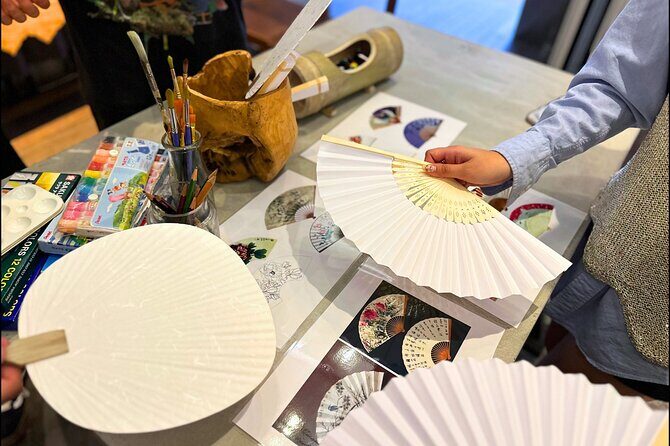
You’ll be provided with what you need—paints and delicate brushes are included in the workshop setup. That turns this into one of those rare travel activities where you can show up without preparing like an artist.
This also keeps your time on track. With only about two hours, “where do I buy paint?” is the last problem you need. Instead, you can focus on composition and brushwork.
And because acrylic and water-based paints are used in guidance, you’ll get advice on how those behave on a fan. That’s especially helpful for people who assume paint will act the same as it does on paper.
Price and Value: Is $60 Worth It?

At $60 per person for about two hours, the value depends on what you want out of it.
This is good value if:
- You want an included-materials art activity with guided instruction
- You care about taking home something you made yourself
- You like the calm shop setting and want a break from nonstop sightseeing
It may feel less compelling if:
- You’re an experienced painter looking for a longer, more demanding session
- You’re the type who prefers lectures and museum time over hands-on making
But here’s the thing: you’re paying for a finished, usable craft. A fan isn’t just a flat souvenir you toss in a drawer. It’s something you can actually use, which makes it feel more practical than many “just for photos” activities.
Where It Fits in Your Tokyo Plan
This workshop works best when you want a reset day. Put it in the middle of a sightseeing stretch, and it becomes a mental breath.
It also works well if you’re traveling as a couple or with a friend. The setting encourages chatting, comparing ideas, and sharing small wins. Just expect that the fun is quieter and slower than typical Tokyo tour stops.
Because it’s near public transportation, you can slot it into your day without building an entire route around it. And since you receive confirmation at booking and get a mobile ticket, you can keep your planning simple.
Who Should Book This Fan Painting Workshop?
Book it if you want:
- A hands-on Tokyo activity with a creative outcome
- Traditional Japanese motifs explained in a friendly way
- A calm environment that feels different from the usual rush
- A beginner-friendly experience with real help, not judgment
You might skip it if:
- You want a highly technical art class with advanced training
- You prefer bigger, more structured sightseeing itineraries
- You’ve already done so many craft projects that a two-hour format feels too short
Should You Book This Fan Painting Workshop?
Yes, I’d recommend it—especially if you want a quieter, more personal Tokyo memory. The biggest strengths are the calm flower-shop setting and the supportive instruction from Ruby and the team. You’re not just copying a design; you’re guided through painting techniques that work on fan surfaces, and you leave with a finished fan you can actually use.
If you’re the kind of person who enjoys thoughtful activities, crafts, or creative breaks during travel, this is a strong match. If you’re chasing only famous landmarks, keep it as an optional side activity—because the real reward here is the making, not the tourism checklist.
FAQ
What is the price of the Japanese Fan Painting Workshop?
The price is $60.00 per person.
How long does the workshop take?
The workshop lasts about 2 hours.
Do I get a mobile ticket?
Yes, it’s a mobile ticket.
How many people are in the group?
The maximum group size is 20 travelers.
Where does the workshop meet?
It starts at Park House Chiyoda Kojimachi, located at 6-chōme46, Kōjimachi, Chiyoda City, Tokyo 102-0083.
What kind of materials are provided?
You’ll have the necessary materials to paint your fan, including vibrant paints and delicate brushes.
Are service animals allowed?
Yes, service animals are allowed.
Is there free cancellation?
Yes. You can cancel for a full refund if you cancel up to 24 hours in advance of the experience start time. If you cancel less than 24 hours before, the amount paid is not refunded.
Make Something to Take Home




More Tour Reviews in Tokyo



Fresh reviews from around Tokyo






Workshops, compared.
 ★ 5.0Sushi Making Tokyo Roll and Authentic Japanese Sushi ClassFrom $593,971 reviews
 ★ 5.0Tokyo Shinjuku Chopsticks Making ClassFrom $201,763 reviews
 ★ 4.8Chopstick Making Workshop in GinzaFrom $251,366 reviews
 ★ 5.0Tokyo Sushi Making Class in Tsukiji with Professional ChefFrom $491,177 reviews
 ★ 5.0Ramen & Gyoza Cooking Class in Tokyo with Local Supermarket VisitFrom $122823 reviews
 ★ 5.0Matcha Making Class in Tokyo with Authentic Japanese Sweets SetFrom $21744 reviews
 ★ 5.0Samurai Sword & Archery Class from Samurai DescendantFrom $193603 reviews
 ★ 4.9Tsukiji Fish Market Sushi Making Class with Pro ChefFrom $63506 reviews
Browse the lists this tour appears in