
Reviewed · TOKYO
IKEBANA experience
Ikebana becomes a real-life skill fast. This private lesson in Tokyo’s Meguro area turns Japanese flower arranging into something you can actually repeat at home, with gentle English instruction and lots of hands-on guidance.
I especially like the private studio-home setting and the way Hiromi teaches with clear step-by-step feedback while you work. The small extras matter too: you finish with matcha and Japanese sweets in a tatami-style space.
One consideration: this experience needs good weather, so plan a little flexibility in your schedule if the day turns rainy or stormy.
In This Review
- Key points
- A private Ikebana class in a real Meguro home
- How the 90 minutes actually works (and why it’s effective)
- Learning the Ikebana basics without getting overwhelmed
- Matcha and Japanese sweets: the payoff that makes it memorable
- Price and value: what you’re really paying for
- Who should book this (and who might want another plan)
- Planning your day: arriving, what to bring, and what to do after
- Should you book Hiromi’s IKEBANA in Tokyo?
- FAQ
- What is the duration of the Ikebana experience?
- Where is the meeting point?
- Is this a private class or shared with other people?
- Do I need any previous experience in Ikebana?
- Is the lesson taught in English?
- Is matcha and Japanese sweets included?
- Can I learn basic tea ceremony during the class?
- What is the experience format like?
- What happens if the weather is bad?
- Is there a cancellation deadline?
Key points
- Private, just your group in a Japanese home setting, not a crowded classroom
- English guidance with a careful, patient teaching style from Hiromi
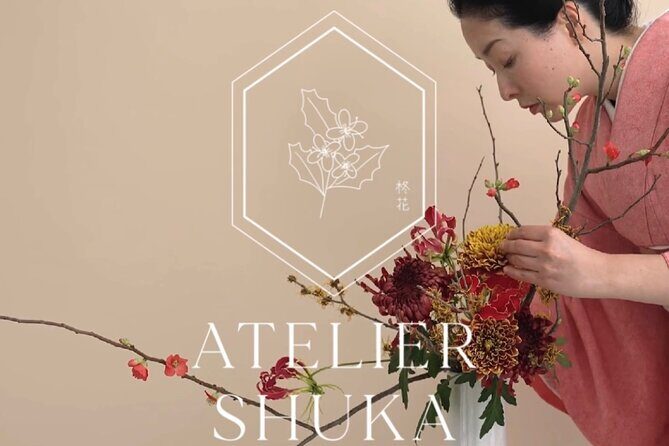
- Hands-on steps: she demonstrates first, you make your own arrangement, then she revises
- Matcha and Japanese sweets after the lesson in a tatami room
- Optional basic tea ceremony instruction if you’re interested
- You’ll get a photo of your arrangement and can ask about practice materials
Before you commit, see how this one stacks up against a few Tokyo favourites:
- Mt Fuji and Hakone 1-Day Bus Tour Return by Bullet Train★ 5.0 · 26,383 reviews
- 1-Day Tokyo Bus Tour★ 5.0 · 14,250 reviews
- Tokyo: teamLab Planets TOKYO Digital Art Museum Entry Ticket★ 4.6 · 9,779 reviews
A private Ikebana class in a real Meguro home
If you want an art lesson that feels like you’re visiting Japan, not just passing through it, this class fits the bill. You start at Toritsu-daigaku Station, then make your way to Hiromi’s home/studio in Meguro (Nakane). Expect a calm, personal pace from the moment you meet.
The setting is a big part of the value. You get to see Japanese-style rooms in a Japanese house, including a quiet space where you’ll work. Multiple people also highlight the feeling of being welcomed into the home—friendly, relaxed, and not overly formal. One person even notes being guided from the station with an umbrella when the sun was intense. That kind of practical care makes the whole experience feel smooth.
And since it’s a private tour/activity, it doesn’t feel like you’re waiting your turn behind strangers. You get real attention, and the instructor can adjust as you go—especially helpful if you’re a total beginner or if you learn better with slower, more specific cues.
How the 90 minutes actually works (and why it’s effective)
The class is about 1 hour 30 minutes, and it follows a simple structure that works even if you have no background in Ikebana.
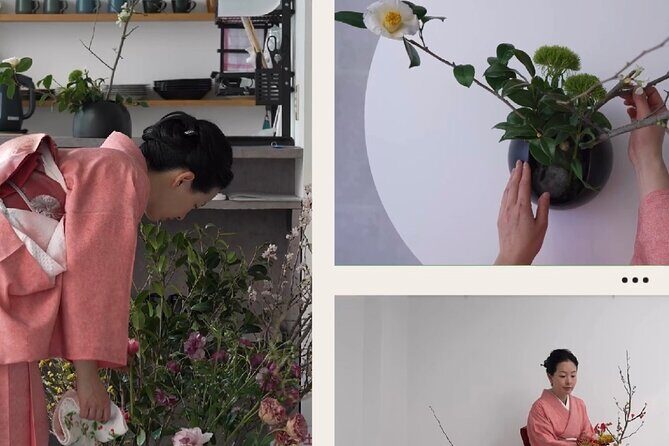
First, Hiromi prepares a sample while referencing a textbook-style approach. She shows you what the arrangement should be aiming for, so your brain has a target before you start cutting flowers. Then you create your own arrangement.
This is where the lesson earns its keep: you’re not left on your own. Hiromi comments and revises as you work, so you’re correcting course in real time. Then she’ll guide you toward finishing, and you’ll take a photo of what you made.
A key detail that shows up in the teaching style: Hiromi can teach “from the basics” or adapt toward what you want. If you want a traditional approach, you’ll get that. If you want guidance that helps you create something you’re personally proud of, you’ll still get structure—just with room for your creativity.
If you’re curious about tea culture, there’s an extra option. The lesson can include basic tea ceremony instruction for those who want it. If that’s on your Tokyo checklist, ask about it at the start so it doesn’t get rushed at the end.
Learning the Ikebana basics without getting overwhelmed
Ikebana often scares people a little, because it can look strict from the outside. The good news here is that the lesson is designed to be careful and gentle, and it’s built around what you can do in one short session.
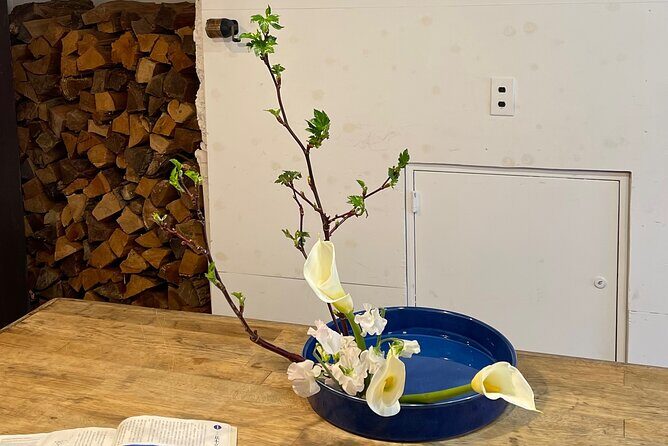
One of the best practical takeaways is the way Ikebana focuses on the line of flowers and the role of water. That focus changes everything. Instead of thinking you need a huge bouquet, you learn how to shape the “gesture” of the arrangement. It’s also why you typically won’t need dozens of flowers—one review notes that since the art emphasizes line and water, you won’t use many flowers, and the whole process doesn’t take forever.
You’ll also learn basic handling, including how to cut flowers properly. That sounds like a tiny detail, but getting the cuts right makes everything look cleaner and last longer. And once you learn the basic technique and structure, you’re much more likely to enjoy practicing at home instead of feeling stuck.
If you’re visiting Tokyo and want cultural context, Hiromi also invites questions about Tokyo and Japan. That turns the lesson into a two-way conversation, not just a workshop where you silently copy steps.
Matcha and Japanese sweets: the payoff that makes it memorable
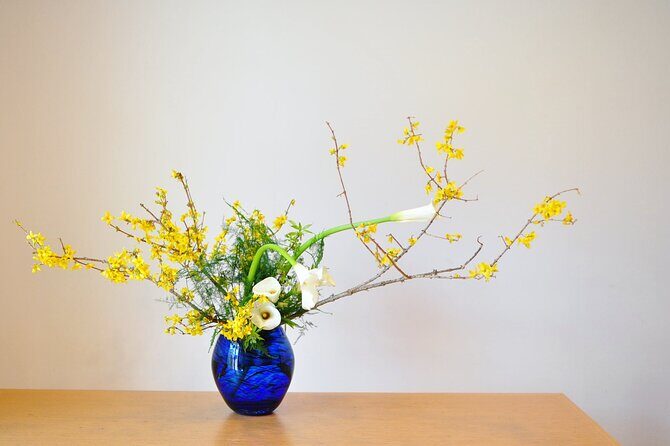
In a lot of lessons, the “activity” ends and everyone files out. Here, the experience has a soft landing. After you finish, you get time for Japanese sweets and matcha.
You’ll typically have this in a tatami room atmosphere, which adds to the calm feeling after the hands-on part. More than one person describes matcha and sweets as delicious, and at least one mentions green tea and candy as part of the treat.
This matters for two reasons:
- It gives you a reset moment. After you’ve concentrated on shaping stems and balancing the arrangement, your brain gets a break.
- It connects the art lesson to everyday Japanese culture. Ikebana isn’t just about flowers—it fits naturally next to tea habits and seasonal sweets.
If you’re the type who loves small details in travel, this portion is genuinely satisfying.





Price and value: what you’re really paying for
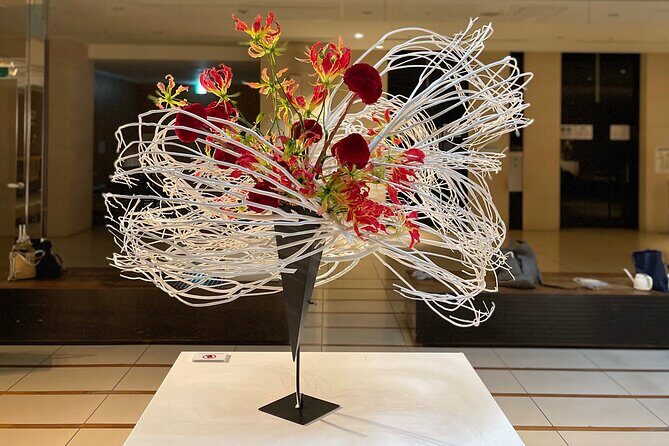
At $115.31 per person for about 1 hour 30 minutes, you might wonder if it’s “too much” for flowers. Here’s the value logic I’d use to judge it:
- You’re paying for a private class, meaning you’re not competing with a room of other people for attention.
- You’re paying for English instruction, including clear demonstration, feedback, and revisions while you work.
- You’re paying for a home-setting experience—seeing Japanese-style rooms in a Japanese house, not just a generic storefront studio.
- You’re getting matcha and sweets after the lesson.
- You get a photo of your arrangement, which is a nice souvenir that’s actually tied to what you made.
Also, because it’s often booked around 28 days in advance on average, it suggests the class is in demand. That’s not proof of quality by itself, but it usually means people find the experience worth planning around.
If you’re trying to stretch your budget, you could compare the price to group workshops. But if you want something personal, comfortable, and guided all the way through, this format holds up well.
Who should book this (and who might want another plan)
This class is a strong match for:
- Beginners who want the basics explained clearly and patiently
- Couples and friends who want a shared activity that isn’t physically exhausting
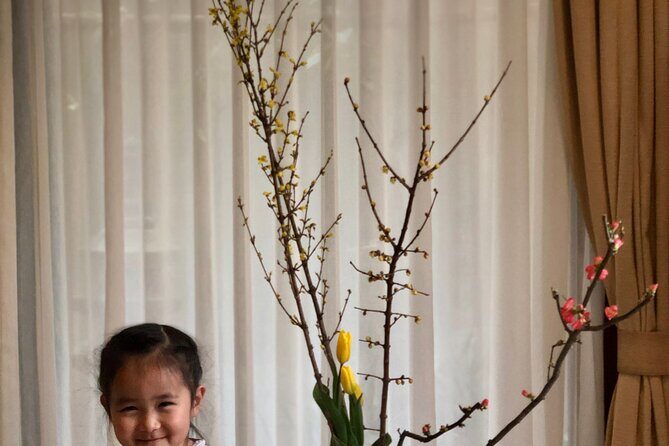
- Families, including multi-generation groups (one person notes a 3-year-old enjoying freestyle Ikebana, and another describes three generations enjoying it)
- People who care about Japanese art + culture, not just taking a photo and moving on
- Anyone who wants an art lesson that can feel relaxing, not performative
It might feel less ideal if:
- You’re searching for a fast “see and leave” attraction. This is a teaching experience, so it’s about focusing and making.
- You’re planning an ultra-tight schedule on a weather-sensitive day. The experience requires good weather, and if it’s canceled for poor conditions you’ll be offered another date or a full refund.
One more note: because you’re in a home environment, it helps to arrive with a calm mindset. You’re stepping into someone’s space for an art lesson. That respectful tone makes it better for everyone.
Planning your day: arriving, what to bring, and what to do after
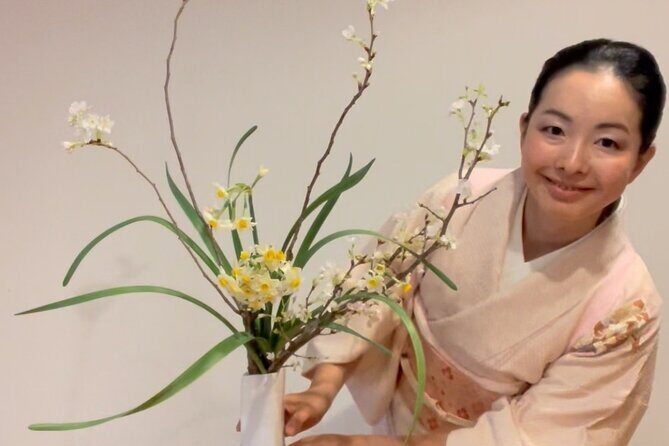
The experience starts near Toritsu-daigaku Station, and it ends back at the meeting point. That makes it easier to slot into your travel day without committing to a long commute.
Here’s how I’d plan around it:
- Give yourself buffer time to arrive calmly and find the meeting spot.
- If you have strong preferences for your arrangement, think about them early: simple and structured vs. more freestyle creativity.
- Bring a phone or camera you can use for the photo moment. (You’ll take a photo as part of the class.)
- If you’re interested in basic tea ceremony, let the instructor know early in the session so you don’t lose time.
After class, treat the timing as a gift. You’ll leave relaxed with a new skill and a cultural memory that’s more than a souvenir shop stop. If you still have energy, I’d use the rest of the day to wander around the local neighborhood streets and keep the quiet vibe going.
Should you book Hiromi’s IKEBANA in Tokyo?
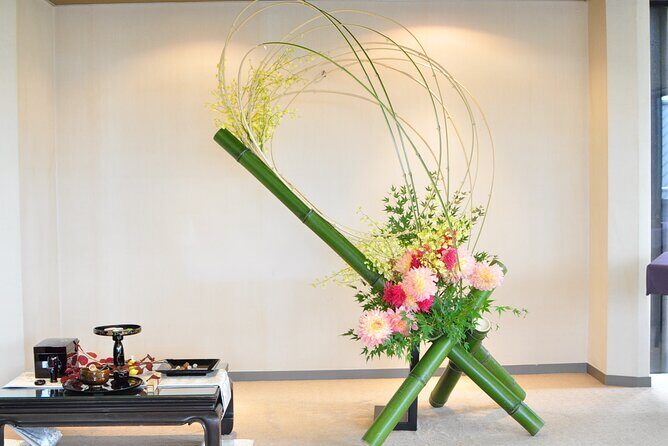
Yes, if you want a private, beginner-friendly Ikebana lesson in a real Japanese home setting, with clear English guidance and a satisfying finish of matcha and Japanese sweets.
I’d especially recommend it if:
- you’re the kind of traveler who likes small, hands-on cultural activities,
- you value gentle instruction and real feedback,
- and you want to learn something you can practice again later.
If you’re only interested in a quick photo stop, or if your schedule can’t flex at all due to weather risk, you may want a different type of activity. But if you can work with a short, calm 1.5-hour window, this is the kind of Tokyo experience that feels personal long after you’ve left.
FAQ
What is the duration of the Ikebana experience?
The lesson runs about 1 hour 30 minutes.
Where is the meeting point?
You meet at Toritsu-daigaku Station. The location is in Meguro City, Tokyo (Nakane, Meguro).
Is this a private class or shared with other people?
It’s private. Only your group participates.
Do I need any previous experience in Ikebana?
No. The class teaches from the basics and is suitable for most travelers.
Is the lesson taught in English?
Yes. The instruction is provided in English.
Is matcha and Japanese sweets included?
If you have time after the lesson, Japanese sweets and matcha are offered.
Can I learn basic tea ceremony during the class?
If you’re interested in tea ceremony, the instructor will teach how to make basic tea ceremony.
What is the experience format like?
Hiromi makes a sample while following a textbook approach, then you create your own arrangement. She gives comments and revisions, and you take a photo at the end.
What happens if the weather is bad?
The experience requires good weather. If it’s canceled due to poor weather, you’ll be offered a different date or a full refund.
Is there a cancellation deadline?
You can cancel for a full refund up to 24 hours before the experience starts. If you cancel within 24 hours, the amount paid is not refunded.
More Tour Reviews in Tokyo



Fresh reviews from around Tokyo






Tokyo, compared.
 ★ 5.0Mt Fuji and Hakone 1-Day Bus Tour Return by Bullet TrainFrom $16326,383 reviews
 ★ 5.01-Day Tokyo Bus TourFrom $12914,250 reviews
 ★ 4.6teamLab Planets TOKYO Digital Art Museum Entry TicketFrom $259,779 reviews
 ★ 4.0Mt Fuji & Hakone Cruise, Drum Show Bullet Train 1 Day from TokyoFrom $1497,413 reviews
 ★ 5.0Shinjuku Food Tour (13 Dishes at 4 Local Eateries)From $866,603 reviews
 ★ 4.4Tokyo Mt Fuji 5th St & Hakone Cruise Bus Tour w/Bullet TrainFrom $1545,024 reviews
 ★ 5.0Flagship 2-Hours Official Street Go-Kart Tour – Tokyo Bay ShopFrom $644,974 reviews
 ★ 4.5From Tokyo: Mount Fuji Full-Day Sightseeing TripFrom $684,970 reviews