
Reviewed · TOKYO
Tokyo Night Bike Tour: From Shibuya to Tokyo Tower via Roppongi
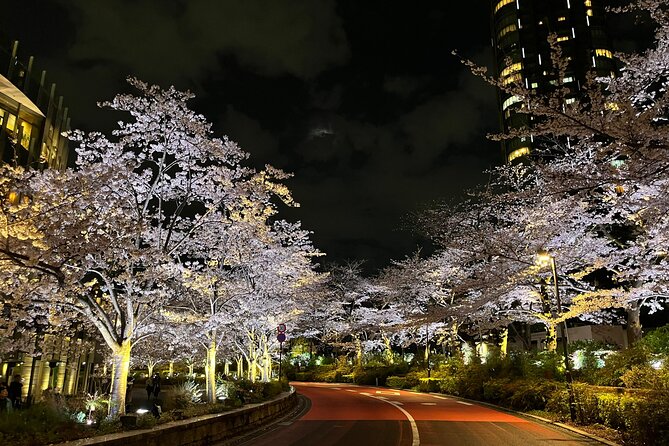
Neon Tokyo feels different at 8 pm. This is a guided night ride from Shibuya toward Tokyo Tower via Roppongi, built for active people who want to see lit-up streets without the daytime crowds.
I like two things a lot here. First, the small group setup (max 6) means you get real guidance and less time worrying about where to turn. Second, the route includes spots you’d struggle to reach on your own using public transport, like Meiji Jingu Gaien and Aoyama’s area around the cemetery.
One thing to consider: you need to be comfortable cycling in real city conditions. The tour is set for about 15 km/h, and you’re expected to handle pavement rides, cross traffic lights, and tighter spaces, with light rain possible.
In This Review
- Key takeaways
- Riding Shibuya to Tokyo Tower After Dark: The Real Point of This Tour
- Is $56 for a 2-Hour Night Bike Tour Good Value?
- Meeting at Umayamichi Park (Shibuya) and Rolling Right on Time
- Tokyo Tower First: Neon Views Without the Daytime Hassle
- Meiji Jingu Gaien and Omotesando: Where the Night Feels Curated
- Roppongi Keyakizaka Dori and Azabujuban: Celebrity Energy, Lower Stress
- Aoyama Cemetery at Night: A Calm Stop in the Middle of the City
- Your Guide Shapes the Whole Experience (Taichi and Ikeda Are Mentioned)
- Safety and Bike Handling: 15 km/h Is Part of the Plan
- What to Wear and What to Bring When Tokyo Gets Cooler
- Who Should Book This Night Bike Tour (and Who Might Skip It)
- Should You Book This Shibuya-to-Tokyo Tower Night Ride?
- FAQ
- How long is the Tokyo Night Bike Tour?
- What does the tour cost?
- What’s included in the tour?
- Where is the meeting point, and what time does it start?
- Do you stop for dinner?
- What weather and cycling skills are required?
Key takeaways
- Helmet and bike included so you can focus on riding, not logistics
- Max 6 riders keeps the experience calm and guide-led
- Night-only atmosphere: cooler air and quieter streets compared with daytime
- Stops that go beyond rails (Meiji Jingu Gaien, Aoyama Cemetery area, and more)
- No dinner stop, so plan food before you start
- Cycling comfort required for pavements, cross traffic lights, and crowded areas
Before you commit, see how this one stacks up against a few Tokyo favourites:
- Mt Fuji and Hakone 1-Day Bus Tour Return by Bullet Train★ 5.0 · 26,383 reviews
- 1-Day Tokyo Bus Tour★ 5.0 · 14,250 reviews
- Tokyo: teamLab Planets TOKYO Digital Art Museum Entry Ticket★ 4.6 · 9,779 reviews
Riding Shibuya to Tokyo Tower After Dark: The Real Point of This Tour
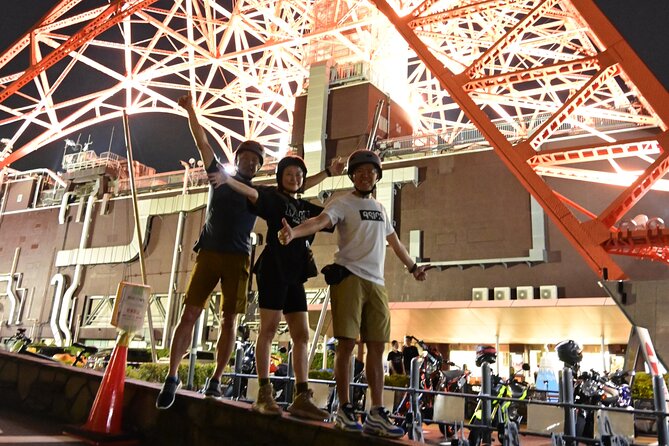
Tokyo is at its best when it slows down a notch. This ride starts at 8:00 pm, when street noise often feels more manageable and the air is usually cooler than the late-afternoon crawl. You still get the big neon payoff, but without spending your energy standing still in lines or dodging crowds on foot.
The guided format is the other big win. In Tokyo, going a few blocks wrong can turn into an awkward detour. Here, you follow a leader so you can spend your attention on the views, not on map math. The bike also lets you cover more ground than walking in the same two hours.
Is $56 for a 2-Hour Night Bike Tour Good Value?
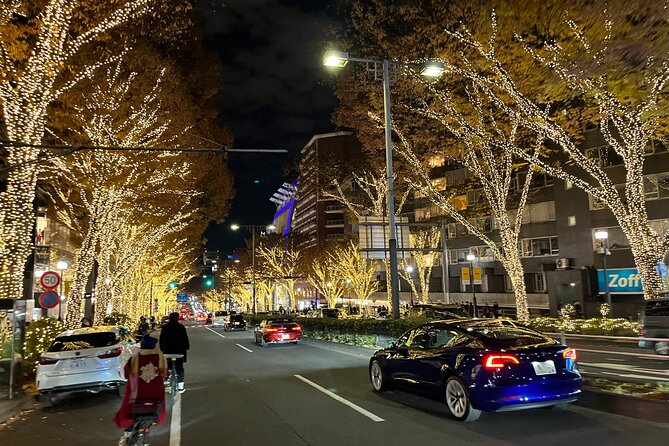
At $56.01 per person for about 2 hours, this isn’t a bargain tour. But the value makes sense if you care about three things: convenience, access, and effort-saving.
You get the bike and helmet included, plus a guide who takes you to multiple named areas like Tokyo Tower, Meiji Jingu Gaien, Omotesando, Roppongi Keyakizaka Dori, Azabujuban, and Aoyama Cemetery. That’s not just sightseeing from the curb. It’s movement through Tokyo’s night rhythm at a pace that still feels fun.
Also, there are practical extras like a mobile ticket, and group discounts may apply (you’d just want to check what qualifies). Finally, the small-group size (max 6) is a real part of the price. You’re not competing for attention with a crowd.
Meeting at Umayamichi Park (Shibuya) and Rolling Right on Time
You meet at Umayamichi Park, 5-chōme-24-11 Sendagaya, Shibuya, Tokyo. The tour starts at 8:00 pm, and it ends back at the meeting point.
What I’d plan for: arrive a little early so you can fit your bike comfortably and settle before you roll. Since the start location is near major stations, it’s not hard to get there—it’s listed as about 10 minutes from Shinjuku Station and about 1 minute from Yoyogi Station. That matters because a night tour is only fun if you’re not rushing the last block.
Tokyo Tower First: Neon Views Without the Daytime Hassle
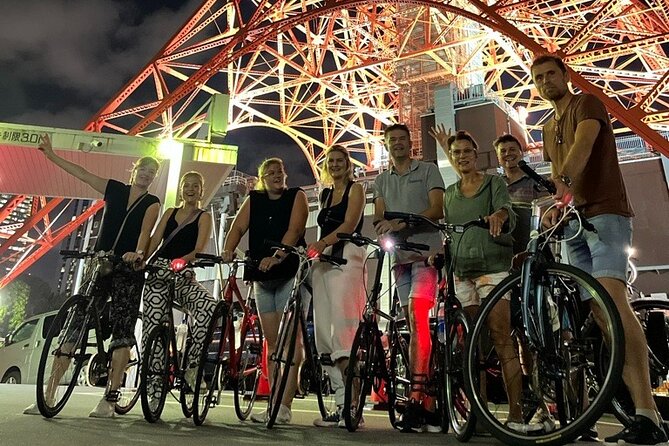
Tokyo Tower is your first major stop, and that sets the tone. At night, the tower’s lighting reads cleaner, and the surrounding streets feel less jammed than midday. Even when you’re just pausing for photos, the atmosphere changes as you approach.
The practical upside is that you’re seeing a headline landmark without turning it into a half-day mission. You’re moving, then stopping, then moving again. That rhythm is one of the reasons night cycling works so well in Tokyo.
Potential drawback: if you’re expecting long, slow photo time at every stop, this is a two-hour ride. You’ll get time to look, but it’s still a paced tour.




Meiji Jingu Gaien and Omotesando: Where the Night Feels Curated
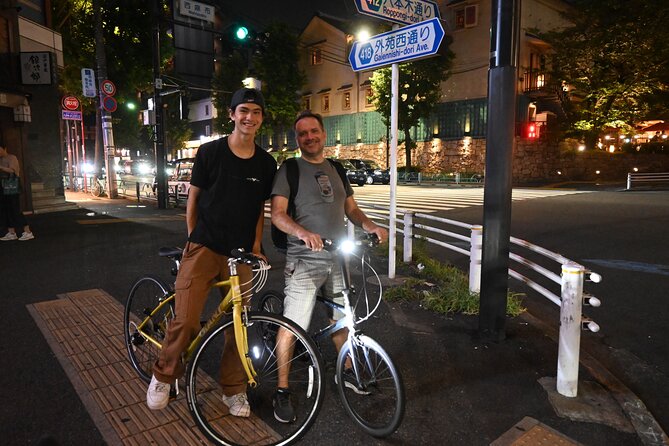
Next up is Meiji Jingu Gaien, followed by Omotesando. This pairing is smart because it balances big-name Tokyo with spaces that feel more designed and walkable-friendly once the lights come on.
Meiji Jingu Gaien is known as a classic area for lighting and perspective. On a bike, you also get a different angle than you would from a sidewalk—less “stand and aim,” more “float past and soak it in.”
Omotesando is where the Tokyo vibe shifts again. Shops and streets here can look almost architectural at night. The bonus for you is that you’re not just snapping one spot; you’re cruising between feel-different neighborhoods in the same session.
Roppongi Keyakizaka Dori and Azabujuban: Celebrity Energy, Lower Stress
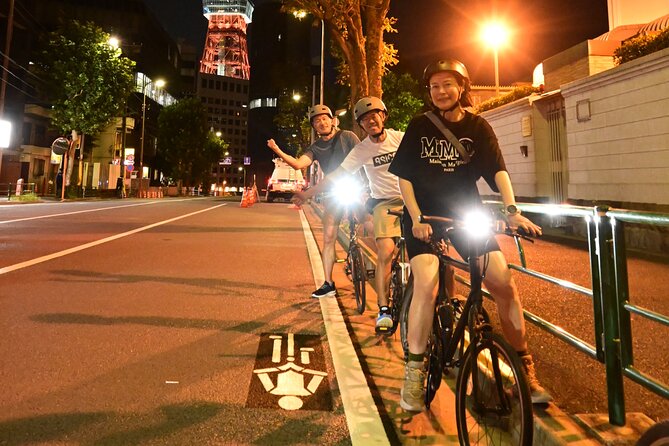
You then ride into Roppongi Keyakizaka Dori, followed by Azabujuban. This stretch is one of those Tokyo contrasts: well-lit streets, dining-and-bar energy, and a sense that people know what they’re doing. The guide-led flow helps you keep moving without getting stuck at every intersection.
One detail that’s worth paying attention to: this tour is described as taking you to places that aren’t easy to access by public transport. That usually means fewer transfers and less walking while you’re tired after a full day in the city.
You’ll likely notice that you’re seeing how Tokyo neighborhoods connect at night—the little street textures, signage, and street-level light that you miss when you arrive by train and head straight to a single destination.
Aoyama Cemetery at Night: A Calm Stop in the Middle of the City
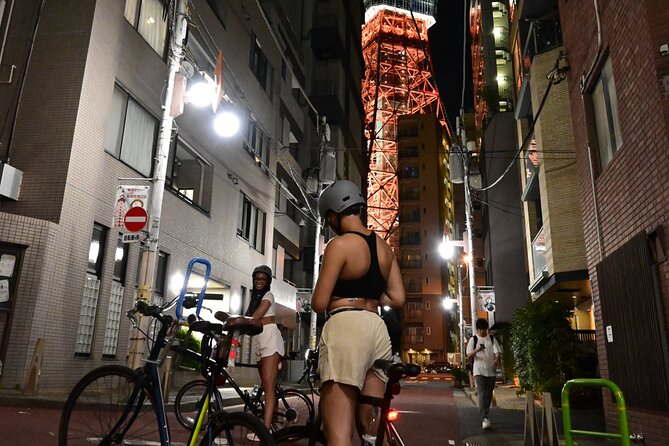
After Azabujuban, the route continues through Aoyama Cemetery, along with more ride segments around Roppongi and Nishiazabu.
A cemetery sounds like a strange “tour highlight,” but at night it can be exactly the contrast you want. The energy shifts from entertainment districts to something quieter and more reflective. On a bike tour, the stillness (even for a short stop) hits harder because you’ve been rolling through noise and crowds just moments earlier.
One consideration: if you’re sensitive to darker areas or want extra time for photos, plan on following the guide’s timing and staying aware of your surroundings. City night riding is safe when you’re alert.
Your Guide Shapes the Whole Experience (Taichi and Ikeda Are Mentioned)
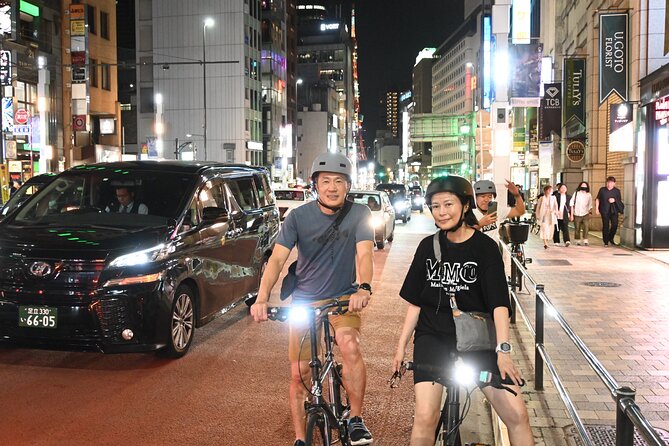
This is a guide-led ride, and that matters more than people think. In the feedback you shared, the guides stand out for three themes: safety, easy-to-follow directions, and real talk about what you’re seeing.
I’d especially take note of how often Taichi is credited for being organized, friendly, and fluent in English. You also have mentions of Ikeda being knowledgeable and making the ride enjoyable, plus a clear pattern that the guide answers questions and shares context beyond the obvious photos.
A couple other useful details from the experience patterns: the ride is described as feeling safe for solo travelers, and it’s also been enjoyed across generations, including a 15-year-old grandson. That tells me the pace and instruction are designed for normal visitors, not hardcore cyclists.
Safety and Bike Handling: 15 km/h Is Part of the Plan
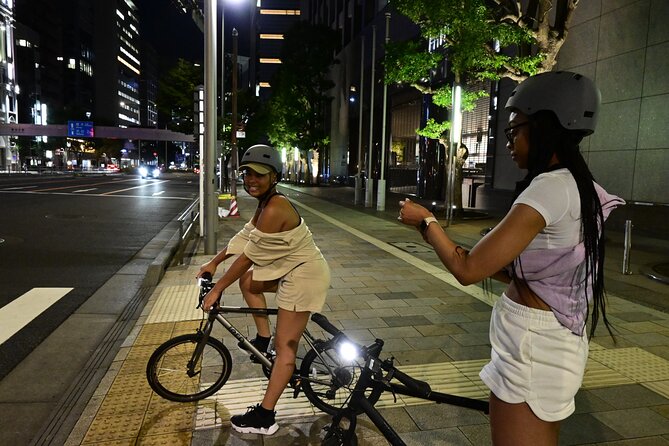
Let’s talk practical cycling requirements, because this tour is fun only if you’re comfortable on the bike.
The bikes fit riders between 155 cm and 185 cm. Speed is about 15 km/h, and you’re expected to ride confidently at that pace. You’re also expected to be proficient in cycling on pavements, cross traffic lights confidently, and ride through crowded or tight spaces.
Helmet is included, which you should treat as non-negotiable. The ride style is organized for a reason: Tokyo intersections can be busy, and night adds a little less visibility. The fact that the group is small helps the guide keep control of spacing and guidance.
Weather also matters. The tour proceeds in light rain, but it may be canceled if weather changes suddenly. And it’s listed as requiring good weather overall, with either a different date or a full refund if canceled due to poor weather.
What to Wear and What to Bring When Tokyo Gets Cooler
This is an after-dark ride, so think in layers. The tour description specifically mentions that the cooler air in summer makes the ride more refreshing. If you’re visiting in shoulder seasons, nights can feel chilly fast once you start moving.
Since there’s no dinner stop, you should eat before the tour. You can also bring a snack, because you’ll want something in your system if your day runs long.
What I’d bring for your own comfort: something small for your hands (especially if it’s breezy), and a plan for staying dry if you get light rain. The tour isn’t just “bike around”; it’s also “stay comfortable enough to focus.”
Who Should Book This Night Bike Tour (and Who Might Skip It)
I’d recommend this tour if you:
- like active sightseeing instead of standing in one place
- want a guided route so you don’t waste time navigating
- enjoy neon scenery and night street atmosphere
- feel comfortable cycling in a real city environment
It’s also a good fit for people who want an efficient overview of several areas in one go—Tokyo Tower, Omotesando, Roppongi, and Aoyama’s area are all in the mix.
I’d be cautious if you’re a brand-new cyclist. The ride expects confidence with traffic lights and tight spaces. You’ll also want to be comfortable at the stated 15 km/h pace. If you’re unsure, you might prefer a walking or transit-based night tour where you can control speed more easily.
Should You Book This Shibuya-to-Tokyo Tower Night Ride?
If you want the best of Tokyo at night without the stress of solo navigation, book it. The mix of famous stops (Tokyo Tower, Omotesando) and less-easy-to-reach areas (like Meiji Jingu Gaien and Aoyama Cemetery) is the recipe for feeling like you saw more than just the postcard spots.
I’d especially book if small-group guiding matters to you. A max of 6 riders keeps the experience manageable, and the guide focus shows up repeatedly in the way people describe safety and helpful explanations.
Skip this one if you don’t want to cycle in traffic conditions or you’re hoping for a slow, sit-down evening with lots of breaks. This tour is for motion, not lounging. Eat first, be comfortable on a bike, and you’ll likely have one of the most memorable nights in the city.
FAQ
How long is the Tokyo Night Bike Tour?
The tour lasts about 2 hours.
What does the tour cost?
The price is $56.01 per person.
What’s included in the tour?
The tour includes a bicycle and a helmet.
Where is the meeting point, and what time does it start?
You meet at Umayamichi Park (5-chōme-24-11 Sendagaya, Shibuya, Tokyo 151-0051). The start time is 8:00 pm, and it ends back at the meeting point.
Do you stop for dinner?
No. There are no dinner stops, so it’s best to eat before you go or bring a snack.
What weather and cycling skills are required?
The tour requires good weather. It proceeds in light rain, but it may be canceled due to sudden weather changes. You should be able to cycle on pavements, handle cross traffic lights confidently, and ride through crowded or tight spaces. The bikes fit heights between 155 cm and 185 cm, and you’re expected to ride at about 15 km/h.
More Tour Reviews in Tokyo



Fresh reviews from around Tokyo






Tokyo, compared.
 ★ 5.0Mt Fuji and Hakone 1-Day Bus Tour Return by Bullet TrainFrom $16326,383 reviews
 ★ 5.01-Day Tokyo Bus TourFrom $12914,250 reviews
 ★ 4.6teamLab Planets TOKYO Digital Art Museum Entry TicketFrom $259,779 reviews
 ★ 4.0Mt Fuji & Hakone Cruise, Drum Show Bullet Train 1 Day from TokyoFrom $1497,413 reviews
 ★ 5.0Shinjuku Food Tour (13 Dishes at 4 Local Eateries)From $866,603 reviews
 ★ 4.4Tokyo Mt Fuji 5th St & Hakone Cruise Bus Tour w/Bullet TrainFrom $1545,024 reviews
 ★ 5.0Flagship 2-Hours Official Street Go-Kart Tour – Tokyo Bay ShopFrom $644,974 reviews
 ★ 4.5From Tokyo: Mount Fuji Full-Day Sightseeing TripFrom $684,970 reviews