
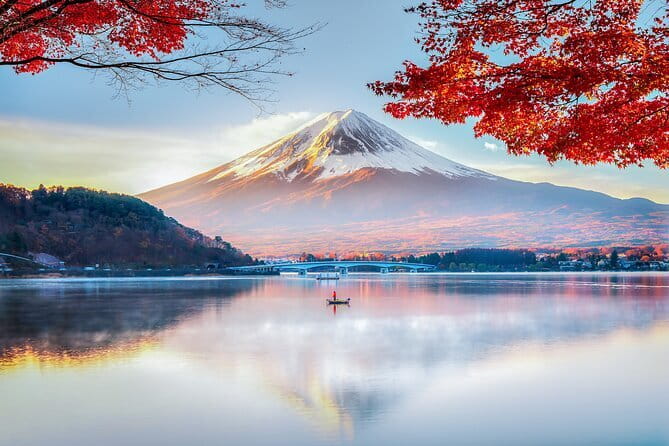
Reviewed · TOKYO
Mount Fuji Sightseeing Private tour w English speaking chauffeur
Mount Fuji in one stress-free day.
What makes this private trip work is the point-to-point comfort plus a route built for Fuji views, temples, and a couple of very specific must-sees. You’re not trying to stitch together buses and trains with tired feet. You’re riding with a driver who can also help you with photos as you go.
I really like that it’s private and customizable. You can tailor the timing and add or adjust stops, instead of feeling stuck on a rigid schedule. And I like that you get an English-speaking chauffeur who’s focused on the day itself, not just driving from one checkbox to another.
One thing to plan around: the experience requires good weather. If Fuji hides behind clouds, you may need to adjust expectations or take a rebook option if the day gets canceled.
Key highlights at a glance
- English-speaking private chauffeur: easier conversation all day, not just at one stop
- Hotel/area pickup + direct transfers: less friction, more time at the views
- Photo help during the day trip: built for getting the shot without rushing
- Fuji Five Lakes region hits: Oshino Hakkai, Oishi Park, and Lake Yamanaka
- Classic shrines and waterfall scenery: including Arakura Fuji Sengen Shrine and Shiraito Falls
- Good-weather dependent: expect visibility to be the big variable
In This Review
- A Stress-Free Private Day Trip to Mount Fuji (With Photo Help)
- The Core Route: From Oshino Hakkai Ponds to Lake Yamanaka Views
- Arakura Fuji Sengen Shrine and the Chureito Pagoda Photo Moment
- Oshino Hakkai vs. Lake Yamanaka: Two Different Ways to See Fuji
- Saiko Iyashi no Sato Nenba Village and What to Expect From a Paid Admission Stop
- Narusawa Ice Cave: Cool Comfort in the Middle of a Warm Day
- Kitaguchi Hongu Fuji Sengen Jinja: A Spiritual Gateway With Old Roots
- Shiraito Falls and Oishi Park: Waterfalls and Gardens in One Day
- How the Private English-Speaking Chauffeur Makes the Day Feel Personal
- Car Size, Group Size, and Why It Matters for Comfort
- Timing, Weather, and Visibility: Your Fuji Reality Check
- Price and Value: When Private Costs Make Sense
- Who This Tour Fits Best (and Who Might Prefer Something Else)
- Should You Book This Mount Fuji Private Tour?
- FAQ
- How long is the Mount Fuji sightseeing private tour?
- What time does the tour start?
- Is this a private tour?
- Does the tour offer pickup?
- Is the chauffeur/guide English-speaking?
- Are tickets included for all stops?
- How many people can be in the group?
- Is a mobile ticket used?
- What happens if the weather is bad?
- How does cancellation work?
A Stress-Free Private Day Trip to Mount Fuji (With Photo Help)
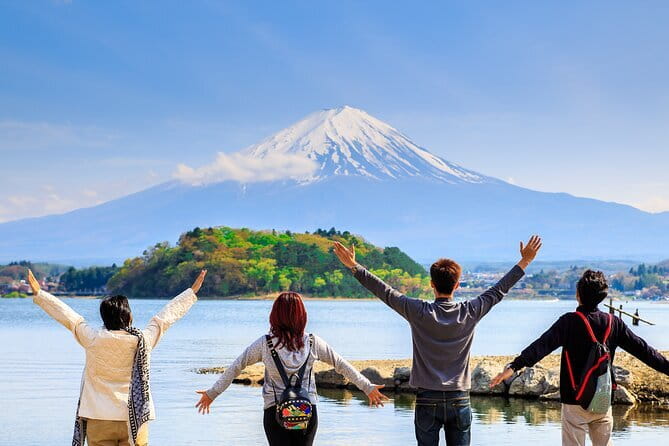
If you’ve ever tried to do Mount Fuji using public transport, you already know the problem: the views are worth it, but the getting there can be tiring. This tour fixes that. It’s set up as a private transfer day from Tokyo with an English-speaking chauffeur, so your biggest decision is where you want the camera to point.
The most practical win here is that you’re not locked into a frantic pace. This is a private outing, which means you can move when it makes sense—either to catch lighter crowds, wait for a good moment, or slow down if someone in your group needs a break. And yes, the guide can help you take photos during the day trip, which matters because Fuji viewpoints often come with awkward angles, crowds, and timing that’s hard to manage alone.
Before you commit, see how this one stacks up against a few Tokyo favourites:
- Mt Fuji and Hakone 1-Day Bus Tour Return by Bullet Train★ 5.0 · 26,383 reviews
- 1-Day Tokyo Bus Tour★ 5.0 · 14,250 reviews
- Tokyo: teamLab Planets TOKYO Digital Art Museum Entry Ticket★ 4.6 · 9,779 reviews
The Core Route: From Oshino Hakkai Ponds to Lake Yamanaka Views
This day is built around the Fuji Five Lakes area, with stops that each “do” something slightly different—water, shrine views, village atmosphere, and wide lake perspectives.
You typically start with Oshino Hakkai. This is a quiet village area known for a collection of eight ponds in the Fuji Five Lakes region. It’s a great first stop because it’s calmer than the big viewpoint zones, and the ponds give you a different feeling than the mountain itself. The stop is about 1 hour, and admission here is free.
Next comes Oishi Park and then Lake Yamanaka later on the day (you’ll follow the tour’s order and timing). Oishi Park is known for Fuji views paired with landscaped gardens, a mix that’s visually satisfying without feeling like you’re spending your whole day in one kind of scenery. Lake Yamanaka is the largest of the Fuji Five Lakes and sits at a higher elevation than most lakes in Japan. That bigger scale tends to make Fuji feel more “far away and grand,” especially if the sky clears.
Between those, you’ll also get temples, shrine viewpoints, and a couple of nature stops with distinct weather-proof character—even when clouds roll in.
Arakura Fuji Sengen Shrine and the Chureito Pagoda Photo Moment
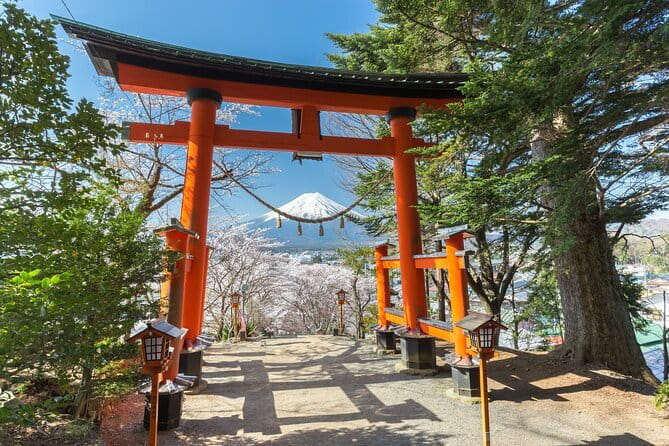
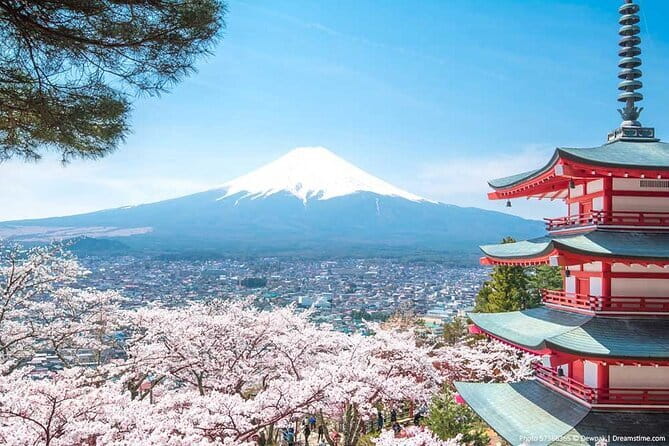
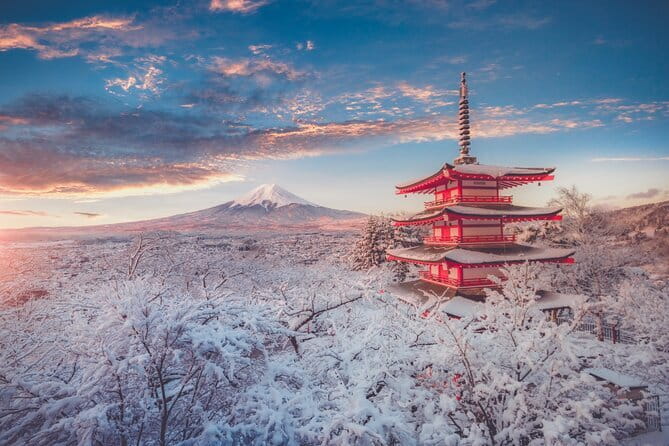
One of the headline sights is Arakura Fuji Sengen Shrine, famous for the Chureito Pagoda. It’s a five-story structure on a mountainside with Mount Fuji in the background, and it was built in 1963 as a peace memorial. That detail matters because it explains why the viewpoint feels purposeful rather than random. You’re going to a place designed for looking.
This stop is about 1 hour, and admission is free. The practical tip is to treat it like a photo stop you pace yourself through: arrive with time to look for the best angles, then take your pictures without rushing through the whole area. If you want the “classic” view, timing and where you stand makes a bigger difference than people expect.
Also, because the tour is private and your chauffeur can help with photos, you’re less likely to get stuck trying to communicate silently with strangers while your group queues behind you.
Oshino Hakkai vs. Lake Yamanaka: Two Different Ways to See Fuji
I like how this itinerary gives you two strong “Fuji-with-water” experiences that don’t feel repetitive.
At Oshino Hakkai, the vibe is intimate. You’re dealing with water in small, defined spaces—eight ponds that sit between Lake Kawaguchiko and Lake Yamanakako. It’s a good place to slow down, take in the details, and reset after a morning drive.
At Lake Yamanaka, the viewpoint shifts. The lake is larger and sits at a higher elevation. That can change the way Fuji appears—often smaller in the frame but more atmospheric, like a distant focal point. It’s a nice contrast after the pond stop because you’re not just repeating scenery. You’re seeing different scale and different ways the mountain reads in the distance.
If you’re someone who wants more than one “best photo,” this helps you get it without doubling up on the same kind of viewpoint.
Saiko Iyashi no Sato Nenba Village and What to Expect From a Paid Admission Stop
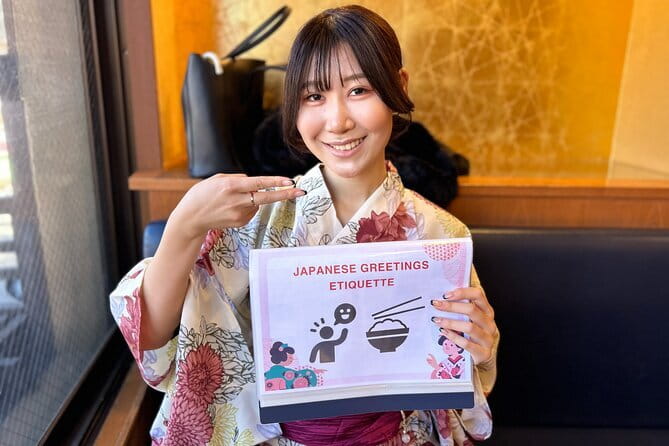
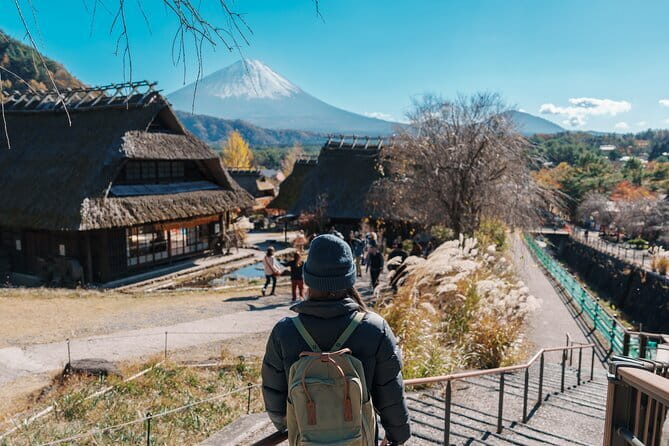
Another major stop is Saiko Iyashi no Sato Nenba, a traditional village on the shores of Lake Saiko. The key promise here is atmosphere: you get that preserved, traditional feel with Mount Fuji in the background when visibility cooperates.
This is a 1-hour visit, and admission is not included. Since the exact fee isn’t provided here, the best practical move is to assume you’ll pay something on-site for this stop. If you’re traveling with a family or a group member who dislikes surprise costs, you might want to ask about the expected ticket cost when you confirm.
Even if Fuji is partly obscured, village-style stops can still work because you’ll have something to look at—architecture, seasonal impressions, and a sense of place that’s not only dependent on the skyline.





Narusawa Ice Cave: Cool Comfort in the Middle of a Warm Day
Not every Fuji day needs another viewpoint. This one adds Narusawa Ice Cave, a natural lava cave near Lake Saiko, formed by Mount Fuji’s eruption over a thousand years ago. The big hook is that it stays icy cold year-round—even in summer.
You’ll also be reminded of the location: it’s hidden within Aokigahara Forest. That’s not just a label on a map; it helps explain why the cave has a “different environment” feeling compared to outdoor lakes and shrines.
This stop is about 1 hour, and admission is not included. Like Nenba, this is another on-your-own ticket cost. If you’re watching your budget, this is the kind of stop you should value because it’s a distinct experience from “just driving to views.”
Practical note: because it’s cold inside, it’s smart to bring a layer even in warmer months.
Kitaguchi Hongu Fuji Sengen Jinja: A Spiritual Gateway With Old Roots
If you want more than photos, this stop delivers the cultural side: Kitaguchi Hongu Fuji Sengen Jinja in Fujiyoshida. This is described as a historic Shinto shrine that dates back over 1,000 years and is dedicated to Konohanasakuyahime.
You’ll spend about 1 hour here, and admission is free. The value isn’t just “seeing a shrine.” It’s how the day balances the visual mountain obsession with the way Japanese tradition frames Fuji as sacred.
One nice aspect of doing this within a private day is that the chauffeur can explain what you’re looking at and why the place matters, without having to fit into a group tour routine. It’s the kind of stop that makes the day feel more grounded.
Shiraito Falls and Oishi Park: Waterfalls and Gardens in One Day

Shiraito Falls is another standout nature stop near Fujinomiya in Shizuoka Prefecture. It’s designated as one of Japan’s most beautiful waterfalls in the description, and the tour gives it a 1-hour visit with free admission. This is a good counterbalance to shrine steps and lake viewpoints—water noise and moving scenery help break up the mental load of the day.
After that, the route brings you back to a Fuji-view style stop at Oishi Park, on the northern shore of Lake Kawaguchi. It’s 1 hour and admission is free. Oishi Park is known for its beautifully landscaped gardens, which means it’s visually structured—great if you want a “designed” foreground with Fuji as the background.
If you’re traveling with someone who gets cranky when there’s too much walking, these parks and waterfall breaks often land well because they give you satisfying scenery without requiring intense hiking.
How the Private English-Speaking Chauffeur Makes the Day Feel Personal

The tour stands or falls on the driver experience, and this is where you get real value from private. The day’s descriptions emphasize a chauffeur who’s comfortable guiding you through the route, explaining what you see as you drive, and helping with photos.
One guide name that comes through strongly is John. Guests describe him as polite, fun, informative, and extremely accommodating—more like hanging out with a friend who happens to know the roads than a distant driver who just drops you off. That kind of energy matters on a long day, because it turns the trip from transportation into shared discovery.
If you’re traveling as a couple, with friends, or with family, the private format also lets you respond to the group’s needs:
- If someone wants a slower pace at a shrine, you can do it.
- If you want a quick photo before moving on, you can do that too.
- If the group agrees on a change of plan, it’s easier to negotiate on a private day.
Car Size, Group Size, and Why It Matters for Comfort
The tour is priced per group and notes a limit of up to 4 for the group price. At the same time, the experience mentions you can choose from multiple car sizes to accommodate groups of up to 6.
So what should you do with that information? Treat it as flexibility: smaller car for smaller groups, bigger option if you’re bringing more people. That matters on an 8 to 10 hour day trip because you’ll be spending a lot of time in the vehicle, and the “fit” of the car affects everyone’s comfort.
The day is listed at 8 to 10 hours. With that kind of duration, you’ll appreciate having enough space for bags, a water bottle, and camera gear, rather than playing the Tetris game in a cramped ride.
Timing, Weather, and Visibility: Your Fuji Reality Check
This experience requires good weather. That’s not a small detail—it’s the backbone of why Fuji days can be magical or just “pretty good.”
What you can do is manage your expectations and make your plan flexible. With a private chauffeur, you have more room to adjust your timing based on visibility. If the mountain is clear for one area but not another, you’ll likely have better odds of catching it in at least one spot.
Your best practical strategy is to:
- Dress in layers (you’ll move between areas with different temperature feel).
- Keep an eye on cloud cover as the day goes.
- Use photo stops efficiently. With photo help, you’ll spend less time fiddling and more time getting the shot when it’s there.
Also: this tour starts at 8:00 am, which is early enough to beat heavier crowds at popular Fuji angles.
Price and Value: When Private Costs Make Sense
At $428.28 per group (up to 4), this is not a budget day. But it also isn’t a “pay extra for nothing” kind of tour.
You’re paying for:
- Direct transfers between Tokyo and the Fuji region without you managing trains and schedules
- Private control over pace and timing
- English-speaking chauffeur support, including photo assistance
If your group is 2 to 4 people, private can feel reasonable compared to the cost of multiple individual transport tickets plus taxis plus lost time. And if your alternative is a DIY day where you constantly check connections, the time you save is worth real money.
If you’re only traveling solo, the price may feel steep. If you’re going with a friend or family member and want a day that feels smooth rather than stressful, this format often turns the price into a fair trade.
Who This Tour Fits Best (and Who Might Prefer Something Else)
This private day tour works especially well if you:
- Want to see multiple Fuji Five Lakes area highlights in one shot
- Care about photo timing and want help getting the right angle
- Prefer a day guided in English, with explanations along the way
- Don’t want to do Tokyo-to-Fuji logistics by yourself
It might be less ideal if:
- You’re on a tight schedule and can only do short trips
- You’re hoping for a guaranteed perfect Fuji silhouette regardless of weather
- Your plan depends on skipping any paid-admission stops (because some listed ones are not included)
Should You Book This Mount Fuji Private Tour?
If your goal is a comfortable, English-friendly, private day that covers the classic Fuji viewpoints plus cultural stops, I’d book it. The itinerary style makes sense for people who want variety: ponds, shrines, a traditional village, a lava cave that’s cold year-round, a famous waterfall, and then lake views that change the feel of the mountain.
Book it with two expectations in mind:
1) Weather matters. You’ll get the best results when Fuji is visible.
2) You’ll likely pay admission for the two specified stops where admission is not included.
If that sounds like a trade you’re happy to make, this is a very strong value play for a private day trip—especially when you factor in pickup comfort and photo support.
FAQ
How long is the Mount Fuji sightseeing private tour?
The tour duration is about 8 to 10 hours.
What time does the tour start?
The start time is 8:00 am.
Is this a private tour?
Yes. It is a private tour/activity, and only your group participates.
Does the tour offer pickup?
Pickup is offered.
Is the chauffeur/guide English-speaking?
Yes. It is described as an English-speaking chauffeur service.
Are tickets included for all stops?
Not all stops have tickets included. Some stops are free, while Saiko Iyashi no Sato Nenba and Narusawa Ice Cave list admission tickets as not included.
How many people can be in the group?
The price is per group up to 4, and the experience also notes car sizes that can accommodate groups up to 6.
Is a mobile ticket used?
Yes, mobile ticket is listed as a feature.
What happens if the weather is bad?
The experience requires good weather. If it’s canceled due to poor weather, you’ll be offered a different date or a full refund.
How does cancellation work?
Free cancellation is available up to 24 hours in advance of the experience start time for a full refund. If you cancel less than 24 hours before, the amount paid is not refunded.
More Tour Reviews in Tokyo



Fresh reviews from around Tokyo






Tokyo, compared.
 ★ 5.0Mt Fuji and Hakone 1-Day Bus Tour Return by Bullet TrainFrom $16326,383 reviews
 ★ 5.01-Day Tokyo Bus TourFrom $12914,250 reviews
 ★ 4.6teamLab Planets TOKYO Digital Art Museum Entry TicketFrom $259,779 reviews
 ★ 4.0Mt Fuji & Hakone Cruise, Drum Show Bullet Train 1 Day from TokyoFrom $1497,413 reviews
 ★ 5.0Shinjuku Food Tour (13 Dishes at 4 Local Eateries)From $866,603 reviews
 ★ 4.4Tokyo Mt Fuji 5th St & Hakone Cruise Bus Tour w/Bullet TrainFrom $1545,024 reviews
 ★ 5.0Flagship 2-Hours Official Street Go-Kart Tour – Tokyo Bay ShopFrom $644,974 reviews
 ★ 4.5From Tokyo: Mount Fuji Full-Day Sightseeing TripFrom $684,970 reviews