

Reviewed · SUMO SHOWS
Experience the Sumo World in Tokyo
Sumo has a reputation. This tour gives it context—up close. You’ll visit a sumo stable for a morning practice that most people never see, then you’ll meet the wrestlers at the end for photos and a chance to try a light push in the ring. I love that the day is built around hands-on access (not just watching from behind glass), and I also like how the guides connect what you see to sumo history and everyday life. One thing to keep in mind: the schedule is tight, and you’ll want to be on time for the 7:45 AM meeting so you don’t miss training.
The route is simple: start at Ueno Station, take JR trains toward the stable area, then settle in for about two hours of practice. Lunch is included—traditional chanko nabe with vegetarian service available if you request it at least 3 days ahead. The only real drawback is logistics outside the tour itself: you’ll pay for your JR ride (round trip is about ¥1060), so factor that into your budget.
If you’re into Japanese sport and culture, this feels like one of those days that turns into a lasting memory fast. It also works well for families and beginners because you get the rules and terms in plain language before things get physical. Just don’t expect a slow, casual sightseeing stroll—this is a working morning at full intensity.
In This Review
- Key highlights to look for
- A Real Sumo Stable Visit in Tokyo’s Morning Rush
- Meeting at Ueno Station: The 7:45 AM Start That Sets the Tone
- Train Legs to Matsudo and Kunugiyama: A Quick Local Route With Context
- Inside Asahiyama Beya: Front-Row Practice, Photos, and a Chance to Push
- Chanko Nabe Lunch: Traditional Stable Food With Vegetarian Service
- Price and Logistics: What $105.71 Really Buys (and What It Doesn’t)
- What to Expect From the Guides: Friendly Translation and Practical Help
- Is This Tour For You? Best Fit and Possible Mismatches
- Tips to Make Your Sumo Day Go Smoothly
- Arrive early and be strict with the 7:45 AM meetup
- Don’t forget your train add-on budget
- If you need vegetarian lunch, request it on time
- Bring a camera you can handle fast photo moments
- Expect intensity, not a show
- Should You Book Sumo World in Tokyo?
- FAQ
- Is lunch included, and can I get vegetarian food?
- Where do I meet the guide?
- How long is the tour?
- What is included in the sumo experience?
- Do I need to pay for train rides?
- Are tickets included for the stable?
- Is photography allowed during the training?
- How big is the group?
- Do I need a smartphone ticket?
- What’s the cancellation policy?
Key highlights to look for
- Exclusive stable access for a real training session, not a staged show
- Front-row viewing from chairs, so you can actually watch footwork and routines
- Try sumo yourself with an easy, safe-to-participate push attempt and photos at the end
- Chanko nabe lunch included (vegetarian option if requested 3+ days ahead)
- Small group size with a maximum of 26 people, which helps you ask questions
- Guide-led history on the train, so practice makes sense right away
More chances to sit ringside
- Tokyo: Sumo Show and Dining Experience★ 4.8 · 2,742 reviews
- the SUMO show★ 5.0 · 1,960 reviews
- Tokyo Shinjuku Sumo Show & Experience with Photo★ 5.0 · 1,750 reviews
A Real Sumo Stable Visit in Tokyo’s Morning Rush
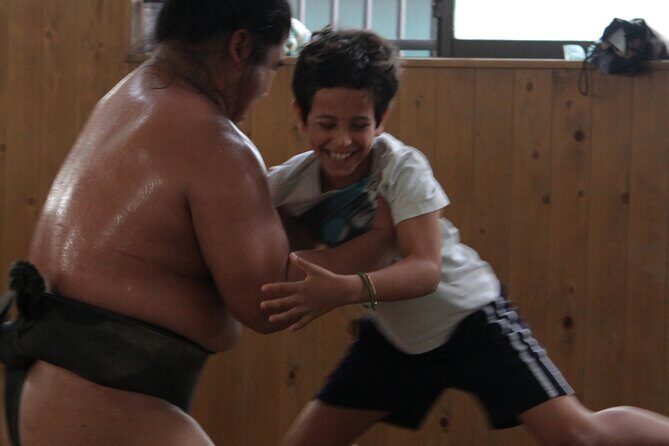
There’s “sumo you watch,” and then there’s “sumo you understand.” This half-day tour is the second type. You’re not just standing around with a ticket and a camera. You’ll be guided into the world of the wrestlers—how training works, what the rituals mean, and how daily life in a stable shapes the sport.
The big win is the format. You’ll sit comfortably and watch the practice, then you’ll interact at the end. Guides often explain the background in a way that makes the moves easier to follow. And the wrestlers themselves are part of the experience—friendly, open to conversation, and happy to take photos after the session.
You also get lunch, which matters more than it sounds. Sumo training is about stamina, routine, and rhythm, and chanko nabe is designed for that. You’re not just consuming a meal; you’re eating something that connects directly to what rikishi do to stay strong.
The one practical note: the schedule is built around training time. That’s great for authenticity, but it means you can’t treat this like a flexible day. Be ready to move quickly and arrive on time.
Meeting at Ueno Station: The 7:45 AM Start That Sets the Tone
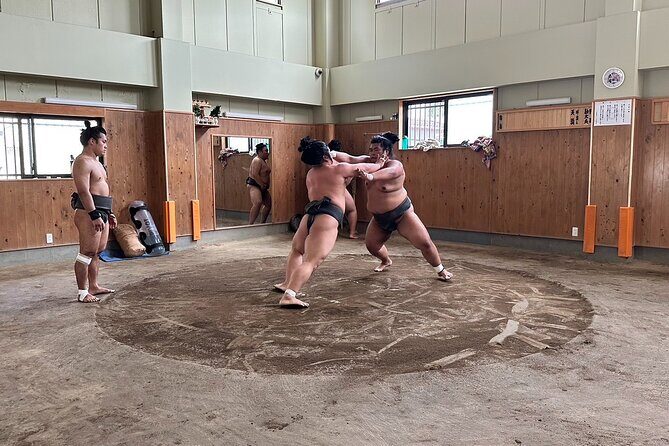
Your day begins at Ueno Station, meeting at 7:45 AM at 7 Chome-1, Taito City. That early start is not random. It’s what lets you reach the stable area before the serious part of practice.
This is also why the meeting point matters. Ueno is a huge station, but the tour’s meeting instructions are specific enough that you shouldn’t be wandering. Still, I’d recommend building in a little buffer. Train delays happen. Fast walking happens too.
Once you start moving, the pace stays upbeat. You’ll hop on JR trains in short legs (about 19 minutes to Matsudo, then about 15 minutes to Kunugiyama). During these ride segments, the guide’s job is to help you connect what you’re about to see with what you already know—or think you know—about sumo.
If you’re sensitive to early mornings, this might feel like the hardest part. But it’s also the part that makes the rest of the day work.
Train Legs to Matsudo and Kunugiyama: A Quick Local Route With Context
This tour uses public transit, and it does it in a smart way: you’re not stuck in a long van ride. You take short JR segments to get out toward the stable.
Here’s what you can expect from the travel portion:
- A clear plan with timed stops, not a random meetup-and-hope approach
- Time for the guide to explain key terms and sumo basics
- A smooth transition from city Tokyo to the world of training
Two tiny but useful details:
1) You won’t pay for the train in the tour price. The round trip by JR is about ¥1060 (around $7).
2) Those train legs are part of the “learning” piece, not downtime. The tour uses the ride time to set you up so the practice feels meaningful.
If you’re the type who likes to “get oriented” quickly, this structure helps. You arrive knowing what to watch for: pace changes, how wrestlers reset, and what different parts of routine are trying to build.
Inside Asahiyama Beya: Front-Row Practice, Photos, and a Chance to Push
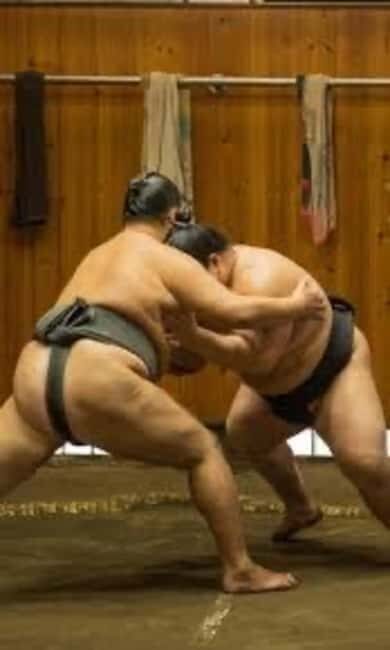
The heart of the experience is your time at 朝日山部屋 (Asahiyama beya). This is where you get the rare access: a real sumo training stable where you can watch practice up close.
You’ll have about two hours here, and you’ll view the session while seated on chairs near the action. That’s an underrated detail. Sumo is all about controlled movements and timing, and chairs keep you comfortable enough to pay attention instead of standing and shifting your legs the whole time.
What makes this stop special is the combination:
1) You watch the training in a structured way, so you can see intensity and technique as part of a daily routine.
2) You participate lightly at the end—trying to push or engage with the wrestlers in a fun, safe format.
3) Photography is allowed at the end, so you can capture the moment after the practice.
Also, don’t be surprised if you come away thinking: these people aren’t just big. The day is set up to show you strength plus agility plus discipline. You’ll see why sumo is both athletic and ritual-heavy.
One more thing to expect: the atmosphere can feel intense because you’re watching real training, not a performance. That’s the point. It’s also why timing matters. If you arrive late, you’re simply walking into a session that may already be in progress.





Chanko Nabe Lunch: Traditional Stable Food With Vegetarian Service
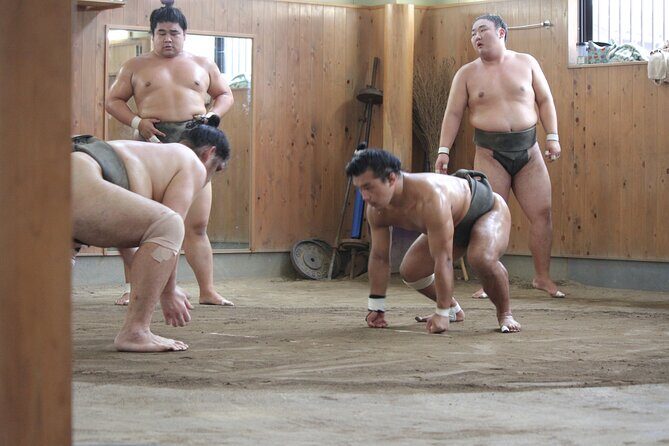
Lunch is included, and it’s centered on chanko nabe, the traditional dish associated with sumo training. Think hearty and practical—food built to support people doing hours of daily work.
Vegetarian options are available, but you must request it at least 3 days in advance. This is not a “no worries, I’ll decide on the day” situation. So if you eat vegetarian, plan ahead during booking.
Why lunch is part of the value here: it’s not a generic add-on meal. It’s a stable-related food that fits the theme of the day. You’ll also be eating with a better sense of what the athletes need, because you’ve just spent the morning watching their routines.
A small caution: chanko nabe is typically warm and filling. If you’re planning a second activity after the tour, keep it light for a couple of hours.
Price and Logistics: What $105.71 Really Buys (and What It Doesn’t)
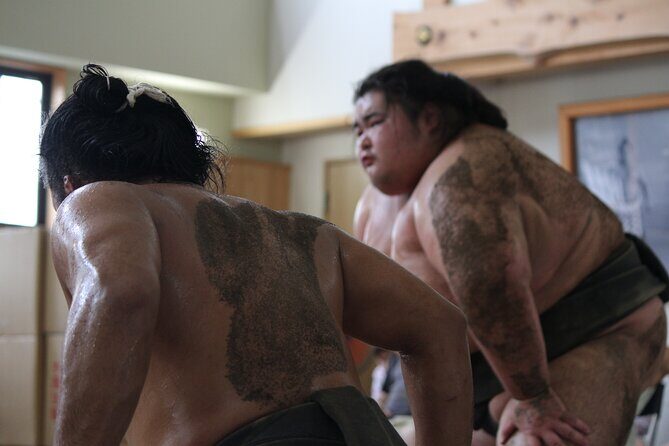
At $105.71 per person, this tour can feel like a splurge—until you break down what you’re getting. You’re not only paying for entry. You’re paying for:
- Exclusive access to a sumo stable practice
- A guided history and cultural explanation
- A hands-on sumo participation moment
- Lunch included (with vegetarian service if requested properly)
- Photography time at the end
The tour price does not include the trains. The round trip by JR train is about ¥1060 (roughly $7). That cost is minor compared to the experience itself, but it’s still real money—so I treat it as part of the total plan.
Also note the structure:
- Duration is about 4 hours (approx.)
- Group maximum is 26, which helps keep it conversational rather than chaotic
- You’ll get a mobile ticket
- The meeting is at 7:45 AM, so you’ll want to schedule your morning accordingly
So the value equation is pretty strong if you care about cultural authenticity. If you just want a quick “look at sumo” photo stop, this may cost more than you need. But if you like being close to real life—training, food, ritual—this feels like a solid use of money.
What to Expect From the Guides: Friendly Translation and Practical Help
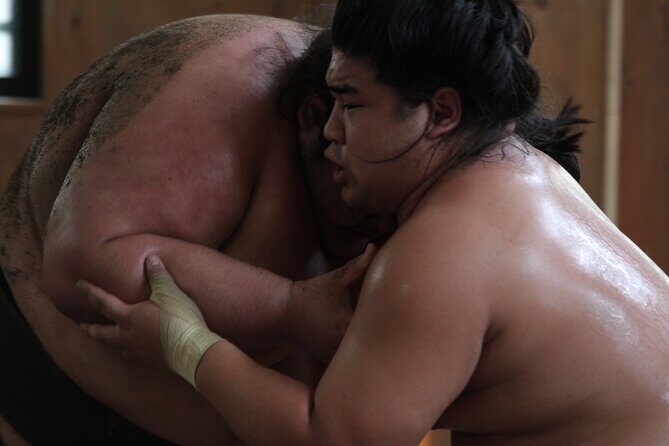
The guides are a major reason this experience earns high ratings. You’ll typically get a history lesson on the train, then an on-the-ground explanation at the stable that helps you understand what you’re seeing.
What I like most about the guide approach is that it’s not only facts. You also get help with the flow of the day—where to stand, when to move, and how to make the most of the photo moment at the end.
Names that show up in guidance roles include Ryoko and Haru, along with other guides such as Tomer, Tammy, Haruko, and Yassmine in different departures. The through-line is consistent: friendly, careful guidance and clear communication during the experience.
One caution pulled from real-world experience: communication can be stressful if you don’t get update messages. If you’re not using messaging apps often (or you tend to miss notifications), double-check that you can receive the tour’s instructions before you leave your hotel. And if you do arrive early, don’t wait until the last minute to confirm the stable address details.
Is This Tour For You? Best Fit and Possible Mismatches
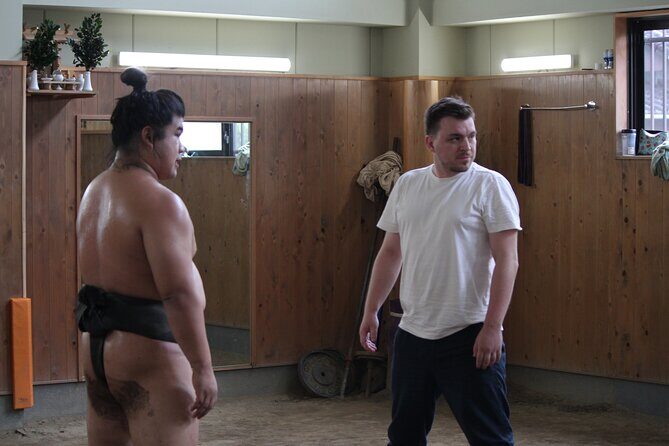
This is a good match if:
- You love Japanese culture and want to see the real version, not a simplified show
- You’re curious about sumo as sport plus ritual
- You like hands-on experiences, even if the participation is playful and limited
- You’re traveling with kids—this type of morning activity can work well when you’re seated comfortably and the guide explains what’s happening
It may be less ideal if:
- You hate early starts and don’t handle tight timing well
- You’re expecting a leisurely sightseeing day with lots of downtime
- You only want to observe quietly from a distance. The tour has an interactive element, and it’s structured around group movement.
If you’re a first-time sumo fan, you’ll leave with a better grasp of the sport’s culture. If you’re already a fan, the stable access gives you something a tournament ticket can’t: the behind-the-scenes training life.
Tips to Make Your Sumo Day Go Smoothly
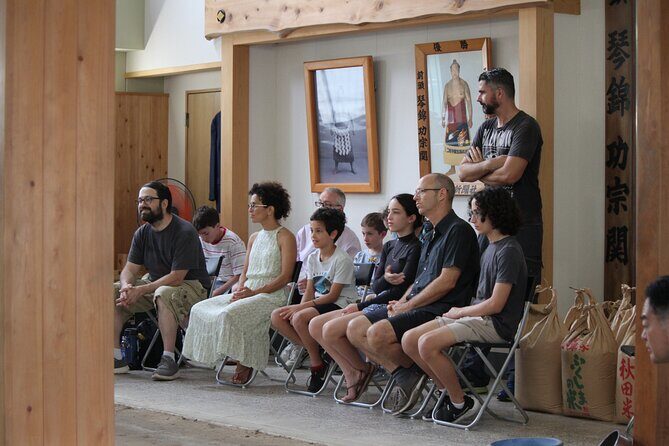
Here are the small things that make a big difference with a schedule like this.
Arrive early and be strict with the 7:45 AM meetup
You’re going to a working training session. If you miss the meeting time, you risk missing parts of the practice. Build in buffer time before you even reach Ueno.
Don’t forget your train add-on budget
Plan on paying the JR round trip (about ¥1060). It’s not included in the tour price, and I’d rather you arrive mentally ready than do math on the platform.
If you need vegetarian lunch, request it on time
Vegetarian service is available, but you need to notify at least 3 days in advance. If you wait too long, you might end up without the option you wanted.
Bring a camera you can handle fast photo moments
Photography is allowed at the end of the session. That means you’ll want to be ready to shoot without fumbling through settings while everyone else is lining up.
Expect intensity, not a show
Training is intense. That’s why it’s unforgettable. The day is built to help you watch with understanding—so lean into the seriousness.
Should You Book Sumo World in Tokyo?
I think you should book this tour if you want a real, close-up slice of Japanese sport culture. The combination of exclusive stable access, seated viewing, chanko lunch, and the chance to try a push makes it feel like more than a ticket—it’s a guided experience you can talk about for years.
Skip it if your priority is casual sightseeing, or if the early start will make you miserable. Also, if communication and timing throw you off, make sure you can receive updates and confirm details before you go.
Bottom line: for many people, this lands as a trip highlight because it’s not performing for tourists. It’s showing you a working stable morning—then letting you step into the fun part at the end. If that sounds like your kind of Tokyo day, this is a strong pick.
FAQ
Is lunch included, and can I get vegetarian food?
Yes. Lunch is included, and vegetarian service is available if you notify the operator at least 3 days in advance.
Where do I meet the guide?
Meet at Ueno Station at 7 Chome-1 in Taito City, Tokyo, with the start time listed as 7:45 AM.
How long is the tour?
The duration is listed as about 4 hours (approx.).
What is included in the sumo experience?
You’ll get a sumo wrestling experience, including viewing the practice comfortably seated on chairs, photography allowed at the end, and interactive participation where you try sumo wrestling firsthand against the wrestlers.
Do I need to pay for train rides?
Yes. Round trip JR train cost is listed as ¥1060 (about $7), and it is not included in the tour price.
Are tickets included for the stable?
The stable/practice admission is listed as included on the day (Asahiyama beya stop shows admission ticket included).
Is photography allowed during the training?
Photography is allowed at the end of the session.
How big is the group?
This experience has a maximum of 26 travelers.
Do I need a smartphone ticket?
Yes. The tour uses a mobile ticket.
What’s the cancellation policy?
Free cancellation is available. You can cancel up to 24 hours in advance for a full refund. If you cancel less than 24 hours before the start time, the amount paid won’t be refunded.
More Tour Reviews in Tokyo



More Mornings with the Wrestlers
Fresh reviews from around Tokyo






Sumo Shows, compared.
 ★ 4.8Sumo Show Experience with Chicken Hot Pot and a PhotoFrom $1036,678 reviews
 ★ 4.8Sumo Show and Dining ExperienceFrom $792,742 reviews
 ★ 5.0the SUMO showFrom $891,960 reviews
 ★ 5.0Tokyo Shinjuku Sumo Show & Experience with PhotoFrom $791,750 reviews
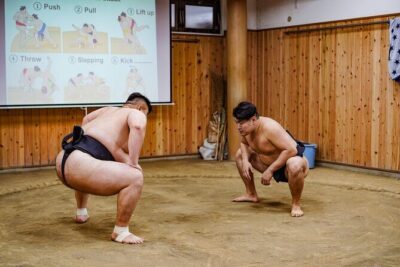
 ★ 4.8Sumo Show and Experience in ShinjukuFrom $691,001 reviews
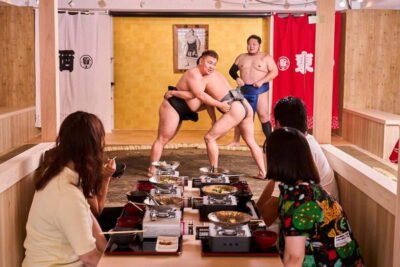
 ★ 5.0Authentic Sumo Experience in Tokyo: Enter the SanctuaryFrom $171603 reviews
 ★ 4.8Tokyo Sumo Experience: Chanko & Mochi with a Former ProFrom $103567 reviews
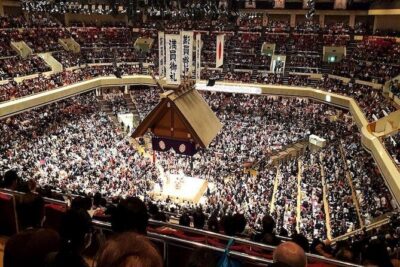 ★ 5.0Ultimate Sumo Tournament: Tokyo, Osaka, Nagoya, FukuokaFrom $184468 reviews
Browse the lists this tour appears in