
Reviewed · COOKING CLASSES
Basic Japanese Home Cooking with Fermented Foods(Teriyaki & Miso)
Fermentation turns lunch into a lesson.
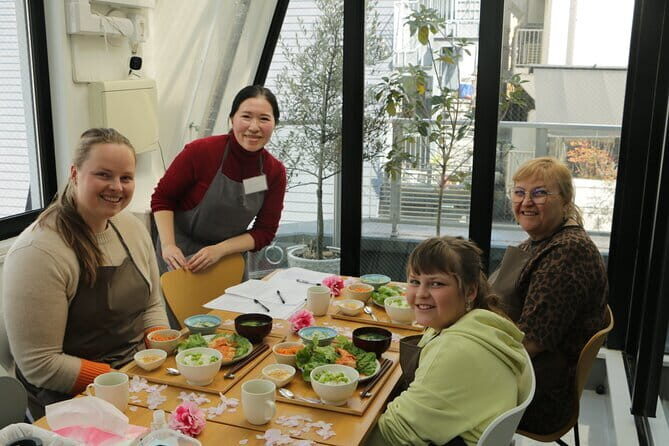
This small-group class in central Tokyo pairs hands-on cooking with an easy, in-depth look at Japanese fermented foods like miso and koji, plus the health angle that makes these ingredients show up in real kitchens. It runs about 2 hours and finishes with what you cooked—lunch or dinner.
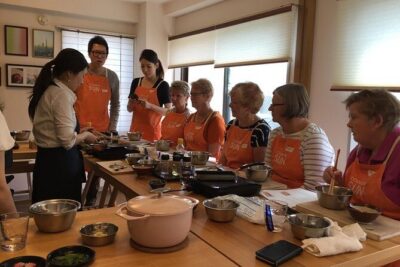
I especially like the small-group size (up to 6), because you get real back-and-forth with instructor Naoko while you cook. I also like that the focus is practical: you learn recipes that are designed to be repeatable back home, not just a one-time performance.
One thing to consider: the menu changes by season, so you won’t get a fixed list of dishes ahead of time. Also, the vegan option uses deep-fried tofu, and the kitchen is shared with non-vegan prep—so you need to request vegan when you book.
In This Review
- Key things to know before you cook miso in Tokyo
- Cooking class in Tokyo that starts with miso (and actually teaches you)
- Where you start: Akasaka-Mitsuke Station and the walk to the kitchen
- The 2-hour flow: tea, apron, lecture, then teriyaki-and-miso cooking
- Step 1: Get comfortable in the kitchen
- Step 2: The fermentation lecture (small-group, Q&A friendly)
- Step 3: Cook the easy home dishes
- Step 4: Eat what you made
- What fermented-food learning gives you beyond the meal
- Vegan option: deep-fried tofu, shared kitchen, and what to request
- Mirin, alcohol, and kids: the safe and the not-safe part
- Price and value: $70.36 for 2 hours, a meal, and take-home notes
- Optional upgrade: fermented food dessert class at 2pm
- Who should book this class, and who might skip it
- Should you book Cooking with Fermented Foods (Teriyaki & Miso)?
- FAQ
- What do I cook and eat in this class?
- How long is the experience?
- How big is the group?
- Where do I meet, and how do I get there?
- Is there a vegan option?
- Does the class use mirin, and is it safe for kids?
- Is this class suitable for children?
- What’s included in the price?
- Can I get a refund if I cancel or if weather is bad?
Key things to know before you cook miso in Tokyo
- Small-group guidance with Naoko: you get feedback while you’re actually chopping, mixing, and tasting (with tasting limits for kids).
- Fermented-food lecture included: you get the story and the health reasons behind ingredients like miso and koji, not just instructions.
- Central Tokyo convenience: the kitchen is walkable near public transport, and it’s about 10 minutes from Shibuya Station including a short walk.
- Seasonal menu keeps it fresh: you’re not eating the same thing every day; the recipes shift with what’s seasonal.
- Vegan option is real, but shared space: deep-fried tofu is used for vegan requests, and you cook in the same kitchen as the standard (non-vegan) group.
- Optional same-day dessert upgrade: join the fermented food dessert class at 2pm and you’ll get a special gift (rice koji amazake, the one used in that dessert class).
More aprons-on time in Tokyo kitchens
- Ramen & Gyoza Cooking Class in Tokyo with Local Supermarket Visit★ 5.0 · 823 reviews
- Tokyo: Easy Ramen Cooking Experience in Kabukicho, Shinjuku★ 4.6 · 321 reviews
- Ramen and Sushi Cooking Class with Sake Pairing Set in Tokyo★ 5.0 · 291 reviews
Cooking class in Tokyo that starts with miso (and actually teaches you)
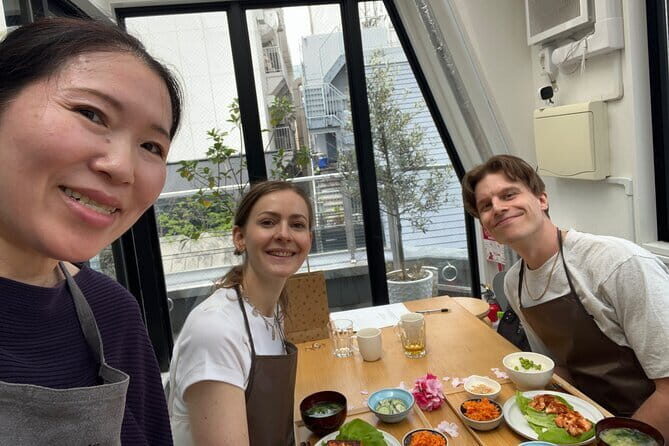
Tokyo can be amazing for food, but it also makes it easy to eat only what you already understand: ramen, sushi, curry—repeat, repeat, repeat. This class is a smarter break. You get a home-cooked meal rhythm, but with a theme that’s both cultural and useful: how Japanese fermented ingredients work, why they matter, and how to handle them in everyday cooking.
The tone is relaxed. You’re not stuck watching someone else do everything. You cook. You ask questions. And because it’s a small group, you’re less likely to feel like a spectator in someone else’s kitchen.
What makes it especially valuable is the pairing: a short lecture plus hands-on cooking. That means you leave with a mental model, not just a recipe list.
Where you start: Akasaka-Mitsuke Station and the walk to the kitchen
The meeting point is Akasaka-Mitsuke Station (3-chōme-1-6 Akasaka, Minato City). Your class starts there and ends back at the same meeting point.
In practical terms, that’s a good setup for two reasons:
1) You can build it into a day without needing complicated planning. Akasaka-Mitsuke is well connected, and the experience notes that it’s near public transportation.
2) The kitchen location is described as central Tokyo, with a short walk involved from Shibuya—about 10 minutes total from Shibuya Station to the kitchen.
You’ll also get a mobile ticket, so you’re not juggling paper confirmations.
Small drawback: there’s a note that the class may take place at a different kitchen location within central Tokyo. If that happens, you’ll be notified after booking. It’s not a dealbreaker, but it does mean you should plan to check your message before you head out.
The 2-hour flow: tea, apron, lecture, then teriyaki-and-miso cooking
This experience is about 2 hours, which is a great length for a busy travel schedule. It’s long enough to feel like you did something meaningful, but short enough that you won’t ruin your evening plans.
Here’s how the class experience is structured, in the way it’s described:
Step 1: Get comfortable in the kitchen
When you arrive, you’ll be given a rental apron. You’ll also have coffee and/or tea, including Japanese tea options (green tea or other Japanese tea). That matters more than you might think. It makes the first 10–15 minutes feel like settling in rather than waiting around.





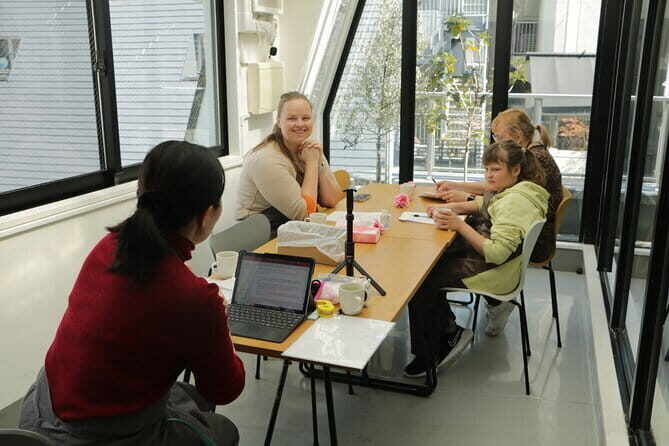
Step 2: The fermentation lecture (small-group, Q&A friendly)
Before you start cooking, you get an in-depth lecture in a small-group setting. The ingredients discussed include Japanese fermented staples such as miso, mirin, and koji (these come up directly in how the class is framed, plus the way the instructor describes the process and health angle).
In other words, you learn the why behind the what. That’s the difference between copying a recipe and understanding how to adjust one when you’re standing in a Japanese grocery store looking at unfamiliar labels.
Step 3: Cook the easy home dishes
Then comes the hands-on part: easy recipes using traditional Japanese fermented ingredients. Since the class is specifically branded around teriyaki and miso, you should expect those flavors and techniques to be central to what you make.
Also, the menu changes depending on the season. So you might cook something different than the person next to you (but the theme stays consistent: fermented foods in everyday Japanese home cooking).
Step 4: Eat what you made
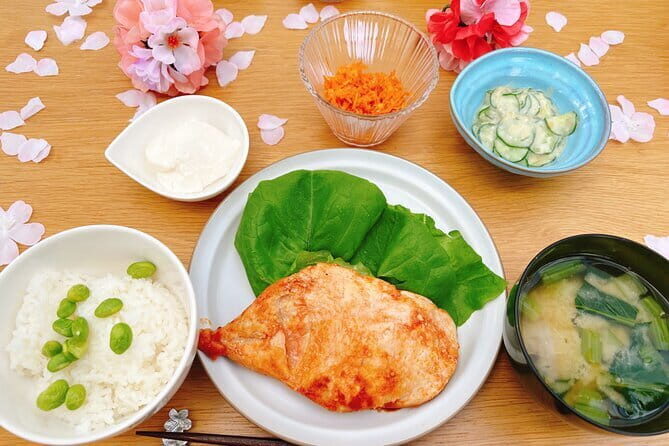
Lunch or dinner is included, and it’s exactly what you cooked. That’s the biggest “value move” in a cooking class: you’re not just paying for instruction; you’re paying for a meal you helped build.
You’ll also receive a lecture handout (presentation material from the lecture). I like this because it turns the class into something you can actually reference when you’re back home staring at your pantry.
What fermented-food learning gives you beyond the meal
Fermentation can sound mysterious until someone explains it in plain language. This class focuses on traditional Japanese fermented ingredients and their health benefits, but it doesn’t do it in a preachy way. It’s practical.
Here’s what you can realistically take away:
- You learn what miso and koji are doing in food, not just that they exist.
- You learn how to work with fermented seasonings like you would in a real kitchen—measure, combine, and cook with confidence.
- You leave with a better sense of how flavors build: savory depth from miso, sweetness and balance from teriyaki-style seasonings, and the role fermented bases play in the final taste.
This is also why the class is framed for both beginners and people who already cook. Even if you’ve never bought miso before, you get the education to make it less intimidating next time.
Vegan option: deep-fried tofu, shared kitchen, and what to request
If you’re vegan, this class can work for you, but it comes with a clear condition: the vegan option uses deep fried tofu. The kitchen is also shared with the non-vegan version.
So here’s the practical way to think about it:
- Request vegan when you apply, so the kitchen can prepare in the way described.
- If your vegan diet has strict concerns about shared utensils or cross-contact, you should consider asking about that directly when you book (the info provided confirms shared kitchen space, but it doesn’t spell out cross-contact controls).
The good news: the option is available, so you’re not forced into eating around the theme.
Mirin, alcohol, and kids: the safe and the not-safe part
There’s a specific note about mirin. A small amount of mirin is used, and mirin contains alcohol. During cooking, the alcohol is removed, so the dish is described as safe for children.
However, tasting is not available for children. That’s an important distinction. If you’re bringing a kid, plan on them participating in the cooking and eating what’s appropriate, but don’t expect them to sample everything.
For age fit: the experience notes it’s best suited for adults and children aged 7 and above, and it may not be suitable for children 6 and under due to the content and technique focus.
Price and value: $70.36 for 2 hours, a meal, and take-home notes
At $70.36 per person, you’re paying for a compact, high-touch experience. In Tokyo, $70-ish doesn’t buy you much alone for dinner these days. In this case, the price includes a lot of the “hard costs” that often sneak up in cooking classes:
- Lunch or dinner
- Rental apron
- Coffee and/or tea (plus Japanese tea options like green tea)
- Lecture handout you can use later
You’re also getting an instructor-led lecture, and you’re cooking in a group of at most 6. That small group is part of the value: it makes questions and feedback realistic.
What isn’t included is transportation to the venue. So factor in your train fare and a bit of buffer time to find the kitchen.
My take: if you want a calmer, instructive alternative to another meal-out day—and you care about fermented flavors—this price feels fair for what’s included.
Optional upgrade: fermented food dessert class at 2pm
If you’re the type who wants to make a full fermented-food day, there’s a promotion: a second class called Fermented Food Dessert Class runs from 2pm. Join both classes the same day and you’ll receive a special gift: rice koji amazake, the same ingredient used in the dessert class.
This is a nice bonus for two reasons:
1) You get more time with koji and fermented sweetness in different formats.
2) You leave with something tangible to remember the day.
If you’re short on time, skip it. But if you have flexibility, it’s a smart way to extend the theme without wasting hours searching for a dessert that’s hard to recreate at home.
Who should book this class, and who might skip it
This is a strong fit if you:
- want hands-on cooking instead of another walking-food tour
- like the idea of learning how to use Japanese fermented ingredients at home
- want something practical and seasonal, not just a fixed menu
- appreciate a small-group setting where you can ask questions
You might skip it if you:
- only want to eat, not cook or learn techniques
- prefer very long classes with multiple dishes (this one is tightly packed at around 2 hours)
- can’t do shared-kitchen formats and are strict about vegan cross-contact concerns
Should you book Cooking with Fermented Foods (Teriyaki & Miso)?
Yes, if your goal is to understand Japanese cooking in a way you can repeat. This class is built around real kitchen ingredients—miso, koji, and teriyaki-style flavoring—and it pairs instruction with the meal you make. The small-group size and the lecture handout make it feel more useful than many short experiences.
If you hate uncertainty, remember the menu changes by season. But if you like learning a method you can apply even when the specific dish shifts, that variability is a feature, not a flaw.
One last practical tip: because it’s said to require good weather, check close to the start time and be ready for a date switch or refund if the experience is canceled due to weather.
FAQ
What do I cook and eat in this class?
You’ll prepare easy Japanese home cooking using traditional fermented ingredients, with a focus on teriyaki and miso flavors. You’ll also eat lunch or dinner, and the menu can change depending on the season.
How long is the experience?
It takes about 2 hours.
How big is the group?
The class is limited to a maximum of 6 travelers.
Where do I meet, and how do I get there?
You meet at Akasaka-Mitsuke Station. The kitchen is in central Tokyo and is described as about 10 minutes from Shibuya Station including a short walk. It’s also near public transportation.
Is there a vegan option?
Yes. A vegan option is available using deep fried tofu. You need to ask for the vegan option when you apply, and the kitchen is shared with the non-vegan version.
Does the class use mirin, and is it safe for kids?
A small amount of mirin is used, and it contains alcohol. The alcohol is removed during cooking, so the dish is safe for children. Tasting is not available for children.
Is this class suitable for children?
The experience is best suited for adults and children aged 7 and above. It may not be suitable for children 6 and under because the content focuses on learning techniques.
What’s included in the price?
The price includes lunch or dinner, a rental apron, coffee and/or tea (including Japanese tea options), and a lecture handout.
Can I get a refund if I cancel or if weather is bad?
You can cancel for a full refund if you cancel at least 24 hours before the start time. The experience requires good weather; if it’s canceled due to poor weather, you’ll be offered a different date or a full refund. If the minimum number of travelers isn’t met, you’ll also be offered a different experience or a full refund.
Learn Another Dish: Tokyo Cooking Classes


More Tour Reviews in Tokyo



Fresh reviews from around Tokyo






Cooking Classes, compared.
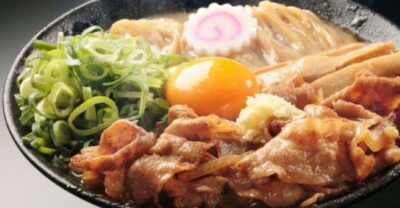
 ★ 5.0Ramen & Gyoza Cooking Class in Tokyo with Local Supermarket VisitFrom $122823 reviews
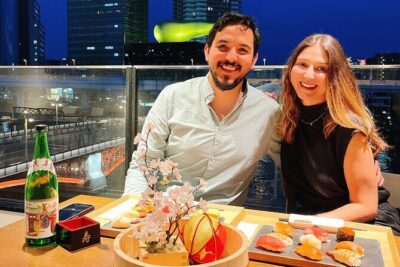
 ★ 4.6Easy Ramen Cooking Experience in Kabukicho, ShinjukuFrom $29321 reviews
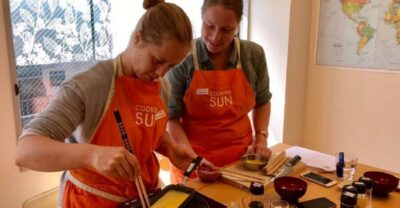
 ★ 5.0Ramen and Sushi Cooking Class with Sake Pairing Set in TokyoFrom $79291 reviews
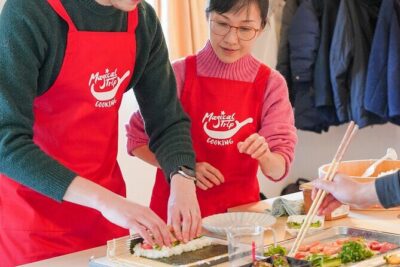
 ★ 4.9Wagyu and 7 Japanese Dishes Cooking ClassFrom $67273 reviews
 ★ 5.0Tokyo Washoku 4-hour Cooking Class: From Market to TableFrom $79253 reviews
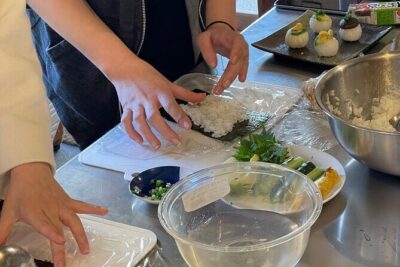
 ★ 5.0Small-Group Wagyu Beef and 7 Japanese Dishes Tokyo Cooking ClassFrom $72190 reviews
 ★ 5.0Private Home Cooking in Yanaka – Local Flavors in a Warm SettingFrom $122173 reviews
 ★ 5.0Tokyo Sushi Making Experience & Japanese Cooking ClassFrom $59150 reviews
Browse the lists this tour appears in