
Reviewed · TSUKIJI FISH MARKET TOURS
【Spanish/ English】Tsukiji Matcha at a 100-Year old Japanese shop
Tsukiji has a quieter side. This experience pairs a temple visit with a private matcha tasting inside a shop with about a hundred years of tea tradition, not a loud food court. You’ll slow down, learn what’s actually happening in each cup, and get a small souvenir for your effort.
I love the private, beginner-friendly setup. You’re not guessing through a museum-style lecture or fighting crowds—you get a guided session built for first-timers and serious matcha fans alike.
One thing to consider: it’s focused on cold-brew matcha in a short 1 hour tasting window. If you want a long, hands-on traditional ceremony with hot whisked matcha, this might feel more like a curated tasting than a full class.
In This Review
- Key things to know before you go
- Tsukiji Hongan-ji Temple first: a peaceful tone-setter
- Inside a century-old Tsukiji tea shop: private and beginner-friendly
- Four cold-brew matcha flights, served as a tasting
- The guide’s tea lessons: origins and cultivation styles
- How this fits Tsukiji: a calmer break from the crowds
- Price and logistics: what $65.04 buys you
- What you’ll leave with (and how to plan the rest of your day)
- Who should book this matcha tasting?
- Should you book this Tsukiji Matcha experience?
- FAQ
- How long is the Tsukiji matcha experience?
- Where does the experience start?
- Where does it end?
- What’s included in the tasting?
- Is it private or shared?
- What languages does the guide speak?
- What exactly do I taste during the session?
- Do I need to pay admission for the temple?
- When is it usually available?
- What’s the cancellation policy?
Key things to know before you go
- A calm, reservation-style session that’s designed as a break from Tsukiji’s busiest areas
- Four premium cold-brew matcha varieties served as a tasting flight
- Seasonal wagashi included, so you taste matcha with the flavors Japanese sweets are meant to balance
- Guided explanations tied to tea-growing origins and cultivation styles
- Small souvenir included, plus photos taken by your guide
Still hungry? More Tsukiji breakfasts and market walks
- Tokyo Tsukiji Fish Market Food and Culture Walking Tour★ 5.0 · 3,184 reviews
- Tokyo: Tsukiji Fish Market Food and Walking tour★ 5.0 · 1,724 reviews
- Tokyo: Tsukiji Fish Market Guided Walking Tour★ 4.9 · 1,397 reviews
Tsukiji Hongan-ji Temple first: a peaceful tone-setter
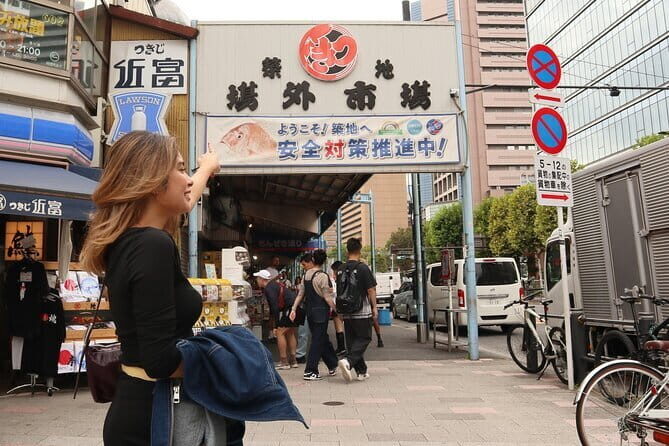
The experience starts at Tsukiji Hongan-ji Temple, a big and impressive stop in the middle of Tokyo’s real daily life. You’ll spend about 30 minutes here, and there’s no admission ticket cost for the temple visit. The best part is the pacing: you begin in a calmer setting before you move into the tea portion.
This is smart if you’re visiting Tsukiji for the food scene. The area can be intense. Starting with a temple visit helps you reset your senses and gives you a little structure before the tasting. You’ll also get an easy win: you’re already in a famous neighborhood, so the walk to the next part doesn’t feel like a detour.
Practical note: wear comfortable shoes. Tsukiji is walk-heavy, and you’ll want to move easily between stops and then onward toward the outer market area afterward.
Inside a century-old Tsukiji tea shop: private and beginner-friendly
After the temple, you head into a tea-focused setting with around a century of history behind it. The tasting is run in a private format for just your group, which matters more than it sounds. You can ask basic questions without feeling like you’re holding up a whole crowd.
The session is led by a certified tea master, and the guide supports you in Japanese/English/Spanish. That language mix is a big deal if your matcha vocabulary is still under construction. You’re not stuck on guessing-only vibes.
What I like about this kind of setup is that it’s not trying to impress you with complexity. It tries to teach you how to taste—starting from flavor, not just terminology. You’ll likely see the difference between matcha you think you understand and matcha that’s been explained in the right order.
Also, this is served as a reservation-style experience, which means you’re less likely to feel like you’re squeezing into a busy setup. The whole thing is built to feel calm, not hectic.
Four cold-brew matcha flights, served as a tasting
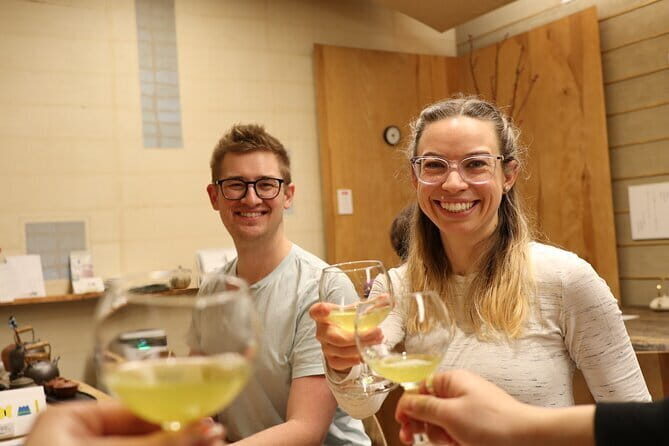
The main event is a 1-hour matcha tasting built around four premium cold-brewed varieties. These are served in wine glasses, which is a fun detail because it changes how you pay attention. You’ll naturally slow down and look at the color and aroma before you drink.
Cold-brew matcha tastes different than hot whisked matcha. In general, cold preparations tend to feel smoother and less sharp at the edges, so you can focus more clearly on sweetness, body, and the way flavors evolve as you sip. Here, the goal isn’t just to drink four cups—it’s to compare them in a guided order.
You’ll also get seasonal wagashi (traditional sweets) to pair with the matcha. This pairing is one of the most useful parts of the experience, because it teaches you how Japanese sweets aren’t just dessert—they’re part of the tasting logic. The wagashi is included, and it changes how matcha feels on your palate between sips.
And yes, coffee and/or tea is included too, so you’re not stuck on matcha-only hydration. (That matters if you’re sensitive to strong tea flavor or if you’re mixing a long day of walking with a tasting.)
The guide’s tea lessons: origins and cultivation styles
One of the best values here is what the session teaches beyond taste. You’ll get guided explanations about flavor origins tied to tea-growing regions and cultivation styles. That’s the practical part: it helps you understand why matcha A tastes the way it does, instead of just memorizing labels.
If you’ve ever wondered why two matcha products that look similar can taste wildly different, this is the answer path. You’ll learn what to look for when you taste—things like how bitterness, sweetness, and aroma show up differently depending on the tea’s background.
The certified tea master and local guide also add stories and history to the flavor lesson. The goal isn’t heavy academic stuff. It’s to connect the cup to the culture and the agricultural choices behind it. This is exactly the kind of knowledge that makes you enjoy matcha later, at home or in a shop, because you can actually describe what you’re tasting.
A small but meaningful detail: the guide takes photos for you. That’s useful because it keeps you from playing solo photographer while you’re trying to taste and learn.





How this fits Tsukiji: a calmer break from the crowds
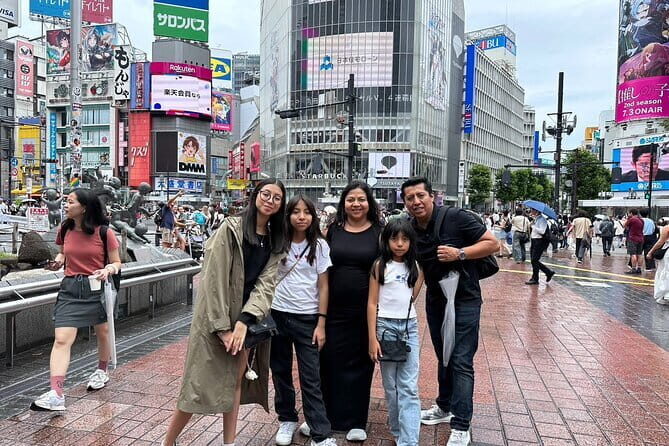
Tsukiji is famous for food, but it can also feel like sensory overload. This experience works because it gives you a reset right in the same area. Instead of another quick stop where you sample and sprint, you get a structured 1 hour tasting with slower attention.
The itinerary design is also friendly to your day. You start at a temple (about 30 minutes), then you spend about an hour on matcha tasting, and you finish near the Tsukiji Outer Market area. That means you’re not locked into a full day of formal activity. You can still plan to explore afterward if you want, without feeling like the tea part stole your entire schedule.
Timing tip: this is typically offered on Mondays from 12:00 PM to 3:00 PM per the listed schedule. If you’re trying to plan around morning market energy or an evening meal, book early and build your walking route accordingly.
Price and logistics: what $65.04 buys you
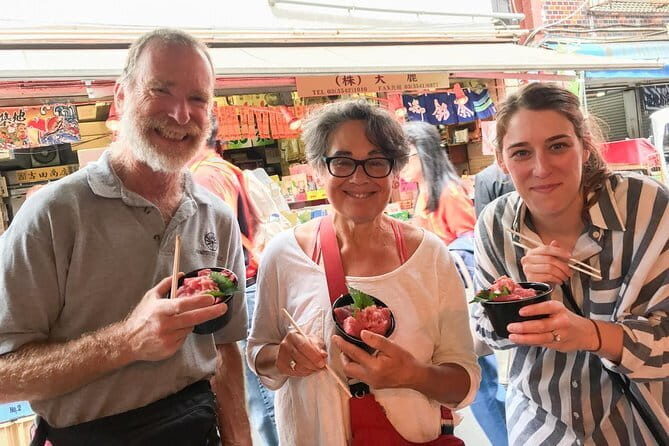
At $65.04 per person, this isn’t the cheapest thing you’ll do in Tokyo. But it’s also not priced like a random sampling station. You’re paying for three main value pieces:
- A private group format (only your group participates) rather than a crowded public tour
- Four premium cold-brew matcha tastings plus seasonal wagashi
- A guided session with a local Japanese/English/Spanish-speaking guide, including photos
If you compare it to the cost of buying multiple premium matcha items on your own, the tasting format becomes more reasonable. The guided comparisons also help you choose better later if you decide to buy matcha as a souvenir or gift.
Another practical value: mobile ticket and being near public transportation. Tsukiji is easy to reach, but it’s not always easy to find your exact meeting spot unless you’re prepared. A mobile ticket helps you avoid stress when you arrive.
About group discounts: the data says group discounts are available. If you’re traveling with friends or family, it can make the per-person cost feel more fair.
What you’ll leave with (and how to plan the rest of your day)
You should expect a small souvenir included with the experience. It’s a nice touch because it gives the session a clear takeaway beyond memories and photos.
Because the experience ends near Tsukiji Outer Market, I recommend planning a simple follow-up. Don’t schedule a super tight next reservation. Use the time after your matcha tasting to walk, snack lightly, and browse. You’ll likely enjoy the market more with a calmer tea brain.
What to bring:
- Comfortable shoes for Tsukiji walking
- Curiosity and patience. This is a tasting and explanation session, not a quick hit
If you’re someone who likes authentic food and culture stops that aren’t just shopping, this is a good fit. And if you’re traveling as a small group, the private format makes it feel personal without getting overly formal.
Who should book this matcha tasting?
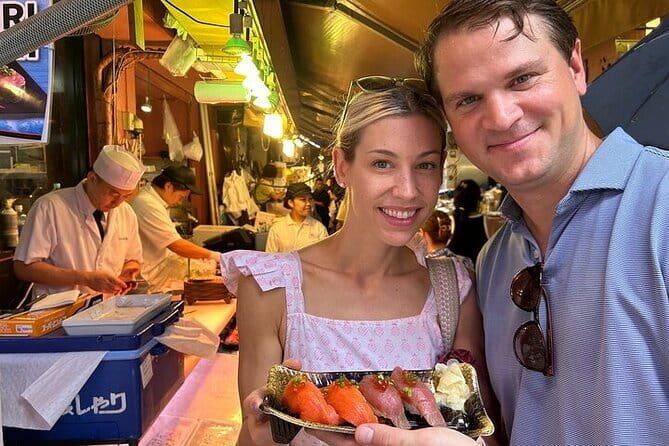
Book it if you fit any of these:
- You’re a matcha fan who wants to taste multiple premium styles in one calm session
- You want a break from the busiest Tsukiji areas
- You like explanations tied to the real source of flavor, like tea-growing regions and cultivation styles
- You’re traveling with someone who wants culture without a long museum-style day
You might skip it if:
- You want hot, traditional whisked ceremony as the main event
- You’re looking for a full-day deep culinary itinerary with many stops
- You need a lot of downtime between activities; this is about 1 hour 30 minutes total
Should you book this Tsukiji Matcha experience?
Yes, if you want a calm, guided matcha tasting that actually teaches you how to think about flavor. For $65.04, you get four premium cold-brew matcha varieties, seasonal wagashi, coffee and/or tea, photos, and a short lesson that connects taste to cultivation choices. That combination is the real value.
If you’re the kind of traveler who enjoys food culture when it’s paced well—temple calm first, then thoughtful tasting—this is a strong pick. Just make sure you’re comfortable with a cold-brew focus, since that’s the center of the experience.
FAQ
How long is the Tsukiji matcha experience?
It lasts about 1 hour 30 minutes total.
Where does the experience start?
It starts at Tsukiji Hongan-ji Temple, 3-chōme-15-1 Tsukiji, Chuo City, Tokyo 104-8435, Japan.
Where does it end?
It ends near Fish Market Tsukiji Outer Market, Tsukiji, Chuo City, Tokyo (area listed around 4-chōme 16 and some of 6-chōme).
What’s included in the tasting?
You get a matcha workshop, traditional sweets (wagashi/snacks), and coffee and/or tea. You also taste four types of premium cold matcha, and your guide takes photos.
Is it private or shared?
It’s private for your group only.
What languages does the guide speak?
The guide is Japanese/English/Spanish speaking.
What exactly do I taste during the session?
You’ll taste four cold-brewed premium matcha varieties served in wine glasses, paired with seasonal wagashi.
Do I need to pay admission for the temple?
No. The temple stop lists admission ticket free.
When is it usually available?
The listed schedule shows Monday from 12:00 PM to 3:00 PM.
What’s the cancellation policy?
Free cancellation is available up to 24 hours in advance for a full refund. Changes within 24 hours aren’t accepted.
More Tour Reviews in Tokyo



Back to the Market: More Tsukiji Tours



Fresh reviews from around Tokyo






Tsukiji Fish Market Tours, compared.
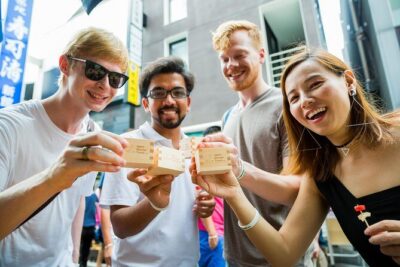 ★ 5.0Tokyo Tsukiji Fish Market Food and Culture Walking TourFrom $993,184 reviews
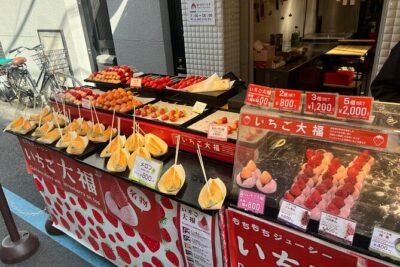 ★ 5.0Tsukiji Fish Market Food and Walking tourFrom $301,724 reviews
 ★ 4.9Tsukiji Fish Market Guided Walking TourFrom $221,397 reviews
 ★ 5.0Tokyo Sushi Making Class in Tsukiji with Professional ChefFrom $491,177 reviews
 ★ 5.0Tsukiji Fish Market Guided Tour and Sushi Making with Pro ChefFrom $104775 reviews
★ 4.7Tsukiji Fish Market Food and Culture Walking TourFrom $96757 reviews
★ 5.0Tsukiji Fish Market Guided Tour and Sushi Making with Pro ChefFrom $104775 reviews
★ 4.7Tsukiji Fish Market Food and Culture Walking TourFrom $96757 reviews
 ★ 5.0Tsukiji Fish Market: Street Food & Culture Walking TourFrom $33669 reviews
 ★ 5.0Tsukiji Fish Market Small-Group Food Walking TourFrom $87621 reviews
Browse the lists this tour appears in