
Reviewed · MT FUJI DAY TRIPS
Tokyo To Mount Fuji Private English Guided Day Tour
Tokyo to Fuji is a long day, so planning matters. This private tour is built to simplify it: you get hotel pickup, a private air-conditioned ride, and an English-speaking guide handling the driving and logistics. You’ll also get a route that can flex around your interests, which is a big deal when Mount Fuji visibility is weather-dependent.
I especially like two things. First, you skip the Tokyo-transit maze—no meeting place hassle, just pickup and drop-off. Second, the day mixes classic view stops with calmer, more local-feeling places like Oshino Hakkai and a shrine on Fuji’s slopes, so it’s not just a photo drive-by.
One possible drawback: access to Mount Fuji can change. There are times when private cars are restricted, so even if Mt. Fuji is the headline, you may not always reach the exact same point on the mountain.
In This Review
- Key things to know before you go
- A Private Fuji Day From Tokyo: What This Tour Gets Right
- Pickup, Private Vehicle, and the Real Meaning of English Guidance
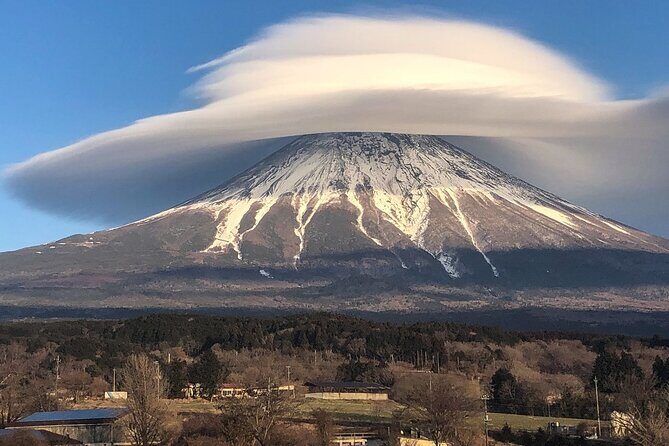
- Stop 1: Mt. Fuji Subaru Line 5th Station for Close-Up Views
- Stop 2: Lake Kawaguchiko for Classic Fuji Reflections
- Stop 3: Oshino Hakkai for Snowmelt Ponds and Quiet Beauty
- Stop 4: Kitaguchi Hongu Fuji Sengen Jinja Shrine for a Short Break
- Stop 5: Oishi Park for Fuji + Lake in One Frame
- Stop 6: Arakurayama Sengen Park for the 398-Stair View
- Stop 7: Gotemba Premium Outlets for a Controlled Reset
- Stop 8: Saiko Iyashi no Sato Nemba for Village-Style Atmosphere
- Weather, Car Access, and Your Best Backup Plan
- Timing and How to Use the Day Without Feeling Rushed
- Value for Money: When This Private Tour Is a Smart Choice
- Who Should Book This Tour (and Who Might Skip It)
- Should You Book This Tokyo to Mount Fuji Private Day Tour?
- FAQ
- How long is the Tokyo to Mount Fuji private guided day tour?
- What is the group size for this private tour?
- What does the tour include for transportation?
- Where does the tour start from?
- Is there an English-speaking guide?
- Which stops are included on the itinerary?
- Are entrance fees included for all stops?
- Is the tour ticket mobile?
- What if weather is bad at Mount Fuji?
- What is the cancellation policy?
Key things to know before you go
- Hotel pickup and drop-off so you start the day without transit stress
- Private, air-conditioned vehicle with an English-speaking driver/guide
- A flexible route shaped around your preferences
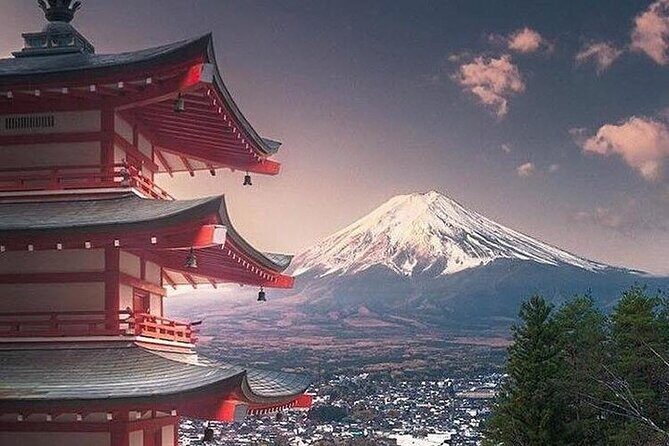
- Multiple Fuji photo angles across lakes, parks, and viewpoints
- Most sights listed as free (while specific admission spots still cost extra)
- Plan for variability on the mountain access depending on seasonal rules and conditions
Other routes to the mountain, compared
- Mt Fuji & Hakone Cruise, Drum Show Bullet Train 1 Day from Tokyo★ 4.0 · 7,413 reviews
- Tokyo Mt Fuji 5th St & Hakone Cruise Bus Tour w/Bullet Train★ 4.4 · 5,024 reviews
- From Tokyo: Mount Fuji Full-Day Sightseeing Trip★ 4.5 · 4,970 reviews
A Private Fuji Day From Tokyo: What This Tour Gets Right
If your goal is Mount Fuji without the headache, this is the kind of day trip that makes sense. It’s priced per group (up to 6), and it runs about 10 hours, so you’re paying for time, comfort, and someone else doing the navigation. For many people, that’s the real value: you buy a smoother day, not just a checklist of places.
On price, here’s the practical way to think about it. At $411 per group, your cost per person depends on how full the car is. If you’re a full group of 6, it’s about $69 each. If it’s just 2 people, it’s closer to $206 each. If you have 4–6 people, it often feels like a strong deal compared with the cost of taxis plus the time you lose figuring out connections.
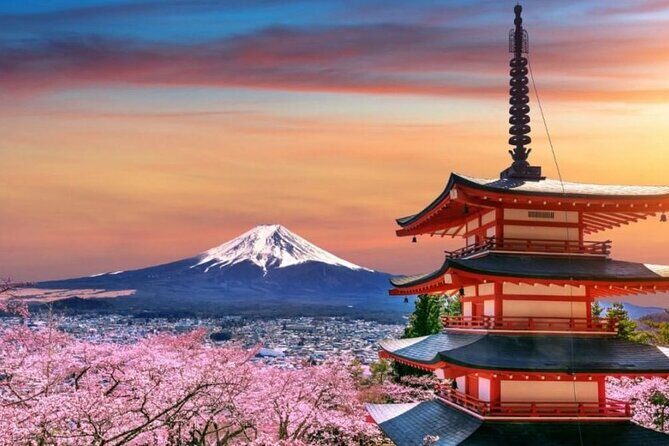
What makes it especially worthwhile is the way the itinerary clusters Fuji highlights efficiently: you’re not hopping back and forth across the region. Instead, you move through view-heavy spots around the Fuji Five Lakes area, then add a cultural/atmosphere stop and a shopping option.
Pickup, Private Vehicle, and the Real Meaning of English Guidance
This tour includes pickup and drop-off, plus an English-speaking driver/guide. That matters more than it sounds. In Japan, getting from “interesting place” to “how do I actually get there” can take longer than the sightseeing itself. Having a guide who can coordinate the route helps you protect your time.
You’ll ride in a private air-conditioned vehicle. In summer heat—or winter chill—that alone can make the day feel less exhausting. And because it’s a private group tour, you’re not waiting on strangers or being herded on someone else’s schedule.
You’ll also use a mobile ticket, and the tour is described as private, with only your group participating. The practical result: you can focus on the scenery instead of tracking which bus or train you should be on.
Stop 1: Mt. Fuji Subaru Line 5th Station for Close-Up Views
The day’s first big push is Mt. Fuji Subaru Line 5th Station, listed at about 2300 meters above sea level. This is one of the best places for climbers to go higher, and it’s also the top pick for close-up views when the weather cooperates.
Expect a mix of viewpoint time and a lot of people watching. The 5th station area has souvenir shops, so it’s not just staring at the mountain—you can browse and get a quick sense of the climbing culture. The catch is the weather. The tour’s description is clear: you’ll see Mt. Fuji close-up if conditions are good and it’s not rainy.
Admission for the 5th station is not included, so budget for that extra expense if you’re planning to go inside/through paid areas. Also, treat this stop as your best shot for a dramatic view. If the sky is clear, you’ll feel like you’re finally close to the real thing.
Stop 2: Lake Kawaguchiko for Classic Fuji Reflections
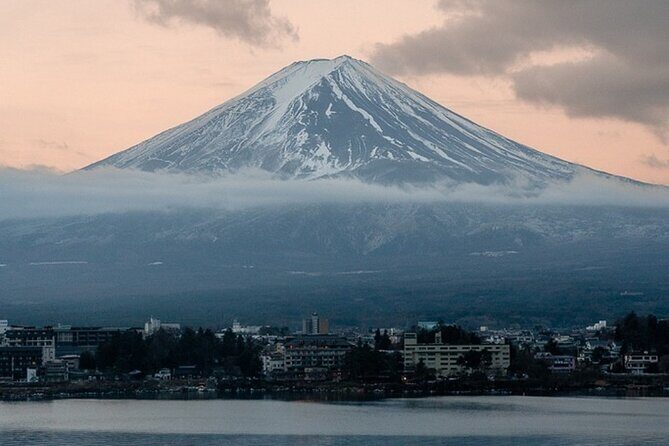
Next up is Lake Kawaguchiko, usually the “gateway” to the Fuji Five Lakes area. This is where you get a more scenic, calmer Fuji feel—less vertical and more reflective. The tour lists the admission ticket here as free, which is nice for controlling costs.
If you want options, Kawaguchiko is the kind of place where you’ll likely see activity choices around the lake. The itinerary notes things like a ship cruise or a cable car (ropeway) connected to viewpoints. Even if you don’t do them, the lake itself is the payoff: on a clear day, Mount Fuji can look sharp and bright against the water.
This is also a good stop to slow down. You’ll have about an hour, which is enough time to walk a bit and find your preferred angle—without feeling like you’re trapped on a schedule.
More days made easy by a guide


Stop 3: Oshino Hakkai for Snowmelt Ponds and Quiet Beauty
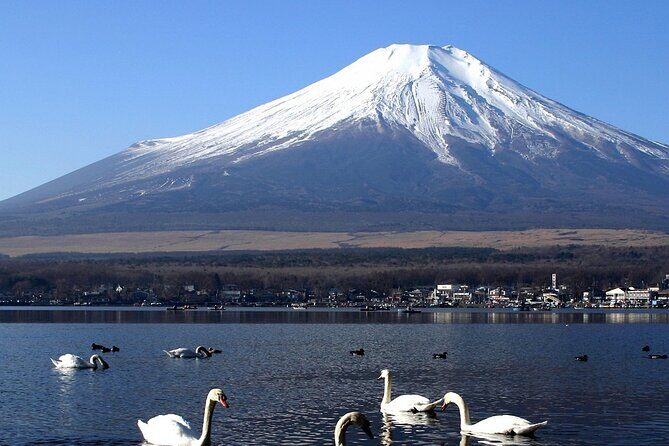
Oshino Hakkai, described as the Eight Seas of Oshino, is one of the most atmospheric stops on this route. It’s a set of eight ponds in the Fuji Five Lakes area, and the story behind it is part of the charm: these ponds are fed by snowmelt from Mount Fuji.
The tour description also adds context: the ponds sit on the site of a former sixth lake that dried out centuries ago. That gives you something to look for beyond “pretty water.” You’re seeing a landscape shaped by time and climate, and it feels grounded in how people live around Fuji.
You’ll have about an hour here, with admission listed as free. It’s a great contrast to the 5th station. If the mountain summit area feels busy, Oshino Hakkai often feels more measured, like a place you can actually enjoy rather than just pass through.
Stop 4: Kitaguchi Hongu Fuji Sengen Jinja Shrine for a Short Break
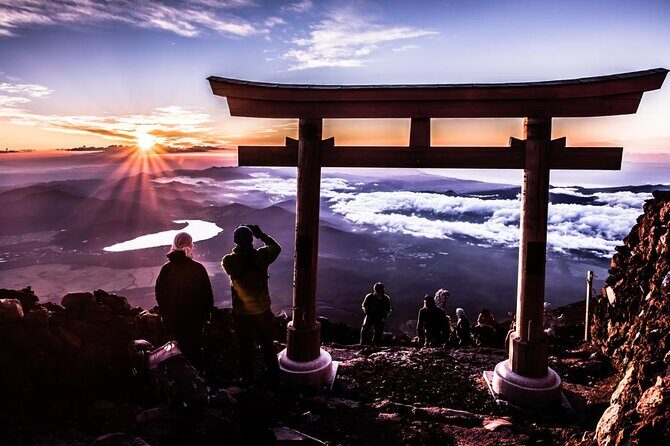
Then you head to Kitaguchi Hongu Fuji Sengen Jinja Shrine for about 30 minutes. This is a quick stop, but it has strong meaning. The itinerary notes its origins in 100 A.D., tied to a visit by prince Yamato Takeru-no Mikoto on his way to Kai Province.
This is the kind of stop that works even if you’re not a religion-and-temples person. In a day heavy on views, a shrine gives your brain a reset. You get a sense of how deeply Mount Fuji is woven into Japanese life, not just travel photos.
Admission is listed as free here. Just plan that 30 minutes is enough for a calm walk and photos, not enough for a long, slow exploration.
Stop 5: Oishi Park for Fuji + Lake in One Frame

Oishi Park is on the north shore of Kawaguchiko and is specifically described as offering a superb view of the lake and Mount Fuji together. This stop is about timing and weather, the same way the 5th station is.
The itinerary notes that flowers bloom along the lakeside promenade depending on the season. That means the view isn’t static; it changes throughout the year. If you’re going in a month when the light is good and the sky is clear, this can be one of your most satisfying “stand here and take in the scene” stops.
Admission here is listed as free, and you’ll have about an hour. Use that time to find your favorite angle, then don’t overdo it. The best photos usually come from a few good spots, not from sprinting between ten viewpoints.
Stop 6: Arakurayama Sengen Park for the 398-Stair View
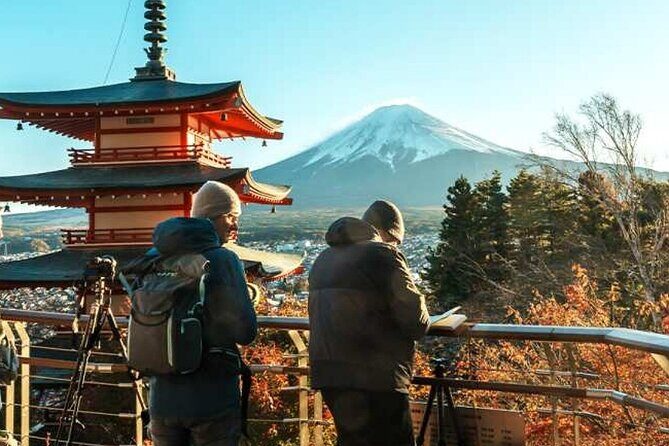
Next is Arakurayama Sengen Park with about 30 minutes on the schedule. The big detail is the stair hike: 398 steps to an observation deck. That’s not a massive trek, but it’s enough effort that you should treat it like a workout snack, not a casual stroll.
The reward is a cityscape view from the top, with Mount Fuji appearing in the background when the weather allows. This stop feels different from the lake viewpoints because it’s positioned above the town, not just beside the water.
Admission is listed as free. Wear shoes you’re comfortable with on steps. If it’s hot, start slow and take a breath at each landing.
Stop 7: Gotemba Premium Outlets for a Controlled Reset
Then you get a change of pace at Gotemba Premium Outlets, about one hour. This is listed with admission free, and it’s a useful “reset stop” if your group wants a break from scenery and photos.
One thing I like about including an outlet mall on a Fuji day trip: it gives you flexibility. If you’re not shopping, you can still use the time to eat, rest, and recharge for the final cultural stop. And because food and drinks aren’t included on the tour, having a predictable place to buy what you need is practical.
Just keep your energy in mind. This tour is only about 10 hours total, so if you linger too long shopping, you could cut into the last stop.
Stop 8: Saiko Iyashi no Sato Nemba for Village-Style Atmosphere
The final stop is Saiko Iyashi no Sato Nemba, also about one hour. This is described as a former farming village site on the western shores of Lake Saiko. The tour notes the village was destroyed by a landslide during a typhoon in 1966, and it references rebuilding decades later using traditional elements (the description is cut off, but the intent is clear).
Admission for this stop is listed as not included. That’s worth factoring in if you’re watching total spending.
This is a meaningful ending because it shifts from pure viewing to atmosphere. If you want to remember your Fuji day trip not just for photos but for a sense of place, this stop can do that.
Weather, Car Access, and Your Best Backup Plan
Mount Fuji can be stunning or frustrating on the same day, depending on cloud and rain. The itinerary itself hints at this: you’ll see the mountain close-up from the 5th station if it’s not rainy and weather is good.
There’s another reality check too: access rules can change. If private cars aren’t allowed to go up certain roads at certain times of year, the exact approach to the mountain can differ from what you pictured. In plain terms: you’re buying a guided route designed to get you the best possible Fuji experience, but nature and road rules still have the final say.
Your best backup plan is attitude and timing. Go in expecting some variability and you’ll enjoy the day more. If visibility is poor at one viewpoint, the later lakes and parks can still deliver good views, and Oshino Hakkai gives you a beautiful, non-weather-dependent experience (still, rain can affect how enjoyable walking feels).
Timing and How to Use the Day Without Feeling Rushed
About 10 hours is a lot of time, but it’s not infinite. The stop durations are mostly tight—30 minutes for the shrine and Arakurayama, one hour for lakes and Oshino, then one hour at outlets, then one hour at Saiko. That’s a sign this tour is designed to maximize variety, not to let you linger.
How to make it work for you:
- Prioritize your must-see. If Mount Fuji summit views are your top priority, focus your energy early at the 5th station.
- Keep your walking realistic. Arakurayama’s stairs add effort; plan pace.
- Use the outlet and lunch window to slow down. Food and drinks aren’t included, so build in a meal purchase time rather than trying to eat on the move.
If you travel with people who want very different things—one group obsessed with photos, another group wanting calmer stops—this itinerary’s mix helps a lot. You get intense views, then softer culture and scenic walking.
Value for Money: When This Private Tour Is a Smart Choice
If you want the lowest-stress way to reach Fuji from Tokyo, this fits the bill. The cost isn’t cheap, but the inclusions reduce hidden expenses and friction:
- pickup and drop-off from central Tokyo
- a private air-conditioned vehicle
- an English-speaking driver/guide
- highway tolls and gas included
Where you’ll spend extra is predictable: Mt. Fuji 5th Station admission, food and drinks, and any paid entry at the spots marked as not included (including Saiko Iyashi no Sato Nemba). Most other listed stops show free admission, which helps keep surprises down.
For a couple or a small group, the value depends on what you would otherwise do. If you’d take trains and buses plus taxis, you’d likely spend a lot of time connecting. If you’d hire a taxi for the whole day, you’d also pay for private transport but without the structured route and guidance.
This tour is best when you want a guided, efficient day with comfort built in—without having to assemble the transportation plan yourself.
Who Should Book This Tour (and Who Might Skip It)
You’ll enjoy this if you:
- want a private day trip from Tokyo with pickup and a dedicated driver/guide
- care about seeing multiple Fuji-related sights in one day
- like a route with both viewpoints and more cultural stops
- want to keep things easy when public transit feels like a puzzle
You might think twice if:
- you’re extremely price-sensitive and only want one or two Fuji viewpoints
- you hate walking stairs (Arakurayama’s 398 steps are real)
- you only want guaranteed mountain access at every exact point, regardless of rules and weather
Should You Book This Tokyo to Mount Fuji Private Day Tour?
I’d book it if you want the smoother way to do Fuji in a single day and you’re traveling as a group of 3–6. The private vehicle, pickup, and English-speaking guide are exactly what turn this from a tiring commute into an organized sightseeing day.
If you’re traveling as 1–2 people, it can still be worth it, but weigh the cost against what you’d spend and lose on transit. Also, accept that weather and road access can affect the mountain portion. If you’re flexible and you actually enjoy the full mix of lakes, ponds, shrines, parks, and village atmosphere, this itinerary has enough variety to stay satisfying even when Fuji clouds roll in.
FAQ
How long is the Tokyo to Mount Fuji private guided day tour?
The tour duration is about 10 hours.
What is the group size for this private tour?
It’s a private tour for up to 6 people per group.
What does the tour include for transportation?
You get hotel pickup and drop-off and ride in a private air-conditioned vehicle.
Where does the tour start from?
The start point is Tokyo Station, 1 Chome-9 Marunouchi, Chiyoda City, Tokyo 100-0005, Japan.
Is there an English-speaking guide?
Yes. The tour includes an English-speaking driver/guide.
Which stops are included on the itinerary?
The stops listed are: Mt. Fuji Subaru Line 5th Station, Lake Kawaguchiko, Oshino Hakkai, Kitaguchi Hongu Fuji Sengen Jinja Shrine, Oishi Park, Arakurayama Sengen Park, Gotemba Premium Outlets, and Saiko Iyashi no Sato Nemba.
Are entrance fees included for all stops?
No. Mt. Fuji 5th Station admission is not included, and Saiko Iyashi no Sato Nemba admission is also not included. Food and drinks are not included either. Several other listed stops are marked as free.
Is the tour ticket mobile?
Yes, the tour uses a mobile ticket.
What if weather is bad at Mount Fuji?
The itinerary notes close-up views depend on weather and not being rainy. If visibility is limited, the day still includes other Fuji-area sights like lakes and Oshino Hakkai.
What is the cancellation policy?
Free cancellation is available up to 24 hours in advance for a full refund. Cancellation within 24 hours is not refunded.
More Tours in Tokyo




More Tour Reviews in Tokyo




The Fuji Shortlist: Other Days Out to the Mountain

Fresh reviews from around Tokyo






Mt Fuji Day Trips, compared.
 ★ 4.0Mt Fuji & Hakone Cruise, Drum Show Bullet Train 1 Day from TokyoFrom $1497,413 reviews
 ★ 4.4Tokyo Mt Fuji 5th St & Hakone Cruise Bus Tour w/Bullet TrainFrom $1545,024 reviews
 ★ 4.5From Tokyo: Mount Fuji Full-Day Sightseeing TripFrom $684,970 reviews
 ★ 4.7Mt. Fuji Tour, Hakone Ropeway, Owakudani, Lake AshiFrom $544,002 reviews
 ★ 5.0Private Tour to Mt. Fuji and Hakone (Fully Licenced Operator)From $4971,910 reviews
 ★ 4.9Mount Fuji Full-Day Private Tour from Tokyo (Customizable)From $3931,470 reviews
 ★ 4.0Mt Fuji & Hakone Cruise, Drum Show Bus 1 Day from TokyoFrom $1221,287 reviews
 ★ 4.2From Tokyo: Mt. Fuji & Hakone Tour w/ Return by Bullet TrainFrom $1171,278 reviews
Browse the lists this tour appears in