
Reviewed · ASAKUSA TOURS
Tokyo: Origami Fun for Families & Beginners in Asakusa
Origami in Asakusa feels like instant calm. I like the way tablet-guided steps keep you moving at your own pace, and I also love the choice you get with 50 paper colors plus 100+ models to try in just 45 minutes. It turns a famous sightseeing stop into something hands-on, and you’ll end up with pieces you can actually use and show off.
One thing to plan for: this isn’t a classic private, teacher-led lesson. You’ll fold with instructions from a tablet, while staff assist as needed, and the studio itself has stairs only plus strict sock rules.
In This Review
- Key Things That Make This Origami Session Work
- Asakusa Is the Right Place to Fold, Not Just Look
- The Studio Basics: Socks, Stairs, and Why They Matter
- What You Actually Do: A Tablet That Runs the Steps
- Choosing Models and Paper: 100+ Options in 45 Minutes
- 100+ models means you can match your mood
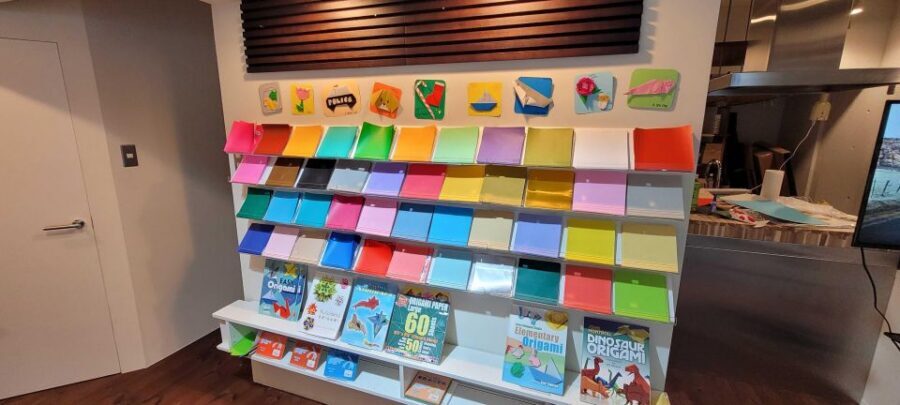
- 50 paper colors make your finished piece feel personal
- The Step-by-Step Folding Environment: Relaxing, but Still Hands-On
- Staff Help Without Turning It Into a Lecture
- Decorating Your Work: Make It Yours Before You Leave
- Timing Reality: What You Can Finish in 45 Minutes
- Who This Origami Session Suits Best
- Price and Value: Is $27 for Origami in Asakusa Worth It?
- Practical Tips Before You Go
- Should You Book This Origami Session in Asakusa?
- FAQ
- Do I need prior origami experience?
- Is this a teacher-led lesson?
- What is included in the price?
- How long is the activity, and how big is the group?
- What do I need to bring?
- Is the studio wheelchair accessible?
Key Things That Make This Origami Session Work
- Tablet instructions that you control: play, replay, and go back a step when you need it
- Huge menu to choose from: 100+ models across animals, flowers, and vehicles
- Pick your own paper: 50 colors from a paper wall, so you’re not stuck with one sheet
- Small group feel: limited to 6 participants, so questions don’t get lost
- Decorating time is real: stickers, stamps, and markers help you personalize your creations
- Helpful support without taking over: staff can step in, but you still do the folding
More mornings around Senso-ji and the old town
- Tokyo: Japanese Dance Cabaret Theater Asakusa-Kaguwa Ticket★ 4.8 · 2,270 reviews
- Tokyo: Asakusa Walking Tour with Sensoji Temple Visit★ 4.8 · 1,583 reviews
- Tokyo Asakusa Rickshaw Tour★ 5.0 · 1,375 reviews
Asakusa Is the Right Place to Fold, Not Just Look
Asakusa is packed with the kind of energy that makes tourists want to rush from temple photo to temple photo. This activity is a smart counterbalance. It gives you a quiet, hands-on block of time right in a very well-known area, so you’re not losing the best part of the neighborhood to transit and lines.
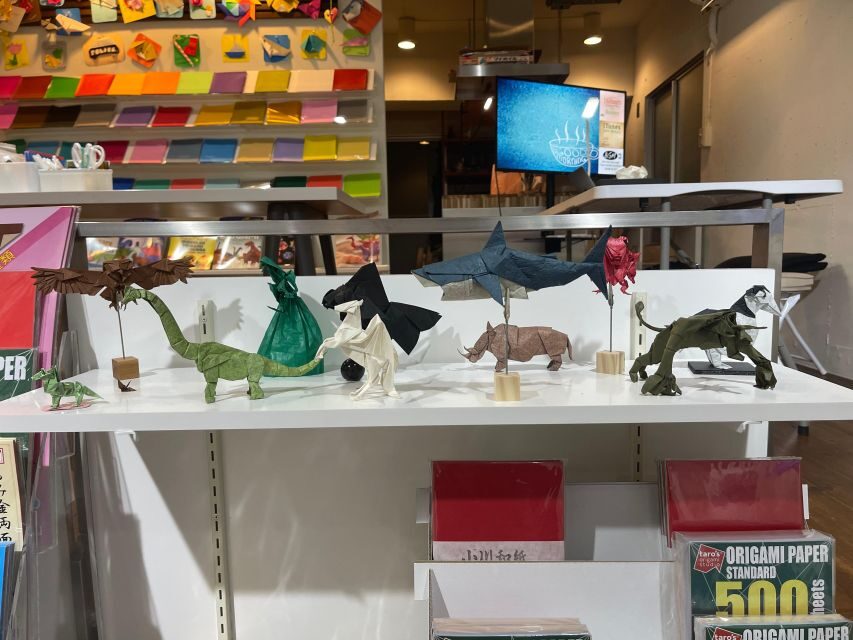
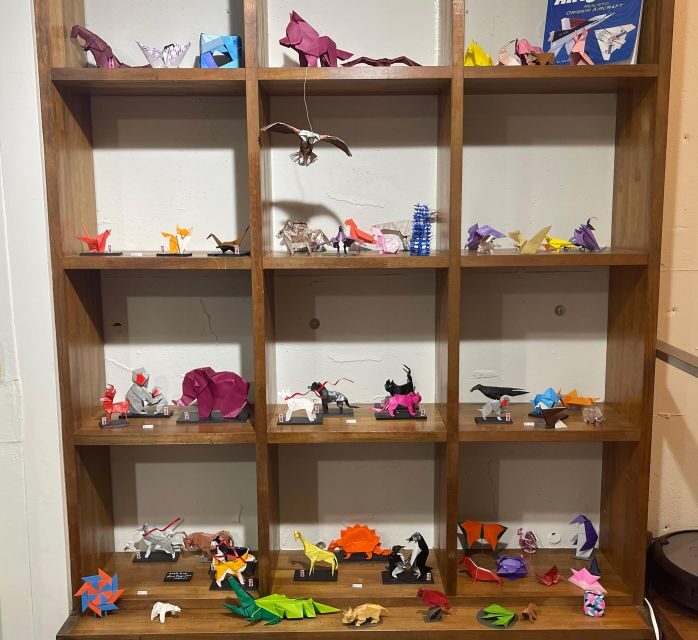
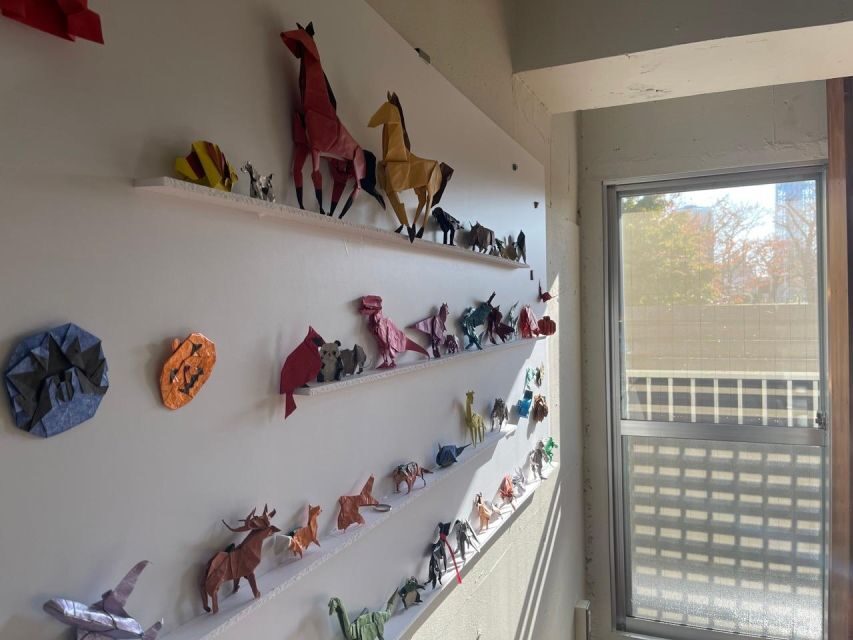
What makes this setting feel special is the studio vibe: you’re surrounded by an origami display culture rather than classroom chaos. The result is that you can treat this as a break from the day’s walking, while still doing something that feels distinctly Japanese.
If your schedule has you moving fast, this kind of structured practice helps. In 45 minutes, you won’t master every fold in the world, but you can learn the basics and see immediate progress.
The Studio Basics: Socks, Stairs, and Why They Matter
Before you go, take the sock requirement seriously. You must wear socks to participate, and the studio requires you to bring socks (or purchase a pair beforehand). It’s one of those rules that can ruin your timing if you forget, especially when you’re already out sightseeing.
Also, the space is not handicap accessible. The studio has stairs and no ramps or lifts, and seating doesn’t include back support. If you need mobility accommodations, you’ll want to consider whether stairs and a sit-down setup will be comfortable for you.
For kids, there’s another practical angle: children under 13 need adult supervision throughout the activity. That means this isn’t just drop-off craft time. It’s a family-style session where adults will be close enough to help if fine motor skills stall or attention slips.
What You Actually Do: A Tablet That Runs the Steps
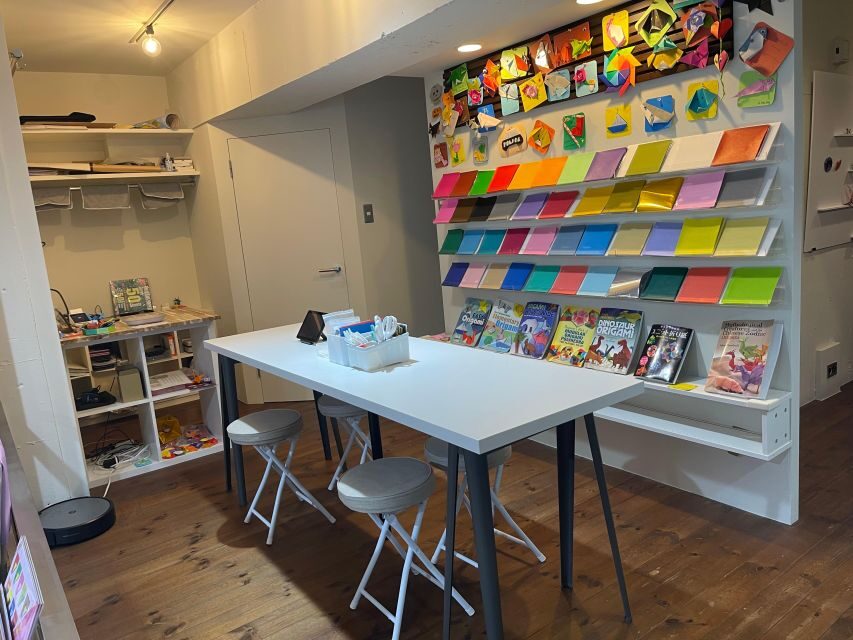
The core of the experience is a tablet workflow. It’s not “watch the instructor talk.” Instead, the tablet helps you go from a square sheet to a finished model with clear steps, and you follow along.
Here’s the rhythm you can expect:
- Use the tablet menu to select a model from available categories
- Walk to the paper wall and choose your color(s)
- Return to the tablet and press play to begin
- If you get stuck, you can replay or return to earlier steps
This design is great for beginners because it removes the guesswork. You’re not relying on memory or trying to interpret diagrams with no context. It also helps older kids and teens stay engaged because the tablet makes the process feel interactive instead of lecture-based.
Staff are present to help, but it’s not teacher-led instruction. That setup is best if you want a guided path while still having room to work independently. If you strongly prefer constant, one-on-one coaching the whole time, you might find this format less intense than a full private lesson.
Choosing Models and Paper: 100+ Options in 45 Minutes
You get two big choices that shape the whole experience: model selection and paper color selection.





100+ models means you can match your mood
The models cover animals, flowers, and vehicles, and the difficulty ranges from beginner to intermediate. In real life, this matters because you can pick something achievable if you’re new, or bump up the challenge if you pick up the folding logic fast.
In a 45-minute session, that flexibility is a big deal. You can start with an easy win, then try one more model before time runs out.
50 paper colors make your finished piece feel personal
The paper wall is where the experience becomes yours. You choose the color(s) before you fold, so your final work doesn’t look like a generic craft. You can also think ahead about the design you’re folding, since the color choice can change how the animal or vehicle reads.
This is also one of those small details that makes photos better. Even if your first fold is rough, color can make the model look polished.
The Step-by-Step Folding Environment: Relaxing, but Still Hands-On
What I like about this format is how “relaxing” it can feel without turning into a passive activity. You sit down, you choose what you want to fold, and then your hands do the work while the tablet keeps the steps clear.
Because the group is small (limited to 6), the studio doesn’t feel like a factory line. You can take a breath if a fold isn’t crisp, and you’re not getting rushed by a loud timeline. That’s especially helpful with beginners who need a moment to understand where creases should land.
It’s also beginner-friendly in a practical way: you don’t need prior origami knowledge. If a model feels too hard, you can switch to something else on the tablet menu during the session.
Staff Help Without Turning It Into a Lecture
A standout theme is that the staff and instructors are supportive while still giving you space to work. That’s the best of both worlds for most first-timers: you get guidance when you need it, not an interruption every two minutes.
Some instructors have been praised for clear explanations and for keeping an eye on what you’re doing without taking control of your hands. One name that shows up in the experience is David, including mention of a very friendly, hands-on approach during help moments.
Another nice detail from the same kind of support is the way staff can help kids succeed. For example, there’s at least one story where an instructor made a rose for a child, which turned a craft session into a memorable moment.
You should still know the expectation: staff help is there, but the tablet drives the steps. If you want a slow, fully narrated lesson where every fold is explained out loud, you may want a different type of workshop. But for families and beginners who want to fold, not just listen, this approach fits well.
Decorating Your Work: Make It Yours Before You Leave
Origami can look great with just paper and folds, but the included decoration options help you add personality fast.
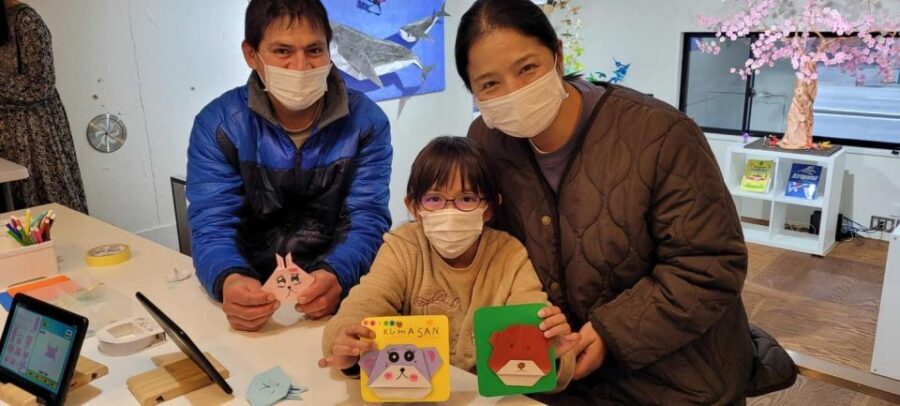
You’ll be able to choose from stickers, stamps, and markers to customize your model. This is a nice way to finish strong if a fold isn’t perfect. A good decoration can make your creation feel intentional, not unfinished.
Also, decoration time helps kids stay excited. Instead of waiting for the next step, they get choices and hands-on creativity right in the middle of the activity.
And yes, photos are allowed during your session. You can capture your paper selection, the folding moments, and the final results.
Timing Reality: What You Can Finish in 45 Minutes
With 45 minutes, you should plan like this:
- Expect to learn the folding pattern for at least one model
- If you’re fast (or you start with an easy choice), you might complete several pieces
- If a model is intermediate-level and takes longer, you’ll still get a solid finished item
The tablet’s replay option helps here. You’re not stuck if you miss a step; you can correct course without asking the staff every time.
For kids, keep it simple. If they’re 4 or 5, you’ll want to expect slower progress, and close supervision matters. For older kids and adults, the time tends to feel fair because you can select an appropriate difficulty level from the menu.
Who This Origami Session Suits Best
This is a strong fit for beginners and families, especially if you like structure.
Best for:
- First-time origami folders who want a guided path
- Families with kids around the recommended ages
- People who want to do something calmer than another temple stop
Pay attention if:
- Your child is under 4 (the activity isn’t suitable)
- Your group wants a fully teacher-led lesson with nonstop instruction
- You have mobility concerns due to stairs and no ramp access
- Someone in your group has a cold (it’s listed as not suitable)
Kids under 13 need adult supervision, so you’ll want to be ready for active help rather than a sit-and-watch setup.
Price and Value: Is $27 for Origami in Asakusa Worth It?
At $27 per person for a 45-minute session, you’re paying for three things:
- Access to paper and supplies
- A guided step system that’s designed for beginners
- A small, supportive setup with staff nearby
You’re not just buying paper. You’re buying the workflow that helps you actually finish something. Many craft activities fail because you get stuck interpreting instructions. Here, the tablet steps reduce that problem.
Also, the model range (100+ choices) means you can tailor the experience. Value improves when the activity can adjust to your skill level in real time.
Finally, the session includes decoration supplies and the ability to personalize. That makes the result feel like something you earned, not just a takeaway token.
Practical Tips Before You Go
These are the details that make the day go smoothly:
- Bring socks. If you forget, you may have to buy them on site, which can cost time.
- Pick one model to start and one backup. Even beginners can get ambitious, but it’s better to win early.
- If you’re with kids, plan on adult help during the folds. Small hands can do it, but supervision matters.
- If you’re sensitive to germs, note the guidance that people with a cold aren’t suitable for the activity.
And location matters. The studio entrance is on the main street side of the building. If you’re next to the park, you may be on the backside and won’t be able to enter from there. Look for the company signage on the front of the building, plus a brown sea turtle affixed to the wall below the window.
Should You Book This Origami Session in Asakusa?
I’d book it if you want a beginner-friendly, hands-on activity that fits into a sightseeing-heavy day. The tablet flow is especially good if you learn better by doing than by listening, and the small group setup keeps it calm.
Skip it if you need a fully teacher-led class with constant explanation, or if mobility access is a problem because the studio has stairs only. Also, if you’re traveling with a very young child under 4, this won’t be suitable.
If you’re in Asakusa anyway, this is a practical way to experience Japanese craft culture without needing prior knowledge or a long time commitment. You’ll leave with folded models you chose, paper you picked, and at least a couple of things you can say you made yourself.
FAQ
Do I need prior origami experience?
No. The activity is designed for beginners, and the tablet instructions guide you from a square sheet to the chosen model.
Is this a teacher-led lesson?
No. It’s tablet-guided folding with staff present to help when needed, but it is not a private teacher-led lesson.
What is included in the price?
Origami paper and supplies, instruction, plus taxes and fees are included.
How long is the activity, and how big is the group?
It lasts 45 minutes, and the group is limited to 6 participants.
What do I need to bring?
You must bring socks to the studio and wear them to participate.
Is the studio wheelchair accessible?
No. The facility is not handicap accessible and has stairs only, with no ramps or lifts. There is also seating without back support.
More Tour Reviews in Tokyo



Around Senso-ji: More Asakusa Picks




Fresh reviews from around Tokyo






Asakusa Tours, compared.
 ★ 4.8Japanese Dance Cabaret Theater Asakusa-Kaguwa TicketFrom $492,270 reviews
 ★ 4.7Meiji Shrine, Asakusa, Skytree Bus Tour and CruiseFrom $1221,986 reviews
 ★ 4.8Asakusa Walking Tour with Sensoji Temple VisitFrom $221,583 reviews
 ★ 5.0Tokyo Asakusa Rickshaw TourFrom $421,375 reviews
 ★ 4.5Tokyo Panoramic 1 Day: Meiji Shrine, Asakusa, Odaiba and SKYTREE®From $851,222 reviews
 ★ 4.8Samurai Ninja Museum Asakusa: Samurai Sword Lesson & TourFrom $63306 reviews
Asakusa Sightseeing Tour by RickshawFrom $35195 reviews
Asakusa Kimono Dressing and Matcha ExperienceFrom $56173 reviews
★ 4.8Samurai Ninja Museum Asakusa: Samurai Sword Lesson & TourFrom $63306 reviews
Asakusa Sightseeing Tour by RickshawFrom $35195 reviews
Asakusa Kimono Dressing and Matcha ExperienceFrom $56173 reviews
Browse the lists this tour appears in