
Reviewed · GO-KARTS
Tokyo Oldtown: Historic Landmarks Go Kart Tour (100 Minutes)
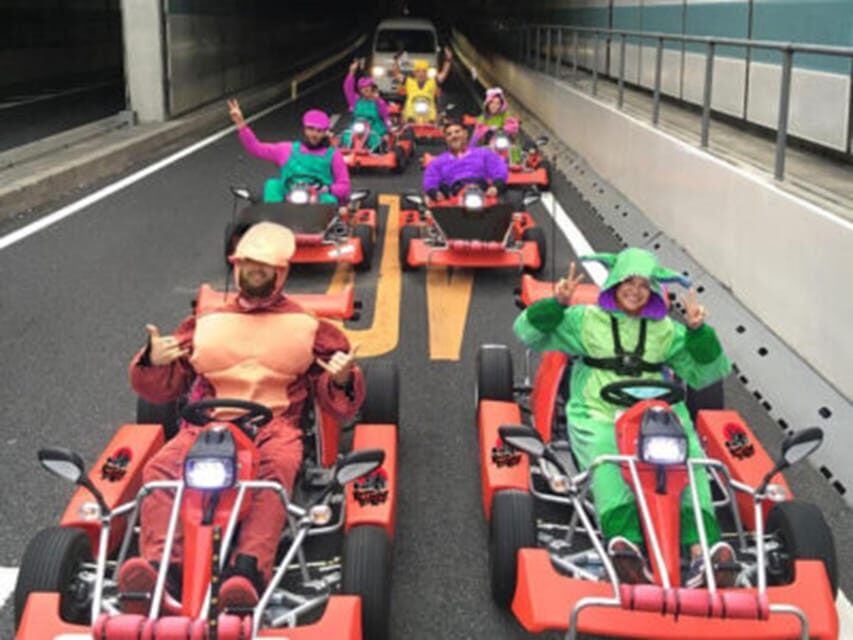
Tokyo, but from behind the wheel. This 100-minute Tokyo Old Town go-kart tour trades tour-bus seats for real street driving, guided all the way so you get landmarks plus the small, everyday details that make this part of the city feel grounded. I really like the comfort-focused Kartzilla karts (stable handling, hydraulic brakes, and built-in support for big and tall riders), and I also like the live guidance with clear safety direction through the route. One thing to consider: you do need the right driving paperwork (usually an IDP plus your license and passport), and backpacks aren’t allowed, so you’ll want to travel light.
The route is built around Tokyo’s foundation, centered on Asakusa—including Senso-ji, described as Tokyo’s oldest Buddhist temple—plus stop-and-see moments at places like Tokyo Station and Akihabara. You’ll get a small group experience (up to 10), and the optional Insta360 setup is a handy way to capture your ride from the driver’s seat without holding a phone. If you hate dealing with logistics, this may still be simple, but the licensing rules are the real gatekeeper here.
In This Review
- Key things that make this go-kart tour worth it
- Why this Tokyo Old Town route feels different than the usual sightseeing
- Kartzilla karts: stable, comfortable, and built for real driving
- Live guides on two-way radio: safety first, stories right on time
- Stop-by-stop: from Skytree sights toward Asakusa temples
- Starting point: Kartzilla facility near Tokyo Skytree
- Tokyo Skytree: orientation views and guided lead-in
- Japanese Sword Museum: culture explained at street pace
- Ryogoku Kokugikan: another iconic stop with guided context
- Tokyo Station: a big-city anchor you can drive through
- Tokyo Imperial Palace: a different tone on the route
- Akihabara: modern edge, old core route
- Ueno: classic city stop on the way to Asakusa
- Asakusa: the historic core, Senso-ji, and street-level tradition
- Price and value: what you’re actually getting for $90
- What it’s like to drive in Tokyo without racing
- Things to know before you go (so the day stays smooth)
- Driving requirements (don’t get caught here)
- Age and suitability limits
- What you can and can’t bring
- Should you book this Tokyo Old Town go-kart tour?
- FAQ
- FAQ
- How long is the Tokyo Oldtown go-kart tour?
- Where do I meet for the tour?
- What driving documents do I need?
- Is the IDP the only requirement for international visitors?
- Is there an onboard camera option?
- What’s included in the price?
- Are there lockers or can I bring a backpack?
- How big is the group?
- What languages are the live guides?
Key things that make this go-kart tour worth it
- Comfort-first karts with suspension and hydraulic brakes for confident stopping
- Small group size (max 10) so the ride stays controlled and instructions land fast
- Live storytelling + real-time safety guidance with two-way radio communication
- Asakusa-centered old-town route, including Senso-ji and traditional streets on a street-level drive
- Optional Insta360 to film hands-free from the driver’s seat (you’ll need a micro-SD card)
Other ways to drive the city in costume
- Flagship 2-Hours Official Street Go-Kart Tour – Tokyo Bay Shop★ 5.0 · 4,974 reviews
- Official Street Go-Kart in Shibuya★ 5.0 · 3,435 reviews
- Official Street Go-Kart Tour – Akihabara★ 5.0 · 1,578 reviews
Why this Tokyo Old Town route feels different than the usual sightseeing
Most Tokyo tours try to cover too much on foot. This one does the opposite: it uses a go-kart to connect big historic areas while still keeping you at street level. You’re not just looking at icons from a distance; you’re rolling through the working city, with your guide explaining what you’re seeing as you go.
The old-town focus also matters. Instead of starting at the flashier, modern highlights, this route builds toward the historic core. That change in rhythm can make Tokyo feel less like a checklist and more like a story you’re actually traveling through.
And because it’s guided at all times, you’re not stuck figuring out streets, turns, or where to park. Your job is simply to drive safely and enjoy the scenery that slides by your shoulders.
Kartzilla karts: stable, comfortable, and built for real driving
This is not the jump-on-a-recreational-kart type of outing. The Kartzilla vehicles are designed for street-legal, city-style driving, and you can feel the difference in how predictable they are.
Here’s what the tour highlights as the comfort and control advantages:
- Advanced suspension for a smoother ride over uneven roads
- Hydraulic brakes for precise stopping (important when you’re learning)
- Reinforced frame so the kart accommodates big and tall riders more comfortably
- Stable handling that makes it a beginner-friendly experience (no racing vibe)
If you’ve ever tried to drive something where you feel like you’re fighting the steering, you’ll appreciate this setup. It’s built around confidence—especially right after the road-safety briefing, when you’re still getting your bearings.
Also, the tour includes fuel and an accident insurance element, which helps justify the price as more than just “rent a toy and go.”
Live guides on two-way radio: safety first, stories right on time
What makes this tour work isn’t just the kart. It’s the guidance model.
You’ll start with a clear road-safety briefing and simple driving instructions. Then your guide leads you at all times, supported by a two-way radio system. That means you’re not guessing whether a driver mistake is about to happen next—you’re hearing instructions as traffic and route conditions change.
This is also where the experience tends to shine. Multiple guides are praised for being organized and clear, including names like Travis and Satar, and one rider specifically called out Hiro for helping with license-translation questions. In practice, that’s exactly what you want: someone who can talk you through what you need to know and handle the real-life friction points without making you feel awkward.
The guide also provides live cultural and landmark context as you roll between stops. It’s not just a narration track; you’re getting explanations while you’re actually seeing the streets involved.
Stop-by-stop: from Skytree sights toward Asakusa temples
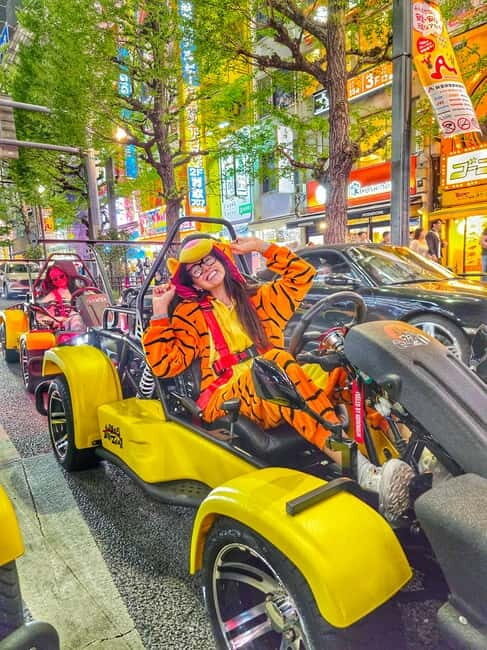
The route runs in a loop that starts near Tokyo Skytree and winds through a mix of major landmarks and old-town streets. Every stop follows a similar pattern: a guided moment, then a scenic drive segment where you pass more of the city’s texture.
More paths into old Tokyo

Starting point: Kartzilla facility near Tokyo Skytree
You begin at the Kartzilla Go Kart facility, which is under 8–10 minutes’ walk from Yotsugi Station on the Keisei Line. The building is marked with signage, and Google Maps should get you there smoothly. If you get stuck, the tour team provides a call option, which is worth saving in your phone before you leave.
Practical tip: because lockers aren’t included and backpacks aren’t allowed, think ahead about what you’re carrying. Bring essentials, keep them small, and plan to wear comfortable footwear.
Tokyo Skytree: orientation views and guided lead-in
Before you go deep into the old core, the tour starts by easing you into the driving experience with scenic views and a guided component around the Skytree area. This is a good time to relax your shoulders and get comfortable with how the kart responds to steering and braking.
Japanese Sword Museum: culture explained at street pace
Next up is the Japanese Sword Museum area. You’ll get a guided stop along with scenic driving time between sights. The value here is the pacing: you’re learning something cultural without turning it into a long museum detour.
Ryogoku Kokugikan: another iconic stop with guided context
You’ll also visit the Ryogoku Kokugikan area. The tour framework keeps it easy: guided guidance first, then you roll onward. Even if you’re not a deep expert in the topic, the guide’s job is to connect what you’re seeing to Tokyo’s larger story of tradition and everyday life.
Tokyo Station: a big-city anchor you can drive through
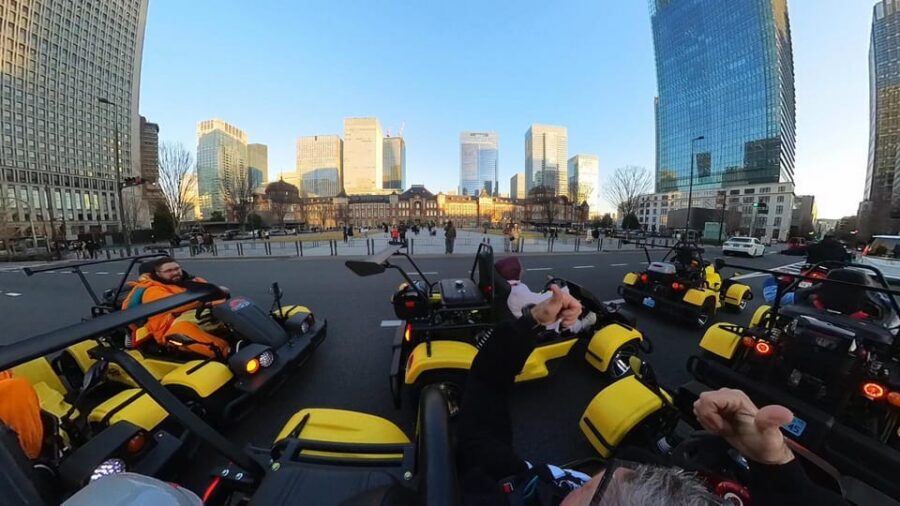
Then comes Tokyo Station, one of those names that feels instantly familiar in movies and maps. Driving past it gives you scale fast. You get guided attention during the stop, plus extra city views while the route transitions you toward calmer, older neighborhoods.
Tokyo Imperial Palace: a different tone on the route
You’ll drive through the Tokyo Imperial Palace area as part of the guided flow. This stop often helps reset the mood. Where earlier stops feel like built-up urban icons, this segment can feel more like Tokyo’s formal center.
Akihabara: modern edge, old core route
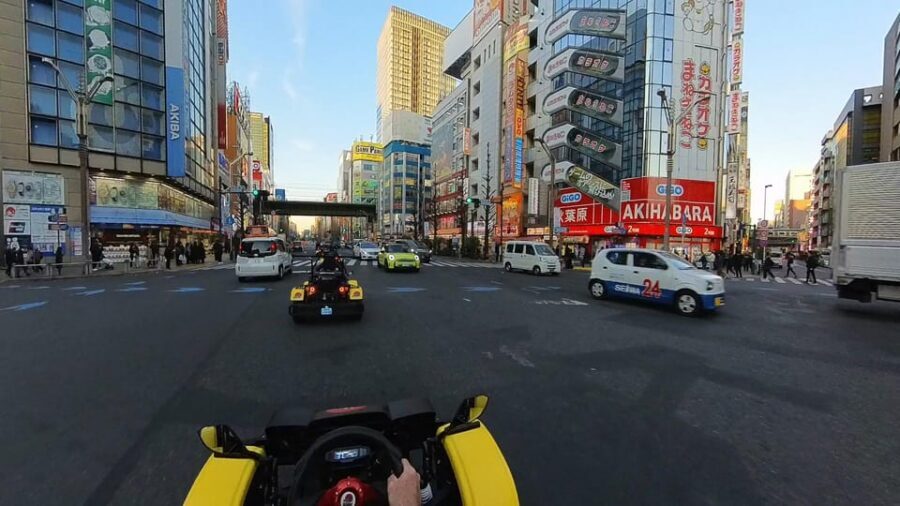
After that, the tour reaches Akihabara. You’re still on the “old town” program, but this part of Tokyo helps explain how the city layers the new over the old. You get a guided look and more scenic drive time.
If you’re the type who loves mixing eras—temples and tech—this stop helps your route feel like a real Tokyo day.
Ueno: classic city stop on the way to Asakusa
Next is Ueno. You’ll have another guided segment, and then time to roll through Tokyo street views as the route closes in on Asakusa. This section helps build momentum so the final old-town area lands with impact.
Asakusa: the historic core, Senso-ji, and street-level tradition
The centerpiece is Asakusa. The tour is specifically designed around this historic neighborhood, including Senso-ji, described as Tokyo’s oldest Buddhist temple and one of the city’s most culturally significant areas.
What makes Asakusa special in this format is that you’re not only seeing buildings—you’re driving through the surrounding old-town blocks where traditional streets, historic architecture, temples, and local shopping areas shape day-to-day life. The guide storytelling is timed so you understand what you’re looking at as you pass through, not after the fact.
This is also the most “street-level and in real time” part of the route. If your goal is Tokyo beyond entertainment zones, this is the section that delivers.
Price and value: what you’re actually getting for $90
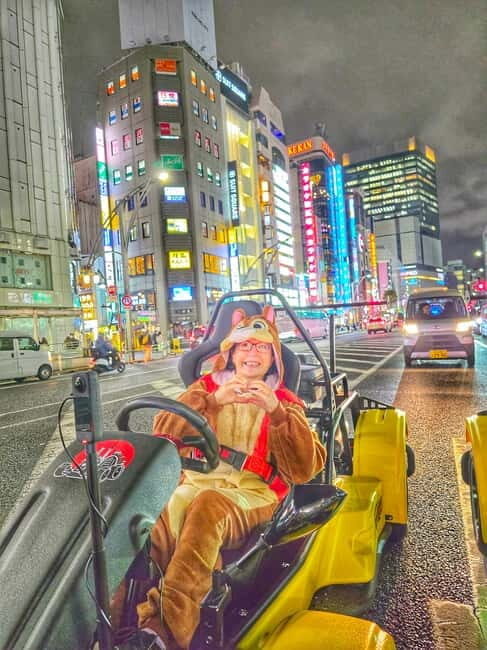
At about $90 per person for a 100-minute experience, you’re paying for several things at once:
- A professionally guided route with live storytelling and traffic-aware direction
- A street-legal kart plus fuel
- Accident insurance
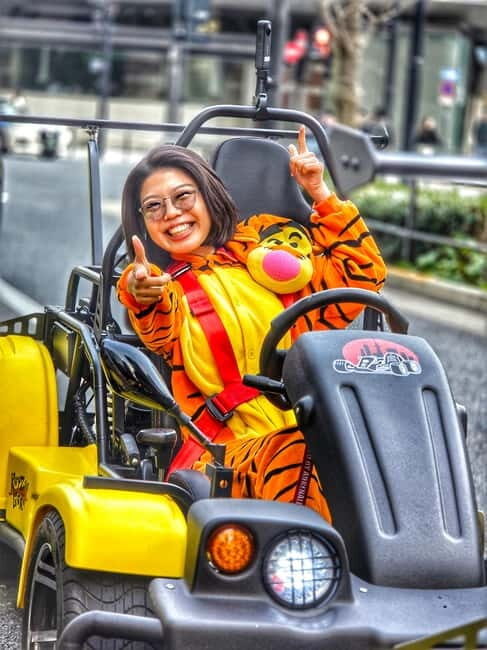
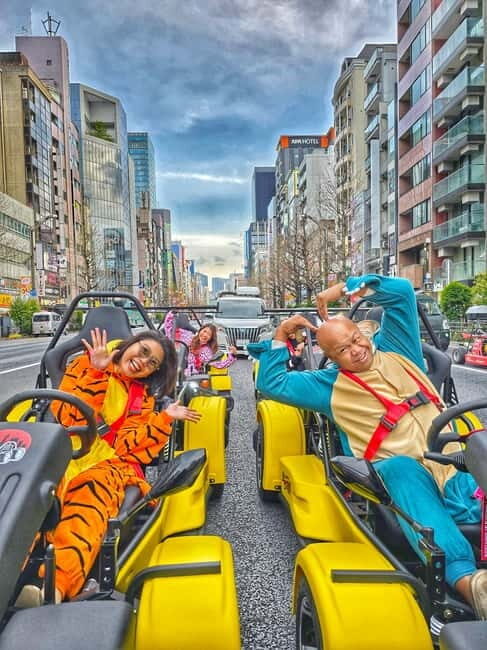
- Costume as part of the experience
- Drinks
- Videos and photos equipment included, with the note that you’ll need to buy a micro-SD card for recording
That’s why this can feel like good value compared to “just a ticket” activities. You’re not only paying for time in a car—you’re paying for the guide coverage, the comfort-focused vehicle, and the media capture option.
The main cost surprise to plan for is the micro-SD card if you want the onboard Insta360 footage. If you’re traveling light and you already have a micro-SD card format that works, you’re in good shape.
What it’s like to drive in Tokyo without racing
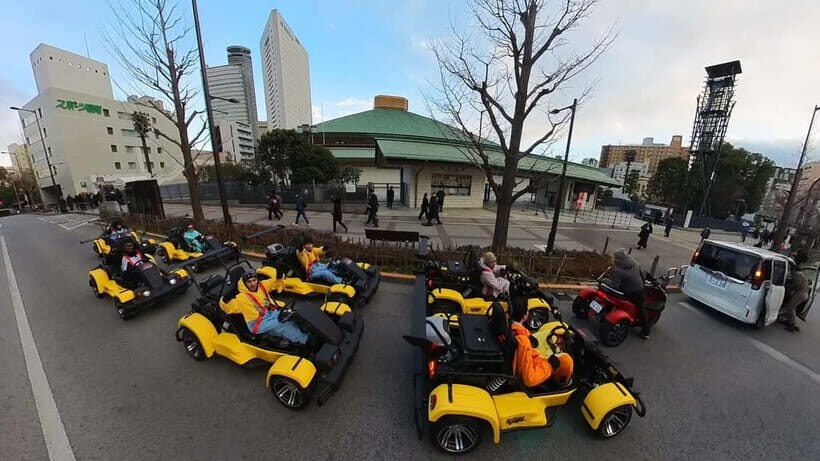
The tour is built to feel safe and beginner-friendly. You get:
- A safety briefing before you drive
- Real-time instructions from your guide
- A pace that avoids racing (the emphasis is on learning and exploring)
Even better, the communication system is part of the safety plan. A two-way radio setup means your guide can coordinate your movement and keep things flowing smoothly.
Expect the experience to feel like “controlled fun.” You’ll be focused on braking, steering, and keeping the right line. But you’ll also get those classic Tokyo moments where you catch temple fronts, historic streets, and landmark silhouettes as you ride through.
Things to know before you go (so the day stays smooth)
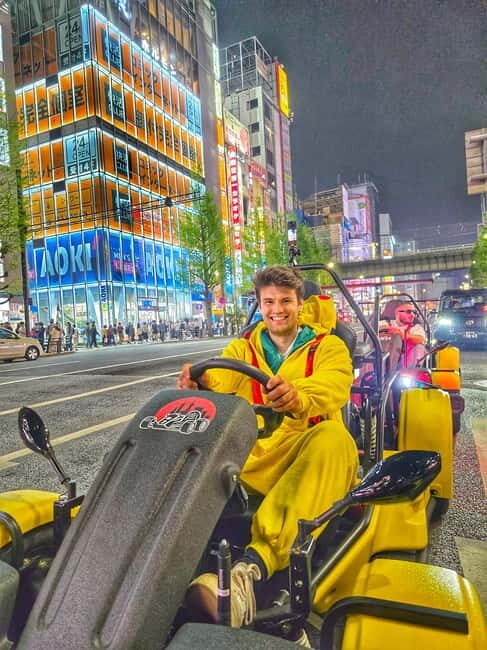
This experience is fun, but Tokyo driving paperwork isn’t optional.
Driving requirements (don’t get caught here)
You’ll need:
- A passport
- A driver’s license
- For overseas nationals not resident in Japan: a valid local driver’s license plus an International Driving Permit (IDP)
The tour notes that only IDPs issued by countries signatory to the 1949 Geneva Convention are recognized for driving in Japan. There are also special rules for some nationalities (including a Japanese translation of a driving license), and U.S. Forces can drive with specific SOFA-related permits. If you’re unsure, contact the provider ahead so they can advise you correctly.
Age and suitability limits
This tour is not suitable for:
- Wheelchair users
- Children under 18
- People who are visually impaired
- People over 95
- Anyone under 18 for driving
What you can and can’t bring
Not allowed:
- Backpacks
- Pets
- Food and drinks (including drinks in the vehicle)
- Alcohol and drugs
- Baby carriages
- Bare feet
And keep in mind: locker space isn’t included, so plan storage with care.
Should you book this Tokyo Old Town go-kart tour?
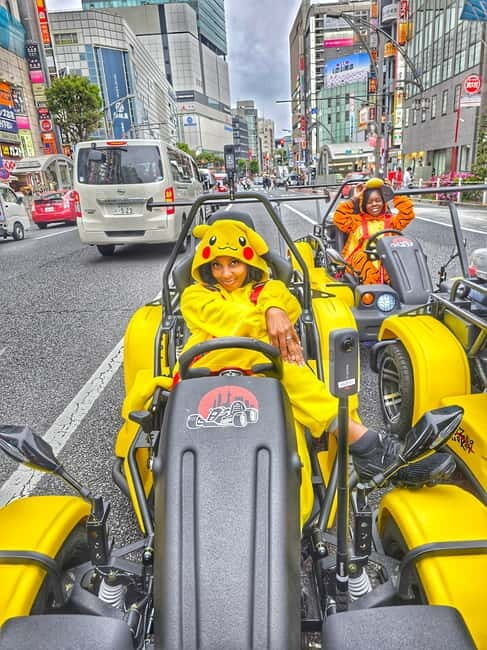
Book it if you want Tokyo with movement. You get old-town street driving, guided cultural context, and a vehicle designed to feel stable and comfortable, not twitchy. The small group size (up to 10) and the praised guide clarity (with names like Travis, Satar, and Hiro showing up in past experiences) are exactly what help make a first-time driving experience feel manageable.
Skip it if you’re not comfortable handling driving documentation and you don’t want to travel light without a backpack. Also skip if any of the suitability limits apply, because the tour is built around standard driving participation.
FAQ
FAQ
How long is the Tokyo Oldtown go-kart tour?
The tour duration is 100 minutes.
Where do I meet for the tour?
You meet at the Kartzilla Go Kart facility. It’s about an 8–10 minute walk from Yotsugi Station and is accessible by the Keisei Line.
What driving documents do I need?
You’ll need your passport and a driver’s license. Overseas nationals who are not resident in Japan also need an International Driving Permit (IDP) along with their local license.
Is the IDP the only requirement for international visitors?
For overseas nationals not resident in Japan, the requirements are: passport, valid local driver’s license, and an IDP issued by a country signatory to the 1949 Geneva Convention.
Is there an onboard camera option?
Yes. There’s an optional on-board Insta360 camera. The equipment is free, but you must purchase a micro-SD card.
What’s included in the price?
Included are the go-kart, fuel, tour guide, costume, videos and photos equipment (with the micro-SD card not included), accident insurance, and drinks.
Are there lockers or can I bring a backpack?
Locker space is not included, and backpacks are not allowed.
How big is the group?
The group is limited to 10 participants.
What languages are the live guides?
Live guides are available in English, German, and Persian.
More Tours in Tokyo




More Tour Reviews in Tokyo




More Street Karting in Tokyo


Fresh reviews from around Tokyo






Go-Karts, compared.
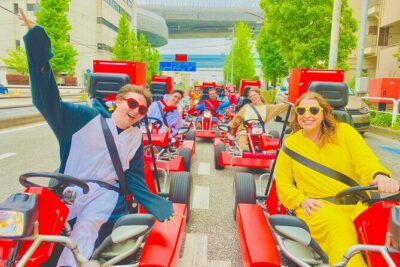 ★ 5.0Flagship 2-Hours Official Street Go-Kart Tour – Tokyo Bay ShopFrom $644,974 reviews
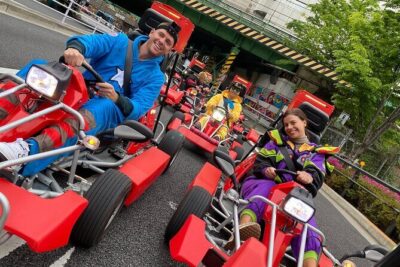 ★ 5.0Official Street Go-Kart in ShibuyaFrom $763,435 reviews
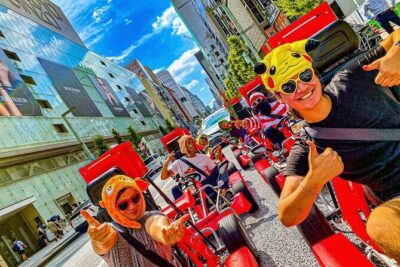 ★ 5.0Official Street Go-Kart Tour – AkihabaraFrom $611,578 reviews
 ★ 5.0Shibuya Official Street Go-Kart in Shibuya AnnexFrom $69972 reviews
 ★ 4.7Premium Go-Kart Tour with Tower & Shibuya CrossingFrom $116528 reviews
Shibuya Kart: Premium Go-Karting Tour through Shibuya, TokyoFrom $63463 reviews
★ 4.7Premium Go-Kart Tour with Tower & Shibuya CrossingFrom $116528 reviews
Shibuya Kart: Premium Go-Karting Tour through Shibuya, TokyoFrom $63463 reviews
 ★ 4.7East Tokyo Go-Kart TourFrom $64370 reviews
 ★ 5.0Guided Tokyo Go-Kart Tour: Tokyo Tower to Shibuya CrossingFrom $155237 reviews
Browse the lists this tour appears in