
Reviewed · MT FUJI DAY TRIPS
Tokyo: Mount Fuji One Day Trip Lake Kawaguchi & Lake Yamanaka
Fuji in a single day? Yes, mostly. This trip takes you out of Tokyo to World Heritage Mount Fuji viewpoints and the Fuji lakes area, then stacks in famous photo spots like Chureito Pagoda and the Arakurayama shrine. I especially like the English-speaking guide approach and the way the day targets classic Fuji views from multiple angles. You get a lot of variety without having to plan trains or figure out transfers.
One potential downside: this is a time-managed photo circuit, so the pace can feel tight, especially during meet-up and when the group needs to move on. Also, lunch isn’t included, so you’ll want a plan for food (cash helps for purchases).
In This Review
- Key highlights at a glance
- From Marunouchi to Fuji Five Lakes: how the 10-hour day plays out
- Meeting point and group flow: what to do at the start
- Lake Kawaguchiko: the classic Fuji-from-the-shore hit
- Oishi Park: flowers, promenade, and Fuji in the same frame
- Lake Yamanaka: swan-lake vibes and another Fuji angle
- Oshino Hakkai: the clear-spring pond detour that’s worth the hour
- Lawson Fujikawaguchiko Town Hall: the quick Instagram stop (and snacks)
- Arakurayama Sengen Park: Chureito Pagoda + the shrine that dates back to 705
- Hikawa Clock Shop: street-scene photography with a calmer pace
- What the guides and drivers do with your day
- Price and value: is $58.90 a good deal for a Fuji one-day loop?
- Who this tour fits best
- Should you book this Tokyo to Mount Fuji one-day trip?
- FAQ
- What time does the tour start?
- How long is the tour?
- Where do I meet the tour?
- What’s included in the price?
- Do I need tickets for the stops?
- How big is the group?
- What’s the cancellation window?
Key highlights at a glance
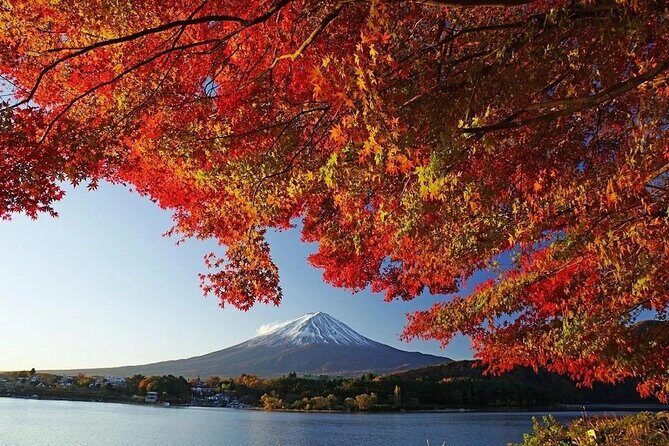
- World Heritage Mount Fuji viewpoints, packed into one day
- Lake Kawaguchiko, Lake Yamanaka, and Oshino Hakkai with mostly free admission stops
- Chureito Pagoda + Arakurayama Sengen Park for the iconic postcard angle
- Oishi Park and its seasonal flower promenades along Lake Kawaguchi
- Hikawa Clock Shop for a calmer street-scene feel with Fuji in the background
- Mobile ticket + air-conditioned vehicle, with a max group size of 45
Other routes to the mountain, compared
- Mt Fuji & Hakone Cruise, Drum Show Bullet Train 1 Day from Tokyo★ 4.0 · 7,413 reviews
- Tokyo Mt Fuji 5th St & Hakone Cruise Bus Tour w/Bullet Train★ 4.4 · 5,024 reviews
- From Tokyo: Mount Fuji Full-Day Sightseeing Trip★ 4.5 · 4,970 reviews
From Marunouchi to Fuji Five Lakes: how the 10-hour day plays out
This is the kind of day trip you do when you want the big Mount Fuji hits, not when you want slow wandering. You start at 8:00 am from STAND T, in Marunouchi (Chiyoda City), then spend roughly 10 hours doing a round-trip loop that returns you to the same meeting point.
What makes the schedule work (and what you’ll feel) is the mix of short, timed stops and a couple longer photo moments. Each main viewpoint is about 25 minutes, except for Oshino Hakkai (about 1 hour) and Chureito Pagoda (about 1 hour). That means you’ll be walking, taking photos, and moving on—often with other groups around you.
Meeting point and group flow: what to do at the start
Your meet-up is near public transportation in central Tokyo, which is a win. The practical part: because this tour can involve a lot of people moving at once (up to 45 travelers), your best move is to arrive a bit early and stay alert to the guide’s instructions.
Some guides (the names I saw for past departures included Taiyo, Yuan, Kyo, Lucy, and Saki) are praised for keeping people on track and giving clear departure guidance. One tip you’ll want to take seriously: if your group uses the same meeting point but you split into separate vehicles, you should make that clear in advance—this helps avoid that awkward moment of chasing the wrong bus.
Also, a WhatsApp group has been mentioned as useful for coordination. If you get one, it’s worth checking so you know exactly where to line up when the group starts moving.
Lake Kawaguchiko: the classic Fuji-from-the-shore hit
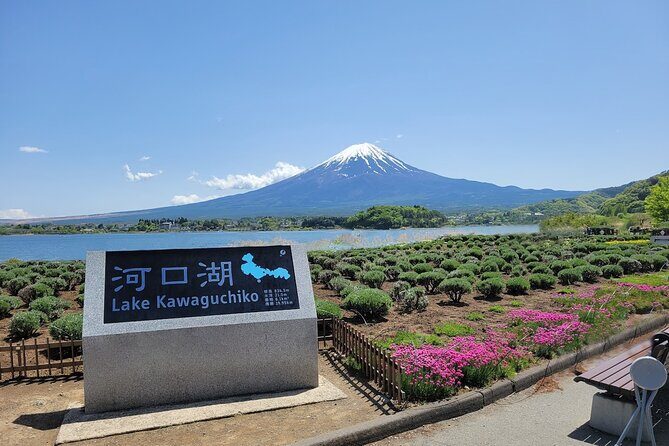
Lake Kawaguchiko is often the first Fuji lake people picture. It’s the most popular of the Fuji Five Lakes, and it’s especially known for panoramic views of Mount Fuji from the shore. The long shoreline also gives you more chances to find a viewpoint angle that fits your photo style.
On a clear day, you’ll be able to look straight toward Fuji and feel that famous “it’s right there” perspective. This stop is about 25 minutes, so keep it efficient:
- Walk to a spot where you can frame Fuji with the water.
- Grab your wide shot first, then your tighter shots.
- Don’t overthink it. This is a timed stop.
What to watch for: visibility. Fuji can hide behind haze. The good news is the itinerary gives you multiple attempts to see it again later.
Oishi Park: flowers, promenade, and Fuji in the same frame
Right after Kawaguchiko, you’ll head to Oishi Park. This is a scenic area designed for exactly what you want from a day like this: flowers + Lake Kawaguchi + Mount Fuji all working together in one composition.
The promenade is the star. There’s space for a steady walk while you look outward over the lake toward the mountain, and the flower displays are described as seasonal. That matters because the park can look different depending on when you go—so if you’re traveling in spring or another peak bloom season, you’re likely to feel like you hit a better-looking set.
Time is about 25 minutes, so you’ll want to pick a path and commit. Don’t plan on a long meander.
Worth weighing up alongside this Tokyo pick:


Lake Yamanaka: swan-lake vibes and another Fuji angle
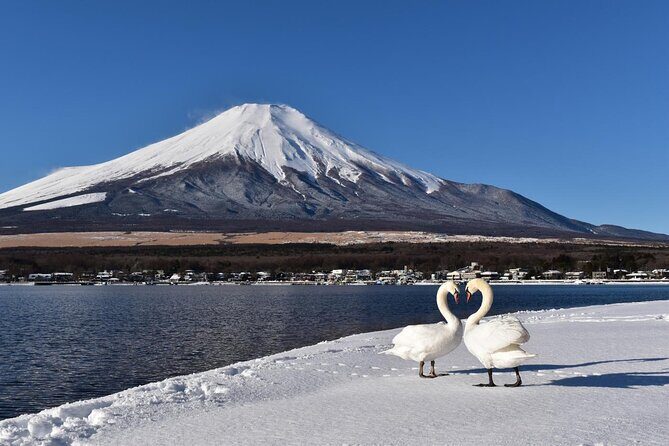
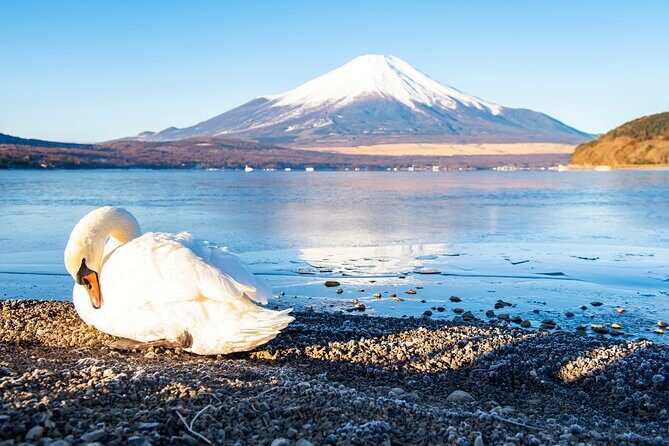
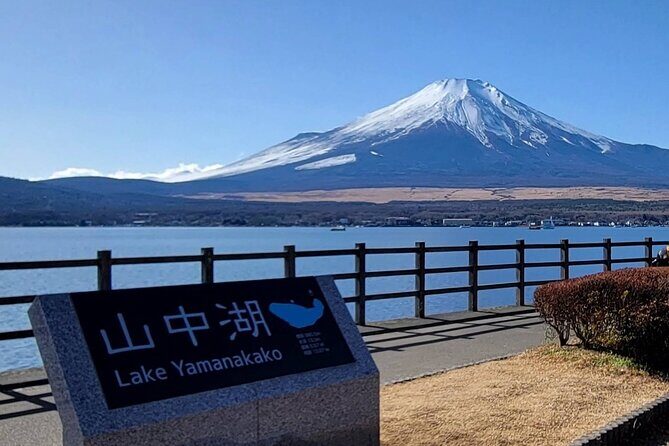
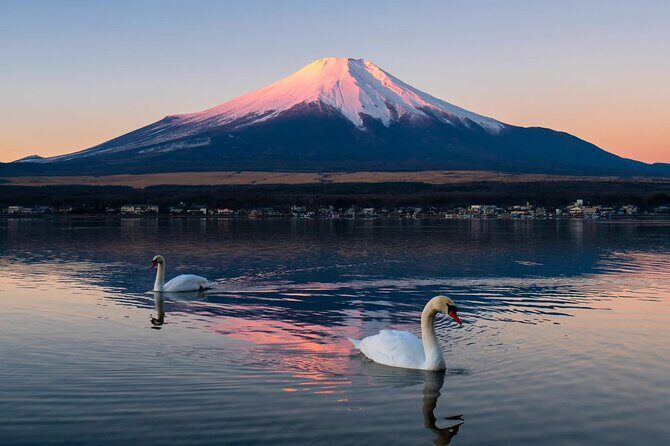
Next up: Lake Yamanaka, also called Swan Lake. It’s noted as the largest of the Fuji Five Lakes and the closest lake to Mount Fuji among the five. Translation: if Fuji is visible, this area gives you another strong shot and a chance to compare how the mountain looks from a different water position.
This stop is again about 25 minutes. For me, the value of repeating Fuji viewpoints across different lakes is that you start noticing small changes—what angle the mountain sits at, how the water texture changes your reflection chance, and where the best photo perspective appears.
If you’re the type who likes variety over “one perfect moment,” this stop fits your style.
Oshino Hakkai: the clear-spring pond detour that’s worth the hour
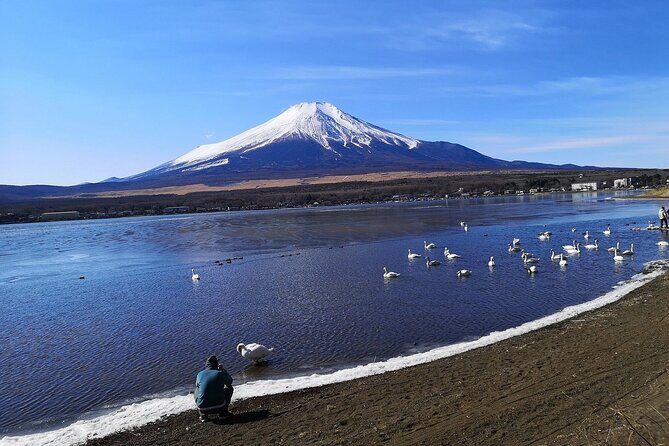
If you only care about photos, Oshino Hakkai can still win you over. It’s a village known for eight clear spring water ponds, described as among Japan’s top 100 famous waters. It’s also classified as a Natural Monument and connected to the Mount Fuji World Heritage area.
This is the one stop with enough time to slow down: about 1 hour. You’ll likely spend it walking the ponds, looking at the water channels, and photographing the setting. The practical benefit is that it’s less about “stand still and shoot” and more about “wander and see how the water system works.”
Possible drawback: if you’re arriving when other buses are dumping people at the same time, the pond area can feel busy. Use that hour to work through your shots quickly, then linger near the calmer pond views.
Lawson Fujikawaguchiko Town Hall: the quick Instagram stop (and snacks)
Then you hit an Instagram-famous Lawson convenience store in the Fujikawaguchiko area. This stop is about 15 minutes, so think of it as a mini-photo break. The focus is the Mount Fuji angle you can get from the store area, plus the fact that it’s an easy place to grab something.
One thing I like about this kind of stop is practicality. Some travelers have mentioned needing cash for food options, and since this is a convenience-store style stop, it’s smart to carry some yen just in case. You might be able to pick up ice cream, drinks, or local snacks.
Arakurayama Sengen Park: Chureito Pagoda + the shrine that dates back to 705
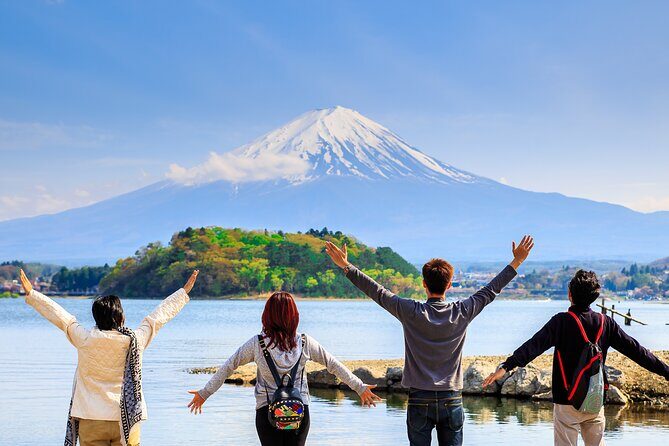
This is the heart of the postcard portion of the day.
First, Chureito Pagoda at Arakurayama Sengen Park. You’re given about 1 hour here, which is helpful because it gives you time for the approach, the main viewpoint, and a chance to adjust your angle. The park is famous for panoramic views where the pagoda, Mount Fuji, and the city of Fujiyoshida can appear together.
Then you continue to Arakura Fuji Sengen Shrine, connected to the same park area. The shrine is described as being built in 705, and it has served as a guardian god for over 1,300 years. Even if you’re not a shrine expert, that kind of age adds weight to a spot that otherwise could just feel like another photo location.
This is also where you’ll likely notice your guide’s personality: some guides are praised for giving fun facts and local tips, and that kind of context can make the photos feel less random and more meaningful. If you want to get more from the shrine visit, listen when the guide explains what people come there for—protection, harmony, and good luck themes are mentioned in the tour details.
Hikawa Clock Shop: street-scene photography with a calmer pace
After the more iconic park stops, you’ll end with Hikawa Clock Shop. This one is about ambiance. You’ll walk a serene path toward the area with Mount Fuji in the background, aiming for those Japanese street-scene photos.
This stop is about 20 minutes, which is perfect if you like photography but also want to avoid another long “queue and wait” moment. The payoff is a different look from the earlier pagoda viewpoint—more everyday Japan, more streets, less big attraction structure.
What the guides and drivers do with your day
The tour description promises a friendly, professional English-speaking guide, and the reviews you can trust here show real patterns.
A few things repeatedly praised:
- Clear instructions on meetup points and departure times.
- Friendly guidance and helpful local tips.
- Guides taking time to help with photos—one past guest even noted the guide taking good photos of the group.
Some practical concerns that matter to you:
- The meet-up can feel a little chaotic because there may be several groups/buses. Your best defense is simple: stick close to your guide or your group leader as soon as you arrive.
- A couple reviews mentioned a feeling of time pressure from tight departure reminders. If you’re the type who likes to linger, you might need to mentally switch into “capture, then move” mode.
Driver punctuality has also been mentioned positively, which is a big deal on day trips because lateness compresses your photo time everywhere.
Price and value: is $58.90 a good deal for a Fuji one-day loop?
At $58.90 per person, this tour is positioned as a low-cost way to cover a lot of ground around Mount Fuji without doing train math. The included items help the value equation:
- Air-conditioned vehicle
- All fees and taxes
- Mobile ticket convenience
The itinerary also leans heavily on stops that are listed as free admission (Lake Kawaguchiko, Oishi Park, Lake Yamanaka, Oshino Hakkai, the Lawson stop, Chureito Pagoda, the shrine, and the Hikawa Clock Shop). That matters because you’re not paying multiple attraction tickets on top of the tour.
The main cost you’ll add is the one thing the tour doesn’t cover: lunch and personal expenses. One review note also suggests you may want cash for lunch purchases. So budget for food, small snacks, and any extra you decide to buy on the day.
If you’re traveling with limited time in Tokyo and you want Mount Fuji viewpoints plus a major shrine/pagoda combo, this is strong value.
If you’re the type who wants long, unstructured hours at one or two places, a guided day trip may feel like a photos-and-moves schedule rather than “slow Japan.”
Who this tour fits best
This one-day Fuji experience is a good match if you:
- Want to see multiple Fuji lakes plus the famous pagoda and shrine without planning transfers.
- Like guided context (facts, local tips) and don’t mind moving on quickly.
- Are comfortable with a bus day and short walking segments at each stop.
It’s less ideal if you:
- Hate being on a schedule or struggle when groups move in timed bursts.
- Need long restroom or sit-down breaks—some reviews mention bathroom stops can be hit or miss.
- Are very sensitive to comfort issues like vehicle cooling. The tour lists an air-conditioned vehicle, but one review mentioned A/C not being available for the first hour or two. That’s not something you can fully predict.
Should you book this Tokyo to Mount Fuji one-day trip?
I’d book it if your goal is maximum Fuji exposure in one day: Kawaguchiko, Yamanaka, Oshino Hakkai, Chureito Pagoda, and shrine time, plus the Hikawa street-scene photos. At this price, the included transport and mostly free stops are hard to beat for a first-time Mount Fuji trip.
I wouldn’t book it if you want a relaxed, slow pace or if you’re expecting a long deep cultural experience at just one place. This is a moving day. Your reward is variety—and plenty of chances to get Mount Fuji in your camera, if the weather cooperates.
FAQ
What time does the tour start?
It starts at 8:00 am.
How long is the tour?
The duration is about 10 hours.
Where do I meet the tour?
The start is at STAND T (Marunouchi, Chiyoda City), Tokyo, near public transportation. The tour ends back at the meeting point.
What’s included in the price?
The tour includes an air-conditioned vehicle and all fees and taxes. Lunch is not included, and you’ll cover other personal expenses.
Do I need tickets for the stops?
The stops listed in the itinerary show free admission. You’ll still use the tour’s mobile ticket for the experience itself.
How big is the group?
The tour has a maximum of 45 travelers.
What’s the cancellation window?
You can cancel for free up to 24 hours before the experience start time for a full refund.
More 1-Day Tours in Tokyo
More Tour Reviews in Tokyo





The Fuji Shortlist: Other Days Out to the Mountain

Fresh reviews from around Tokyo






Mt Fuji Day Trips, compared.
 ★ 4.0Mt Fuji & Hakone Cruise, Drum Show Bullet Train 1 Day from TokyoFrom $1497,413 reviews
 ★ 4.4Tokyo Mt Fuji 5th St & Hakone Cruise Bus Tour w/Bullet TrainFrom $1545,024 reviews
 ★ 4.5From Tokyo: Mount Fuji Full-Day Sightseeing TripFrom $684,970 reviews
 ★ 4.7Mt. Fuji Tour, Hakone Ropeway, Owakudani, Lake AshiFrom $544,002 reviews
 ★ 5.0Private Tour to Mt. Fuji and Hakone (Fully Licenced Operator)From $4971,910 reviews
 ★ 4.9Mount Fuji Full-Day Private Tour from Tokyo (Customizable)From $3931,470 reviews
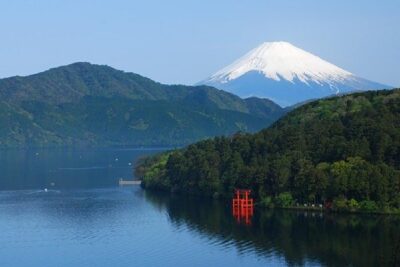 ★ 4.0Mt Fuji & Hakone Cruise, Drum Show Bus 1 Day from TokyoFrom $1221,287 reviews
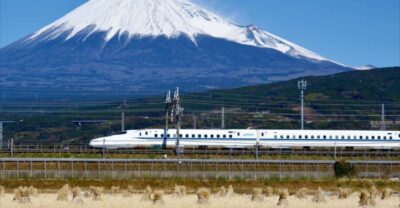 ★ 4.2From Tokyo: Mt. Fuji & Hakone Tour w/ Return by Bullet TrainFrom $1171,278 reviews
Browse the lists this tour appears in