
Reviewed · MT FUJI DAY TRIPS
Tokyo: Instagram-Worthy Mt Fuji & Lake Kawaguchiko Day Trip
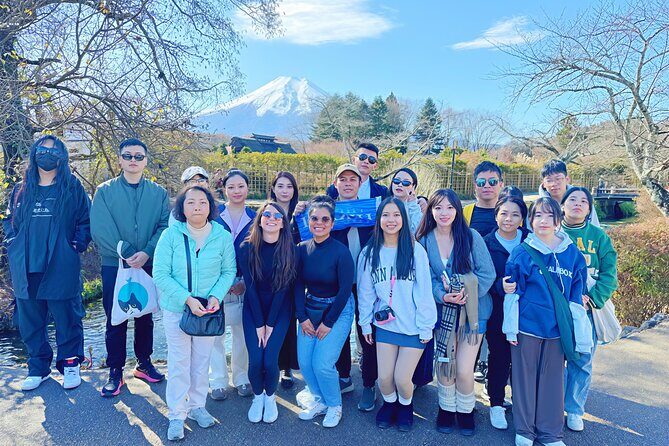
Mt Fuji can feel like a photo hunt. This day trip is built for getting you to the right places around Kawaguchiko, with multiple Mt Fuji viewpoints so your chances go up when weather plays games. The pacing is practical: you ride comfortably, get dropped at the shots people talk about, and you’re not stuck planning trains and transfers all day.
Two things I really like about it: first, the hassle-free pickup from Tokyo Station makes a long day feel doable. Second, you get a tight set of stops that mix classic Mt Fuji scenes (Chureito Pagoda at Arakurayama Sengen Park) with low-key local moments, like a Lawson convenience store photo spot that’s basically famous for its Fuji framing.
One consideration: this is a photography-first route, so some parts can feel like quick drive-and-shoot stops rather than slow cultural wandering. If you’re chasing deep history or you’re hoping Mt Fuji will be crystal-clear the whole time, you’ll want to manage expectations.
In This Review
- Key highlights that make this tour worth a look
- Why this Mt Fuji day trip feels easy (even when the day is long)
- Tokyo Station pickup and how it shapes your whole day
- Stop 1: Arakurayama Sengen Park and the Chureito Pagoda view
- When the Hikawa Clock Shop gets skipped (and why that can be a plus)
- Oshino Hakkai: eight Fuji springs and a calmer pace
- Lawson Kawaguchiko Station: a quick stop with a serious photo mission
- Lake Kawaguchiko Ohashi Bridge and the Oishi Park flower fields
- Maple Corridor instead of Oishi Park: late October color planning
- How the tour timing actually feels: photo stops, transit, and variable weather
- What guides do with this day: explanations, humor, and photo coaching
- Value check: does $161 make sense for this route?
- Who should book this tour (and who might want a different style)
- Final call: should you book this Mt Fuji and Kawaguchiko day trip?
- FAQ
- What time does the tour start, and where is the meeting point?
- How long is the day trip?
- Is Mt Fuji guaranteed to be visible?
- Are admission tickets included?
- What happens during cherry blossom season in early April?
- What changes in late October and November?
- How big is the group?
Key highlights that make this tour worth a look
- Tokyo Station pickup gets you off the planning hook fast, with an easy start point at 8:00am
- Photo-focused scheduling hits several “Fuji shows up here” viewpoints in one day
- Arakurayama Sengen Park pairs an iconic pagoda view with an actual stair-and-walk stretch
- Oshino Hakkai brings quiet nature with eight springs that reflect Mt Fuji
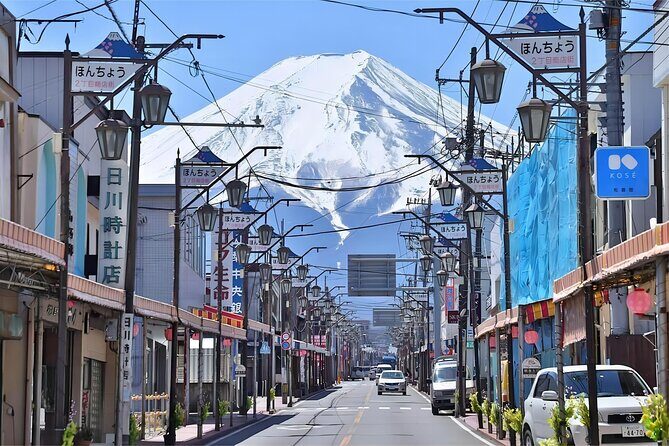
- Lawson Kawaguchiko Station is a quick stop with a surprisingly good Fuji view
- Seasonal swap in late autumn trades Oishi Park for the Maple Corridor during peak color windows
Other routes to the mountain, compared
- Mt Fuji & Hakone Cruise, Drum Show Bullet Train 1 Day from Tokyo★ 4.0 · 7,413 reviews
- Tokyo Mt Fuji 5th St & Hakone Cruise Bus Tour w/Bullet Train★ 4.4 · 5,024 reviews
- From Tokyo: Mount Fuji Full-Day Sightseeing Trip★ 4.5 · 4,970 reviews
Why this Mt Fuji day trip feels easy (even when the day is long)
This is the kind of tour I’d pick when my Tokyo time is limited but I still want the Mt Fuji “I was there” photos. The whole structure is designed around minimizing decision-making: pickup is handled, the route is set, and the stops are chosen for sightlines.
The small group size helps too. You can expect a max of 21 travelers, which usually means you’re not fighting the crowd at each viewpoint the way you can on larger buses.
Tokyo Station pickup and how it shapes your whole day
Meeting at Tokyo Station (Marunouchi area) is a big deal. It’s central, it’s easy to find with public transport, and it keeps your morning from turning into a scavenger hunt. The tour starts at 8:00am, and the total time is about 10 hours including travel.
You’ll also use a mobile ticket, so you’re not juggling paper vouchers. That matters when you’re trying to move efficiently through timed stops and parking areas.
Stop 1: Arakurayama Sengen Park and the Chureito Pagoda view
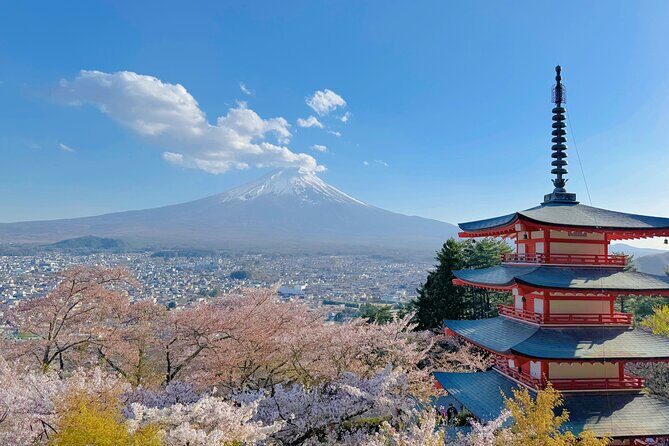
Arakurayama Sengen Park is famous for a reason: it’s where you get the iconic Chureito Pagoda view with Mt Fuji in the background. The tour gives you about 1 hour, which is short enough that you’ll want comfortable shoes and a game plan for photos.
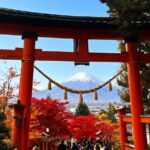
There’s also a walk involved. One review specifically mentioned the 400-step climb to the shrine area, and it’s worth knowing this before you book if your legs are not into stairs. The reward is the reason people come here in cherry blossom season (mid-April) and again in autumn (November), when the park looks especially photogenic.
Possible drawback: if Mt Fuji is cloudy or hidden low in the sky, you can end up with a “wait for the peek” moment. The good news is that this tour doesn’t bet everything on one viewpoint.
When the Hikawa Clock Shop gets skipped (and why that can be a plus)
The plan normally includes Hikawa Clock Shop, but there’s an important seasonal adjustment: during cherry blossom traffic regulations (Apr 1–18, 2025), the tour skips this stop to protect time for Arakurayama Sengen Park.
The reason is practical. The route notes an extended walk from parking, and in peak congestion that can eat the day. If you’re traveling during those dates, the skip can actually be a smart trade: you spend more time where the photo payoff is strongest.
If you’re going at a different time of year, you may see Hikawa Clock Shop included, but always assume schedules can shift to protect time on the ground.
Worth weighing up alongside this Tokyo pick:


Oshino Hakkai: eight Fuji springs and a calmer pace
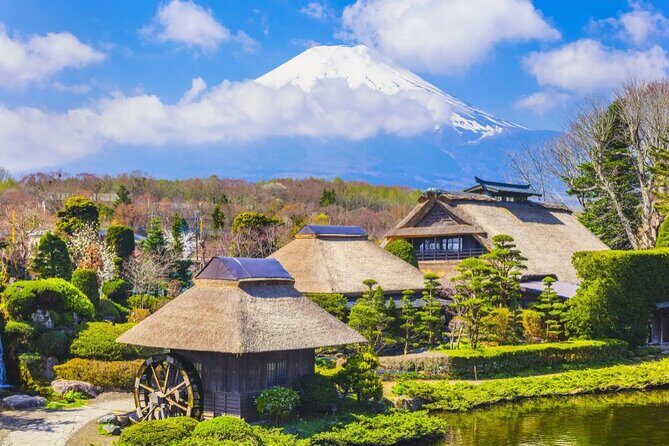
Next up is Oshino Hakkai, a natural site made of eight springs fed by snowmelt from Mt Fuji. This stop is free entry and lasts about 1 hour 20 minutes, which is longer than most of the other photo moments on the route.
What you should expect here is a change in mood. Instead of chasing a single perfect angle, you can slow down and look at the clear water and the way reflections behave. Even when Mt Fuji isn’t fully visible, the water and the surrounding feel like a proper nature break.
A realistic tip: plan to move at an easy walking pace. This isn’t just a quick “snap and go.” The whole point is to actually look.
Lawson Kawaguchiko Station: a quick stop with a serious photo mission
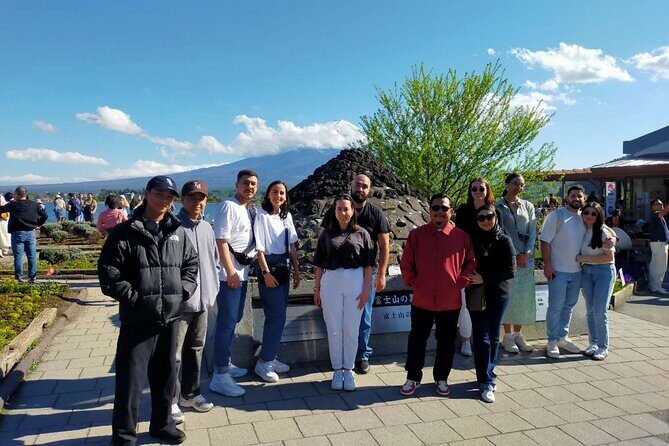
Yes, it’s a convenience store. And yes, it has become a go-to photo spot because of the Mount Fuji view you can frame from there. The tour gives you about 20 minutes, and that means you’ll want to arrive ready: camera set, angle in mind, and patience for people stepping into and out of your shot line.
This stop is short on purpose. It’s more about nailing the classic “Japan normal life meets Mt Fuji” contrast than turning it into a long activity.
Lake Kawaguchiko Ohashi Bridge and the Oishi Park flower fields
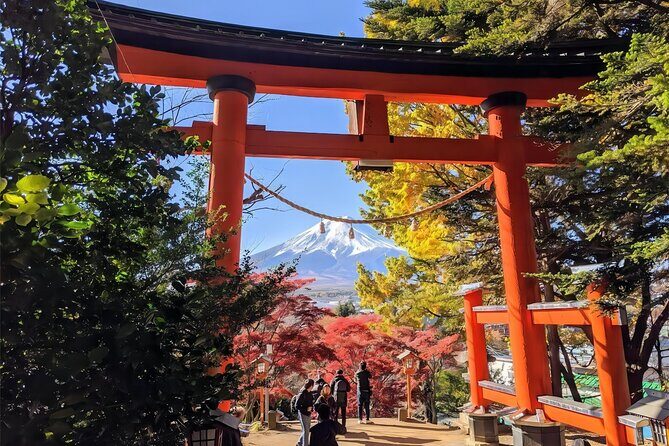
The mid-to-late portion of the day heads to Lake Kawaguchi, including the Ohashi Bridge area, and then usually ends at Oishi Park (about 50 minutes).
Oishi Park is known for flower fields that can include lavender, begonia, cosmos, and Japanese blood grass, depending on the season. That floral mix is why this stop works so well on camera: it gives you layers in the frame, not just a mountain silhouette.
What to watch for: late-day light can matter. If the sun is harsh, you might get glare off the lake or bright highlights on the flowers. If that happens, try shifting to slightly different angles rather than forcing the same framing over and over.
Maple Corridor instead of Oishi Park: late October color planning
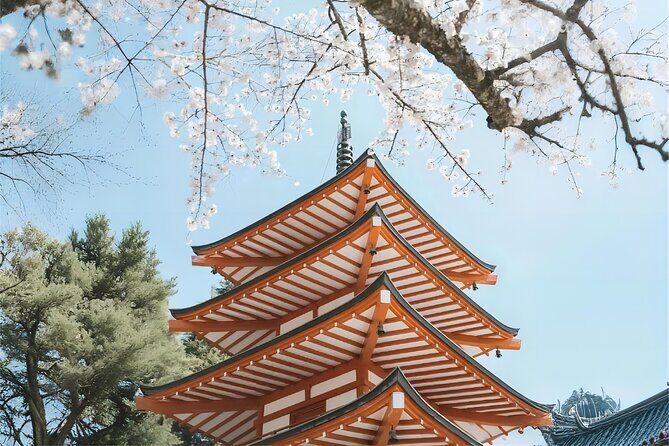
From around Oct 30 to Nov 20, the itinerary swaps away from Oishi Park to focus on the Kawaguchiko Maple Corridor. The Maple Corridor is a seasonal limited-time stop from about Oct 20 to Nov 20, and it’s designed to show Mt Fuji against red maple leaves.
If you love autumn color, this is the window that can make this tour feel extra special. You’re not only looking for Fuji; you’re looking for Fuji plus dramatic color contrast.
Tradeoff to keep in mind: in peak autumn periods, lighting and crowding can push you to be efficient with your time. The tour time here is still fixed, so you’ll want to know what you want to capture as soon as you arrive.
How the tour timing actually feels: photo stops, transit, and variable weather
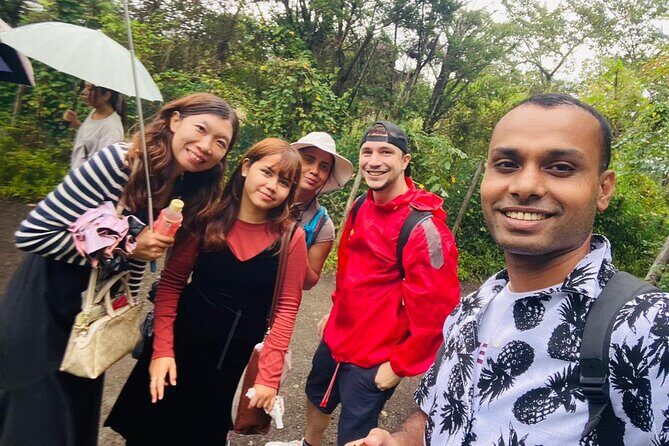
The plan is about 10 hours total, but real days can stretch with traffic. One review said the trip ran a bit longer (around 11 hours including traffic), while another mentioned returning to Tokyo Station earlier in the afternoon (around 4:30pm). That tells you the timing has some flexibility depending on conditions.
Also, Mt Fuji is famously moody. One review described a cloudy day where Fuji appeared only in short windows. That’s one reason this itinerary is built with multiple stops: even if one viewpoint underdelivers, another can pay off.
Practical move: pack for walking and heat/cold. Even in months when the mountain looks snowy, the weather around Kawaguchiko can still be comfortable or harsh depending on the day.
What guides do with this day: explanations, humor, and photo coaching
Guide quality shows up clearly in the reviews. Names like Hikari and Sakura came up more than once, and both are described as helpful and good at keeping the group moving with clear guidance. One review also mentioned Hikari showing the best angles for taking Mt Fuji photos and explaining each stop in a way that kept the day smooth.
On the other hand, there are also mixed notes about some guides seeming more rushed, or giving less explanation than expected. So here’s my best advice: if you’re the type who wants lots of history and culture talk, ask yourself whether photos and viewpoints are your main goal. If they are, this tour tends to deliver.
Value check: does $161 make sense for this route?
At $161, you’re paying for a guided, all-in-one day that includes driver and guide service plus parking fees, and it’s structured for a long-distance day from Tokyo. You’re also saving time and effort versus building the route on your own, especially when you factor in how weather and crowds can change plans.
Admission fees are mostly not the issue. Several stops are marked free, and Arakurayama Sengen Park’s admission is included in the plan. What you still budget for is your own meals and personal spending, since dinner isn’t included.
Is it “cheap”? No. But it’s not just a bus ride either. The value comes from reducing friction: pickup location, transportation between viewpoints, and a route designed specifically around capturing Mt Fuji from different angles.
Who should book this tour (and who might want a different style)
This works best if you:
- want a day out of Tokyo that’s photo-led and low-stress
- don’t want to plan trains, transfers, and stop timing yourself
- enjoy walking a bit and taking lots of pictures
It may be less ideal if:
- you need a very slow pace or lots of cultural depth during the drive and at each stop
- you strongly prefer places with minimal stairs (there can be a climb at Arakurayama Sengen Park, and one review called out the 400-step stretch)
One note from the tour info: it’s not recommended for travelers requiring constant mental health supervision. If that’s you or someone in your group, you’ll want to choose a different setup with appropriate support.
Final call: should you book this Mt Fuji and Kawaguchiko day trip?
I’d book it if your priority is classic Mt Fuji scenery with minimal planning stress. The Tokyo Station pickup, the multiple Fuji viewpoints, and the seasonal choices (cherry blossom timing and late-autumn maple color) are exactly what make this feel like a smart use of a single day.
I’d think twice if you’re expecting a long, relaxed cultural deep-dive or if you’re not comfortable with a schedule that moves you from place to place quickly. Also, be ready for Fuji to hide sometimes. This tour gives you multiple tries, but it can’t control clouds.
If you want a straightforward way to get to the right Mt Fuji scenes—without playing transportation chess—this is a good fit.
FAQ
What time does the tour start, and where is the meeting point?
The tour starts at 8:00am and meets at Tokyo Station, 1 Chome-9 Marunouchi, Chiyoda City, Tokyo 100-0005, Japan.
How long is the day trip?
The total duration is about 10 hours, including travel time.
Is Mt Fuji guaranteed to be visible?
No visibility is guaranteed. The itinerary includes several different viewpoints, which gives you more chances to see Mt Fuji during the day if weather changes.
Are admission tickets included?
Most stops are marked free. Arakurayama Sengen Park includes an admission ticket in the itinerary, but the tour overall notes that admission tickets are not included.
What happens during cherry blossom season in early April?
From Apr 1–18, the tour skips the Hikawa Clock Shop due to cherry blossom traffic regulations, to maximize time at Arakurayama Sengen Park.
What changes in late October and November?
From about Oct 30 to Nov 20, the tour visits the Kawaguchiko Maple Corridor instead of Oishi Park to focus on autumn colors.
How big is the group?
The tour has a maximum of 21 travelers.
More 1-Day Tours in Tokyo
More Tour Reviews in Tokyo





The Fuji Shortlist: Other Days Out to the Mountain

Fresh reviews from around Tokyo






Mt Fuji Day Trips, compared.
 ★ 4.0Mt Fuji & Hakone Cruise, Drum Show Bullet Train 1 Day from TokyoFrom $1497,413 reviews
 ★ 4.4Tokyo Mt Fuji 5th St & Hakone Cruise Bus Tour w/Bullet TrainFrom $1545,024 reviews
 ★ 4.5From Tokyo: Mount Fuji Full-Day Sightseeing TripFrom $684,970 reviews
 ★ 4.7Mt. Fuji Tour, Hakone Ropeway, Owakudani, Lake AshiFrom $544,002 reviews
 ★ 5.0Private Tour to Mt. Fuji and Hakone (Fully Licenced Operator)From $4971,910 reviews
 ★ 4.9Mount Fuji Full-Day Private Tour from Tokyo (Customizable)From $3931,470 reviews
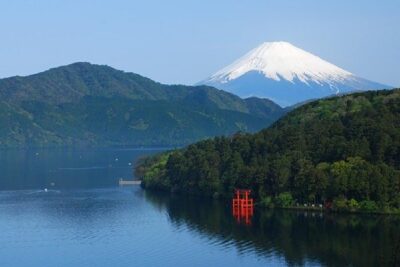 ★ 4.0Mt Fuji & Hakone Cruise, Drum Show Bus 1 Day from TokyoFrom $1221,287 reviews
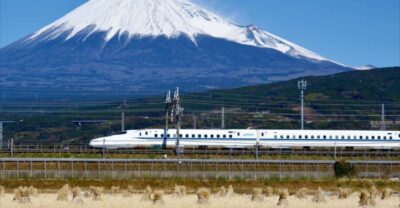 ★ 4.2From Tokyo: Mt. Fuji & Hakone Tour w/ Return by Bullet TrainFrom $1171,278 reviews
Browse the lists this tour appears in