
Reviewed · TOKYO
Tokyo: Harajuku Meiji Shrine to Shibuya Crossing Guided Tour
Two hours can feel like a full Tokyo orientation. This guided route strings together Meiji Jingu Shrine, Takeshita Street, and Shibuya Crossing so you get the key landmarks without worrying about train changes or navigation. You follow a guide’s pace, stop for photo moments, and get commentary as the city shifts from shrine calm to Harajuku style to Shibuya energy.
What I like most is the guided navigation. In Tokyo, that alone saves time and reduces stress when you’re still figuring out stations and streets. I also like the small size—this tour caps at 10 people, and one guide named Naoko gets praised for being friendly, informative, and speaking very good English.
One thing to consider: at about 2 hours, the stops are quick-hit. You’ll see a lot, but you won’t linger long enough for a slow, deep exploration if you prefer to spend extra time in each place.
In This Review
- Key things to know before you go
- How this Harajuku-to-Shibuya route helps you get oriented fast
- Stop 1: Meiji Jingu Shrine and the omikuji fortune paper moment
- Stop 2: Takeshita Street for fashion, kawaii shops, and a quick taste of Harajuku
- Stop 3: Shibuya Scramble Crossing photo stop with guided timing
- What the small group size really changes (and why it feels easier)
- Mobile ticket and meet-up points: how to keep it stress-free
- Price and value: what you’re paying for at $79.73
- Who should book this tour (and who might want something longer)
- The experience pace: what “2 hours” feels like in real life
- Should you book the Tokyo: Harajuku Meiji Shrine to Shibuya Crossing Guided Tour?
- FAQ
- How long is the tour?
- What does the tour cost?
- How large is the group?
- Where does the tour start and end?
- Do I need to buy tickets for the stops?
- Is this tour good for a first-time visitor to Tokyo?
- What should my fitness level be like?
- Is the tour ticket mobile?
- How does cancellation work?
Key things to know before you go
- A guided route that covers three major zones: Meiji Jingu, Harajuku, and Shibuya in one go
- Small group capped at 10 travelers, so questions and pacing feel manageable
- Fortune paper (omikuji) is part of the experience, with the fee included
- Prime Shibuya Scramble Crossing photo time, right at a landmark you’ve probably seen online
- Mobile ticket, so you can keep it simple on your phone
- About a 20-minute walk between Harajuku and Shibuya, plus time in shrine areas
Before you commit, see how this one stacks up against a few Tokyo favourites:
- Mt Fuji and Hakone 1-Day Bus Tour Return by Bullet Train★ 5.0 · 26,383 reviews
- 1-Day Tokyo Bus Tour★ 5.0 · 14,250 reviews
- Tokyo: teamLab Planets TOKYO Digital Art Museum Entry Ticket★ 4.6 · 9,779 reviews
How this Harajuku-to-Shibuya route helps you get oriented fast
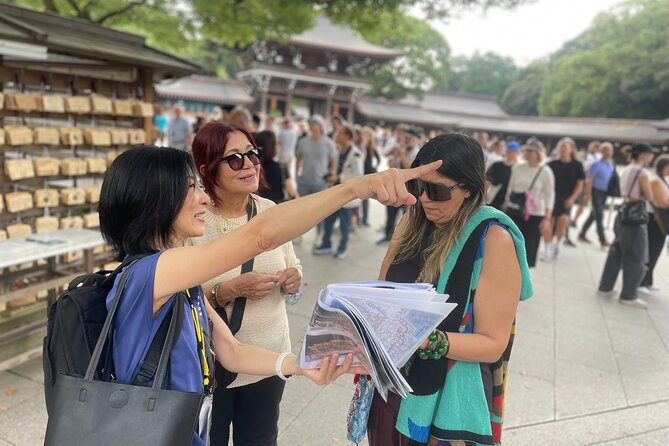
This tour is built for the part of Tokyo planning that usually feels annoying: you want the highlights, but you don’t want to spend your whole day reading maps. The route moves logically. It starts with a major shrine visit, then flows into Harajuku’s youth fashion streets, then lands at Shibuya Crossing where the city is at its loudest and brightest.
That flow matters. Meiji Jingu sets a calm baseline with nature and tradition. Takeshita Street flips the mood to quirky shopping and colorful street life. Then Shibuya gives you the payoff photo moment.
If you’re visiting for the first time, I like that you’re not just walking in random circles. You’re moving between neighborhoods that actually feel different, with a guide steering you.
Stop 1: Meiji Jingu Shrine and the omikuji fortune paper moment
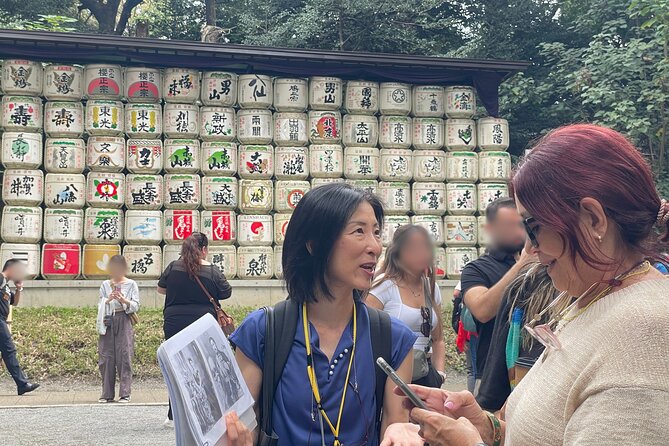
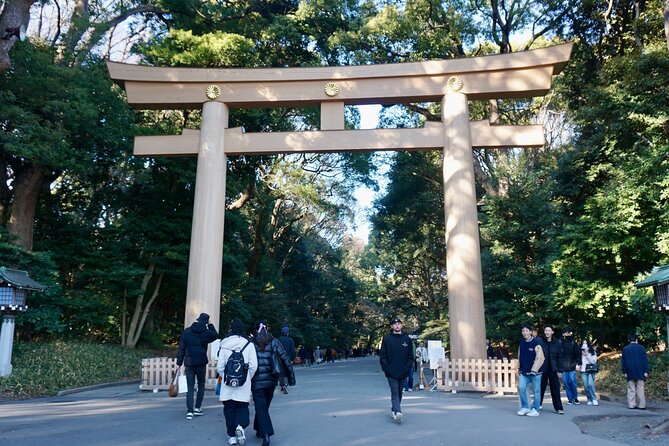
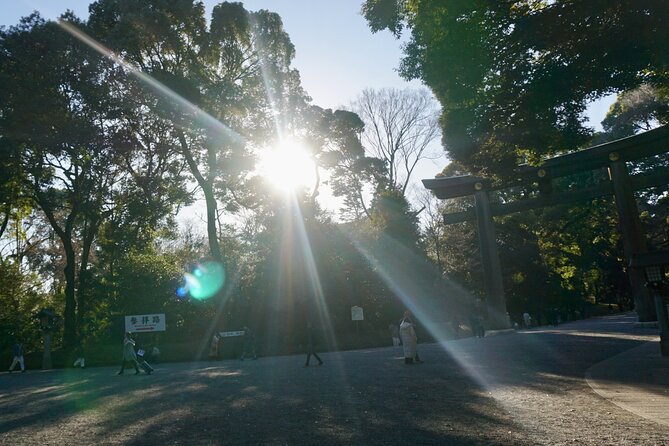
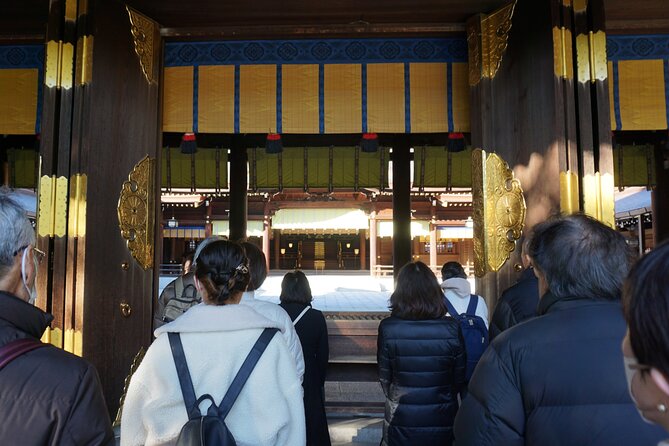
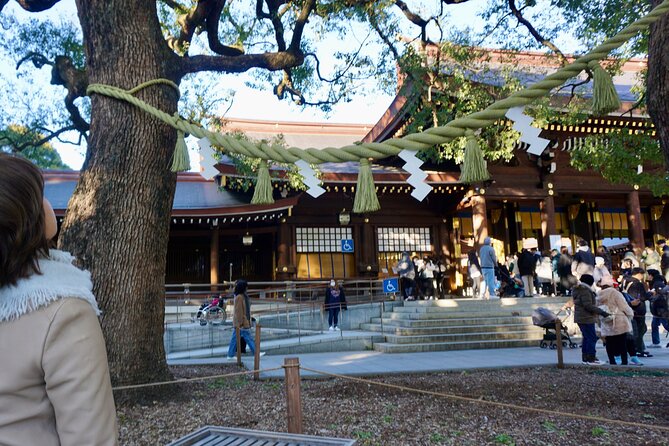
Meiji Jingu Shrine is the first stop for a reason. The site has a reputation tied to hatsumode, the New Year shrine visit. That context helps you understand why people treat the place with real attention, not just sightseeing.
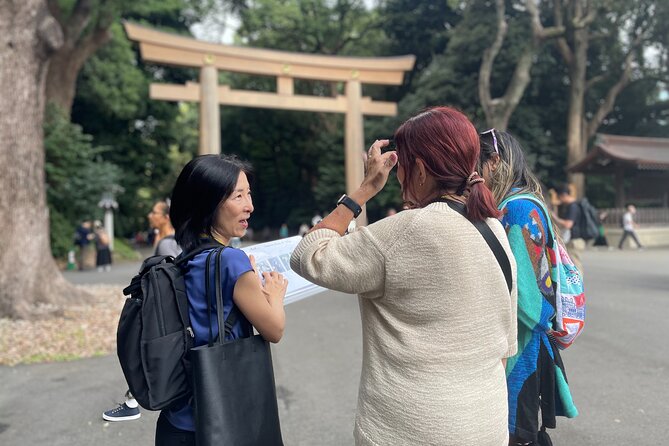
Practically, you’re there for about an hour. During that time, you’ll experience the shrine atmosphere and learn the cultural meaning behind what you’re seeing. The goal isn’t to rush past it—it’s to help you feel that shift from city streets into a more spiritual, nature-filled space.
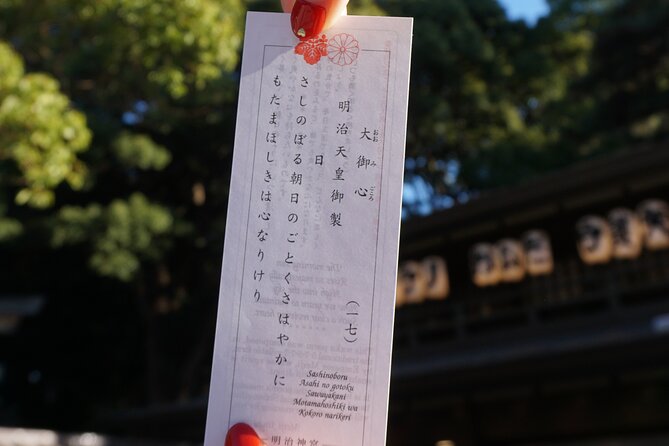
One extra detail that’s actually worth planning for: the tour includes the omikuji (fortune paper) fee. You’ll get a chance to try this custom, which is one of the easiest ways to participate rather than just observe. Even if you don’t read Japanese fluently, the ritual itself gives you something memorable to bring home.
What to watch for:
- Expect a calm pace compared with the later stops.
- Dress for walking and weather. Shrine paths can be slippery after rain.
- If you’re sensitive to crowds, earlier timing can feel easier, since you start here.
Stop 2: Takeshita Street for fashion, kawaii shops, and a quick taste of Harajuku
After the shrine, the tour moves into modern Harajuku. Takeshita Street is short, but it’s packed with energy. This is where you’ll find the iconic youth fashion vibe and lots of kawaii-leaning shops and colorful window displays.
Your time here is about 30 minutes. That’s enough for a satisfying stroll and a few photos, but not enough to do long shopping loops. I’d treat it like a “see it, taste it, and move” stop—especially if you have only two hours total.
If you want a little extra flavor of Harajuku, the route specifically points you toward the idea of a Japanese-style crepe. Even when food isn’t guaranteed as a paid include, that suggestion is a useful cue for where people actually go. Grab one if you’re hungry, and don’t worry about squeezing it in perfectly—you’ll be moving again soon.
A potential downside: Takeshita Street can be packed with people. If you hate tight crowds, keep your patience with you. Your guide can help you choose angles and timing for photos.
Stop 3: Shibuya Scramble Crossing photo stop with guided timing
The final stop is Shibuya Scramble Crossing, and yes, it’s the one you’ve seen a thousand times. The tour includes a photo-focused visit here for about 30 minutes, after walking from Harajuku to Shibuya.
The walk is about 20 minutes. That matters because it’s not just station-to-station. You’ll get a bit of real street context as you shift from Harajuku’s youth scene toward Shibuya’s bigger-city vibe. It also means your legs should be ready.
At the crossing itself, the big payoff is capturing the scene from a good angle. A guide helps because timing and positioning can make a huge difference at Shibuya. If you try to do it alone without planning, you often end up too far back or moving at the wrong time.
One more neat detail: the tour includes guide commentary throughout. That kind of context is useful at Shibuya, where you’re mostly there for a visual moment. It helps you understand why the area is so iconic, beyond the photo.





What the small group size really changes (and why it feels easier)
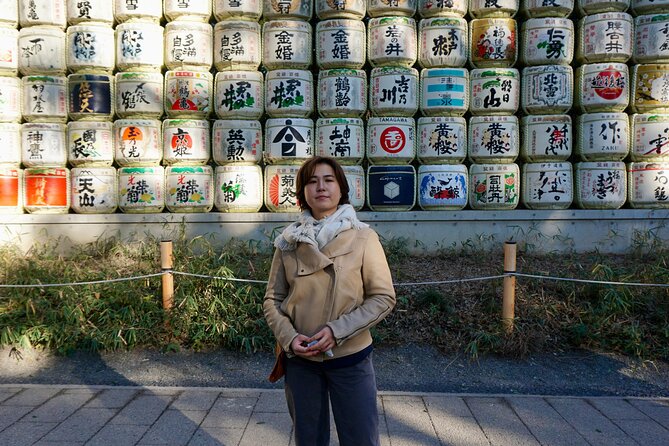
This is capped at 10 travelers, which is a big deal in Tokyo sightseeing. With a smaller group, you waste less time waiting for people at entrances, and the guide can actually adapt if someone’s stuck on a question about where to stand or how the streets work.
In the reviews, a guide named Naoko gets specifically praised for being friendly, informative, and speaking very good English. While every guide will have their own style, that kind of feedback is a strong sign that you’re not getting a robotic script. You’re getting real explanations you can understand while you’re walking.
Also, small group tours are better for photo stops. At Shibuya and in busy streets like Takeshita Street, you want a plan for where to pause. Larger groups can turn photo time into a slow traffic jam.
Mobile ticket and meet-up points: how to keep it stress-free
This tour uses a mobile ticket, which is a modern convenience you’ll appreciate the moment you land in Tokyo and realize how much you’ll juggle in a day. You won’t be hunting for printed vouchers.
Meet-up is at Harajuku Station (address listed as 1 Chome-18 Jingumae, Shibuya, Tokyo 150-0001). The tour ends at Shibuya Mark City, right by both JR and Ginza Line (address listed as 1-chōme-12-1 Dōgenzaka, Shibuya, Tokyo 150-0043).
I like end points like this because Shibuya Mark City places you in a transit-heavy area. After a tour ends, you’ll often want to continue on your own. Shibuya makes that easy.
Quick practical tip: arrive a few minutes early. That gives you time to confirm where the meeting point is in the station area, without rushing.
Price and value: what you’re paying for at $79.73
At about $79.73 per person, you’re paying for three main things: a guide, efficient routing across neighborhoods, and help with the high-impact photo moment at Shibuya.
You do not need paid admissions for the stops listed. That’s important for value. Meiji Jingu is free to enter, and the other stops are streets and public areas. The tour includes the omikuji fee, so you’re not scrambling to pay for that custom yourself.
So where does the money go? Mostly into time and guidance:
- The guide handles direction, pacing, and timing.
- You get commentary instead of guessing what to look for.
- Small-group size reduces waiting and improves photo time.
When this price makes the most sense: if you’re short on time, new to Tokyo, and want the highlights without spending half your day figuring out logistics. If you already know your way around and you’re happy doing Shibuya and Harajuku on your own, you might feel the cost is less justified. But if your priority is getting bearings quickly, this is the kind of spend that pays off immediately.
Who should book this tour (and who might want something longer)
This tour fits best if:
- It’s your first trip to Tokyo and you want a structured path.
- You like learning as you walk, not reading museum placards.
- You prefer a small group and a guide that handles navigation.
- You want big photo moments without planning an entire itinerary.
You might choose a different option if:
- You’re the type who wants to linger for an hour at a time in one place.
- You dislike crowds and busy streets, especially around Takeshita Street.
- You want a more food-centered or shopping-centered day. This tour points you toward shopping streets and snacks, but it’s not positioned as a long food crawl.
The experience pace: what “2 hours” feels like in real life
Because the total duration is about 2 hours, you’ll want to think in motion. You’ll do:
- About an hour at Meiji Jingu
- About 30 minutes at Takeshita Street
- About 30 minutes at Shibuya Scramble Crossing
Plus walking time between areas.
That means you’ll get a taste, not a marathon. If you plan your day around it, you’ll be happy. If you try to schedule it as one stop among many other time-consuming activities, you might feel pressed.
A simple way to plan: treat it like your orientation walk. Then after the tour, pick one neighborhood to return to on your own—either Harajuku for shopping or Shibuya for nightlife and transit.
Should you book the Tokyo: Harajuku Meiji Shrine to Shibuya Crossing Guided Tour?
I’d recommend booking if you want a quick, low-stress path through Tokyo’s most recognizable neighborhoods. The combination of Meiji Jingu’s tradition, Takeshita Street’s Harajuku style, and Shibuya Crossing’s famous photo moment is exactly the kind of “first Tokyo day” mix that helps you orient.
The biggest reason to say yes is the guide-led navigation with a small group cap. That’s what makes the difference when you’re not yet fully comfortable in the city. Also, the included omikuji fee adds a memorable, hands-on cultural touch.
Skip it (or choose something else) if you want long stop times, quieter backstreets, or a slower pace. This one is about seeing a lot and getting your bearings fast.
FAQ
How long is the tour?
The tour is listed as approximately 2 hours.
What does the tour cost?
The price is $79.73 per person.
How large is the group?
The maximum group size is 10 travelers.
Where does the tour start and end?
It starts at Harajuku Station and ends at Shibuya Mark City (next to both JR and Ginza Line).
Do I need to buy tickets for the stops?
Admission tickets are listed as free for the main visited areas. The omikuji fortune paper fee is included.
Is this tour good for a first-time visitor to Tokyo?
Yes. The tour is designed as a way to get your bearings, with a guide doing the navigating for you.
What should my fitness level be like?
You should have a moderate physical fitness level. The route includes walking time, including around a 20-minute walk between Harajuku and Shibuya.
Is the tour ticket mobile?
Yes, it uses a mobile ticket.
How does cancellation work?
Free cancellation is available if you cancel up to 24 hours in advance for a full refund.
More Tour Reviews in Tokyo



Fresh reviews from around Tokyo






Tokyo, compared.
 ★ 5.0Mt Fuji and Hakone 1-Day Bus Tour Return by Bullet TrainFrom $16326,383 reviews
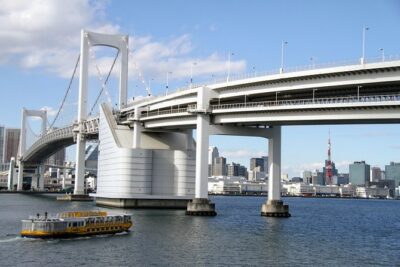 ★ 5.01-Day Tokyo Bus TourFrom $12914,250 reviews
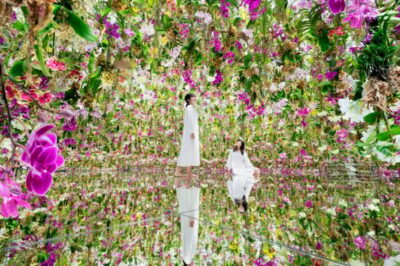 ★ 4.6teamLab Planets TOKYO Digital Art Museum Entry TicketFrom $259,779 reviews
 ★ 4.0Mt Fuji & Hakone Cruise, Drum Show Bullet Train 1 Day from TokyoFrom $1497,413 reviews
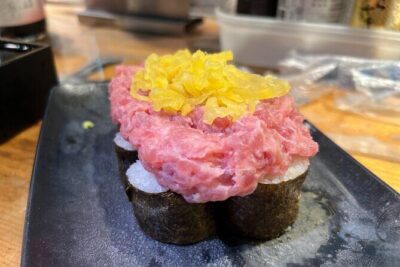 ★ 5.0Shinjuku Food Tour (13 Dishes at 4 Local Eateries)From $866,603 reviews
 ★ 4.4Tokyo Mt Fuji 5th St & Hakone Cruise Bus Tour w/Bullet TrainFrom $1545,024 reviews
 ★ 5.0Flagship 2-Hours Official Street Go-Kart Tour – Tokyo Bay ShopFrom $644,974 reviews
 ★ 4.5From Tokyo: Mount Fuji Full-Day Sightseeing TripFrom $684,970 reviews