
Reviewed · SHIBUYA TOURS
Tokyo: E-scooter Experience in Shibuya with Iconic Photos
Neon looks different from a scooter seat. You get to glide through Shibuya’s famous street energy and then swap gears to calmer, greener spots like Meiji Shrine without wasting time on transit connections. It is part sightseeing, part photo walk, and part first-time rider confidence boost.
I especially like how the guides help you stay relaxed on a new mode of transport. One thing I really found useful is that you get a quick tutorial and a chance to practice first, which matters when Shibuya feels like it is moving at the speed of sound. I also love that you get your photos sent after the tour, so you can spend less time wrestling your camera and more time actually seeing the place.
The one drawback to plan around is weather. This experience needs good weather, and since it runs outdoors with riding time, a rainy day can change the plan. Also, since it is a small group, you’ll want to keep pace when your guide is doing those quick photo stops.
In This Review
- Key things that make this Shibuya e-scooter ride worth your time
- Why Shibuya by e-scooter feels like Tokyo with good motion
- Where you start: NEON NEON TOKYO and why being near transit matters
- The scooter basics: up to 20 km/h and training that keeps you confident
- Shibuya Crossing: your short photo moment in the loudest place in Tokyo
- Meiji Shrine gate stop: the reset you feel right away
- Meijijingu Gaien tree-lined ride: where the scenery cools down
- The route pace: how two hours adds up without feeling rushed
- Photos after the tour: why this is better than only relying on your camera
- Price and value: what $52.02 buys you in Tokyo reality
- Who this tour suits best, and who should think twice
- Quick planning checklist before you go
- Should you book this Shibuya e-scooter experience?
- FAQ
- FAQ
- What is the duration of the Tokyo e-scooter experience in Shibuya?
- How much does the tour cost?
- What’s included in the price?
- What is not included?
- Where do you meet for the tour?
- Which main stops are part of the ride?
- What is the maximum speed of the e-scooter?
- How many people are in the group?
- What happens if the weather is poor?
- What is the cancellation policy?
Key things that make this Shibuya e-scooter ride worth your time
- Shibuya Crossing on a scooter: You see the famous crowd flow and get a solid photo moment built in.
- Quick, first-timer-friendly practice: The training is fast, but it helps you feel steady before the big sights.
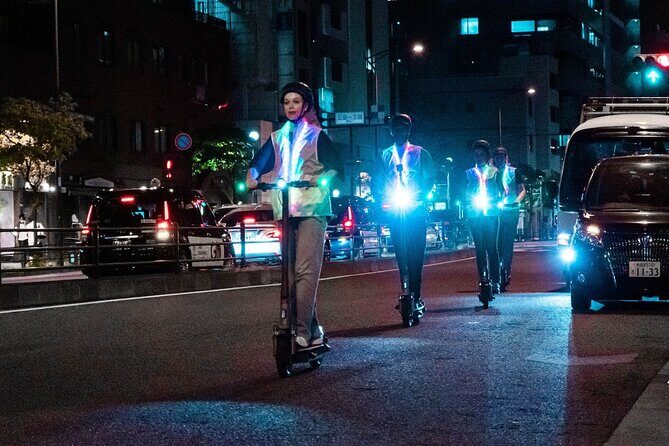
- Glowing safety vests for photos: They’re not just practical, they make it easier to look coordinated in pictures.
- Short stops at three standout areas: About five minutes each for the shrine gate, tree-lined Gaien, and crossing shots.
- Small group size (max 7): It feels more personal, and you get more checking-in from your guide.
More to do within sight of the Crossing
- Official Street Go-Kart in Shibuya★ 5.0 · 3,435 reviews
- Tokyo: Street Kart Experience in Shibuya★ 4.9 · 1,484 reviews
- Shibuya Meltdown Nightlife Tour: All-You-Can-Drink Bar Hopping★ 5.0 · 1,058 reviews
Why Shibuya by e-scooter feels like Tokyo with good motion
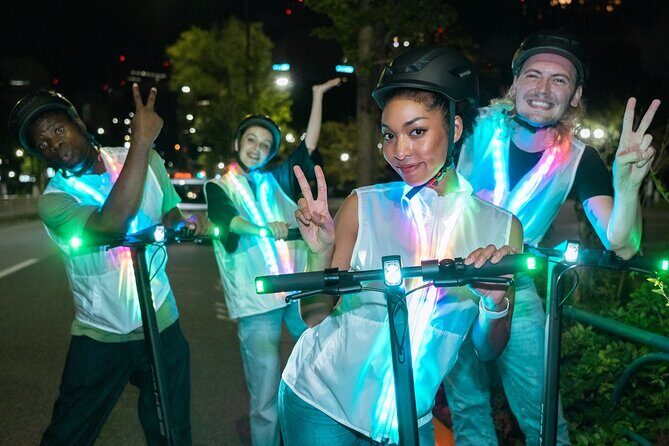
Shibuya is one of those places where words fail you. From street level it is loud, bright, and packed; from an e-scooter seat it becomes more like a controlled glide through the chaos. You get to move with Tokyo instead of standing still and waiting for the right angle.
What I like is the contrast in the route. You tackle the fast, neon-heavy Shibuya side, then you slow down at Meiji Shrine’s gate for a more solemn vibe. After that, you ride along the tree-lined Gaien stretch where the scenery does not feel like a shopping corridor.
And because you’ll be doing short photo stops (not long wandering), you’ll cover a lot of visual territory in roughly two hours. This is the kind of Tokyo experience that gives you a story in your camera roll without turning your whole day into a long grind.
Where you start: NEON NEON TOKYO and why being near transit matters
Your meeting point is NEON NEON TOKYO, located at 4-chōme-1-4 Mita, Minato City, Tokyo 108-0073. The operator notes that it is near public transportation, which is a big deal in Tokyo. It means you’re not stuck budgeting extra time just to get to the start.
Also, since the tour ends back at the same meeting point, you do not have to worry about how you’ll get home from the final stop. That sounds simple, but in Tokyo it quietly saves you from decision fatigue.
Arrive with a bit of buffer time so you can settle in, get the scooter instructions, and not feel rushed. If you are a nervous first-timer, a calm start makes everything easier.
The scooter basics: up to 20 km/h and training that keeps you confident
The e-scooters on this tour are limited to up to 20 km/h, which is an important detail for first-time riders. That speed ceiling helps keep the ride feeling manageable, especially in busy areas where you’ll be following your guide and staying aware.
The other practical piece is the guide support. In real-life terms, you want someone who can slow down when your brain is still figuring out the balance. One rider shared that they were nervous at first, but the team handled it with a quick tutorial and a chance to practice before the main sightseeing. That’s exactly what you want when the first ride in Tokyo is not on a quiet side street.
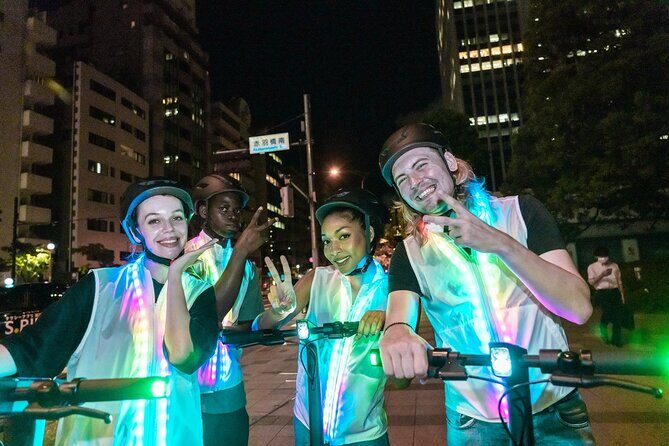
You’ll also wear glowing safety vests that make you easier to spot and help your photos look more cohesive. It is a small detail, but it changes the whole picture quality. Your group looks intentional instead of like you all accidentally wandered into frame.
Shibuya Crossing: your short photo moment in the loudest place in Tokyo
Shibuya Crossing is the headline, and it earns the attention. This is where Tokyo turns into a moving diagram of people, timing, and light. On the scooter, you’re not just staring at it from across a street; you’re positioned to experience the flow while still capturing the iconic view.
You’ll have a set window here for photos—about five minutes—so treat it like a mini mission. Come with one or two photo ideas in mind: wide shot for the crossing background, and then a close shot with your scooter and vest visible. Your guide is there to help with timing and to keep the group from turning into a tangled traffic hazard.
One nice extra mentioned by a rider: the guide was willing to slow down for additional photo opportunities when possible, including a stop for a Tokyo Tower picture. That does not mean it is guaranteed every time, but it tells you the team is flexible when there is a safe chance to add a good shot.
Even if you know Shibuya already, this stop is still worth it because you’re seeing the crossing in motion, with neon around you and that instant sense of being in the center of everything.
More frames: other photo sessions in Tokyo





Meiji Shrine gate stop: the reset you feel right away
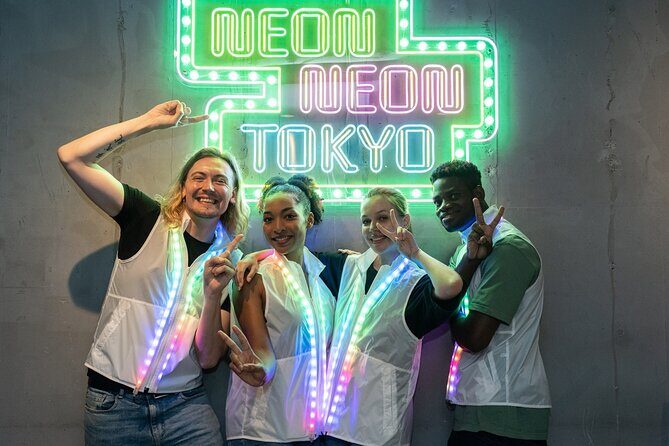
After Shibuya’s energy, Meiji Shrine’s gate is a clean break. You’ll stop for about five minutes, and the focus is on the gate area and the mood it creates. The practical value here is that it gives your body and head a breather. You get to lower your heart rate a little, then continue your ride with better focus.
This is also where you get a different kind of photo. Shibuya photos often feel like light and crowds. Shrine gate photos feel more centered, more solemn, and often more timeless. If you’re building a photo set that tells a story, this stop is the pause that makes the rest make sense.
If you want to photograph quietly, use the short time well. Walk a step or two, find a stable angle, and then shoot. Don’t burn your minutes on trying to create a perfect composition from scratch—your guide will keep the schedule moving.
Meijijingu Gaien tree-lined ride: where the scenery cools down
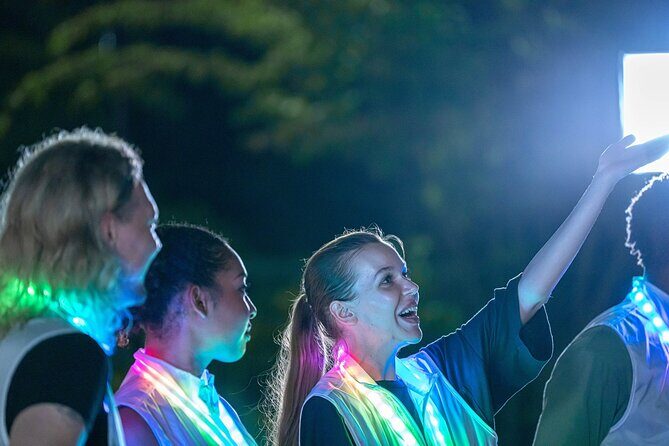
Next comes Meijijingu Gaien, a street lined with trees that creates a long, calmer visual corridor. You’ll stop for about five minutes to take pictures with the trees as your background.
What makes this stop especially useful is how it balances the whole tour. Between the crossing and the shrine gate, this tree-lined area gives you a softer scene that still feels like Tokyo. It also helps you photograph your ride in a way that is not all neon and not all stone gate.
If you visit in fall, the trees can turn yellow with ginkgo, and that color adds a distinctly seasonal look. Even if you are going outside fall, the tree lines still provide that green structure that makes your photos feel less like a straight city snapshot and more like you captured a pocket of Tokyo.
Use this moment to take a few full-body shots. The vest, scooter, and tree line together look naturally “tour worthy” without you needing a fancy setup.
The route pace: how two hours adds up without feeling rushed
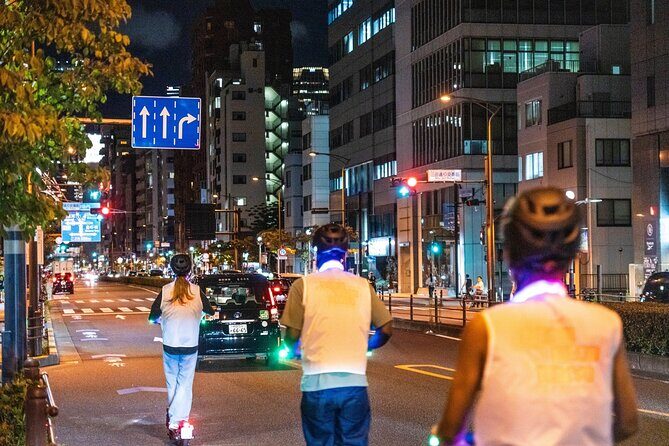
The whole experience runs about two hours. That length is a sweet spot: long enough to feel like you did more than just a quick photo stop, but not so long that you’re exhausted.
You’ll spend time riding between stops, and those stops themselves are relatively short—around five minutes each. That means your guide is managing your movement through the city while still giving you time to shoot. If you keep your expectations realistic, you’ll enjoy the rhythm.
One thing I appreciate about a small group (max 7) is that it keeps the tour controlled. You are less likely to feel lost or boxed in by a large crowd. The guide can check in more often, and the whole experience feels smoother.
Also, you’ll likely notice the difference between riding time and waiting time. Riding time keeps you engaged; waiting time can make a photo tour feel like work. This tour structure prioritizes movement so the experience stays fun.
Photos after the tour: why this is better than only relying on your camera
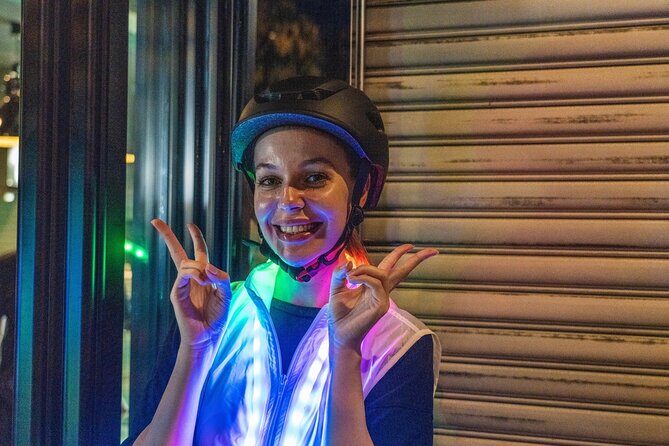
You get photos during the tour, and then you receive them at the end. This matters more than you might think. If you’ve ever tried to do scooter shots while also watching traffic and staying balanced, you know your best photos usually come when someone else handles the camera timing.
The glowing safety vest helps here because it creates a clear visual marker for your group. The result is that even if your own phone shots are decent, you’ll have backup pictures where the composition looks right and everyone is easier to spot.
Practical tip: if you care about a specific shot (self-portrait, group shot, or a background with Shibuya Crossing), try to communicate it quickly when you arrive. You are on a schedule, so the earlier you show your idea, the better your chances.
Price and value: what $52.02 buys you in Tokyo reality
The price is $52.02 per person for a roughly two-hour experience. That can sound steep until you factor in what’s included and what you’d otherwise pay for.
Here’s what you get bundled:
- a local guide for the ride
- rental of the e-scooter
- photos taken during the tour and sent at the end
In a city like Tokyo, paying for a guide is not just about information—it’s also about safe pacing. You’re not driving the whole experience by yourself, and you’re not figuring out timing and stopping points on the fly. Even if you’re comfortable navigating, having someone manage the ride flow usually makes the experience feel easier.
The eco-friendly angle is more of a bonus than the main reason to book. The real value is time and guidance. You spend your effort enjoying Shibuya’s lights and the calmer counterpoints instead of planning how to link photo spots efficiently.
If you want an efficient, photo-forward intro to Shibuya, this price is in the reasonable zone.
Who this tour suits best, and who should think twice
This tour works best for you if:
- you want a fast, fun way to see Shibuya without a long day of walking
- you enjoy photo stops and want someone else to help with timing
- you’re okay riding an e-scooter at up to 20 km/h with guide support
It also fits first-timers, because the approach includes tutorial time and a practice run before you’re fully in the city. That’s a big mental hurdle for many people, and getting past it early makes the rest smoother.
You might want to think twice if:
- you are going during weather that could be poor (the experience requires good weather)
- you prefer long, wandering sightseeing rather than short, scheduled photo pauses
Also consider your comfort with holding a steady pace with a small group. It is not a solo ride, and the guide will keep you moving.
Quick planning checklist before you go
To make your two hours feel effortless, do this:
- Plan to arrive early enough to settle in before the tutorial and practice.
- Have your phone ready, but trust the guide-led photo plan too.
- Bring a simple mindset: three photo stops, lots of riding, done in about two hours.
And remember: Shibuya looks best when you’re not overthinking it. Follow the guide, keep your eyes up, and let the city come to you.
Should you book this Shibuya e-scooter experience?
Yes, if you want a fun, guided way to connect Shibuya Crossing with quieter Tokyo scenes in a short window. The big strengths are the guide support for first-timers, the flexible help with photo moments, and the included photos that take some pressure off you.
I’d book it with confidence if your goal is a high-impact evening-style city ride with built-in photo stops and an easy schedule. If the weather is questionable, though, you should hold off or at least be ready to adjust, since this one really depends on good riding conditions.
FAQ
FAQ
What is the duration of the Tokyo e-scooter experience in Shibuya?
It’s approximately 2 hours.
How much does the tour cost?
The price is $52.02 per person.
What’s included in the price?
You get a 2-hour local guide, photos taken during the tour (sent to you at the end), and the rental fee for the e-scooter.
What is not included?
Food and drinks are not included.
Where do you meet for the tour?
The meeting point is NEON NEON TOKYO, 4-chōme-1-4 Mita, Minato City, Tokyo 108-0073, Japan.
Which main stops are part of the ride?
You’ll visit Shibuya Crossing, Meiji Shrine (for the gate photo), and Meijijingu Gaien (tree-lined street photo area).
What is the maximum speed of the e-scooter?
The e-scooters are up to 20 km/h.
How many people are in the group?
The tour has a maximum of 7 travelers.
What happens if the weather is poor?
This experience requires good weather. If it’s canceled due to poor weather, you’ll be offered a different date or a full refund.
What is the cancellation policy?
You can cancel for free up to 24 hours in advance for a full refund. If you cancel less than 24 hours before the start time, the amount paid is not refunded.
Better Photos of Your Trip

More Tour Reviews in Tokyo






Still in Shibuya? Keep Going



Fresh reviews from around Tokyo






Shibuya Tours, compared.
 ★ 5.0Official Street Go-Kart in ShibuyaFrom $763,435 reviews
 ★ 4.9Street Kart Experience in ShibuyaFrom $741,484 reviews
 ★ 5.0Shibuya Meltdown Nightlife Tour: All-You-Can-Drink Bar HoppingFrom $1061,058 reviews
 ★ 5.0Shibuya Official Street Go-Kart in Shibuya AnnexFrom $69972 reviews
 ★ 5.0Shibuya Food Tour (13 dishes and 4 Eateries)From $77770 reviews
 ★ 5.0Best of Shibuya Food TourFrom $217612 reviews
 ★ 4.8Shibuya Highlights Walking TourFrom $19601 reviews
 ★ 4.7Premium Go-Kart Tour with Tower & Shibuya CrossingFrom $116528 reviews
Browse the lists this tour appears in