
Tokyo’s kimono glow starts fast.
This is an Asakusa kimono rental experience built for an easy, good-looking day in old Tokyo. I love how hands-on the dressing is with Kazune helping you get comfortable and looking right, and I love that you’re not stuck indoors—you’ll walk the historic streets and head to Sensoji Temple right after. One thing to consider: you’ll need to plan your route and pace so you’re back to the shop by 17:30 the same day.
What makes it special is how practical it is. You show up, choose a real kimono from their authentic collection, get put together by staff including a Japanese National Certified Kimono Dresser, then you’re free to explore in your own time—photos, temple atmosphere, and slow street wandering included. The only real “watch it” item is fit and mobility: it isn’t listed as suitable for wheelchair users and it has a weight limit.
In This Review
- Key things you’ll notice right away
- Arriving Near Asakusa Station, Not in the Middle of Nowhere
- Picking Your Kimono and Getting Put Together the Right Way
- The Details That Make It Feel Local: Hair, Sandals, and Walking
- Stroll the Old Streets of Asakusa Before and After Sensoji
- Why Sensoji in a kimono feels different
- A practical photo tip
- Optional Add-Ons: Rickshaw and Tea Ceremony (If You Want to Go Further)
- Price and Value: What $47 Really Buys You
- Timing That Actually Works: Fit It Into Your Day, Not the Other Way Around
- For planning your day
- Who This Is Best For (And Who Should Skip It)
- What the Staff Makes Better: Warm Help You’ll Feel Immediately
- Should You Book This Asakusa Kimono Rental?
- FAQ
- Where is the meeting point?
- What time do I need to arrive?
- When do I have to return the kimono?
- What’s included in the rental price?
- Can I add a rickshaw or tea ceremony?
- What languages are spoken?
- Is this refundable if plans change?
Key things you’ll notice right away
- Certified dressing help from staff that includes a Japanese National Certified Kimono Dresser
- Asakusa-local host energy from Kazune, who grew up in Asakusa
- Photo-ready strolling in the streets around Sensoji Temple after you’re dressed
- Full set included, including obi, sandals (zori), and a bag
- Simple hair styling to finish the look cleanly
- Add-ons available on-site like rickshaw or a tea ceremony experience
More mornings around Senso-ji and the old town
- Tokyo: Japanese Dance Cabaret Theater Asakusa-Kaguwa Ticket★ 4.8 · 2,270 reviews
- Tokyo: Asakusa Walking Tour with Sensoji Temple Visit★ 4.8 · 1,583 reviews
- Tokyo Asakusa Rickshaw Tour★ 5.0 · 1,375 reviews
Arriving Near Asakusa Station, Not in the Middle of Nowhere
The shop meets you close to Asakusa Station, which matters more than people think. You’re not fighting across town with your kimono-length jacket dragging behind you in the rain. The start point is a few minutes’ walk from Asakusa Station (Tokyo Metro Ginza Line / Toei Asakusa Line). Look for a building entrance with a black-and-white checkered pathway and a silver metal gate. Go through the gate, then toward the elevator area where the staff will greet you.
Plan to arrive at least 10 minutes early. That buffer is for getting you into the kimono smoothly, not for rushing. If you’re early, you’ll probably feel calmer as the staff takes care of the clothing setup.
This is also where you should decide how long you want to be out. The kimono must be returned by 17:30 the same day, but you can arrange a next-day return for a small extra fee. If you’re visiting around the 22nd of July, there’s a special case for fireworks in Katsushika: the rental can be extended until 21:30.
Picking Your Kimono and Getting Put Together the Right Way
Inside, you’ll choose a kimono from their authentic collection. The key word in the experience design is real. This isn’t just a costume you wear for the photo and then wrestle off. It’s a traditional set, and you’ll be treated like you’re actually preparing to walk Asakusa in it.
Kazune will help with dressing, and you’ll also be supported by other staff including a Japanese National Certified Kimono Dresser. That combination is a big deal for two reasons:
- Comfort and fit. A kimono should let you move. The staff’s job is to make sure it fits properly and looks right, not just to button you up.
- Confidence. When someone adjusts your obi and checks your overall look, you stop worrying and start enjoying the streets.
You’ll also get the full rental set: the obi belt, zori sandals, and a bag. There’s storage for your clothes and belongings during the rental, which is quietly one of the best parts of any kimono day. You don’t want to spend Sensoji time holding a tote, and you don’t want to keep your jacket and valuables stuffed in your pockets.
The Details That Make It Feel Local: Hair, Sandals, and Walking
After dressing, you’ll get simple hairstyling. It’s meant to complete the look without turning your afternoon into a multi-hour salon session. Then you’ll step out ready to explore.
Now, let’s talk about footwear and walking, because this is where kimono days can either feel graceful or feel like a tripping hazard. You’ll be given zori sandals as part of the set. You don’t need to be an expert. You just need to slow down a touch and take normal steps at a comfortable pace.
If you want your photos to look natural, walk like you’re sightseeing, not like you’re racing your schedule. Your kimono will look best when you’re moving steadily and pausing often.
Stroll the Old Streets of Asakusa Before and After Sensoji
Once you’re dressed, the experience is built around your time outside: strolling the old streets of Asakusa and visiting Sensoji Temple. This is the heart of why the rental works so well. You aren’t wearing a kimono for a short photo op and then being funneled into a bus or back room. You get to experience the temple area at street level, with the clothing part of your day rather than a separate activity.





Why Sensoji in a kimono feels different
Sensoji Temple is iconic, but the kimono changes your relationship to the scene. You’re not just looking at old Tokyo—you’re participating in it visually. Expect people to notice your outfit, and expect plenty of photo moments. The streets around the temple are also where you’ll find the most atmospheric “old neighborhood” feeling.
A practical photo tip
Bring your usual travel sense: phone camera ready, but don’t block pedestrian flow. If you want the classic temple backdrop shots, do them in short bursts. Then step into side streets and keep moving. That’s how you’ll get pictures that feel like a day you lived, not just a pose you took.
Optional Add-Ons: Rickshaw and Tea Ceremony (If You Want to Go Further)
Included in the base experience are the kimono rental, dressing assistance, storage, simple hairstyling, and the sandals and bag. But there are add-ons available at the shop:
- Rickshaw ride experience (extra fee at the shop)
- Tea ceremony experience (extra fee at the shop)
These add-ons are worth considering if you’re the kind of traveler who likes finishing your day with a cultural “moment.” The kimono rental gives you the visual and the street atmosphere; a tea ceremony can give you a slower, indoor contrast. A rickshaw ride adds motion and a different viewpoint over the area.
The best advice I can give: if you add an experience, keep it matched to your energy level. Dressing + temple walking is already a full sensory day. Add-ons work best when you’re not trying to cram five things into one afternoon.
Price and Value: What $47 Really Buys You
The price listed is $47 per person. For Tokyo, kimono rentals range a lot, so what matters is what’s actually included here.
You’re getting:
- Kimono rental (full set)
- Obi belt, zori sandals, and a bag
- Dressing assistance by friendly staff
- Storage for your clothes and belongings
- Simple hairstyling
- Optional: rickshaw and tea ceremony add-ons
That’s the value equation: you’re not only paying for the outfit. You’re paying for the service—someone helps you wear it correctly and comfortably, then you get the gear that lets you actually walk the neighborhood without improvising.
If you’ve ever tried to “do it yourself” with a rental before, you know the biggest pain is fit and fuss. Here, the dressing support is the main product, and the temple stroll is the payoff.
If you’re on a tight day, you’ll also appreciate that the shop is just a 3-minute walk from Sensoji Temple. Short transfer time means more time actually wearing the kimono where it matters.
Timing That Actually Works: Fit It Into Your Day, Not the Other Way Around
The experience has a clear return deadline: you need to return the kimono by 17:30 the same day. If you’re the type who likes long evenings and sunset walks, consider either an earlier start or the option to return it the next day (with an extra fee arranged at the shop).
Also note the shop expects you to arrive 10 minutes early. This helps you avoid the classic travel trap: you’re five minutes late, you feel rushed in clothing, and suddenly your “slow old-town stroll” turns into a sprint.
For planning your day
- Build in time to dress and adjust.
- Plan Sensoji photo stops early enough that you’re not rushing.
- Keep your route flexible. Side streets can be just as photo-worthy as the main frontage.
Who This Is Best For (And Who Should Skip It)
This kimono rental is a strong pick if you want:
- A traditional kimono experience without complicated logistics
- A straightforward way to see Asakusa and Sensoji Temple
- Staff help with dressing and finishing touches like hairstyling
- A day activity that feels distinctly Japanese, not just another museum stop
From the suitability info, it’s not suitable for:
- Wheelchair users
- People over 264 lbs (120 kg)
- Children under 2 years
- Babies under 1 year
So if your group includes someone who uses a wheelchair, you’ll want to look for a different kind of cultural experience. And if weight is a factor for kimono sizing and comfort, plan ahead.
What the Staff Makes Better: Warm Help You’ll Feel Immediately
This experience is built around service, and the names show up in a very consistent way. Kazune is described as helpful, thoughtful, and supportive, and Wako is mentioned as welcoming and the kind of attendant who makes sure you and your group look properly dressed and presentable.
That matters because a kimono day can feel awkward if you’re left to figure things out alone. Here, you’re guided through dressing, adjustments, and getting ready to walk out into public in traditional attire.
Expect a friendly tone and an atmosphere that makes it easy to relax. Even if you’ve never worn a kimono, you’re not “on your own.” You’re in the hands of people who do this work professionally.
Should You Book This Asakusa Kimono Rental?
Yes—if your goal is to wear a real kimono and spend meaningful time walking Asakusa’s old streets and visiting Sensoji Temple.
I’d book it if:
- You want the dressing help, not just a closet pickup.
- You care about looking right in photos.
- You like cultural experiences that start on-site and lead directly into sightseeing.
I’d think twice if:
- You need full wheelchair accessibility (it’s not listed as suitable).
- You’re likely to miss the return deadline and you dislike time limits.
- You’re expecting a guided tour with deep commentary. This is more about dressing well and exploring on your own after.
If you want an authentic-looking day that feels distinctly Tokyo—and you’re okay planning around the 17:30 return—this is a solid way to do Asakusa.
FAQ
Where is the meeting point?
It’s a few minutes’ walk from Asakusa Station. Look for a building entrance with a black-and-white checkered pathway and a silver metal gate, then head to the elevator area where staff will greet you.
What time do I need to arrive?
Please arrive at the shop at least 10 minutes before your booking time so everything can be prepared smoothly.
When do I have to return the kimono?
You need to return the kimono by 17:30 on the same day. If you want to keep it longer, next-day return is possible for a small extra fee arranged at the shop.
What’s included in the rental price?
The price includes kimono rental (full set), obi belt, sandals (zori), and a bag, plus dressing assistance, storage for your belongings, and simple hairstyling.
Can I add a rickshaw or tea ceremony?
Yes. A rickshaw ride experience and a tea ceremony experience can be added for an extra fee directly at the shop.
What languages are spoken?
The staff can help in English and Japanese.
Is this refundable if plans change?
You can cancel up to 24 hours in advance for a full refund.
If you tell me your travel dates and whether you want the rickshaw or tea ceremony, I can help you plan a realistic timeline around the 17:30 return.
More Tour Reviews in Tokyo



Around Senso-ji: More Asakusa Picks
Fresh reviews from around Tokyo






Asakusa Tours, compared.
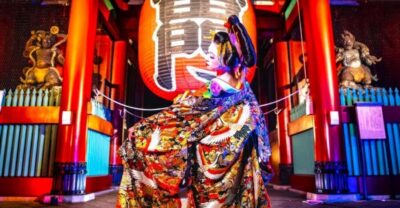 ★ 4.8Japanese Dance Cabaret Theater Asakusa-Kaguwa TicketFrom $492,270 reviews
 ★ 4.7Meiji Shrine, Asakusa, Skytree Bus Tour and CruiseFrom $1221,986 reviews
 ★ 4.8Asakusa Walking Tour with Sensoji Temple VisitFrom $221,583 reviews
 ★ 5.0Tokyo Asakusa Rickshaw TourFrom $421,375 reviews
 ★ 4.5Tokyo Panoramic 1 Day: Meiji Shrine, Asakusa, Odaiba and SKYTREE®From $851,222 reviews
 ★ 4.8Samurai Ninja Museum Asakusa: Samurai Sword Lesson & TourFrom $63306 reviews
Asakusa Sightseeing Tour by RickshawFrom $35195 reviews
Asakusa Kimono Dressing and Matcha ExperienceFrom $56173 reviews
★ 4.8Samurai Ninja Museum Asakusa: Samurai Sword Lesson & TourFrom $63306 reviews
Asakusa Sightseeing Tour by RickshawFrom $35195 reviews
Asakusa Kimono Dressing and Matcha ExperienceFrom $56173 reviews
Browse the lists this tour appears in