
Reviewed · SUMO SHOWS
Sumo Training Watching Experience in Tokyo
Real sumo is up close in Tokyo.
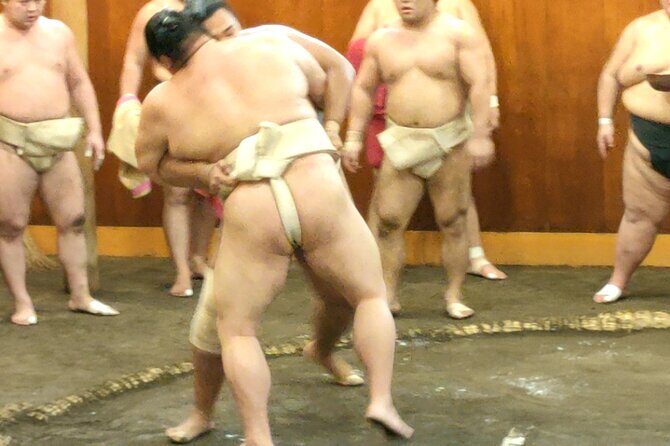
This experience takes you to a working sumo stable for a serious training session by active wrestlers, not a staged comedy show. You’ll get live commentary as the practice moves through stretching, fundamentals, and match-style drills, so it actually makes sense while you’re watching. The whole thing has a quiet, sacred feel that you simply don’t get from match-day crowds.
Two things I especially like: the small group size (max 8) and the way the guide, Alisa (NicoTour Japan), explains what you’re seeing with clear, easy-to-follow visuals. The closeness is the point here: you can feel the intensity, including the sound and heat of practice right in front of you.
One consideration before you book: you’ll be sitting on cushions on the floor, and the stable rules are strict. If you have bad knees or back, or you’re pregnant, plan carefully—and arrive on time, because they leave on schedule and don’t wait for late guests.
In This Review
- Key highlights
- Why Real Sumo Training at a Tokyo Stable Feels Different Than Match Day
- Getting to Ryogoku Station and the 10–15 Minute Walk That Matters
- The Training Session Flow: Stretching to Match-Style Drills
- Timing nuance: arrive early for the full sequence
- Live Commentary That Turns Watching Into Understanding
- Stable Etiquette: The Rules Are Part of the Experience
- Photos With Wrestlers: When You Might Get That Close-Up
- Group Size, Flow, and How the Morning Actually Feels
- Price and Value: What $84.70 Is Really Paying For
- Who Should Book This Sumo Training Watching Experience
- Should You Book This Sumo Training in Tokyo?
- FAQ
- How long is the sumo training watching experience?
- Where do I meet for the tour?
- How far is the walk from the meeting point to the stable?
- What does the training program include?
- Is there a specific schedule depending on when I arrive?
- Can I eat or drink in the stable?
- Are photos allowed during the training?
- Will I be able to take photos with wrestlers?
- What are the age requirements?
- Is this tour small-group or large-group?
Key highlights
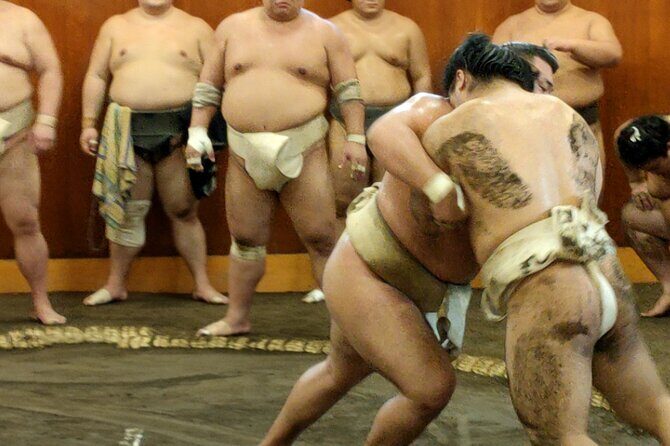
- Real training, not a performance: see active wrestlers drill as part of their daily routine.
- Live commentary with original documents: you’re guided through what each phase means.
- Small group access: up to 8 people keeps the experience focused and calm.
- Cushion-floor seating: you’ll sit on the ground, so bring your comfort plan.
- Photo time is included: you may be able to take pictures with wrestlers after training.
More chances to sit ringside
- Tokyo: Sumo Show and Dining Experience★ 4.8 · 2,742 reviews
- the SUMO show★ 5.0 · 1,960 reviews
- Tokyo Shinjuku Sumo Show & Experience with Photo★ 5.0 · 1,750 reviews
Why Real Sumo Training at a Tokyo Stable Feels Different Than Match Day
Sumo looks simple from far away. Up close, it’s loud, physical, and intensely controlled—like watching athletes rehearse a craft that has been guarded for generations. That’s what makes this sumo training watching experience so satisfying: it’s not about cheering, it’s about technique and discipline.
You’re stepping into a working stable, where wrestlers warm up, build power, and practice set patterns before anyone thinks about a tournament. Even the pacing feels different. At a tournament, you see the peak moment. Here, you see how they arrive at that moment, piece by piece—stretching and strength work, then basics, then the practice that looks most like a bout.
And you’ll notice how the atmosphere shifts. There’s a rule-driven quietness, and the group stays focused. The organizers also don’t do a running conversation while you watch, which may sound strict, but it actually helps you concentrate on what’s happening.
Getting to Ryogoku Station and the 10–15 Minute Walk That Matters
Your meeting point is Ryogoku Station—specifically Ryogoku Sta. 1-chōme-4-29 Yokoami, Sumida City. From there, it’s about a 10-minute walk to the stable (some timing can stretch to 10–15 minutes depending on your pace and how quickly you find the correct route).
This is one of those small details that can make or break your morning. Tokyo stations are busy, and it’s easy to misread the exact meeting spot when you’re carrying luggage or navigating side streets. Give yourself buffer time. The tour is also firm about leaving on time and can’t wait for late arrivals.
Also, the stable is not right next to the big sumo stadium area you might have in mind. Plan on walking from the station rather than expecting it to be next door to major landmarks.
Quick practical tip: if your phone’s data is spotty, download offline maps before you leave your hotel. That short walk is easier when you’re not scrambling to find the address in real time.
The Training Session Flow: Stretching to Match-Style Drills
The watch time is listed as about 2 hours 20 minutes total, but the actual training viewing is roughly 60–120 minutes, depending on when you arrive. They also work with a cutoff style schedule: date requests aren’t accepted, so you pick the right session time ahead of arrival.
Here’s how the practice is structured:
- Stretching and strength training
This is where you see how they prepare the body for impact. The movement looks simple, but it’s steady and purposeful. It also sets the tone: you’re watching athletes warm up in a disciplined way, not just doing casual stretching.
- Basic training
This is usually the “workhorse” part of the morning. Basics teach balance, footwork, and the kind of control that shows up later when contact gets serious. Live commentary helps you understand what you should be watching for here, not just that something is happening.
- Match-style training
This is the phase most people are waiting for. It’s still practice, but it’s close to how a bout feels—more sound, more motion, more intensity. If you’re coming for the heat and rhythm of sumo, this is where you’ll feel it most.
- Take photos
After training, you may be able to take photos with the wrestlers. The ability to do it can depend on timing and stable flow, but the program includes a photo component.
Timing nuance: arrive early for the full sequence
If you arrive at 7:45, you’ll experience the entire program. If you arrive at 8:20, you’ll generally start around the basics portion, so expect less time for the earlier segments.
If you want the “complete story” of how the session builds, aim earlier. If you prefer shorter time in the stable, arriving later can still work because you’ll still see a meaningful portion of the practice.





Live Commentary That Turns Watching Into Understanding
This isn’t a silent, “good luck” observation. You’ll get live commentary during the training. The guide uses original documents, so the explanations are built around what’s happening in front of you, not generic history lessons.
One thing I appreciate about this format is that you don’t have to be a sumo nerd to follow along. You’ll get context as you watch: why certain warmups matter, what the basics are training, and how match-style practice is different from early drilling.
Also, the group is guided to keep quiet during viewing. They basically don’t talk much while the session is running. That’s not just etiquette—it helps you hear the impacts and movement better, which makes the training feel more real.
Stable Etiquette: The Rules Are Part of the Experience
The stable setting is sacred, and the rules keep it that way. Some visitors only think about what they want to see. Here, you also need to think about how you behave.
Key etiquette points to know before you go:
- No eating or drinking in the stable.
You can’t snack your way through practice. If you need food, do it before you arrive.
- Phones on silent.
The program specifically asks you to set your cell phone to silent mode. This is for respect, but also because audio matters when training gets loud.
- Photos are allowed, but you must keep it quiet.
You can take photos during the session, and they ask you to install a silent camera mode on your smartphone. It’s a small thing, but it makes a big difference inside a room.
- Don’t arrive late.
They leave on time and can’t wait for late guests. Showing up early saves you from a stressful scramble.
- Clothing matters.
Avoid revealing clothing. If you break the guidelines, you may be asked to step outside temporarily.
- Basic health caution.
If you have a cold or infectious disease on the day, the guidance is to cancel your participation.
- Seating is floor-based.
This is Japanese style: you sit directly on cushions on the floor instead of chairs. If you have bad knees or back, you’ll want a plan for sitting comfortably. Pregnant guests also should consider whether floor seating will be doable.
And one more rule that’s easy to overlook: the program is for people who can actually sit still. Children must be 6 years old or older. Even children over 8 who cannot sit quietly are not allowed.
If you’re traveling with kids, this is a “calm and respectful” activity, not a playground. Choose accordingly.
Photos With Wrestlers: When You Might Get That Close-Up
A lot of tour experiences promise photos, but the stable flow can be unpredictable. In this program, photography is part of the structure, and they mention that you might be able to take a photo with wrestlers after the event.
If that photo moment happens for you, you’ll feel it more than you expect. The wrestlers are real athletes, and the stable setting makes everything feel less like a meet-and-greet and more like a moment that happens because the session is finished.
For your best chance:
- Keep your phone ready and in silent mode.
- Follow instructions immediately when photography time comes up.
- Don’t push, crowd, or hover. The space is small and the day is running on schedule.
Group Size, Flow, and How the Morning Actually Feels
This tour caps at 8 travelers, which is a big deal for how it feels. A smaller group means you’re not fighting for sightlines, and the guide can keep the pace and rules consistent.
It also means you’ll likely get a more personal version of the explanations. One review noted the guide used clear diagrams that helped people feel comfortable doing something difficult to access on your own. That matches what you can expect from a stable visit: it’s not just “watching,” it’s also learning how to behave in a place you can’t casually wander into.
Time wise, the experience ends back at the meeting point. So you don’t need to figure out how to get home from a remote area. You just walk back when it’s done.
One more timing note: because the tour leaves on time and doesn’t wait for late guests, you’ll want to treat it like a train connection. I find that mindset reduces stress and improves your overall experience.
Price and Value: What $84.70 Is Really Paying For
At $84.70 per person, this isn’t the cheapest thing you’ll do in Tokyo. The value isn’t in a flashy venue or a souvenir-heavy package. You’re paying for:
- Access to a stable where it’s not easy to simply show up
- Real active wrestlers practicing in a controlled session
- Small group size that protects your closeness
- Live commentary that helps you understand the training as it happens
- A structured photo opportunity after the session
There’s also a “timing value” piece. On average, this is booked about 77 days in advance, which suggests it sells out or fills quickly when slots are limited. The stable is not designed for casual daily tourism, so planning ahead matters.
If you’re the type of traveler who likes sports but hates generic “performances,” this can be a very good use of money. You’re getting something more like witnessing craft than watching entertainment.
If you want a long, talk-filled cultural lecture, this may not be your style. The program is pretty focused on watching and quiet respect, with commentary tied to what you’re seeing.
Who Should Book This Sumo Training Watching Experience
This tour is a strong fit if you want:
- A deeper look at sumo training, not just match-day spectacle
- A small-group, close-up view of real athletic work
- Helpful explanations while you watch
- A morning activity in Tokyo that feels genuinely different from temples and museums
It’s also a good match if you’re curious about how difficult it is to visit these spaces independently. The whole point is that stable access isn’t always straightforward, even for Japanese people—so when you can do it responsibly, it’s worth it.
You should think twice if:
- Floor seating will likely be painful for you
- Your group can’t follow quiet rules (phone silent, minimal noise)
- You’re coming with kids who might struggle to sit calmly
- You’re late-prone and don’t want schedule stress
Should You Book This Sumo Training in Tokyo?
I’d book it if you’re craving authenticity and you’re happy to follow etiquette. The best part is that it’s real training, close enough to feel how serious it is, and structured enough that you won’t be lost. With a small group and live commentary, you’ll likely understand more than you expect.
Skip it if your trip style is loud and flexible. This is a sacred-feeling space with strict timing and quiet behavior. It rewards visitors who come prepared, arrive early, and treat the stable with respect.
If you’re ready for a focused, no-nonsense Tokyo experience, this is the kind of booking that tends to stay with you long after your photos load onto your phone.
FAQ
How long is the sumo training watching experience?
The overall activity is about 2 hours 20 minutes, and the practice viewing is roughly 60 to 120 minutes depending on the session timing.
Where do I meet for the tour?
Meet at Ryogoku Sta. 1-chōme-4-29 Yokoami, Sumida City, Tokyo 130-0015, Japan. The tour ends back at the meeting point.
How far is the walk from the meeting point to the stable?
It’s about a 10-minute walk on foot, and it can take around 10 to 15 minutes depending on your pace.
What does the training program include?
The program includes stretching and strength training, basic training, match-style training, and time for photos.
Is there a specific schedule depending on when I arrive?
Yes. If you arrive at 7:45, you generally experience the entire program. If you arrive at 8:20, you generally start with the basics section.
Can I eat or drink in the stable?
No. You cannot eat or drink inside the stable.
Are photos allowed during the training?
Yes, you can take photos during the session, and they ask you to use silent camera mode on your smartphone.
Will I be able to take photos with wrestlers?
Photos with wrestlers are included as part of the program, and you might be able to take a photo with them after the training.
What are the age requirements?
Children must be 6 years old or older to participate. Children over 8 who cannot sit still are not allowed.
Is this tour small-group or large-group?
It’s small-group. The experience has a maximum of 8 travelers.
More Tour Reviews in Tokyo



More Mornings with the Wrestlers

Fresh reviews from around Tokyo






Sumo Shows, compared.
 ★ 4.8Sumo Show Experience with Chicken Hot Pot and a PhotoFrom $1036,678 reviews
 ★ 4.8Sumo Show and Dining ExperienceFrom $792,742 reviews
 ★ 5.0the SUMO showFrom $891,960 reviews
 ★ 5.0Tokyo Shinjuku Sumo Show & Experience with PhotoFrom $791,750 reviews
 ★ 4.8Sumo Show and Experience in ShinjukuFrom $691,001 reviews
 ★ 5.0Authentic Sumo Experience in Tokyo: Enter the SanctuaryFrom $171603 reviews
 ★ 4.8Tokyo Sumo Experience: Chanko & Mochi with a Former ProFrom $103567 reviews
 ★ 5.0Ultimate Sumo Tournament: Tokyo, Osaka, Nagoya, FukuokaFrom $184468 reviews
Browse the lists this tour appears in