
Reviewed · SHINJUKU BAR HOPPING
Sake Pairing Workshop with Japanese Food in Shinjuku
Sake lessons, with dinner included. This hands-on workshop in Shinjuku turns you into a more confident sake taster fast, using a guided tasting plus a meal built around real Japanese pairings. I like the focus on kanpai etiquette and the way temperature (warm vs cold) can totally change what you think you taste. I also like the value: you get a real course dinner plus access to 20 sakes by the end. One thing to consider is that this is a tasting-centered experience, so if you prefer low-alcohol or you dislike structured drinking, you’ll need to pace yourself.
A bilingual guide named Anika is called out for explaining sake history and varieties in a way that actually helps you make sense of labels and pairings. You also get hands-on practice with aroma and flavor detection, not just a lecture. And since it uses a mobile ticket and starts at a clearly marked spot near public transportation, it’s the kind of activity that fits smoothly into a Tokyo day.
This is capped at a small group size (up to 12), so you’re not shouting over a crowd. The total time is about 2 hours, which is long enough to learn and eat, but short enough that you’ll want to plan an easy route home afterward.
In This Review
- Key highlights you’ll feel right away
- Shinjuku sake pairing: why this workshop works
- The opening lesson: kanpai, aroma, and temperature changes
- Your guided food-and-sake flight: chicken nanban to miso butter
- Creamy and sweet segment: nigori with sea urchin croquettes
- Finishing strong: taiyaki and a sweet sake pairing
- The all-you-can-drink menu: 20 sakes, beer, and soft drinks
- Small group size and bilingual guidance: what that changes
- Where it starts in Shinjuku (and how to plan your timing)
- Price and value: what $73.17 really buys
- Who should book this workshop
- Should you book the Shinjuku sake pairing workshop?
- FAQ
- Where is the meeting point for the workshop?
- How long does the experience last?
- How much does it cost?
- What food is included in the course dinner?
- How many sakes are included?
- Is beer or non-alcoholic drinks included?
- What is the group size limit?
- Will I receive a mobile ticket?
- What happens if the weather is bad?
- Can I cancel for a full refund?
Key highlights you’ll feel right away
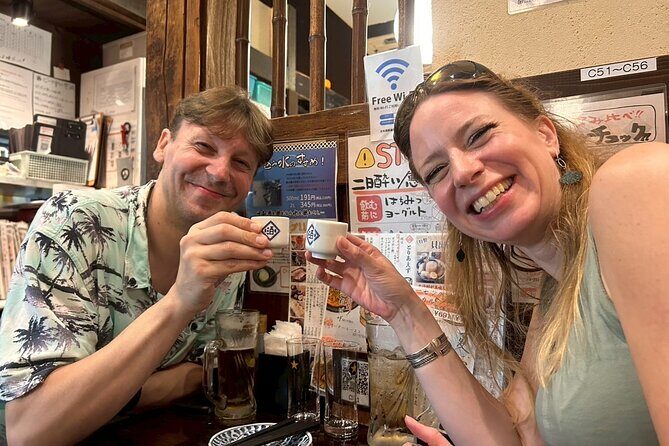
- A guided sake flight tied to specific dishes, not random sips
- Temperature lessons showing how warm vs cold reshapes flavor
- A course dinner with chicken nanban, miso-butter dishes, sea urchin croquettes, and taiyaki
- All-you-can-drink access to 20 sakes plus beer and soft drinks
- Small group size (max 12) for real Q&A
- Tips for reading Japanese sake labels so you can shop smarter later
Different nights, same neon: more Shinjuku crawls
- Tokyo: Shinjuku Food Tour (13 Dishes at 4 Local Eateries)★ 5.0 · 6,603 reviews
- Tokyo Bar Hopping Tour in Shinjuku (All-You-Can-Drink + Dinner)★ 5.0 · 3,587 reviews
- Tokyo: Shinjuku Food Tour (15 Dishes and 4 Eateries)★ 4.9 · 2,033 reviews
Shinjuku sake pairing: why this workshop works
Tokyo has endless food tours, but this one is different because it teaches you how sake connects to food. The point isn’t to make you memorize brand names. It’s to teach you the mechanics of tasting—what your nose does, how your palate changes, and why certain sakes shine with certain flavors.
You’ll practice with a guided flight that walks through the how and the why. That matters, because sake is tricky even for people who drink it sometimes. One sake can taste crisp one minute and flat the next if the temperature is wrong—or if you’re eating the wrong bite at the wrong time.
Another reason I think it’s a smart pick is the pacing. You’re not stuck drinking one type of sake all night. The workshop builds from savory to creamy to sweet, with the meal itself acting like a tasting roadmap.
The opening lesson: kanpai, aroma, and temperature changes
The first part is about building your tasting instincts. You’ll learn the basics of sake tasting in a structured way, including the kanpai etiquette. This sounds small, but etiquette is one of those things that makes you feel comfortable in the setting. It also helps you pay attention in the moment instead of rushing to drink.
Next comes aroma practice and flavor detection. You’ll go step by step through what to notice before you even take a sip. That matters because sake often reveals itself through smell first—things like light fruit notes, rice character, or how clean and dry (or softly sweet) it feels.
Then you get the temperature lesson: warm vs cold changes how rice flavor shows up and how acidity and sweetness feel on your tongue. If you’ve ever wondered why the same sake tastes totally different in different places, this is the reason. You’ll learn that temperature isn’t just a serving style. It’s part of the recipe.
Your guided food-and-sake flight: chicken nanban to miso butter
After the basics, the workshop moves into pairings. The idea here is simple: match the right sake style to the right type of bite.
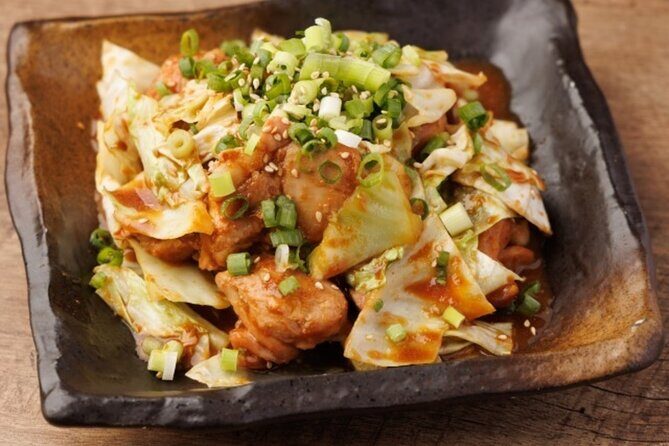
You’ll start with savory items like Chicken Nanban, along with miso-butter dishes. The guidance is about what kind of sake tends to work with these flavors—often crisp sakes for tangy, punchy food, and other profiles that feel smoother with richer dishes. You’re not just told what to drink. Your bilingual expert explains why a specific sake enhances the food, so you can start making your own pairing decisions later.
Chicken nanban is a great anchor dish for this lesson. It’s got that tangy sauce vibe and a satisfying fried bite, which can overwhelm delicate drinks if you pick wrong. So the pairing becomes a real lesson in balance: acidity and crispness vs richness and fat.
Miso-butter dishes add a different challenge. Miso brings salt and depth, butter brings roundness, and that combination can make some sakes taste muted unless you choose carefully. This is where the workshop’s explanations really pay off, because you’ll learn how to read the way your palate reacts.
Creamy and sweet segment: nigori with sea urchin croquettes
The workshop includes a dedicated stretch (about 30 minutes) focused on Creamy & Sweet. This is where sake styles with texture start to make sense.
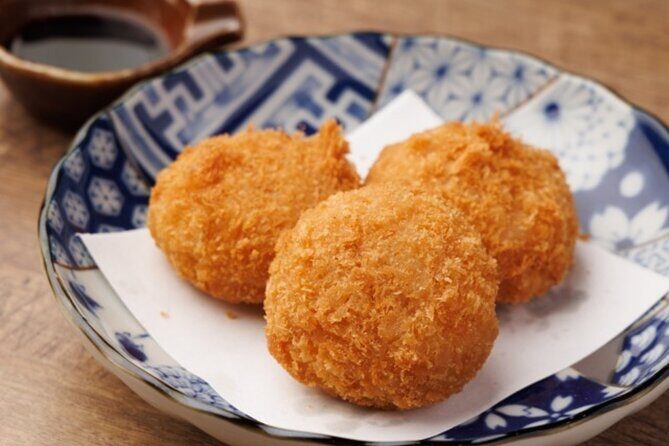
You’ll taste a soft nigori sake alongside sea urchin cream croquettes. Nigori is cloudy sake, and the texture is part of the flavor experience. It won’t taste like a thin, crisp pour. It feels thicker, softer, and it tends to cling to creamy bites instead of cutting through them.
Sea urchin cream croquettes are also a smart choice for a workshop because they sit at the crossroads of richness and delicate seafood character. If you pair with the wrong sake, you can end up with either a dull seafood flavor or an overwhelming alcohol note. When the match is right, the seafood reads clearer and the creaminess feels balanced instead of heavy.
At this point, you’ll also likely feel how your earlier tasting skills help. You’re not only drinking now—you’re predicting. You can start noticing when a sake’s sweetness or softness makes the next bite feel smoother.
Another round: more sake tastings
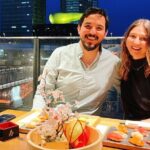
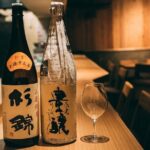
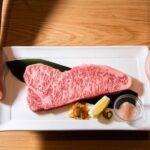
Finishing strong: taiyaki and a sweet sake pairing
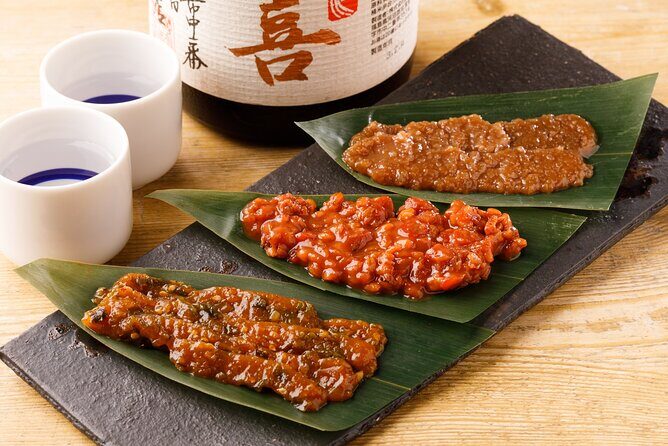
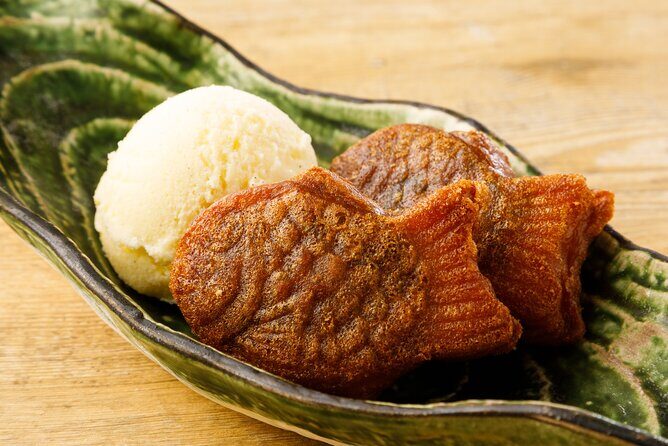
The finale of the course leans dessert-like: fried vanilla taiyaki matched with a sweet sake. This is more than a sugary ending. It teaches you a big pairing principle—how sweetness in sake interacts with sweetness (and caramelized crust) in food.
Taiyaki has an almost snack-sized comfort factor, but when it’s fried and served with vanilla notes, it becomes richer and more aromatic than typical street-style desserts. Pairing it with a sweet sake gives you a controlled way to taste how sweetness levels can either blend or clash.
It’s a great moment to pay attention to mouthfeel too. Even if two drinks both seem sweet, their textures can be different. One might feel smoother and more rounded; another might feel bright or lightly sharp. These differences are exactly what you’re training your palate to detect.
The all-you-can-drink menu: 20 sakes, beer, and soft drinks
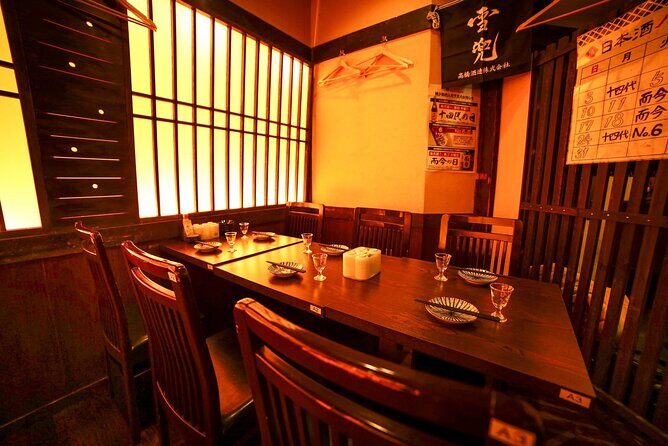
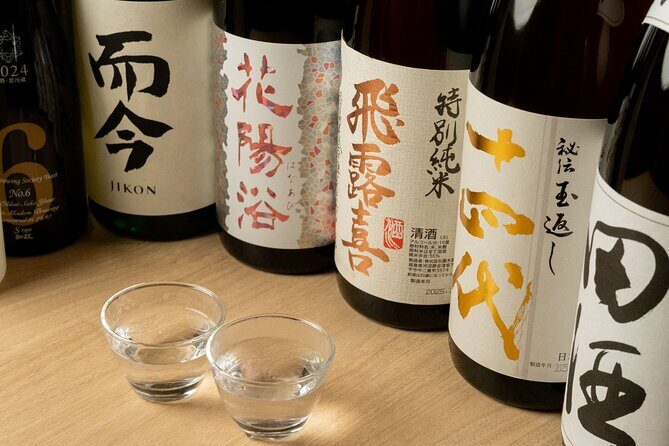
Here’s where the workshop becomes a party of learning at your own speed. After the structured flight, you get full access to an all-you-can-drink selection of 20 sakes, with beer and soft drinks also included.
This matters because it lets you explore beyond the four-course flight. You can compare styles you just tasted to other ones from the menu and see how your own preferences shift as you get more comfortable. It’s also a good chance to ask your guide follow-up questions once the core lesson is done.
My practical advice: use the menu like a tasting tool, not a race. Start with one direction—crisp and dry if you want to stay sharp, or softer styles if you’re eating rich bites. Sip, pause, switch. If you go too fast, your palate will stop cooperating.
You’ll also get guidance on how to read Japanese sake labels. Even if you don’t buy anything that night, this skill pays off later in shops and supermarkets. It’s one of those travel upgrades that turns a moment into a habit.
Small group size and bilingual guidance: what that changes
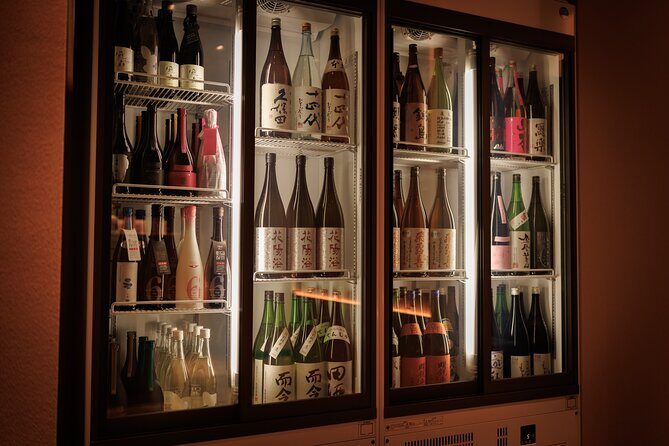
This experience caps at 12 travelers, which is the difference between feeling like a participant and feeling like a number. In a small group, you can actually ask why a pairing works, and your guide can correct misunderstandings without rushing.
The bilingual setup is also helpful. If you’re learning even a few key phrases for food and tasting, having the explanation in two languages can make it easier to connect the words to the flavors you’re tasting. That clarity is part of why many people walk away feeling they understand sake more deeply than when they arrived.
And yes, Anika’s name comes up for a reason: the way she explains sake varieties and history is the kind of teaching that sticks. You’ll likely leave with more than just fond memories—you’ll leave with a framework for noticing.
Where it starts in Shinjuku (and how to plan your timing)
You meet at H&M 3-chōme-5-4, Shinjuku, Shinjuku City, Tokyo 160-0022, Japan and the activity ends back at the same meeting point.
Because it’s near public transportation, I’d treat this as an easy anchor in your Shinjuku day. Look at your route early. Shinjuku is big, and it’s better to know your train exit than to solve it while hungry and holding a phone with a mobile ticket.
The total duration is about 2 hours. That’s a good slot for an evening meal, but it’s also a solid afternoon activity if you want to front-load dinner. Just plan for a slower pace afterward. You’re tasting a lot—plus beer and soft drinks are available—so give yourself time to decompress.
Price and value: what $73.17 really buys
At $73.17 per person, you’re paying for more than a tasting flight. You’re getting a guided sake lesson plus a course dinner (including items like chicken nanban, croquettes, and taiyaki) and access to an all-you-can-drink list of 20 sakes, alongside beer and soft drinks.
That price can feel high if you compare it to buying a single bottle at a store. But this isn’t a store purchase. It’s instruction, food, and guided pairing choices—all in one small group. If you’ve ever done tastings that cost similar amounts but didn’t include food or meaningful pairing context, you’ll feel the difference here.
The best way to judge value for your own trip: think about what you’d pay separately for a guided meal with multiple alcohol tastings plus a structured explanation of why pairings work. In Tokyo, when food and drink come together with an expert guide in a small group, it adds up fast.
Who should book this workshop
You’ll probably love this if you:
- Want a hands-on way to understand sake beyond first impressions
- Like food pairings and want explanations that help you do it yourself
- Are comfortable trying a range of sake styles, from crisp to cloudy to sweet
You might skip it (or choose your pace carefully) if:
- You only drink occasionally and don’t want a structured tasting flow
- You prefer entirely non-alcoholic experiences, since alcohol is central even though soft drinks are available
Should you book the Shinjuku sake pairing workshop?
If your goal is to leave Tokyo with a real understanding of sake—not just a fun evening—this is a strong pick. The workshop teaches practical tasting skills: aroma, kanpai etiquette, and how temperature shifts flavor. Then it backs that up with a proper course meal and a menu that keeps you experimenting with 20 sakes at your own pace.
Book it if you’re excited by food-and-drink learning and you want small-group attention. It’s a good fit for a date, a solo foodie, or anyone who wants to turn sake from mystery into something you can actually order confidently.
FAQ
Where is the meeting point for the workshop?
The workshop starts at H&M 3-chōme-5-4 Shinjuku, Shinjuku City, Tokyo 160-0022, Japan, and it ends back at the same meeting point.
How long does the experience last?
The experience is about 2 hours.
How much does it cost?
The price is $73.17 per person.
What food is included in the course dinner?
The course dinner includes items such as chicken nanban, miso-butter dishes, sea urchin cream croquettes, and fried vanilla taiyaki.
How many sakes are included?
You get a 4-sake flight, and you also have all-you-can-drink access to a selection of 20 sakes.
Is beer or non-alcoholic drinks included?
Yes. The all-you-can-drink plan includes beer and soft drinks in addition to the sake selection.
What is the group size limit?
The maximum group size is 12 travelers.
Will I receive a mobile ticket?
Yes, the experience uses a mobile ticket.
What happens if the weather is bad?
This experience requires good weather. If it’s canceled due to poor weather, you’ll be offered a different date or a full refund.
Can I cancel for a full refund?
Yes. Free cancellation is available up to 24 hours in advance for a full refund. Canceling within 24 hours does not receive a refund.
More Tour Reviews in Tokyo






Tokyo by the Cup: More Sake Tastings
Shinjuku After Hours: The Other Crawls
Fresh reviews from around Tokyo






Shinjuku Bar Hopping, compared.
 ★ 5.0Shinjuku Food Tour (13 Dishes at 4 Local Eateries)From $866,603 reviews
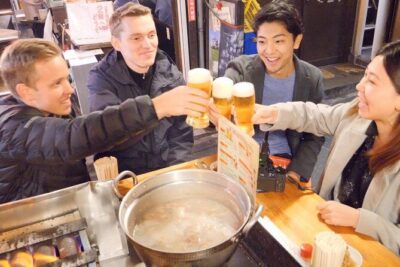 ★ 5.0Tokyo Bar Hopping Tour in Shinjuku (All-You-Can-Drink + Dinner)From $1063,587 reviews
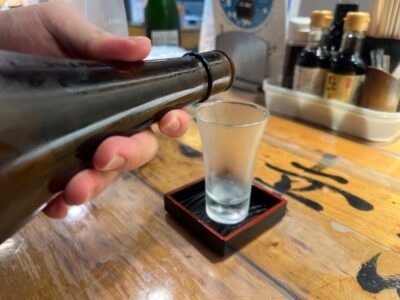 ★ 4.9Shinjuku Food Tour (15 Dishes and 4 Eateries)From $852,033 reviews
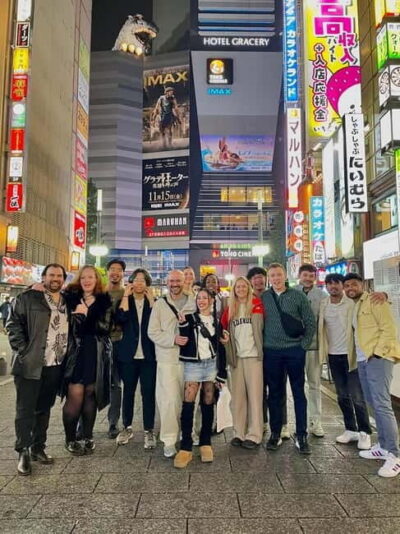 ★ 4.9Shinjuku Local Bar and Izakaya Guided Walking TourFrom $341,794 reviews
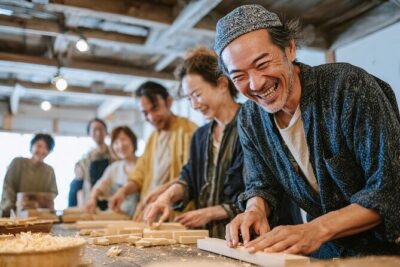 ★ 5.0Tokyo Shinjuku Chopsticks Making ClassFrom $201,763 reviews
 ★ 5.0Tokyo Shinjuku Sumo Show & Experience with PhotoFrom $791,750 reviews
 ★ 5.0Tokyo Night Foodie Tour in Shinjuku – Seasonal Sushi, Wagyu BeefFrom $1111,161 reviews
 ★ 4.8Sumo Show and Experience in ShinjukuFrom $691,001 reviews
Browse the lists this tour appears in