
Reviewed · VEGAN & VEGETARIAN
Plant-Based Sushi Diversity for All (vegan-friendly)
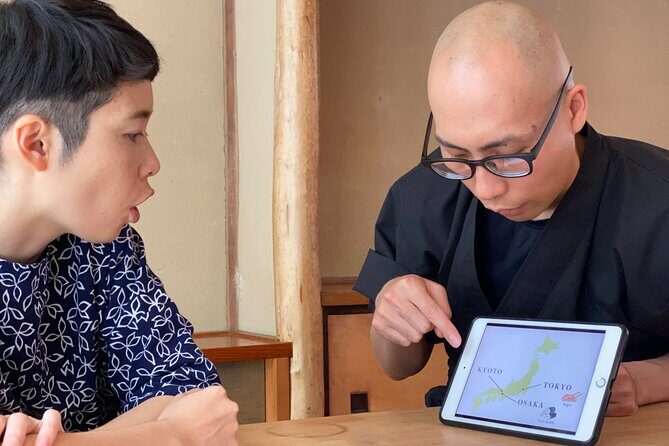
Sushi lessons that teach culture, not just recipes. In Musashino, Rei, a cultural storyteller, uses plant-based sushi and sushi history to show how today’s sushi is only one slice of a much bigger tradition.
Two things I genuinely like: you get real hands-on practice making sushi rice with vinegar, and then building six different plant-based sushi types using traditional tools (including Japanese kitchen knives). The other big win is the calm, story-led explanation of how sushi changed over time and in different regions, so you understand what you’re making—not just how.
One consideration: this is a vegan class, but some tools may also be used for fish or meat outside the vegan session. If you have strong food-safety concerns or allergies, ask how they handle cross-use.
In This Review
- Key highlights worth marking on your plan
- Why Rei’s sushi lesson feels different in Musashino
- Meeting at Musashi-Sakai Station, then heading to a home kitchen
- What you’ll make: six plant-based sushi types (plus the sushi rice skill)
- Traditional tools and Japanese kitchen knives: practice with respect
- Learning sushi’s evolution: tradition isn’t one straight line
- The tasting and swap: enjoying your rolls with the group
- Vegan-friendly details that matter (and one thing to confirm)
- Price and value: $65.04 for a 4-hour hands-on cultural workshop
- Who should book this workshop (and who might skip it)
- Can you customize the class length or content?
- Should you book this plant-based sushi workshop?
- FAQ
- Where do we meet, and what time does the class start?
- How long is the plant-based sushi workshop?
- Is the class vegan and beginner-friendly?
- What will I learn and what will I make?
- Do we use traditional tools, including knives?
- Is this a private tour/activity?
- What is the cancellation policy for a full refund?
Key highlights worth marking on your plan
- Rei’s story-first approach links what you cook to how sushi evolved across time and places
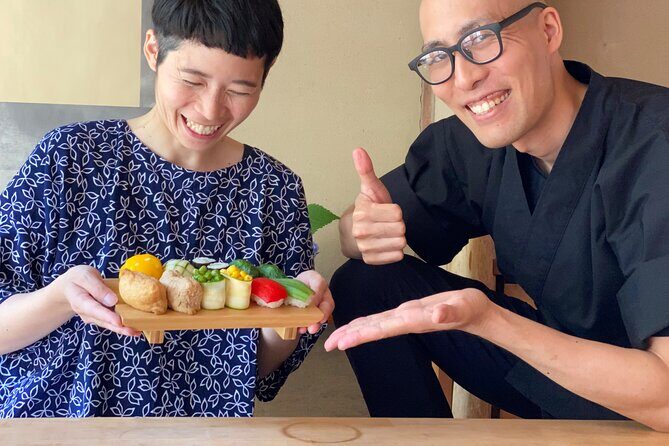
- Six plant-based sushi styles with seasonal ingredients, so you taste variety, not one repeat roll
- Sushi rice with vinegar is taught step by step—useful even after class ends
- Traditional Japanese tools and knives get real hands-on practice, not just watching
- Group swapping at the end lets you compare rolls and enjoy what everyone makes
Worth weighing up alongside this Musashino pick:
- The 10 Tastings of Tokyo With Locals: Private Street Food Tour★ 5.0 · 48 reviews
- EXCLUSIVE Tokyo Secret: Kichijoji Small-Group Food & Bar Hopping★ 5.0 · 29 reviews
Why Rei’s sushi lesson feels different in Musashino
This is not a quick roll-and-go cooking class. It’s a 4-hour workshop where sushi becomes a way to talk about tradition, change, and shared human comfort.
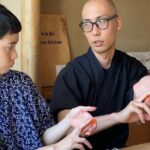
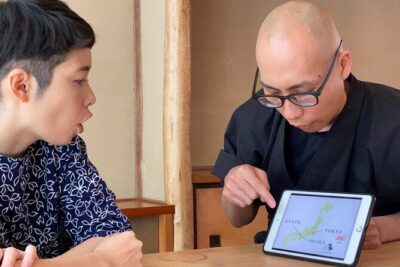
Rei brings an artist’s perspective from both traditional Japanese arts and Japanese cuisine, so the explanations don’t feel like a lecture. You’re guided through the meaning and evolution of sushi first, then you’re put to work making plant-based versions with seasonal ingredients. That order matters: when you understand the cultural story, your hands-on time feels more satisfying.
Another smart part: the goal isn’t perfection. It’s mutual understanding and friendship through food. That vibe comes through in the way the class is structured: you make your own sushi, then you exchange and taste what others made. It turns cooking from a solo task into a shared experience.
Meeting at Musashi-Sakai Station, then heading to a home kitchen
The day starts at JR Musashi-Sakai Station at 10:00 AM. You’ll meet at 2-chōme-1-12 Kyōnanchō, Musashino, Tokyo 180-0023, Japan, then head out from there.
From the station, you’ll ride in a private car to Rei’s home/workshop space. That matters because you’re not navigating multiple transfers or trying to find a kitchen that may not be obvious to outsiders. It’s also the kind of setup that usually feels more personal than a public cooking studio.
The activity ends back at the meeting point, so you’re not stuck planning the rest of your afternoon around a different location. The class runs about 4 hours, which makes it a good fit for a day you already have partially planned.
If you like planning ahead: the class is commonly booked around a month in advance. For something this specific—vegan sushi made with traditional tools—booking early is a safe move.
What you’ll make: six plant-based sushi types (plus the sushi rice skill)
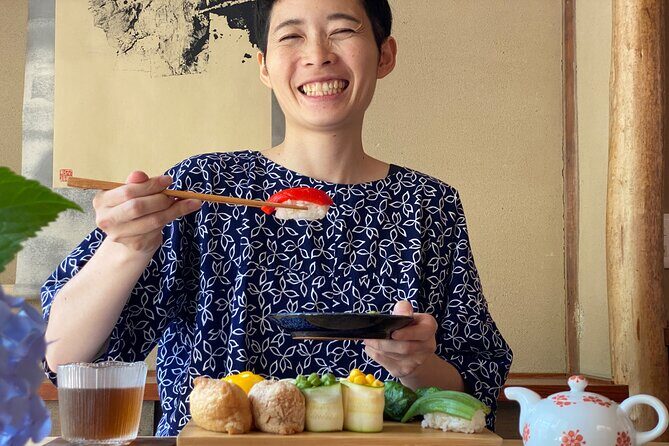
You’ll build six types of plant-based sushi during the class. The exact styles aren’t listed in advance here, but the experience is consistent: seasonal ingredients, traditional Japanese tools, and guided hands-on instruction.
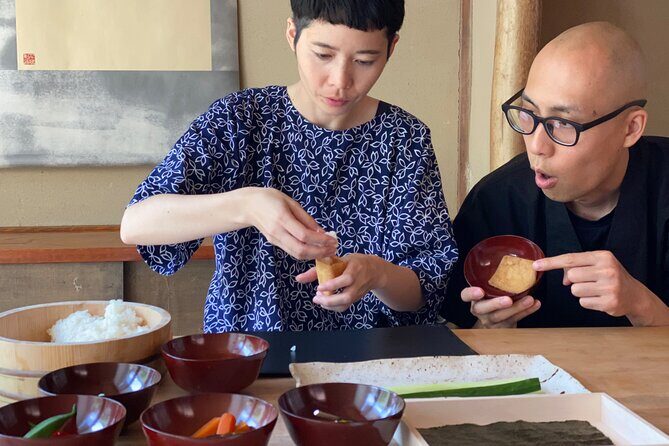
Before you assemble anything, you’ll learn the basics of sushi rice. You’ll mix the rice with vinegar, and you’ll practice how that part supports the whole sushi idea. This is one of those lessons that keeps paying you back later. Even if you never recreate every roll, knowing how vinegar works with rice gives you a real foundation for Japanese cooking.
After the rice lesson, you move into making. This is where the class earns its keep. You’re not just spooning fillings into a roll while someone else does the technique. You work through the steps with guidance, and you learn how the tools support the process.
The class stays vegan and open to all, with no experience required. That’s especially reassuring if you’re worried about looking awkward around knives or rice.
Traditional tools and Japanese kitchen knives: practice with respect
One of the most praised parts of this experience is the use of traditional Japanese tools—including Japanese kitchen knives. That can sound intimidating, but the way it’s described is clear: you’re shown and guided, and you practice rather than simply observe.
Knife skills here are about control and confidence. You’ll learn how to handle traditional tools in a structured setting, not a rushed demonstration where you feel behind. And since the class is vegan, the focus stays on plant-based ingredients while you build those practical technique habits.
You should also know the practical reality of tool handling. The equipment is washed and sanitized before your use. Still, some tools may also be used for cooking fish or meat outside this vegan class. If you’re strict about avoiding cross-contact, it’s worth bringing that up directly. The class describes sanitization, but cross-use can matter depending on how careful you need to be.


Learning sushi’s evolution: tradition isn’t one straight line
A big reason this workshop feels more meaningful than a standard cooking class is that you start with sushi’s meaning and evolution.
You’ll explore how people think about sushi today versus what sushi became over time. The class frames sushi as part of a larger and more diverse tradition, rather than a single fixed idea. That’s a helpful mindset shift, especially if your only contact with sushi is the modern menu at a restaurant.
The story part connects to the hands-on part in a natural way. When Rei explains that tradition isn’t one single correct form—just a collection of cultures shaped over time—you start looking at each step like it has context. Vinegar rice isn’t just a flavor step. It’s part of how sushi developed into what people recognize now.
You’ll also hear how sushi developed in different regions and how those changes reflect the lifestyles around it. It’s not a dry history timeline. It’s a food-centered way to understand why people made sushi in the first place, and why the concept kept changing.
This is the sort of lesson you can carry beyond sushi. It trains your eye for how everyday foods pick up local meaning—and how change doesn’t erase tradition. It reshapes it.
The tasting and swap: enjoying your rolls with the group
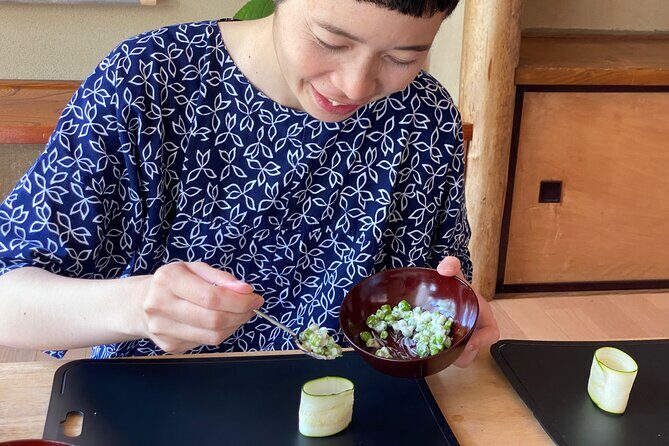
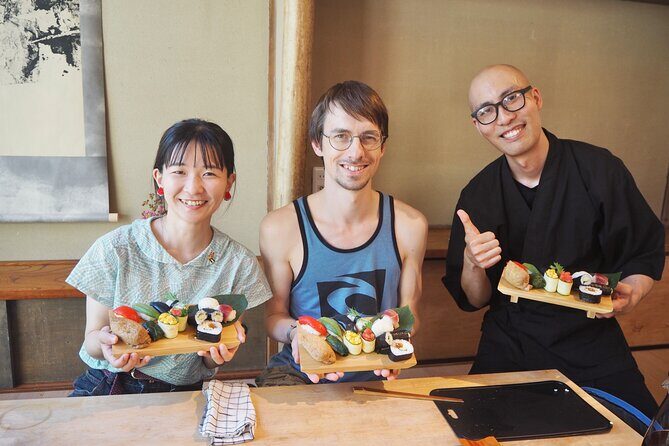
At the end, you eat the sushi you made yourself. And then comes a fun social step: you exchange and try the sushi made by others in the group.
That swap is more than a polite gesture. It’s how you catch technique differences and ingredient choices you might have missed. When someone else builds a roll slightly differently, you instantly see how shape and balance affect the final bite.
It also turns the class into a shared meal. You’re not just leaving with a handful of notes. You leave with something you made, something you tasted, and a few comparisons that stick with you.
If you tend to learn best by doing, this ending is ideal. You get a clear before-and-after moment: earlier you were learning steps; later you’re eating them.
Vegan-friendly details that matter (and one thing to confirm)
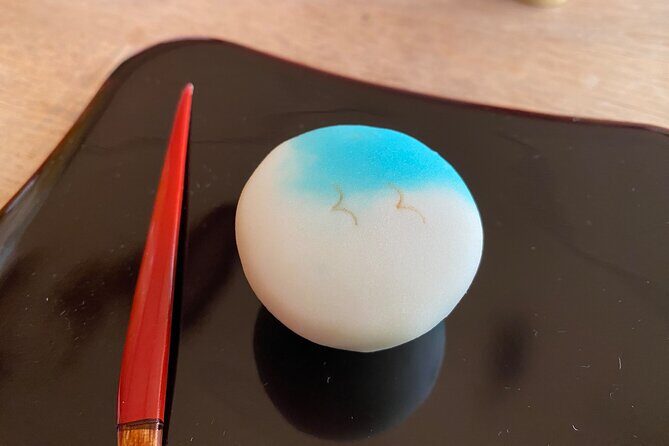
This class is vegan and open to all, and they emphasize care with equipment. All equipment is washed and sanitized before your use. That’s the baseline.
The one caveat to keep in mind is that some tools may also be used for cooking fish or meat outside the vegan class. That doesn’t automatically mean something unsafe is happening—it does mean you shouldn’t assume zero cross-use. If you have a serious allergy or strict personal rule, ask for specifics when you book.
This matters because vegan cooking isn’t only about ingredients. It’s also about the practical chain of preparation. The class already signals they care about sanitation. Your job is to check whether that level matches your needs.
Price and value: $65.04 for a 4-hour hands-on cultural workshop
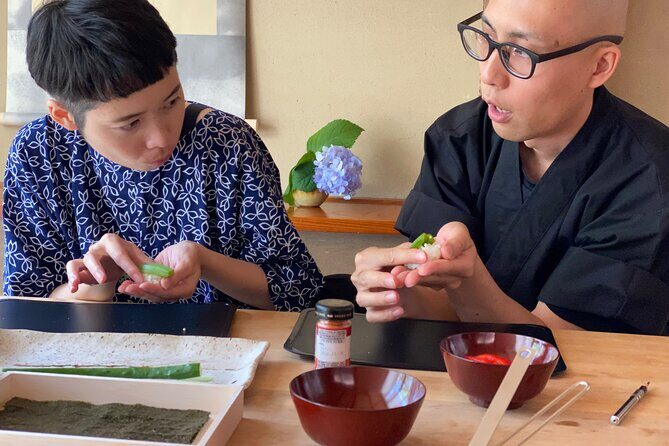
At $65.04 per person for about 4 hours, this is priced like a focused workshop rather than a casual food tour. And honestly, for what you’re getting, the value is strong.
You’re paying for:
- instruction that covers both technique (sushi rice with vinegar, assembly) and context (meaning and evolution of sushi)
- making six plant-based sushi types with seasonal ingredients
- guidance on using traditional tools and Japanese kitchen knives
- the chance to eat what you make, then swap and taste what the group made
- private group participation, meaning your class time is devoted to your group rather than a big mixed crowd
The private-car ride from Musashi-Sakai Station and back is also part of the practical value. You don’t have to solve local navigation on your own.
If you’re a solo traveler, a couple, or a small group who likes doing things with your hands, the price feels easier to justify. If you’re only interested in eating sushi without learning technique, you may prefer a restaurant-focused experience instead.
Who should book this workshop (and who might skip it)
This class is a great match if you:
- want vegan sushi with real technique, not just a tasting
- like food history that explains why changes happened, not just what changed
- enjoy traditional tools and want hands-on practice
- feel curious about how sushi became what people order today
Skip it or reconsider if:
- you only want to eat and don’t care about making
- you have strict food-safety or allergy requirements where cross-use of tools could be a problem without extra confirmation
Can you customize the class length or content?
Yes, the class can be adjusted. The experience notes that the class length can change, and there’s an example of a 12-hour, 2-day intensive course that includes everything from cooking rice to full preparation.
It also says content can be changed if you contact the provider with your preferences. The price would be set accordingly after hearing what you want.
That’s useful if you want more depth than a single 4-hour session. If you’re serious about sushi technique, the long-form option is the one to consider.
Should you book this plant-based sushi workshop?
I think you should book it if you want a hands-on way to understand sushi as a living tradition. The mix of plant-based making, traditional tools, and culture-led storytelling is the real reason this works. You leave fed, but you also leave with a repeatable skill: sushi rice with vinegar and the confidence to build sushi types.
I’d only hesitate if you’re extremely sensitive about cross-use of kitchen tools outside the vegan class. If that’s your situation, ask the provider clearly before you go. If that’s handled in a way you’re comfortable with, this is the kind of experience that feels personal rather than staged.
If you’re deciding between another sushi meal and this class, I’d pick the class. You’ll spend the time learning, laughing, swapping rolls, and walking away with sushi knowledge that sticks.
FAQ
Where do we meet, and what time does the class start?
You meet at JR Musashi-Sakai Station at 10:00 AM. The address listed for the start is 2-chōme-1-12 Kyōnanchō, Musashino, Tokyo 180-0023, Japan, and the activity ends back at the meeting point.
How long is the plant-based sushi workshop?
The class is about 4 hours.
Is the class vegan and beginner-friendly?
Yes. The class is vegan and open to all, with no experience required.
What will I learn and what will I make?
You’ll learn the meaning and evolution of sushi, how to make sushi rice by mixing it with vinegar, and then make six types of plant-based sushi using seasonal ingredients and traditional Japanese tools.
Do we use traditional tools, including knives?
Yes. You’ll practice using traditional Japanese tools and Japanese kitchen knives under guidance.
Is this a private tour/activity?
Yes. It’s a private tour/activity, and only your group participates.
What is the cancellation policy for a full refund?
You can cancel for free up to 24 hours in advance of the experience start time for a full refund. If you cancel less than 24 hours before the start time, the amount paid is not refunded.
More Good Eating in Musashino


More Tour Reviews in Musashino
Fresh reviews from around Musashino


Vegan & Vegetarian, compared.
 ★ 5.0Vegan Friendly Sushi & Okonomiyaki Shibuya Night Foodie TourFrom $110124 reviews
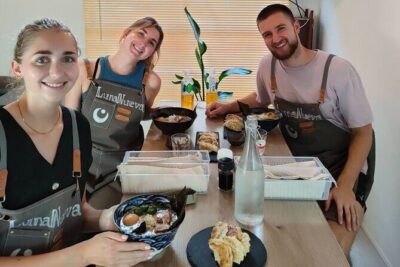 ★ 5.0Ramen & Dumpling Cooking in Tokyo with Chef/Vegan possibleFrom $102107 reviews
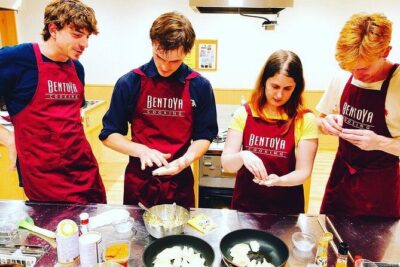 ★ 5.0Vegan/Vegetarian Ramen and Gyoza by Bentoya cookingFrom $7559 reviews
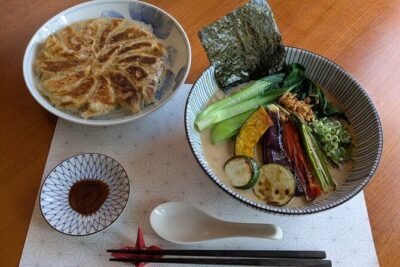 ★ 5.0Ramen Making from Scratch with Tokyo Mom(Vegan Option Available)From $12039 reviews
2-Hour Vegan and Vegetarian Ramen Guided Walking TourFrom $9633 reviews
Shibuya Tokyo: Sushi Making Class (Vegan/Vegetarian/Halal)From $5829 reviews
★ 5.0Ramen Making from Scratch with Tokyo Mom(Vegan Option Available)From $12039 reviews
2-Hour Vegan and Vegetarian Ramen Guided Walking TourFrom $9633 reviews
Shibuya Tokyo: Sushi Making Class (Vegan/Vegetarian/Halal)From $5829 reviews
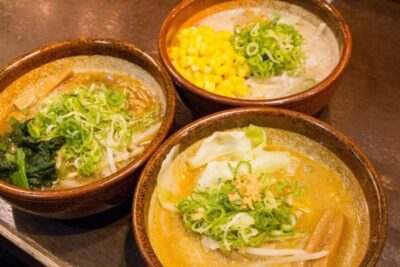 ★ 5.0Tokyo Vegan Food TourFrom $10112 reviews
 ★ 5.0Zen Buddhist Vegetarian(Shojin Ryori): Cooking ExperienceFrom $1149 reviews
Browse the lists this tour appears in