
Reviewed · MT FUJI DAY TRIPS
Mt. Fuji Tours to Lake Kawaguchi and Yamanaka Onsen English Guide
Fuji in four seasons beats the usual day trip. This one is built for same-day variety: you get timed stops at Lake Kawaguchiko plus a second lake visit at Lake Yamanaka, with a seasonal routing that changes depending on the dates. Daily departures and a fixed, easy schedule make it a solid choice when you want Fuji views without wrestling with trains.
I especially like the way the plan uses seasonal photo targets around Lake Kawaguchiko. Depending on when you go, the tour swaps in Oishi Park, the Motosu Fuji Shibazakura Festival, the Music Museum, or the Maple Leaf Corridor—each with about an hour allotted. One consideration: lunch is optional and you pay for it yourself, even though a lunch moment is built into the flow.
My other big plus is the guide. In the field, you may be looked after by multilingual guides like Christy, Mr Sandy, Damon, or Mario, and their job is to keep you moving while pointing you toward the best angles for clear views. The main drawback to plan around is the hot spring part: bath fees are not included, and you only have a set amount of time at Lake Yamanaka, so bring a simple game plan for towels, payment, and getting back on time.
In This Review
- Key highlights to plan for
- How the season changes what you actually see
- Getting from Tokyo: your 8 hours and why timing matters
- Lake Kawaguchiko: the best odds for clear Fuji photos
- Lake Yamanaka hot springs: how to not run out of time
- Arakurayama Sengen Park vs Mt. Fuji 5th Station
- If you go Oct–Apr: Arakurayama Sengen Park
- If you go Apr–Sep: Mt. Fuji 5th Station
- The extra Mount Fuji stop and why it’s not just repetition
- What the guides do (and why multilingual helps)
- Price and value: what $61 actually buys you
- Who should book this tour (and who should skip it)
- Should you book this Mt. Fuji day trip?
- FAQ
- FAQ
- How long is the tour from Tokyo?
- Does the tour include hot spring bathing fees?
- Is lunch included?
- What seasonal stops are included on different dates?
- Do I need to buy admission tickets for the attractions?
- How much time do I get at Lake Yamanaka?
- What is the hot spring Red Fuji no Yu cost and when is it closed?
- How many people are on the tour?
- What is the cancellation window for a full refund?
Key highlights to plan for
- Season decides the route: Arakurayama Sengen Park runs Oct 1–Apr 25, while Mt. Fuji 5th Station runs Apr 26–Sep 30.
- Lake Kawaguchiko photo strategy: you get a first Fuji viewing window plus a seasonal Lake Kawaguchiko stop after.
- Lake Yamanaka Onsen with an optional plan: 70 minutes total, with pick-up and drop-off in the same car if you bathe.
- Admission tickets are free for listed stops: the schedule points to free-entry attractions at each stop (except the hot springs).
- Small-caroaded group feel: maximum group size is 45 travelers, and the plan follows fixed stay times.
Other routes to the mountain, compared
- Mt Fuji & Hakone Cruise, Drum Show Bullet Train 1 Day from Tokyo★ 4.0 · 7,413 reviews
- Tokyo Mt Fuji 5th St & Hakone Cruise Bus Tour w/Bullet Train★ 4.4 · 5,024 reviews
- From Tokyo: Mount Fuji Full-Day Sightseeing Trip★ 4.5 · 4,970 reviews
How the season changes what you actually see
This tour is not one-size-fits-all. Your calendar date controls whether you’ll trade Arakurayama Sengen Park for Mt. Fuji 5th Station.
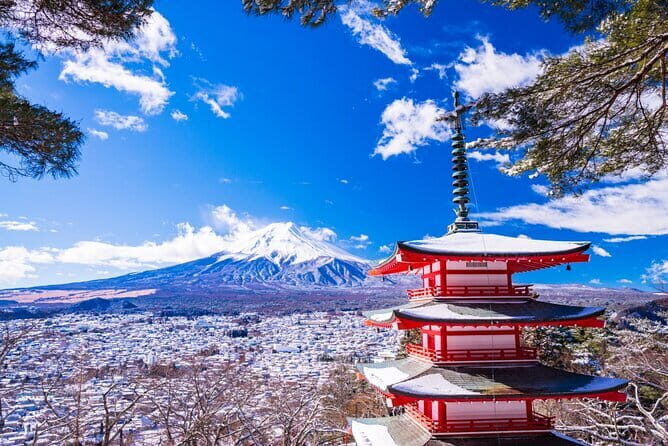
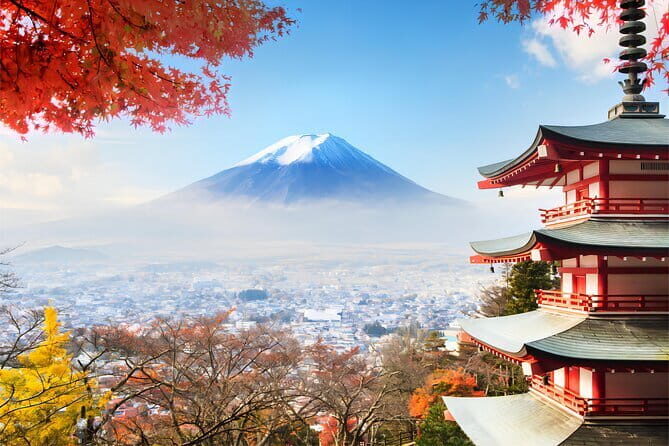
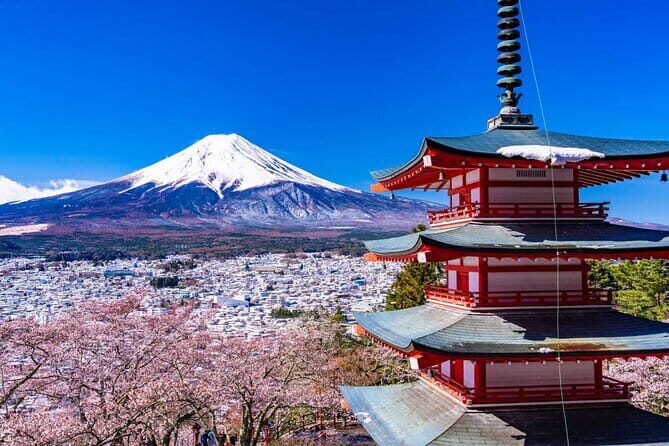
From Oct 1 to Apr 25, you’ll visit Arakurayama Sengen Park (about 1 hour) and you will not go to Mt. Fuji 5th Station. Arakurayama is famous for the classic combo of Mount Fuji views with the famous five-story pagoda scene, plus easy sightseeing that works even if you want minimal walking beyond the steps.
From Apr 26 to Sep 30, the itinerary swaps to Mt. Fuji 5th Station (about 40 minutes) and skips Arakurayama Sengen Park. The 5th Station sits at 2,305 meters, so the vibe changes: you’re higher up, closer to the mountain’s presence, and you can get views shaped by clouds drifting around.
Either way, you’ll still get a separate Mt. Fuji stop (about 1 hour) at the end of the day flow. That extra hour matters because weather can shift, and you’ll want at least one more chance to catch a clear look.
Getting from Tokyo: your 8 hours and why timing matters
The total day runs about 8 hours, with travel time and lunch time baked into the schedule. That means your “real” sightseeing time is carved into fixed blocks, not flexible roaming.
This is also a carpool-style fixed itinerary. You’ll follow the driver’s plan and the stay times at each stop, and if multiple people want to squeeze in the same walk, you’ll be glad you’re on a schedule.
Traffic can be a real factor. Weekends and red days can mean slowdowns, so if you’re serious about maximizing views at your best stop, choose a weekday date when you can.
The tour is designed for a wide range of people, and it caps at 45 travelers. It’s also listed as near public transportation, and you’ll use a mobile ticket—helpful if you want to travel light and skip paper.
One practical note: the night before, you get an email with key tour details like the tour guide phone number and the car license plate number. Make sure your phone number is active and reachable.
Lake Kawaguchiko: the best odds for clear Fuji photos
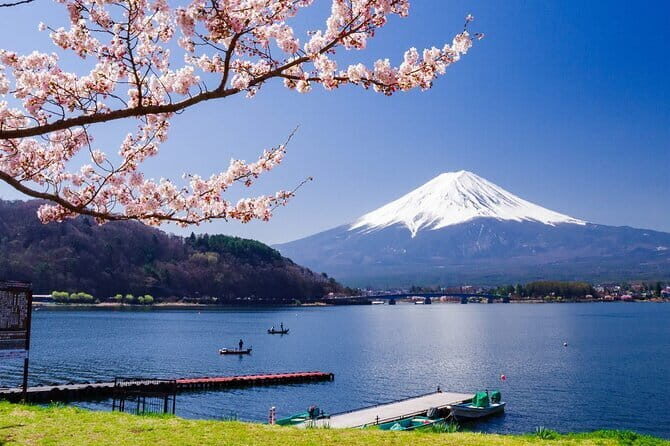
Lake Kawaguchiko is where this day starts, and it’s paced in a smart order. You get a free-time window of about 30 minutes specifically for Mount Fuji viewing, so you can find your preferred angle before the seasonal lineup begins.
After that, the tour switches into the seasonal limited plan, and this is where the day feels more tailored than a generic Fuji loop. You’ll spend about 60 minutes at the seasonal highlight, and the listed attractions have admission ticket free in the schedule.
Here’s what to expect based on your dates:
- Oishi Park (11/24–4/14 and 5/29–7/10): about 60 minutes. This is a classic Fuji-view setting where the lake foreground can frame the mountain nicely when the weather cooperates.
- Lake Motosu Fuji Shibazakura Festival (4/15–5/28): about 60 minutes. If you’re going in spring, expect a stronger focus on seasonal color themes around Fuji rather than pure still-water symmetry.
- Lake Kawaguchiko Music Museum (7/11–10/19): about 60 minutes. This is a good pivot if you want something more than “stand and look.” It can help break up the photo-only rhythm.
- Kawaguchiko Maple Leaf Corridor (10/20–11/23): about 60 minutes. Autumn light and color are often the goal here, and the schedule is built to give you time to walk and reposition.
Also, there’s a lunch moment in the seasonal flow. The schedule notes lunch is free as a concept, but you’ll pay for lunch yourself. I treat this as a clue: bring cash or a payment method you’re comfortable using fast, because you won’t have time for long searches.
A small but important tip: because the tour has fixed stay times, I’d plan your “must-do photo angles” early. Use that first Fuji free-time block to orient yourself, then let the guide steer you to the seasonal highlight.
Lake Yamanaka hot springs: how to not run out of time
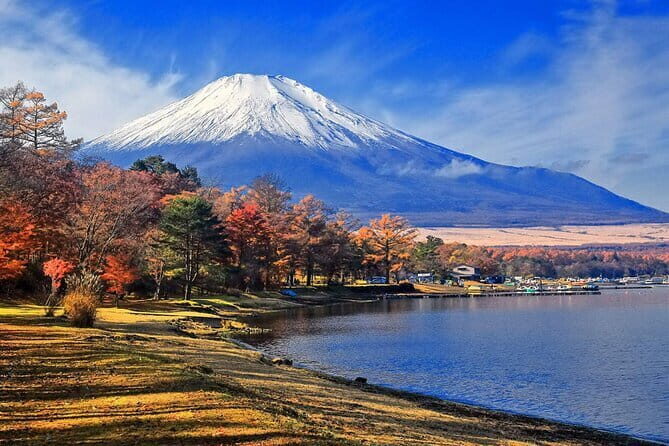
Next up is Lake Yamanaka, with about 70 minutes total. You’ll be able to see Mount Fuji from the area and you’ll have time for a hot spring soak if you choose.
Lake Yamanaka has a specific geographic detail that can interest you on-site: it’s described as the only lake among the Fuji Five Lakes with a natural river outlet. It’s the kind of fact that makes you notice the water flow and shoreline character when you’re standing there.
If you want the bath option, the tour includes pick-up and drop-off service in the same car for the hot spring visit. The bath itself is not included, so you’ll pay on arrival.
Here are the hot spring cost details listed for Yamanakako Hot Spring Red Fuji no Yu:
- Adult: 1,120 yen (includes adult bath fee plus towel fee)
- Middle/high school: 920 yen
- Elementary: 570 yen
The price note I actually care about: you should treat the hot spring as a paid add-on you’re consciously choosing, not something you can assume is baked into the ticket. If you skip it, you’ll still enjoy the lakeside Fuji time—but if you do it, budget that money.
The schedule also gives you a backup plan for timing. Red Fuji no Yu is closed every Tuesday, and there’s a suggestion to visit another place called Mt. Fuji Hot Spring when that one is closed. That option is listed as 1,600 yen on weekdays, and the tour notes you can see Mount Fuji from the lounge area there. If you’re traveling mid-week, this matters because it changes what’s available on the day.
A smart way to handle the 70 minutes: decide early. If your priority is the bath, keep your walk-and-photos time shorter and focus on getting in, changing, and returning promptly.
One more practical point: the tour warns that bath expenses aren’t covered, so don’t rely on the tour ticket alone for payments.
More days made easy by a guide

Arakurayama Sengen Park vs Mt. Fuji 5th Station
This is one of the biggest reasons to book this particular tour: it puts the “right” sight in the right part of the year.
If you go Oct–Apr: Arakurayama Sengen Park
Arakurayama Sengen Park is all about the classic panorama. The schedule gives about 1 hour and describes a climb of 397 steps near the main shrine.
What you’re aiming to capture is the familiar Fuji-and-pagoda view, plus a sense of the street view at the foot of the mountain and visibility of Fujiyoshida city. The seasonal detail is real too: cherry blossoms in spring, fresh greenery in summer, red leaves in autumn, and snowy scenery in winter are all listed as beautiful times to be there.
The main practical drawback? Those steps. If your legs are not ready for a stair climb, you might still enjoy the park from viewpoints, but you’ll want to pace yourself and keep time for photos.
If you go Apr–Sep: Mt. Fuji 5th Station
Mt. Fuji 5th Station is the “up-close” option, and it takes your day into higher altitude territory. You’ll have about 40 minutes there.
At 2,305 meters, the mountain can feel different fast—less about distant postcard symmetry and more about the mood changes when clouds move in and out. The schedule even highlights that you might see clouds like a sea when weather allows.
The trade-off is that 40 minutes can go quickly. If you want to browse souvenirs or do more than a short lookout circuit, you may feel a pinch on time.
In either season, I’d treat this stop like your “view checkpoint.” If the sky is clear, spend your time there. If it’s cloudy, still go—because your best photo odds can shift minute to minute.
The extra Mount Fuji stop and why it’s not just repetition
After your second signature stop, you get a dedicated Mt. Fuji stop for about 1 hour. Admission is listed as free, but the key value is time.
Why does an extra Fuji stop help? Because your weather and lighting can change. A day can start clear and then cloud over, or it can start gray and brighten later. Having a second chance reduces the stress of thinking you missed the perfect moment at the first viewpoint.
This is also a useful buffer if your group needs a breather. You’ll have walked, ridden in the car, and likely spent time standing outside at the lakes. That extra hour can be your calmer moment to enjoy the mountain without rushing through another timed attraction.
What the guides do (and why multilingual helps)
The tour guide is the glue for a day like this. The information includes a note that the night before you’ll get a guide phone number and car license plate number, and that tells you the operator expects the day to run smoothly with good communication.
In practice, the guides you might encounter include multilingual professionals such as Christy, Mr Sandy, Damon, and Mario. That kind of language ability matters because Fuji days often include quick tips: which side to stand on, when to move to a new angle, and how to stay on schedule without losing your place.
There can be small technical hiccups too. One experience described a bus microphone that cut in and out, but the guide still managed the tour professionally. I wouldn’t plan your day around perfect audio, though: take responsibility for your schedule awareness, and listen for the next boarding timing.
Price and value: what $61 actually buys you
At about $61.06 per person for an 8-hour guided day trip, the price sits in the “reasonable day trip” zone for Tokyo-based travel.
What you’re paying for is more than just transport. The included items list:
- vehicle service fees from the itinerary
- fuel costs, tolls, and highway tolls
- driver service fee
- certified tour guide
That’s the real value in a one-day Fuji plan: someone handles the logistics of getting you between multiple spots outside the city. You’re also getting free admission for the listed attractions at the stops (with the hot spring being the main exception).
What you still pay for:
- food and drinks
- hot spring bathing fees if you choose to bathe
So the decision point is simple. If you plan to soak and you want towels included in the listed bath fee plan, you’ll add that cost. If you skip the bath and focus on views and photos, the base ticket is more “straight value.”
Group size max is 45, and the tour is designed as a fixed itinerary. That can feel less flexible than renting a car, but it’s also why the day stays efficient.
Who should book this tour (and who should skip it)
This tour fits you well if:
- you want a Fuji day trip from Tokyo without planning every detail
- you care about seasonal highlights around Lake Kawaguchiko
- you like the idea of optional hot springs at Lake Yamanaka
- you’re okay following a fixed schedule and staying within set times
You might skip it if:
- you want maximum flexibility to linger wherever the view is best
- you strongly depend on hot spring time and don’t want to manage the extra cost and time planning
- you’re sensitive to stair climbing if you’re traveling during the Arakurayama season
If your goal is mostly photos, this still works—because the schedule is built around timed viewing blocks, not random stops.
Should you book this Mt. Fuji day trip?
I’d book it if you want a dependable, season-aware Mt. Fuji day that mixes lakes, timed viewpoints, and optional onsen without the stress of organizing everything yourself. The best part is that your date matters: you get a different signature stop depending on the season, so you’re not stuck seeing the same Fuji set every time.
Skip it only if you want an itinerary you can reshape on the fly or if hot springs are the one non-negotiable piece and you don’t want to deal with add-on fees and tight timing. For most people doing a first Fuji trip from Tokyo, this is a practical, high-efficiency way to see the mountain in a variety of angles during one day.
FAQ
FAQ
How long is the tour from Tokyo?
It’s listed as approximately 8 hours total.
Does the tour include hot spring bathing fees?
No. Hot spring bathing fees are not included, and you pay them directly. For Red Fuji no Yu, the adult fee is listed as 1,120 yen (including bath and towel).
Is lunch included?
Food and drinks are not included. The schedule mentions a lunch moment, but lunch is at your own expense.
What seasonal stops are included on different dates?
From Oct 1 to Apr 25, the tour visits Arakurayama Sengen Park and does not go to Mt. Fuji 5th Station. From Apr 26 to Sep 30, it visits Mt. Fuji 5th Station and does not go to Arakurayama Sengen Park.
Do I need to buy admission tickets for the attractions?
The schedule states admission tickets are free for the listed stop attractions (with the hot springs being the exception).
How much time do I get at Lake Yamanaka?
You get about 70 minutes at Lake Yamanaka.
What is the hot spring Red Fuji no Yu cost and when is it closed?
The adult bath fee is listed as 1,120 yen (with towel), and the schedule notes Red Fuji no Yu is closed every Tuesday.
How many people are on the tour?
The tour has a maximum group size of 45 travelers.
What is the cancellation window for a full refund?
Free cancellation is available up to 24 hours in advance for a full refund. If you cancel less than 24 hours before, the amount paid is not refunded.
More Tours in Tokyo




More Tour Reviews in Tokyo




The Fuji Shortlist: Other Days Out to the Mountain

Fresh reviews from around Tokyo






Mt Fuji Day Trips, compared.
 ★ 4.0Mt Fuji & Hakone Cruise, Drum Show Bullet Train 1 Day from TokyoFrom $1497,413 reviews
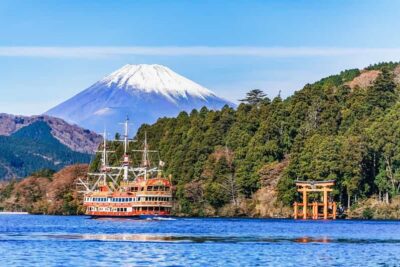 ★ 4.4Tokyo Mt Fuji 5th St & Hakone Cruise Bus Tour w/Bullet TrainFrom $1545,024 reviews
 ★ 4.5From Tokyo: Mount Fuji Full-Day Sightseeing TripFrom $684,970 reviews
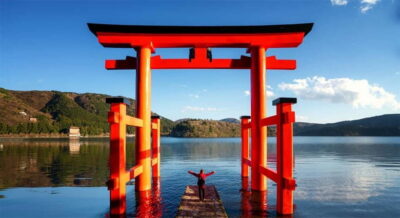 ★ 4.7Mt. Fuji Tour, Hakone Ropeway, Owakudani, Lake AshiFrom $544,002 reviews
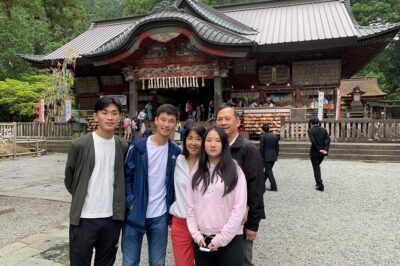 ★ 5.0Private Tour to Mt. Fuji and Hakone (Fully Licenced Operator)From $4971,910 reviews
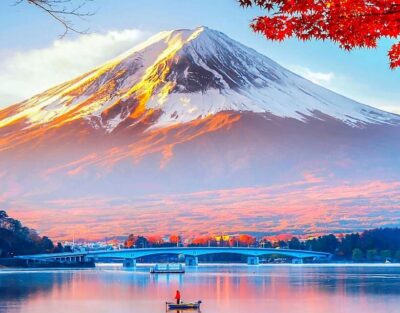 ★ 4.9Mount Fuji Full-Day Private Tour from Tokyo (Customizable)From $3931,470 reviews
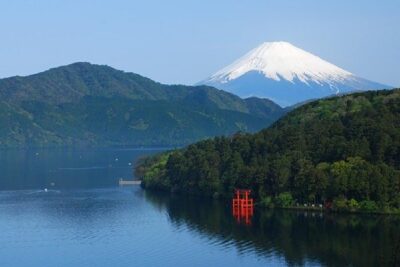 ★ 4.0Mt Fuji & Hakone Cruise, Drum Show Bus 1 Day from TokyoFrom $1221,287 reviews
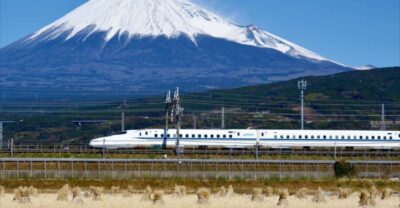 ★ 4.2From Tokyo: Mt. Fuji & Hakone Tour w/ Return by Bullet TrainFrom $1171,278 reviews
Browse the lists this tour appears in