
Reviewed · MT FUJI DAY TRIPS
Mount Fuji Full Day Customize Private Tour with English Guide
Fuji in one day, without the stress.
This private Mount Fuji full-day tour is built for efficiency: you get hotel pickup and an air-conditioned ride, then you hit several Fuji highlights in a single 10-hour stretch. I like that the plan is structured (5th Station, Lake Kawaguchiko, Oshino Hakkai, shrines, Narusawa Ice Cave, plus Gotemba), but still flexible enough to match what you care about most. The main drawback is that not every booking feels like a true guided tour—some days come off more like a car-and-driver day than a deep, on-foot guided experience.
Another thing I value: it’s timed around real-world crowd and weather limits. If you’re lucky with skies, you’ll have a strong shot at views, and the day can be shaped on the fly (for example, guidance like Hassy and Rana have been praised for timing and clear communication). Still, Fuji visibility is never guaranteed, and the operator notes the experience requires good weather.
Also, budget for small extras. WiFi on board and comfort are included, but lunch isn’t, and the Mount Fuji 5th Station entrance fee is ¥2,100 per person.
In This Review
- Key Things I’d Plan Around
- A Private Fuji Day That Actually Moves Fast
- Price and Value: How $360 per Group Adds Up
- How Pickup and a 10-Hour Day Feel in Real Life
- Stop-by-Stop: What You’ll See and Why It’s Worth the Time
- Mount Fuji 5th Station (Fujinomiya): The Launch Point View
- Lake Kawaguchiko: Fuji Reflected, With Easy Walking
- Oshino Hakkai: The Eight Ponds You Can Walk Between
- Oishi Park: A Fuji Viewpoint Stop on the Lake Side
- Kitaguchi Hongu Fuji Sengen Jinja: A Shrine With Deep Roots
- Chureito Pagoda and Arakurayama Sengen Park: The Fuji Postcard Combo
- Narusawa Ice Cave: Lava Cave + Cold Air Contrast
- Gotemba Premium Outlets: Shopping Time Without Breaking the Day
- Driver vs. Guide: The Real Expectation Check
- Fuji Weather: The Variable You Can’t Control
- Lunch, Tickets, and Small Logistics That Decide How Smooth It Feels
- The Cancellation and No-Show Lesson (How to Book Without Losing Sleep)
- Who This Tour Fits Best (And Who Might Be Happier Elsewhere)
- Should You Book This Mount Fuji Private Tour?
- FAQ
- How many people is the tour for?
- How long is the Mount Fuji full day tour?
- Is hotel pickup and drop-off included?
- What entrance fees should I expect?
- Is lunch provided?
- What happens if the weather is bad?
Key Things I’d Plan Around
- Private pickup in Tokyo saves you the “where do we meet?” headache and keeps your day moving.
- Up to 3 people per group makes the price feel more reasonable when split between friends or family.
- A tight stop list means you’ll see Lake views, Oshino’s ponds, shrine pagoda viewpoints, and the Narusawa Ice Cave in one day.
- Mount Fuji 5th Station ticket is extra (¥2,100 per person), so factor that into your total.
- Timing matters for clouds and crowds, and some guides are specifically praised for getting you there early.
- Expect English help more than a licensed walking guide—great for logistics and context, but not always a full tour narrative.
Other routes to the mountain, compared
- Mt Fuji & Hakone Cruise, Drum Show Bullet Train 1 Day from Tokyo★ 4.0 · 7,413 reviews
- Tokyo Mt Fuji 5th St & Hakone Cruise Bus Tour w/Bullet Train★ 4.4 · 5,024 reviews
- From Tokyo: Mount Fuji Full-Day Sightseeing Trip★ 4.5 · 4,970 reviews
A Private Fuji Day That Actually Moves Fast
Mount Fuji is the kind of place that punishes slow planning. Weather rolls in, buses get crowded, and daylight runs out faster than you think. This tour is designed to solve that with private transportation and a day plan that strings together the major Mount Fuji area sights.
What makes it interesting is the balance: you get a clear sequence of stops, but it’s still customizable. That matters because not every traveler wants the same “perfect day” recipe. If you care more about viewpoints, you can lean into pagoda and park stops. If you want classic Fuji scenery, Lake Kawaguchiko and Oshino Hakkai rise to the top.
The other quiet win is the simplicity. You don’t need to coordinate multiple trains, buses, and transfer points from Tokyo. You just start with hotel pickup, then spend your energy on the scenery and the short walks at each site.
Price and Value: How $360 per Group Adds Up
This tour costs $360 per group (up to 3 people). On paper that sounds like a lot, but here’s the practical way to look at it: you’re paying for a full-day private vehicle, English support, and hotel pickup/drop-off—not a shared bus with strangers and stop-and-go delays.
If you have two or three people splitting the cost, the value jumps. It becomes closer to paying for your own car for the day, with someone handling logistics and (depending on the driver) adding historical context.
One important budgeting note: lunch is not included, and Mount Fuji 5th Station has an extra entrance ticket of ¥2,100 per person. That means your real spend is tour price + lunch + the 5th Station fee (if you go).
How Pickup and a 10-Hour Day Feel in Real Life
The experience runs about 10 hours. That’s long enough to make Tokyo-to-Fuji travel worthwhile, but it’s not so long that you can sprawl into a dozen half-stops.
Your day should typically flow like this: you start with pickup in Tokyo, then you move through the Fuji area in a sequence that targets iconic sights. The tour is private, so you’re not waiting for other groups to finish a meal or take a photo. That reduces friction, which is half the battle on a day trip.
Two comfort details matter more than you’d think:
- Air-conditioned vehicle helps a lot in summer (and still helps when it’s cold and you’re in/out of cars).
- WiFi on board makes waiting time easier and keeps navigation and translation simple.
Stop-by-Stop: What You’ll See and Why It’s Worth the Time
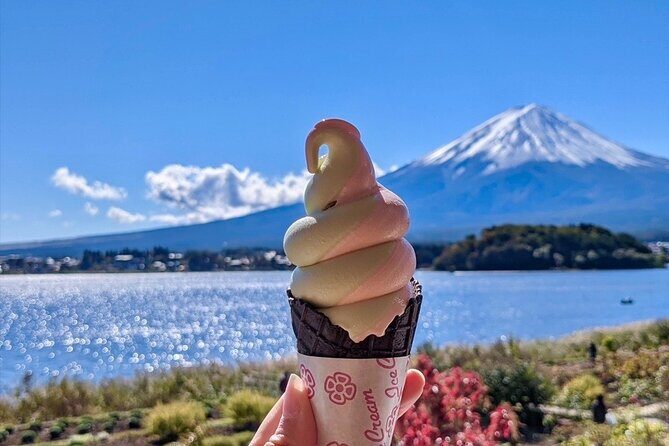
This day is built around a classic Mount Fuji circuit: station viewpoint + lakeside scenery + iconic water pools + shrine views + a volcanic/cold-cave stop + outlet time. You’ll spend about one hour at most main stops, with Gotemba Premium Outlets getting about two hours.
More days made easy by a guide


Mount Fuji 5th Station (Fujinomiya): The Launch Point View
Your first major stop is Mount Fuji 5th Station (Fujinomiya). This isn’t about conquering the mountain; it’s about reaching a higher “Fuji is right there” vantage. The site has roots back to the Edo period, originally used as a rest stop for travelers heading toward the summit.
A practical note: the admission ticket isn’t included (¥2,100 per person). Plan to budget this ahead of time so you don’t lose your momentum when you arrive.
Also, remember you’re not hiking for hours. You’re here for the viewpoint experience and the feeling of being in Fuji’s orbit.
Lake Kawaguchiko: Fuji Reflected, With Easy Walking
Next up is Lake Kawaguchiko, one of the five Fuji lakes. This area has a long timeline tied to agriculture and its later development as a tourist destination, so it’s comfortable for day-trip routines.
The value of Lake Kawaguchiko is simple: it’s one of the easiest places to get classic Fuji scenery without needing a strenuous plan. You get enough time for photos and a calm walk, while still staying on schedule.
Oshino Hakkai: The Eight Ponds You Can Walk Between
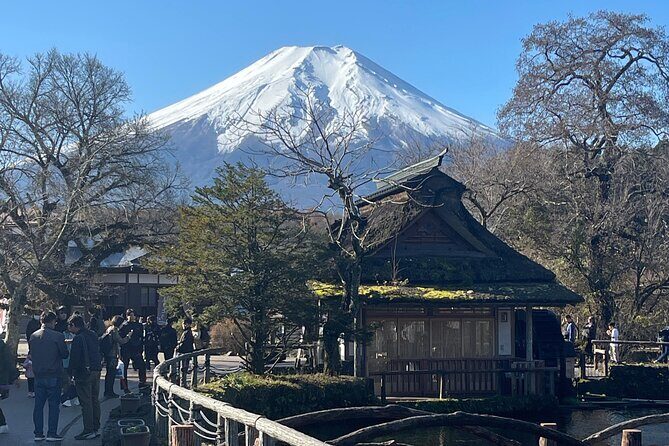
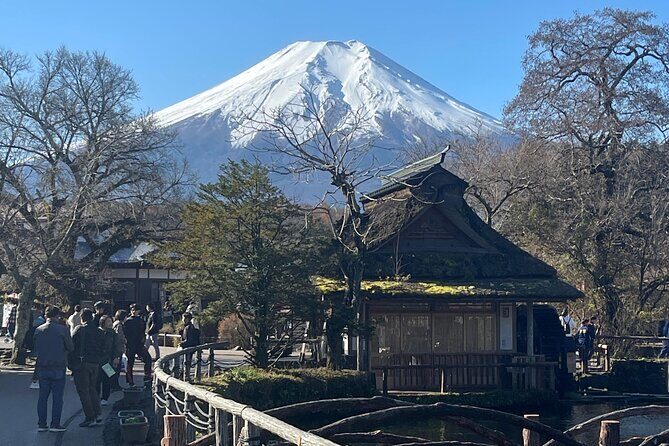
Oshino Hakkai is known for its eight pools of water. The layout is visitor-friendly—bridges and pathways take you around and over the ponds.
This stop is great when the weather is good because you can slow down a touch. If clouds or rain appear, it’s still worth it because the ponds and footpaths keep your experience moving even when Fuji is partly hidden.
Oishi Park: A Fuji Viewpoint Stop on the Lake Side
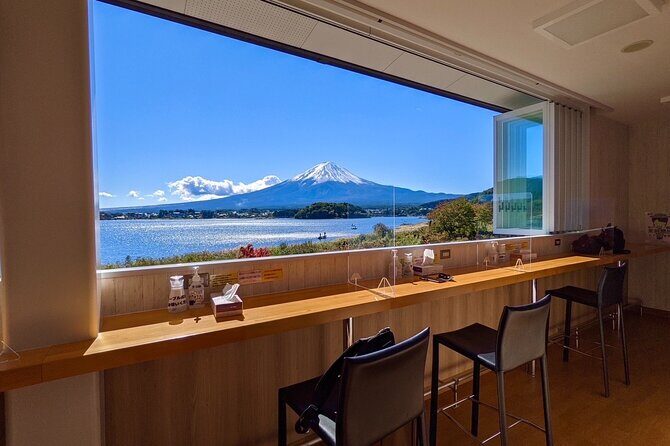
Oishi Park sits on the north side of Lake Kawaguchiko. It’s a go-to spot for Mount Fuji views, and it’s a nice change of pace after the pond area.
You’ll spend about an hour here, which is usually perfect for photos and a short reset before you move toward shrines and caves.
Kitaguchi Hongu Fuji Sengen Jinja: A Shrine With Deep Roots
Then you’ll head to Kitaguchi Hongu Fuji Sengen Jinja, a shrine said to have been established in 100 CE. It honors Yamato Takeru, described as a legendary prince tied to the Yamato dynasty.
This stop is valuable if you like learning why places look the way they do in Japan. Even if you’re not a shrine person, it helps connect Fuji to the cultural world around it, not just the postcard view.
Chureito Pagoda and Arakurayama Sengen Park: The Fuji Postcard Combo
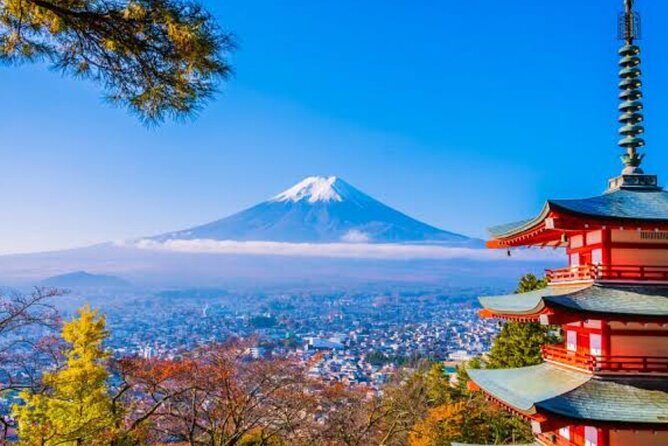
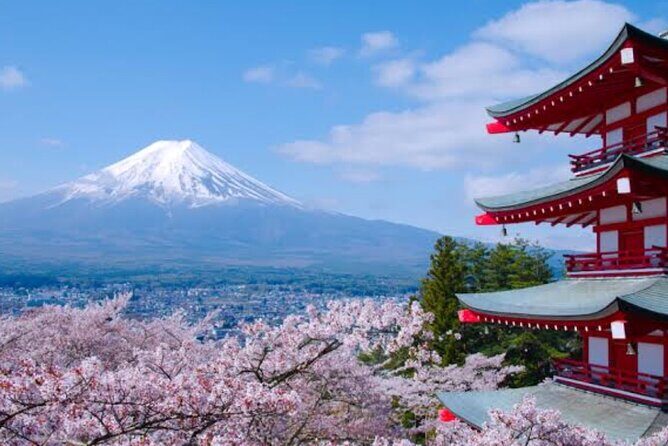
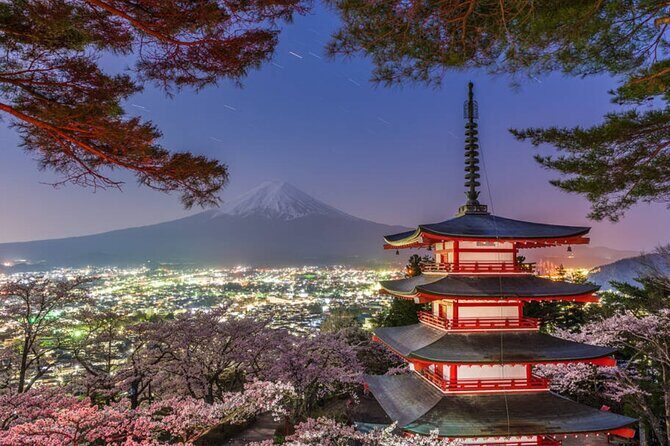
You’ll hit Chureito Pagoda, then Arakurayama Sengen Park (part of the Arakura Sengen Shrine area). Chureito is famous for its five-story silhouette on the mountainside with Mount Fuji in the background. Arakurayama Sengen Park adds the larger park setting around the shrine.
There’s a specific reason this combo works well on a day trip: you get both an iconic single structure (the pagoda) and a broader viewpoint environment (the park). If clouds drift in, you’ll still have multiple angles and photo chances in the same general area.
Narusawa Ice Cave: Lava Cave + Cold Air Contrast
Narusawa Ice Cave is a lava cave formed around 1,150 years ago and designated a Natural Monument in 1929. This is a smart mid-to-late day stop because it’s different from lakes and shrines.
The experience here is about temperature contrast and geology. Even if it’s cloudy, you can still have a satisfying “we’re in a different natural world now” moment.
Gotemba Premium Outlets: Shopping Time Without Breaking the Day
Finally, you’ll spend about two hours at Gotemba Premium Outlets. It’s a practical add-on if you want a break, snacks, or shopping time before returning to Tokyo.
Gotemba is also described as having early settlement roots in the region going back around 2,000 years, which gives the area a sense of place beyond just malls. But mostly, this stop functions as decompression time.
Driver vs. Guide: The Real Expectation Check
Here’s the part you should think about before booking: this experience is sold with English support, but the feel can vary between a driver who explains things and someone who acts like a full-blown tour guide.
Some bookings have been praised for genuinely helpful guidance and history explanations, with specific positives tied to guides like Hassy and Rana—including good timing and friendly communication. On the other hand, there are also clear complaints that the service can feel like a private car transfer with drop-offs, not a guided tour at each stop.
So what should you expect?
- You should expect English-speaking support and practical help during the day.
- You should not assume you’ll get a deep, stop-by-stop narrative like you might with a dedicated museum guide or a highly trained licensed guide.
If you want a heavily interpretive experience, I’d recommend you plan to ask your driver simple questions as you arrive. When someone is prepared, those questions can turn a car day into something better fast.
Fuji Weather: The Variable You Can’t Control
You’re visiting Japan’s most famous mountain, which means weather is the boss. The operator flags that the experience requires good weather, and if it’s canceled due to poor conditions, you’ll be offered a different date or a full refund.
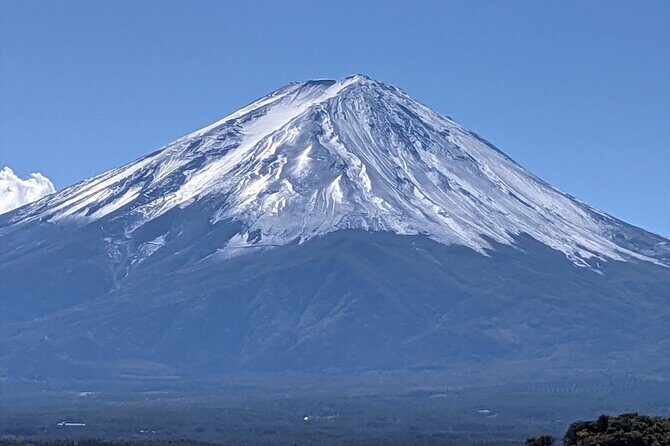
In good weather, the payoff is huge. That’s when the 5th Station viewpoint and the pagoda/park area shine. In less-than-ideal conditions, you can still enjoy the lakes, ponds, shrine sites, ice cave, and shopping—but Fuji itself may be a partial or fleeting star.
One tip that matters: if your schedule allows, treat this as a day you plan around the forecast rather than something you force at all costs.
Lunch, Tickets, and Small Logistics That Decide How Smooth It Feels
A few practical points can make or break the day:
- Lunch isn’t included, so you’ll want to either eat before pickup/after drop-off or plan your meals during the gaps. Don’t leave it as a last-minute scramble.
- Mount Fuji 5th Station costs extra (¥2,100 per person). Keep cash or a way to pay ready.
- You’ll be moving between multiple sites, so wear comfortable shoes even though the stops are short.
The inclusion of mobile ticket is handy for keeping everything in order. And WiFi on board is more than a perk—it’s useful for translating signs quickly and mapping where you are when you step out.
The Cancellation and No-Show Lesson (How to Book Without Losing Sleep)
The tour has free cancellation up to 24 hours in advance, and if it’s canceled for poor weather, you’ll typically get an alternate date or a full refund. That’s reassuring if you’re traveling with flexible plans.
Still, one downside that shows up in service quality is the risk of miscommunication. There have been accounts of a missed pickup and weak responsiveness. I can’t promise that will never happen, but I can suggest a smart habit: confirm pickup details the day before, and keep your confirmation and local contact info handy so you can act quickly.
Who This Tour Fits Best (And Who Might Be Happier Elsewhere)
This tour is a great fit if you want:
- A private day with hotel pickup from Tokyo
- To cover multiple Mount Fuji area icons without juggling transport
- English help for navigation and basic explanations
- A balanced day that blends nature, culture, and at least a little downtime at outlets
It may be less ideal if you want:
- A full, walking, historian-style guide at every stop
- An experience that feels like a high-touch guided tour rather than a private transport day
- Total certainty on punctuality without any chance of operational issues (even well-run services can slip; build your own backup plan)
Should You Book This Mount Fuji Private Tour?
I’d book it if you want convenience, a tight Fuji-hit itinerary, and you’re traveling as a small group (up to three). The math works best when you split the cost, and the mix of Lake Kawaguchiko, Oshino Hakkai, shrine/pagoda viewpoints, Narusawa Ice Cave, and outlet time is exactly the kind of “one day, many highlights” structure that saves you energy.
I’d be cautious if you strongly need a constantly interpretive guide experience or if your trip is so tight that a weather issue (or a rare pickup failure) would ruin your entire plan. In that case, you’ll want a backup date or a Plan B nearby.
If you go in with the right expectations, you’ll have a smooth, efficient day—and a very good chance of seeing Mount Fuji when the sky cooperates.
FAQ
How many people is the tour for?
It’s a private tour for your group, with a maximum of up to 3 people per group.
How long is the Mount Fuji full day tour?
The tour runs for approximately 10 hours.
Is hotel pickup and drop-off included?
Yes. Hotel pickup and drop-off are included, and pickup is offered.
What entrance fees should I expect?
The Mount Fuji 5th station entrance fee is not included and costs ¥2,100 per person. Other listed stops have free admission.
Is lunch provided?
No, lunch is not included.
What happens if the weather is bad?
The experience requires good weather. If it’s canceled due to poor weather, you’ll be offered a different date or a full refund.
More Tours in Tokyo




More Tour Reviews in Tokyo




The Fuji Shortlist: Other Days Out to the Mountain

Fresh reviews from around Tokyo






Mt Fuji Day Trips, compared.
 ★ 4.0Mt Fuji & Hakone Cruise, Drum Show Bullet Train 1 Day from TokyoFrom $1497,413 reviews
 ★ 4.4Tokyo Mt Fuji 5th St & Hakone Cruise Bus Tour w/Bullet TrainFrom $1545,024 reviews
 ★ 4.5From Tokyo: Mount Fuji Full-Day Sightseeing TripFrom $684,970 reviews
 ★ 4.7Mt. Fuji Tour, Hakone Ropeway, Owakudani, Lake AshiFrom $544,002 reviews
 ★ 5.0Private Tour to Mt. Fuji and Hakone (Fully Licenced Operator)From $4971,910 reviews
 ★ 4.9Mount Fuji Full-Day Private Tour from Tokyo (Customizable)From $3931,470 reviews
 ★ 4.0Mt Fuji & Hakone Cruise, Drum Show Bus 1 Day from TokyoFrom $1221,287 reviews
 ★ 4.2From Tokyo: Mt. Fuji & Hakone Tour w/ Return by Bullet TrainFrom $1171,278 reviews
Browse the lists this tour appears in