
Reviewed · FULL-DAY
Full Day Private Tokyo Tour for Wheelchair Users
Tokyo gets easier when the city comes to you.
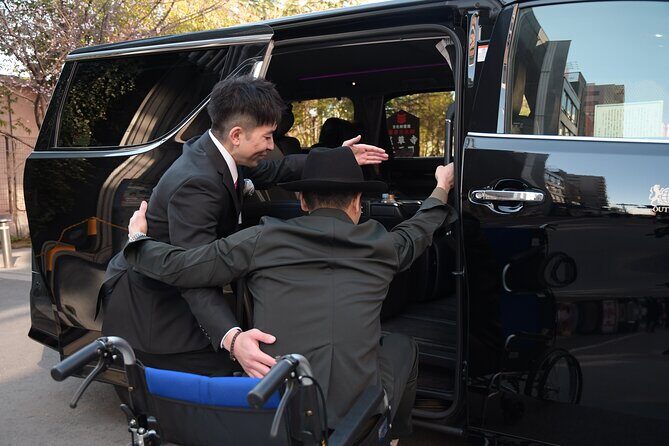
This private full-day tour is built for wheelchair users, with a private vehicle so you can skip the usual Tokyo puzzle of trains, steps, and transfers. The route also works like a dial you can turn: your guide can adjust the day to fit your pace and interests, while you get comfortable breaks—sometimes with key sights from the car window.
I love the on-board Wi-Fi and the small comforts that keep the day from feeling like a grind. Snacks and bottled water are included, and in at least one hot-day experience, the guides (Umi and Roberto) actively helped manage heat and handled a mobility scooter so it didn’t become your job on top of sightseeing.
One consideration: you’re covering a lot of Tokyo highlights in one day, so you may still want to plan energy for short walks at stops like temples and markets, even if the driving and pacing are easier with a private guide and vehicle.
In This Review
- Key things that make this wheelchair-friendly Tokyo day work
- A private Tokyo day designed for wheelchair users
- Starting from Tokyo Station: the easiest launch point
- Tsukiji Outer Market: food streets and real neighborhood texture
- Hama Rikyu Gardens: a calm pause with a story behind it
- Ginza, the Imperial Area, and the National Diet Building: iconic views with less hassle
- Senso-ji in Asakusa: old Tokyo energy in about an hour
- Omotesando and Harajuku: architectural stops and youth fashion chaos
- Meiji Jingu, Shibuya Crossing, and Daikanyama: nature break to city peak
- Your guides: the real secret sauce is stress control
- Price and value: is $731.60 per group a good deal?
- Who should book this wheelchair-friendly private Tokyo tour
- Should you book this full-day private Tokyo tour for wheelchair users?
- FAQ
- How long is the full day private Tokyo tour?
- How many people are in a group?
- Where do we meet, and does the tour end there?
- Is pickup offered?
- What’s included in the price?
- Is lunch or dinner included?
- Which stops have admission fees?
- Can the route be adjusted to my interests?
- Does the vehicle have Wi-Fi?
- What if I need to cancel?
Key things that make this wheelchair-friendly Tokyo day work
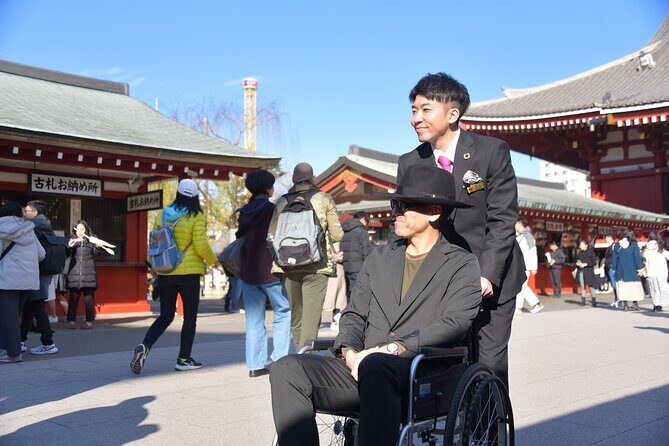
- Private transportation: You’re not stitching together Tokyo transit with stairs, crowds, and timing stress.
- Wi-Fi in the vehicle: You can get online while moving between areas, not just during long stops.
- Smart pacing with your guide: The day can be tailored to what you actually want to do and how you want to do it.
- Accessible support in real life: One review specifically notes the guide handling a mobility scooter, which is exactly the kind of pressure-reliever you want.
- A “mix it up” itinerary: Markets, gardens, temples, and modern neighborhoods in one compact circuit.
More private options with your own guide
- Tokyo 6hr Private Tour with Government-Licensed Guide★ 5.0 · 3,902 reviews
- Private Tour to Mt. Fuji and Hakone (Fully Licenced Operator)★ 5.0 · 1,910 reviews
- Tokyo Customized Private Tour (Must See Places in 1 Day)★ 5.0 · 1,499 reviews
A private Tokyo day designed for wheelchair users
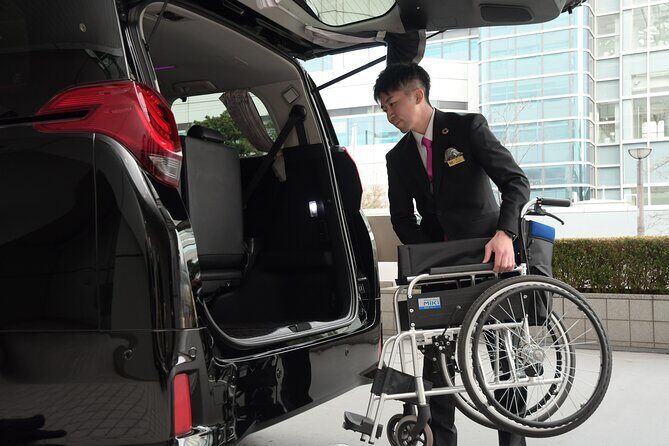
A lot of Tokyo tours are built around the idea that everyone will hop between stations, navigate crowds, and keep moving even when lines slow you down. This one is different in mindset. It’s planned around the reality that getting around may be harder for you, so the tour uses a private, air-conditioned vehicle and a guide who’s with you the whole time.
The day feels like you’re getting a guided route through Tokyo’s most recognizable areas, without the normal friction of figuring out logistics minute by minute. Some sights are time on foot. Others are best enjoyed from the car window, which helps when crowds or walking distance are the limiting factors.
I also like that the guide can tailor the route. That matters because the most famous Tokyo stops are famous for a reason, but the best day is the one that matches your interests—whether that’s gardens, shopping streets, temples, or big-city energy.
Starting from Tokyo Station: the easiest launch point
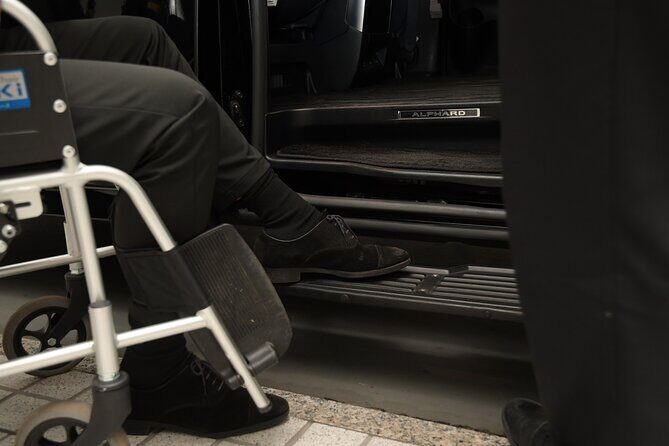
You meet at Tokyo Station (Marunouchi side, Tokyo Station 1 Chome-9). It’s a practical choice because Tokyo Station is a major hub and generally easier to reach than meeting points tucked deep into side streets.
You also get a pickup offered, and the tour ends back at the meeting point. For a wheelchair user, that “back to where we started” piece is underrated. It reduces the risk of the day ending with one last hard transfer.
The tour runs for about 8 hours, and it’s scheduled during a window that includes early mornings and up to early afternoon (with specific dates showing 7:00 AM to 2:00 PM). Translation: you’ll likely start early enough to beat some crowds and heat, though July-style warmth is still Tokyo warmth.
Tsukiji Outer Market: food streets and real neighborhood texture
Your first stop is Tsukiji Jogai Market, the outer market area. Quick context: the main Tsukiji Market shifted to Toyosu in 2018, but the outer area still has plenty going on—shops and restaurants with interesting items and old-school market energy.
This is a great opening stop because it’s a sensory hit without requiring you to “conquer” a huge theme park layout. Plan to browse at a comfortable speed. If you want snacks later, you’ll already be in the food zone, but remember lunch isn’t included—so you’ll want to factor that into your timing and appetite.
Accessibility-wise, markets can be tight and busy. Since this is a private tour, your guide can steer you toward what’s most usable for your mobility needs and keep you out of the worst crush when possible. One more practical tip: wear something breathable, even if you trust the car ride to save you—this is still a market morning.
Hama Rikyu Gardens: a calm pause with a story behind it
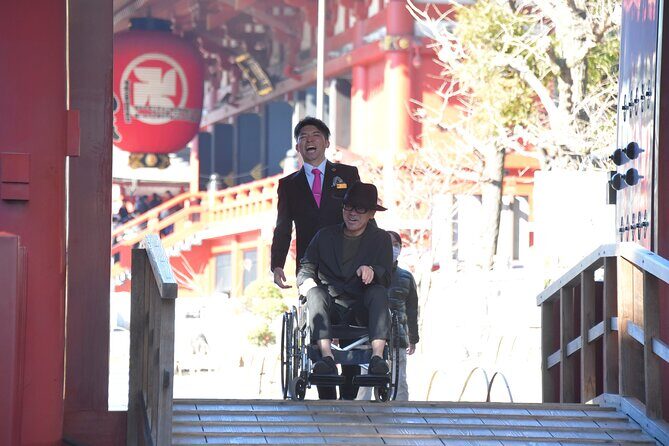
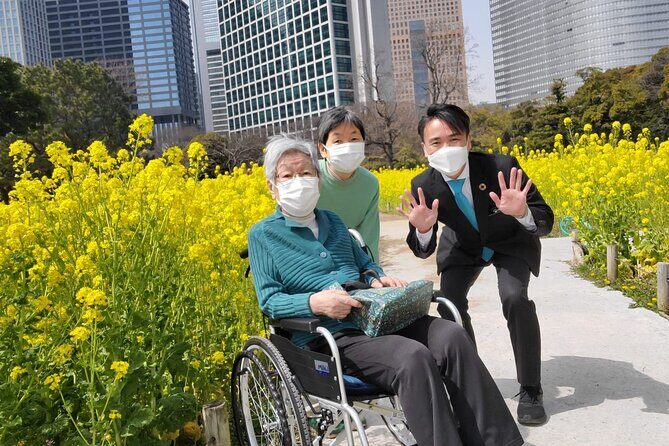
Next comes Hama Rikyu Gardens for about an hour. This garden has had multiple lives: it was originally built as a feudal lord’s Tokyo residence and even used for duck hunting between the 17th and 19th centuries. Over time, it became the garden you visit today.
This stop is valuable because it breaks up the urban intensity. After Tsukiji, stepping into green space is not just pretty—it’s a reset for your body. Even if your mobility is limited, a garden visit can be a good “change of pace” day component.
Admission isn’t included for Hama Rikyu, so you’ll want to budget for that if you’re counting costs closely. The upside is that the garden fits well into a wheelchair-friendly route: it’s a destination you linger in, not a place you rush through.
Worth weighing up alongside this Tokyo pick:


Ginza, the Imperial Area, and the National Diet Building: iconic views with less hassle
After the market and gardens, you’ll spend time moving through central Tokyo with sightseeing from the car window. That includes Ginza, the Imperial Palace area, and the National Diet Building.
Ginza is known for eclectic boutiques, galleries, Japanese traditional crafts, and modern architecture. Even if you don’t step out much, you’ll still get a feel for how polished this part of Tokyo is. It’s a good contrast against more traditional zones.
The Imperial Palace area gets a quick look from the car window as well. The palace site connects to the Tokugawa shoguns (1603 to 1868). After that period, it became the Imperial Palace when political power returned to Emperor Meiji.
The National Diet Building stop is another “see it, don’t fight it” moment. This building survived the air raids of 1945 and was built in 1936—so it carries weight beyond the postcard angle. A short viewing stop works well here because the purpose is recognition and atmosphere, not museum-style wandering.
If you’re someone who likes structure, these windows-instead-of-walks segments are the smart part of the itinerary.
Senso-ji in Asakusa: old Tokyo energy in about an hour
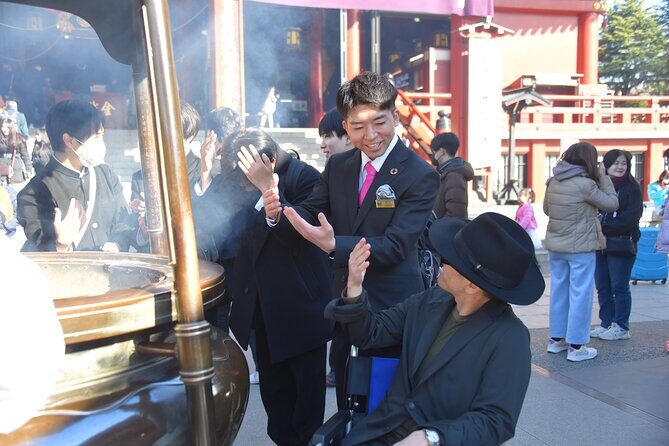
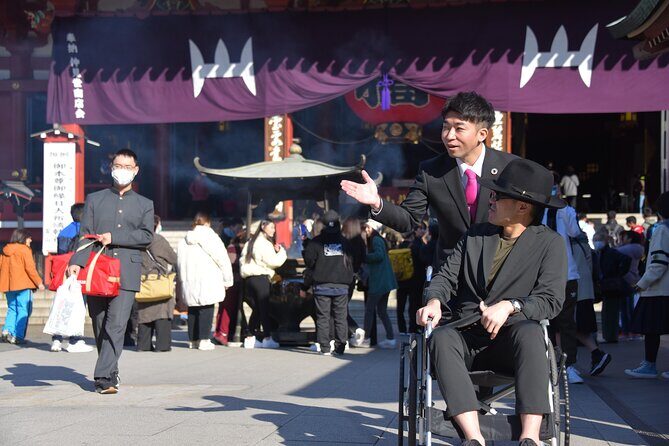
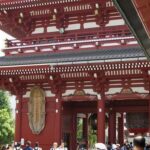
Senso-ji Temple is the oldest temple in Tokyo, and it’s one of those places where Tokyo’s past feels present. The story goes back to 628, when a Kannon statue was reportedly found by two fishermen in Asakusa.
You get about an hour here, and this is one of the stops where you’ll likely do more than just look from the car. Temples can mean crowds, especially near entrances and along the approach streets. Since the tour is private, you’re not stuck with a rigid group pace, and your guide can help you navigate your route through the busiest areas.
I’d treat this as your “main walking” portion of the day. If you want to buy small souvenirs or focus on the architecture details, build in a slower pace. If you want maximum calm, you can keep your stop more focused—look, enjoy, and get out before energy peaks.
Omotesando and Harajuku: architectural stops and youth fashion chaos
Then it’s off to Omotesando and Harajuku. Both stops are listed around 30 minutes, with sightseeing through the car window for Omotesando and Harajuku.
Omotesando is famous for buildings designed by leading architects and for shopping that mixes upscale brands with street-level style. It’s Tokyo design watching, and it works well from the car because the street itself is the spectacle.
Harajuku is different. It gives you a taste of youth culture with unique fashion trends and bold, sometimes outrageous styles in buildings and streets. It’s fast, visual, and slightly chaotic—in a fun way if you’re up for it.
If you’re not a fan of crowds, this is where car-window time helps you avoid long exposure. If you do want to step out, you’ll need to coordinate that with your guide during the day, since the itinerary as written favors quick scenic passes at these locations.
Meiji Jingu, Shibuya Crossing, and Daikanyama: nature break to city peak
Meiji Jingu Shrine is one hour and is described as a pleasant atmosphere and a welcome break from busy streets. That makes it a strong choice later in the day when you might want a breather.
There’s also a chance to see a traditional Japanese wedding ceremony on Saturdays and Sundays. Since that’s not guaranteed, treat it as a bonus if it happens on your day.
Then comes Shibuya Crossing. You’ll see it through the car window for about 30 minutes. Shibuya is often called the busiest intersection in the world, and it’s hard to get a calmer impression of Tokyo than standing near that kind of crosswalk energy—except you won’t have to. You get the spectacle without committing to the full crowd dance.
Finally, you end in the Daikanyama area for about 30 minutes, a neighborhood known for boutiques and cafes with a less frantic feel than more famous nearby hotspots. It’s a nice way to finish without ending your day in the densest traffic zone.
A practical note: even though parts of this segment are from the car, it still helps to plan for the emotional “range” of Tokyo—from shrine calm to crossing chaos to chic street vibes.
Your guides: the real secret sauce is stress control
What made this experience shine in real-world accounts wasn’t just the route. It was the way the guides handled the human parts of travel.
One review highlights Umi and Roberto making an extra effort on a very hot day, trying to keep everyone cool and actively asking what kinds of experiences mattered most to the group. That’s a small thing that turns into a big difference when you’re managing comfort, mobility needs, or simply energy levels.
Another review features Gen, who allowed customization to match the group’s preferences and stayed kind and flexible. Customization isn’t just a sales phrase here—it shows up as real decision-making in the moment, like how long to linger, what to prioritize, and how to keep the day from turning into a checklist.
Also, in the same hot-day experience, the guide team helped handle a mobility scooter used by the group. If you’ve ever had to manage your own gear while trying to enjoy the trip, you know that matters. It reduces friction and lets you focus on the places.
Price and value: is $731.60 per group a good deal?
The price is $731.60 per group for up to 9 people. That sounds high until you translate what you’re buying: a private, accessible-minded day with an air-conditioned vehicle, a guide, snacks, bottled water, and Wi-Fi on board.
For families or groups, the cost can become more reasonable because you’re splitting the private transport and guide fee. For a smaller group, it’s closer to a premium convenience purchase. You’re paying for less hassle, better pacing, and a route that’s designed to reduce how much you have to solve on your own.
You’ll also want to note what’s not included: lunch and dinner. That’s not a dealbreaker, but it means you’ll either plan a meal stop or eat around your day. If you like control, you can bring snacks from home for backup. If you like spontaneity, ask your guide what’s easiest near your next stop.
Is it good value? For me, yes—when accessibility, comfort, and a smoothly managed day matter more than squeezing in extra stops or doing everything on your own.
Who should book this wheelchair-friendly private Tokyo tour
This tour is a strong fit if:
- You want a private day without navigating Tokyo transit systems while managing mobility needs.
- You like the idea of hitting major sights (Tsukiji outer market, Senso-ji, Meiji Jingu, Shibuya) without the chaos of joining big groups.
- You value small comforts like snacks, bottled water, and onboard Wi-Fi.
It may be less ideal if:
- You want long, detailed museum-style visits at a slower tempo. This is built as a full-day sweep with short segments at multiple neighborhoods.
- Your priority is deep time in one place and no drive-by sightseeing at other stops.
If you’re somewhere in the middle—wanting highlights but also needing practical pacing—this is a good match.
Should you book this full-day private Tokyo tour for wheelchair users?
I’d book it if your goal is a smooth, well-managed Tokyo day where the hard parts are handled: moving between areas, managing pacing, and reducing stress. The combination of private transport, snacks, and onboard Wi-Fi makes a real difference on a day that spans central and iconic Tokyo.
If you’re considering it for the itinerary alone, remember it’s a highlight route with some car-window segments. For the best day, think in terms of “I want a guided circuit with manageable stops,” not “I want to spend half the day in one museum.”
Finally, choose this if you’d benefit from a guide who takes comfort seriously. The standout service moments in past experiences—keeping people cool and handling mobility gear—are exactly the kind of support that turns a good tour into an actually enjoyable day.
FAQ
How long is the full day private Tokyo tour?
The tour is about 8 hours.
How many people are in a group?
It’s a private tour for your group, up to 9 people.
Where do we meet, and does the tour end there?
You start at Tokyo Station (1 Chome-9 Marunouchi, Chiyoda City) and the tour ends back at the meeting point.
Is pickup offered?
Yes, pickup is offered.
What’s included in the price?
Included are an air-conditioned vehicle, private transportation, bottled water, snacks, and Wi-Fi on board.
Is lunch or dinner included?
No. Lunch and dinner are not included.
Which stops have admission fees?
Hama Rikyu Gardens admission is not included. The other listed stops are marked as free in the itinerary details.
Can the route be adjusted to my interests?
Yes. The tour route can be tailored to your interests and preferred schedule.
Does the vehicle have Wi-Fi?
Yes, Wi-Fi is available on board.
What if I need to cancel?
You can cancel for free up to 24 hours in advance for a full refund. If you cancel less than 24 hours before the start time, the amount paid is not refunded.
Just Your Group: Private Options


More Tours in Tokyo





More Tour Reviews in Tokyo




Fresh reviews from around Tokyo






Full-Day, compared.
 ★ 4.5From Tokyo: Mount Fuji Full-Day Sightseeing TripFrom $684,970 reviews
 ★ 4.9Mount Fuji Full-Day Private Tour from Tokyo (Customizable)From $3931,470 reviews
 ★ 5.0Tokyo Private Full-Day Tour by Car or VanFrom $321684 reviews
 ★ 4.7From Tokyo: Must-Visit Mount Fuji Highlight Full-Day TourFrom $69532 reviews
 ★ 4.5Mt. Fuji, Hakone Full-Day Private Tour with English Driver GuideFrom $495458 reviews
 ★ 4.8From Tokyo: Mount Fuji Full-Day Customizable Private TourFrom $483451 reviews
 ★ 5.0Nikko Full-Day Private Tour with Government-Licensed GuideFrom $155259 reviews
 ★ 4.9From Tokyo: Nikko World Heritage Site Private Full-Day TripFrom $483243 reviews